🔥Get 3% Off Your First Train Ticket Booking!
As a special treat, Trip.com is offering a 3% discount on your first train ticket booking. Simply claim your coupon and enjoy a seamless travel experience.

By Trip.com
September 19, 2026
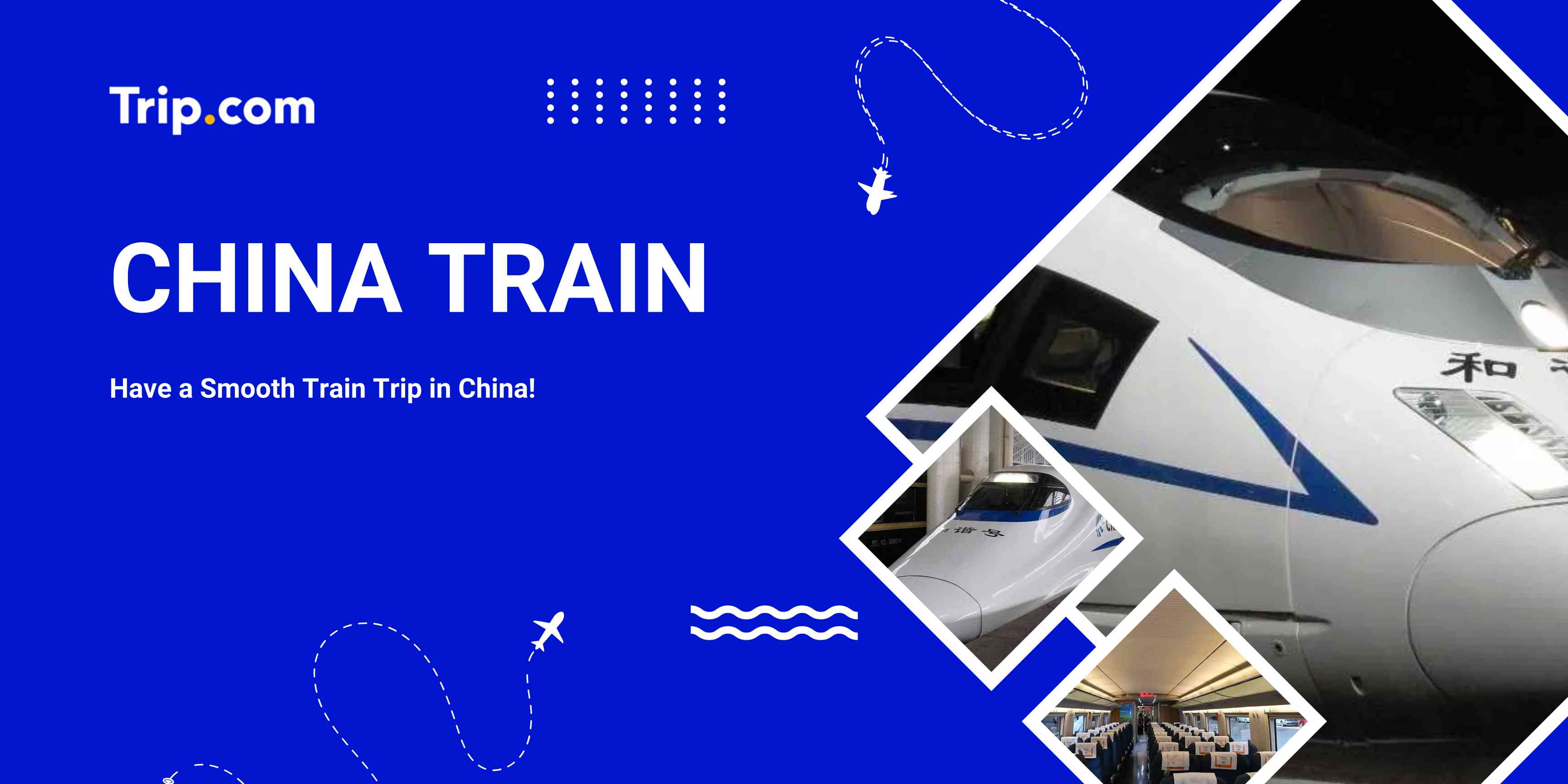
With one of the most advanced and extensive rail networks in the world, China train can send every traveller to their destinations across the country in hours. This guide to China high speed rail will navigate you through China train types, ticket booking, tips, popular routes and more you need if you’re planning a trip to China.
China train is a preferred transport for both locals and tourists due to its efficiency, affordability, and extensive coverage. The network spans over 159,000 km (98,798 mi), making it the second longest in the world as of 2024.
Train travel in China includes a variety of services from China high speed rail train to slower, more scenic routes. Every traveller can choose the one that suits their need most, catering to different preferences and budgets for your high speed train China trip.
As a special treat, Trip.com is offering a 3% discount on your first train ticket booking. Simply claim your coupon and enjoy a seamless travel experience.

Source: Wikipedia
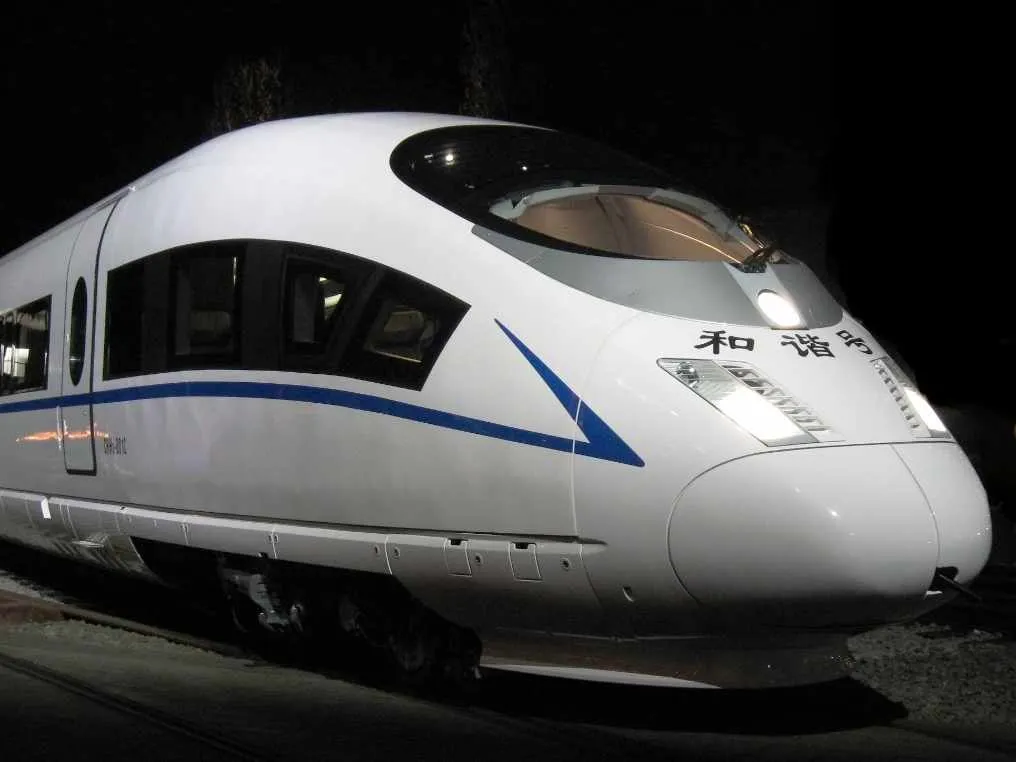
China's train services are categorised into several types, each designated for different needs and offering different levels of speed and comfort.
China high speed rail includes 3 types - G, D, C. Here’s the summary of these 3 train types.
Train types | Speed | Introduction |
G Trains | Up to 350 km/h | 1. The fastest trains in China. |
D Trains | Up to 250 km/h | 1. Slightly slower than G trains. |
C Trains | Up to 250 km/h | 1. For short distances between nearby cities. |
Except for China high speed rail, there are also many normal train types in China, serving for different travellers. Check the table below for details.
Train types | Speed | Introduction |
Z Trains | Up to 160 km/h | 1. Typically Overnight trains with minimal stops. |
T Trains | Up to 140 km/h | 1. Fewer stops than regular services. |
K Trains | Up to 120 km/h | 1. Slower trains. |
Y Trains | Up to 100 km/h | 1. Slower trains. |
L Trains | Up to 100 km/h | 1. For peak seasons and holidays to accommodate increased passenger demand. |
Source: Wikipedia
G trains can reach speeds up to 350 km/h (217 mph), providing rapid transit between major cities like Beijing, Shanghai, and Guangzhou. For example, a distance of approximately 1,318 kilometres (819 miles) from Beijing to Shanghai is covered by G trains in about 4.5 hours.
D trains still offer high-speed service, reaching up to 250 km/h (155 mph). These trains are used for both intercity travel and longer routes, such as from Beijing to Guangzhou, taking about 8 hours.
C trains are designed for rapid transit between nearby cities. For instance, taking C trains from Beijing to Tianjin is just 30 minutes.
Use our promo code to enjoy up to 5% OFF (up to S$3) on your attraction tickets, tours and eSIMs! Only for new users!

Source: China Railway official
Travelling on China bullet train offers numerous benefits, especially when opting for sleeper trains for overnight journeys.
China trains offer a variety of seat classes to different comfort levels and budgets. You can choose:
China train system is quite extensive and complicated for foreigners. Follow this step-by-step guide to ensure a stress-free China train trip.
Book China train tickets online
1. Book tickets on Trip.com or the official China Railway website 12306. You can search your route and date.
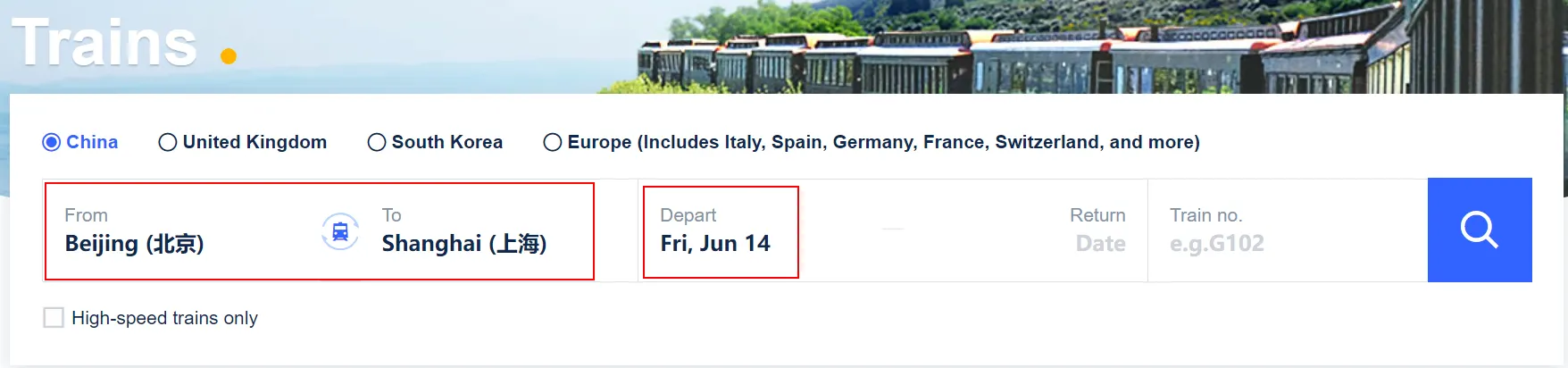
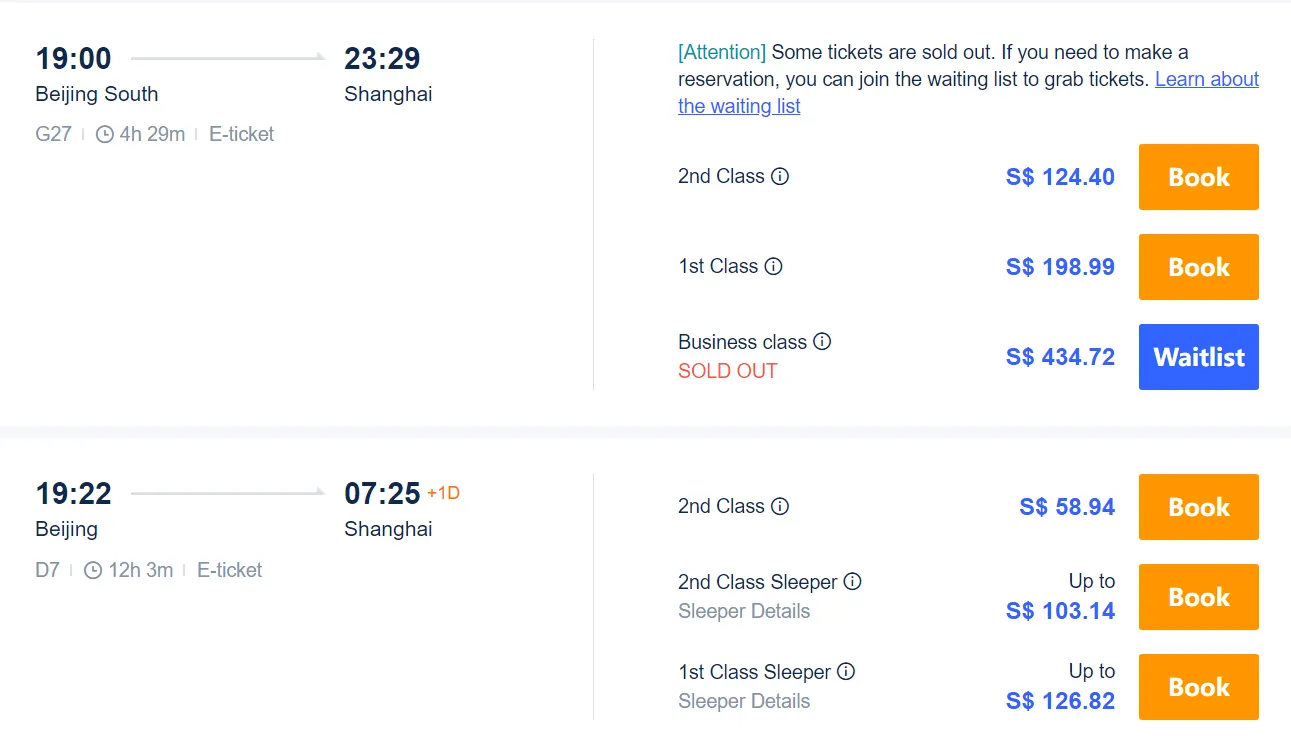
2. Select your departure time, type of train and seat class. You can filter China bullet train at this step.
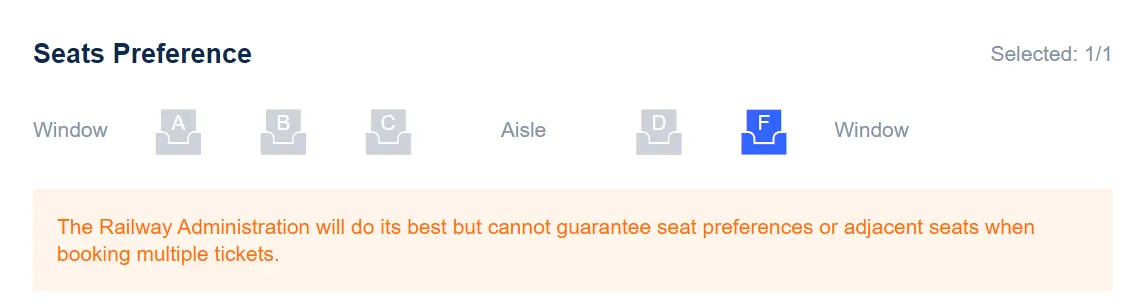
3. Fill in your personal information, including passage information, contact information and seat preference. You can select the China bullet train seat here if available.
4. Make the payment.
5. Receive your e-ticket.
Book China train tickets at the station
Arrive at least 30-60 minutes before departure for security checks and ticket inspections. Pass through security checks, including baggage scanning and sometimes a personal body check.
Check the information screens for your train number and corresponding waiting gate. Boarding usually starts 15-30 minutes before departure. Listen for announcements in Chinese and English, and follow signs to your platform at China bullet train station.
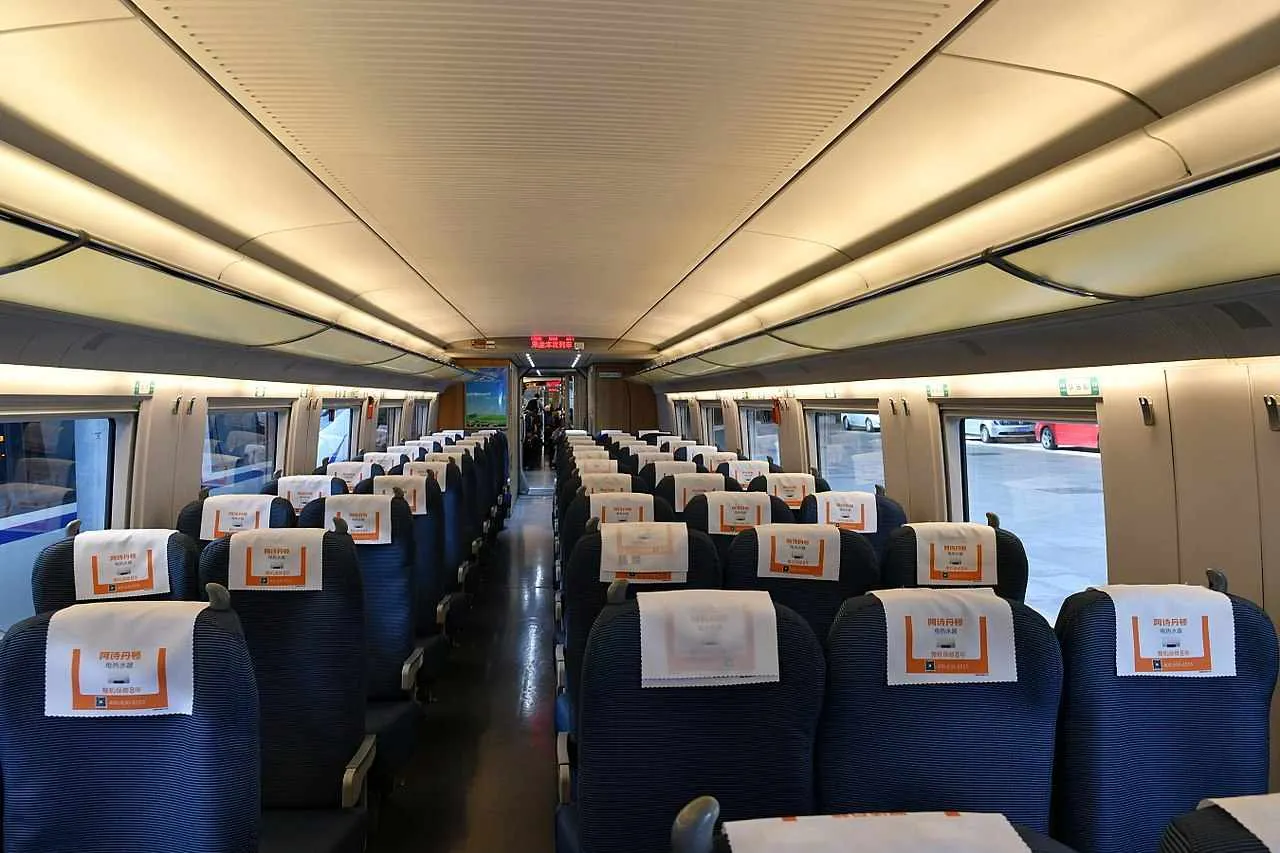
Have your ticket and identification ready for inspection at the entrance and boarding gates. Train carriages are clearly numbered. Match the number on your ticket with the carriage number and find your assigned seat or sleeper berth.
Place larger baggage in the designated storage areas at the end of each carriage or under the seats. Then you can relax and enjoy the journey!
Source: Wikipedia
Travelling by high speed train China offers a range of amenities to ensure a comfortable journey.
Most high-speed trains feature a dining car offering Chinese meals, snacks, and beverages. Trolley services also pass through the carriages selling food and drinks. You can bring your own food and drinks onboard as well.
High-speed trains are equipped with power outlets at each seat or in shared areas, allowing you to charge electronic devices. Many trains also offer free Wi-Fi.
Many trains have clean restrooms, including both Western-style and squat toilets. Some trains also provide facilities for passengers with disabilities.

Source: Wikipedia
China's vast train network connects numerous regions, offering scenic and efficient travel experience. Here are some popular routes of high speed train China:
Route | Distance | Travel Time | Book Tickets |
1,318 km (819 mi) | About 4.5 hours | ||
2,298 km (1,428 mi) | About 8-10 hours | ||
140 km (87 mi) | About 30 minutes | ||
169 km (105 mi) | About 45 minutes | ||
643 km (400 mi) | About 4-5 hours | ||
3,070 km (1,910 mi) | About 36 hours |

Travelling by high speed train China offers more than just efficient transportation, but also offers a unique perspective on the rich history and cultures, making high speed train China travel an unforgettable memory. Book your China train tickets now to explore the mysterious, vast, and beautiful country!
 950773 booked





![Beijing Mutianyu Great Wall round-trip bus [departure time slots 7:30 | 8:30 | 9:30 | 12:00 | 15:30 optional multilingual Russian/Spanish + includes shuttle ticket + upgrade to private charter available]](https://ak-d.tripcdn.com/images/0352e12000ccyef751C18_C_568_320.jpg)

![Beijing Mutianyu Great Wall 1-Day Tour [VIP Private Charter ◆ Door-to-Door Pickup/Includes Admission Ticket & No Shopping]](https://ak-d.tripcdn.com/images//0580u12000mzn0c4q2CAB_C_568_320.jpg)