






















Trip.com offers you a simple and secure way to book high-speed rail within China online. Now, our Go China campaign - in collaboration with Jackie Chan, Global Ambassador for China Travel - brings you special discounts, so you can discover this one-of-a-kind destination for less.

Thanks to China's Gaotie high-speed rail, travelling between the country's must-visit cities couldn't be easier. These modern bullet trains reach speeds of up to 217 miles per hour, meaning you could have breakfast in Beijing and make it into Shanghai in time for lunch.

Best of all, booking your China high-speed trains is a breeze on Trip.com. You can book, change, and cancel your tickets 100% online from your home country, in your home language, and in your home currency.

China's 30-day visa-free policy for international passengers

China's 30-day visa-free policy for international passengers

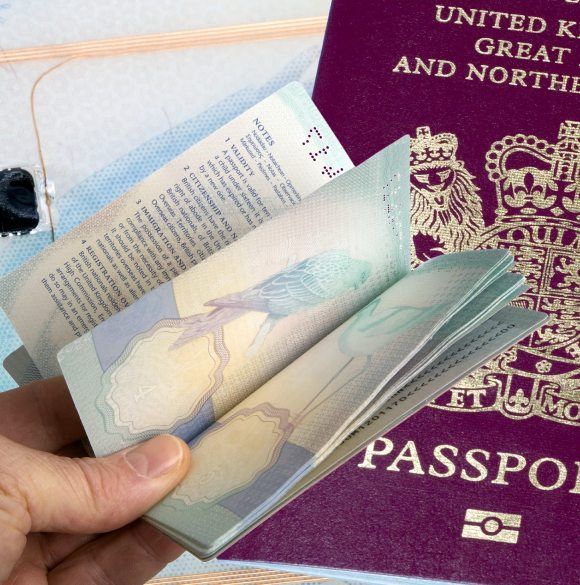
Citizens of many countries in Europe and the Americas - now including the UK and Canada - can travel for 30 days visa-free to China.

If you hold a passport from the list of countries below, you can now spend a whole month exploring the wonders of this incredible country.

Andorra, Argentina, Australia, Austria, Bahrain, Belgium, Brazil, Brunei Darussalam, Bulgaria, Canada, Chile, Croatia, Cyprus, Denmark, Estonia, Finland, France, Germany, Greece, Hungary, Iceland, Ireland, Italy, Japan, Kuwait, Latvia, Liechtenstein, Luxembourg, Malta, Monaco, Montenegro, Netherlands, New Zealand, North Macedonia, Norway, Oman, Peru, Poland, Portugal, Republic of Korea, Romania, Russian Federation, Saudi Arabia, Slovakia, Slovenia, Spain, Sweden, Switzerland, United Kingdom of Great Britain and Northern Ireland, Uruguay

Simply book your flights and - if you're visiting for business, tourism, family/friends visit, exchange, or transiting through - you'll get a visa on arrival. Just remember, these rules can change at any time, so be sure to double-check on the official government website

Additionally, if you hold a U.S. passport, you can still explore China visa-free for up to 240 hours. Please check the official guidelines from the Chinese Embassy in the U.S. for specific requirements.

Popular Chinese train routes

China's high-speed rail network covers more than 31,000 miles and links the coastal metropolises with the peaceful mountain towns and ancient capitals inland. Whether you've set your sights on Hong Kong, Xi'an, or the Great Wall, the vast bullet train network means you can explore the country's most enchanting destinations. Here are just a handful of the most popular routes:

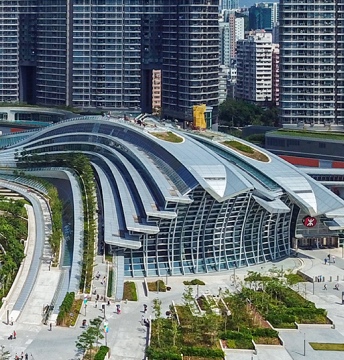
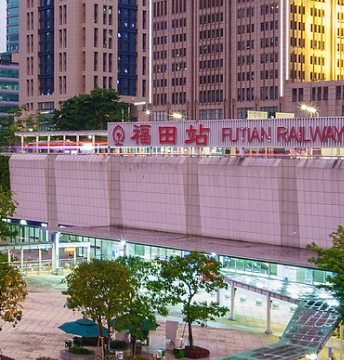
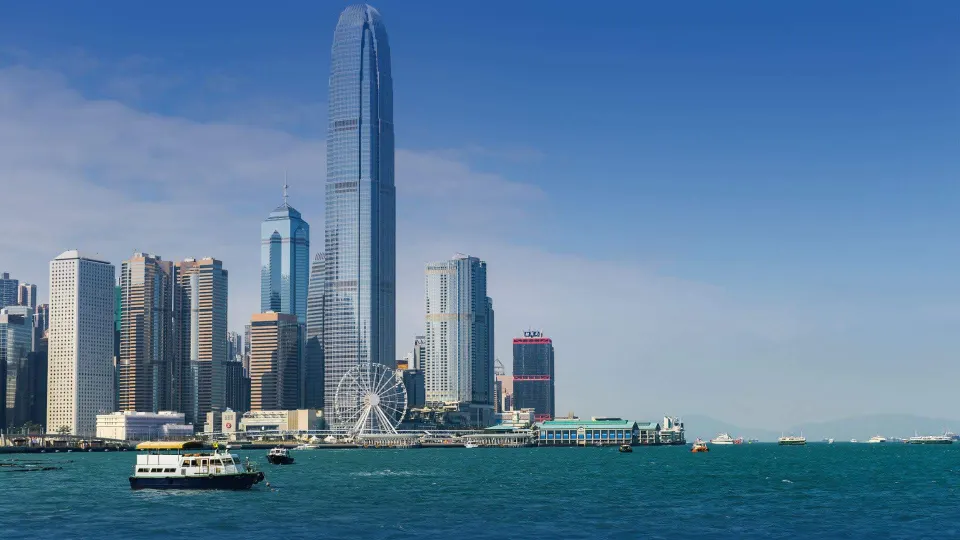
  1. Hong Kong to Mainland China. From Hong Kong West Kowloon, you can be in Shenzhen Futian in 14 minutes and Guangzhou South in just under an hour, so a day trip across the border is easy to fit in.
  2. Beijing to Shanghai. Trains from Beijing South to Shanghai Hongqiao take around 4.5 hours to complete the 807-mile journey. Book a morning departure, and you'll have the whole afternoon on the Bund.
  3. Xi'an to Chengdu. It's a 3.5-hour ride through the Qinling tunnels from Xi'an North to Chengdu East. This is the ideal next stop after the Emperor Qinshihuang's Mausoleum Site Museum, and Chengdu's panda base is a metro ride from the station.
  4. Great Wall and Zhangjiajie.As Beijing North to Badaling Changcheng takes just 40 minutes, you can easily take a day trip to the unmissable Great Wall. For the sandstone pillars of Zhangjiajie, trains from Changsha reach Zhangjiajie West in around 1h 45m.

China train types and seat classes

These are the different types you can book in China:

High-speed trains:

  1. G (Gaotie – 高铁): The fastest bullet train. Reaches speeds of up to 300–350 km/h (186–217 mph) on dedicated high-speed lines.
  2. D (Dongche – 动车): High-speed trains that travel between 200–250 km/h (124–155 mph). They operate on both high-speed and upgraded conventional lines.
  3. C (Chengji – 城际):Short-hop intercity trains between neighbouring cities, like Beijing–Tianjin. Some run at 350 km/h (186–217 mph) on the same track as G trains.

Classic trains:

  1. Z (Zhida – 直达): Direct express trains that reach speeds of up to 160 km/h (99 mph), with few stops between major cities. Mostly overnight services with soft and hard sleeper carriages.
  2. T (Tekuai – 特快): Express services running up to 140 km/h (87 mph) with a choice of hard seats and sleeper berths. Only stop at larger stations.
  3. K (Kuaisu – 快速): Fast trains that make more stops along the route. Standard options include hard seats and hard sleepers. Top speeds of up to 120 km/h (75 mph).

You'll be able to see your train type in the Journey Planner search results on Trip.com.

High-speed trains (G/D/C)
Classic trains (Z/T/K)
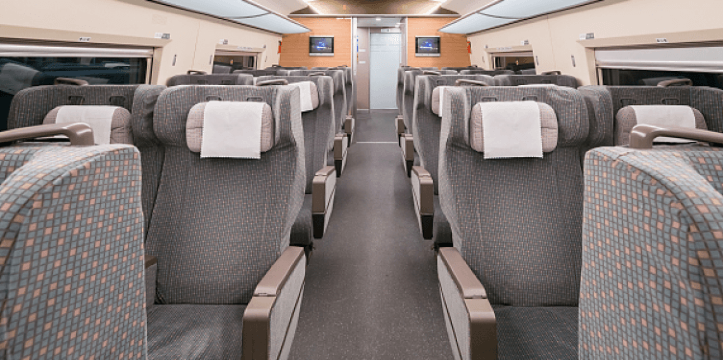
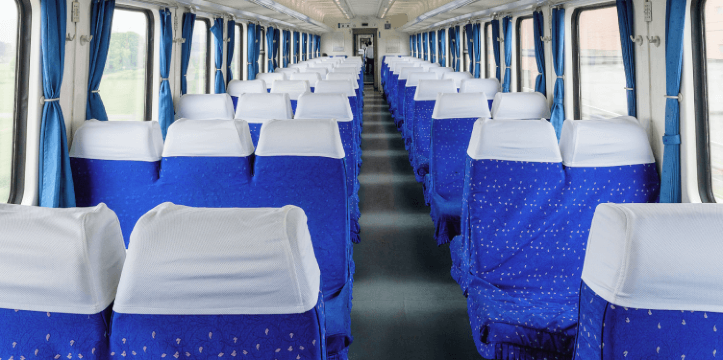
  • 2nd Class

    2nd Class

    icon 3+2 seating layout

    icon Adjustable backrest

    icon Spacious legroom

    icon Tray table or folding table

    icon Luggage rack

    icon Air conditioning

    icon Plug Sockets

  • 1st Class

    1st Class

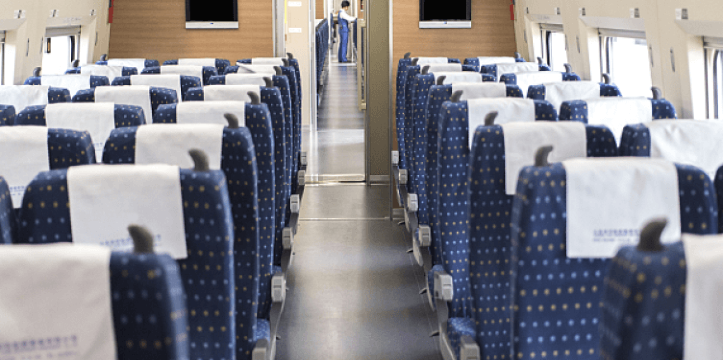
    icon 2+2 seating layout

    icon Adjustable backrest

    icon Spacious legroom

    icon Headrest

    icon Tray table

    icon Luggage rack

    icon Air conditioning

    icon Plug Sockets

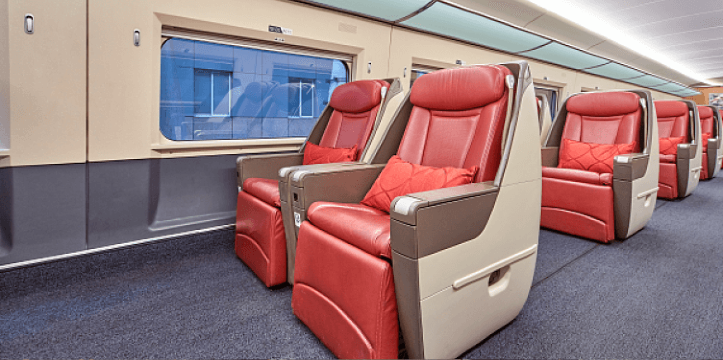
  • Business class (selected routes only)

    Business class (selected routes only)

    icon 2+1 or 1+1 seating layout

    icon Leather seats

    icon Electrically adjustable backrests

    icon Spacious legroom

    icon Headrest

    icon Blanket

    icon Slippers

    icon Tray table

    icon Air conditioning

    icon Free meals

    icon Plug Sockets (selected trains)

    icon Entertainment screen, headphones, and other amenities (selected trains)

    icon VIP lounge (selected trains)

  • 2nd Class sleeper (selected D train routes only)

    2nd Class sleeper (selected D train routes only)

    icon Open 6-person compartment

    icon 3-tier berths

    icon Bedding

    icon Reading light

    icon Baggage storage

    icon Tray table

    icon Air conditioning

    icon Plug Sockets

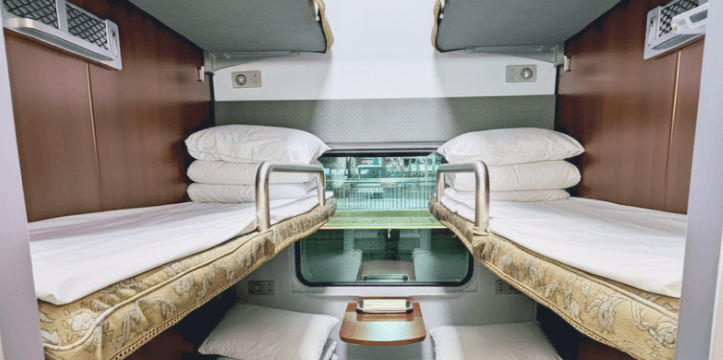
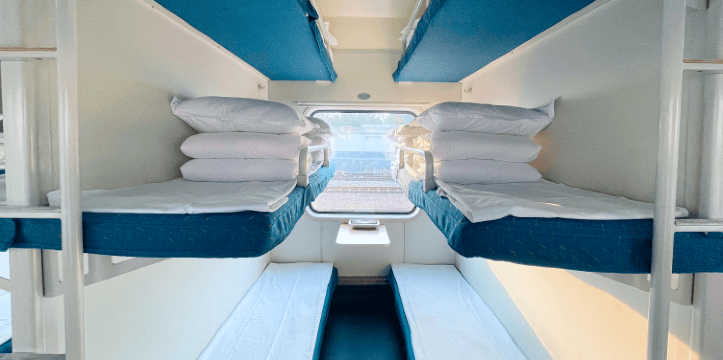
  • 1st class sleeper

    1st class sleeper

    icon Private four-person cabin

    icon Double-deecker berths

    icon Bedding

    icon Reading light

    icon Baggage storage

    icon Tray table

    icon Air conditioning

    icon Charging ports

  • Hard seat

    Hard seat

    icon 3+2 seat layout

    icon Small table or folding table

    icon Luggage rack

    icon Air conditioning

    icon Plug Sockets (in some carriages)

  • Hard sleeper

    Hard sleeper

    icon Open-plan 6-person compartment

    icon 3-tier berths

    icon Bedding

    icon Luggage rack

    icon Tray table

    icon Folding seat

    icon Air conditioning

    icon Plug Sockets

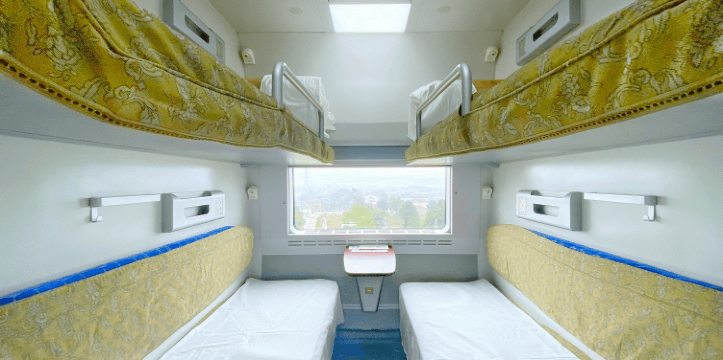
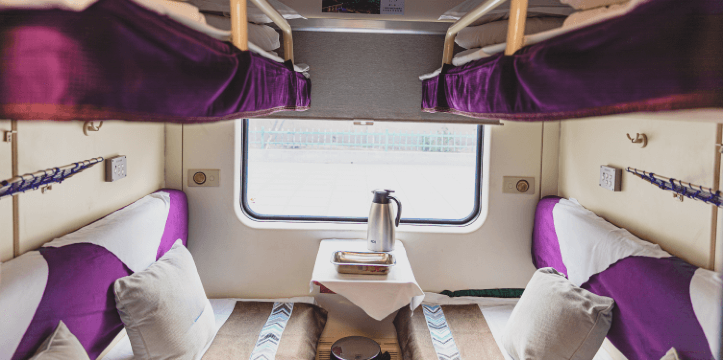
  • Soft sleeper

    Soft sleeper

    icon Private 4-person cabin

    icon Double-decker berths

    icon Bedding

    icon Baggage storage

    icon Tray table

    icon Air conditioning

    icon Plug Sockets

How to book China train tickets

Below, you'll find a step-by-step guide for booking China train travel in English, or another language, from your home country and in your home currency on Trip.com.

Before booking, it's important to know that train tickets in China go on sale 15 days before departure. For busy routes, like Beijing to Shanghai and Hong Kong to Guangzhou, be sure to book as soon as tickets are released, as they're known to sell out.

Keep in mind, too, that Chinese train tickets are tied to real-name registration, so your passport number has to be typed exactly as it's printed, character for character. The number you book with is the number you'll show at the barrier to board.

Follow these steps to book China train tickets online in your own language and currency:

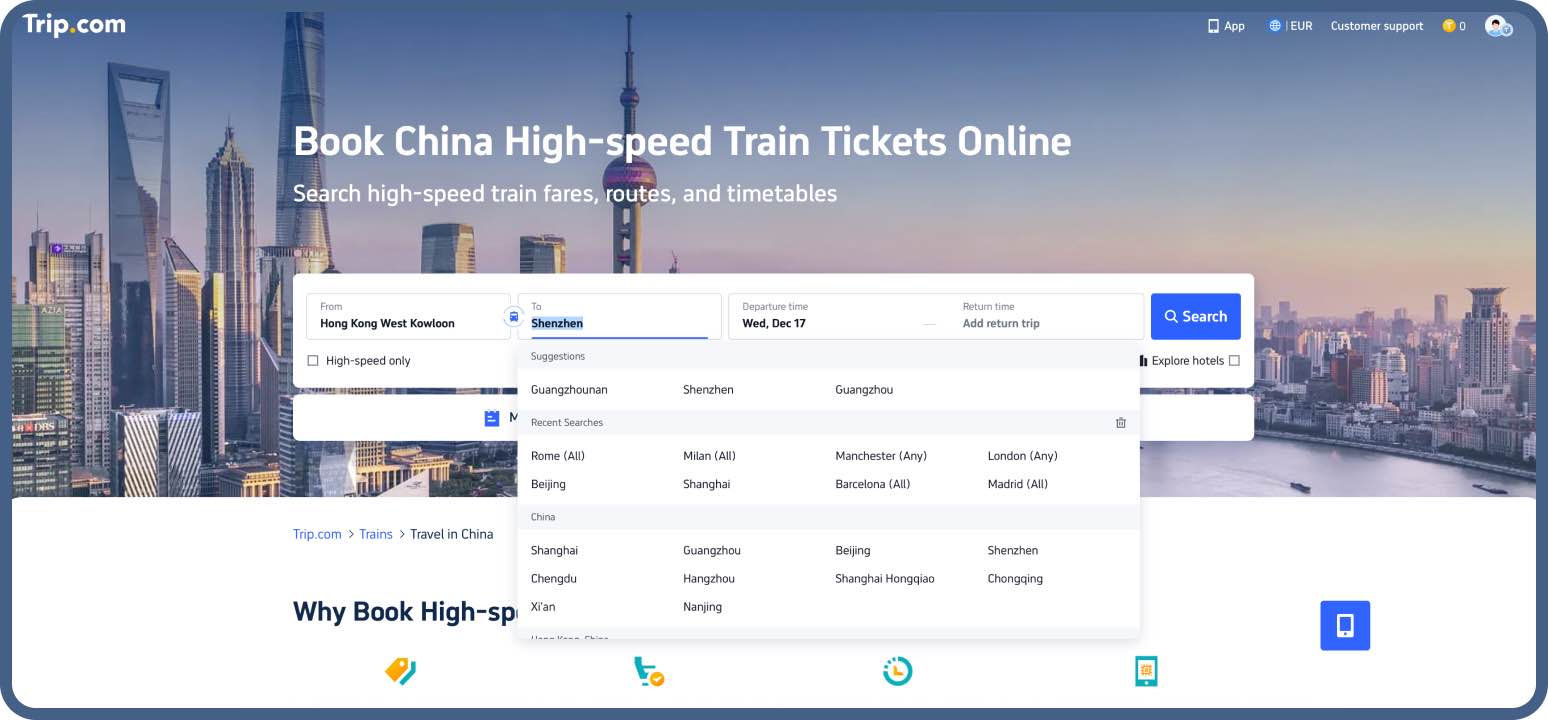
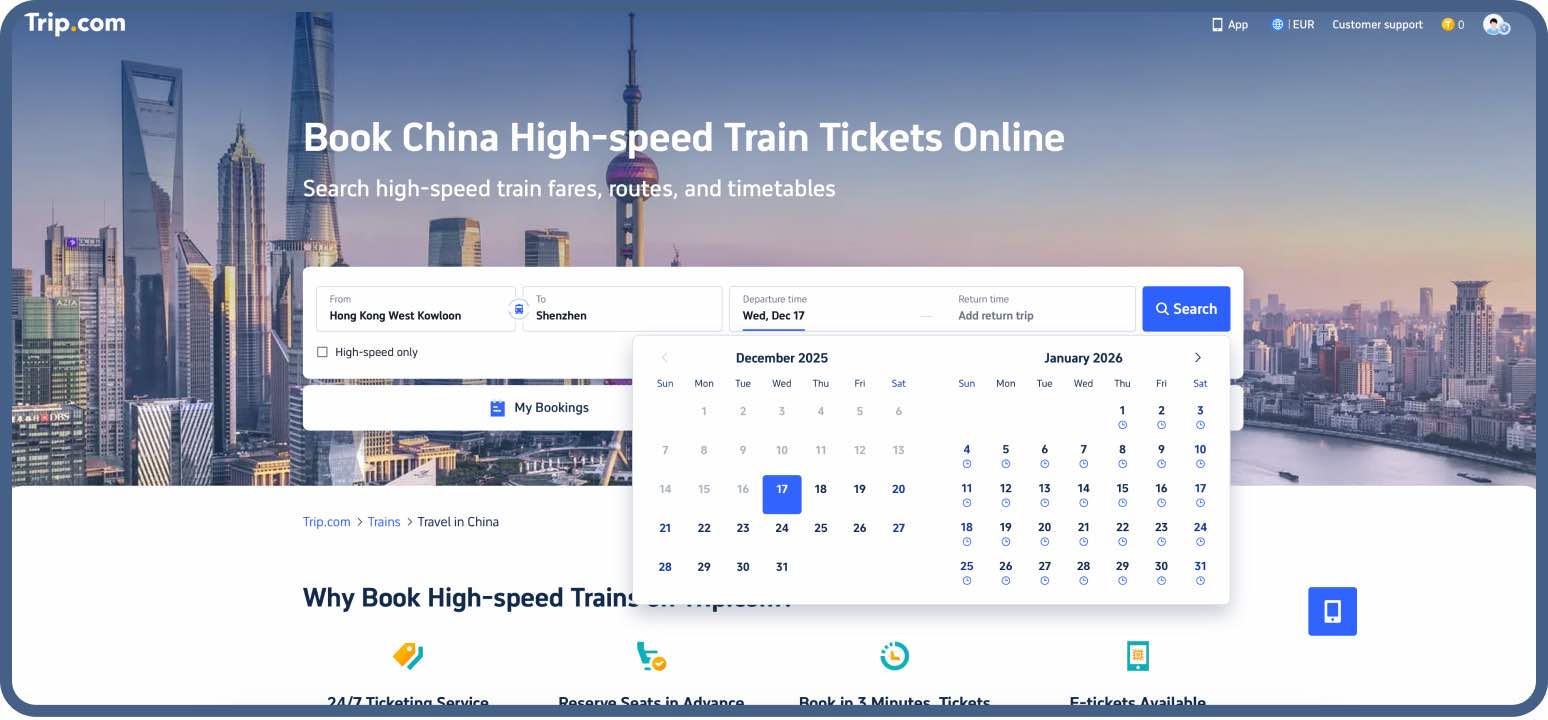
<span>Step 1</span> Select departure and arrival stations

Step 1 Select departure and arrival stations

If there are multiple stations in a city, check that the station and city are correct before confirming.

<span>Step 2</span>Select departure date

Step 2Select departure date

Choose a date from the calendar; for tickets that aren't available yet, come back later or check the release calendar.

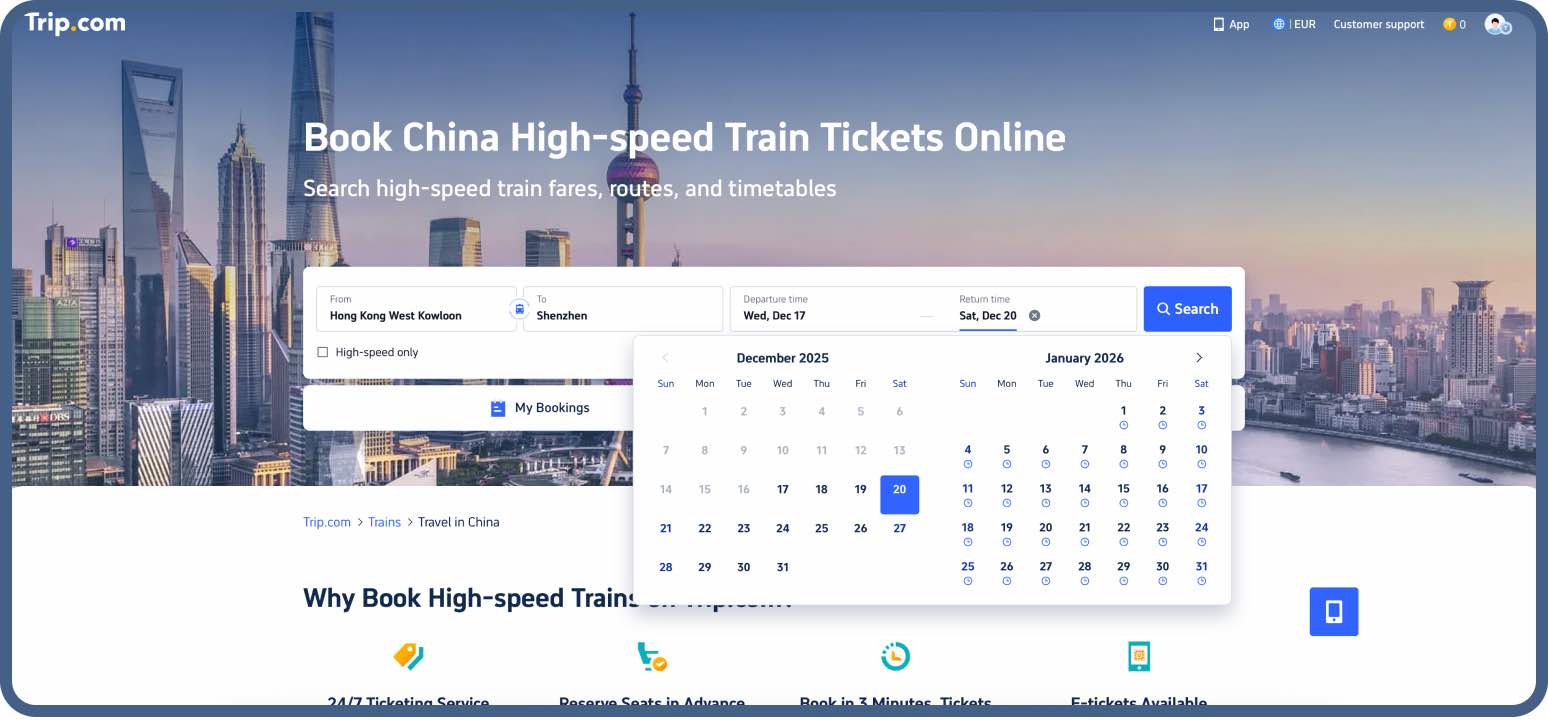
<span>Step 3</span>Select return date (if applicable)

Step 3Select return date (if applicable)

If you're booking a round trip, select the date you wish to return on.

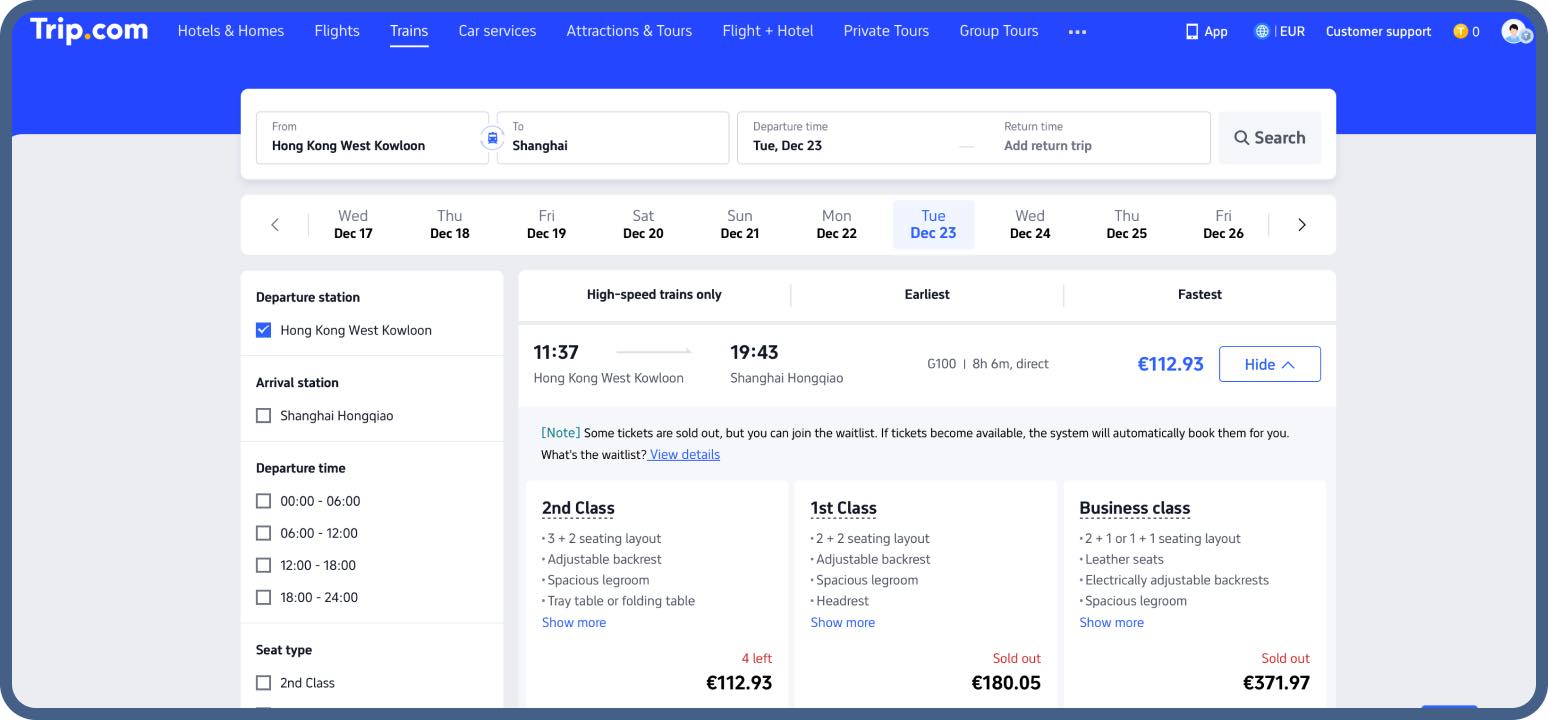
<span>Step 4</span>Choose your train and seat class

Step 4Choose your train and seat class

Select the most suitable train from the list and your desired seat class.

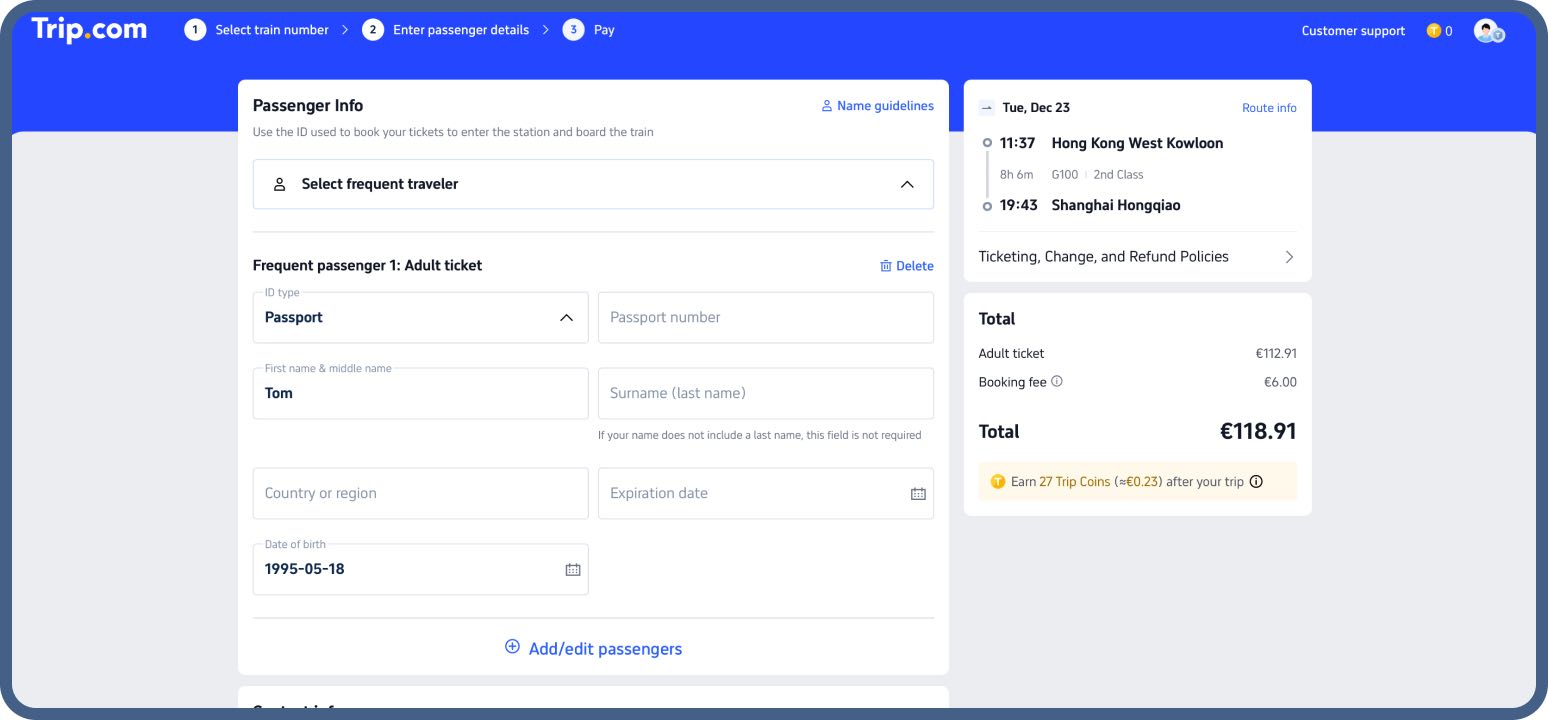
<span>Step 5</span>Enter information

Step 5Enter information

Enter passenger and contact information. Enter your passport number exactly as it appears on your passport, with no spaces or missing characters.

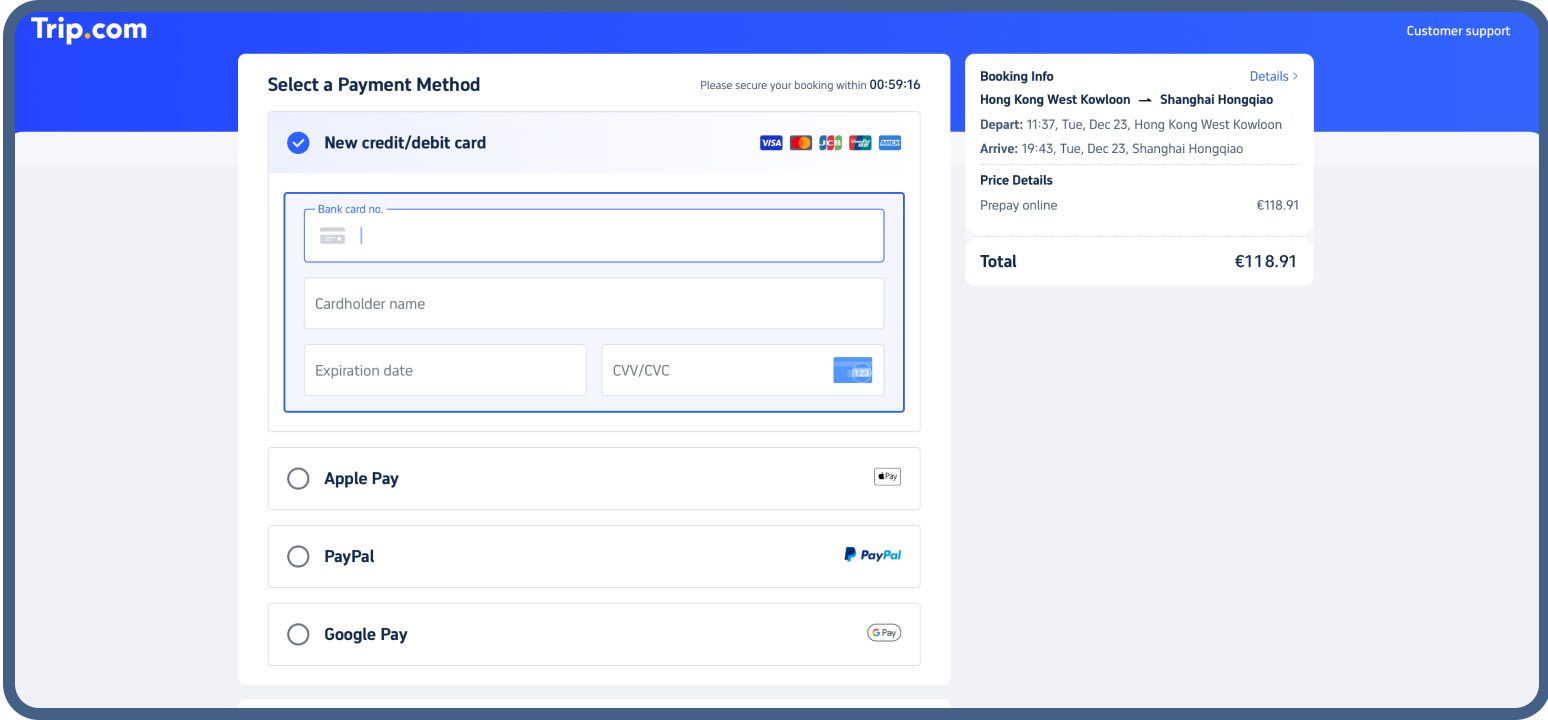
<span>Step 6</span>Choose payment method

Step 6Choose payment method

Multiple payment methods are available - select your preferred method.

Hong Kong to Mainland China travel guide

Hong Kong to Mainland China travel guide

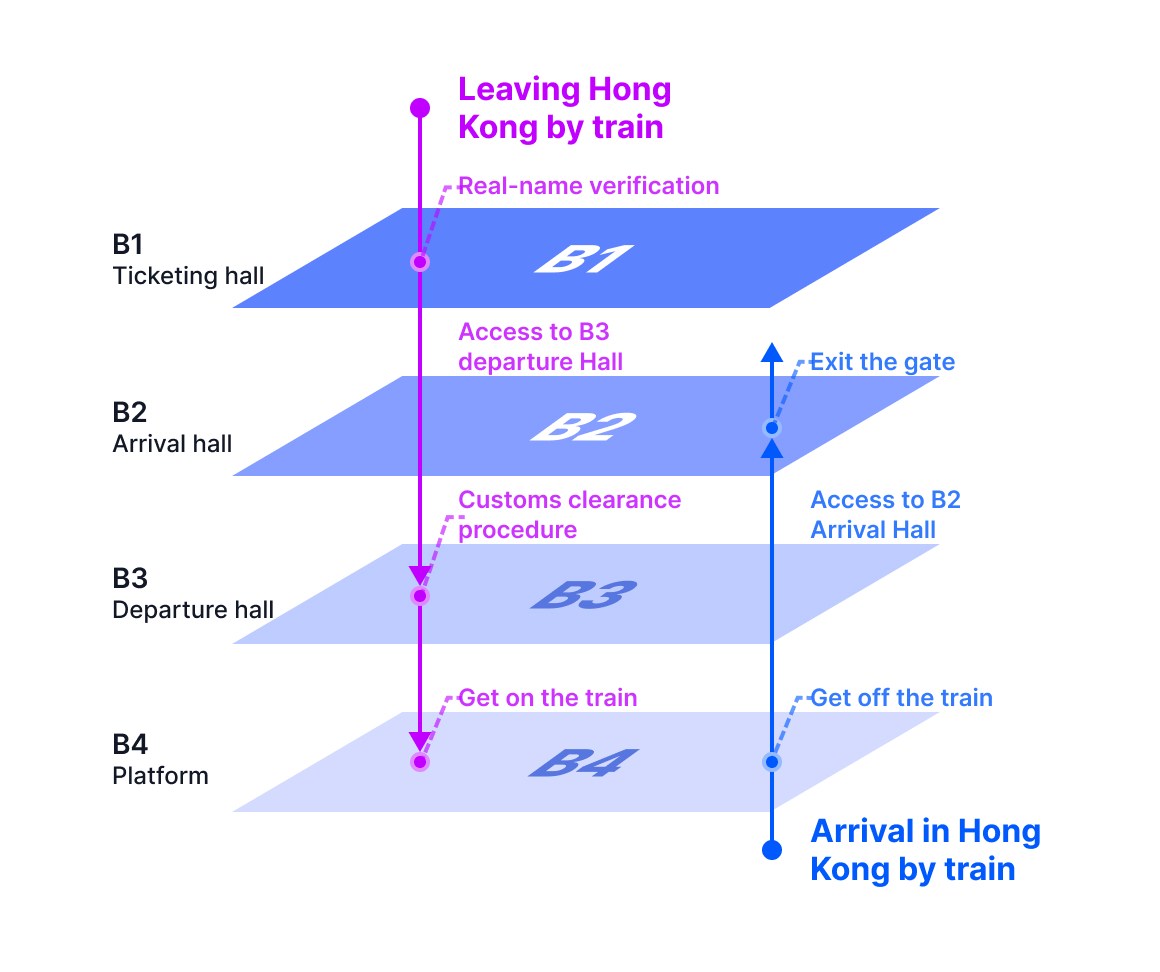
Hong Kong West Kowloon Station Layout

Ground level: Here you'll find the main waiting area, convenient metro(MTR, Mass Transit Railway)/bus connections, and pick-up/drop-off points, the Green Plaza public space, and several stores and restaurants.

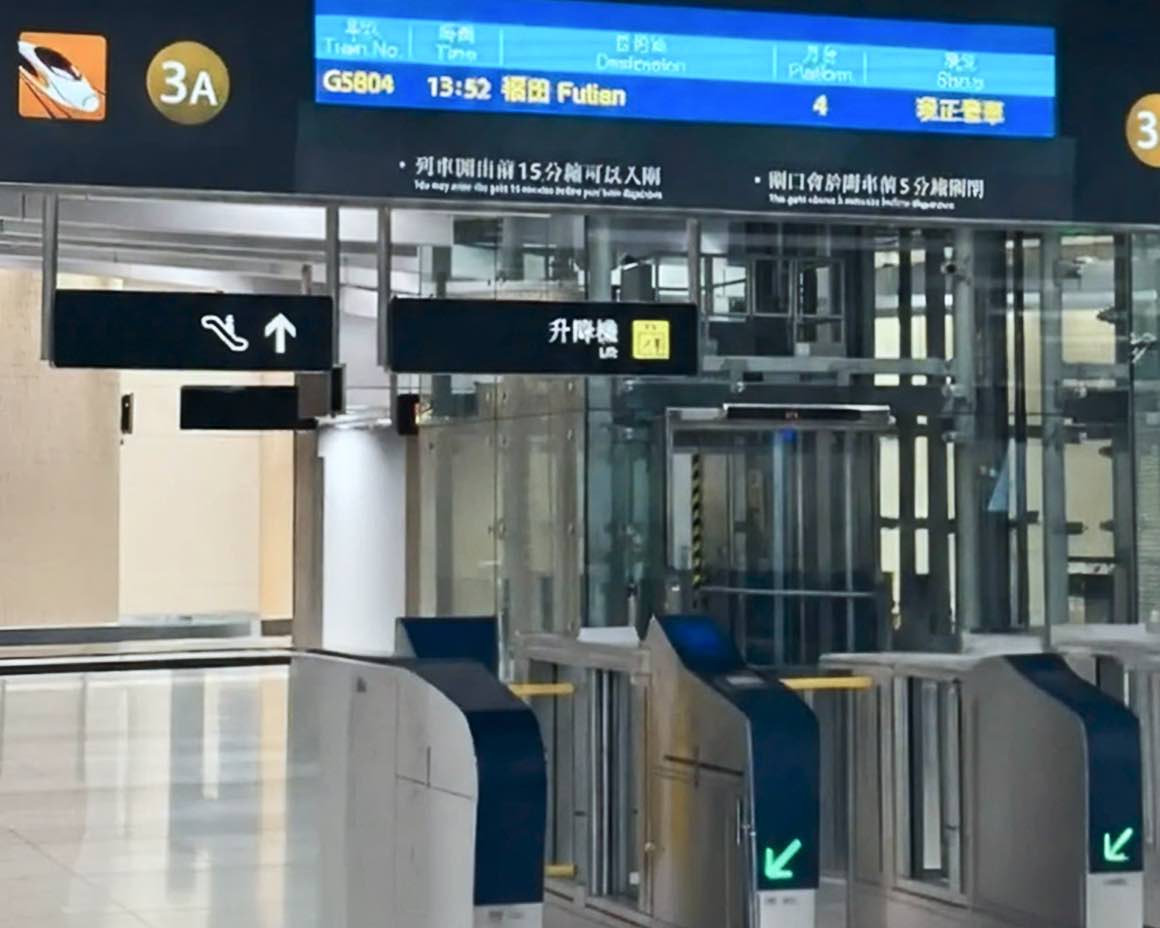
B1 level: This is where the ticketing concourse is located. Various checks, including ID/e-ticket verification and security screenings, take place at the self-service gates and staffed counters.

B2 level: At the arrival hall, passengers go through Mainland departure or Hong Kong arrival clearance procedures.

B3 level: This floor contains the departure hall, where passengers complete border clearance procedures for Mainland arrivals and Hong Kong departures.

B4 level: Passengers board/alight trains at this platform level. Waiting areas, seating, clear signage, and emergency equipment are also provided.
Hong Kong to Mainland China travel guide

Hong Kong West Kowloon Station: Departure Guide

Step 1: ID check and ticket verification

Present your ID at the self-service gate or counter.

Step 2: Security check and immigration procedures

Complete luggage checks, then immigration procedures in the departure hall.

Step 3: Boarding

Enter the gate with your ID/QR code and board the train.

Step 4: Arrival at a Chinese mainland station

Use your ID/QR code to exit the gate.

Navigating train stations in China

Navigating a Chinese train station is simple once you know how they work - they just might be a bit different from those you're used to at home. Here's what you need to know:

Arriving at the station

Arrive at least 45 to 60 minutes before your train departs to leave enough time for security. Stations in China require security screening and a passport check before you reach the concourse.

Understanding station names

Station names follow two patterns in China and understanding them helps you book and get to the right one.

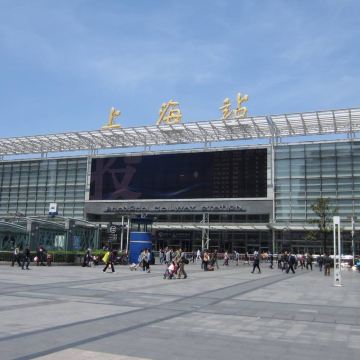
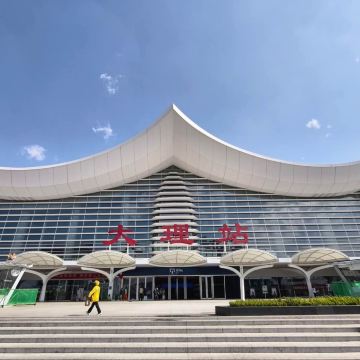
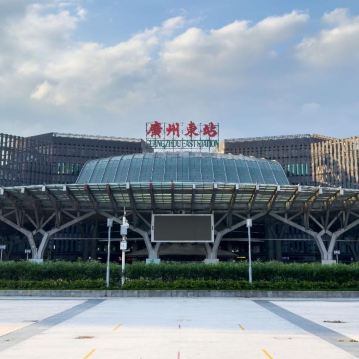
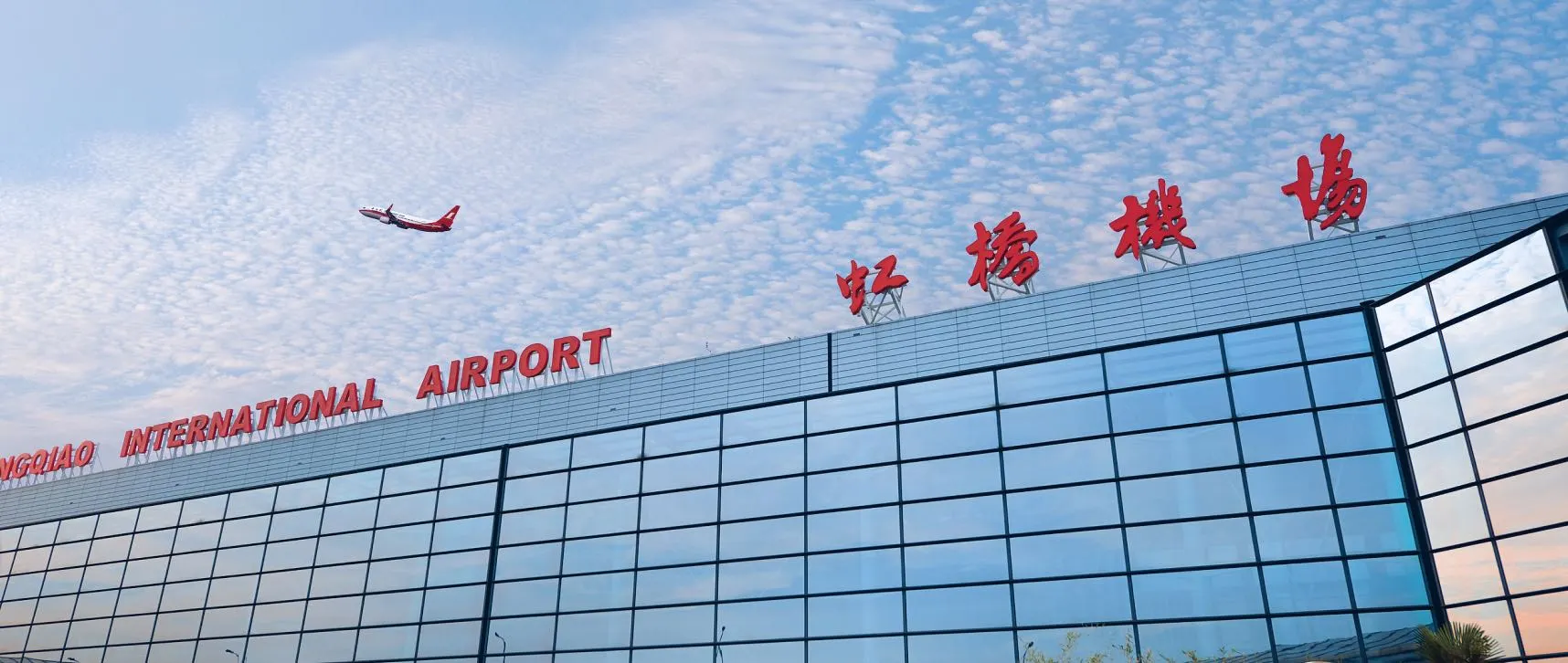
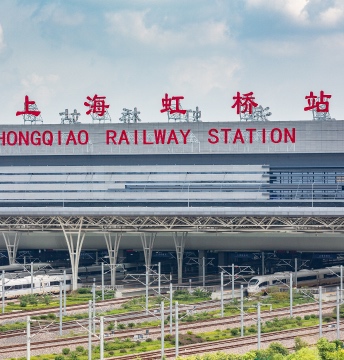
  1. Many stations are named "[City Name] + [Area Name]", like Shanghai Hongqiao Station, which is next to Terminal 2 of Shanghai Hongqiao International Airport.
  2. Others use "[City Name] + [Direction in Pinyin]". Beijingnan, written as Beijing Nan, is Beijing South Station, and Xi'anbei, written as Xi'an Bei, is Xi'an North Station.
DirectionChinese PinyinChinese
Northbei北
Southnan南
Eastdong东
Westxi西

The paperless e-ticket system

Train travel in China uses a paperless e-ticket system, so there's nothing to print or collect. Instead, your passport number acts as the ticket, so you'll show this to board. Residents of Hong Kong, Macao, and Taiwan can use their valid ID in the same way.

You'll need to scan your physical passport at the automated turnstiles when you enter the station, then again at the boarding gates for your platform. If the machine doesn't recognise your foreign passport, see staff next to the barriers.

Train stations near me

Luggage on Chinese trains

Luggage on Chinese trains

The luggage allowance on trains in China is 20 kg per adult and 10 kg per child, and each piece must be no more than 130 cm in length (length + width + height).

At most stations, your bags go through a security scanner before you reach the platform, so give yourself a few extra minutes on arrival. Aerosol cans and pocket knives are not allowed.

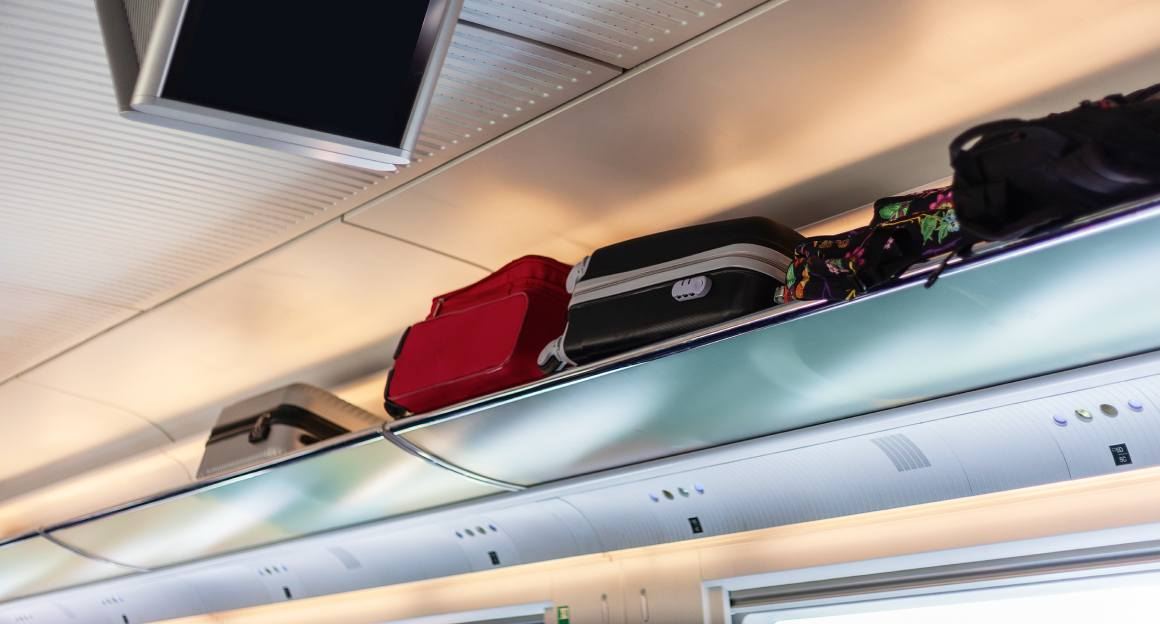
Once you're on board, there are overhead racks above the seats for smaller cases, plus larger storage areas next to the doors at either end of most carriages.

Airport transfers by trains

Here's what you need to know about catching the train from the country's major airports:

  • Explore Hong Kong Airport Express

    Hong Kong International Airport (HKG)

    1. Hong Kong Airport Express: The fastest route, taking passengers directly to Central (Hong Kong Station) in under 30 minutes.
    2. MTR Network Transfers: Alight at Tsing Yi Station via the Airport Express for seamless transfers to the New Territories and Kowloon.
    3. High-Speed Rail Access: Take the Airport Express to Kowloon Station, then transfer to Hong Kong West Kowloon Station for high-speed rail links to mainland China.
  • View Guangzhou Baiyun Airport travel guide

    Guangzhou Baiyun International Airport (CAN)

    1. Guangzhou Metro Line 3: Connects all terminals directly to the central business district (Tiyu Xilu) and major city centre hubs.
    2. Intercity High-Speed Rail: Direct train departures from Baiyun Airport North, South, and East stations to regional Guangdong destinations.
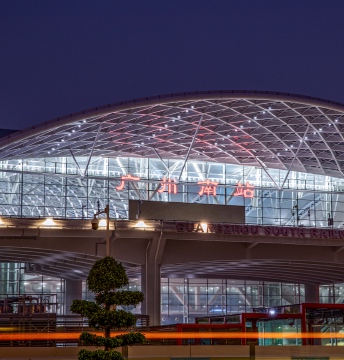
    3. National Rail Access: Straightforward metro transfers to Guangzhou South Railway Station to catch cross-country high-speed trains.
  • View Beijing Daxing Airport travel guide

    Beijing Daxing International Airport (PKX)

    1. Daxing Airport Express: A rapid transit line providing a direct, high-speed link to Caoqiao Station in the southern city centre.
    2. Direct Rail Access: The intercity railway links the airport directly to major hubs like Beijing West and Beijing Fengtai railway stations in under 30 minutes.
    3. Beijing Subway Integration: Easy transfers from Caoqiao Station onto Subway Line 10, granting comprehensive access to all central Beijing districts.
  • View Beijing Capital Airport travel guide

    Beijing Capital International Airport (PEK)

    1. Capital Airport Express: Provides a dedicated, direct link from Terminals 2 and 3 into the city at Dongzhimen and Beixinqiao.
    2. City Centre Metro Transfers: Connect at Dongzhimen for Metro Lines 2 and 13 to reach key central destinations like Tiananmen and CBD.
    3. Railway Hub Access: Take the Capital Airport Express to the city centre, with convenient metro transfers connecting to Beijing South Railway Station for onward travel.
  • View Shanghai Hongqiao Airport travel guide

    Shanghai Hongqiao International Airport (SHA)

    1. Metro Lines 2 & 10: Direct access from Terminal 2 to the heart of city centre Shanghai, including People's Square and East Nanjing Road.
    2. Integrated High-Speed Hub: Terminal 2 offers pedestrian access to the adjacent Shanghai Hongqiao Railway Station for national high-speed train departures.
    3. Cross-City Airport Link: Rapid transit connections to quickly navigate from the western Hongqiao hub across the city to Pudong.
  • View Shanghai Pudong Airport travel guide

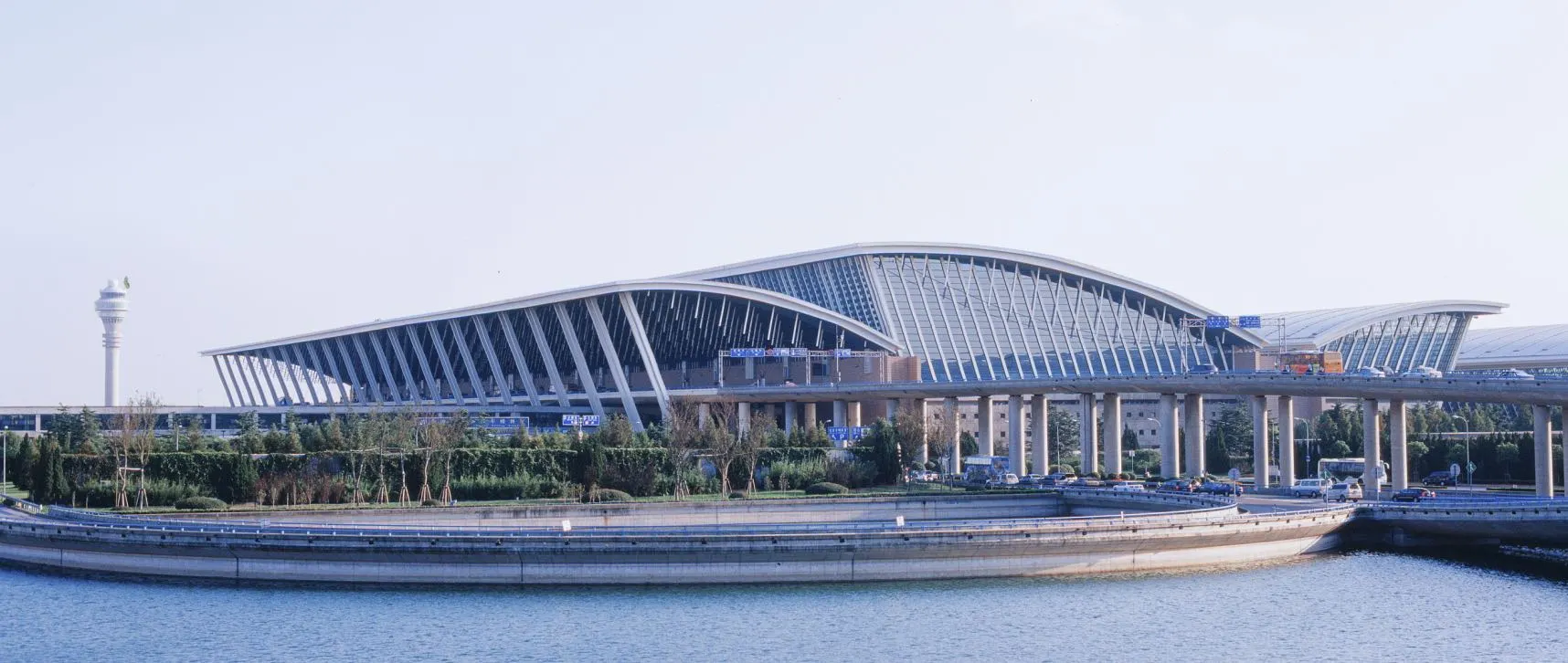
    Shanghai Pudong International Airport (PVG)

    1. Shanghai Maglev Train: An ultra-high-speed magnetic levitation train offering transit to Longyang Road Station in just 8 minutes.
    2. Metro Line 2: A comprehensive, direct metro route cutting through city centre Shanghai, from Pudong all the way to Hongqiao.
    3. Airport Link Line: A dedicated rapid railway connection providing a fast, direct transit corridor between Pudong Airport and the Hongqiao transport hub.

FAQs about China train tickets

  • Can international travellers book China train tickets on Trip.com?

    Yes, non-Chinese citizens can book China train tickets on Trip.com with a foreign passport, a Home Return Permit, or a Taiwan Travel Permit. You'll simply need to show your passport or ID document to board. Since the Trip.com site and app are available in multiple languages and accept multiple currencies, booking China train tickets couldn't be easier!
  • How can I change or cancel my China train tickets on Trip.com?

    To change or cancel your China train tickets on Trip.com, go to "My Bookings" in the app or on the website and follow the steps. Just keep in mind that China Railway sets the refund fees, and they go up the closer you get to departure.

    • 8 or more days before: free
    • 48 hours to 8 days before: 5% of the fare
    • 24 to 48 hours before: 10%
    • Under 24 hours before: 20%

    These figures can change and be sure to always double-check the terms and conditions before booking.

  • Can I choose my preferred seat (window or aisle) when booking on Trip.com?

    When booking China train tickets on Trip.com, you can select your preferred seat type (window, aisle, or middle) and request to sit with your travel companions. Please note that seat allocation is managed directly by China Railway's central system. While we will submit your preferences and do our best to accommodate them, final seat selection cannot be guaranteed.

  • How can I pay for my booking on Trip.com?

    You can pay for your Trip.com booking using a credit/debit card, PayPal, Apple Pay, or Google Pay. You can also apply Trip Coins and Trip.com gift cards towards your fare. Most major currencies are accepted.

  • How far in advance should I book Chinese high-speed rail tickets?

    It's best to book Chinese high-speed rail tickets as soon as possible, as busy routes can book out fast. They go on sale 15 days before departure on the official 12306 system, but you can put in an Advance Reservation on Trip.com weeks or months ahead. The system then buys your tickets the moment the 15-day window opens.

  • Do I need a physical ticket to board China trains?

    No, you don't need a physical ticket to board China trains - the system uses paperless e-tickets, so there's nothing to print or pick up. All you need to do is show the same ID you booked with, use it at the gate to get onto the platform, and then again at the gate on the way out. You'll find your seat number in the Trip.com app under your booking.
  • Do international travellers or Hong Kong residents need to collect paper tickets before boarding?

    Foreign travellers and Hong Kong residents don't need to collect paper tickets before boarding. Your Home Return Permit or passport is your ticket. With a Home Return Permit, you can walk through the automatic gates, while some also read foreign passports, too. If it doesn't scan your passport, a member of staff can check your ticket and wave you through.

  • What ID documents are accepted for booking China train tickets?

    You can book China train tickets with any of these:

    • Mainland Travel Permit for Hong Kong and Macao Residents (Home Return Permit)
    • Mainland Travel Permit for Taiwan Residents (Taibaozheng)
    • Valid foreign passports

    Remember to type your name exactly as it appears on the document.

  • Do children need tickets to travel on China high-speed rail?

    Yes, children need a ticket on China high-speed rail. Tickets are now by age and no longer by height:

    • Under 6: free, one child per adult. They don't get their own seat, and you'll need to declare them and register their ID document when you book.
    • 6 to under 14: a child discount ticket at half the adult fare, with a seat of their own.
    • 14 and over: full adult fare. If you'd rather your under-6 had a seat, book them a child ticket instead. Children can't travel on their own.
  • What should I do if my preferred train route is sold out?

    If your preferred train route in China is sold out, Trip.com offers you two solutions to help:

    1. Waitlist: You'll pay a pre-authorisation on your card for your preferred train, and the system then automatically books a seat (and debits the amount you paid) if one becomes available. The authorisation will be cancelled and funds refunded if none become available.
    2. Smart transfer routes: Our system automatically finds the best connecting routes for you. If a direct train is sold out, you can take two or more connecting trains to reach your destination. For example, if there are no direct trains from Hong Kong West Kowloon to Xiamen, you can take a train to Shenzhen North and transfer to another train from there.