 3 booked



🔥Save More with Up to 5% OFF
Use our promo code to enjoy up to 5% OFF (up to S$3) on your attraction tickets, tours and eSIMs! Only for new users!


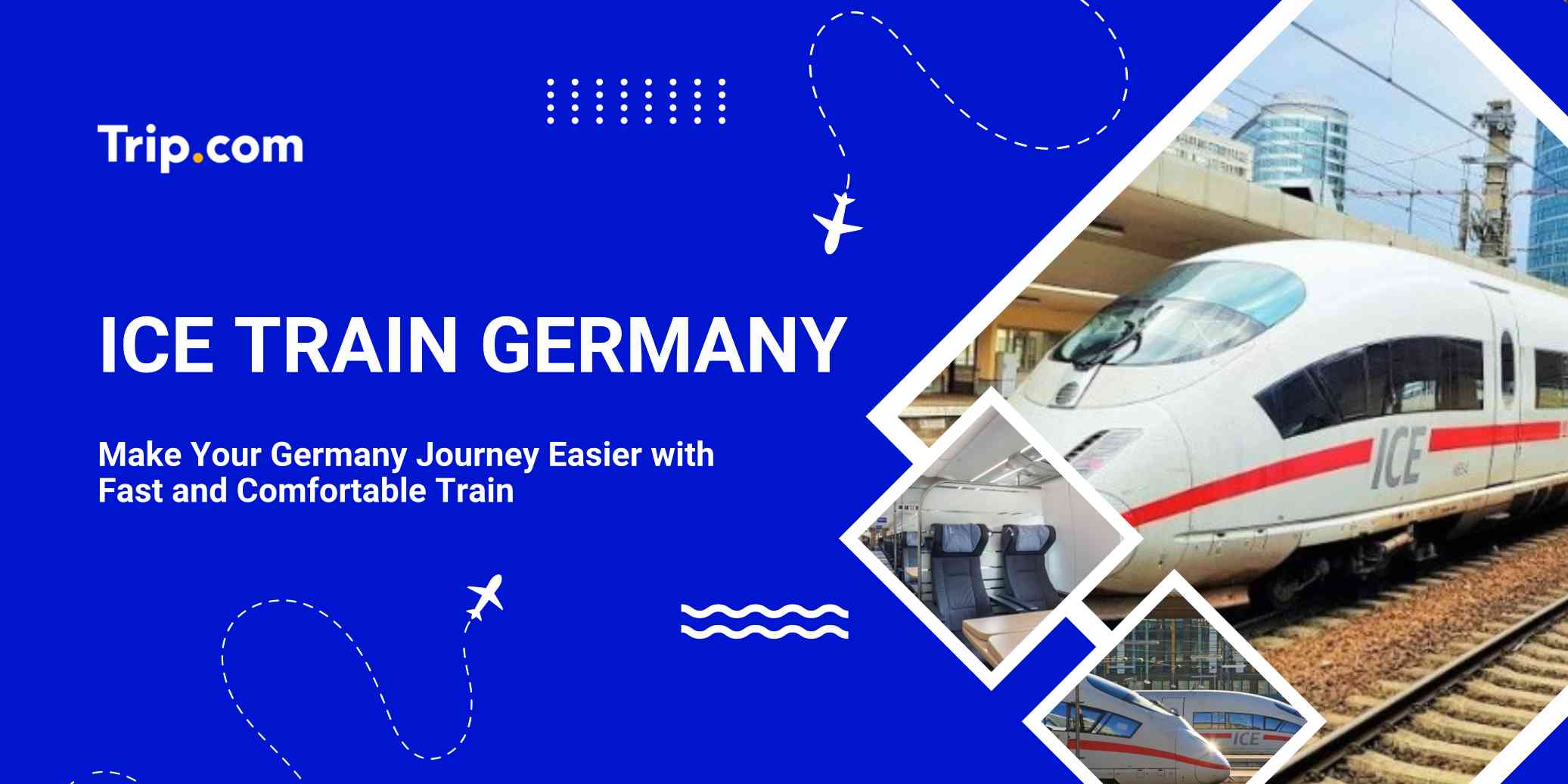
Travelling around Germany by trains is one of the easiest ways to explore the country especially if you are planning to visit several cities in one trip.
From Berlin's historic landmarks to Munich's traditional beer gardens, Germany's railway network makes getting between major destinations relatively straightforward.
For Singaporean travellers, the ICE train (Intercity Express) is one of the most convenient ways to travel between German cities.
Understanding how the ICE train works can help you save money, choose the right ticket and avoid confusion at train stations. Here's everything you need to know before booking your journey.
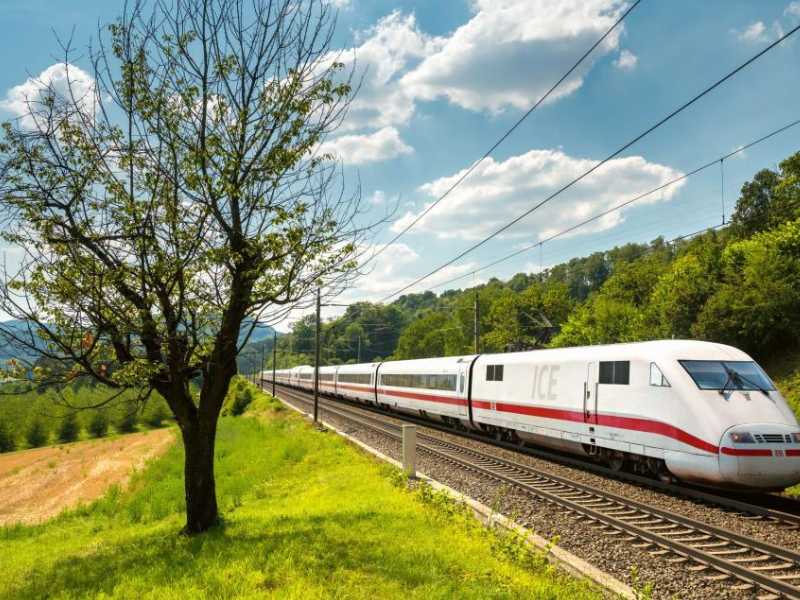
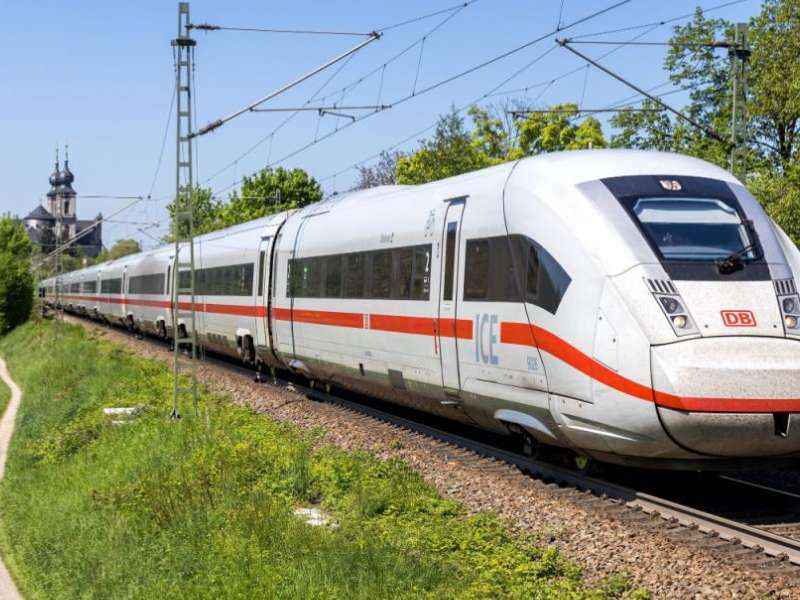
The ICE train, short for InterCity Express, is Germany's high-speed rail service operated by Deutsche Bahn (DB), the country's national railway company.
It connects major German cities such as Berlin, Munich, Frankfurt, Hamburg and Cologne, allowing passengers to travel between destinations without needing to take domestic flights or drive long distances.
Depending on the route and train model, ICE trains can reach speeds of up to 300 km/h. They are designed for intercity journeys, with comfortable seats, luggage storage, power sockets and free Wi-Fi.
Here is a quick overview:
Feature | Details |
|---|---|
Full name | InterCity Express (ICE) |
Train operator | Deutsche Bahn (DB) |
Train type | High-speed intercity train |
Maximum speed | Up to 300 km/h, depending on the train |
Main network | Germany and selected international routes |
Seating classes | 1st Class and 2nd Class |
Onboard facilities | Wi-Fi, power sockets, toilets and food services |
Ticket options | Super Sparpreis, Sparpreis and Flexpreis |
Not exactly. Germany also has regional and intercity trains, but they serve different purposes.
Train type | What it is | Best for |
|---|---|---|
ICE | High-speed intercity train | Travelling between major cities quickly |
IC | Intercity train | Longer journeys with more stops |
EC | EuroCity international train | Travel between Germany and neighbouring countries |
RE | Regional Express | Travelling between nearby towns and cities |
RB | Regional train | Short-distance journeys with frequent stops |
S-Bahn | Suburban train | Getting around cities and surrounding areas |
If you are travelling from Berlin to Munich or Frankfurt to Cologne, the ICE is usually one of the best options to consider. For shorter journeys within a city or region, regional trains may be more suitable.
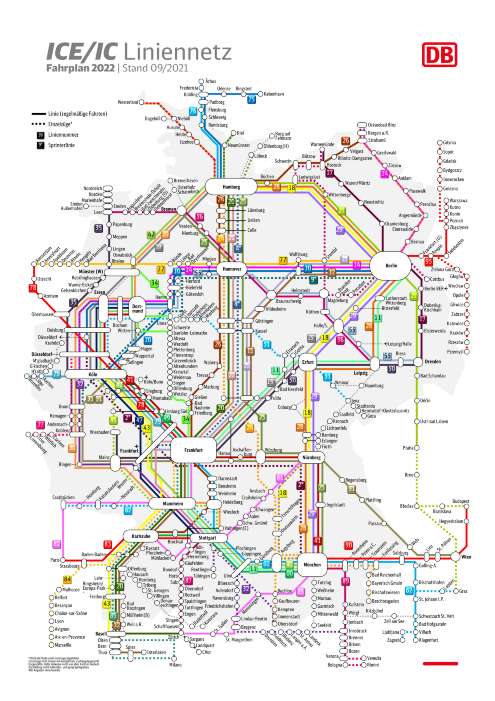
One of the biggest advantages of travelling by ICE is that you reach many of Germany's popular tourist destinations directly from major railway stations.
Some routes are particularly useful for Singaporeans planning a multi-city holiday.
Route | Approximate travel time |
|---|---|
Berlin to Hamburg | 2 hours |
Berlin to Frankfurt | 4 hours |
Berlin to Munich | 4 to 4.5 hours |
Berlin to Cologne | 4 to 4.5 hours |
Frankfurt to Cologne | 1 to 1.5 hours |
Frankfurt to Munich | 3 to 3.5 hours |
Hamburg to Frankfurt | 4 hours |
Hamburg to Munich | 5.5 to 6 hours |
Munich to Cologne | 4 to 4.5 hours |
This is a convenient route if you want to explore two major German cities in one holiday. Berlin is known for its history, museums and cultural attractions, while Hamburg offers a different experience with its harbour, canals and lively waterfront neighbourhoods.
Travelling from Berlin to Munich by ICE is a good option if you want to experience two different sides of Germany. Spend a few days exploring Berlin before heading south to Munich for traditional Bavarian food, historic architecture and day trips to nearby attractions.
This is one of the shorter ICE journeys, making it suitable for travellers who want to explore Cologne after arriving in Frankfurt. You can visit the famous Cologne Cathedral, stroll along the Rhine River and explore the city's old town.
If Munich is part of your Germany itinerary, travelling by ICE from Frankfurt is a practical option. You can enjoy the journey through the German countryside without worrying about driving or airport transfers.
Yes! Selected ICE services also operate on international routes, allowing you to travel from Germany to neighbouring countries without changing trains. Some popular international connections include:
Route | Destination country | Approximate travel time |
|---|---|---|
Frankfurt to Amsterdam | Netherlands | 4 hours |
Cologne to Amsterdam | Netherlands | 3 hours |
Frankfurt to Brussels | Belgium | Around 3 hours |
Frankfurt to Paris | France | Around 4 hours |
Frankfurt to Zurich | Switzerland | Around 4 hours |
Munich to Vienna | Austria | Around 4 hours |
This is especially useful if you are planning a longer European holiday. For example, you can explore Frankfurt before continuing to Amsterdam or Brussels by train.
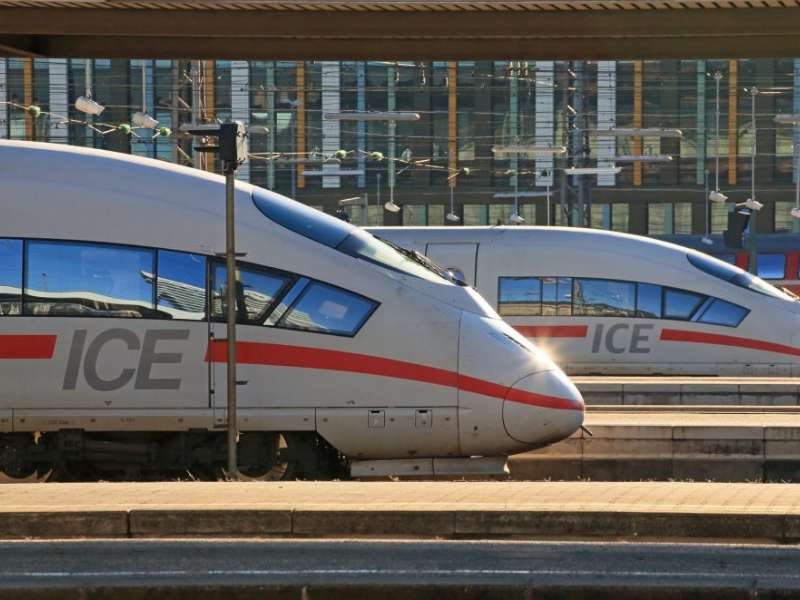
The price of an ICE train ticket depends on several factors, including your route, travel date, departure time, travel class and how early you book.
Unlike some metro or local train systems, ICE tickets do not have one fixed price for each route. Cheaper promotional fares are generally limited by availability, so booking earlier can give you more choices.
Here are some indicative starting fares displayed on Trip.com Singapore's Germany train booking page. These are examples of advertised fares rather than guaranteed prices.
ICE route | Starting fare |
|---|---|
Hamburg to Berlin | From S$16.85 |
Frankfurt to Berlin | From S$36.77 |
Munich to Berlin | From S$44.43 |
Cologne to Berlin | From S$22.35 |
Frankfurt to Munich | From S$36.15 |
Cologne to Munich | From S$27.58 |
Deutsche Bahn offers several ticket categories. Knowing the differences is important because some cheaper tickets come with stricter travel conditions.
Ticket type | Main benefits | Flexibility |
|---|---|---|
Super Sparpreis | Usually the cheapest promotional fare | Fixed to the booked long-distance train |
Sparpreis | Discounted fare with limited cancellation flexibility | Fixed to the booked long-distance train |
Flexpreis | More flexibility to travel on the selected route on the booked date | Flexible within the ticket's conditions |
This is generally the best option if you already know your travel dates and departure times.
This is another discounted option for travellers who want to save on train tickets while keeping some cancellation flexibility.
If your itinerary is not completely fixed, Flexpreis offers greater freedom.
For most Singaporean tourists, Super Sparpreis is worth considering if your itinerary is confirmed. However, if you are planning a flexible European trip and may change your departure time, paying more for Flexpreis could be worthwhile.
Always read the fare conditions before confirming your booking, especially if you are connecting to another train or travelling internationally.
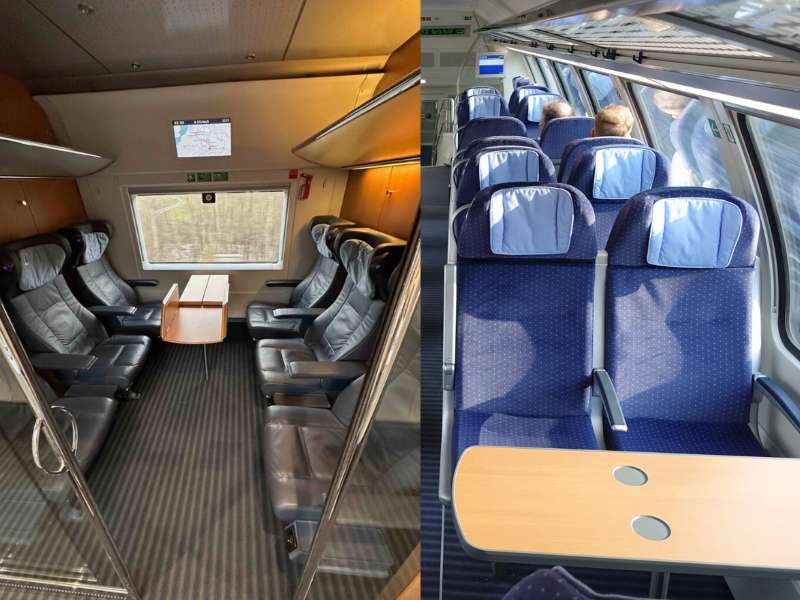
When booking an ICE train, you will usually have the choice between 1st Class and 2nd Class.
Both options offer comfortable seating, but there are differences in space, seating arrangements and ticket conditions.
Feature | 2nd Class | 1st Class |
|---|---|---|
Seating | Comfortable standard seating | More spacious seating on many services |
Layout | Usually 2+2 | Usually 2+1 |
Wi-Fi | Free | Free |
Power sockets | Available | Available |
Food and drinks | Available for purchase onboard | Available for purchase, with at-seat service on eligible services |
Seat reservation | Usually an additional fee | Included with eligible Flexpreis tickets |
Best for | Budget-conscious travellers | Travellers who prefer extra comfort |
Yes! For most leisure travellers, 2nd Class is perfectly comfortable, even for journeys lasting several hours.
You will still have access to onboard Wi-Fi, power sockets, toilets and food services. If you are travelling with a group or family, you can also reserve seats together when the booking system allows it.
1st Class may be worth considering if:
If the price difference is small, comparing both classes before booking can help you decide whether the upgrade is worthwhile.
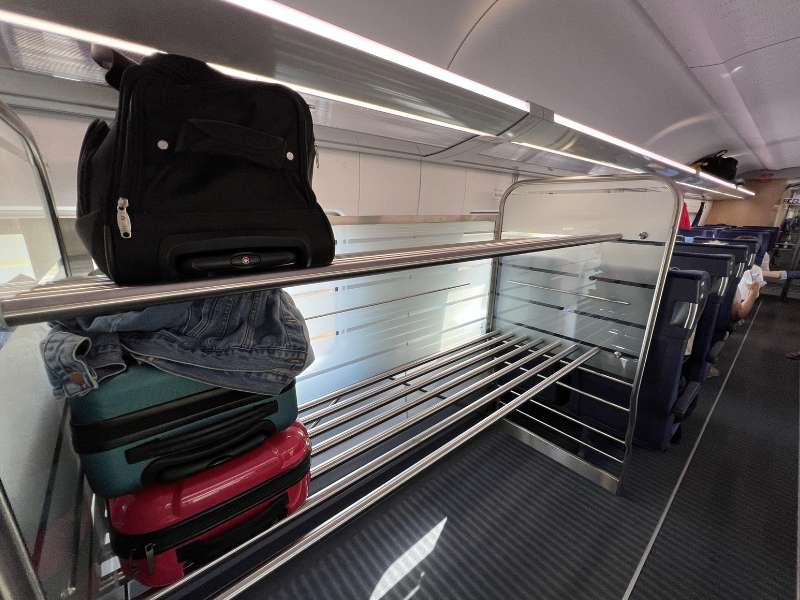
One of the convenient things about travelling by ICE is that you do not need to check in your luggage like you would on a flight.
You can bring your suitcases onboard without paying an additional luggage fee, provided you can carry and store them safely.
According to Deutsche Bahn, passengers can bring their hand luggage and one additional larger piece of luggage free of charge, as long as they can carry it independently.
There is no separate luggage reservation or weighing requirement.
There are several luggage storage areas on ICE trains:
Unlike airline check-in luggage, you remain responsible for your own belongings throughout the journey. If you are travelling from Singapore with large check-in luggage, keep these tips in mind:
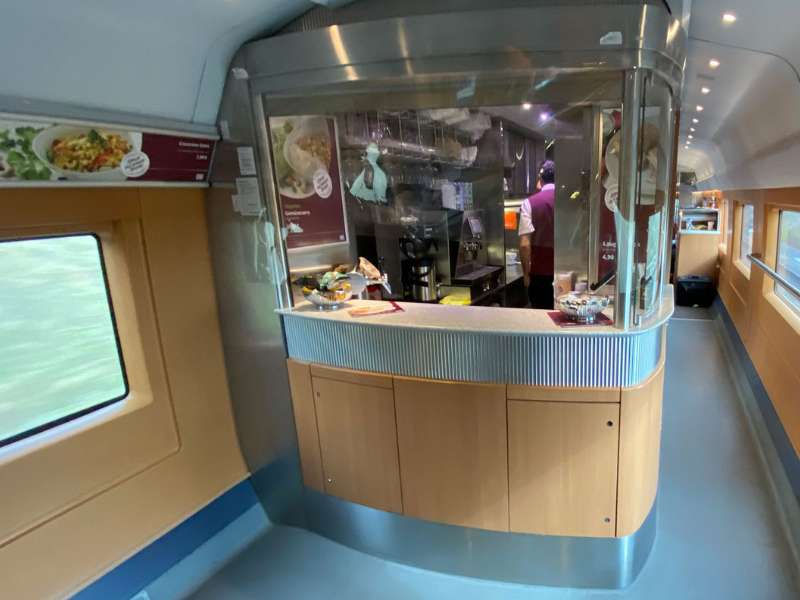
ICE Train Germany are designed to make longer journeys more comfortable, so you do not need to spend the entire trip sitting without access to basic facilities.
Here are some of the services you can expect onboard.
Facility | What to expect |
|---|---|
Free Wi-Fi | Available on ICE trains |
Power sockets | Available at many seats |
Toilets | Available onboard |
Restaurant or bistro | Food and drinks on selected services and train models |
Air conditioning | Available |
Family areas | Available on many ICE services |
Bicycle spaces | Available on selected trains, subject to reservation requirements |
Yes, ICE trains offer free Wi-Fi in both 1st Class and 2nd Class. To connect:
Wi-Fi quality can vary depending on the route, mobile network coverage and number of passengers using the service. It is useful for messaging, browsing and checking travel information, but it may not always be fast enough for uninterrupted video streaming.
Feeling hungry during your journey? Many ICE services have an onboard restaurant or bistro where you can purchase food, snacks and drinks.
The menu and availability vary depending on the service. If you have dietary requirements or prefer specific food, bringing your own snacks is a practical idea.
Depending on the train, you may find:
Most ICE trains offer power sockets at or near passenger seats, making it easier to charge your phone, laptop or other electronic devices.
However, socket availability and layout can vary between train models. It is still a good idea to bring a fully charged power bank, especially if you are using your phone to access your digital ticket.
Use our promo code to enjoy up to 5% OFF (up to S$3) on your attraction tickets, tours and eSIMs! Only for new users!
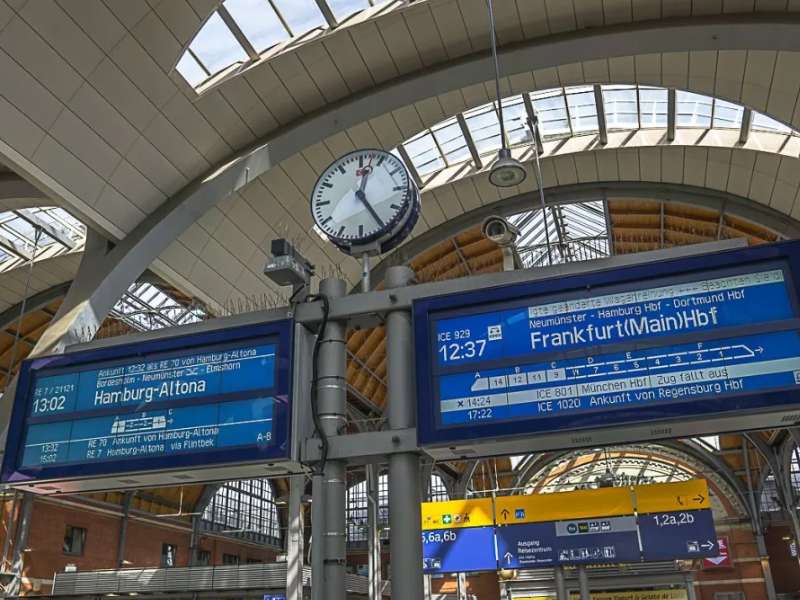
A little preparation can make a big difference, especially if you are travelling between several German cities with luggage. Before your journey, keep these common mistakes in mind:
Common mistake | How to avoid it |
|---|---|
Boarding the wrong ICE train | Check the train number and destination |
Assuming every ticket is flexible | Read the fare conditions before booking |
Forgetting to reserve seats | Reserve seats if you want guaranteed seating |
Arriving at the last minute | Reach the station 15 to 20 minutes early |
Waiting until departure to find luggage space | Board early and use the designated racks |
Missing platform changes | Check the latest departure board |
Assuming the Deutschland-Ticket covers ICE | Purchase a separate ICE ticket |
Forgetting your passport | Keep your passport ready for inspection |
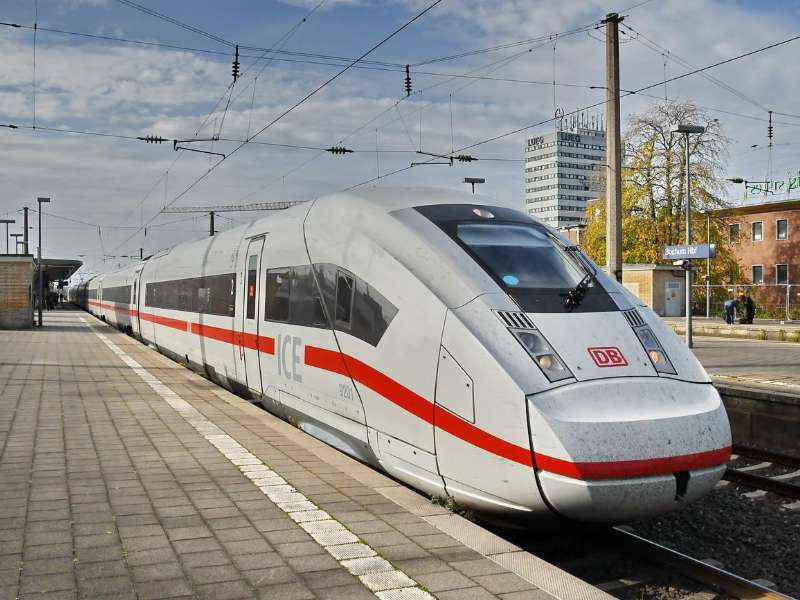
Taking the ICE Train is relatively easy, but there are a few things Singaporean travellers should know before their first journey.
Try to arrive around 15 to 20 minutes before departure, especially if you are unfamiliar with the station.
Large stations can have multiple platforms and long walking distances between entrances and train boarding areas.
This is one of the most important things to remember.
If you purchase a Super Sparpreis or Sparpreis ticket, you are generally required to take the specific long-distance train shown on your ticket.
You cannot simply board another ICE train because it departs earlier or later.
Flexpreis tickets offer more flexibility, subject to the route and ticket conditions.
When travelling with a digital ticket, Deutsche Bahn requires you to show an accepted identification document during ticket inspection.
For Singaporean tourists, an international passport is an accepted form of identification.
Make sure the passenger name on your ticket matches your passport details.
Do not rely entirely on mobile data or station Wi-Fi.
Save your digital ticket on your phone so you can access it even if your internet connection is unstable.
The train's coach arrangement can be displayed before departure. Look for your coach number so you know where to board.
This is especially helpful when travelling with a seat reservation or carrying several suitcases.
Although ICE trains are designed for fast intercity travel, delays and timetable changes can happen.
Check your journey through DB Navigator or the station departure board before leaving your hotel.
If a delay or cancellation affects your connection, check your passenger rights and follow the railway operator's instructions before boarding an alternative service.
Exploring Germany by ICE train is a convenient way to visit several cities without spending too much time on airport transfers or long road journeys.
Whether you are travelling from Berlin to Hamburg, Frankfurt to Munich or Cologne to Amsterdam, the ICE network makes planning a multi-city European holiday much easier.
For Singaporean travellers, the key is to compare ticket prices, understand the different fare conditions and reserve seats when needed.
Start planning your Germany adventure and book your Germany train tickets on Trip.com to make travelling cities easier.