 950773 booked







🔥Unlock 8% OFF on Car Rentals
Whether you're planning a road trip, a business journey, or just need a reliable ride, now is the perfect time to save. Use the coupon to enjoy this exclusive offer. Rent a car today and hit the road with extra savings!

Beijing is such a massive city! How in the world do I even move around here?😆 But much to my surprise, I actually found it quite easy to navigate the city once I figured things out.
The public transport system may not be new, but it's super fast, convenient, and affordable. Not to mention, the views!
You will love the sights of famous historical landmarks as you zip past them through various transportations, like passing by the Forbidden City via Line 1!
What’s the atmosphere like? Just say that you can sense the heartbeat of the city whenever you’re moving around. During rush hour, the subway might be crowded but efficient; while the fast train would be a life-saver when going out for day trips to the nearby cities.
Now that you know all there is to get around Beijing, let’s discover all the places you can find delicious food from!
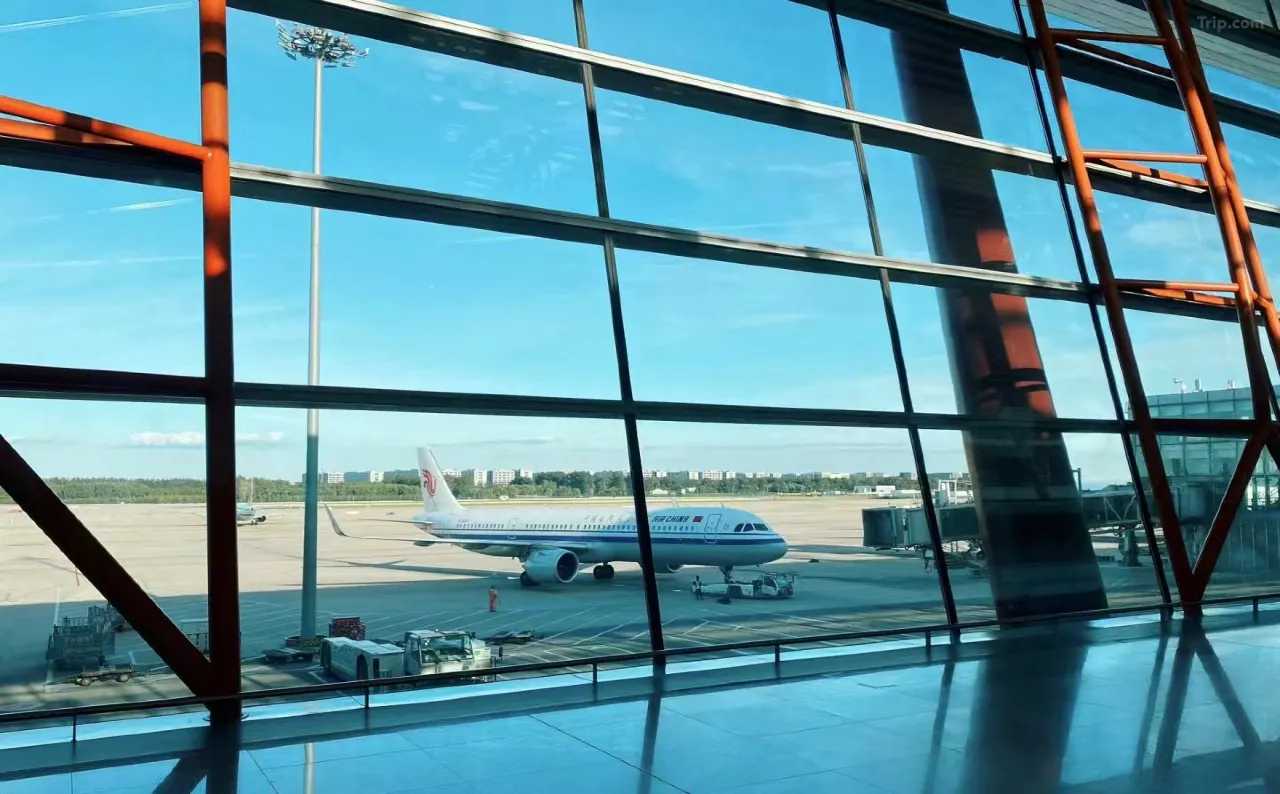
For Beijing Capital International Airport (PEK), the fastest way into the city is the Airport Express Line. It connects you to key subway stations like Dongzhimen and Sanyuanqiao in about 20 minutes.
If you're arriving at the newer Beijing Daxing International Airport (PKX), you’ve got a few solid options:
Both airports also have airport buses and shuttle services to popular city hubs and hotels.
👉 Read the full Beijing Airport to City Guide for all the routes, tips, and local hacks!
Source: Travel China Guide
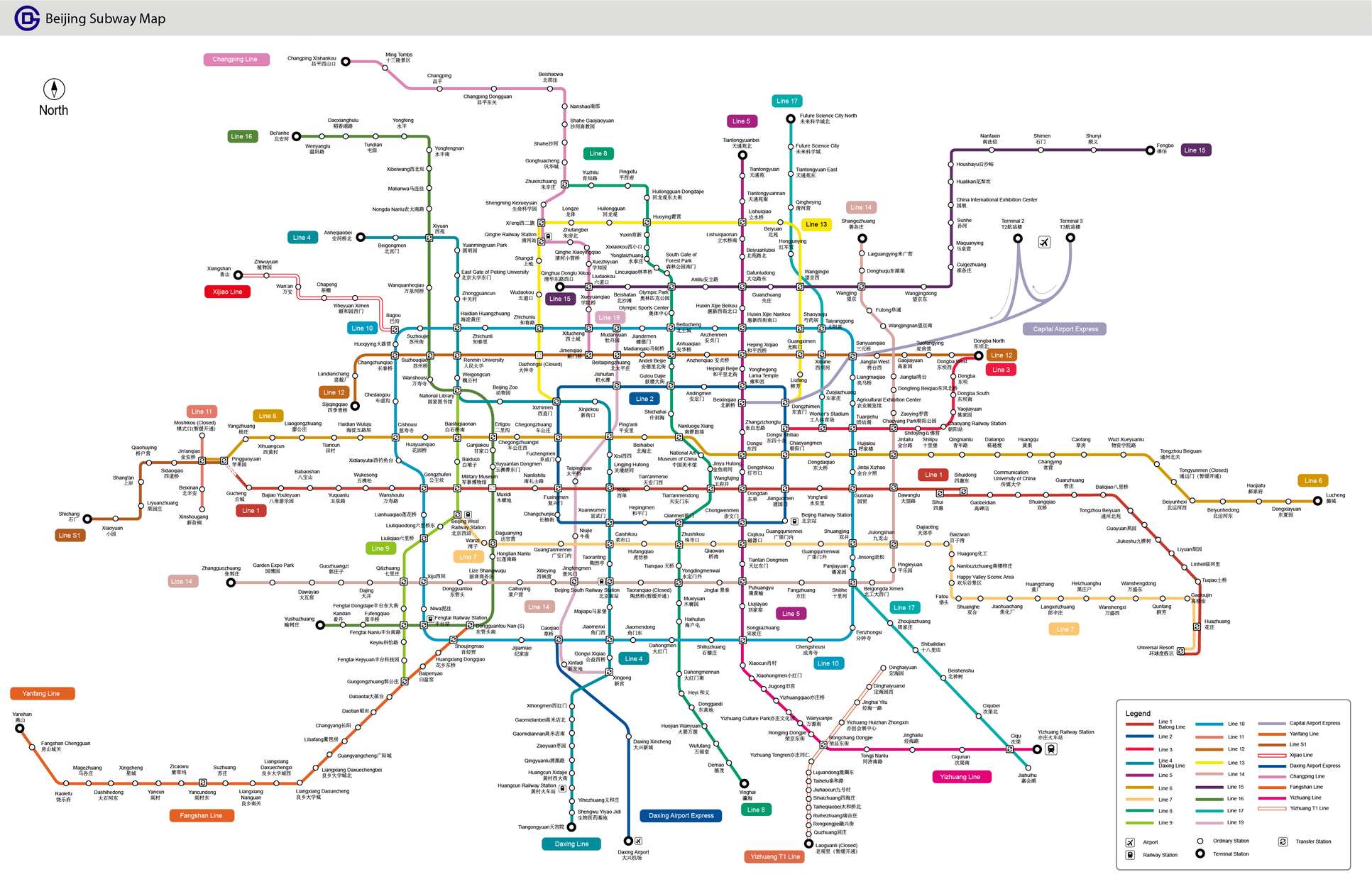
The Beijing Subway(北京地铁) totally surprised me in a good way! Upon arrival at Beijing, I expected some outdated elements because of the size of the city, but it's actually very modern, dependable, and a budget traveler’s paradise.
Beijing subway network is among the biggest worldwide, having 29 lines and continually adding more. All the major landmarks such as Forbidden City, 798 Art District, as well as both airports (PEK and PKX), are accessible through the subway.
Most of the stations feature bilingual signage, and the latest train carriages are not only clean and air-conditioned but also have electronic maps to guide you on your journey.
Beijing Subway | |
First trains | Around 5:00–5:30am |
Last trains | Usually by 11:00–11:30pm (varies by line) |
Frequency | Every 2–5 minutes, even during off-peak hours |
It’s super affordable: ¥3–10 per ride (about S$0.55–1.79).
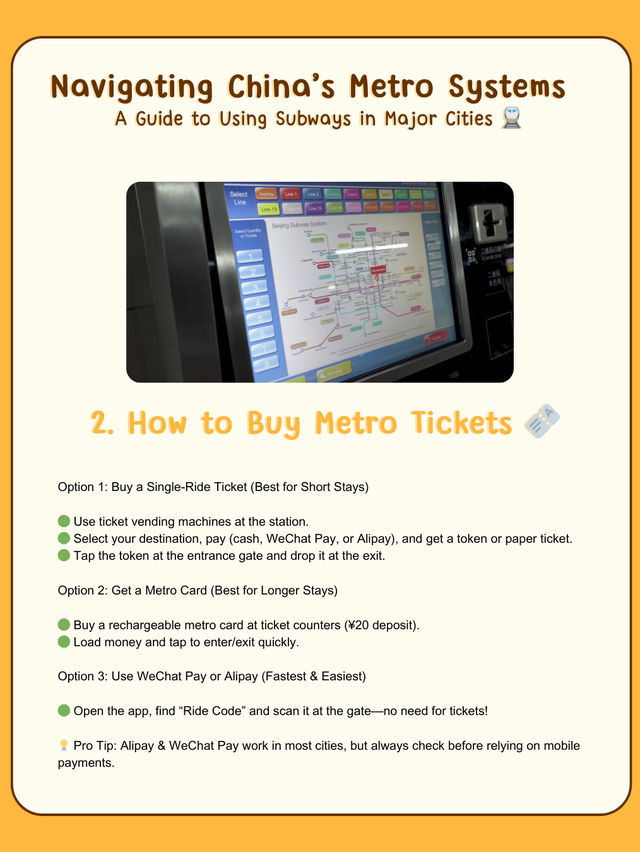
Most locals (and savvy travelers) use the Yikatong card (一卡通), Beijing’s version of the EZ-Link. Just tap in and out—easy. You can get one at most subway stations and recharge at machines.
If you’ve got Alipay or WeChat Pay linked to a Chinese bank card, you can scan a QR code directly at the gates too. Super convenient if you're set up digitally.
Source: Every day journey from Trip Moments
Here are a few major stations you’ll likely pass through always busy, but well-marked and helpful for sightseeing:
Source: Wikipedia
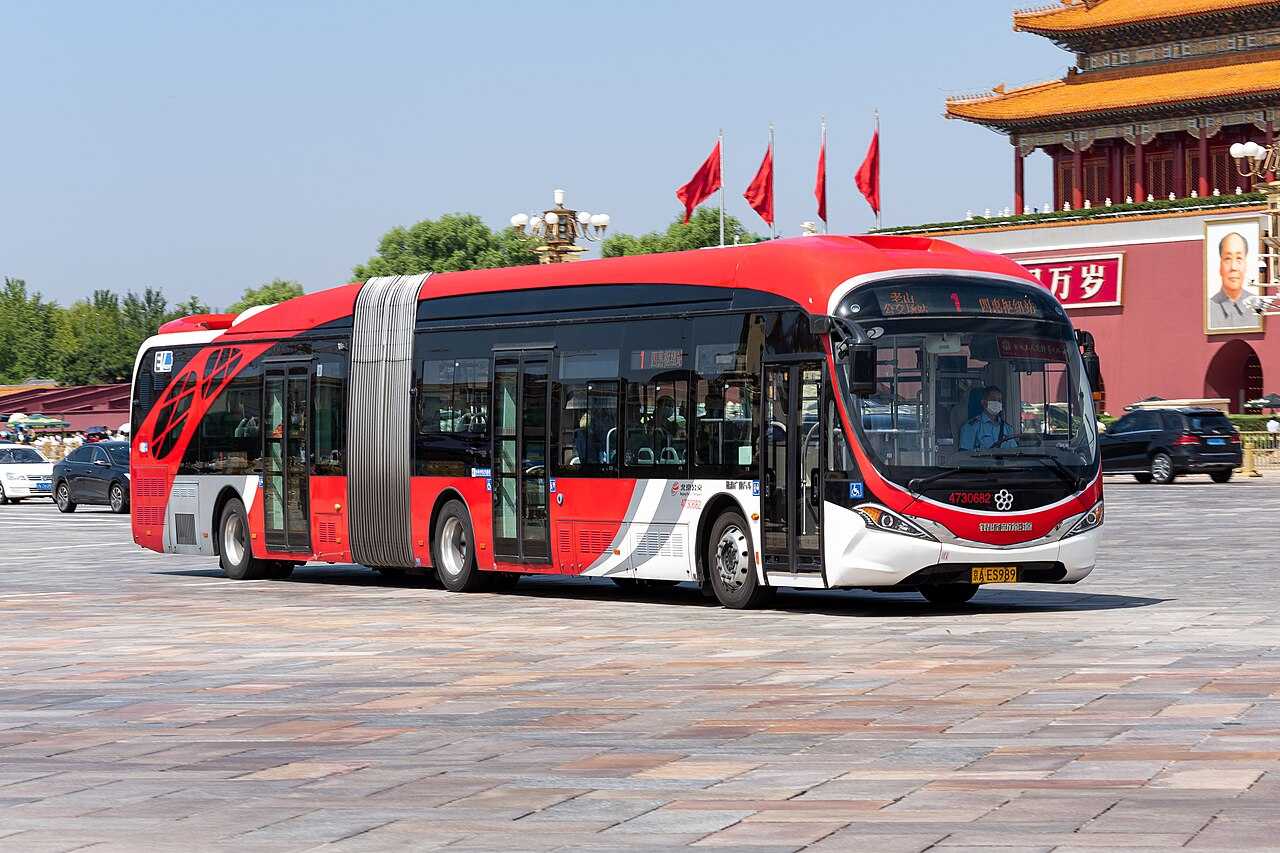
Beijing’s buses are inexpensive, punctual, and can even take you to areas the subway doesn’t reach – like the hutongs, older districts, and scenic parks. A normal fare would be around ¥2 or lower (S$0.36), and there are many elderly passengers riding the bus free of charge via the QR code on their resident card.
While the subway would normally suffice for most tourists, taking a bus ride offers you an authentic experience of Beijing’s transportation scene. While it may not cater to tourists as much (signage only in Mandarin, outdated buses), the buses offer unique rides through Beijing’s hidden hutongs.
Beijing Bus | |
Operating hours | Most around 5:00am–11:00pm, with night routes (like 夜1, 夜2) running until midnight or later |
Frequency | Every 5–10 minutes on major lines, slightly longer intervals for suburban or scenic routes |
You can pay with a Yikatong card(一卡通), which works across the subway, buses, and even airport express lines. Just tap when you get on. Some buses charge based on distance, so don’t forget to tap out when you exit.
More and more buses now support Alipay/WeChat Pay QR codes look for the little scanner near the door. If you're paying with cash, prepare exact change (usually ¥1 or ¥2) no change is given.
Tip: Always board from the front door, and exit through the middle or back.
Get China eSIM Now
Source: Wikipedia
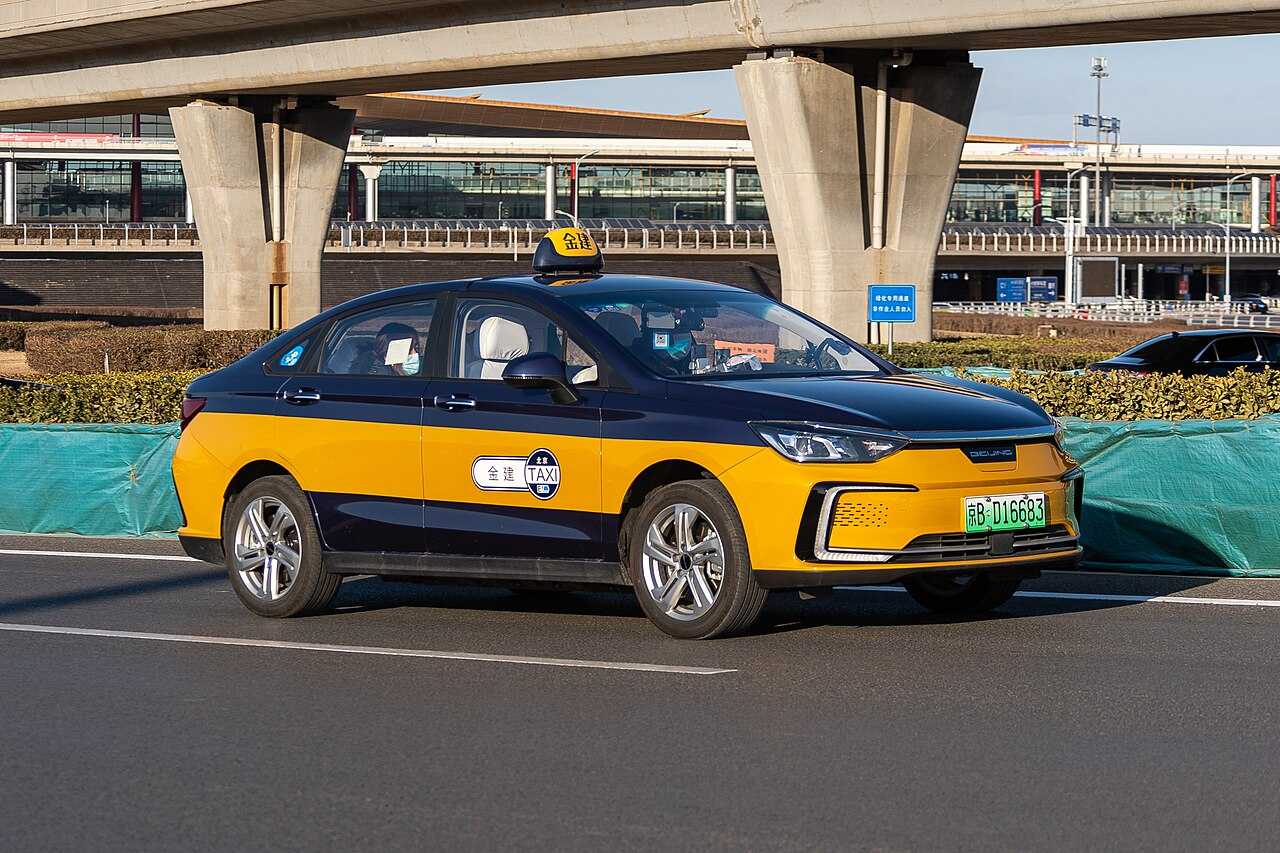
Picking up a cab in Beijing should not be difficult, particularly near hotels, shopping centers, or railway stations. The taxis here come in different colors, like blue, yellow, or green, and all of them are official and have meters.
Generally speaking, it’s safe, but remember always to be vigilant, especially when there are people trying to sell you their private cars.
However, as is common in Singapore, most residents prefer using apps for getting taxis.
The most common app is Didi Chuxing (滴滴出行) basically China’s Grab. It works well with Singapore credit cards, shows fixed upfront prices, and has English support (though some translations can be a bit quirky).
Another option is Meituan (美团打车) or Amap Taxi (高德打车), which compare fares from different providers—but they’re mainly in Chinese, so best if you're comfortable with the language or have a Chinese-speaking friend.
Here’s a quick sense of the prices:
If you're using Didi, you’ll pay in-app via card, Alipay, or WeChat Pay.
For street taxis, too. Many support digital payments, but don’t count on it. Always check the meter is running when you hop in.
Grab Cheap Flights to Beijing Now
Source: Wikipedia
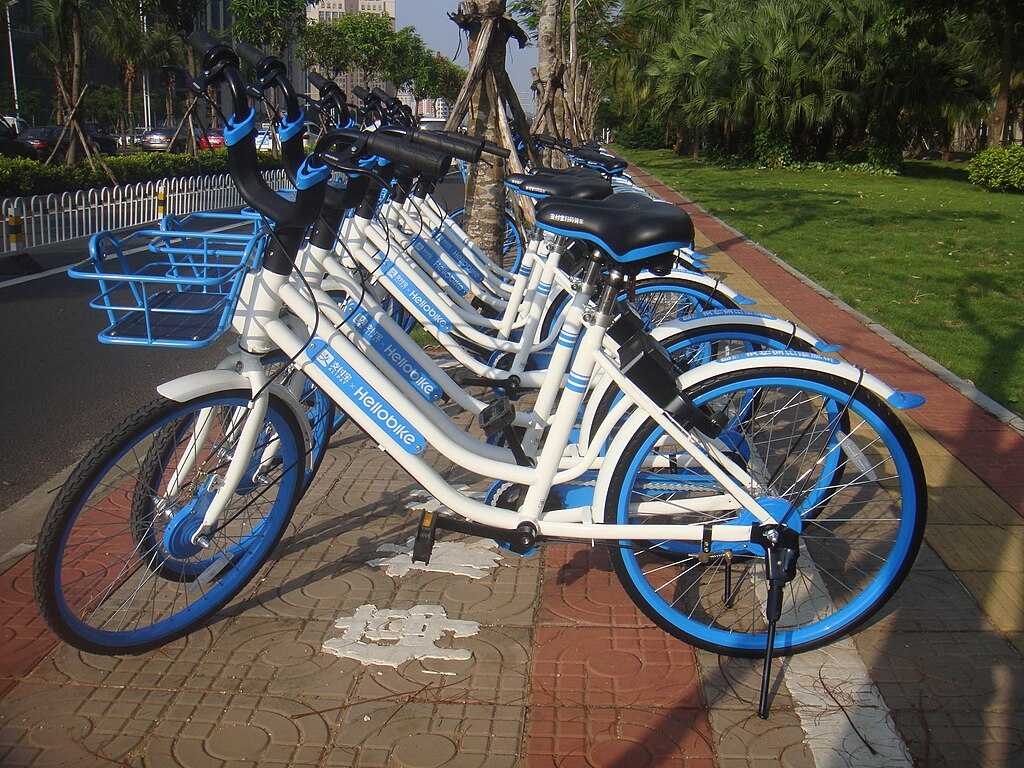
In Beijing, bike-sharing is everywhere and honestly, it’s one of the best ways to explore the city’s wide streets and hutong alleys.
You won’t find Grab-style motorbike taxis like in Southeast Asia, but if you're up for a bit of pedalling (or e-bike cruising), shared bikes are a super fun and cheap way to get around especially for short distances or last-mile rides from the subway.
Look around any subway exit, shopping street, or residential block, and you’ll likely see a colourful lineup of parked bikes. They're dockless, so you can unlock them almost anywhere and park in any designated zone.
The two most common:
You’ll need the Hello Bike or Meituan app, or access through Alipay/WeChat.
💸 Most rides cost ¥1–2 (S$0.20–0.40) for every 15 minutes.
Book Cheap Hotels in Beijing

When planning a visit to Beijing, the last thing that comes to mind would be going out on a boat, yet, should you happen to go to Beijing during spring or autumn time, you will find that cruising along its rivers is among the most soothing experiences available.
This is not something that takes place everyday as in other cities, but something that is designed to provide relaxation and enjoyment.
Boats mainly operate in parks and lakes, especially in central Beijing. These aren’t ferries in the usual sense, but more like small leisure boats and tourist water shuttles.
Here are some popular spots:

Seasonal only: Most boats run from April to October/November, closed in winter due to frozen water
Opening hours: Typically 9am to 5pm, with last rides around 4:30pm
No app needed: Just head to the dock, pay at the counter, and go
Note: Often priced per boat, not per person.
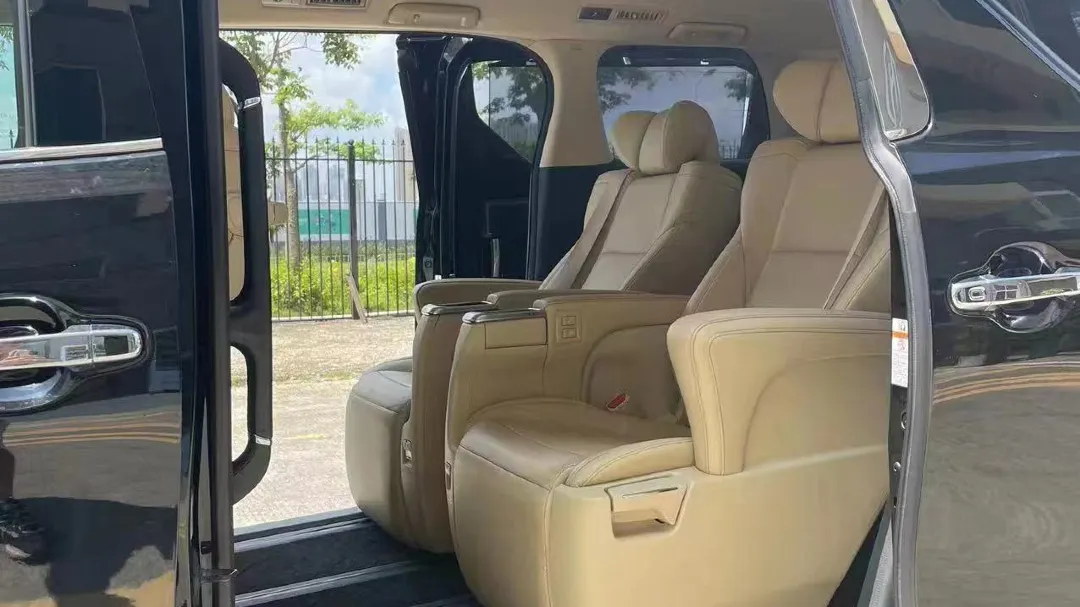
Indeed, navigating the city of Beijing through its roads is indeed scary if compared to the roads back home in Singapore. Because of the congestions, rules, and the difficulty of getting parking spaces, renting cars and trying to drive around Beijing by oneself is definitely something that should not be done.
However, if there will be any plans of traveling outside the main city, especially the Great Wall, along with other places like Miyun and Huairou, renting cars might actually be the better thing to do.
There are many car rental counters at Beijing Capital International Airport (PEK) and Beijing Daxing International Airport (PKX). Alternatively, booking cars online via platforms like Trip.com is also possible.
Here’s the tricky part: your Singapore licence alone won’t cut it. You need to apply for a temporary Chinese driving permit before you can legally drive here. The basic requirements usually are:
You must apply for a temporary Chinese driving permit, which requires:
Unless you’re heading far out or need the flexibility, public transport and ride-hailing apps like Didi will save you a lot of stress in Beijing city. Enjoy the ride without the traffic headache!
Whether you're planning a road trip, a business journey, or just need a reliable ride, now is the perfect time to save. Use the coupon to enjoy this exclusive offer. Rent a car today and hit the road with extra savings!
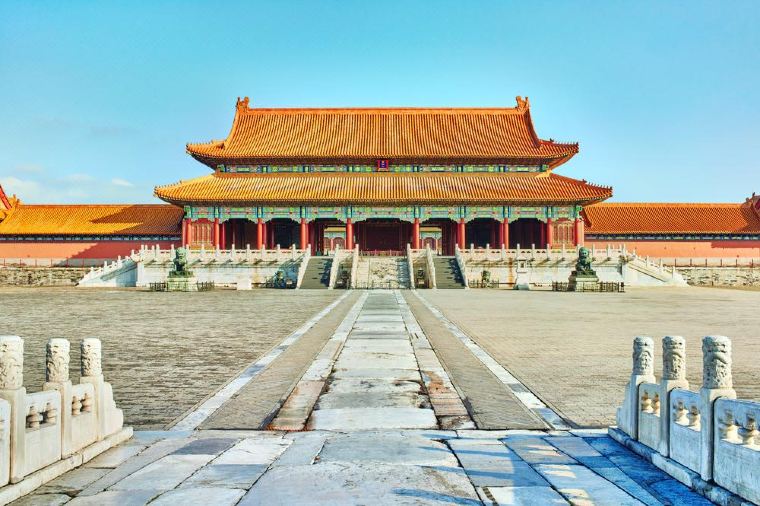
Is Beijing walkable? Yes definitely, even if there is no walking like that found in Shanghai and Singapore. Due to the combination of wide roads, historical hutongs, and large green spaces, walking in Beijing becomes an exciting adventure.
However, if you plan to explore areas far away from central Beijing or tourist sites such as the Forbidden City or Wangfujing, it might be better to use transport means such as the subway or bikes.
Beijing’s sidewalks are generally spacious, but watch out for busy intersections and occasional street vendors. The hutongs (traditional alleys) offer some of the best walking experiences quiet, winding lanes full of local life, cafés, and quirky shops.
For navigation, Google Maps works if you have a VPN, but locals rely on Baidu Maps or Amap both mostly in Chinese. For offline backup, Maps.me is a solid choice.
Street signs in touristy spots are mostly bilingual, but less so in residential areas. Beijing is quite safe to walk around during the day, but at night, it’s best to stick to well-lit main streets.
The climatic conditions of Beijing are more severe than those of Singapore. The summer season is extremely hot and dry, while winters may become cold and even snowy, making it necessary to dress warmly. In spring and autumn seasons, the weather conditions are favorable for walking.
Use our promo code to enjoy up to 5% OFF (up to S$3) on your attraction tickets, tours and eSIMs! Only for new users!
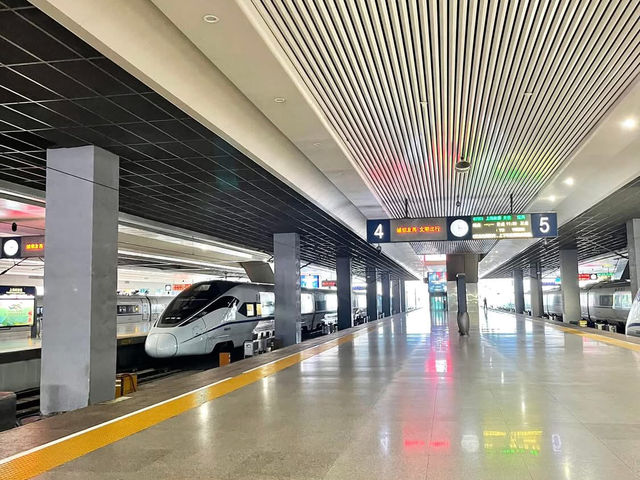
China's high-speed railway network is simply outstanding—it is very fast, modern, and highly dependable. Traveling at a speed of up to 350 kilometers per hour, you will be able to reach your destination much faster within only a few hours.
All the trains are clean, punctual, provide a comfortable journey with seats that range from economy to business class. It is easy to book your tickets online (Trip.com being a popular choice for travelers).
All the biggest stations are equipped with English signages to facilitate tourists’ life and journey experience, and traveling by fast train is faster and more comfortable compared to flights in most cases.

Transporting yourself through Beijing is one of the experiences in itself, whether taking the subway train, hailing a cab at the end of the day, or walking by the lakes in the Hutongs. Beijing goes at its own rhythm: bustling and historical, yet unexpectedly navigable once you know the way.
Persona | Best Transport Options |
First-time visitors | Subway + Taxi or Didi |
Families | Subway + Private Transfers or Taxis |
Budget travelers | Subway + Buses + Walking |
Solo explorers | Subway + Walking + Shared E-Bikes |
Late-night arrivals | Didi from airport or airport shuttle buses |
Use both modes of transportation: take the subway for speed when traveling in the city, while taxis and Didi may be used when needed. Also consider cycling and walking to become one with the surroundings. Information is important in Beijing so buy China eSIMs for smooth journey.