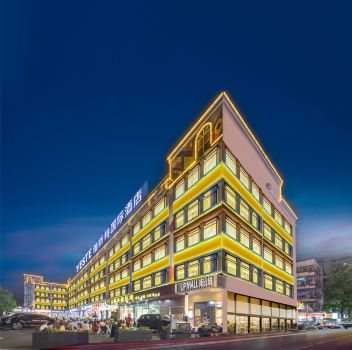
Shenzhen Typhoon Travel Guide: Transport & Flight Cancellations

Author's Profile Picture
Shenzhen Typhoon

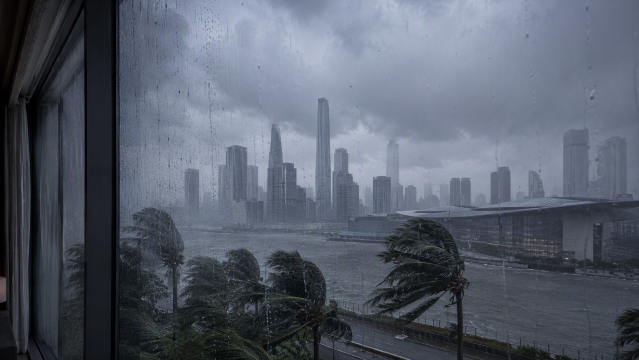
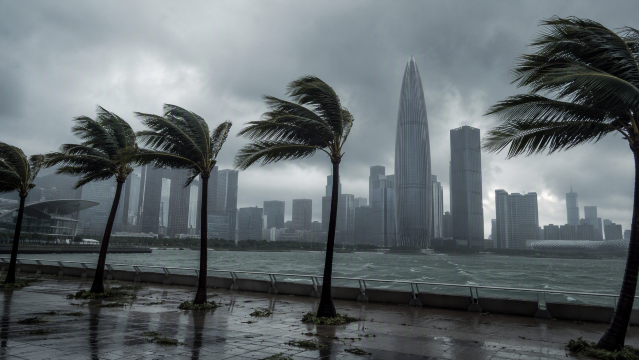
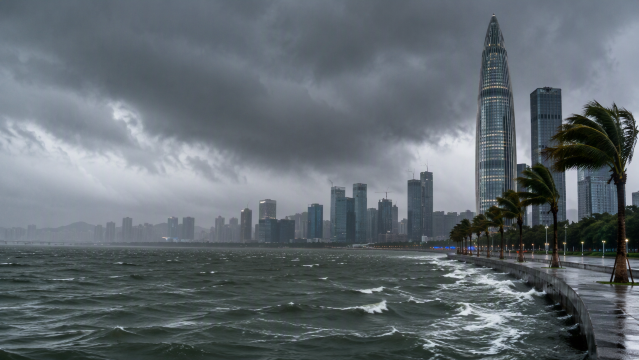
Shenzhen’s typhoon season brings tropical cyclones that can affect the whole city. Located on the coast of the Pearl River Delta, Shenzhen lies in the way of storms that come from the South China Sea.

If you are visiting Shenzhen from Singapore, this gude helps to know about the typhoon risks, how warnings work, and what to do when a storm is coming.

Do Typhoons Reach Shenzhen?

The city sits on the coast of the Pearl River Delta. Each year many typhoons hit Shenzhen. When a strong typhoon lands, public transport can stop, tourist spots may close, many regional flights can be delayed. Because of this, Shenzhen has a high risk of travel problems caused by typhoons.

When Does Typhoon Season in Shenzhen Typically Occur?

Shenzhen has a typhoon season that lasts from June to October. The dangerous months are July, August and September. Even though Singapore has rain all year because of the monsoon, Shenzhen's typhoons are separate events that last only a short time. These typhoons can stop city life for one or two days.

Here is a breakdown of the risk month, by month compared to Singapores weather experience:

  • June (Moderate Risk): Typhoon activity starts. Tropical depressions and named storms begin to form over the South China Sea. Heavy rain and occasional strong winds happen; minor flight delays can happen full city shutdowns are not common.
  • July to September (Peak High Risk): This is the active time. Three to four major typhoons affect Shenzhen every year, including very strong super typhoons. August has the number of storm landfalls. Red alert lockdowns, airport problems and public transport shutdowns are most likely during these three months.
  • October (Declining Moderate Risk): The number of storms goes down. Late season "autumn typhoons" can still cause strong winds and heavy rain.
  • November to May (Low / Risk): The typhoon risk is gone. Sometimes there are season or very early weak systems, but they are extremely rare.
👀Pro Tip: To stay connected throughout your visit, consider getting a China eSIM. Just activate and go!

🔥Save More with Up to 5% OFF

Use our promo code to enjoy up to 5% OFF (up to S$3) on your attraction tickets, tours and eSIMs! Only for new users!

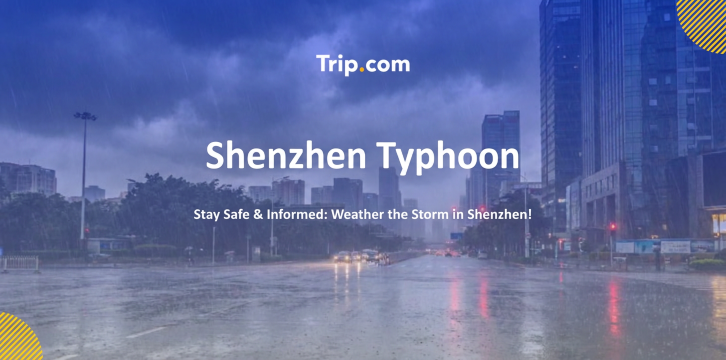
How Shenzhen Typhoon Warnings Work and What They Mean?

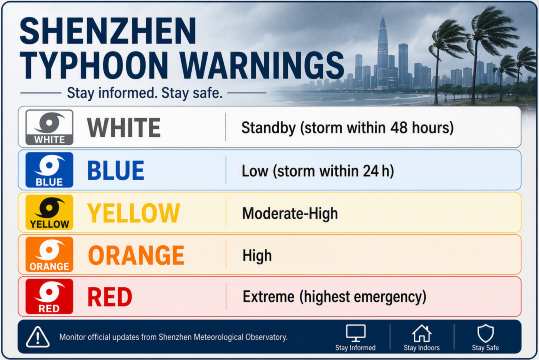
Shenzhen Typhoon Warnings

Unlike Guangdong’s standard four‑colour system, Shenzhen uses five‑tier typhoon warnings: White, Blue, Yellow, Orange, Red. Each level triggers defined public‑safety rules affecting transport, businesses, schools and tourist sites.

Warning Level

Risk

Core Impact for Travellers

White

Standby (storm within 48 hours)

Normal daily operations. Monitor forecasts closely; prepare rain gear.

Blue

Low (storm within 24 h)

Outdoor work partially restricted; tourist sites stay open. Minor traffic slow‑downs possible.

Yellow

Moderate‑High

Schools suspend classes; outdoor attractions and beaches close. Some flights delayed. Metro and buses keep running.

Orange

High

Schools closed; many workplaces allow early dismissal or stop operations. High‑speed rail and some metro routes may suspend. Airport scales back flights; outdoor venues shut completely.

Red

Extreme (highest emergency)

Wide‑ranging city‑wide restrictions; large parts of public transport suspend; airport largely halts operations.

Note: These local Shenzhen signal rules differ slightly from other cities in Guangdong province.

What Happens in Shenzhen When a Red Typhoon Signal Is Issued?

A Red typhoon signal triggers the city’s strictest emergency measures, which may surprise Singapore travellers unused to large‑scale storm lockdowns.

When a Red Typhoon Signal is issued, the city of Shenzhen goes into its emergency state. This can surprise travellers from Singapore because they are not used to large storm lockdowns. The Red Typhoon Signal means that most non‑essential businesses, such as shopping malls and tourist attractions stop operating. All schools are closed. Most employers require employees to stop work except for those who provide emergency services. Large parts of the metro, bus routes and inter‑city high‑speed rail lines are cancelled. At Shenzhen Bao’an Airport, take‑offs and landings are stopped, which causes many flight cancellations. Hotels tell guests to stay keep away, from windows and not to move outdoors.

✅ Traveller action tip: Do not go sightseeing walk along coastlines or take pictures of the storm. Flying debris and flash floods are danger. Stay safely inside your accommodation until the authorities officially lift the Red warning.

💡 Pro Tip: If you’re travelling onwards to other cities in China, consider using China high-speed rail. It's fast, comfortable, and efficient!

🔥Get 3% Off Your First Train Ticket Booking!

As a special treat, Trip.com is offering a 3% discount on your first train ticket booking. Simply claim your coupon and enjoy a seamless travel experience.

Where to Get Real‑Time Shenzhen Typhoon Updates and Alerts?

For Singapore visitors, select reliable sources offering readable updates:

  • Shenzhen Meteorological Bureau: Official local source for all five‑tier warning announcements.
  • Hong Kong Observatory: Excellent English‑language tracking for South China Sea typhoons covering the whole Pearl River Delta.
  • China National Meteorological Centre: National storm‑track data.
  • Airline & booking‑platform apps: Trip.com and carrier apps push flight disruption notifications.

Save key pages offline where possible; mobile networks can become unstable during severe typhoon conditions.
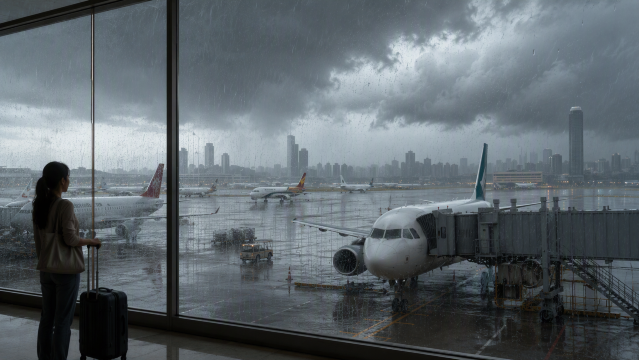
How Shenzhen Typhoons Impact Flights from Singapore?

Shenzhen Typhoon Impacts Flights

Flight trouble is the biggest worry for Singapore‑based travellers flying Changi to Shenzhen Bao’an Airport. Impacts align closely with warning levels:

  • White / Blue warnings: Operations run mostly normally; occasional short delays of 1‑2 hours.
  • Yellow / Orange warnings: Pre‑emptive flight rescheduling becomes common. Some services get cancelled ahead of bad weather to avoid risk.
  • Red warning: Near‑total airport shutdown. Mass cancellations may last 24‑48 hours until storms pass and safety inspections complete.

Pro tips:

  • Check flight status every 6‑12 hours in the 48 hours before your departure.
  • Build generous buffer time if you have connecting itineraries. Avoid tight connections in peak typhoon months July‑September.

Airline Rebooking and Refund Policies During Shenzhen Typhoons

Major airlines operating Singapore‑Shenzhen routes apply flexible disaster‑related policies, far more lenient than normal fare rules:

  • Rebooking: No change fees or extra fare surcharges when rescheduling flights within 3‑7 days of your original travel date.
  • Refunds: Full refunds apply for flights officially cancelled due to typhoon, even for non‑flexible tickets.
  • Third‑party support: Platforms such as Trip.com offer dedicated 24‑hour support to accelerate rebooking and refunds during peak‑disruption periods.

Always read your specific airline’s terms, as small differences in rebooking windows exist between carriers.

What Should You Do If Your Flight Gets Cancelled During Your Trip to Shenzhen?

Follow these clear steps to reduce stress amid typhoon‑driven flight cancellations:
  1. Confirm flight status: Check your airline or booking‑app; do not rely purely on noisy airport public announcements.
  2. Submit requests quickly: Apply for rebooking or refunds immediately, as alternative flight seats fill extremely fast.
  3. Speak to your hotel: Ask for zero‑fee extensions or late check‑out if you are forced to stay longer in Shenzhen.
  4. Keep records: Save cancellation screenshots, warning notices and extra‑expense receipts for later insurance claims.

Should You Still Fly to Shenzhen During Typhoon Season?

Shenzhen Typhoon

Visiting Shenzhen in typhoon season is possible and many trips pass without storm‑related trouble, but you need balanced expectations.

Pros of travelling June‑October:

  • Lower airfare and hotel rates compared to peak winter travel months.
  • Fewer crowds at popular tourist and business venues.

Cons & Risks:

  • Fixed‑date business trips or short weekend holidays face real risk of disrupted plans in July‑September.
  • When a typhoon arrives, outdoor sightseeing, beach visits and day trips to nearby locations will be cancelled.

Risk‑mitigation steps:

  1. Purchase comprehensive travel insurance covering weather‑related disruption.
  2. Prioritise flexible flight and hotel bookings.
  3. Avoid buying non‑refundable tours for peak‑risk July‑September.
  4. Monitor weather forecasts starting 3‑5 days before your travel date.

Shenzhen Hotel Safety During a Typhoon: Choosing the Right Accommodation

Shenzhen Typhoon Impacts Hotels

Your choice of hotel plays a role in safety and comfort if a typhoon lockdown happens.

Prioritise:

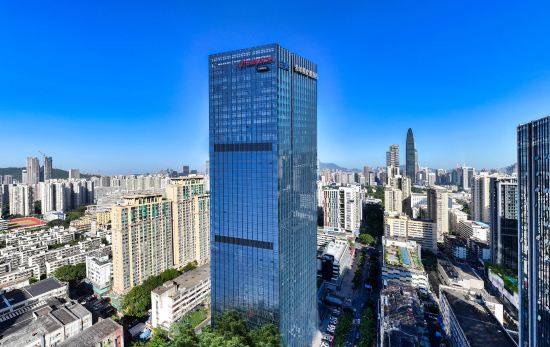
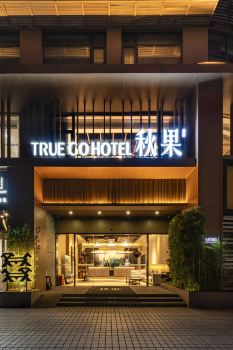
Modern high-rise hotels in central districts like Futian CBD and Nanshan business zones. These buildings are built to last. They have reinforced construction, wind-resistant glass windows and clear typhoon emergency protocols for guests. They are designed to handle storms and keep people safe.

❌ Avoid:

Low-rise guesthouses, those near the coast or in low-lying areas close to rivers. These places are more likely to flood during heavy typhoon rain. Being too close to water is risky when storms bring rainfall.

🔎 Things to look for when booking:

Check for hotels that share documented guest safety procedures. Make sure they provide emergency contact information and give weather updates during storm events. It helps to know what to do if a typhoon hits. A hotel that stays in touch and has a plan makes a difference.

Hotel Rebooking and Refund Policies During Shenzhen Typhoons

Most large-chain hotels in Shenzhen usually offer terms when typhoon warnings are officially issued.

  • Date re-adjustment: Guests can reschedule their stay within three to seven days without paying any amendment fees.
  • Refunds: Pre-paid bookings that are normally non-refundable may still qualify for refunds, with no penalties if the typhoon alert stops travel.
  • Third-party support: Trip.com’s support team can help speed up hotel changes during storm disruptions.

Important note: Small boutique hotels or budget hotels may have rules. Always check the typhoon-related cancellation terms before finalizing your booking.

What Should You Do If Your Hotel Stay Is Disrupted by a Typhoon?

  1. Check the current typhoon warning levels. Listen to the hotel staff for any updates about the hotel. Do not trust rumours that appear on media.
  2. Send your requests for rebooking, cancellation or extension to the hotel staff. The number of hotel rooms will be very small when a city-wide typhoon happens.
  3. Ask for an extra night or a late check‑out if the weather cancels your flight.
  4. Keep copies of the typhoon alert screenshots and the hotel messages. These can help if you need insurance or a refund.
👉Pro Tip: For a convenient stay, look for Shenzhen hotels in advance to secure the best rates.

🔥Exclusive Hotels Deal: Up to 10% OFF for New Users

Discover the world with Trip.com! Book the perfect hotel anywhere in the world and get an unbeatable 10% discount if you're a first-time user! Download our app now and start planning your next trip with ease.

Just click this link and download the Trip.com App, after successfully registering as a member, use it when you place an order!

Indoor Activities and Things to Do in Shenzhen If a Typhoon Strikes

Typhoon lockdowns do not mean a wasted holiday. Shenzhen offers indoor alternatives.

Large-scale shopping malls, like COCO Park, One Avenue and MixC Shenzhen are spots to visit. These malls are fully air-conditioned with international retail stores, cinema complexes, cafes and fine-dining restaurants. Most of them stay open during typhoon alerts.

For culture lovers, the Shenzhen Museum, the Sea World Culture and Arts Centre are must-visit places. These spots let you explore history, art and design exhibits in a comfortable indoor setting.

Food fans will enjoy the Chaoshan beef hot-pot restaurants, dim-sum halls and Cantonese teahouses. You can taste southern Chinese cuisine without stepping outside. The food is delicious. The atmosphere is warm and inviting.
Shenzhen Weather by Month: Planning Around Typhoon Season

  • Jan–Feb: Dry weather with no typhoon risk. Perfect for sightseeing. Expect crowds during Chinese New Year holidays.
  • Mar–Apr: Humidity and occasional light rain but almost no typhoon threat. This is one of the times to visit.
  • May: Humidity starts to rise. Typhoon risk stays very low though a few early-season storms might appear.
  • Jun: Typhoon season begins. Moderate storm chances, warm and humid. Travel delays could happen in the afternoon.
  • Jul–Sep: Peak typhoon season. Very humid. High chance of flight cancellations and transport disruptions.
  • Oct: Typhoon risk drops. Temperatures are pleasant like autumn. Late-season typhoons can still form.
  • Nov–Dec: Dry and cool. No typhoon activity. A great time for Singapore travellers looking for weather.

Shenzhen Typhoon Preparation Tips for Singapore Travellers

Shenzhen Typhoon Travel

Here is a simple and easy to follow list of things to do based on the stages of your trip:

Pre-Trip (Before You Leave Singapore)

  • Check how your flight is doing in the 48 hours before you leave.
  • Give yourself 3 to 4 hours time if you have connecting flights during typhoon season.
  • Make sure you have a change of clothes, toiletries and a power bank in your carry-on bag.

In-Destination (While You Are in Shenzhen)

  • Keep emergency phone numbers saved on your phone where you can get to them without needing internet.
  • Look at the typhoon safety instructions at your hotel. Find the emergency exits when you check in.
  • Stay away from the beach the boardwalk and any open areas when there is a typhoon warning.
  • Make a list of places to go if your outdoor plans get cancelled.

Travel Insurance for Shenzhen

Basic travel insurance plans often leave out tropical‑cyclone‑related losses. Singapore visitors who travel from June to October need travel insurance coverage.

Make sure your policy includes these key protections:

  • Flight‑disruption cover: compensation for typhoon‑caused cancellations and long delays.
  • Trip‑interruption cover: reimbursement for pre‑paid tours and attraction tickets that are cancelled by storms.
  • Emergency‑medical‑evacuation cover: injury or medical emergencies that happen during typhoon events.
  • Accommodation‑disruption cover: reimburses hotel nights that happen because of storm‑related travel suspension.

Always read the print of your travel insurance; many low‑cost Singapore travel insurance products exclude typhoon‑related claims.

Emergency Contacts and Resources in Shenzhen During a Typhoon

It's advised to save these contacts offline before arrival because mobile connectivity may be unstable during a storm.

  • Police (public‑safety incidents): 110
  • Ambulance & medical emergency: 120
  • Exit‑Entry passport‑assistance hotline: 12367
  • Shenzhen Meteorological Bureau: Official local typhoon warning source
  • Hong Kong Observatory: Trusted English‑language typhoon‑tracking platform for the Pearl River Delta.

FAQs About Shenzhen Typhoon

Disclaimer: This article has been provided by an individual contributor or third party platform. If there is any discrepancy regarding the copyright, please contact us directly and we will delete the content immediately.
Leona

Leona

Traveller, Writer, Cat Lover, Sea Lover

View profile

Always on the hunt for smart travel! I love exploring new places, testing out travel products, and finding little hacks that make every trip smoother.

460 articles
Travel China Singapore
> >
Shenzhen Typhoon