
Philippines Visa Guide : Requirements, Application Process & Fees

The Philippines visa system is designed to make travel accessible for tourists, business visitors, and professionals. Whether you are planning a short vacation, attending a business meeting, or working long-term, knowing the right visa type is essential.
This guide explains the main visa categories, requirements, and who can enter visa-free.
Do You Need a Philippines Visa?
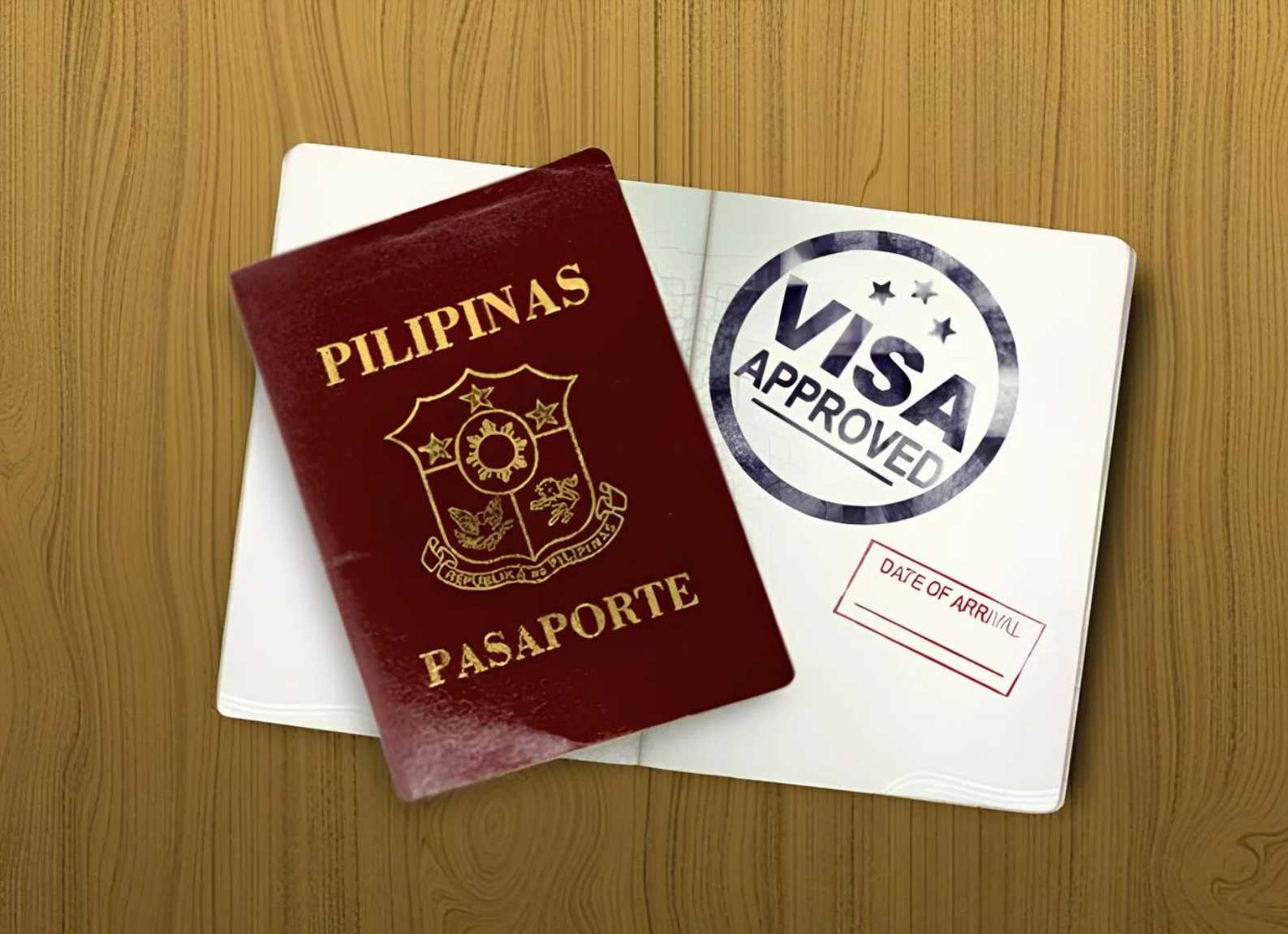
Not all travelers need a visa to enter the Philippines. The country allows visa-free entry for citizens of many countries for short stays. However, travelers from other nationalities must apply for a Philippines visa in advance.
Visa-free countries
Nationals from ASEAN countries (like Singapore, Malaysia, and Thailand) can stay visa-free for up to 21 days visa free.
Visa-required countries
Travelers from certain countries must apply for a Philippines visa online or through a Philippine Embassy/Consulate.
Longer stays
Even if you are visa-exempt, you must apply for an extension or a long-stay visa if you plan to remain in the Philippines beyond your allowed period, usually 30 days
Philippines Visa on Arrival
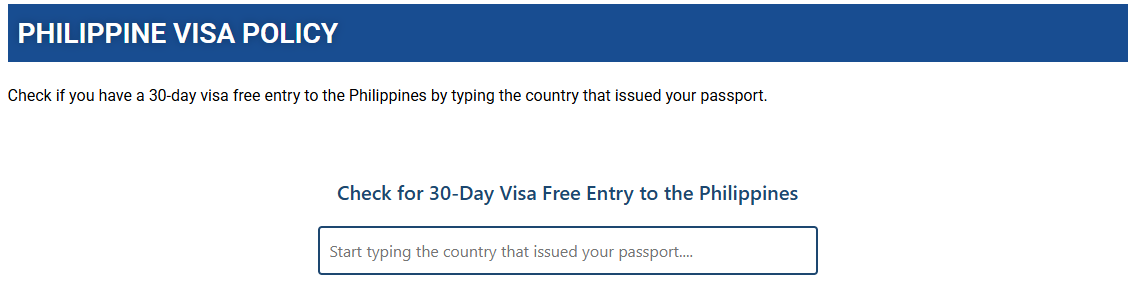
The Philippines has a Visa Upon Arrival (VUA/SEVUA) program, but it is not a conventional visa-on-arrival.
It requires pre arrangement through a business contact, chamber of commerce, or sponsor in the Philippines.
One cannot simply fly into the Philippines and apply for a visa at the port of entry.
The program is primarily for foreign investors, businessmen endorsed by BOI/PCCI, athletes, delegates to conventions, and officials of international organizations.
- Initial stay: 30 days (extendable up to 59 days at the Bureau of Immigration)
- Requirements: Pre-arrangement through a business chamber or sponsor, endorsement letter from PCCI/BOI/DTI or foreign chambers of commerce, and a confirmation letter from the Bureau of Immigration.
Types of Philippines Visa
| Visa Type | Purpose | Validity / Stay | Key Requirements |
|---|---|---|---|
Philippines Tourist Visa | For leisure travel, family visits, and short stays | Typically valid for 30 days, extendable up to 36 months (for some nationalities) | Valid passport, return ticket, proof of accommodation and funds |
Philippines Business Visa | For attending conferences, meetings, trade fairs, or exploring investments | Usually valid for multiple entries | Invitation letter or proof of business activities, valid passport, financial proof |
Philippines Work Visa (9g) | For foreigners employed by a Philippine company | Valid for duration of employment contract | Job offer, Alien Employment Permit (AEP) from employer, supporting work documents |
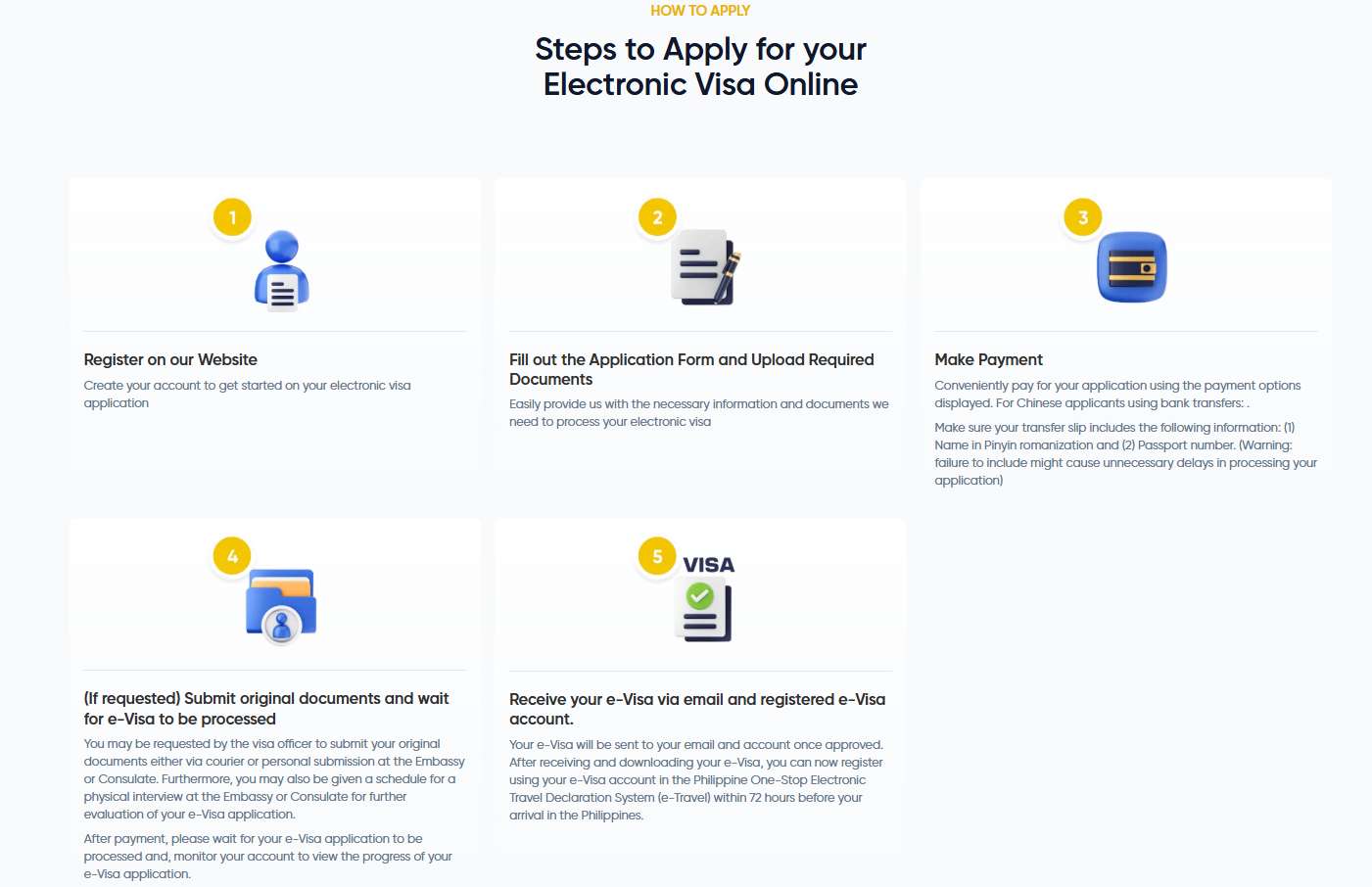
How to Apply for a Philippines Visa
Cheap Flights to Philippines

Philippines Visa Requirements
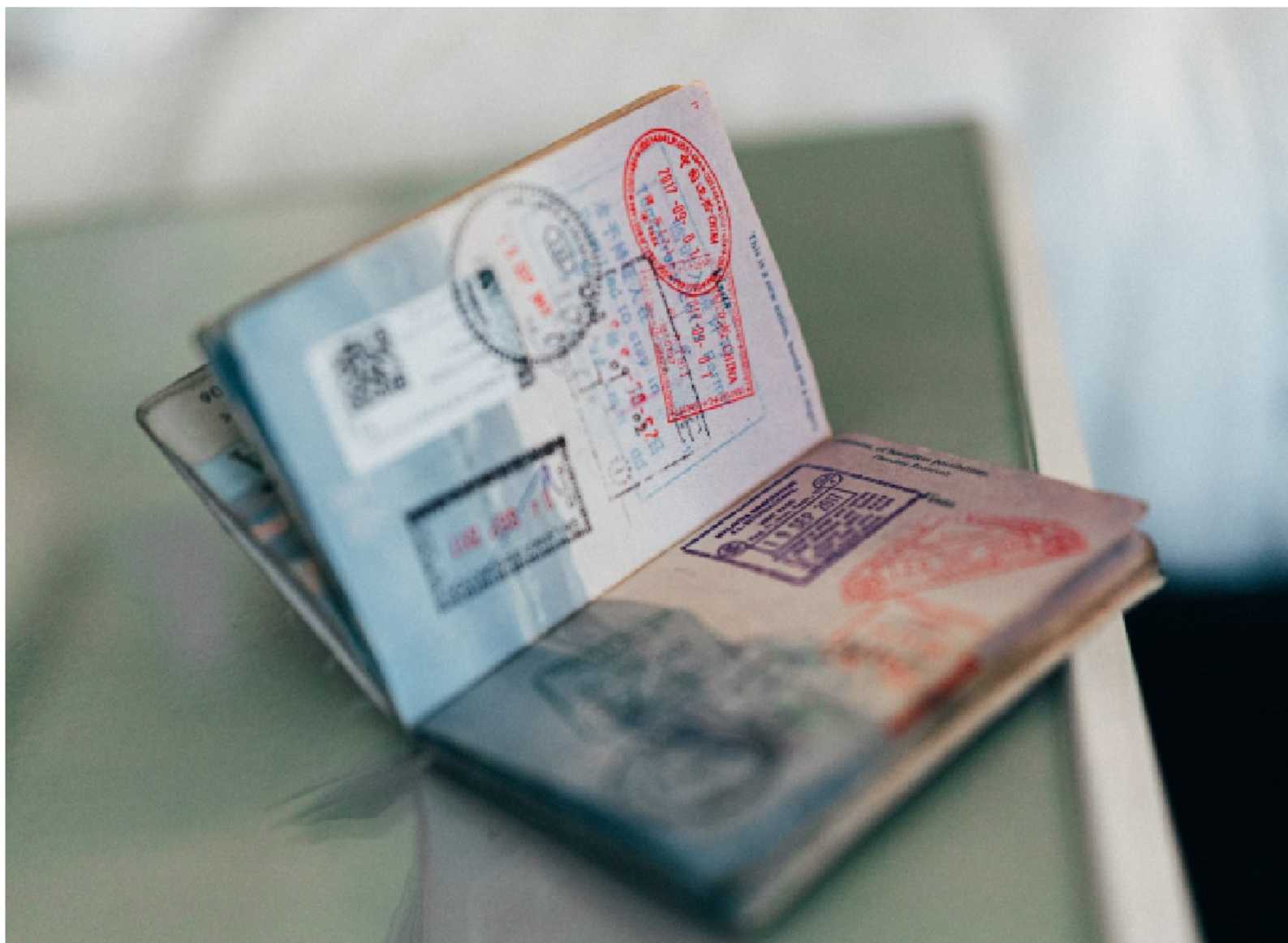
When applying for a Philippines visa, you generally need to prepare the following:
Valid Passport
Your passport must be valid for at least 6 months beyond your intended stay in the Philippines, with at least 2 blank pages available for visa stamping. Expired or damaged passports will not be accepted.
Completed Philippines Visa Application Form
Fill out the official Philippines visa application form accurately and truthfully. Any errors or omissions may delay processing or lead to rejection.
Recent Passport-Sized Photos
Provide 2–3 color photographs that meet biometric standards (white background, no glasses, neutral expression). These must have been taken within the last 6 months.
Flight Booking or Confirmed Itinerary
Applicants must submit proof of travel arrangements such as a return or onward ticket to show that they do not intend to overstay. For business or work visas, an official travel schedule may also be requested.
Proof of Accommodation
This can be a hotel reservation, Airbnb booking, or an invitation letter from a host in the Philippines. Immigration authorities require a clear address of stay for the visa application.
Proof of Financial Means
Submit recent bank statements (last 3–6 months), payslips, or a sponsorship letter to prove you can cover your expenses during your stay in the Philippines. For students or dependents, financial support documents from parents or sponsors may be required.
Visa Fee Payment Receipt
Applicants must pay the Philippines visa fee (amount varies depending on visa type and nationality) and include the official receipt in the application. Payments are usually non-refundable.
Health & Travel Insurance
While not always mandatory, it is strongly advised to have travel insurance covering medical emergencies, accidents, and repatriation during your stay in the Philippines.
Supporting Documents
- Business Visa – Invitation letter from a Philippine company, business registration documents, or conference details.
- Work Visa – Employment contract, Alien Employment Permit (AEP) from the Department of Labor and Employment (DOLE), and endorsement from the hiring company.
- Student Visa – Admission letter from a recognized Philippine school or university, proof of enrollment, and financial sponsorship details.
- Special Visas (retirement, missionary, diplomatic) – Specific requirements vary by category.
Philippines Fees and Processing Time
| Visa Type | Philippines Visa Fees | Processing Time |
|---|---|---|
Tourist Visa (9a) | USD 25-40 (for single entry) / USD 50 -120 (multiple entry) | 7 – 14 working days (single entry) / 1-2 months (multiple entry) |
Business Visa | SGD 80-160 (depending on entries) | 7 – 15 working days |
Work Visa (9g) | SGD 200 – SGD 400 (plus AEP processing fees) | 1 – 2 months (may vary by employer) |
Student Visa | SGD 150 – SGD 250 | 4 – 8 weeks |
Visa on Arrival (Eligible Nationalities) | SGD 45 – SGD 60 | Issued upon arrival (extendable) |
Special Visas (e.g., Retirement, Missionary) | SGD 250 – SGD 500+ (varies by category) | 1 – 3 months depending on type |
Tips for a Smooth Philippines Visa Application

✅ Apply early
Submit your application at least 3–4 weeks before your planned travel date. This ensures enough time for embassy processing and avoids last-minute stress.
✅ Double-check your documents
Incomplete forms, missing signatures, or absent supporting documents are the most common reasons for delays or rejections. Always cross-check before submission.
✅ Match your visa type with your purpose of visit
For example, use a Philippines business visa if you’re attending meetings or trade fairs, not a tourist visa. Using the wrong visa type can lead to refusal of entry.
✅ Keep extra photocopies of documents
Some embassies and immigration officers require multiple copies of passports, forms, and photos. Having extras saves time and hassle.
✅ If visa-free, confirm your length of stay
Many travelers enjoy visa-free entry for up to 30 days, but overstaying leads to fines, deportation, or being blacklisted. Always check the allowed duration.
✅ Have proof of return or onward travel
Immigration may ask to see a confirmed return ticket to ensure you don’t overstay your visa-free period or tourist visa.
✅ Prepare financial proof
Bank statements or credit cards showing sufficient funds help demonstrate you can support yourself during your stay.
✅ Keep copies of your visa approval or e-receipt
If you applied for your visa online, print both the confirmation email and receipt to present at the airport if requested.
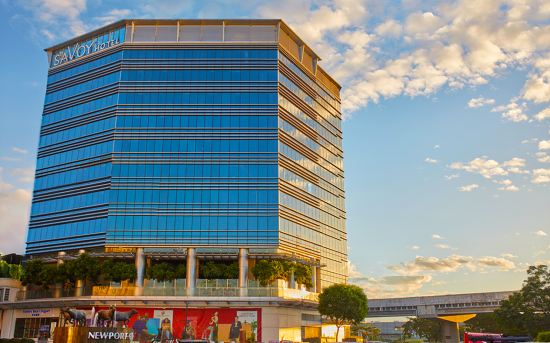
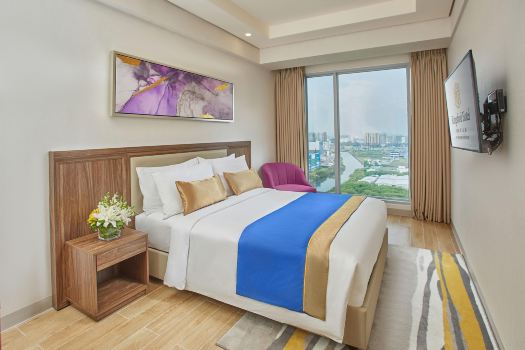
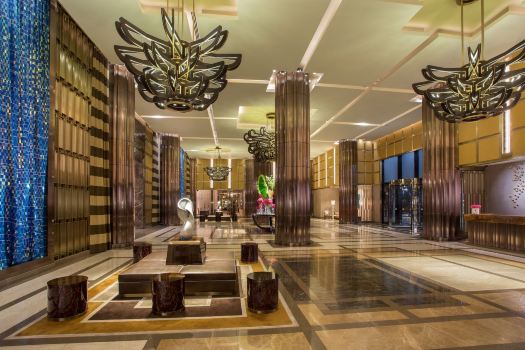
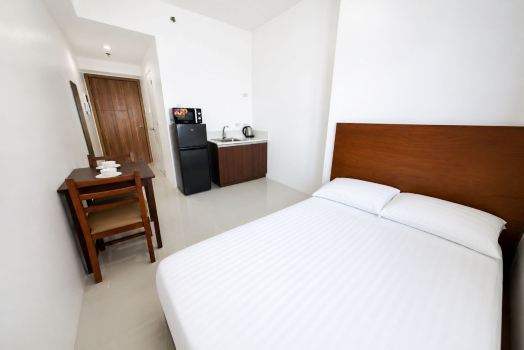
Best Hotels in Philippines
 NO.1
NO.1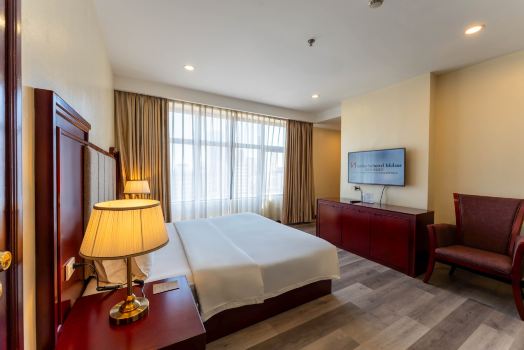

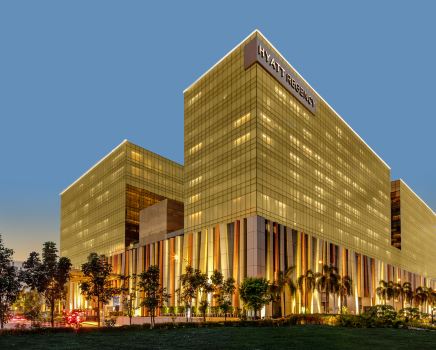
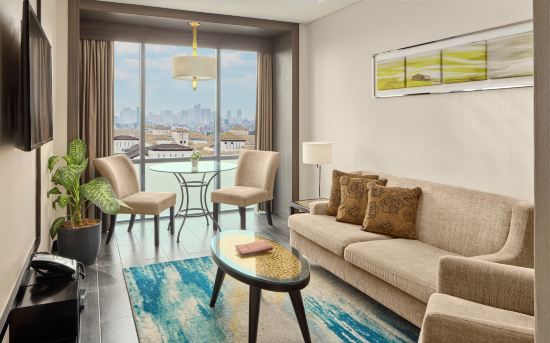

Conclusion

The Philippines visa process is straightforward as long as you prepare the right documents and apply early.
Whether you’re visiting for tourism, business, study, or work, knowing the visa requirements will make your entry smoother. If your country enjoys visa-free access, you still need to follow entry rules and respect your allowed duration of stay.
FAQ: Philippines Visa
-
Do Singaporeans need a visa to the Philippines?
-
Is there a Philippines visa on arrival?
-
Can I extend my stay in the Philippines?
-
Is the Philippines visa application available online?
-
Do I need travel insurance for the Philippines?
-
What happens if I overstay my Philippines visa?
Find Cheap Travel Deals & Explore Destinations on Trip.com
-
Popular Content
-
Top Flight Links
-
Popular Hotels
-
Popular Things to Do
-
Featured guides
-
Trip.com links
- Trip.com Customer Service
- Buy Now Pay Later
- Trip.com VIP Lounge
- Singapore Airlines Baggage Allowance
- Trip.com Contact
- How to Use Trip com Promo Codes
- Trip.com Cancellation Policy
- scoot-baggage-allowance
- Best Credit Cards
- luggage size cabin
- How to Book a Student Flight Ticket
- Best Day to Book Flights
- Flight Classes Explained
- Trip.com Flight Refund
- Singapore Airlines Change Flight
- JT924 Flight Status
- MU7705 Flight Status
- SQ869 Flight Status
- CA490 Flight Status
- ZG053 Flight Status
- MU2434 Flight Status
- CA1651 Flight Status
- Cheap flights from Singapore to Kuala Lumpur
- Plane tickets from Singapore to Fukuoka
- Cheap tickets from Singapore to Bangkok
- Plane tickets from Singapore to Shanghai
- Cheap tickets from Singapore to Manila
- Plane tickets from Singapore to Hanoi
- Plane tickets from Singapore to Seoul
- Plane tickets from Singapore to Bengaluru
- Hotels near Johor Bahru Senai International Airport
- Hotels near Hefeinan Railway Station
- Hotels near Hongcun Aju Theater
- Hotels near Zixiao Palace
- Hotels near Beijing Road
- Kuala Lumpur Hotels
- Chengdu Hotels
- Kunming Hotels
- Hong Kong Hotels
- Phu Quoc Island Hotels
- Hotel Les Matins de Paris
- Ramada by Wyndham Seoul Dongdaemun
- Mercure Guangzhou Beijing Road Pedestrian Street Hotel
- Atour Hotel (Chengdu Taikoo Li)
- Taohuawu Lijiang Snow Mountain Secret Realm Luxury Resort Hotel
- Singapore 4G eSIM | Supports Google Maps / ChatGPT | Daily/Total Data Plans | 24-Hour Billing | 1–30 Days | QR Code
- Malaysia 5G eSIM | Supports mainstream apps including TikTok, Google Maps & ChatGPT | Day Pass/Total Package | 24H Billing | 1-30 days | QR code
- Vietnam Airport VIP Fast Track Service
- VIP Fast Track service for immigration clearance at Tan Son Nhat Airport in HCM
- Huanglongjiuzhai Railway Station - Jiuzhaigou | Departure/Return | Rideshare/Private Charter | Bus/Nanny/5-9 Seater Business | Shuttle Bus | Vehicle Type Optional | Any Combination | T
- Mainland China 5G eSIM | ChatGPT Available | Day Pass/Total Data | 24-Hour Billing | 1-365 Days | QR Code
- Mainland China 5G eSIM | Supports Google Maps / ChatGPT | Daily/Total Data Plans | 24-Hour Billing | 1–365 Days | QR Code
- Mainland China/Hong Kong/Macau 5G eSIM | Dual Network | Day Pass/Total Data Package | 24-Hour Billing | QR Code
- Stockholm Yacht Charter
- Furano Yacht Charter
- Zhangjiajie Travel Essentials
- Bangkok Yacht Charter
- Guanghan Photoshoot
- Batu Caves Spa & Massage
- Pattaya Pocket Wifi Router
- China Power Bank Limit
- Trip.com Customer Service
- train to kl from singapore
- Shanghai Metro
- China Entry Requirements
- train from singapore to jb
- Renew Autopass Singapore
- China Train Map
- Thailand Plug
- universal studios singapore tickets
- Vietnam Arrival Card
- Batam Arrival Card
- 泰国插头
- Singapore Malaysia Cross Border Taxi
- China Plug
- Big Transport from Tokyo to Fukuoka
- Frankfurt Airport to City
- Bangkok to Pattaya
- Trip.com Promo Code
- Trip.com Flight Deals
- Trip.com Credit Card Promotions
- How to Book Cheap Hotels
- How to Book Cheap Flights
- Trip.com Member Rewards
- Trip Weekly Hotel Sales
- Online Hotel Booking
- Online Flight Booking
- Trip.com Travel Guide
- Book China Train Tickets
- Trip.com Seat Selection
- Singapore Public Holidays 2027
- Trip.com 优惠码
- Trip.com Travel Guides
- Trip.com 10.10 Mega Sale