
Thailand remains one of the top holiday destinations for Singaporeans thanks to its affordable shopping, famous street food, beautiful islands, and vibrant cities like Bangkok, Phuket, and Chiang Mai.
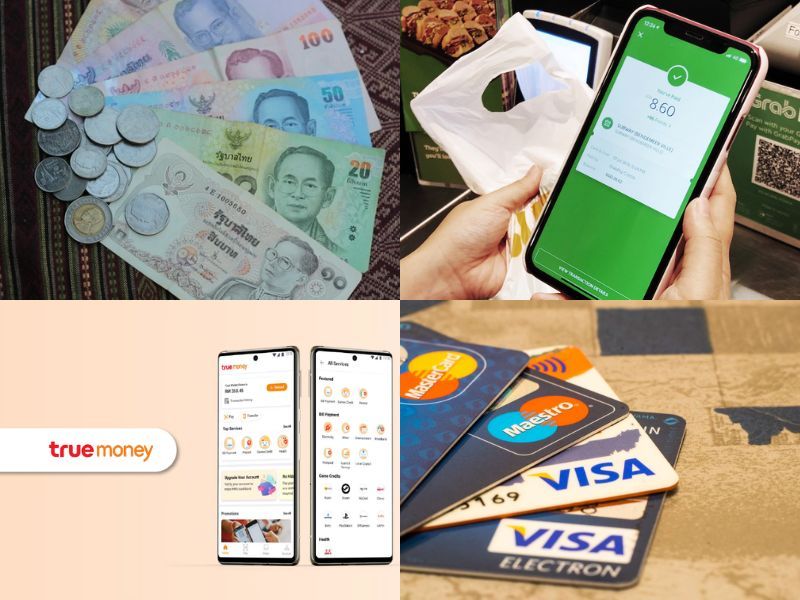
Thailand today offers a mix of traditional cash payments and modern cashless options. In major tourist areas, travellers can easily pay using cards, QR codes, and mobile apps.
However, cash still plays a major role in local markets, smaller restaurants, island destinations, and rural towns.
This guide covers everything Singaporeans need to know about payment methods in Thailand, including cards, QR payments, e wallets, PayNow integration, and smart money tips for a smoother trip.
Is Thailand a Cash or Cashless Society?
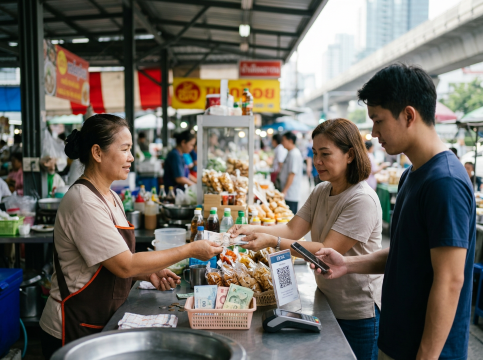
Thailand sits somewhere in between a cash and cashless society.
In cities like Bangkok, many businesses now support cashless payments. Shopping malls, chain restaurants, luxury hotels, cafes, and tourist attractions commonly accept:
- Visa
- Mastercard
- QR payments
- Mobile wallets
However, cash remains extremely important across Thailand, especially for:
- Street food stalls
- Night markets
- Tuk tuk rides
- Local taxis
- Small guesthouses
- Island shops
- Rural towns
For example, travellers visiting Chatuchak Weekend Market or local night markets may discover that many vendors only accept Thai Baht cash or local QR transfers.
Meanwhile, in malls like Siam Paragon, paying by card is usually seamless.
The best strategy is not relying on only one payment method.
Using Cash (Thai Baht) in Thailand
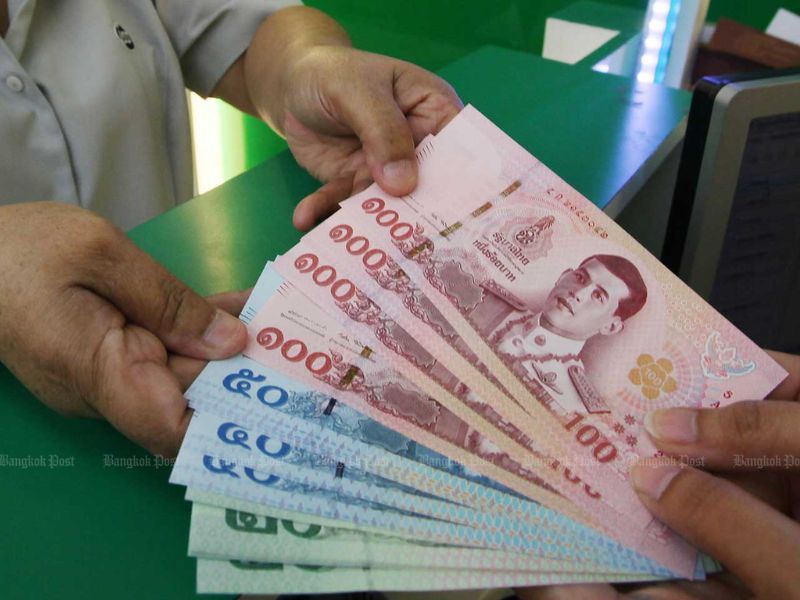
Cash remains essential in Thailand, especially outside premium tourist areas.
Even in modern cities, many smaller merchants prefer cash because it avoids card processing fees.
Thai Baht is the official currency of Thailand, and travellers should always carry enough cash for:
- Street food
- Local transport
- Market shopping
- Small entrance fees
- Tips
- Emergency situations
Small denominations are especially useful. Many vendors may struggle to provide change for large notes.
How Much Cash Should You Carry in Thailand?
The amount depends heavily on travel style.
Travel Style | Estimated Daily Cash Usage |
Budget Traveller | 800 to 1,500 THB ( S$ 30 to S$ 60 ) |
Mid Range Traveller | 2,000 to 4,000 THB ( S$ 80 to S$ 156 ) |
Luxury Traveller | 5,000 THB and above ( S$ 200 and abovr ) |
Typical daily cash expenses include:
- Street food meals
- Local transport
- Massage shops
- Night markets
- Small cafes


Paying by Credit and Debit Card in Thailand
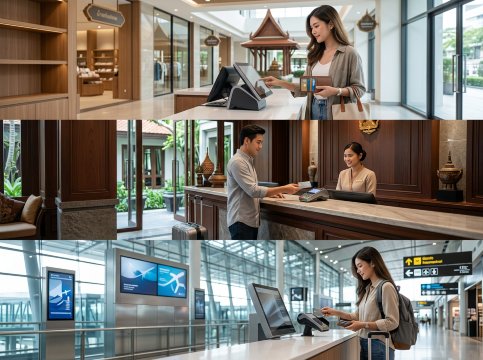
Using credit and debit cards in Thailand is convenient in major tourist areas like Bangkok, Phuket, and Chiang Mai. Visa and Mastercard are widely accepted, especially in malls, hotels, cafes, and airports, while smaller local businesses still tend to prefer cash or QR payments.
Category | Details |
Widely Accepted At | Shopping malls, hotels, airports, chain restaurants, convenience stores, tourist attractions |
Most Accepted Cards | Visa and Mastercard |
Limited Acceptance | American Express is mainly accepted at luxury hotels and upscale restaurants |
Best Cards for Travellers | Multi currency cards, travel debit cards, miles earning credit cards |
Common Payment Experience | Contactless card payment is common in malls and tourist areas |
Places That Still Prefer Cash | Street food stalls, night markets, tuk tuk rides, local shops |
Things to Check Before Travelling | Foreign transaction fees, overseas spending activation, ATM withdrawal fees, spending limits |
Smart Payment Tip | Always choose to pay in Thai Baht instead of Singapore dollars to avoid poor exchange rates |
From personal travel experience, using cards in places like ICONSIAM and Siam Paragon is usually smooth and fast, but carrying some cash is still important for smaller vendors and local markets.
🔥Save More with Up to 5% OFF
Use our promo code to enjoy up to 5% OFF (up to S$3) on your attraction tickets, tours and eSIMs! Only for new users!
E Wallets and Mobile Payment Apps in Thailand for Foreigners
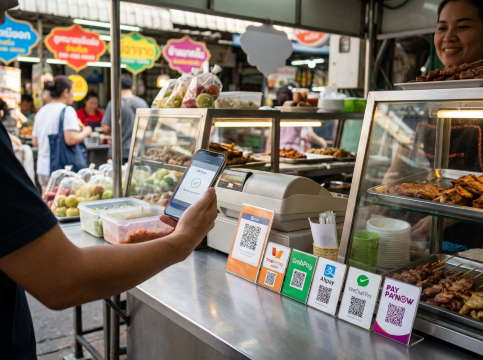
Thailand has many local and international e wallet systems.
Popular options include:
- TrueMoney Wallet
- GrabPay
- Alipay
- WeChat Pay
However, not every wallet is easy for foreigners to register.
Singaporeans often find Grab and cross border QR payments easier than opening local Thai wallets.
Can Singaporeans Use PayNow in Thailand?
Yes. Singapore's PayNow is linked with Thailand's PromptPay for participating banks.
Before travelling, it is important to check whether your banking app supports overseas QR payments and understand the related fees and limits.
What to Check Before Using PayNow in Thailand | Why It Matters |
Bank Support for Cross Border QR Payments | Not all Singapore banks support PromptPay QR payments in Thailand |
Daily Transfer Limits | Some banks set daily overseas QR payment limits |
Exchange Rate Fees | Banks may apply different exchange rates or service charges |
Internet Access | Mobile data or WiFi is needed to complete QR payments |
Supported Thai Merchants | Most tourist areas support PromptPay, but some small vendors still accept cash only |
From personal travel experience, QR payments in Thailand are very convenient in cafes, shopping malls, and local restaurants, especially in Bangkok.
However, carrying some Thai Baht cash is still useful for street food stalls, markets, and smaller shops.
TrueMoney Wallet: Can Foreigners Use It in Thailand?
TrueMoney Wallet is one of Thailand's largest digital wallets.
It is commonly accepted at:
- 7 Eleven
- Cafes
- Convenience stores
- Restaurants
- Retail chains
However, foreigner registration can be more complicated because local verification requirements may apply.
Alipay and WeChat Pay Acceptance in Thailand
Alipay and WeChat Pay are increasingly visible across Thailand's tourist areas.
They are especially common in:
- Shopping malls
- Duty free stores
- Tourist attractions
- Chinese focused businesses
Singapore travellers who already use these apps may find them useful in tourist heavy zones.
However, local Thai businesses still rely more heavily on PromptPay.
GrabPay and Grab App for Payments in Thailand
Singaporeans can conveniently continue using the Grab app in Thailand.
Useful features include:
- Grab rides
- Food delivery
- Cashless ride payments
- Saved card integration
This creates a familiar experience for Singapore travellers without needing to install additional ride hailing apps.
Grab is commonly used in:
- Bangkok
- Phuket
- Chiang Mai
- Pattaya
 NO.1
NO.1
















Quick Summary: Best Payment Methods in Thailand at a Glance
Payment Method | Best For | Advantages | Limitations |
Thai Baht Cash | Markets, transport, street food | Widely accepted everywhere | Need to carry physical cash |
Visa and Mastercard | Hotels, malls, restaurants | Convenient and secure | Foreign transaction fees may apply |
PromptPay QR | Small local payments | Fast and popular in Thailand | Requires compatible banking support |
Travel Cards | ATM withdrawals and spending | Better exchange rates | Some cards charge ATM fees |
GrabPay | Grab rides and food delivery | Convenient for Singapore users | Limited outside Grab ecosystem |
Alipay and WeChat Pay | Tourist shopping zones | Accepted in many tourist spots | More common among Chinese tourists |
Thai E Wallets | Local convenience stores | Easy for locals | Foreign access may be limited |
🔥Exclusive Hotels Deal: Up to 10% OFF for New Users
Discover the world with Trip.com! Book the perfect hotel anywhere in the world and get an unbeatable 10% discount if you're a first-time user! Download our app now and start planning your next trip with ease.
Where to Get Thai Baht: Money Changers vs ATMs vs Airport Exchange
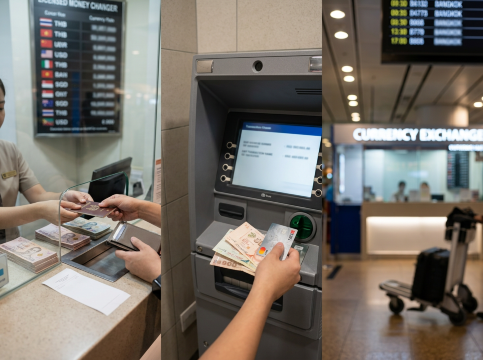
Singaporeans generally have three main ways to obtain Thai Baht.
1. Licensed Money Changers in Singapore
This is often the preferred option for better exchange rates.
Advantages:
- Competitive rates
- Easy comparison
- Convenient before departure
Good for:
- Travellers wanting immediate cash upon arrival
2. ATMs in Thailand
ATMs are widely available in cities and tourist zones.
Advantages:
- Convenient
- Competitive bank exchange rates
Things to note:
- Thai ATM withdrawal fees are common
- Some banks charge overseas withdrawal fees
Good for:
- Topping up cash during the trip
3. Airport Exchange Counters
Airport exchange counters offer convenience but usually weaker exchange rates.
Good for:
- Small emergency amounts only
Recommended Payment Strategy for Singaporeans Travelling to Thailand

For most Singapore travellers, this setup works best:
Before Departure
- Exchange some Thai Baht in Singapore
- Activate overseas card usage
- Prepare at least two cards
- Check PayNow QR compatibility
During the Trip
- Use cards for hotels and malls
- Use QR payments when convenient
- Carry cash for markets and transport
- Withdraw additional cash only when necessary
Emergency Backup
- One backup card
- Emergency Thai Baht cash
- Digital banking access
Thailand is becoming more cashless every year, but cash still remains essential in many everyday situations. Combining cash, cards, and QR payments gives Singapore travellers the most flexibility and convenience throughout their trip.







![Phuket Phi Phi Island + Maya Bay + Egg Island Day Trip [Includes Island Fee | Snorkeling]](https://ak-d.tripcdn.com/images//0586j12000n0tpgd0BF56_C_568_320.jpg)



![[Official Ferry Ticket] Phuket - Phi Phi Tonsai/Laemtong (Transfer Optional)](https://ak-d.tripcdn.com/images//0585q12000o1ncmj008A7_C_568_320.jpg)
![[Double festival special offer] Phuket Ko Racha Yai + Coral Island 1-day tour - Lazy Cat Silver Soul boat with travel photo shoot](https://ak-d.tripcdn.com/images/0354x12000e4jau3f901F_C_568_320.jpg)

![[Book Today]The Wake Up Club Adult Show Ticket Phuket [One free drink bottle | Fast ticket issuance]](https://ak-d.tripcdn.com/images/0351z12000h5optyzBA74_C_568_320.jpg)







FAQs: Payment Methods in Thailand
-
What is the main payment method in Thailand?
-
Can Singaporeans use PayNow in Thailand?
-
Can you pay by card at 7-Eleven in Thailand?
-
How do foreigners pay in Thailand?
-
Are there surcharges for paying by card in Thailand?
-
What is the best travel card for Singaporeans visiting Thailand?
-
Which e-wallets work in Thailand for tourists?