
Typhoon Champi Flight Cancellations: Latest Updates

Typhoon Champi brought Taiwan to a near standstill in late October 2026, forcing schools, offices and airports to shut as the storm tracked along the island's north-east coast.
Taiwan's transport ministry reported 979 flights cancelled in a single day — all 262 domestic services and 717 international ones with Taoyuan International Airport alone logging more than 560 cancellations.
If you were booked on a Singapore–Taipei flight, or you are planning a Taiwan trip in the coming weeks, the practical questions are the same: is my flight affected, can I get my money back, and how quickly can I rebook?
This guide walks through what happened, which airports and airlines were hit, how refunds and free rebooking work when a typhoon cancels your flight, and how to protect your next trip during Taiwan's typhoon season.
How Typhoon Champi Flights Cancelled Across Taiwan and East Asia
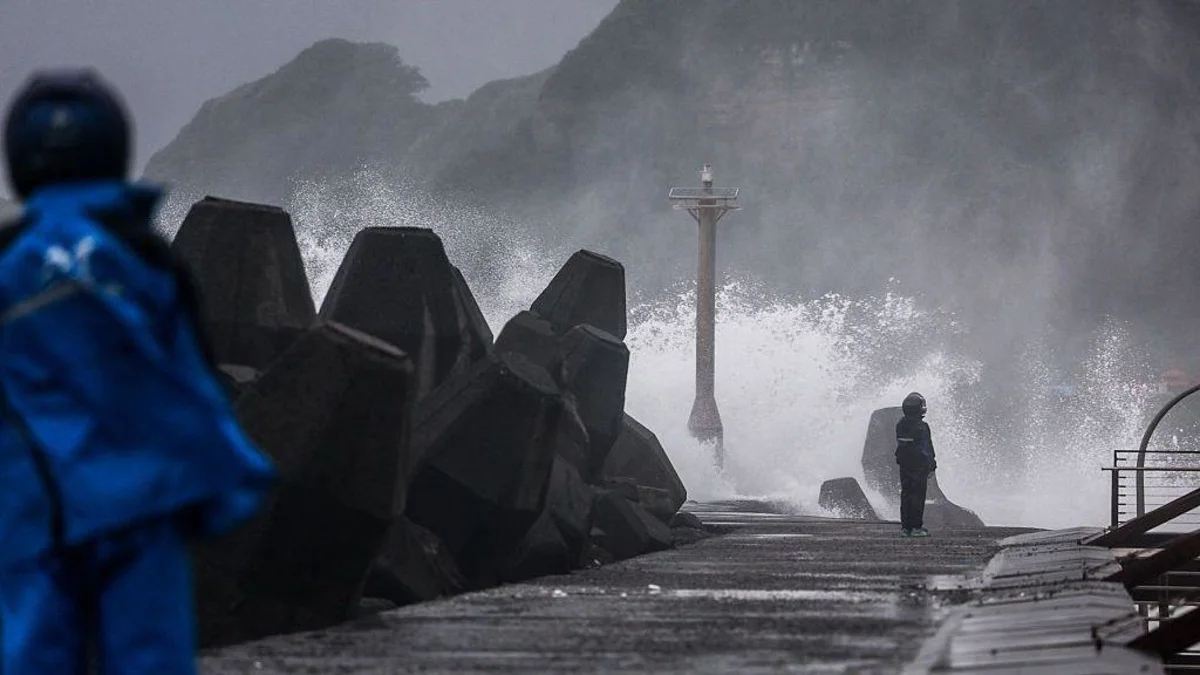
Typhoon Champi approached Taiwan through the week of 19 October 2026, prompting the Central Weather Administration to issue sea and land warnings as the storm's outer bands reached the island.
Most municipalities across Taiwan cancelled work and classes on Friday 23 October, and the near-total shutdown extended to domestic transport, with rail services curtailed and ferry routes suspended.
For aviation, the timing was especially awkward. The disruption landed on the eve of Taiwan's Retrocession Day long weekend, one of the busiest domestic travel periods of the autumn, when seat demand is already high.
Cancelling hundreds of flights did not simply strand inbound tourists — it also displaced thousands of residents trying to get home or away for the holiday.
The scale, based on official announcements:
- 979 flights cancelled on the worst day, comprising 262 domestic and 717 international services, according to Taiwan's Ministry of Transportation and Communications.
- More than 560 cancellations at Taoyuan International Airport on 23 October, including passenger and cargo flights, according to the airport operator.
- Regional knock-on effects across East Asia, with airlines issuing advisories for Taipei, Kaohsiung and Okinawa services and adjusting schedules through 24 October.
By 24 October, winds had eased and Taoyuan began clearing its backlog, though airlines warned that rebooking the displaced passengers would take several days.
Local reports also described one fatality and more than 160 injuries, along with widespread power outages; those figures come from local media coverage and should be treated as provisional.
For travellers from Singapore, the practical takeaway is that the storm itself has moved on, but its effects linger in full flights, waitlists and overworked airline service desks. If your booking was affected, act on it now rather than waiting for a call from the airline.
Which Airports Were Affected by Typhoon Champi Flight Cancellations
The disruption was island-wide, but not evenly spread. The airports that matter most to Singapore travellers:
- Taoyuan International Airport (TPE), Taiwan's main long-haul gateway and the arrival point for most Singapore–Taipei flights. It carried the heaviest international cancellation load, with operations resuming progressively from 24 October.
- Taipei Songshan Airport (TSA), the city-centre airport handling domestic routes and a handful of regional international services. Domestic flights were cancelled in full on 23 October.
- Kaohsiung International Airport (KHH), southern Taiwan's main gateway. Thai Airways, for example, flagged possible disruption to its Taipei and Kaohsiung services between 22 and 24 October.
- Taichung International Airport (RMQ) and other regional airports, where schedules were also trimmed or suspended depending on local conditions.
Airport reopening was staged rather than simultaneous. Taoyuan restarted arrivals and departures once wind speeds dropped and ground crews had completed safety checks, but the first days after reopening were marked by delays, retimed flights and tight connections.
If you are travelling in the next week, check your flight status directly with the airline or on the airport's live departure board before leaving for Changi, and do not head to Taoyuan until your flight is confirmed as operating.
Airlines Reporting Typhoon Champi Cancelled Flights
Both full-service and low-cost carriers adjusted schedules, and the notices came through different channels depending on who you booked with.
- Singapore Airlines and Scoot issued advisories covering Singapore–Taipei flights on 23 and 24 October, with Scoot services among those cancelled. Both publish disruption notices on their websites and push updates through their apps.
- China Airlines and Tigerair Taiwan moved early, announcing changes to Taiwan–Okinawa flights from 21 October as the storm approached.
- Thai Airways issued a travel advisory covering Taipei and Kaohsiung between 22 and 24 October.
- Peach Aviation, the Japanese low-cost carrier with several daily Taipei–Tokyo and Taipei–Osaka services, posted flight-status updates for its Taiwan network and directed passengers on cancelled flights to rebook onto other Peach services or request a refund through its website.
In a shutdown of this size, most carriers serving Taiwan will have touched the waiver process in some form, even if your specific flight was merely retimed.
Notifications typically go out by email, SMS and app push, but they can arrive late or land in spam. If you booked through a platform rather than directly with the airline, the platform, not the airline's app is usually where your ticket can be changed, because the booking sits with the agency.
That is also why it pays to check both sides: the airline's waiver page tells you what you are entitled to, while your booking platform is where you actually action it.
If you booked on Trip.com, your flight status and any change or refund options appear in the app alongside your itinerary, so you can compare them with the airline's published policy before submitting a request.
Typhoon Champi Flight Cancellation Refund: Your Rights and Options
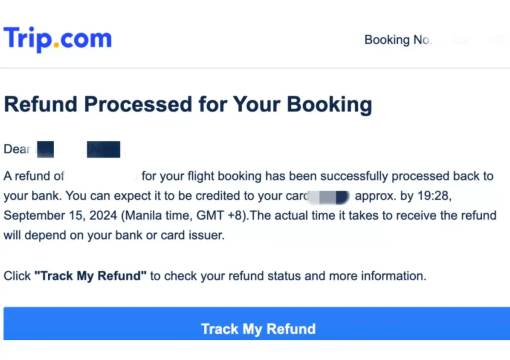
A typhoon is treated as an extraordinary circumstance outside the airline's control. In practice, that means two things. First, the airline generally does not owe you compensation for the delay itself or for consequential costs such as missed hotel nights.
Second, if the airline cancels your flight, you are normally entitled to either a refund of the unused portion of your ticket or a rebooking, and you should not have to pay a change fee for the rebooking.
Most travellers will be offered one of three outcomes:
- A full refund of the unused ticket, including taxes and surcharges, back to the original payment method.
- Free rebooking to a later flight, usually within a defined waiver window and subject to seat availability in the same cabin.
- A travel credit or voucher, which some low-cost carriers offer as their default. You are not obliged to accept a credit where a cash refund is due, but in practice low-cost fares often carry restrictive refund terms, so read the waiver wording carefully.
There are two caveats worth knowing before you click anything. Low-cost carriers and full-service airlines do not operate the same refund rules: a budget ticket may refund only taxes and fees, or issue credit instead of cash.
And a "no-show" can extinguish your rights, if your flight was cancelled, do not simply abandon the booking without contacting the airline or your booking platform.
Keep your paperwork. The cancellation email, your booking reference, boarding passes for any segment already flown, and receipts for meals or an extra night's accommodation are all useful if you claim on insurance later.
Refunds to a credit card typically take 7 to 15 business days to appear after approval, though the issuing bank can add a few more days, and low-cost carrier credits can take longer to be issued.
If you booked through Trip.com, you can start a refund or change request from "My Orders" in the app without calling a hotline, and track the status in the same place.
Have your booking number and the airline's cancellation notice to hand, since the request will be matched against the airline's waiver.
How to Apply for a Taiwan Flight Cancellation Refund Step by Step
Step 1: Confirm the cancellation is official. Check the airline's website or your booking platform for a status of "cancelled" rather than "delayed". A voluntary decision not to fly is treated differently from an airline cancellation.
Step 2: Read the waiver terms. Airlines publish a typhoon waiver page listing eligible travel dates, routes and the rebooking window. This tells you whether refund, rebooking or both are available.
Step 3: Go to the source of your booking. Booked direct? Use the airline's manage-booking page. Booked through a platform? Use the platform's order page — the airline cannot usually process a refund on an agency ticket.
Step 4: Choose refund or rebooking, and submit. Select the option, confirm the passenger details and submit. If you are rebooking, check the new flight's departure time and whether it operates from the same airport.
Step 5: Record the reference number. Screenshot the confirmation and note the case number. If nothing has moved after about 15 business days, follow up with the booking channel and quote the reference.
Step 6: Keep every receipt. Meals, transport and extra accommodation may be claimable on travel insurance even where the airline owes you nothing beyond the ticket.
Travel Insurance and Typhoon Champi: Can You Claim?
Travel insurance is where the extra costs often get recovered, because airline refunds cover the ticket but not the hotel night you lost or the extra day you had to stay.
Most comprehensive policies include trip disruption or travel delay benefits, and a typhoon is normally treated as a natural disaster rather than an excluded event. Typical benefits include reimbursement for unused accommodation and tours, additional meals and accommodation during a delay, and a lump sum for a long delay. The important limitation is timing: policies usually exclude claims arising from a storm that was already forecast or named when you bought the policy. Insurance purchased after the typhoon warning was issued will not cover Champi.
To claim, you will generally need official proof of cancellation from the airline, your policy number, boarding passes and receipts for the extra expenses. Most insurers require claims within about 30 days of the event. Some credit cards also bundle travel disruption cover when you pay for the ticket with that card, so check your card benefits before assuming you are uninsured.
Rebooking After Typhoon Champi Cancelled Flights: Alternative Routes to Taiwan
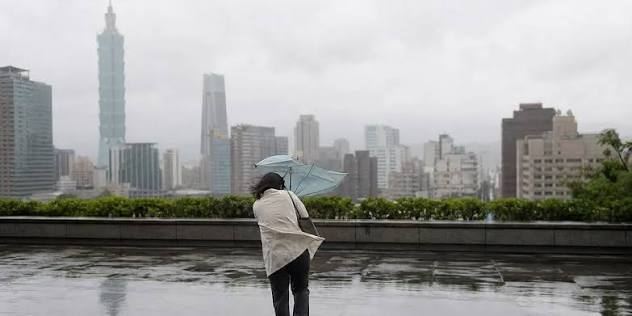
With Taoyuan back in operation since 24 October, the challenge has shifted from weather to capacity. Displaced passengers, the long-weekend rush and airlines' own aircraft repositioning have combined to fill the first available seats, so flexibility matters more than loyalty to a particular departure time.
From Singapore, SIN–TPE is the most competitive route, served by Singapore Airlines, Scoot, China Airlines and Taiwan's other international carriers.
That density helps: if your original flight is full, there is usually another operator with a seat within a day or two.
If your destination is southern Taiwan, flying into Kaohsiung rather than Taipei can be quicker than landing at Taoyuan and taking the high-speed rail south, but Kaohsiung has fewer direct options from Singapore, so many travellers connect through Taipei, Hong Kong or Bangkok.
From Kuala Lumpur, KUL–TPE is served by AirAsia X, Malaysia Airlines and Taiwan's carriers, giving another set of seats if you can route through Malaysia.
The general principle for any disruption: widen your search rather than fixating on your original flight number. Look at neighbouring airports, earlier departures the same day, and one-stop options through hubs that were not affected.
Two warnings. First, demand spikes after a typhoon, and fares on the first available flights rise accordingly; the cheapest seat is usually the one you book soonest.
Second, check that your connection is not routing through another storm-affected area. Champi disrupted schedules in Okinawa and other parts of East Asia, so a "clever" connection through a secondary airport can leave you stranded twice.
Trip.com's flight search lets you compare the next available Singapore–Taipei and Singapore–Kaohsiung departures in one view, including alternate dates, which is faster than checking carriers one by one when seats are moving.
Best Time to Rebook Your Typhoon Champi Cancelled Flight
Typhoons typically clear an area within 24 to 48 hours, and Taiwan's airports generally resume operations within 12 to 48 hours of the warning being lifted, depending on damage and wind. Champi followed that pattern closely: the worst of the weather passed on 23 October and Taoyuan was handling flights again from 24 October.
The best moment to rebook is as soon as the airline publishes its waiver and the airport confirms resumption. Seats on the first post-storm departures go quickly, and passengers who wait for a phone call rather than checking the app usually end up further down the queue. Note the deadline on your waiver — free changes often must be made within a set period and travel completed within a defined window, sometimes 7 to 30 days, depending on the carrier. Missing it can mean paying a fare difference you did not need to pay.
Accommodation Options If You're Stranded Due to Typhoon Champi
If you are stuck in Taiwan or cannot reach it, accommodation becomes the second half of the problem. Airport-area hotels around Taoyuan fill first, followed by properties near Taipei Main Station and the city's MRT hubs. During a typhoon, demand spikes within hours and walk-up rates rise.
Book a room with free cancellation rather than the cheapest prepaid rate, and take it early even if you are not certain you will need it a cancellable booking costs nothing if your flight goes ahead.
Ask about late checkout if your new flight is overnight, and keep the folio, since it is the document your insurer will want. Trip.com's hotel search lets you filter for free cancellation in Taoyuan and central Taipei, which is the simplest way to keep your options open while your flight status settles.
Hotels in Taipei
 NO.1








Staying Connected During Typhoon Champi Flight Disruptions
During a disruption, your phone is your check-in desk, your queue ticket and your news source. Airlines push schedule changes through their apps before the information reaches airport screens, and rebooking is often faster online than at a counter.
You will also want to reach family, and to keep your booking confirmations accessible when the terminal Wi-Fi is overloaded.
A local SIM or eSIM solves most of this. Taiwan's airport SIM counters can be busy exactly when you need them most, so ordering an eSIM before you fly and installing it while you still have reliable home connectivity, is the lower-risk option.
Trip.com offers Taiwan SIM and eSIM options that can be arranged before departure, so data is ready the moment you land.
Three habits help regardless of provider: download your airline's app and Trip.com's app and turn on flight-status notifications; screenshot your booking reference, e-ticket and hotel address so they work offline; and carry a power bank, because charging points at a disrupted airport are the first thing to be occupied.
How to Prepare for Typhoon Champi and Future Flight Cancellations in Taiwan
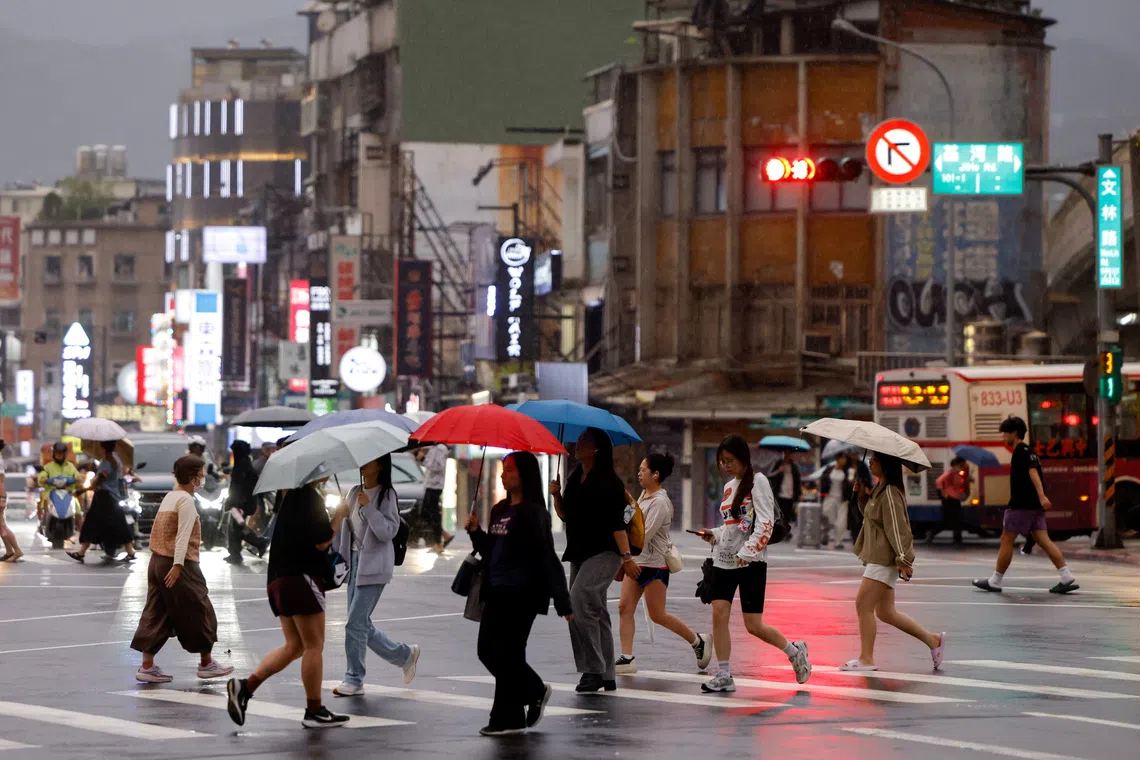
Taiwan's typhoon season runs roughly from July to October, with the highest frequency between July and September. Champi arrived late in the window, which is a useful reminder that the shoulder of the season can still produce a major shutdown.
The preparation that actually changes outcomes is boring and cheap: buy a flexible fare or a refundable ticket, add travel insurance at the time of booking rather than after a storm is named, and build a buffer day into any tight itinerary.
A 24-hour cushion between your flight and a cruise, a wedding or a non-refundable tour costs little and absorbs most of the risk.
Practically, that means:
- Book flexible fares where the price difference is modest, especially for trips that hinge on a fixed date.
- Buy insurance early, with a natural disaster or travel disruption benefit, and check the "known event" exclusion.
- Monitor warnings from 72 hours out, and read the airline's waiver page daily once a storm is named.
- Set flight alerts so a cancellation reaches you before you leave for the airport.
- Keep a plan B — a cancellable hotel, a second routing, and enough budget for one extra night.
The final point is the pleasant one: typhoons usually pass quickly, and the days that follow are often clear.
Travellers who rebook for 48 to 72 hours later frequently get better weather than they would have had on their original dates.
Choosing Flexible Tickets to Protect Against Typhoon Cancellations
The difference between a refundable and a non-refundable fare is smaller than most travellers assume, particularly on full-service carriers where a flexible economy fare may cost 20 to 40 per cent more than the deepest discount.
On a trip where a typhoon could wipe out the first two days, that premium is often cheaper than rebooking at the last minute.
Low-cost carriers work differently: their base fares are usually non-refundable, with only taxes and fees returned if you cancel voluntarily, and their typhoon waivers typically offer rebooking or credit rather than cash. If you fly budget, treat the waiver policy as part of the ticket price and read it before you pay. When searching on Trip.com, use the refundable or changeable fare filter to see what flexibility actually costs on your dates before you commit to the cheapest option.
Monitoring Typhoon Warnings Before Your Taiwan Flight
Taiwan's Central Weather Administration issues typhoon warnings in two stages: a sea warning for coastal waters, followed by a land warning as the storm's centre approaches.
Flight cancellations usually follow the land warning and the airport's own operational decisions, so a land warning is the point to start seriously reworking your plans.
Reliable sources to bookmark:
- Taiwan Central Weather Administration for official warnings, rainfall and wind forecasts.
- Taoyuan International Airport's live flight board and the Civil Aeronautics Administration for airport status.
- Japan Meteorological Agency and the Hong Kong Observatory if your route connects through Japan or Hong Kong.
- Your airline's travel advisory page, which is where the waiver terms are published.
Start checking three days before departure, then daily, then hourly on the day.
If a land warning is issued for your arrival airport, contact your booking platform before the airline's hotline queue builds, the earlier your request is logged, the more rebooking options you will have.
FAQ
-
Are Typhoon Champi flights cancelled for all Taiwan airports?
-
How do I get a refund for my Taiwan flight cancelled due to Typhoon Champi?
-
Can I rebook my Typhoon Champi cancelled flight for free?
-
How long does it take for Taiwan airports to reopen after a typhoon?
-
Does travel insurance cover Typhoon Champi flight cancellations?
Find Cheap Travel Deals & Explore Destinations on Trip.com
-
Popular Content
-
Popular Flights
-
Popular Hotels
-
Popular Things to Do
-
Featured guides
-
Trip.com links
- Cheap flights from Shanghai to Taipei
- Cheap flights from Seoul to Taipei
- Cheap tickets from Ho Chi Minh City to Taipei
- Cheap tickets from Singapore to Taipei
- Cheap tickets from Bangkok to Taipei
- Cheap tickets from Guangzhou to Taipei
- Plane tickets from Manila to Taipei
- Plane tickets from Kuala Lumpur to Taipei
- Cheap flights from Osaka to Taipei
- Cheap flights from Okinawa to Taipei
- Plane tickets from Jakarta to Taipei
- Plane tickets from Hong Kong to Taipei
- Cheap tickets from Mabalacat to Taipei
- Plane tickets from Penang to Taipei
- Cheap tickets from Tokyo to Taipei
- ILLUME TAIPEI
- Miramar Garden Taipei
- Roaders Plus Hotel Taipei Station
- Solaria Nishitetsu Hotel Taipei Ximen
- Inhouse Hotel
- Caesar Park Hotel Taipei
- MAYERINN
- Taipei Garden Hotel
- Just Sleep Ximending
- Hotel Midtown Richardson
- Meworld Hotel Taipei Main Station
- Sotetsu Grand Fresa Taipei Ximen
- MGH Mitsui Garden Hotel Taipei Zhongxiao
- Cosmos Hotel Taipei
- Hotel Papa Whale
- Caesar Metro Taipei
- HINOEN Hotel
- Tango INN Taipei Kaifong
- Palais de Chine Hotel
- Regent Taipei
- One-way shuttle from Sun Moon Lake to Taipei
- From Taipei: Yehliu, Shifen, Houtong & Jiufen One-Day Tour
- Valid across Taiwan - Pizza Hut instant gift voucher
- Explore Yangmingshan & Beitou 1-day tour
- Professional guide from Taiwan, China | Chinese / English / Russian / Japanese / Korean-speaking + professional reception
- China Power Bank Limit
- 中国地图
- Hong Kong Public Holidays 2027
- Trip.com Customer Service
- train to kl from singapore
- Shanghai Metro
- China Plug
- Thailand Plug
- Taiwan Plug
- Singapore Public Holiday 2027
- What to Buy in Shenzhen
- China Entry Requirements
- universal studios singapore tickets
- China Train Map
- China Train Luggage
- Big Transport from Tokyo to Fukuoka
- Frankfurt Airport to City
- Osaka Station to Kyoto Station
- Trip.com Promo Code
- Trip.com Flight Deals
- Trip.com Credit Card Promotions
- How to Book Cheap Flights
- Trip.com Member Rewards
- Trip Weekly Hotel Sales
- Online Hotel Booking
- Online Flight Booking
- Trip.com Travel Guide
- Book China Train Tickets
- Trip.com Seat Selection
- Singapore Public Holidays 2027
- Trip.com 优惠码
- Trip.com Travel Guides
- Trip.com 11.11 Mega Sale