 1411 booked







🔥Get 3% Off Your First Train Ticket Booking!
As a special treat, Trip.com is offering a 3% discount on your first train ticket booking. Simply claim your coupon and enjoy a seamless travel experience.

Planning a trip to Mainland China, whether it's a shopping getaway to Shenzhen or a longer holiday in Beijing, Shanghai or Chengdu? Besides booking your flights, hotels and high-speed train tickets, getting your payment methods ready should be part of your pre-trip checklist.
Unlike Singapore, where cash, cards and mobile wallets are commonly used, everyday payments in China rely heavily on QR codes. From shopping malls and restaurants to street food stalls and public transport, Alipay and WeChat Pay are widely used across the country.
For Singaporean travellers, a few questions are worth sorting out before departure: Which is easier to use, Alipay or WeChat Pay? Can you register with a Singapore mobile number? Can you link your Singapore-issued Visa or Mastercard? And can you use local e-wallets such as DBS PayLah! or OCBC for payments in China?
This guide compares Alipay and WeChat Pay, covering payment fees, overseas bank card setup, public transport, restaurant payments and their key differences. We'll also look at alternative payment options available to Singaporeans, so you can prepare your digital wallet before your China adventure.
If you already use DBS PayLah!, OCBC Digital, Changi Pay or other mobile payment apps in Singapore, you might be wondering whether you can use them directly in Mainland China.
The good news is that you may not need to set up a completely new payment account. Some Singapore payment services support cross-border QR payments in China, allowing you to pay participating merchants without first transferring money into a separate Chinese wallet.
Alternatively, you can download the Mainland China versions of Alipay and WeChat, then link an eligible Singapore-issued Visa or Mastercard.
There are two main ways Singaporeans can make mobile payments in China. Here's how they compare:
Comparison | Singapore payment apps | Mainland China Alipay and WeChat Pay |
|---|---|---|
Examples | DBS PayLah!, OCBC, Changi Pay | Alipay and WeChat Pay |
Account registration | Use your existing Singapore account | Register using an eligible international mobile number |
Payment source | Depends on the Singapore wallet and linked funding source | Eligible international Visa, Mastercard and other supported bank cards |
Payment currency | RMB is displayed, with conversion and settlement handled according to the wallet's terms | Payments are made in RMB, with foreign currency conversion handled according to the card network and issuing bank |
Merchant acceptance | Participating merchants that support the relevant cross-border payment network | Broad acceptance across participating Alipay and WeChat Pay merchants |
Additional fees | Depends on the Singapore wallet's terms | A 3% platform service fee generally applies to individual transactions above RMB200 when using an overseas bank card |
Best for | Travellers who prefer using their existing Singapore payment apps | Travellers who want access to China's local payment ecosystem |
Some Singapore payment services support QR payments at participating merchants in Mainland China.
📢Important: Cross-border payment support does not mean every merchant will accept every Singapore wallet. Check the supported QR network, payment limits and exchange rate before travelling.
Yes, especially if you are planning a longer trip or visiting several Chinese cities.
Although Singapore payment apps are becoming more convenient for overseas QR payments, having Alipay and WeChat Pay gives you additional flexibility.
Here are a few things to know:
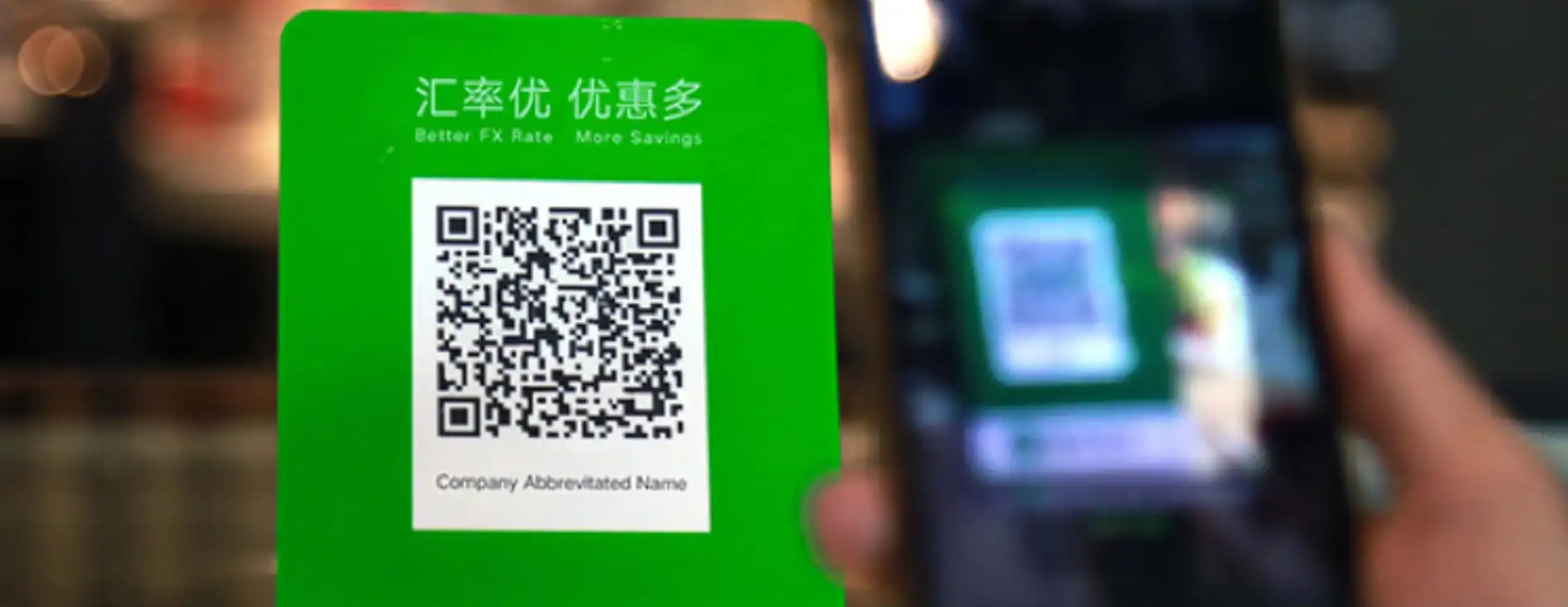
If you're using the Mainland China version of the app to link an international credit card issued in Hong Kong, like Visa / Mastercard, here are the latest 2026 rules on fees and transaction limits:
Comparison items | Alipay (Mainland China version) | WeChat Pay (Mainland China version) |
|---|---|---|
Supported card types | Supports Visa / Mastercard / UnionPay cards issued in Singapore | Supports Visa / Mastercard / UnionPay cards issued in Singapore |
Single transaction of RMB 200 or less | No platform service fee | No platform service fee |
Single transaction over RMB 200 | A 3% platform service fee will be charged on the total transaction amount | A 3% platform service fee will be charged on the total transaction amount |
Per-transaction limit | Equivalent to USD 5,000 | Equivalent to USD 5,000 |
Annual cumulative transaction limit | Equivalent to USD 50,000 | Equivalent to USD 50,000 |
Mainland China bank account requirements | Optional | Optional |
Note: The 3% mentioned above is a service fee charged by the payment platform and does not include any foreign transaction fee (CBF) your Hong Kong card issuer may charge. The actual amount charged will be based on your credit card statement.
When you use Alipay or WeChat Pay with a Hong Kong credit card linked, there’s no fee on single transactions of RMB 200 or less; for any single purchase of RMB 201 or more, a 3% service fee is applied to the entire transaction amount, not just the portion over RMB 200.
So if you come across purchases at a restaurant or mall that can be settled separately, feel free to politely ask the staff whether you can split the payment to reduce transaction fees.
When deciding which is easier to use WeChat Pay or Alipay the key is how you’ll actually use them on the road. The two apps differ significantly in what they’re built for and how well they suit travelers:
Comparison dimensions | Alipay | WeChat Pay |
|---|---|---|
Key Strengths | Focused on integrating payments, public transit, and business travel services | Social ecosystem, food-ordering mini programs, and small-business coverage |
Interface user-friendliness | Comes with an international interface, and English support is solid | Mostly in Chinese; some mini apps don’t offer a bilingual interface |
Public Transportation | Transit QR codes offer wide coverage across major cities nationwide, and getting started is a breeze. | You'll need to use each city's transit app to ride |
Order food and drinks | Supports QR code ordering in some places, but it's less widespread than WeChat. | QR code ordering is mainstream at restaurants in Mainland China (via WeChat mini programs) |
Comprehensive Travel Integration | Tickets to attractions, food delivery, and ride-hailing—all in one place | You'll need to individually search for and authorize the relevant mini programs |
When traveling to Mainland China, never rely on a single e-wallet. We recommend preparing in the following order of priority:
Payment Methods | Applicable Scenarios | Fees and Costs | Pros | Cons |
|---|---|---|---|---|
Alipay | Everyday retail purchases, public transit (subway/bus QR ride codes), ride-hailing (DiDi), attraction ticket bookings | • Single transaction of RMB 200 or less: No platform service fee | • Clear interface, supports quick verification with a Singapore passport and a Hong Kong phone number | Some street stalls or independent operators’ personal payment QR codes don’t support payments made with Hong Kong credit cards. |
WeChat Pay | QR code ordering for dine-in at restaurants (WeChat mini programs), small businesses, tea shops, and convenience store purchases | • Single transaction of RMB 200 or less: No platform service fee | • Deeply integrated with WeChat mini programs, it's the go-to way for QR code ordering at restaurants across Mainland China | • Account security and risk control reviews are relatively strict |
Renminbi (RMB) cash | Street stalls, small purchases, remote attractions, an emergency backup when your phone runs out of battery or the network goes down | It depends on the exchange rate markup at Hong Kong money changers or banks before you depart; withdrawing cash from ATMs in mainland China will incur foreign ATM withdrawal fees | • No need to rely on your smartphone, internet connection, or power | • Carrying lots of cash comes with a risk of losing it |
Physical Hong Kong credit card | Check-in deposits and checkout at international star-rated hotels, major department stores, and spending on high-end luxury brands | According to the rules set by Hong Kong card issuers (Visa / Mastercard foreign transaction fees are typically around 1.95%; UnionPay cards usually don't charge foreign transaction fees) | • No need to link a mobile app ahead of time | Adoption is extremely limited; most small and mid-sized restaurants, taxis, and neighborhood mom-and-pop shops generally can’t process foreign-issued physical cards. |
Digital Renminbi (e-CNY) | Large shopping malls, official attractions, select public transportation pilot programs, and duty-free shops that accept the digital renminbi (e-CNY) | Top up via the official "Digital RMB" app; generally settled at the real-time official exchange rate, with no transfer or transaction fees | • Issued by the People's Bank of China, with a high level of security | • Merchant acceptance still lags behind Alipay and WeChat Pay |
When it comes to getting around, Alipay’s user experience is significantly better than WeChat Pay’s.
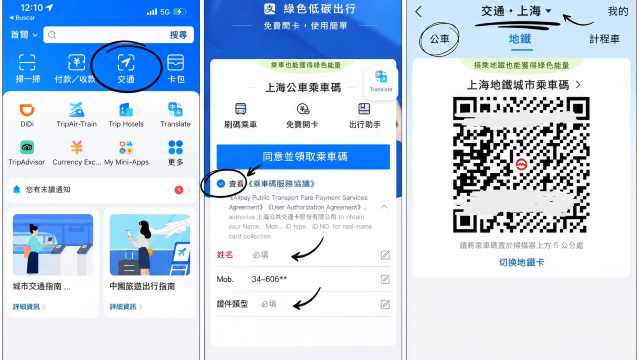
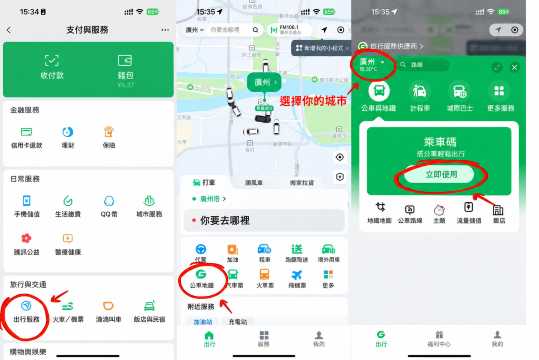
If you’re not planning to take public transit, using a rideshare is a very cost-effective option.
When you hail a traditional taxi on the street, you'll find that drivers can vary in the ways they prefer to accept payment:
📌Getting around recap: If you’ll mainly be taking the city subway, buses, and ride-hailing, Alipay’s flow is more consistent and setup is smoother; but if you’ll frequently need to pay individual drivers directly, having both apps ready is the most thorough plan.
As a special treat, Trip.com is offering a 3% discount on your first train ticket booking. Simply claim your coupon and enjoy a seamless travel experience.

When you're shopping at brick-and-mortar malls, chain convenience stores, or online in Mainland China, Alipay and WeChat Pay are neck and neck in popularity, but each plays a distinct role in different business ecosystems:
At major shopping malls (like The MixC in Shenzhen and Plaza 66 in Shanghai) and at large chain convenience stores, checkout counters always support both Alipay and WeChat Pay.
If you’re shopping through Alibaba platforms like Taobao, Tmall, or Freshippo (Hema Fresh) while traveling, Alipay is the best and most compatible way to pay. Checkout and order syncing are seamless, and after-sales refunds will be sent back via the original route to Alipay or your linked card.
On platforms like JD.com, in addition to their own payment methods, WeChat Pay is usually supported, while whether Alipay is accepted depends on the specific settlement terms. Before shopping online, Hong Kong travelers should rely on the final payment options shown on the checkout page.
At night market food stalls, street vendors, or small local shops, you'll find that most owners simply use a printed static QR code to accept payments.
Use our promo code to enjoy up to 5% OFF (up to S$3) on your attraction tickets, tours and eSIMs! Only for new users!
In dining settings, the answer to "Which is easier to use—WeChat Pay or Alipay?" is crystal clear: WeChat Pay holds an overwhelming advantage in the dining ecosystem.
Big-name restaurant chains (like Haidilao and Tai Er Chinese Sauerkraut Fish) usually offer a variety of ways to order and pay—show your payment QR code at the counter, use a self-checkout kiosk, or pay on a tablet. Both Alipay and WeChat Pay work seamlessly.
These days across mainland China, the vast majority of small and mid-sized restaurants have ditched paper menus altogether and instead put a QR code in the corner of the table:
When you’re picking up street snacks or stopping by an independent tea shop, some merchants offer a unified aggregate QR code (meaning it works whether you scan with Alipay or WeChat). However, chain brands like HEYTEA and Nayuki’s Tea likewise rely on WeChat Mini Programs for online queuing and ordering ahead for pickup, making WeChat undeniably more practical for dining.
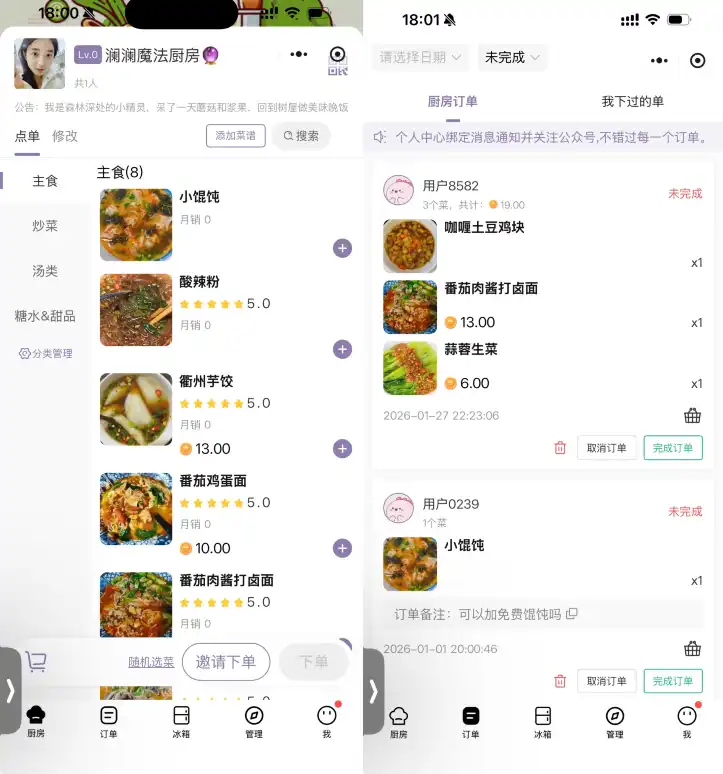
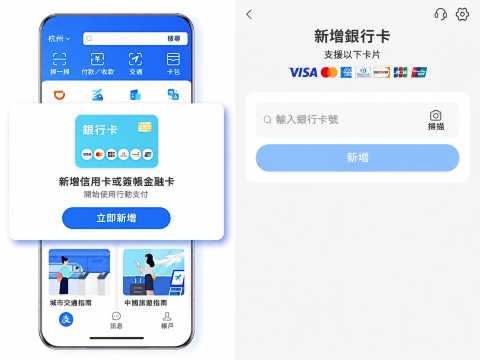
Hong Kong travelers can complete the registration and card linking for the Mainland China version of Alipay before departure, right in Hong Kong:
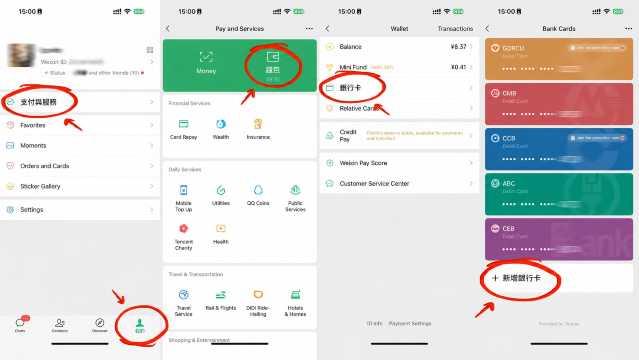
Alipay and WeChat Pay make travelling around Mainland China much easier, but having a Singapore-issued Visa or Mastercard linked to your account does not guarantee that every payment will go through.
If your QR code payment gets declined at a restaurant, shopping mall or tourist attraction, here are some common reasons and what you can do.
Tip: Before your trip, check your bank's overseas transaction settings and make sure you can receive verification messages while travelling.
For international bank cards, a 3% service fee generally applies to individual transactions above RMB200, while transactions of RMB200 or less are generally exempt. The applicable limits and fees should be checked in the payment app before purchase.
China is increasingly cashless, and mobile payments are widely used for shopping, dining, transport and everyday purchases. For Singaporeans visiting for the first time, preparing a few things before departure can make the journey much smoother.
What to prepare | Why it matters |
|---|---|
Valid Singapore passport | Required for immigration, hotel check-in and other identity checks. |
Alipay and WeChat Pay | Set up your accounts and link an eligible international bank card before departure. |
RMB cash | Keep some Chinese yuan for small shops, markets and situations where mobile payments are unavailable. |
Singapore bank cards | Bring at least one physical Visa or Mastercard as a backup, and check overseas spending settings. |
China travel eSIM or roaming plan | Arrange mobile internet access before departure so you can use payment, navigation and booking apps. |
Portable charger | Useful for keeping your phone charged throughout a full day of sightseeing and mobile payments. |
Besides Alipay and Wechat Pay, there are several apps worth downloading before your trip. They can help with transport, food, navigation and sightseeing.
App | Main use | Why Singaporeans should download it |
|---|---|---|
Trip.com | Flights, hotels, high-speed trains and attraction tickets | Book your travel essentials in advance, compare prices and manage your bookings in one place. |
Alipay | Mobile payments and transport | Link an eligible Singapore-issued international bank card to pay at participating merchants. You can also access supported transport services. |
Messaging, WeChat Pay and mini programs | Useful for communicating with local contacts and accessing restaurant ordering or other services through mini programs. | |
Amap (Gaode Maps) | Navigation and public transport | Helpful for finding walking routes, subway stations and directions around Chinese cities. |
Baidu Maps | Navigation and location searches | A useful alternative for finding local businesses, attractions and directions. |
DiDi | Ride-hailing | Book a car through the app instead of having to explain your destination to a taxi driver. |
Dianping | Restaurant reviews and local recommendations | Discover popular restaurants, local food spots and places to visit. |
Meituan | Food delivery and local services | Convenient for ordering food and exploring local deals, although some services may require additional account or payment verification. |
Discover the world with Trip.com! Book the perfect hotel anywhere in the world and get an unbeatable 10% discount if you're a first-time user! Download our app now and start planning your next trip with ease.
So, should you download Alipay or WeChat Pay before travelling to Mainland China? The good news is that you don't necessarily have to choose just one. Both apps are useful, and having both gives you more flexibility when making payments.
What you need | Recommended app | Why |
|---|---|---|
Everyday shopping and dining | Alipay | Convenient for scanning merchant QR codes and making payments with eligible overseas bank cards. |
Public transport | Alipay | Offers access to supported transport payment services in many Chinese cities. |
Restaurant ordering | WeChat Pay | Useful for restaurants that use WeChat mini programs for digital menus and ordering. |
Messaging and communication | Widely used for communicating with local businesses, tour operators and contacts. | |
Backup mobile payment | Both | If one app or linked card encounters a problem, you can try the other. |
For Singaporeans, set up both Alipay and WeChat Pay before your trip. Alipay is a convenient starting point for everyday payments, while WeChat is useful for accessing local services and mini programs.
Before departure, remember to:
For a smoother trip, you can also use Trip.com to book your China flights, hotels, high-speed train tickets and attraction passes in advance. This helps you organise your itinerary before arrival, leaving you more time to explore China's cities, enjoy local food and experience the attractions.