


If you’re Singaporean, you probably don’t just eat durian… you debate it. Mao Shan Wang or D24? Sweet or bitter? Geylang stall or JB road trip? When durian season hits, it’s game on.
You’ll know it’s arrived when the smell wafts through neighbourhood fruit stalls or someone proudly lugs a Styrofoam box into the office fridge. The King of Fruits has returned and with it, the annual flood of cravings, queues, and heated arguments about which type reigns supreme.
But if you’ve ever stood in front of a mountain of thorny husks, unsure what to pick or how to tell your D13 from your XO, this guide is for you. We’ve broken down the 10 most popular durians in Singapore (plus a few bonus gems), along with tips on picking the best ones and what to try if you’re a first-timer.
Let’s crack this open.
When’s Durian Season in Singapore?
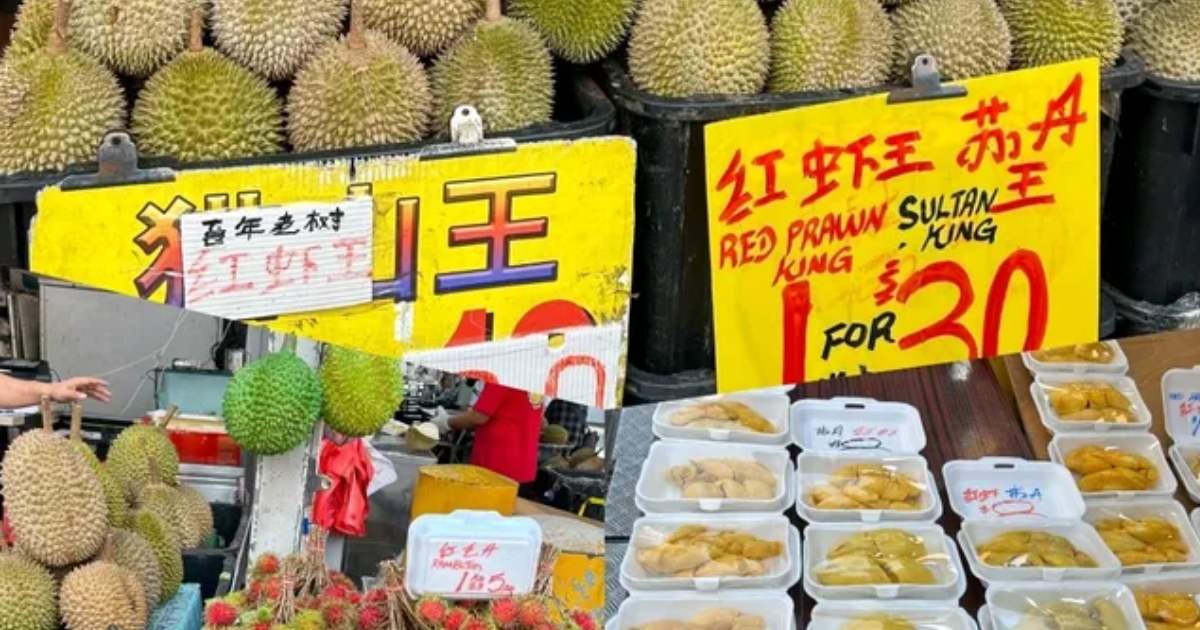
Most of the durians we enjoy in Singapore come from just across the border… Malaysia. In particular, the lush orchards of Pahang, Johor, and Penang supply us with Musang King, Red Prawn, XO, and more.
Durian has two main seasons:
🟢 Main season: June to August
🟡 Mini season: December to January
During these periods, stalls are fully stocked, and prices drop as supply peaks. This is also when durian buffets start popping up in places like Geylang, Dempsey, or even pop-up trucks in the heartlands.
You might also spot Thai durians like Monthong or Chanee in supermarkets. These tend to be sweeter, less pungent, and firmer in texture. Great for newcomers or those who can’t handle the usual “aroma.” Thai durian season typically runs from April to July.
Indonesian durians, like those from Medan, are rarely sold fresh here but you’ll see them used in paste, mooncakes, or durian desserts.
The Durian Cheat Sheet
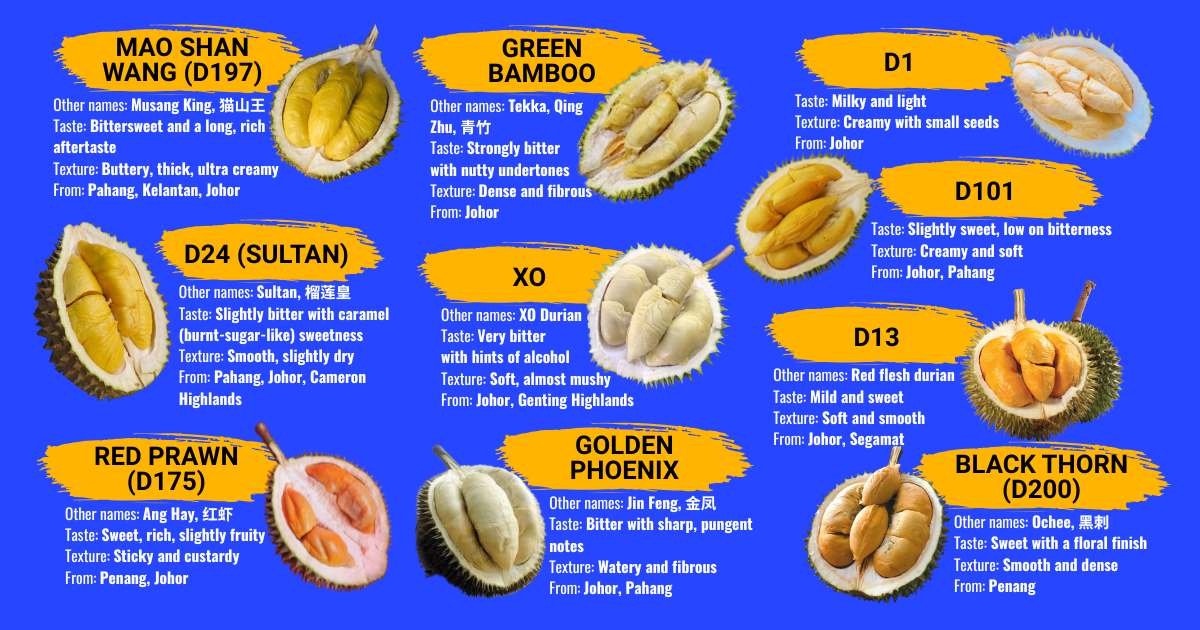
Whether you're #TeamBittersweet or #TeamSweetAndSticky, here's your go-to guide for navigating the durian jungle.
These 10 are the ones you’ll most likely encounter at trusted Singapore stalls or on a durian road trip up north.
1. Mao Shan Wang (D197)
Also known as: Musang King, 猫山王
Taste: Bold bittersweet with a long, rich aftertaste
Texture: Buttery, thick, ultra creamy
Flesh colour: Bright, deep yellow — almost golden
Best for: Hardcore durian fans and those who love a strong punch
From: Pahang, Kelantan, Johor
The Hermes of durians. If you’ve never tried MSW, can you really say you’ve eaten durian?
2. D24
Also known as: Sultan, 榴莲皇
Taste: Slightly bitter with caramel (burnt-sugar like) sweetness
Texture: Smooth, slightly dry
Flesh colour: Pale yellow
Best for: Old-school fans and those who grew up on this OG variety
From: Pahang, Johor, Cameron Highlands
Used to be the king before MSW stole the throne.
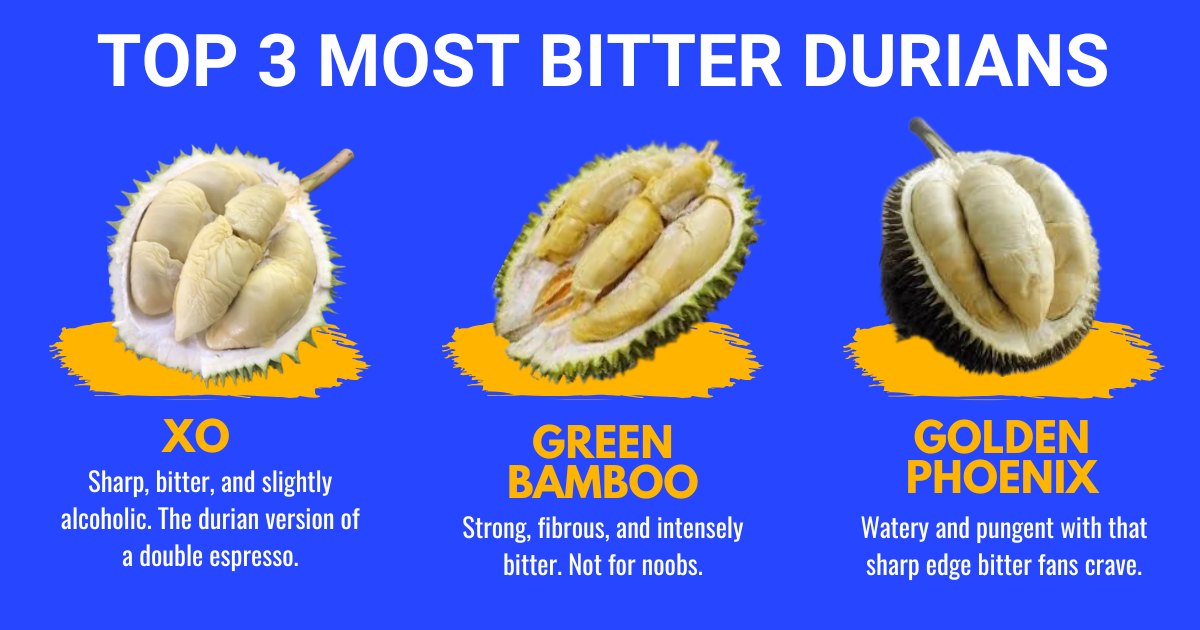
3. XO
Also known as: XO Durian
Taste: Very bitter, with hints of alcohol
Texture: Soft, almost mushy
Flesh colour: Pale yellow to greyish
Best for: Bitter lovers and the adventurous
From: Johor, Genting Highlands
Smells a bit like Cognac, tastes like a challenge — not for the faint-hearted.
4. Red Prawn (D175)
Also known as: Ang Hay, 红虾
Taste: Sweet, rich, slightly fruity
Texture: Sticky and custardy
Flesh colour: Orangey-red
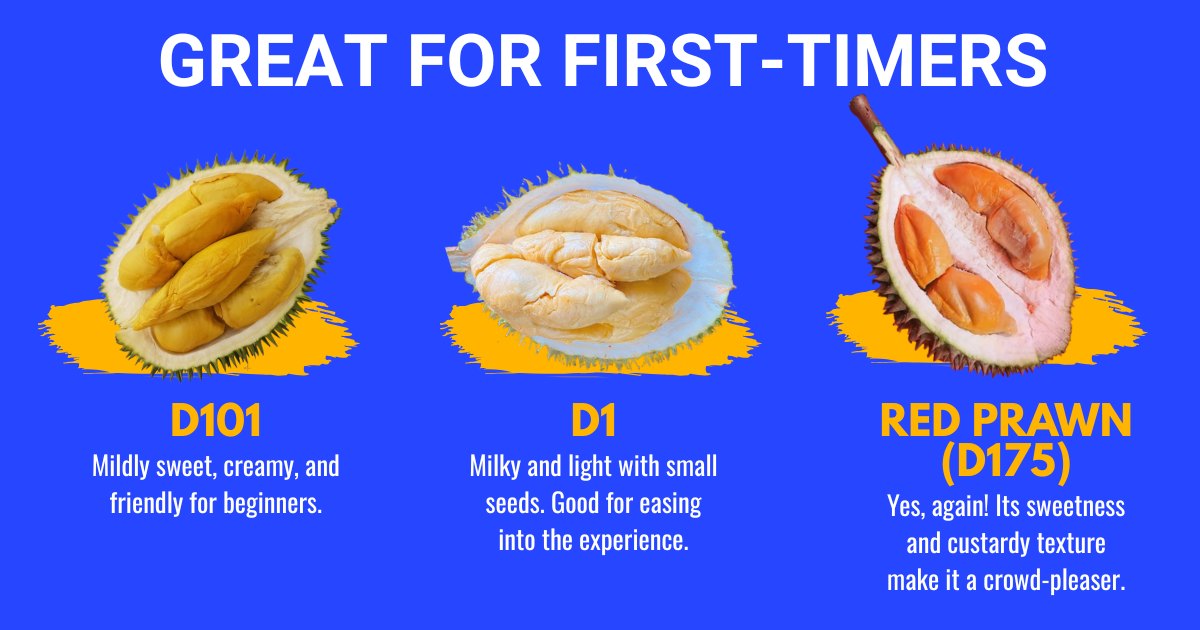
Best for: First-timers, children or anyone with a sweet tooth
From: Penang, Johor
Dessert in a husk. If you like it sweet and sticky, this one’s a treat for you.
5. Black Thorn (D200)
Also known as: Ochee, 黑刺
Taste: Sweet with a floral finish
Texture: Smooth and dense
Flesh colour: Deep orange
Best for: Premium lovers and Penang durian fans
From: Penang
Rare, expensive, and often sold out. Worth hunting down
6. Golden Phoenix (Jin Feng)
Also known as: 金凤
Taste: Bitter with sharp, pungent notes
Texture: Watery side and fibrous
Flesh colour: Pale kind of yellow-white
Best for: Those who like strong flavours but want a lighter texture
From: Johor, Pahang
Small seed, big bite — and slightly funkier than expected.
7. Green Bamboo (Tekka / Qing Zhu)
Also known as: 青竹
Taste: Strongly bitter with nutty undertones
Texture: Dense and fibrous
Flesh colour: Yellow with a green tinge
Best for: Hardcore durian eaters
From: Johor
Less common but packs a punch. A true uncle’s pick
8. D13
Also known as: Red flesh durian
Taste: Mild and sweet
Texture: Soft and smooth
Flesh colour: Deep orange
Best for: People who want flavour without overpowering smell
From: Johor, Segamat
This one is underrated. Easy to love, and usually more affordable.
9. D101
Taste: Slightly sweet and low on bitterness
Texture: Creamy and soft
Flesh colour: Bright orange
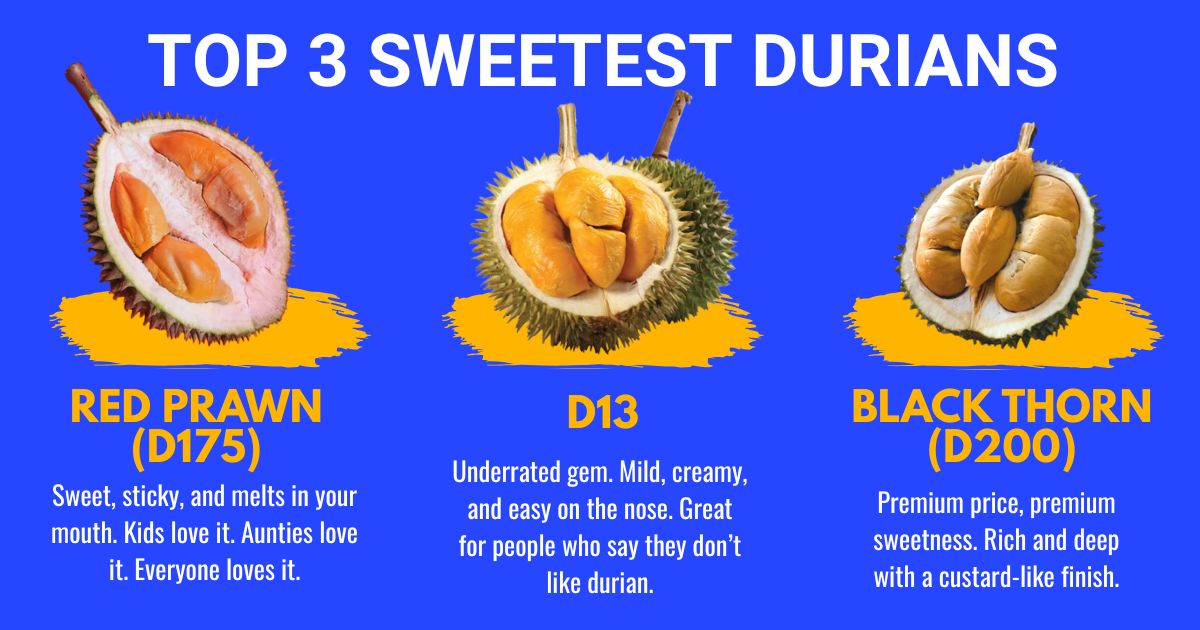
Best for: First-timers or younger kids
From: Johor, Pahang
Reliable choice when you don’t want to argue with the family.
10. D1
Taste: Milky and light
Texture: Creamy with small seeds
Flesh colour: Pale yellow
Best for: People who prefer subtle flavours
From: Johor
Perfect for beginners as an introduction to the durian world.
How to Pick the Best Durian (Without Getting Conned)
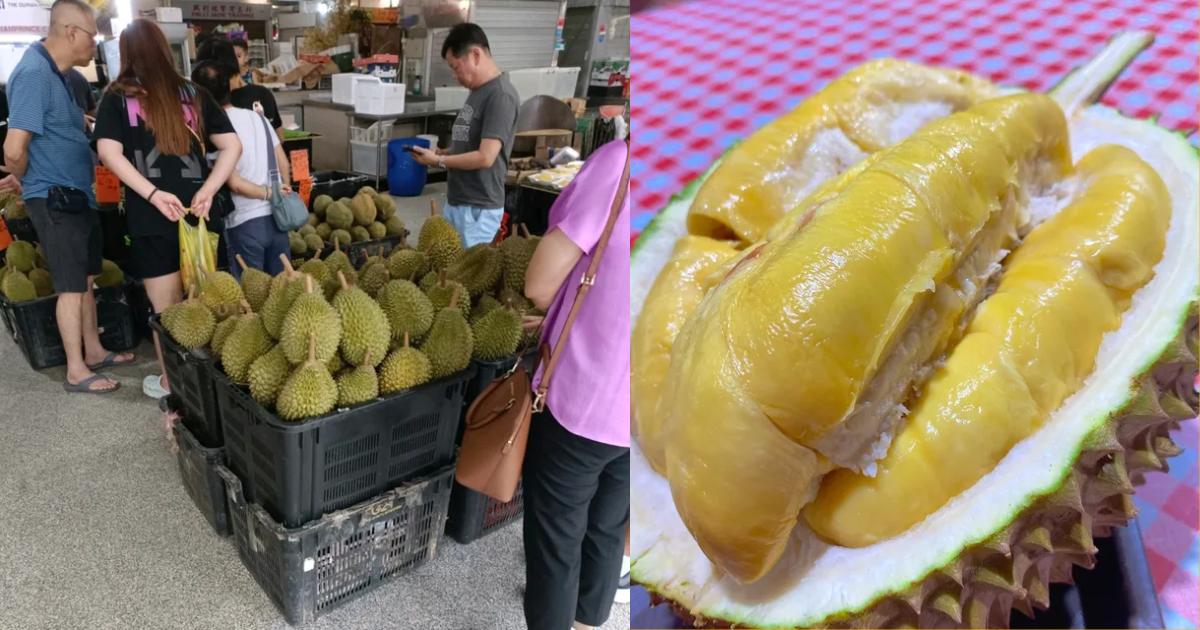
So, you’ve memorised the names. Now comes the true test: choosing one that lives up to the hype. Here's how to pick a durian like a seasoned Singaporean or at least fake it convincingly at the stall.
✅ 1. Give It a Good Sniff
- Ripe durian usually has a strong, sweet aroma at the base.
- If it smells sourish or alcoholic (except for XO), it might be overripe.
- No smell at all? Likely under-ripe. Move on.
✅ 2. Shake Test
- Firmly hold the durian with gloves or a towel… gently shake it.
- If you hear a slight thud or “detached” sound, the flesh has separated from the husk = ripe and ready.
- No sound? It might still be firm inside.
✅ 3. Check the Stem
- A green, moist stem means the durian was freshly dropped.
A dry or blackened stem = old stock or picked too early.
✅ 4. Look for Hairline Cracks
- Tiny, natural cracks at the seams (not too wide!) are a good sign the durian is ripe.
- If the husk is splitting open, that’s often a yes but ask for a fresh one if it looks too dry.
✅ 5. Shape Matters
- Oddly shaped or round durians might have uneven or empty chambers.
- A slightly oval or “five-angled” shape usually means even pod distribution and better flesh-to-husk ratio.
✅ 6. Tap & Listen
- Use a knife or just your knuckles (careful!) to lightly tap the husk.
- You’ll hear a dull and hollow sound if it’s nicely ripened.
🧠 Bonus Singaporean Pro Tips:
- Ask to open on the spot – A good seller will show you the flesh.
- Taste test – Some stalls will offer a sample if you’re buying in bulk.
- Split with friends – Variety is key. Share a box with 3–4 types and compare.
Recommended Hotels In Singapore
 NO.1
NO.1




Where to Buy or Eat Durian in Singapore
Are you a tapao-in-box kind of person or a buffet warrior? Lucky for you, Singapore has plenty of options for your next durian fix.
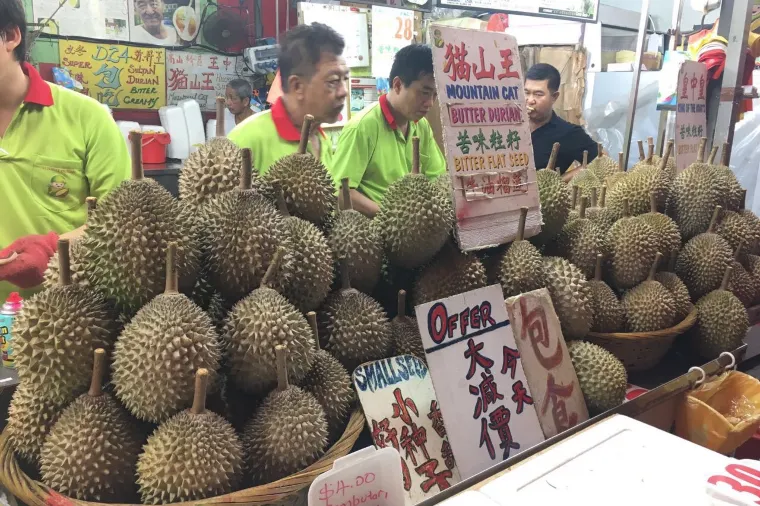
🏬 Trusted Stalls & Shops
These are well-known for freshness, honesty, and solid reputations, some even offer delivery!
Ah Seng Durian (Ghim Moh & Bukit Merah)
Famous for: Musang King, Red Prawn
Pro tip: Go early or pre-order as queues can be intense.
99 Old Trees (Farrer Park)
Clean branding, air-conditioned shop, and the quirky “Stinky Roll” durian swiss roll.
Offers dine-in and take-home.
DurianBB (Online + pop-ups)
Malaysia-based brand that ships to SG during season known for variety boxes.
Combat Durian (Balestier Road)
One of the oldest names. Uncle is old-school, but his durians are legit.
Fruit Monkeys (Delivery-focused)
Good online reviews. Offers same-day islandwide delivery.
🍽️ Buffet Spots (Seasonal)
If you're up for a full-on durian challenge:
Goodwood Park Hotel Durian Fiesta
Famous for pastries, not fresh fruit, but worth mentioning for durian puffs and cakes.
Durian Fiesta Pop-ups (Various)
Look out for seasonal durian buffets in Geylang, Dempsey, or Toa Payoh.
Prices usually range $38–$88 per pax for all-you-can-eat Musang King, D24, etc
📦 Online Stores (Fresh Box Delivery)
- Durian Delivery Singapore – Known for their “Flash Freeze” option
- Durian Express Delivery – Often delivers in under 60 minutes
- Kungfu Durian – Musang King-focused, good reviews
Book Great Staycation Deals




Do’s and Don’ts of Eating Durian
Here’s some of the common Do’s and Don’ts of eating Durian (especially if you're Singaporean, or pretending to be):
✅ DO:
- Bring wet wipes and gloves: Sticky fingers = durian badge of honour, but you’ll thank yourself later.
- Ask the seller to open it on the spot: A good stall will let you inspect the flesh and sometimes taste.
- Split a box with friends: More varieties, less wallet damage.
- Eat in a well-ventilated place: For obvious, nose-related reasons.
- Store leftovers in an airtight container: Otherwise, your fridge becomes… a situation.
- Drink water from the husk (if you believe in tradition): Old-school trick to “cool down” after eating durian.
❌ DON’T:
- Sneak it onto public transport: MRT and bus bans are real unless you enjoy making headlines.
- Stash it in the office fridge: One whiff and HR will send you a “friendly” reminder.
- Overload on durian and then nap: It’s rich, high in calories, and “heaty” — especially if you mix it with other indulgences.
- Chase it with alcohol: Old auntie wisdom + modern science both agree: durian + beer = no joke.
- Assume all durians are the same: Learn your D24 from your XO. Your tastebuds (and durian kakis) will respect you more.
Top Things To do In Singapore



Just One More Seed...
Durian isn’t just fruit. It’s personality.
It sparks debates, friendships, cravings, and the occasional regret. Whether you’re the type who swears by bitter XO, or someone who just discovered the joy of Red Prawn, there’s always one more variety to try, one more husk to crack open.
The best part? Every durian season in Singapore brings with it a new excuse to gather your kaki, get your fingers messy, and argue over who picked the best box.
So save this guide, share it with your durian group chat, and maybe, just maybe, convert one more “eh I don’t eat durian” friend.
What’s your favourite durian? And what would you dare to try next?