How to Use Qingju Bike in China: App, Price & Guide 2026
By Leona
July 22, 2026
Welcome to the world of bike sharing in China. This is a cool way to get around. One of the bike sharing companies is Qingju Bike. People like Qingju Bike because it is a reliable option.
What Is Qingju Bike?
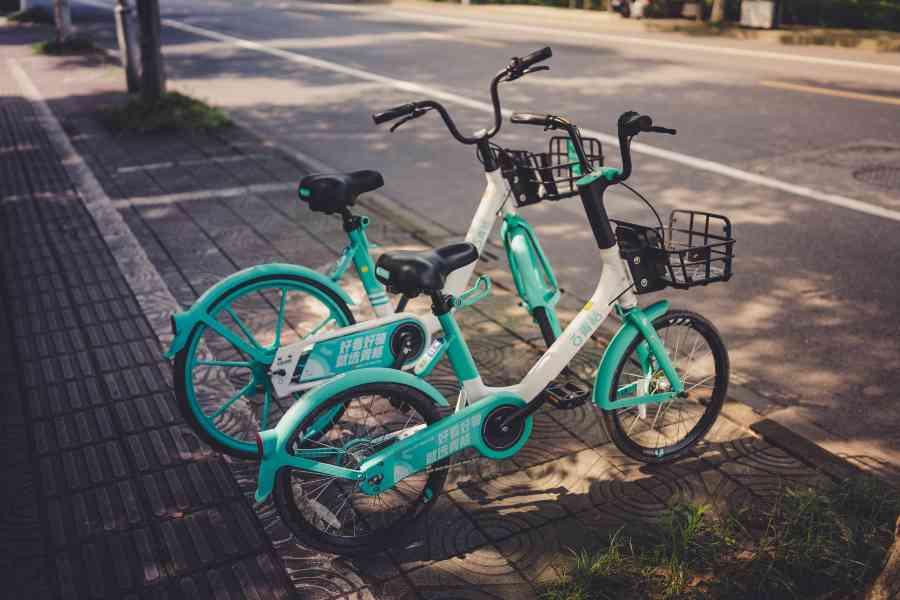
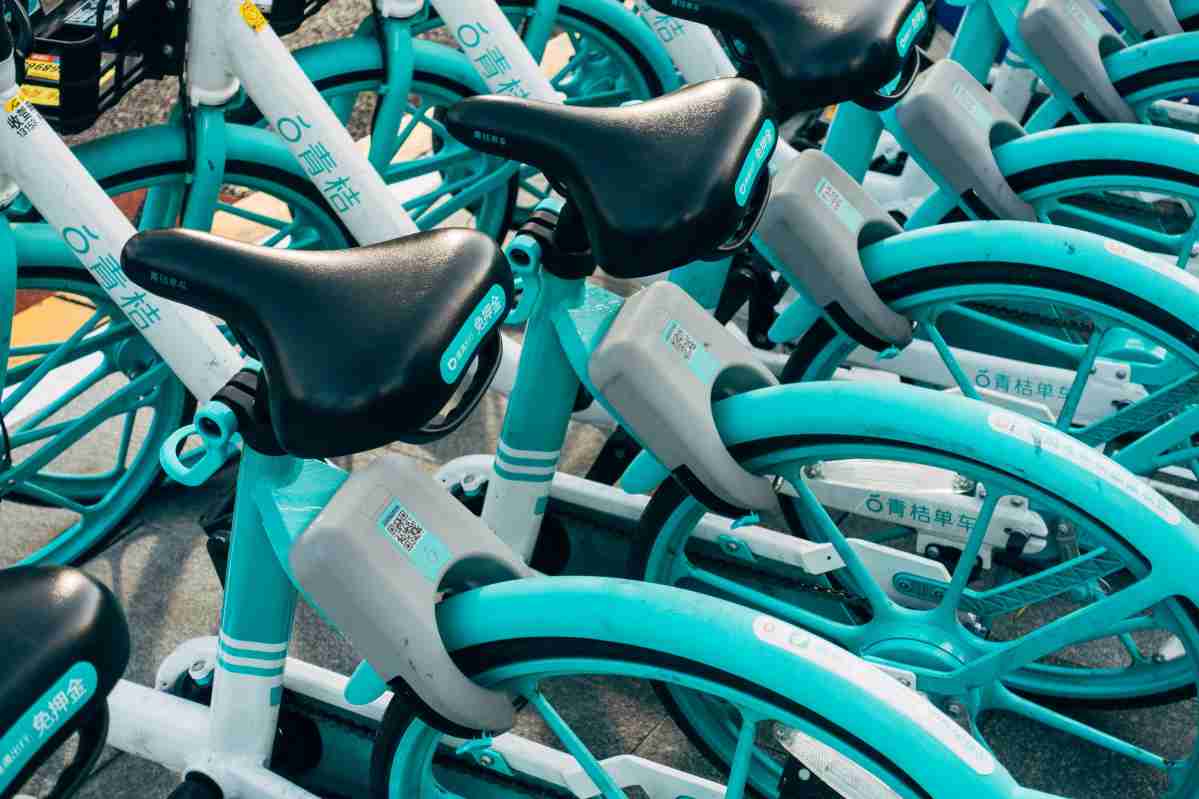
Qingju Bike (青桔单车) is a part of Didi Chuxing, which's a really big company in China that people use to get rides. They started Qingju Bike in 2018 in Chengdu. Now it is one of the bike sharing companies in China along with Meituan Bike and Hellobike. The name Qingju Bike means green tangerine. It is like the colour of the bikes.
What is really cool about Qingju Bike is that you can use it with Didi app. So if you already have the Didi app on your phone, you can use it to rent a Qingju Bike.
👍Pro Tip: When planning your visit, consider booking your flights to China early to snag the best deals and keep an eye out for promotions.
Bike-sharing prices in China have risen from the cheap promotional rates of a few years ago, but they're still incredibly affordable by Singaporean standards.
Standard Pay-Per-Ride Pricing
Scenario
Price (CNY)
Price (approx. S$)
What's Included
Weekday / Weekend
¥1.99
~S$0.38
First 60 minutes
Public Holidays
¥2.50
~S$0.48
First 60 minutes
Overtime fee
¥0.10/min
~S$0.019/min
Each minute beyond 60 min
Example calculations:
A 20-minute ride on a normal day: ¥1.99 (~S$0.38).
A 90-minute ride on a weekday: ¥1.99 + 30 × ¥0.10 = ¥4.99 (~S$0.95).
A 2-hour ride on a public holiday: ¥2.50 + 60 × ¥0.10 = ¥8.50 (~S$1.62).
Membership Plans
The membership plan for the ride is an idea if you like to ride often.
Plan Type
Price Range (CNY)
Price Range (approx. S$)
What You Get
Weekly pass
¥10–15
~S$1.91–2.86
7 days, first 60 min free per ride
Monthly pass (30-day)
¥18–30
~S$3.44–5.73
30 days, first 60 min free per ride (usually 2 rides/day limit)
Continuous monthly (auto-renew)
~¥18.61 first month
~S$3.55 first month
Same as monthly, auto-renews at standard rate
30-day multi-ride card
~¥7.50 (promo)
~S$1.43
30 days, discounted per-ride rates
Who should get a membership?
Short-term visitors (1–2 weeks): Probably not worth it unless you'll ride daily. Pay-as-you-go is cheap enough.
Expats / long-stay travellers (1 month+): Absolutely. A monthly pass pays for itself in 10–15 rides.
Occasional riders: Stick to pay-per-ride.
👉Pro Tip: For a convenient stay, look for China hotels in advance to secure the best rates.
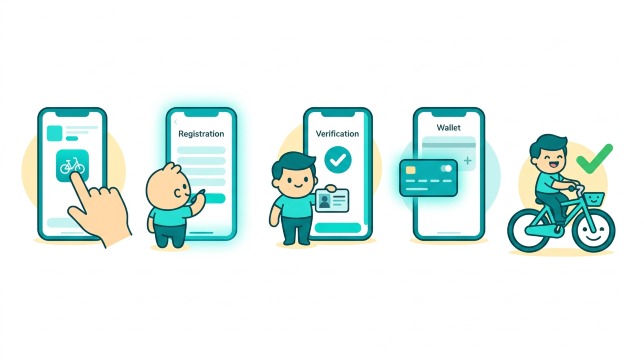
Didi App (滴滴出行) – Recommended if you also use Didi for taxis. The bike function is built in.
Qingju Cycling App (青桔骑行) – Dedicated bike app if you only need bike sharing.
Both are available on the Apple App Store and Google Play Store (though Google Play access may be limited in mainland China. Download before you arrive, or use a Chinese app store).
Step 2: Register an Account
You'll need a phone number that can receive SMS verification codes.
Singaporean numbers work – you don't need a Chinese SIM card to register.
Select your country code (+65 for Singapore) and enter your number.
Enter the verification code sent via SMS.
Step 3: Complete Real-Name Verification
This is the crucial step for foreigners. Chinese regulations require real-name authentication for transport services.
What you'll need:
Your passport (the app will ask for passport number and sometimes a photo).
A selfie for facial recognition.
How to do it:
Go to "My Account" or "Wallet" in the app.
Look for "Real-name verification" (实名认证).
Select "Passport" as your ID type (not Chinese ID card).
Enter your passport details exactly as printed.
Take a clear selfie when prompted.
Wait for verification, usually instant, but can take up to 24 hours.
Step 4: Add a Payment Method
International credit/debit cards: Visa, Mastercard, and JCB are widely accepted. Simply add your card details in the payment section.
Alipay International: If you have an Alipay account set up with a foreign card, you can link it to Didi/Qingju.
WeChat Pay: If you have WeChat Pay with a linked international card, this also works.
Apple Pay: Available in some regions for quick checkout.
How to add a card:
Go to "Wallet" or "Payment Methods".
Select "Add bank card" or "Add credit card".
Enter your card details.
Complete the verification if prompted.
Step 5: Enable Credit-Based No-Deposit Riding
Once your payment method is verified, the app should automatically grant you deposit-free riding status. You'll see a "No deposit" badge on your account page.
If it doesn't activate automatically:
Look for "Credit riding" (信用骑行) in the wallet section.
Follow the prompts to authorise a credit check.
It's usually instant and doesn't affect your actual credit score.
👀Pro Tip: To stay connected throughout your visit, consider getting a China eSIM. Just activate and go!
🔥Save More with Up to 5% OFF
Use our promo code to enjoy up to 5% OFF (up to S$3)on your attraction tickets, tours and eSIMs! Only for new users!

Okay, you're all set up. Now let's actually ride a bike!
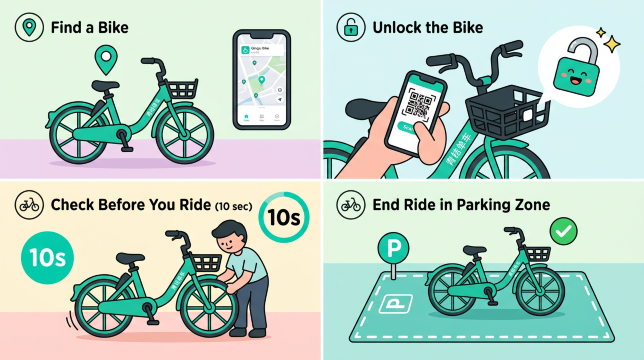
Find a Bike
Open the Didi or Qingju app.
Tap the "Bike" or "Cycling" icon (usually on the home screen).
You'll see a map showing nearby available bikes as teal-green icons.
Each icon shows the bike type (regular bike or e-bike) and sometimes battery level for e-bikes.
Tap a bike icon to see its exact location and walk there.
Unlock the Bike
Stand next to the bike.
Tap "Scan to unlock" (扫码开锁) in the app.
Point your camera at the QR code on the bike – it's usually on the handlebars and also on the rear lock.
Wait 2–3 seconds. You'll hear a click as the electronic lock releases.
The app will confirm "Unlocked successfully" and the timer starts counting.
If scanning fails:
Clean the QR code – sometimes they're dirty or scratched.
Try the second QR code (one on handlebars, one on the lock).
Tap "Enter code manually" and type in the number below the QR code.
Before You Ride
Don't just hop on and go. Spend 10 seconds checking:
Brakes: Squeeze both brake levers to make sure they work.
Tyres: Give them a quick squeeze – they should be firm, not squishy.
Seat height: Adjust if needed (most bikes have a quick-release lever under the seat).
Chain: Give the pedals a quick spin to make sure the chain isn't fallen off.
Bell: Ring it – it's your primary way of communicating with pedestrians in China.
Riding Rules & Etiquette
China's roads can be chaotic by Singaporean standards.
Stay in the bike lane: Most major roads have dedicated cycle lanes (marked with a bicycle symbol or painted green). Use them.
Ride on the right: Like cars, bikes keep to the right side of the road.
Watch for e-bikes: Electric scooters and bikes go much faster than you – stay alert.
Follow traffic lights: Yes, even bikes must stop at red lights.
Use your bell: Ring it when passing pedestrians or other bikes. It's not rude – it's expected.
No riding on pavements: Unless there's a marked shared path, stick to the road.
End Your Ride
This is the #1 mistake new users make. You can't just leave the bike anywhere. It has to be in a designated parking zone.
Find a parking spot: Look for white painted boxes on the ground with bicycle symbols, or clusters of other shared bikes.
Check the app: The map shows "P" markers for valid parking zones. If you're outside a zone, the app will warn you.
Manually lock the bike: Push the rear lock closed until you hear a click.
Wait for confirmation: The app will beep and show "Ride ended" with the final fare.
Check the charge: Make sure the amount looks right before you walk away.
What happens if you park outside the zone?
You'll get a warning on your first few offences.
Repeated violations can result in a parking fee (usually ¥5–20).
Severe or repeated misuse can lead to account suspension.
💡 Pro Tip: If you’re travelling onwards to other cities in China, consider using China high-speed rail. It's fast, comfortable, and efficient!
🔥Get 3% Off Your First Train Ticket Booking!
As a special treat, Trip.com is offering a 3% discount on your first train ticket booking. Simply claim your coupon and enjoy a seamless travel experience.
If a bike feels wrong (wobbly wheel, broken chain, no brakes), lock it back up immediately and report it in the app. You won't be charged.
Don't ride in the rain unless you have to: Chinese roads get slippery, and bike brakes aren't always the best.
Don't leave valuables in the basket. Keep your phone in your pocket.
What to Do If Something Goes Wrong?
Bike won't unlock: Try another bike. Report the faulty one in the app. You might even get a credit as thanks.
Bike breaks down mid-ride: Lock it up in the nearest valid spot, then report the issue in the app. You'll usually get a refund for that ride.
Charged incorrectly: Go to "My orders" → select the ride → "Dispute" or "Contact customer service". English support is limited but available for Didi.
Why Choose Qingju Bike?
China has a lot of bike-sharing brands, so why choose Qingju?
No Deposit Required
You do not have to pay a deposit to use Qingju bikes. Qingju uses a credit-based system. If you pass their credit check and have a valid payment method, you can ride a Qingju bike without paying a deposit.
Dual Positioning Technology
Qingju bikes are equipped with Beidou and GPS chips. This means Qingju can track their bikes in big cities or under roads with lots of bridges. This means fewer "ghost bikes" that show up on the map but aren't actually there.
Integrated with Didi Ecosystem
If you use Didi for taxis, you can use the app and the same payment method for Qingju bikes. This means you do not have to use a lot of apps when you are travelling.
Wide City Coverage
Qingju operates in over 700 cities in China. You can find Qingju bikes in cities like Shanghai and Beijing. You can also find Qingju bikes in cities that are popular with tourists.
Multiple Vehicle Types
Beyond standard bicycles, Qingju also offers electric-assist bikes in many cities, which are great if you do not want to ride a bike in the summer or in cities with lots of hills.

Do I need a Chinese phone number to use Qingju Bike?
No, you can register with a Singaporean phone number (+65). However, you'll need to be able to receive SMS verification codes, so make sure your roaming is on, or use a number that can receive texts abroad.
Can I take Qingju Bike on the metro?
No. Shared bikes are for street use only. You can't take them inside metro stations, shopping malls, or residential compounds. Park them at the designated spots outside.
How do I find where to park Qingju Bike?
The app map shows "P" icons for valid parking zones. In practice, just look for clusters of other shared bikes. If you see 10+ bikes parked together, that's almost certainly a valid spot. When in doubt, check the app before you lock up.
Can I use Qingju Bike in every Chinese city?
Almost. It's available in 700+ cities. Major tourist destinations like Beijing, Shanghai, Xi'an, Chengdu, Guangzhou, and Shenzhen all have extensive coverage. Smaller rural towns might not have them.
Disclaimer: This article has been provided by an individual contributor or third party platform. If there is any discrepancy regarding the copyright, please contact us directly and we will delete the content immediately.