🔥Get 3% Off Your First Train Ticket Booking!
As a special treat, Trip.com is offering a 3% discount on your first train ticket booking. Simply claim your coupon and enjoy a seamless travel experience.



If you are going to Yunnan, China's geographically diverse province, this map guide has all the information you need to find your way around Yunnan's big mountains, lakes, old towns and rainforests.
Yunnan Province is located in the southwestern part of China. It shares a long border with three countries in Southeast Asia: Myanmar, Laos and Vietnam. This border is 4,060km long. Yunnan Province also shares borders with some places domestically. These are Sichuan to the north, Guizhou and Guangxi Zhuang Autonomous Region to the east, and Xizang Autonomous Region to the northwest.
Yunnan Province covers 394,100 kilometres. To put that in perspective, Yunnan Province is over 537 times larger rthan Singapore. You can find snow-capped peaks, turquoise highland lakes, old villages that were once on the Silk Road and Southeast Asian jungle all within Yunnan Province.
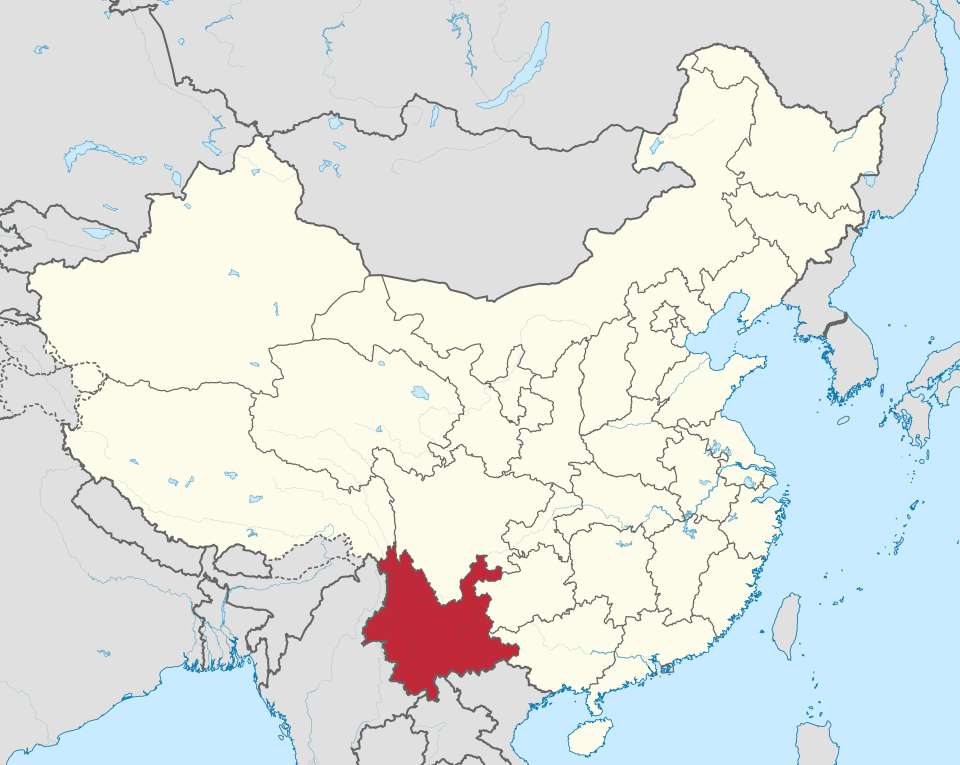
Source: Wikipedia
Yunnan's landscape is different. It has an area in the northwest and a low area in the southeast. Yunnan has two core geographic zones:
This area has rolling hills made of a type of rock called karst limestone. The weather is mild all year round. There are also mountain basins. This is where you can find Kunming, which's the capital of Yunnan. The average height of this area is 2,000 meters. The terrain is gentle and easy to walk, making it perfect for casual sightseeing.
This area has mountain ranges that are close to each other and run in the same direction. These mountains are cut by river canyons like the Jinsha, Lancang and Nu rivers. Western Yunnan is where you can see the beautiful and dramatic mountains. Some of these places include Jade Dragon Snow Mountain, Meili Snow Mountain, Erhai Lake and Lugu Lake. The height of this area varies a lot. It can be as low as 76 metres at the border with Vietnam or as high as 6,740 metres at Kawagebo Peak, which's the highest mountain in Yunnan.
Tip for Singapore Travellers: Book direct flights to Kunming early to lock in lower fares; off-peak season (January–February, mid-September) often sees flight discounts.
Yunnan’s vast size means mastering transport routes is critical for Singapore visitors with limited annual leave.
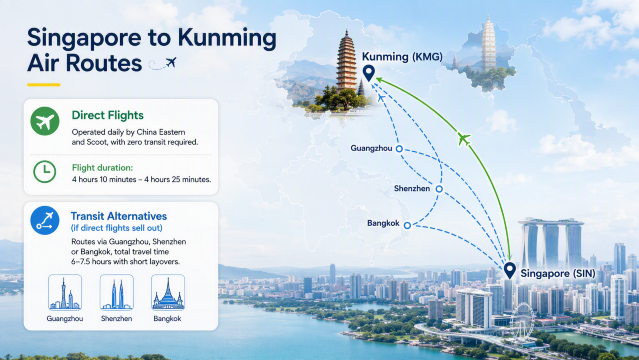
Yunnan operates 15 commercial airports, with Kunming Changshui International Airport (KMG) as the sole international gateway for flights from Singapore Changi (SIN).
Airport Code | City | Regional Hub | Flight Time from Kunming |
KMG | Kunming | Main International Hub | - |
DLU | Dali | Northwest Yunnan | 45 mins |
LJG | Lijiang | Northwest Yunnan | 1 hour |
JHG | Xishuangbanna (Jinghong) | Southwest Tropical Zone | 1 hour 10 mins |
DIG | Diqing (Shangri-La) | High-Altitude Tibetan Zone | 1 hour 20 mins |
Yunnan’s fully completed high-speed rail network is the most popular land transport for tourists.
Train Route | Distance | Journey Time | 2nd Class Fare (S$) |
328km | ~2 hours | 27 | |
170km | ~1 hour 15 mins | 16 | |
517km | ~3 hours 20 mins | 42 | |
422km | ~3 hours 15 mins | 46 | |
380km | ~3 hours | 40 |
As a special treat, Trip.com is offering a 3% discount on your first train ticket booking. Simply claim your coupon and enjoy a seamless travel experience.
Road trips unlock remote villages and hidden viewpoints inaccessible by rail, ideal for travellers wanting flexible schedules.
⚠️ Note About Border Permits: If you are going to the western border areas of like Nujiang, some parts of Shangri-La and Ruili, which is near Myanmar, you need to get a special permit to travel. People who have a passport from Singapore can get this permit through hotels or travel agencies in Kunming or Dali. It will cost between S$19 and S$38 to get the permit. You can only use it for one trip.
Whether you're planning a road trip, a business journey, or just need a reliable ride, now is the perfect time to save. Use the coupon to enjoy this exclusive offer. Rent a car today and hit the road with extra savings!
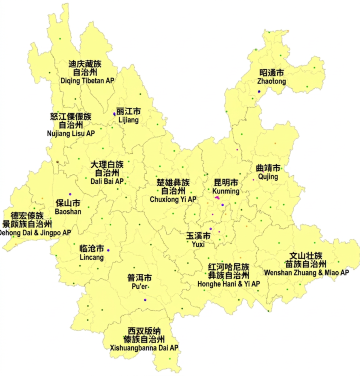
The most vital detail on any Yunnan tourist map is understanding the four separate travel zones, each with entirely different scenery, culture and weather.
This is Yunnan’s signature travel zone, famous for snow peaks, crystal lakes and preserved ancient ethnic towns, suitable for year-round travel.
Perfect for short 3–4 day stopovers before heading north or south, with flat, easy walking terrain ideal for families.
A stark contrast to northern alpine scenery, with steamy jungle, Dai ethnic villages and wild elephant sanctuaries, best visited November–April to avoid heavy monsoon rains.
For travellers seeking off-the-beaten-path experiences, volcanic landscapes and Burmese-influenced culture.
Use our promo code to enjoy up to 5% OFF (up to S$3) on your attraction tickets, tours and eSIMs! Only for new users!
Buy Cheap eSIM Here
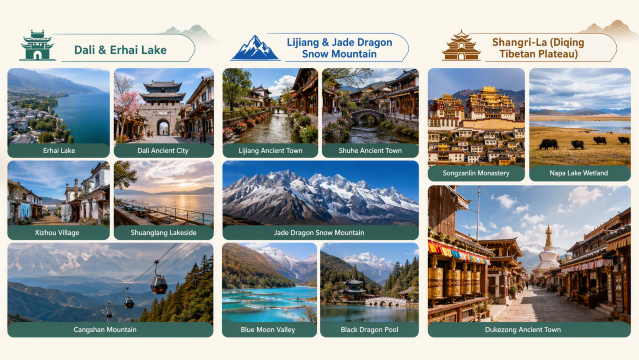
Dali’s biggest draw is Erhai, a freshwater lake ringed by cycling paths and white-walled Bai villages.
Yunnan’s most photographed natural landmark, a mandatory stop for Singapore travellers.
High-altitude Tibetan culture with vast grasslands and sacred monasteries.
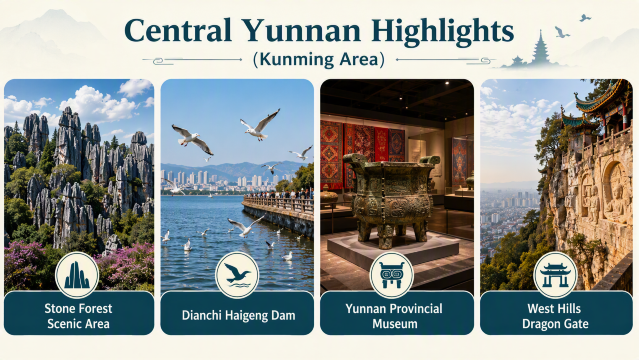
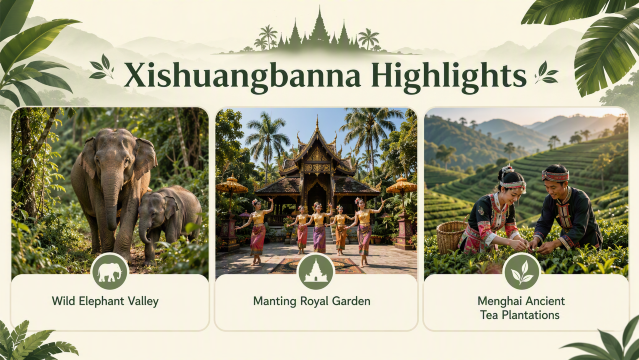
Good for travellers looking for mountain views lake views and old town views.
Route: Singapore → Kunming (1 night) → Dali (2 nights) → Lijiang (3 nights) → Shangri-La (1–2 nights) → Fly back Kunming/Singapore
Tip: If you only have 7 days, avoid Shangri-La and fly straight from Lijiang back to Kunming to save one full day of driving through the mountains.
Ideal for trips when you want to avoid cold and high altitude weather.
Route: Singapore → Kunming (transit) → Xishuangbanna (4–5 nights) → Direct return flight
For travellers with more time off: Kunming → Dali → Lijiang → Shangri-La → Kunming → Xishuangbanna
Destination | Best Area to Stay | Budget (S$) | Mid-Range (S$) | Luxury (S$) |
Kunming | Nanping Pedestrian Street (city centre, transport & food access) | 42 – 65 | 100 – 160 | 320 – 660 |
Dali | Dali Old Town, Xizhou & Shuanglang (Erhai lakeside views) | 30 – 55 | 75 – 140 | 180 – 300 |
Lijiang | Shuhe Ancient Town (quiet) & Lijiang Old Town (central) | 35 – 70 | 90 – 170 | 220 – 450 |
Shangri-La | Dukezong Ancient Town (authentic Tibetan atmosphere) | 38 – 68 | 85 – 150 | 200 – 380 |
Xishuangbanna | Jinghong City Centre (convenient for markets & attractions) | 32 – 60 | 70 – 130 | 160 – 320 |
 1782089 booked