
 NO.1
NO.1








🔥Unlock 8% OFF on Car Rentals
Whether you're planning a road trip, a business journey, or just need a reliable ride, now is the perfect time to save. Use the coupon to enjoy this exclusive offer. Rent a car today and hit the road with extra savings!


If you are travelling to the Spain, you have to know that besides your hotel or apartment rate, you still need to pay a tourist tax depends on where you stay.
This is because, Spain does not have a single national tax instead of fees that are set regionally and locally by specific autonomous communities and cities.
The most well-known tourist taxes are found in Catalonia and the Balearic Islands, including destinations such as Barcelona, Mallorca, Menorca, Ibiza and Formentera.
Fly from Singapore
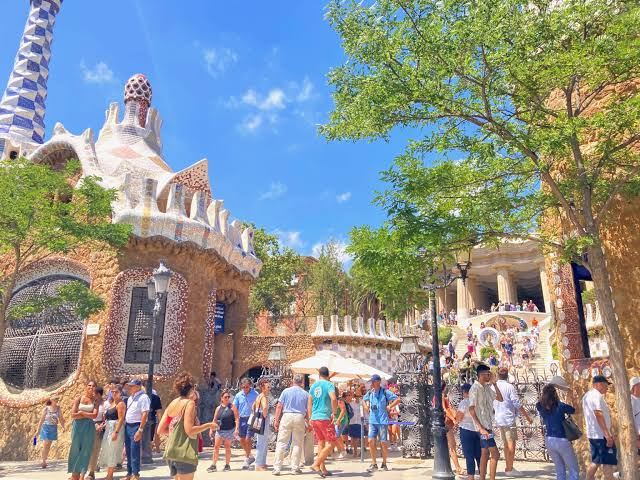
The Spain tourist tax is a charge that applied to eligible tourist accommodation stays in certain areas of Spain.
Generally, it is charged for per person and per night although the rules and rates differ between destinations.
Unlike a national tourist tax that applies through Spain, tourist taxes are managed at the regional or local level.
For example, when staying in Madrid, Barcelona and Mallorca can result in different tourist tax rules.
The tourist tax revenue is generally intended to help destinations that manage the impact of tourism.
For instance, in the Balearic Islands, the Sustainable Tourism Tax supports to environmental protection, cultural heritage, sustainable tourism, scientific research, training and employment and infrastructure and sustainability projects.
So, the Balearic government used the tax to compensate for tourism's impact on the islands and support projects across Mallorca, Menorca, Ibiza and Formentera.
Furthermore, recent funding has included projects related to water management, energy efficiency, tourism innovation and environmental sustainability.
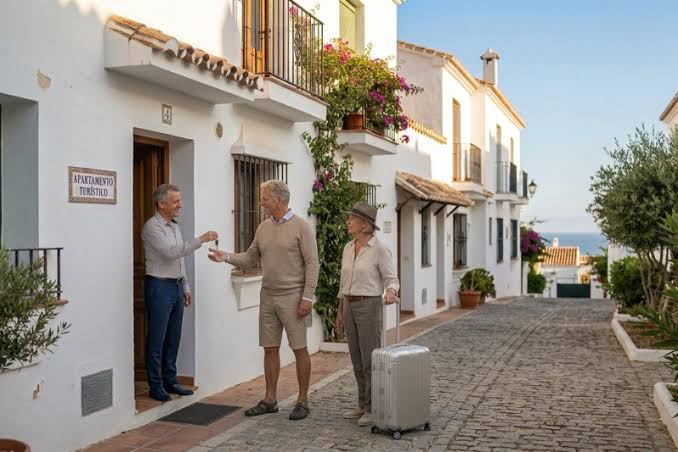
Yes, but not a general national tourist tax but some of the regions and cities impose their own accommodation taxes.
The Catalonia charges a regional tourist tax (IEET) and Barcelona enforces an additional municipal surcharge.
Total of the night fees in the Barcelona range roughly from €7 to €12+ per person depends on the accommodation tier while Catalonia ranges from €1.20 to €6 per person and per night.
So, if you are visiting Barcelona from Singapore or another international destination, you can look at your booking confirmation of the latest rates total amount because the tax may either be included in the displayed price or collected separately by the accommodation.
The tourist tax here is known as Sustainable Tourism Tax or known as Impuesto de Turismo Sostenible (ITS) that ranges from €1 to €4 per person and per night during high season.
But during low season, it drops by 50%-75%.
The tax has been since July 2016 and the revenue is used to support projects related to the environment, cultural heritage, sustainable tourism and other areas.
The children under 16 years old are exempt from paying the Sustainable Tourism Tax.
The great news is, visitors that staying at the same accommodation for longer periods can also receive a 50% reduction from the ninth day of their stay.
Not only that, cruise passengers whose ships are based at a port in the Balearic islands are also exempt under the published rules.
The cities like Santiago de Compostela and A Coruna charges a local visitor fee of €1 to €2.50 per person and per night.
The other popular areas such as Madrid, Andalusia (Costa del Sol/Malaga) and the Canary Islands do not charge a general regional tourist tax.
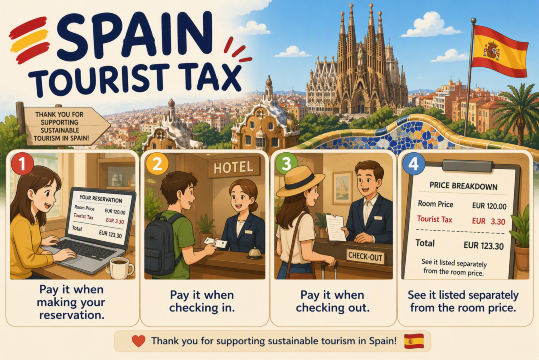
In most of the cases, the accommodation provider usually collects the tourist tax.
But depends on the property and booking platform, you may:
Hotels in Spain

For Singaporean who are travelling from Singapore to Spain, it is worth budgeting for tourist tax separately from your flights and hotels.
For example, a trip covering Barcelona and Mallorca could involve different accommodation-tax rules because the two destinations are governed by different regional and local systems.
So, before your trip:
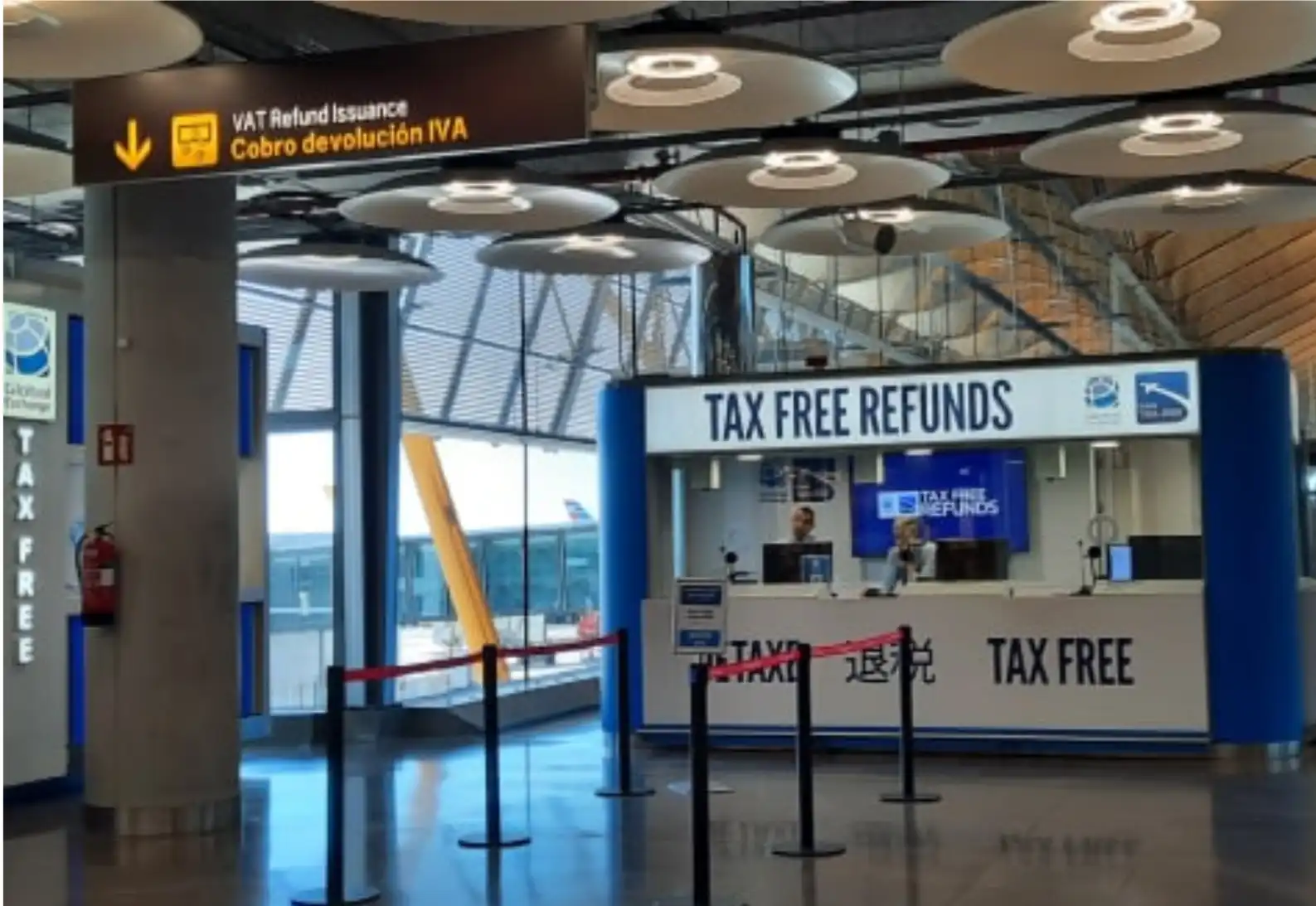
Tourist tax and VAT are really different things and charges.
VAT is general consumption tax that applied to goods and services in Spain while tourist tax is an accommodation related charge that imposed by specific regions or cities.
You can therefore see both taxes or charges associated with accommodation bill.
Whether you're planning a road trip, a business journey, or just need a reliable ride, now is the perfect time to save. Use the coupon to enjoy this exclusive offer. Rent a car today and hit the road with extra savings!

Spain does not have a single tourist tax that applies to every visitor but the tourist tax are difference of every region and city, so the amount is depends on where are you staying.
For most accurate amount, always check the latest local rules and your accommodation's tax information before travelling.