Can You Bring a Power Bank on a Plane? Airline Rules & Limit Explained

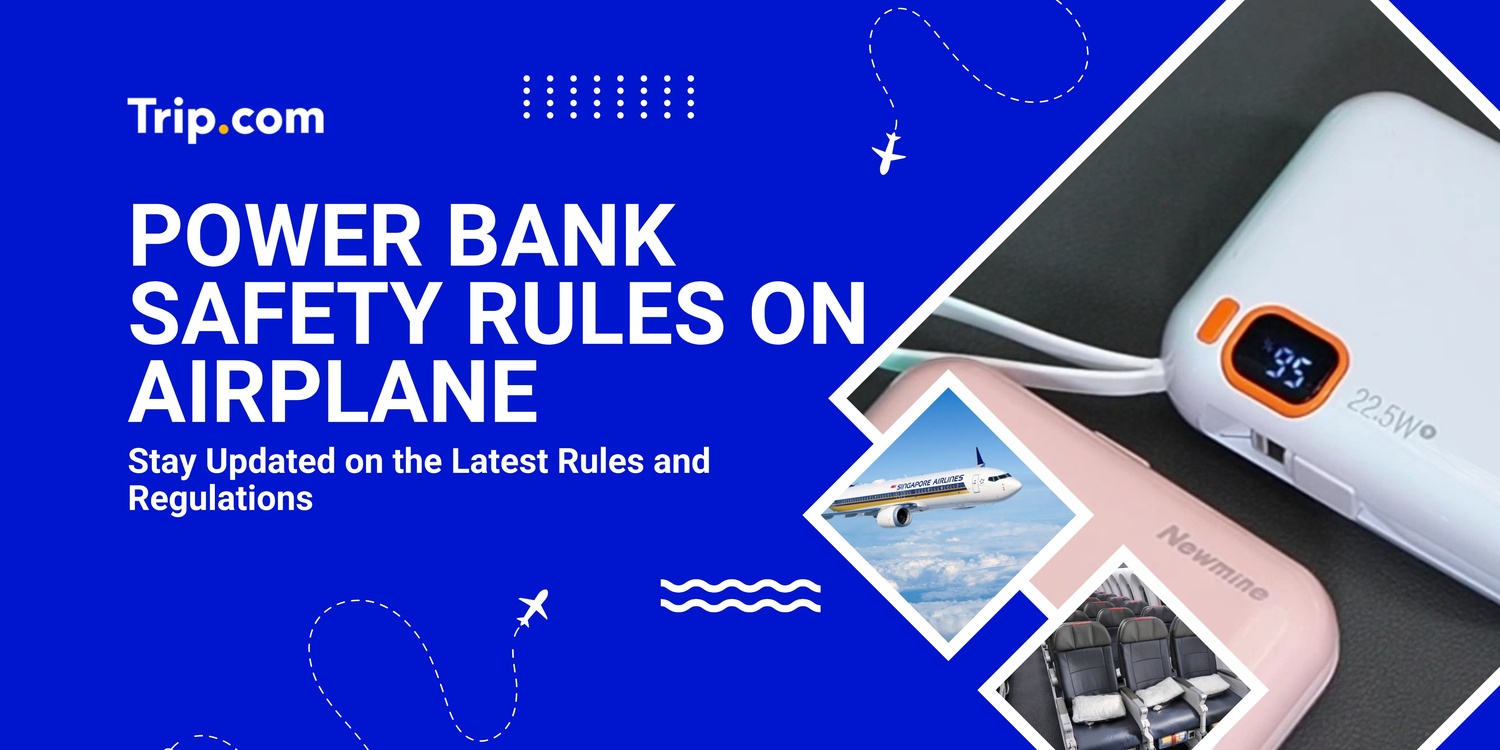
With recent aviation safety incidents, many travelers are asking: Can I bring powerbank on airplane?
A power bank fire in an overhead locker caused a flight delay and injuries, prompting airlines like EVA Air and China Airlines to tighten rules.
The answer is simple: power banks are allowed only in carry-on bags and strictly banned in checked luggage.
Most airlines set the standard limit at 100Wh per device. Power banks between 100Wh–160Wh may need airline approval, while anything above 160Wh is not permitted.
Knowing these rules helps you pack smart and travel safely. Important also to check your carry on luggage size and weight before boarding to avoid suprises at airport.
Are Powerbanks Allowed on Plane?

Yes, power banks are permitted on airplanes, but only as carry-on luggage.
Power bank limit on plane under 100Wh are often allowed on most aircraft without any restrictions, while those between 100 and 160Wh could need permission and are typically only allowed two per passenger, no matter what size power bank can take on a plane.
Many airlines including Singapore Airlines, Malaysia Airlines, and EVA Air, have banned the usage or charging of power banks during flights as a result of recent safety concerns.
To prevent problems at the airport, always review the most recent regulations of your airline before you take out.
⚡ Power Bank Carry-On Regulations by Airline
Airline / Authority | Allowed in Checked Baggage? | Carry-On 100 Wh | 100–160 Wh (Approval) | In-Flight Use Allowed? | Notes & Effective Date |
|---|---|---|---|---|---|
ICAO / IATA Standard | No | Yes | Yes | Usually no | Industry standard limits |
Singapore Airlines / Scoot | No | Yes | Yes | No | Ban on use/charging from 1 April 2025 |
EVA Air | No | Yes | Yes | No | Ban on in-flight use from 1 March 2025 |
China Airlines | No | Yes | Yes | No | Use banned since 1 March 2025 |
Thai Airways | No | Yes | Yes | No | Ban effective 15 March 2025 |
AirAsia, Air Busan, Korean Airlines, Asiana | No | Yes | Yes | No | Carriage only, no in-flight use—Air Busan first to restrict overhead storage |
Cathay Pacific & Hong Kong Airlines | No | Yes | Yes | No | From 7 April 2025 , no use or overhead storage |
Emirates | No | Yes | (Assumed) | No | No use or charging onboard; must store securely in seat pocket |
Southwest Airlines (USA) | No | Yes | Likely standard | No | New rule from 28 May 2025 — must keep power banks visible (e.g., seat pocket) |
⚡ In-Flight Use Rules for Power Banks
Airline / Region | Power Bank Use During Flight | Storage Restriction | Additional Notes |
|---|---|---|---|
Singapore Airlines / Scoot | Not allowed | Cabin-only (not checked baggage) | Ban from 1 April 2025 |
EVA Air / China Airlines | Not allowed | Avoid overhead; carry-on only | Ban started 1 March 2025 |
Thai Airways / AirAsia | Not allowed | Cabin only; avoid overhead | Ban from 15 March 2025 |
Air Busan / Korean / Asiana | Not allowed | Must carry-on in hand; no overhead bin | Rules from Feb–Mar 2025 |
Cathay Pacific / HK Carriers | Not allowed | Under-seat or seat pocket only | Ban effective 7 April 2025 |
Industry Standard (ICAO/IATA) | Not typically allowed | Carry only; follow airline rules | Common safety protocol |
🔋 How to Convert Power Bank Capacity to Wh (Watt-Hours)?

To check if your power bank meets airline regulations, you can calculate its capacity in watt-hours (Wh) using this simple formula:
Wh = (mAh × Voltage) ÷ 1000
Most power banks use a standard voltage of 3.7V.
Here are a few examples:
- 10,000 mAh power bank → approx. 37 Wh
- 20,000 mAh power bank → approx. 74 Wh
Based on airline rules, the maximum capacity allowed for carry-on (without special approval) is typically below 100 Wh, which means around 27,000 mAh at 3.7V.
✈️ How to Keep Your Phone Charged During a Flight

Worried about your phone running out of battery on a flight? Here are a few smart tips to stay powered up:
Charge fully before boarding and switch on battery saver mode to minimize power consumption
Since airlines now ban the use of power banks during flights, it’s best to start your journey with a fully charged device. Before you head to the airport, plug in your phone, tablet, or laptop so you have maximum battery available. Once on board, enable battery saver mode (or low power mode) to reduce background activity, screen brightness, and unnecessary app usage. This way, your device can last throughout the flight without needing a recharge, ensuring you still have enough power for essentials like e-boarding passes, in-flight entertainment, or keeping in touch after landing.
Bring a power bank that meets airline regulations (under 100Wh) so you can recharge anytime after landing
Most airlines, including those in Singapore, only allow power bank on plane under 100Wh (about 27,000mAh) in carry-on bags. Larger ones may require airline approval or be rejected at security checks. By choosing a compliant power bank, you’ll avoid any hassles at boarding and ensure your devices are ready once you land. Having a portable charger means you can top up your phone, tablet, or even laptop immediately after arrival—whether you’re waiting for transport, navigating with maps, or staying connected with family and friends.
Use in-flight power outlets—many international flights offer USB ports or AC power for charging devices
On newer aircraft, airlines often install USB charging ports or universal AC outlets at each seat, especially in premium cabins and long-haul flights. Even in economy, you’ll likely find at least a USB port to keep your phone or tablet powered throughout the journey. Bringing your own charging cable ensures you can take full advantage of these outlets. However, it’s smart to check your airline’s aircraft type and amenities in advance, as not all planes are equipped. This way, you’ll know whether to rely on your power bank or the plane’s built-in charging options.
Enable airplane mode to reduce unnecessary battery drain, and pre-download music, videos, or maps for offline use
Switching your phone to airplane mode cuts off constant network searching, which can quickly drain your battery mid-flight. Even though in-flight Wi-Fi is available on some airlines, it may be costly or limited, so having entertainment ready is a smart move. Pre-download your favorite movies, playlists, podcasts, or offline maps before departure. This way, you can enjoy uninterrupted entertainment, save data, and conserve battery life—all without relying on unstable connections in the air.
✈️ Conclusion: Travel Smart with Your Power Bank

To answer the most questions by travellers whether can i bring a power bank on a plane, the answer is, power banks are allowed in carry-on luggage but strictly prohibited in checked baggage, with most airlines setting a 100Wh capacity limit.
In Singapore, carriers like Singapore Airlines, Scoot, and major international airlines all follow similar rules to ensure passenger safety.
To avoid delays or confiscation, always check your airline’s latest policy before flying.
By packing a compliant power bank, charging your devices fully, and using smart battery-saving habits during your trip, you can stay connected from takeoff to landing without worries.
A little preparation of travel pack guides goes a long way in ensuring both safe and hassle-free travels.
Top and The Best Hotels Among Tourist
 NO.1
NO.1






































🔋 Frequently Asked Questions: Power Banks on Planes
-
Is there a capacity limit for power banks?
-
Can I bring a 20,000mAh power bank on a plane?
-
Can I use a power bank during the flight?
-
Can I charge my phone on the plane?
Trending Research
-
Featured guides
-
Trip.com links
- China Power Bank Limit
- Trip.com Customer Service
- train to kl from singapore
- Shanghai Metro
- China Entry Requirements
- train from singapore to jb
- Renew Autopass Singapore
- China Train Map
- Thailand Plug
- universal studios singapore tickets
- Vietnam Arrival Card
- Batam Arrival Card
- 泰国插头
- Singapore Malaysia Cross Border Taxi
- China Plug
- Big Transport from Tokyo to Fukuoka
- Osaka Station to Kyoto Station
- Bangkok to Pattaya
- Trip.com Promo Code
- Trip.com Flight Deals
- Trip.com Credit Card Promotions
- How to Book Cheap Hotels
- How to Book Cheap Flights
- Trip.com Member Rewards
- Trip Weekly Hotel Sales
- Online Hotel Booking
- Online Flight Booking
- Trip.com Travel Guide
- Book China Train Tickets
- Trip.com Seat Selection
- Singapore Public Holidays 2027
- Trip.com 优惠码
- Trip.com Travel Guides