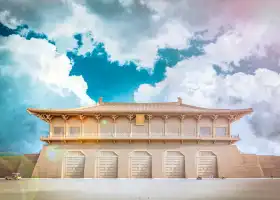
I thought Luoyang was beautiful, but then I went to Xi'an…
A journey through ancient and modern Chang'an! A 3-day, 2-night Xi'an itinerary
You simply must visit Xi'an, to listen to the echoes of time in the morning and evening bells and drums of the Bell and Drum Towers, to touch the warmth of history on the mottled bricks and stones of the Ming City Wall, to experience the prosperity of a golden age in the bright lights of the Grand Tang Mall, and to delve into the vast collection of the Shaanxi History Museum, exploring the long history of this ancient capital… This is a comprehensive 3-day, 2-night in-depth Xi'an travel guide, taking you to appreciate the unique charm of this ancient capital of thirteen dynasties. Save it and let's go!
Itinerary
Day 1: Encounter with ancient Xi'an
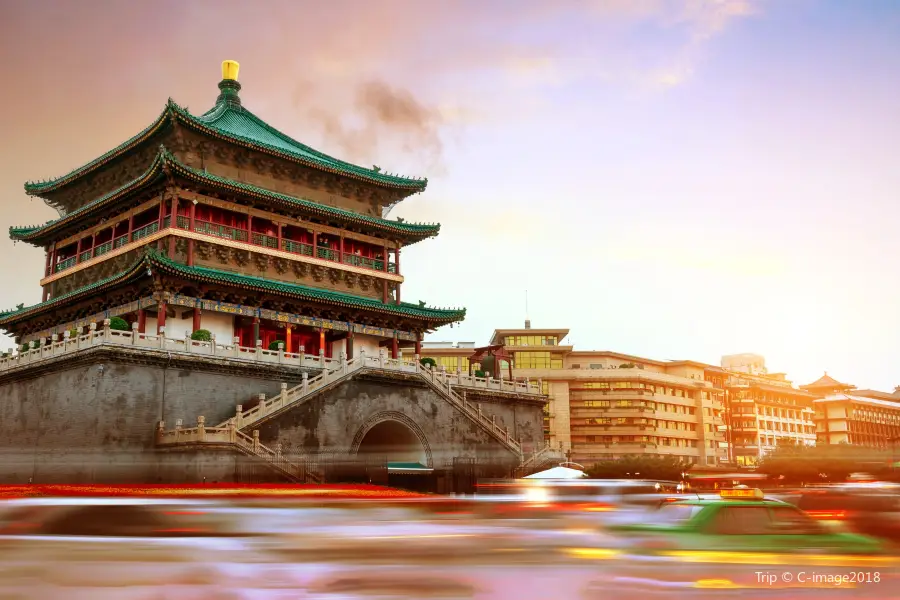
- Bell and Drum Towers: The heart of Xi'an, where the morning bell and evening drum were once the city's timekeepers. Ascend the Bell Tower and look out over the bustling modern city and the simple and elegant ancient buildings complementing each other. The flying eaves and brackets of the Drum Tower are magnificent, showcasing the exquisite ancient architectural art.
- Sajinqiao: A food paradise for authentic Xi'an locals, full of life and energy. Compared to Huimin Street, it is less commercialized and more authentic. Start your day with Hulutou spicy soup and Youcha fritters, and satisfy your sweet tooth with Zenggao and persimmon cakes. Every bite is an authentic taste of Xi'an.
- Xi'an City Wall: One of the largest and most completely preserved ancient city walls in existence. Rent a bicycle and ride along the wall, feeling the breeze on your face. The crenellations and gate towers seem to tell stories of the past. Starting from Yongning Gate, enjoy the four seasons of the ancient city and see the blend of ancient and modern inside and outside the city walls.
- Shuyuanmen: An antique cultural district, filled with a strong scholarly atmosphere. Stroll through it, browsing the various writing brushes, ink sticks, paper, inkstones, calligraphy, and paintings. You can also see street artists creating their works on the spot, experiencing the unique charm of traditional culture.
Day 2: Exploring history and culture
- Shaanxi History Museum: "Give me a day, and I'll give you ten thousand years." This museum, known as the "Pearl of the Ancient Capital, Treasure House of China," houses cultural relics from the earliest stages of human history to the various artifacts of social life before 1840. It is a vivid textbook of Shaanxi history. Book tickets in advance on the official website or WeChat official account, follow a professional guide, walk into the long river of history, and appreciate the prosperity of the Zhou, Qin, Han, and Tang dynasties.
- Giant Wild Goose Pagoda: The landmark building of Dacien Temple, a masterpiece of Buddhist architecture from the Tang Dynasty. Ascend the pagoda and overlook the bustling city of Xi'an. The temple is filled with the scent of incense and devout believers. Feel the profoundness of Buddhist culture in the serene atmosphere.
- Grand Tang Mall: When night falls, this place transforms into a brightly lit scene of the Tang Dynasty. NPCs in Hanfu costumes shuttle through the crowds, the "Bouncing Lady" performs, and various Tang culture-themed performances take you back to the golden age of the Tang Dynasty in an instant.
Day 3: Tracing the Grandeur of the Qin Dynasty
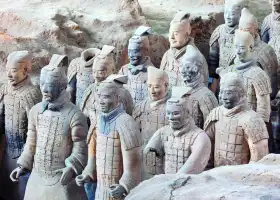
- Terracotta Army: One of the eight wonders of the world, the massive underground army is awe-inspiring. It is recommended to depart early in the morning to avoid peak tourist times. Follow the guide's explanation, carefully observe the unique faces and costumes of each Terracotta Warrior, and feel the majestic momentum of the Qin Empire.
- Mount Li Scenic Area: Included in the Terracotta Army ticket, this is the location of the Mausoleum of the First Qin Emperor. Although the underground palace has not yet been opened, the Bronze Chariots and Horses Museum in the park is not to be missed. The exquisite bronze chariots and horses, with their superb craftsmanship, are breathtaking, as if you can see the grand scene of Emperor Qin Shi Huang's tour.
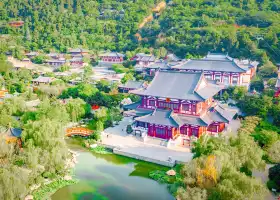
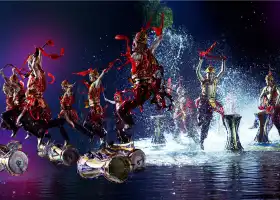
- Huaqing Palace: An ancient royal hot spring resort, bearing the love story of Emperor Xuanzong and Yang Guifei. Stroll along the Huaqing Pool and imagine the scene of Yang Guifei bathing. When night falls, watch the large-scale live-action historical dance drama "The Song of Everlasting Regret," and relive that eternal love story in the interweaving of lights, music, and dance.
Accommodation Guide
- Near the Bell and Drum Towers: Convenient transportation, multiple subway lines intersect here, and it is close to major attractions. There are a variety of hotels and guesthouses to choose from, ranging from budget-friendly express hotels to high-end luxury star hotels, making it easy to start your culinary exploration at any time.
- Near the Giant Wild Goose Pagoda: Beautiful environment, close to several attractions, and you can enjoy the musical fountain of the Giant Wild Goose Pagoda at night. This is also a gathering place for young people, with a rich and colorful nightlife, and various characteristic bars and restaurants to meet your leisure needs.
Transportation Guide
- Subway: Xi'an's subway network is constantly improving, covering most of the popular attractions. The subway is the preferred mode of transportation, convenient, fast, and punctual. Download the "Xi'an Subway" app to scan the code and ride.
- Bus: Bus routes are extensive, and some bus routes also offer views of the city along the way. However, it may be congested during peak hours, so plan your time accordingly.
- Taxi/Ride-hailing: Convenient for travel, especially suitable for those with luggage or traveling in groups. However, you may encounter traffic jams during peak tourist seasons and rush hour.
Food Recommendations
- Zi Wu Lu Zhang Ji Rou Jia Mo: The bun is crispy, the meat is tender and juicy, and every bite is full of happiness. It is a taste recognized by old Xi'an locals.
- Ma Hong Xiao Chao Pao Mo: The stir-fried Paomo is sour and spicy, the mutton is tender, the bun pieces are chewy, and paired with sweet garlic and chili, every bite is a rich Xi'an flavor.
- Liu Xiang Noodles: The noodles are evenly thick, chewy, with rich meat sauce, and a generous portion. One bowl is super satisfying.
- Persimmon Huta: Made with Lintong fire crystal persimmons, the outer skin is crispy, and the filling is soft, sweet, and fragrant. The sweetness of the persimmons spreads in your mouth, a unique sweet taste of Xi'an.
Tips
- Travel: Check the weather forecast in advance and prepare appropriate clothing and rain gear. Try to avoid rush hour to avoid delays.
- Tickets: Tickets for popular attractions such as the Terracotta Army and Shaanxi History Museum need to be booked in advance on official platforms to avoid delays.
- Food: Xi'an cuisine is heavily flavored. If you can't handle spicy food, remember to inform the waiter in advance and ask for mild spice.
- Photography: When taking photos at attractions such as the Grand Tang Mall, you can rent a Hanfu costume. Wearing it will create a more atmospheric photo and greatly improve your photo quality!
Xi'an, an ancient and modern city, has both a profound historical heritage and boundless vitality. Follow this guide, embark on your Xi'an journey, and explore your own Chang'an memories!
Good view of the city from both locations. Bought the combo ticket and was easy to use, just scan to go in at both locations. Booking confirmation was issued almost instantly upon purchase
The ticket price is a bit expensive: 30 yuan per person. However, the bell tower is still worth going up, as there are cultural relics to appreciate. The view is even more beautiful at night when the tower is lit up.
Previously, I had only viewed it from a distance, but this time, climbing the tower gave me a more comprehensive understanding of its history, function, facilities, and architectural structure. Looking around from the top, the entire cityscape unfolded before me—a bustling commercial area with beautiful scenery. It was definitely worthwhile!
It is worth a visit. I go there often. There are Kaiyuan Mall and Bell Tower Hotel, the best hotel in Xi'an, around it. The night view is beautiful at night. You can look at it from different angles. There are also many men and women dressed in Tang style taking photos and checking in here. It is also considered a scenic spot now. You can go to Huimin Street in the basement of the Bell Tower. There are many kinds of snacks and the flow of people is not small. It is especially worth a visit.
The Xi'an Bell Tower is the center of Xi'an City. It is the intersection of four streets in the east, west, south and north. It was built in the 17th year of Hongwu, the reign of Emperor Taizu of the Ming Dynasty. It is one of the largest and best-preserved bell towers in China. The Bell Tower is a loft-style building with a double-eaved three-drop water-style four-cornered spire. It is built on a square base made of blue bricks and white lime. It is 36 meters high and covers an area of 1,377 square meters. I have come here many times, and I have a different feeling every time I come. Only with the Bell Tower can there be the history of Xi'an. The surrounding area of the Bell Tower has also been built over the years to form a comprehensive area for sightseeing, shopping, dining and accommodation. In particular, the Bell Tower Hotel and Kaiyuan Mall are already large commercial districts in Xi'an. During holidays, there are crowds of people coming and going here to check in, and they need to clear the personnel to pass smoothly. It is a must-check-in place for tourists to Xi'an.
The Bell Tower and Drum Tower are very nice, but there are so many people during the May Day holiday that the flow of people has to be limited! It is very convenient to take the subway, but it is strongly recommended to go to the bathroom before getting on the subway! Otherwise, it will be difficult to go to the bathroom when you arrive at the Bell Tower/South Gate of the City Wall... You can go to Kaiyuan Shopping Mall first after leaving the subway, go to the observation deck to look at the Bell Tower and Drum Tower from a distance (buy milk tea and go to the bathroom by the way), and then go down to take a closer look You can buy various cultural and creative souvenirs at the Shuyuan Gate next to it. There are Hanfu makeup and travel photography everywhere. It is very convenient and suitable for shopping, but there are so many people! Every place with the words Chang'an/Xi'an is queuing up to take pictures!
This time I took my 80-year-old mother-in-law to Xi'an, and we went to the Drum Tower and Bell Tower on the same day. The Drum Tower that the three of us visited first was warm and gentle, leaving a deep impression. 625 years have passed between the red lacquered beams and pillars, and the free opening policy allows silver-haired tourists to walk freely. The two of us chose the 100-yuan Bell and Drum Tower ticket (120 yuan for single purchase) and climbed the tower with the creaking sound of the wooden stairs. The mottled marks on the drum surface tell the story of forging during the Hongwu period of the Ming Dynasty, and the whispers of the copper bells on the eaves and the wind seem to carry the echoes of the alarm during the Anti-Japanese War. The beams that were blown off by enemy planes have now been restored to their original state during the repair. Only the old site of the alarm in the southwest corner quietly shows the wrinkles of time to the world.
The Ferryman of Time: The Time and Space Narrative of Xi'an Bell Tower In the coordinate system of the heart of Xi'an, the bell tower is like a ferryman of time, witnessing the vicissitudes of the ancient capital of 13 dynasties with six hundred years of silence. This 36-meter-high wooden structure is not only the largest and most complete architectural specimen among the existing bell towers in China, but also more like a continuously running time machine, weaving the construction wisdom of ancient craftsmen, the evolution code of urban civilization and the spiritual demands of contemporary people into a dialogue network across time and space. 1. Solidified Time and Space Coordinates When Zhu Yuanzhang, the first emperor of the Ming Dynasty, ordered the construction of the bell tower in the 17th year of Hongwu (1384), he might not have expected that this building used for timekeeping would become an eternal city totem. Architect Liang Sicheng once marveled at its structural wisdom of "three drops of water on double eaves": twelve eaves columns on the bottom floor form a corridor, eight golden columns on the middle floor support the octagonal caisson, and four sky-high columns on the top floor support the gilded top, forming a spatial order that rises layer by layer. This vertical upward spatial narrative implicitly coincides with the ancients' cosmic view of "harmony between man and nature", transforming the flow of time into the eternity of space. The ancient rhythm of morning bells and evening drums was once the pulse of time in this city. According to the "Xi'an Prefecture Records" of the Ming Dynasty, the bronze bell in the bell tower weighed 6 tons and the sound of the bell could be heard for thirty miles. When 108 bells pierced the morning mist of Chang'an City, shops removed their door panels, postmen were ready to go, and the whole city woke up in the sound of bronze. This time system constructed by sound has shaped the unique rhythm of life in agricultural civilization. 2. Dialogue Field of Civilizations The architectural language of the bell tower is a code book for dialogues among multiple civilizations. The peacock blue glazed tiles and the blue brick base form a color tension, symbolizing the unrestrained grassland civilization and the implicit Central Plains civilization; the evolution of the crouching beasts on the eaves from 7 to 9 records the changes in the ritual system; the Bagua caisson added in the Qing Dynasty reveals the infiltration of Taoist thought. This phenomenon of cultural accumulation is just as the archaeologist Su Bingqi said: "The bell tower is a three-dimensional yearbook of national integration." In the contemporary context, the bell tower has become a time-travel theater. The arc trajectory of the old man doing Tai Chi in the morning echoes the curve of the bracket; under the fill light of the Internet celebrity live broadcast, the shadow of the mortise and tenon structure projects the cultural confusion of modern youth; in the lens of foreign tourists, the lotus pattern on the bracket and the geometric lines of the glass curtain wall form a surreal collage. The magical realism produced by this spatial juxtaposition is exactly the survival strategy of ancient buildings under the impact of modernity. 3. Eternal spiritual totem The existence of the bell tower subverts the linear view of time. The Yuan Dynasty canal ruins discovered during the subway construction in 2018 form a time-space overlap with the bell tower foundation; the night view of the Tang Dynasty restored by 5G holographic projection technology coexists with modern advertisements on LED large screens in the same field of vision. This phenomenon of time and space folding confirms the time philosophy of philosopher Bergson: "Real time is the penetration of various memories." The bell tower is like a crystal of memory, storing the urban DNA of different eras. Under the impact of globalization, the bell tower interprets the modern transformation of traditional architecture. The night light show transforms the mortise and tenon structure into a data stream, VR technology allows tourists to "walk into" the construction site of the Ming Dynasty woodwork, and the digital bell sound echoes in the cloud through the APP.