
Things to do in Hebei
Explore top experiences
Top 10 attractions in Hebei
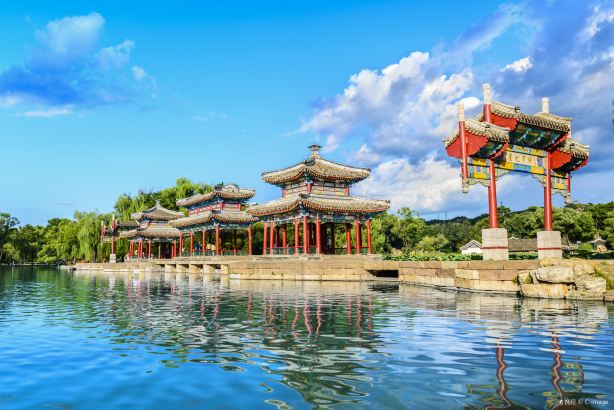

The Mountain Resort Scenic Area
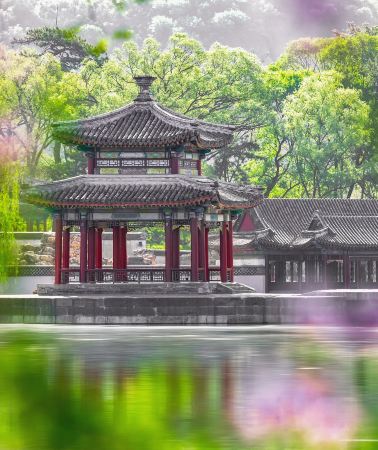
Construction of the resort began in 1703 and took 89 years to complete, spanning the reigns of the Qing emperors Kangxi, Yongzheng, and Qianlong. This was the second political center apart from Beijing during the Qing dynasty. The mountain resort is divided into four major areas. On the south side are the palace and lake areas, and on the north side are the mountain and grassland areas. The palace and lake areas house the essence of the mountain resort. The lake area contains many examples of architecture from China's Jiangnan region just south of the Yangtze River. These are a result of the love the emperors Kangxi and Qianlong had for the Jiangnan scenery.China · Chengde

Aranya · Qinhuangdao
Aranya · Qinhuangdao is a seaside community, and its name signifies tranquility and a return to one's true self. The core attractions of this seaside community are its cultural buildings constructed along the coast. It brings together various cultural spaces, including a library, auditorium, art museum, and art center, where the architecture creates a unique dialogue with the ocean, beach, and natural light. Among them, the library facing the sea, the minimalist pure white auditorium, the art museum hidden beneath the sand dunes, and the art center with its circular courtyard each offer unique features, perfect for a leisurely stroll. Beyond the architecture, public spaces like the coastline and beach are also worth exploring. The community's cultural venues host year-round theater, music, and literary performances and exhibitions, weaving an artistic atmosphere into daily seaside life. When the light is soft in the early morning and evening, the silhouettes of the seaside buildings are perfect for photos.China · Changli

Shanhaiguan
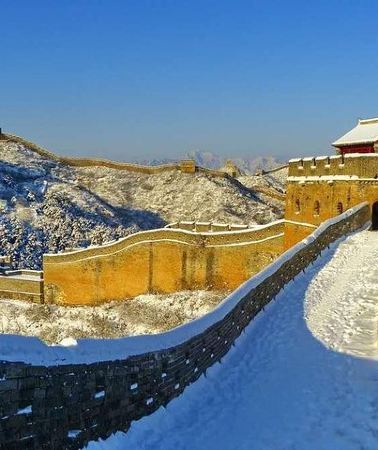
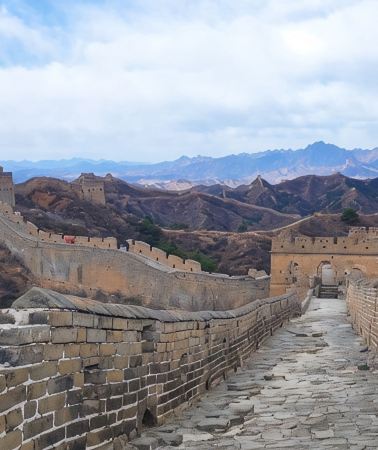
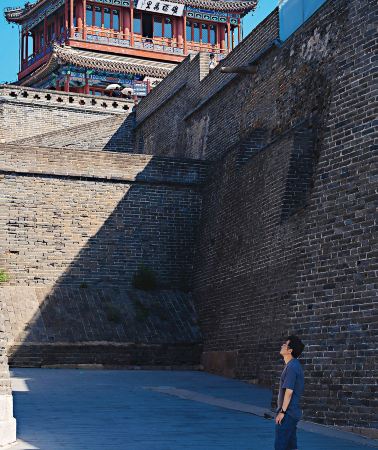
Shanhaiguan, also known as the first pass under heaven, is located in the northeast of Qinhuangdao. The Shanhaiguan pass was built in the Ming dynasty, leaning against the Yanshan mountains to the north and facing the Bohai sea to the south. It is a complete defensive system and an important military fortress in ancient times. The terms "inside the pass" and "outside the pass" commonly used in ancient times were demarcated by Shanhaiguan. Shanhaiguan is one of the important passes in the eastern section of the Ming Great Wall, echoing Jiayuguan in the western section as the head and tail of the wall. It is honored as the "first pass under heaven". The perimeter of Shanhaiguan pass is approx. 4 km, connected to the Great Wall. The Ming dynasty city walls within the ancient town are well-preserved, with most main streets and alleys retaining their original appearance, making the town more elegant and quaint. The most striking feature is Zhen Dong tower on the east gate of the pass, also known as the "first pass under heaven tower". The tower stands tall on the Great Wall, commanding a panoramic view. Climbing the tower offers a bird's-eye view of Shanhaiguan and the scenery outside the pass. Surrounding Zhenyuan tower stand structures like Jingbian tower, Linlü tower, Muying tower, Weiyuan hall, the urn-shaped defense system, Dongluo city, and the Great Wall museum. The layout of these ruins offers insights into ancient Chinese city defense architecture. Afterwards, stroll into the old town to sample local snacks while experiencing Shanhaiguan's distinctive customs. Shanhaiguan is not only a military fortress with a long history, but also a picturesque tourist and summer resort with pleasant climate. The attraction features over 90 developed historical sites, with the Great Wall as the main thread, including several scenic areas such as "Laolongtou", "Meng Jiangnu temple", "Jiaoshan", "Longevity mountain", "Yansai lake", and "Wang family compound". These attractions are conveniently located close to each other with good transportation, allowing for an easy sequential visit.China · Qinhuangdao

Guangfu Ancient City
Guangfu Ancient Cityis located in Guangfu town, Yongnian district, Handan city, Hebei province. It is a national 5A-level attraction, a famous historical and cultural town in China, and a wetland park with profound historical heritage. Featuring beautiful northern water town scenery and a long-standing tai chi culture, it is China's unique ancient town, water town and tai chi town. The ancient town. Guangfu ancient town has a history of over 2,600 years, with its city walls stretching 4.5 km in circumference and covering an area of 1.5 square kilometers. The town boasts numerous historical relics, including two national-level protected sites - Guangfu ancient town itself and Hongji bridge, along with over 20 provincial and municipal protected sites such as the former residences of Yang Luchan, Wu Yuxiang and Wu Ruqing. The water town. Guangfu ancient town is located in the Yongnian depression covering an area of 46,000 mu. Surrounding the town walls is a 5 km moat that's 100 m wide, with wetlands beyond it. This "town between two waters" forms a unique view of Guangfu. The depression has perennial water accumulation with lush reeds, thriving fish and shrimp, lotus ponds, and migratory birds, earning it the reputation of "little Jiangnan in the north". The city of taiji. Guangfu ancient town is the birthplace of Yang-style and Wu-style taijiquan, where the founders of the two major schools, Yang Luchan and Wu Yuxiang, were born. It is a renowned hometown of taiji, from which taijiquan spread across China and the world.China · Handan

Hetou Old Street
Hetou Old Street is located on both banks of the Tangjin Canal in Fengnan District, Tangshan, covering an area of nearly 2,000 mu. It derives its name from the "river head" where the Coal River and Tangjin Canal converge. In the late Qing Dynasty, coal from the Kaiping Coal Mine was loaded onto ships in Xugezhuang and transported along the newly excavated Coal River to Tianjin for export. The starting point of the canal thus became a bustling water and land port. According to county records, at that time, "merchant ships and passenger vessels were as dense as a forest, and Western-style buildings and flower gardens were too numerous to take in at a glance." Today, the old street has been transformed from the long-dormant antique-style block "Canal Tangren Street." With Tang Dynasty culture as its theme and the canal as its foundation, it has formed a layout of "one river, one lake, two streets, and three islands," serving as an immersive nighttime attraction showcasing the grand Tang Dynasty's performing arts on water. Nighttime is the highlight of the old street: the "Tang"-inscribed lampposts and lantern-lit sky streets along the kilometer-long canal gradually light up, while painted boats glide across the water. The nearly 100-meter-high "Tangshan light" Ferris wheel offers a panoramic night view. NPCs dressed in Tang-style costumes roam the streets, where you can recite poetry with "Li Bai," answer scholarly exam questions from the "zhuangyuan," or win "silver notes" in mini-games like idiom chains and rock-paper-scissors to redeem snacks and cultural products. The lantern-lighting ceremony, water dance show, live performance of "Emperor Tang's eastern expedition," and iron-flower fireworks along the parade route from Tang King Square to Prosperity Pier amplify the Tang dynasty atmosphere as the night deepens. The daytime is perfect for thorough exploration: the large vats at the entrance of the Tai'er merchant banquet floating market correspond to the twenty-four solar terms, recreating the bustling commercial atmosphere of the traveling "Tai'er merchant" trade group. In the east bank art district, old courtyards relocated and replicated from Jiangxi, Anhui, Shanxi and other regions are interspersed with handmade shops, making the silk tree area ideal for photos. Wangzhen square's hitching posts, the Tangshan dialect square themed on local slang, the koi pond, and the old car & persimmon market blending vintage vehicles with persimmon trees each offer unique sights. The old street primarily focuses on nightlife, so it's recommended to enter in the evening. With cool riverside breezes and long walking sections at night, remember to bring a light jacket and wear comfortable shoes. Families with children can check out the indoor Tang Little Lord castle amusement park, while travelers who love hanfu may consider wearing Tang-style attire for more atmospheric photos.China · Tangshan

Zhengding Ancient City
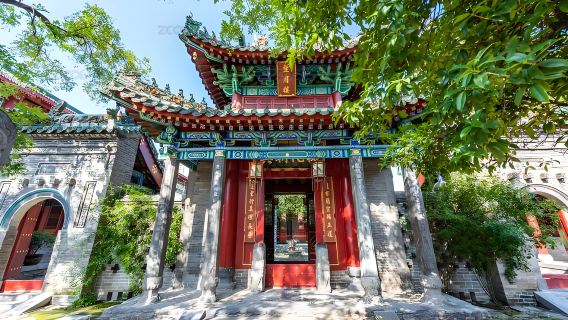
Zhengding Ancient City is located 15 km north of Shijiazhuang, the capital of Hebei Province. Built according to traditional Chinese planning concepts and architectural styles, it embodies China's historical and cultural characteristics from the 5th to 19th centuries, showcasing the wisdom and perseverance of ancient laborers. Historically known as one of the "Three Northern Strongholds" alongside Baoding and Beijing, its southern gate still bears a stone inscription reading "Stronghold of Three Passes." Zhengding is also the hometown of Zhao Zilong, a renowned general from the Three Kingdoms period. The long and rich history has endowed Zhengding Ancient City with magnificent and uniquely styled cultural relics and historic sites, renowned for its "Three Invisible Mountains, Nine Non-Flowing Bridges, Nine Towers, Four Pagodas, and Eight Great Temples, along with Twenty-Four Exquisite Memorial Archways." "Three Invisible Mountains" refers to the fact that Zhengding was historically the administrative center of the Zhongshan State, Hengshan Commandery, and Changshan Commandery, yet the area itself has no mountains. "Nine Non-Flowing Bridges" describes a single-arched three-path stone bridge in front of the Longxing Temple, as well as the pan bridges (ancient pan bridges typically featured three parallel bridges) in front of the Prefectural Confucian Temple and the Zhengding County Confucian Temple—none of which have flowing water. "Nine Towers, Four Pagodas, and Eight Great Temples" refers to the original four gate towers, four corner towers, and the Yanghe Tower within the city; the four pagodas are the Tianning Temple Pagoda, Huata Pagoda of Guanghui Temple, Xumi Pagoda, and Chengling Pagoda of Linji Temple; the eight great temples include Longxing Temple, Guanghui Temple, Linji Temple, Kaiyuan Temple in Zhengding Ancient City, Tianning Temple, Hongji Temple, Sheli Temple, and Chongyin Temple—the latter three of which have been destroyed. Zhengding once boasted 24 magnificent memorial archways, including the Xu Family Archway, Liang Family Archway, Ancient Changshan County, Supreme Virtue Reaching Heaven, Virtue Matching Heaven and Earth, and Wooden Bell for All Affairs. However, due to historical changes, weathering, and especially the destruction during the decade-long Cultural Revolution, many precious cultural relics were damaged. Yet with 9 nationally protected relics, 6 provincially protected relics, and over 10 county-level protected relics, Zhengding still retains the grandeur of a renowned historical and cultural city. The ancient city of Zhengding was designated as a provincial-level historical and cultural city in 1990 and recognized as a national historical and cultural city in 1994. Zhengding's tourism features a unique blend of "modern and ancient," "elegant and folk" characteristics. Among its historical sites, the Longxing Temple, originally built in 586 AD during the Sui Dynasty and expanded under the decree of Emperor Zhao Kuangyin, the founding emperor of the Song Dynasty, stands majestic and well-preserved. It enjoys high acclaim both domestically and internationally, praised by renowned architect Liang Sicheng as "the foremost temple beyond the capital." The temple's "Reclining Guanyin" mural sculpture was hailed by Lu Xun as "the Goddess of Eastern Beauty."Revolving Sutra LibraryDubbed by physicists as a prime example of Newton's laws in action, along with China's scripture cabinets. The Sui Dynasty Longzang Temple Stele is one of the country's renowned ancient stone inscriptions, showcasing the evolution from Han clerical script to Tang regular script, praised by Kang Youwei as "the finest Sui stele." Standing 22 meters tall, the grand Buddha statue is among China's earliest and tallest surviving bronze standing Buddhas. The cross-shaped Mani Hall exemplifies classic Song Dynasty architectural techniques. Zhengding's vicinity also boasts four famous pagodas, including Huagong Pagoda at Guanghui Temple—a brilliant fusion of diamond throne and floral pagoda styles. Tianning Temple's...Lingxiao PagodaIt is the foremost wooden pavilion tower in China. The symmetrical arrangement of the Tang Dynasty bell tower and ancient pagoda at Kaiyuan Temple in Zhengding Ancient City exemplifies the transition in Chinese Buddhist temple architecture from pagoda-centered to hall-centered layouts. The Chengling Pagoda at Linji Temple serves as the reliquary pagoda for Master Yixuan, founder of the Linji school of Buddhism, and has become a symbol of Sino-Japanese friendship. Located within Zhengding, the Zhengding Rongguo Mansion was meticulously designed and constructed according to descriptions in Cao Xueqin's literary masterpiece "Dream of the Red Chamber" while strictly adhering to China's "Great Qing Code", making it the country's first architectural complex replicating Ming-Qing architectural styles. Most scenes from the TV series adaptation of "Dream of the Red Chamber" were filmed here. The Qing Dynasty-style Ningrong Street by Rongguo Mansion's west gate stretches over 200 meters, where pivotal scenes like "Imperial Consort Yuan's Homecoming" and "Qin Keqing's Funeral" were shot. With over 1,600 years of history, Zhengding Ancient City's walls were originally earthen fortifications during the Eastern Jin Dynasty, rebuilt in stone during the Northern Zhou Dynasty, expanded into earthen walls during the Tang Dynasty, and finally reconstructed as 24-li (approximately 12 km) brick walls during the Ming Dynasty. The surviving 8,106-meter Ming-era walls feature four magnificent gates: Yingxu (later renamed Huancui) to the east, Changle to the south, Zhenyuan to the west, and Yong'an to the north. While time has eroded the western and northern gates, the eastern gate was entirely buried under 1960s military fortifications. In 2001, the southern gate tower and 50-meter flanking walls were restored through public donations of original bricks and a CNY 3.99 million investment.China · Zhengding

Thaiwoo Resort
Overall introduction Thaiwoo Resort is nestled among the mountains in Chongli District, Zhangjiakou City, Hebei Province. It is a year-round mountain resort with a North American style, offering skiing in winter and a summer retreat. It is conveniently accessible from Beijing by high-speed rail or self-drive. The main peak of Chongli, Yushi Liang, is located within the ski area, with a summit elevation of over 2,100 m. The valley is densely forested, making it one of the well-known ski resorts near Beijing. The resort was developed by Chongli Thaiwoo Tourism Resort Co., Ltd., with a total land area of 40 km² and an investment exceeding CNY 20 billion. It is currently one of the largest comprehensive ski resorts in China. The "Dancing Runner" course has hosted the FIS Freestyle Ski World Cup Moguls event for four consecutive years. As a year-round ski resort in China, it has established strategic partnerships with globally renowned brands such as Club Med, Westin, and HYTT. Venue advantage √ World ski golden belt The mountainous region between 40-50° north latitude is recognized as the "world ski golden belt". √ 2022 event core area In 2022, the Zhangjiakou competition zone will feature six major events, including cross-country skiing, Nordic combined, and biathlon. √ A year-round resort ski town in full operation: ski in winter and spring, outdoor activities in summer, and enjoy the scenery in fall. √ The beginner ski area is very large; √ A ski town introducing international hotel management brands, including Hyatt, Marriott, PVCP, and more; √ A ski town that hosts international A-level ski competitions; √ A ski town that introduced Starbucks coffee; √ Hosting a super large snow music festival, the Cool Snow Music Festival co-organized with BTV for the New Year's Eve gala attracted nearly 10,000 live audience members. On the evening of December 31, the topic interaction on Weibo reached 530 million. Winter piste map Taiwu ski resort covers a total area of 400 hectares, with approximately 200 planned ski runs totaling 138 km in length. The resort plans to have 45 lifts and 21 magic carpets, with a total length of 38.23 km. Currently, the town has built 31 ski runs, with beginner, intermediate, and advanced runs in a 3:4:3 ratio. The total length is 30 km, with snowmaking covering about 80 hectares. There are 6 high-speed cable cars and 13 magic carpets. The ski runs are named after dances like rumba, waltz, and tango, drawing inspiration from their rhythmic and artistic qualities to give the town a unique charm. Taiwu Rave Park The rave park, jointly created by Taiwu and the Swiss Helvepark team, was designed by Marcel Brunisholz (known for designing SkasFee, Zermatt Adelboden), bringing a refreshing Swiss style to ski enthusiasts. The terrain park features all the traditional elements, including kickers of various sizes, rails, boxes, and other features, catering to freestyle players of all skill levels. Summer outdoor map In summer, Taiwu is 8–12°C cooler than Beijing. Its lush forests serve as a natural oxygen bar and outdoor sports venue. Here you'll find a variety of outdoor activities: mountain biking, orienteering, ATV riding, hiking, go-karting, mountain golf, and luge. Thaiwoo life Stay at Thaiwoo Local food, coexisting with scenic views Taifu features 17 distinctive restaurants: Alpine hut, 2160 restaurant, Summit view restaurant, Hui cui restaurant, Peach izakaya, White mountain blue tile, Sanchuan hot pot, Taifu craft brewery, Lu coffee, Columba kids restaurant, Yuan shan, Big talk lounge, Fun hall, Yi hot pot, Yuewu skewers, KFC, Starbucks coffee. Shop at Thaiwoo North American style commercial street, gathering international first-tier brands: Salomon, Arc'teryx, Patagonia, Burton, Nobaday, Bogner, Millet, Suunto, Spider, Smartwool, Tonisailor, Kjus, Kessler, Electric, Head, Halti, Leki, Lowa, Northland, Vauhti, Level, Phenix, Rossignol...... Recreation Phoebe mini theater/Yichi hot spring/May 4th club/Time KTVChina · Zhangjiakou

Old Dragon's Head
Lao Longtou is located on Shanhaiguan's Southeastern Bohai Sea. It is 4 km away from the Shanhaiguan Scenic Area. The eastern starting point of the Ming Great Wall, is ia magnificent fortress. The Great Wall is like a dragon, traversing the land of China. The east end is inserted directly into the sea to the south of Shanhaiguan City. It is like a dragon head, so it is called the “old dragon head." The Chenghai Building, the tallest building in the scenic spot, is a great location to watch the sunrise on the sea.China · Qinhuangdao

Dove Nest Park
Dove Nest Park is a famous attraction in Beidaihe. The park has great sight lines to the ocean. Watching the sunrise in Pigeon park is a can't-miss activity for all visitors! Migratory birds pass through here every year in the Spring and Autumn, so it's an ideal place for bird-watchers to visit! The park's rocky beachers are also amazing as well!China · Qinhuangdao

Nandaihe Xianluo Island
Nandaihe Xianluo Island, leveraging its natural advantages of blue skies and clear waters, was built inspired by the enchanting legend of the conch fairy. This comprehensive marine amusement destination combines entertainment, sightseeing, fitness, leisure, and dining, earning its reputation as a "fairy tale on the sea." The island creatively incorporates the folk tale of the conch fairy's romantic union with a young fisherman named Haiwa, featuring myth-inspired landscapes that exude classical elegance—resembling a celestial pool amid the waves, a paradise in the ocean. Visiting this island to experience the joy of viewing the sea from its midst is truly a highlight of life. Attractions like the conch fairy statue, Three Passes, Seven-Star Rocks, Stone Monkey Gazing at the Sea, windmill clusters, and Giant Dragon Emerging from the Waves are imbued with mystical charm. The island's Xianluo pavilion and the shore-side Juxian pavilion complement each other perfectly. Visitors ascending these pavilions are treated to breathtaking vistas where the sea merges with the sky, waves glisten, sails dot the horizon, clouds drift, and seagulls soar—all unfolding before their eyes. Connecting the two pavilions is a kilometer-long cable car route spanning the sea like a rainbow bridge, transforming the natural barrier into a seamless passage. On the island's western side stands an imposing 70-meter-high observation tower, soaring skyward. It hosts thrilling marine activities like bungee, skydiving, rafting, and sightseeing—innovative, exhilarating, yet safe. To the southwest, an artificial 7,000-square-meter seawater bathing area invites the adventurous to revel in the waves. A dedicated bidirectional cable car links the sandy shore to the island, serving as the primary transportation for visitors. Over a hundred semi-enclosed two-person cable cars operate smoothly along this kilometer-long route, taking approx. 15 minutes from Juxian pavilion to Xianluo pavilion. As travelers recline in the cable cars, they enjoy panoramic views: nearby Nandaihe and distant Beidaihe connected by shimmering waters, red-walled buildings nestled among greenery, golden sands embraced by blue waves, seagulls dancing on crests, and refreshing sea breezes—offering endless delight and wonder.China · Qinhuangdao
Experiences you can't miss in Hebei
Featured Cultural experiences in Hebei
View all Cultural experiences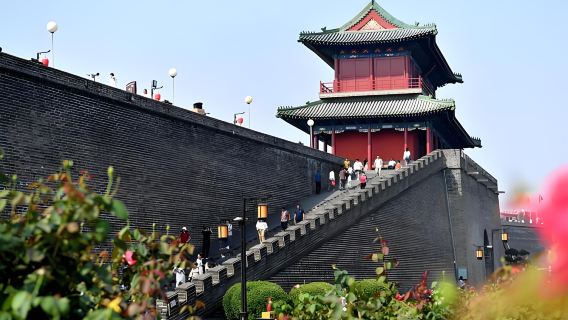
Free cancellation
Instant confirmation
Book now for tomorrow
FromUS$38.51
Free cancellation
Instant confirmation
Book now for tomorrow
FromUS$84.61

Free cancellation
Instant confirmation
Book now for tomorrow
FromUS$60.93

Free cancellation
Book now for tomorrow
FromUS$80.57

Free cancellation
Instant confirmation
Book now for tomorrow
FromUS$5.98
Free cancellation
Instant confirmation
Book now for tomorrow
FromUS$89.24
Free things to do in Hebei
The Mountain Resort Scenic Area
China · ChengdeImmediate access, Book now for today, Cancel anytimeAranya · Qinhuangdao
China · ChangliShanhaiguan
China · QinhuangdaoImmediate access, Book now for today, Cancel anytimeGuangfu Ancient City
China · HandanHetou Old Street
China · TangshanImmediate access, Book now for today, Cancel anytimeZhengding Ancient City
China · ZhengdingThaiwoo Resort
China · ZhangjiakouOld Dragon's Head
China · QinhuangdaoImmediate access, Book now for today, Cancel anytimeDove Nest Park
China · QinhuangdaoImmediate access, Book now for today, Cancel anytimeNandaihe Xianluo Island
China · Qinhuangdao
More ways to travel from Hebei
Private Tours in Hebei
View More Private Tours in Hebei





Group Tours in Hebei
View More Group Tours in Hebei




What travellers say about Hebei

Anonymous user14 October 2026
5.0
The Mountain Resort is located near Chengde city center and very close to Chengde Railway Station. It covers a vast area, divided into palace, plain, mountain, and lake areas. A complete tour would take at least 4 hours. It is recommended to enter from the Lizheng Gate and hire a guide for a better understanding of Qing Dynasty history and to avoid unnecessary detours.
The Mountain Resort Scenic Area

老少皆宜()30 November 2025
5.0
If we're talking about the most famous attraction in Changli County, Qinhuangdao, Hebei Province, it has to be the Aranya Community. Originally a real estate development project intended as a community, it has now transformed into a popular tourist destination.
This is because the unique atmosphere created by the cultural heritage and neighborly relations within the Aranya Community makes both residents and visitors feel comfortable.
Due to the success of the Aranya project, it's now undoubtedly Changli's must-visit spot for social media check-ins, and it's definitely worth a visit.
Aranya · Qinhuangdao

Meanderer015 October 2026
5.0
The city gate tower is a very representative historical site, and the view from the top is excellent. Many buildings within the city walls have been restored, and it gets very crowded during peak season. Taking photos only in the outer square is free, but it's recommended to buy tickets online in advance to climb the city gate tower.
Shanhaiguan
Anonymous user3 October 2026
4.0
The hometown of Tai Chi has well-preserved ancient city walls and many performance programs, but it is still quite commercialized. During the National Day holiday, there are a lot of tourists, especially at night, which causes serious traffic jams.
Guangfu Ancient City

M27***8418 October 2026
5.0
Before visiting, my initial impression was that it would be similar to other tourist attractions with NPCs. However, after arriving, I found it to be completely different from what I had imagined. The performances inside the scenic area were so numerous and varied that it was impossible to watch them all. The NPCs were also incredibly knowledgeable, and my child even saw the figures of Li Bai, Du Fu, and Lord Cui, whom he had been longing to see. The scenery was also a pleasant surprise. With elderly people and children, one day was simply not enough to experience everything. The parade, the lighting ceremony, and the closing ceremony were all breathtaking. I highly recommend it. My child had a great time and said he would definitely come back again. I look forward to visiting Hetou Old Street again next time.
Hetou Old Street
Anonymous user5 October 2026
5.0
This is a Buddhist holy site well worth visiting. The Thousand-Handed and Thousand-Eyed Buddha and the mural of the Reclining Guanyin are historical and artistic treasures that have been preserved intact for future generations to appreciate and understand history! An even greater gain was visiting the memorial hall of Mr. Liang Sicheng, where I learned about the contributions he and Lin Huiyin made to the preservation of historical sites in my country and their transmission in education, so that we, the later generations, can appreciate these historical sites!
Zhengding Ancient City

nicky05153 October 2026
4.0
Taiwu Town is easily accessible from Beijing by high-speed rail. From Qinghe Station to Taizicheng Station, there are free shuttle buses available right outside the stations, taking about 10 minutes to reach various stops within the town. Families without cars have no problem. The town was already a bit chilly during the National Day holiday. There are many hiking trails available. We chose cable car number 4 to the top of the mountain, returned to the transfer station, and began hiking Rainbow Valley G3 from the starting point. The entire trail is 2.33 kilometers long with 15 checkpoints. It winds through forests along a wavy route, and we even encountered some squirrels – quite interesting! We continued until we reached the junction with the G4 chipmunk route, which is also the starting point for the mountain bikes. If you get tired here, you can ride down for 150 yuan. There are many curves, and children up to 12 years old can ride independently. If you choose to continue hiking, take the chipmunk route downhill. Don't stay on the paved road the whole way; after a section of paved road, turn into the pine forest path – that's the correct chipmunk route. Continue until you reach the red wooden bridge, then return to the paved road downhill to the starting point of cable car number 9, Nanshanli Hotel, Paston Hotel, and the end point. Rainbow Valley G3 + Chipmunk G4 is a 6km route that takes 2.5 hours. There are very few uphill sections, making it a fun and engaging route. It's not particularly difficult.
Thaiwoo Resort

huiluogao16 October 2026
5.0
Of the two attractions included in the combined ticket, I would recommend Laolongtou (Old Dragon Head). It has historical stories, a majestic atmosphere, and a beach. Visiting the military camp and walking around the Bagua (Eight Trigrams) area makes it quite interesting. The First Pass Under Heaven in the Ancient City was dark that day, and the shuttle bus stopped operating after 5 pm. The ancient city was deserted after the National Day holiday, making for a less than ideal experience.
Old Dragon's Head

Happy菲爸12 October 2026
5.0
The park has a large parking lot and covers a considerable area. Just inside the entrance is the animal area, and after passing through, you reach the beach. The sand is fine and the coastline is quite long. The scenery is beautiful, and children could easily spend half a day there.
Dove Nest Park

Sunshine80s18 September 2026
5.0
The most popular attraction on Xianluo Island in Nandaihe is its kilometer-long cross-sea cableway. Suspended above the Bohai Sea, with a refreshing sea breeze, it offers a truly immersive experience and is perfect for taking photos. The island itself is small, featuring a sightseeing tower and a statue of the Conch Fairy. However, its shortcomings are quite apparent: long queues for the cableway during holidays, limited recreational activities, and a somewhat artificial feel. It's recommended to visit during off-peak hours and take the cableway in the evening to watch the sunset for a better experience.
Nandaihe Xianluo Island
Frequently asked questions
What are the must-do things in Hebei?
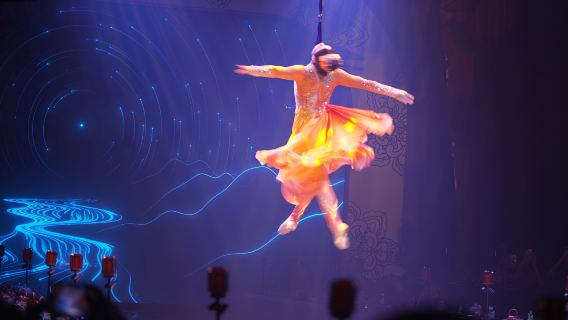
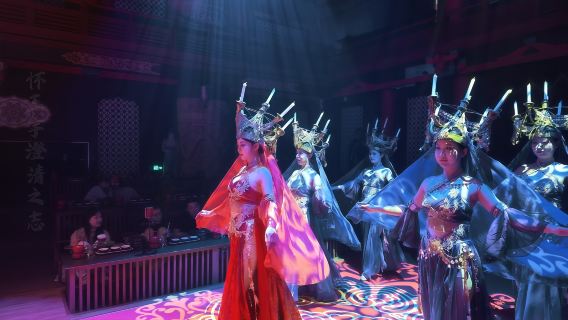
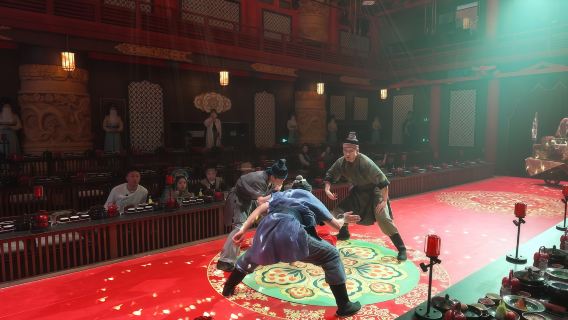
Don't miss these attractions in Hebei: The Mountain Resort Scenic Area, Aranya · Qinhuangdao, and Shanhaiguan. If you like Cultural experiences, try One-day tour of Zhengding Ancient City + Longxing Temple + Rongguo Mansion + Zhaozhou Bridge in Shijiazhuang, Hebei: Chartered car + admission. If you enjoy Food & drink, try Handan Zhao capital imperial banquet | immersive ancient Zhao-style dinner (9 performance programs + multiple seating options + experience an ancient-style banquet feast + optional styling and photography experience).
What are the must-try foods and restaurants in Hebei?
You can give Handan Zhao capital imperial banquet | immersive ancient Zhao-style dinner (9 performance programs + multiple seating options + experience an ancient-style banquet feast + optional styling and photography experience) and Tangshan Yanle Feast Under Heaven: Live Court Performance & Gourmet Experience a try. Before you go, please check their opening hours and menus online. Reservations are recommended, especially during peak hours.
How can I contact Trip.com customer support?
Get help anytime, anywhere within 30 secondsContact customer support
Can I change or cancel my booking?
Change and cancellation policies vary by attractions and tours. Please check the product details page for more information.
How can I get discounted prices?
Ticket prices may vary between weekdays and weekends, as well as during peak and off-peak seasons. When booking with Trip.com, you can also use Trip Coins to get extra savings. For more tips on booking discounted tickets, please visit Trip.com for the latest information.
Trip.com picks
Popular cities in China
Popular Experiences in Hebei
Recommended Car Rentals in China
Things to do in YangshuoThings to do in ShanghaiThings to do in SuzhouThings to do in HangzhouThings to do in QingdaoThings to do in JiuzhaigouThings to do in MacauThings to do in ChengduThings to do in BeijingThings to do in SanyaThings to do in TaipeiThings to do in HarbinThings to do in ChinaThings to do in ZhangjiajieThings to do in Zhuhai
Hebei SurfingHebei Day ToursHebei ActivitiesHebei City PassCar rentals in BeijingCar rentals in TainanCar rentals in KinmenCar rentals in PingtungCar rentals in TaipeiCar rentals in TaichungCar rentals in ShenzhenCar rentals in HualienCar rentals in MacauCar rentals in Hong KongCar rentals in PenghuCar rentals in KaohsiungCar rentals in YilanCar rentals in GuangzhouCar rentals in Taoyuan