


The Palace Museum in Beijing is located in Beijing, China. It was established on October 10, 1925, and is a large comprehensive museum built on the foundation of the imperial palaces of the Ming and Qing dynasties and their collections. It integrates ancient architectural complexes, imperial collections, and cultural and artistic heritage from various dynasties. The Palace Museum covers an area of over 1 million square meters and preserves approx. 9,000 ancient buildings. It is the largest and most complete ancient palace complex in China and also the largest ancient cultural and art museum in China.
Construction of the Forbidden City began in 1406, the fourth year of the Yongle reign in the Ming dynasty, modeled after the Nanjing Imperial Palace. It was completed in 1420, the 18th year of the Yongle reign, and served as the imperial palace for 24 emperors during the Ming and Qing dynasties.

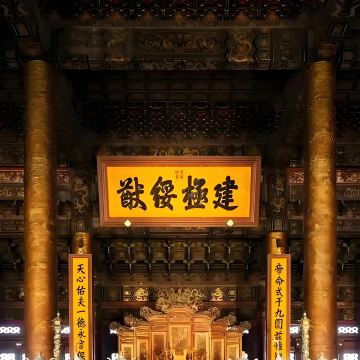

The architecture within the Forbidden City is divided into two sections: the outer court and the inner court. The center of the outer court consists of the Hall of Supreme Harmony, Hall of Central Harmony, and Hall of Preserving Harmony, collectively known as the three great halls, which served as venues for grand state ceremonies. The three great halls are flanked by two architectural complexes: the Hall of Literary Brilliance and the Hall of Martial Valor. The center of the inner court comprises the Palace of Heavenly Purity, Hall of Union, and Palace of Earthly Tranquility, collectively called the three rear palaces, which were the principal residences of the emperor and empress.
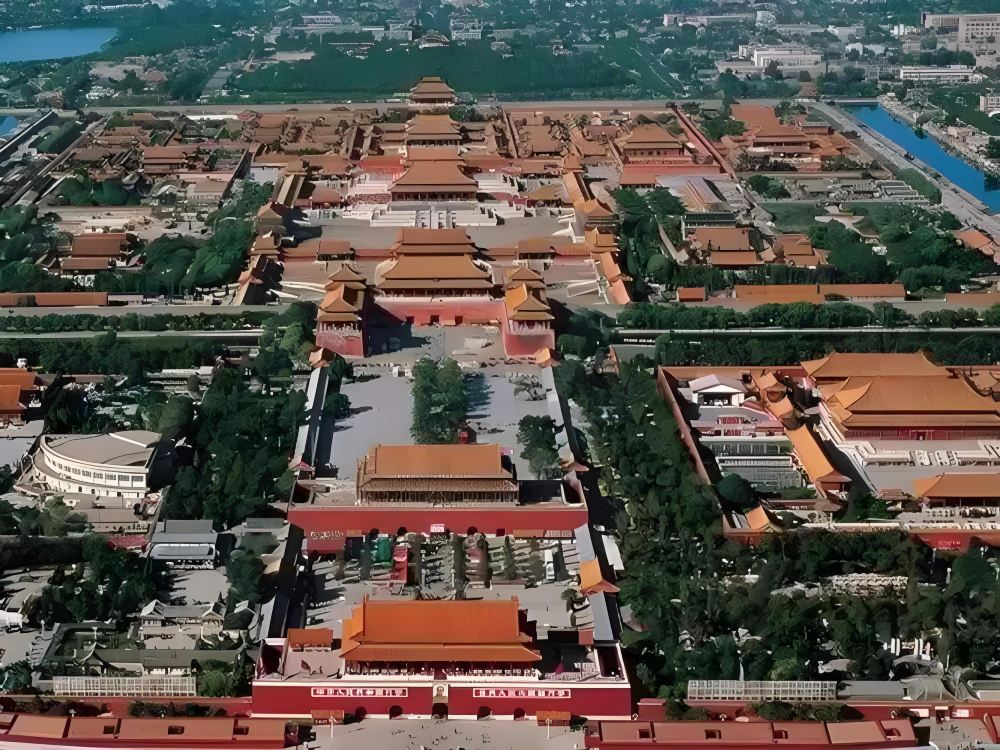
Behind it is the Imperial Garden. Flanking the inner three palaces are the eastern and western six palaces, which served as living quarters for imperial consorts. To the east of the eastern six palaces stands the Hall of Heavenly Vault and other Buddhist halls, while to the west of the western six palaces are the Hall of Central Uprightness and other Buddhist halls. Beyond the outer court and inner court lie the outer eastern route and outer western route architectural complexes.

