Suzhou Gardens: Which to Visit, Tickets and Opening Hours
Contents
- Why Suzhou's gardens are worth planning a day around
- The five Suzhou gardens to see first
- Humble Administrator's Garden (Zhuozheng Yuan)
- Lingering Garden (Liuyuan)
- Master-of-Nets Garden (Wangshi Yuan)
- Lion Grove Garden (Shizilin)
- Canglang Pavilion (Canglangting)
- Four quieter Suzhou gardens worth adding
- How to choose which Suzhou garden to visit
- Suzhou garden tickets, timed entry and opening hours
- Getting to Suzhou and between the gardens
- A one-day Suzhou gardens route from Shanghai
- A two-day route with the west side
Show more
Suzhou is a canal city about 25 minutes by high-speed train from Shanghai, and its classical gardens are the reason most travelers come. Nine of them are inscribed on the UNESCO World Heritage list as the Classical Gardens of Suzhou, laid out between the 11th and 19th centuries as private worlds for scholars and officials. This guide covers the five Suzhou gardens most first-time visitors see, four quieter ones worth adding, and the tickets, opening hours and metro routes you need to choose between them.
These are not flower parks. A Suzhou garden is a compressed landscape: water, rock, pavilion, corridor and one carefully placed window, arranged so that a space the size of a city block feels endless. Four design devices come up again and again, and knowing them turns a pleasant walk into a visit you can actually read.
Most of the famous gardens sit inside the old town, within a few kilometres of each other, but they are not one afternoon's walk. A realistic day is one large garden plus one small one; three is possible if you start at opening, and four will blur into one another.
Best light and thinnest crowds are in the first hour after opening and the last hour before closing. Between about 9:30 and 15:00, tour groups move through the big gardens in waves.
These five cover the range of the tradition: the biggest, the most architectural, the smallest, the most playful and the oldest. For each one you get what to look for, how long it takes, the ticket price and the nearest metro station. Prices are shown as peak and off-peak; April, May and July to October are peak months, the rest are off-peak.
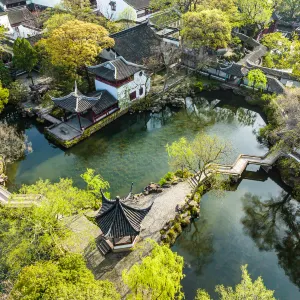
 Strolling through the Humble Administrator's Garden with friends was so relaxing! As a representative of Suzhou gardens, it's truly remarkable. Just inside the entrance, you're greeted by a vast lotus pond. A gentle breeze rustles the lotus leaves, carrying a delicate fragrance – incredibly pleasant. The plaques at the Humble Administrator's Garden add to the ambiance, and the ancient buildings throughout offer picturesque views at every turn. The winding corridors make it perfect for taking scenic photos or capturing stunning moments on social media. When you get tired, you can simply find a spot under a corridor to rest, gazing at the flowers, trees, and rocks in the courtyard. It's a truly relaxing experience, perfect for a leisurely stroll with friends. I highly recommend visiting this place when you're in Suzhou!
The one to see if you see only one. At 5.2 hectares this is the largest classical garden in Suzhou, begun in 1509 by a Ming dynasty official and divided into east, central and west sections. The central garden is the essence: ponds, islands, halls and covered walkways arranged in the simple Ming style, with water taking up about a fifth of the whole site.
Look for the Hall of Distant Fragrance facing the lotus pond, Little Flying Rainbow (the city's only covered bridge), the stone boat known as Fragrant Isle, the borrowed view of the North Temple Pagoda from the pavilion called With Whom to Sit, and the blue-glazed windows of the Hall of Thirty-Six Mandarin Ducks in the west garden.
Practical: allow 2 to 3 hours. Tickets are CNY 80 peak / 70 off-peak (about US$11 / 10), half price for students and visitors aged 60 to 69, free for children under about 1.4 m and visitors over 70. Open 07:30 to 17:30, last entry 17:00, from 1 March to 31 October, and 07:30 to 17:00, last entry 16:30, from November to February. Metro Line 6 to Zhuozhengyuan-Suzhou Museum, Exit 2, then about five minutes on foot. Suzhou Museum and Lion Grove Garden are both within a ten-minute walk.
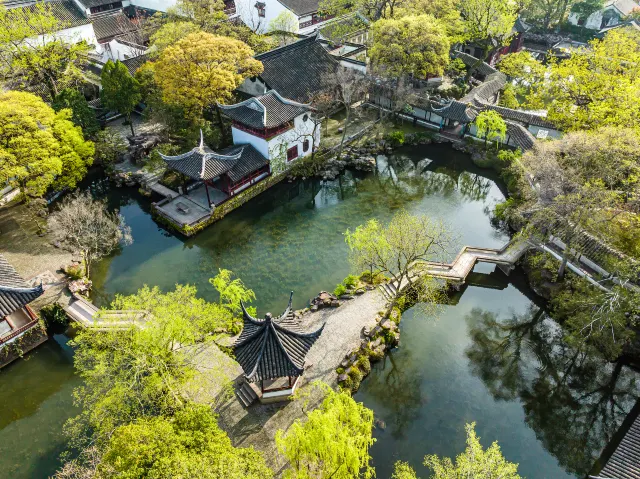


The one for architecture and interiors. Started in 1593 and rebuilt in 1798, Lingering Garden gives about a third of its 2.33 hectares to buildings, linked by a covered corridor of roughly 700 metres that loops around the central pond. It is the most sophisticated of the Suzhou gardens to walk through slowly, and usually calmer than the Humble Administrator's Garden.
Look for Cloud-Capped Peak, a 6.5-metre Taihu stone and one of the celebrated garden stones of Jiangnan; the marble screen in the central hall; and the run of lattice windows along the corridor, each framing a different slice of rock, bamboo or water.
Practical: about 2 hours. Tickets are CNY 55 peak / 45 off-peak, with the same student and senior discounts as above. Hours match the Humble Administrator's Garden: 07:30 to 17:30 with last entry 17:00 from March to October, 07:30 to 17:00 with last entry 16:30 from November to February. Metro Line 2 to Shilu, Exit 1, then 10 to 12 minutes on foot. The garden sits outside Changmen Gate, 4 to 5 km from the Humble Administrator's Garden, so take the metro or a short taxi rather than walking.
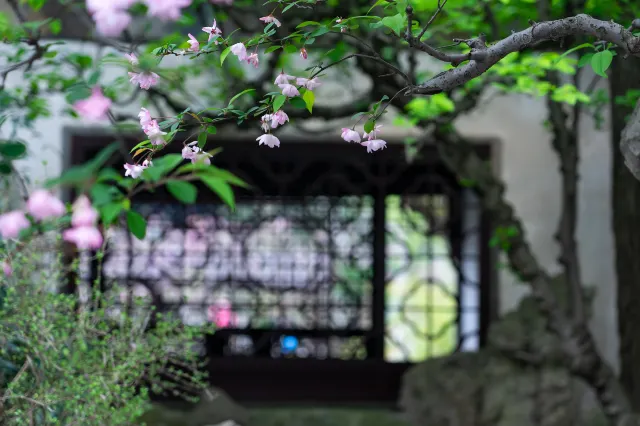
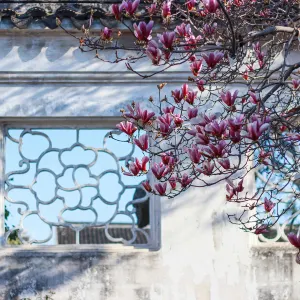

The one that proves small is enough. Master-of-Nets covers just 0.6 hectares in the southern old town. Its history goes back to 1174, although the present layout dates from 1785, and every hall, courtyard and pavilion is arranged around a single pond. It is the most perfectly balanced of the small gardens and the easiest to see in an hour.
The courtyard called Dianchunyi was reproduced as the Astor Court at the Metropolitan Museum of Art in New York in the early 1980s, which is why many visitors make this garden their priority. In season there is also a Classical Night Garden here, with opera, pipa and flute performances in the halls around the water; it is a separate ticket, around CNY 120, and runs from roughly late March to November, so check the session times.
Practical: 1 to 1.5 hours by day. Tickets are CNY 40 peak / 30 off-peak. Open 07:30 to 17:30, last entry 17:00, from March to October, and 07:30 to 17:00, last entry 16:30, from November to February. Metro Line 5 to Nanyuan Beilu, Exit 4, about 600 m north on foot; Line 4 to Sanyuanfang is about 900 m east.
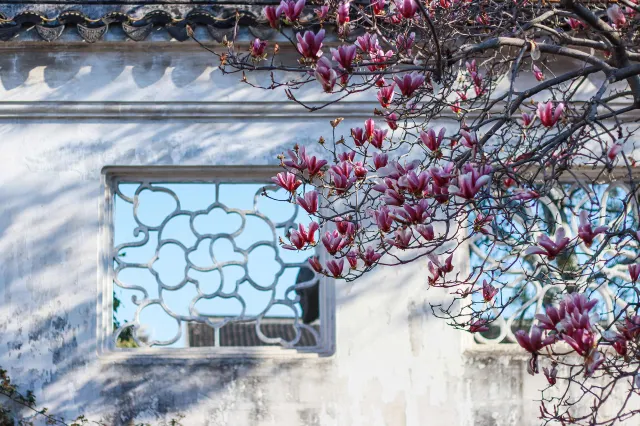

The one for children and anyone who likes a puzzle. Founded in 1342 as a Zen temple garden, Lion Grove is built around a rockery labyrinth of Taihu limestone: nine paths, 21 openings and around 500 stone shapes in a compact 1.1 hectares. It is the most playful of the classical gardens, and the easiest to enjoy without knowing anything about garden design.
Look for the True Delight Pavilion, which carries an inscription by the Qianlong emperor (a copy of the pavilion stands in Beijing's Summer Palace), and climb to the Woyun Room on top of the rockery for a view back over the stones and the pond.
Practical: 1.5 to 2 hours. Tickets are CNY 40 peak / 30 off-peak. Hours follow the same pattern as the other big gardens: 07:30 to 17:30 with last entry 17:00 from March to October, 07:30 to 17:00 with last entry 16:30 from November to February. The gate is 200 to 300 m south of the Humble Administrator's Garden, so visit the two together; Metro Line 6 to Zhuozhengyuan-Suzhou Museum, then five to seven minutes south.
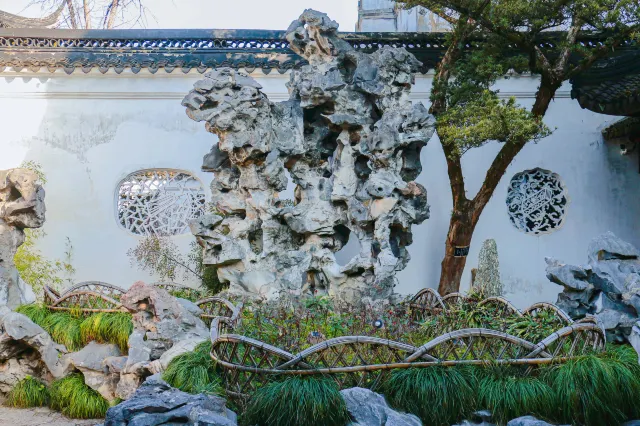
The oldest and quietest of the five. Canglang Pavilion was laid out around 1044 by the poet Su Shunqin and is the oldest surviving garden in Suzhou. At 1.08 hectares it is small, shaded by bamboo and old trees, and far less crowded than the big names, which makes it a good last stop of the day.
Its stone pavilion carries a famous couplet about clear wind and bright moon having no price; the double corridor along the north wall has 108 openwork windows; and the garden borrows the water outside its wall, so the scenery continues beyond the boundary.
Practical: about 1 hour. Tickets are CNY 20 peak / 15 off-peak, the cheapest of the famous gardens, with half price for visitors aged 60 and over and free entry from 70. Note the season switch here: 07:30 to 17:30, last entry 17:00, from 21 April to 20 October, and 07:30 to 17:00, last entry 16:30, from 21 October to 20 April. Metro Line 4 to Sanyuanfang, Exit 2, then ten minutes on foot.
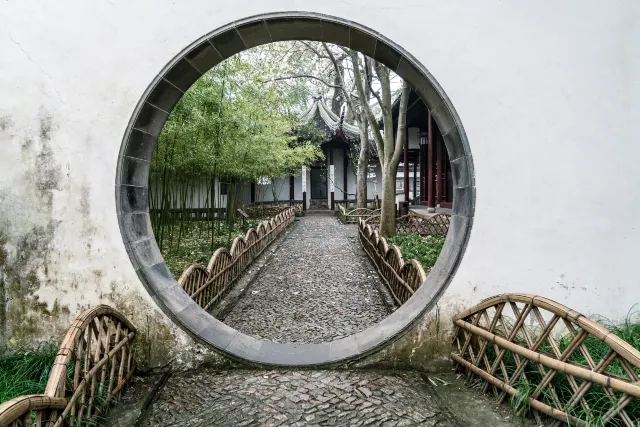
Once you have seen the headline gardens, or if you want a garden almost to yourself, these four are also on the UNESCO list. They are small, inexpensive and rarely busy on weekday mornings.
If you have one day, you do not need all of them, and choosing by what you want to see works better than choosing by ranking. Use this list to match a garden to your trip.
If you are choosing between the two biggest, the Humble Administrator's Garden wins on scale and variety while Lingering Garden wins on detail and comfort. If you are choosing between the two smallest, Master-of-Nets is more polished and Canglang more atmospheric.
Every famous Suzhou garden runs real-name timed-entry reservations, and your passport is your ticket. Carry the original document, not a photo on your phone, because it is checked at the gate.
Prices and hours in this guide were checked in October 2026. Seasonal calendars change, so confirm the ticket page the day before you visit.
Opening hours mostly follow two seasons, roughly March to October and November to February, but not every garden switches on the same date. Canglang Pavilion changes on 21 April and 21 October, for example, so check the individual garden rather than assuming.
Suzhou is an easy day trip from Shanghai. G-series trains from Shanghai Hongqiao take about 25 to 35 minutes, with several hundred departures a day, so you can decide on the morning of travel. Book to Suzhou Railway Station, not Suzhou North: the main station sits just north of the old town and minutes from the gardens, while Suzhou North is better for onward high-speed connections. The full Shanghai to Suzhou train guide covers stations, classes and ticketing. For hotels, food and non-garden sights, start with the Suzhou travel guide.
Inside the old town, the metro does most of the work, and every garden on this list is within about ten minutes of a station.
The gardens look close on a map, but the old town is 4 to 5 km across and walking between clusters eats time. Take the metro or a short taxi between the northeast cluster (Humble Administrator's, Lion Grove, Suzhou Museum) and the southern cluster (Master-of-Nets, Canglang).
- 07:30 - Humble Administrator's Garden at opening, before the tour groups arrive. Allow 2 to 3 hours.
- 10:30 - Suzhou Museum next door, designed by I. M. Pei. Free, closed on Mondays, and you need to reserve in advance. Allow 1 to 1.5 hours.
- 12:30 - Lion Grove Garden, five minutes south, then lunch on Pingjiang Road, about 15 minutes on foot.
- 15:00 - Metro to Master-of-Nets Garden for 1 to 1.5 hours, then Canglang Pavilion if you still have energy.
- 18:00 - Dinner, then the Classical Night Garden at Master-of-Nets in season, or a train back to Shanghai.
Day 1: the route above, or just the northeast cluster at a slower pace, with more time in the Humble Administrator's Garden and around Pingjiang Road.
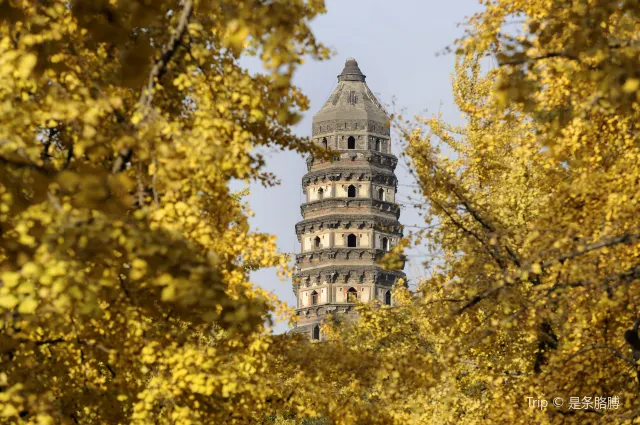
Day 2: Lingering Garden in the morning, then Tiger Hill after lunch (CNY 70 peak / 60 off-peak, open 07:30 to 18:00, Metro Line 6 to Tiger Hill) for the leaning Yunyan Pagoda and the Sword Pool. Shantang Street is a short walk from the north gate in the evening. Add Garden of Cultivation or Couple's Retreat Garden if you want one more small garden.
Popular recommendations

10 Items You Must Buy When Shopping in Batam
 Trip.com

3 Ipoh Night Markets To Visit During Your Stay
Trip.com