Changsha's Skyline Symphony: Architecture as a Living Art Canvas
#postandearn
Changsha, a city whose history stretches back over three millennia, presents an extraordinary architectural narrative. Far more than mere structures for shelter or function, its buildings stand as monumental art forms, chronicling the city's evolution from ancient capital to revolutionary stronghold and now to a pulsating hub of modern China. Changsha's architecture is a dynamic, ever-changing art installation, where millennia-old traditions converse with cutting-edge innovation, creating a unique urban aesthetic deeply rooted in place yet boldly facing the future.
Layers of Time: Heritage as Foundational Palette
The bedrock of Changsha's architectural artistry lies in its profound historical legacy. Though much of the ancient city was lost, fragments whisper stories. Remnants of Han Dynasty tombs (like Mawangdui) offer insights into sophisticated structural and decorative sensibilities. The preserved Tianxin Pavilion, originally part of the Ming Dynasty city walls and later rebuilt, stands sentinel atop the old battlements. Its layered eaves, intricate woodwork, and commanding presence embody traditional Chinese architectural principles – harmony with nature, axial symmetry, and intricate carpentry as high craftsmanship. Nearby, the Kaifu Temple complex offers glimpses of Buddhist architecture's serene courtyards and devotional halls. In quieter lanes, remnants of qilou arcades and traditional courtyard houses (siheyuan) showcase vernacular adaptations to Hunan's climate and social life. These historical structures are not relics, but the foundational strokes on the city's vast canvas, informing the scale, materials (like brick and timber), and underlying philosophies that continue to resonate.
Concrete Ideals: Socialist Realism and Modernist Pragmatism
The mid-20th century ushered in a dramatic stylistic shift, where architecture became an overt instrument for expressing political ideology and industrial ambition. The socialist realist style, dominant from the 1950s through the 1970s, produced monumental structures designed to impress and inspire collective purpose. Buildings like the Hunan Guesthouse (a designated heritage site) exemplify this: grand, symmetrical facades, prominent Soviet-influenced cornices, and expansive plazas intended for mass gatherings. This period also saw the rise of utilitarian workers' housing complexes and industrial architecture – sprawling factory complexes with functionalist designs prioritizing output. While often stark, these structures hold significant historical and aesthetic weight. Their imposing forms, repetitive geometries, and sheer scale reflect a specific era's aspirations and social reorganization. They represent the art of collective identity forged in concrete and brick, a powerful counterpoint to both ancient traditions and the flamboyance that would follow.
The Contemporary Crescendo: Fusion, Fluidity, and Futurism
Since the economic reforms and accelerating rapidly in the 21st century, Changsha's skyline has undergone a breathtaking metamorphosis, transforming the city into a showcase of audacious contemporary architectural art. This phase is defined by several key artistic movements:
Global Iconism & Structural Expressionism: The undisputed masterpiece is the Meixihu International Culture & Arts Centre, designed by the late Zaha Hadid Architects. This breathtaking complex is pure sculptural art – soaring curves of steel and glass resembling glacial formations or flowing streams. Its undulating roofs, cavernous grand theatre, and sculpted terraces defy traditional geometry, creating fluid, dynamic spaces that are as much experiential artworks as functional venues. It’s a statement of global ambition and architectural avant-garde on Changsha's shores.
The Vertical Canvas: Skyscrapers Reimagined: Changsha's downtown bristles with innovative high-rises that push engineering and design boundaries. The Maha Tower (Nur Vision) promises unique forms upon completion. Existing towers like HNA Huayuan Center boast distinctive facades and bold silhouettes. These aren't just tall buildings; they are vertical sculptures, their cladding systems, lighting schemes (like the vibrant LED displays on the IFS Tower), and rooftop designs turning the skyline itself into a kinetic light installation at night.
Contextual Fusion & Neo-Vernacular: Many contemporary architects in Changsha grapple with integrating global styles with Hunan's distinct identity. This can manifest subtly in material choices – modern interpretations of brickwork or timber – or in spatial planning that echoes traditional courtyard sequences within larger developments. Projects might incorporate green roofs and terraced gardens responding to the local landscape, blending built form with the natural environment in a distinctly regional way. Even the ubiquitous bamboo scaffolding enveloping new constructions becomes a temporary, ephemeral art installation, weaving local materiality into the act of creation.
Regeneration and Adaptive Reuse: The transformation of historic industrial zones like Xiangjiang New Harbour and Hunan Power Plant Park into cultural and commercial hubs represents an art form itself. Preserving the industrial skeletons – smokestacks, steel trusses, vast brick shells – and inserting galleries, cafes, and studios within them creates a powerful dialogue between past and present. It's architectural collage and sculpture on an urban scale, honoring the city's industrial heritage while breathing new artistic life into its remnants.
The Enduring Artistic Statement
Changsha's architectural art is never static. It thrives on the dynamic tension between preserving layers of history and embracing radical innovation. Walking its streets offers a visceral journey through time and style: from the earth-rooted solidity of Tianxin Pavilion, through the stern pronouncements of socialist towers, to the gravity-defying audacity of Meixihu. Every era contributes its aesthetic, its materials, and its story.
The city understands architecture's power beyond mere utility. It actively commissions landmark projects, fosters experimental designs, and revitalizes old structures with imagination. The towering new builds, the preserved fragments of history, the converted factories – all act as individual sculptural pieces within the vast, open-air gallery that is Changsha. It is a city constantly re-sculpting itself, proving that architecture, at its most ambitious and contextually aware, is indeed one of humanity's highest and most public forms of art. The skyline isn't just infrastructure; it's Changsha's evolving, three-dimensional self-portrait rendered in concrete, steel, glass, and light.
Changsha's only above-ground historical monument is a must-see! It's a shame I couldn't reach the summit because the third floor was under repair! But it's a good omen! I hope you keep striving and keep climbing!
I visited Tianxin Pavilion for the second time. This time I brought my mother and children. As long as you don't look at the main building, it's a park. It's free, and the elderly and children are also free. The park is not big, and you won't feel tired after visiting it. It's best to ask a tour guide to explain it, otherwise you really can't know the historical context in detail. Finally, Changsha is really a very good medium-sized city to visit. It's not too big, the food is good, and the fun is cheap.
Tianxin Pavilion, a landmark building in Changsha, carries the city's 2,200-year history. Originally named "Tianxing Pavilion," after the Changsha star in the sky, it served as an observation deck. Its location at the highest point in Changsha, making it easily defendable and difficult to attack, made it a highly sought-after location.
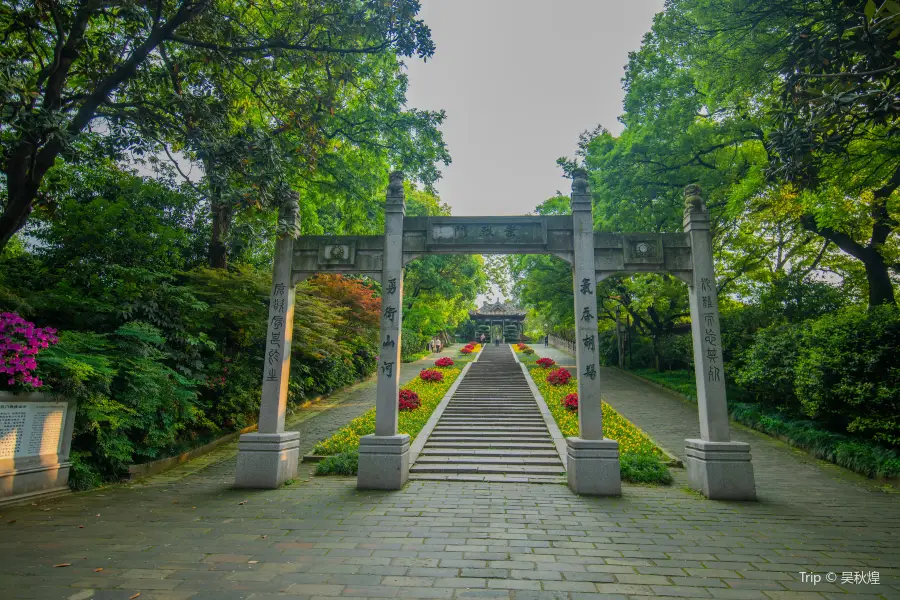
Tianxin Pavilion is located in Changsha City. It is a historical architectural scenic spot. Except for the core area, the external attractions can be visited for free. After climbing up the Tianxin Pavilion, you can overlook the street. There is also a popular science introduction to the relevant historical evolution in the building for tourists to visit. There is currently a night tour service, where you can see the beautiful night view, which is suitable for tourists to visit.
The attractions here are concentrated, and there are many cultural marks worth watching and enjoying. The ancient Changsha City defense features are the ancient city wall, Hongyi cannon, and attic; the loyal tower, the loyal gate, and the Wenxi fire memorial clock that reflects the spirit of the famous Chinese people, indomitable, independent, resisting foreign aggression; The art museum and Chengnan College reflecting the bones of Huxiang literature and art.
Tianxin Pavilion has been through the years, with a lot of historical imprints, and Chinese cultural elements are very rich. There are three main buildings in Tianxin Pavilion, the main pavilion and the east and west attic. The ancient Changsha City Wall, Wengcheng, Red Cannon, Tianxin Pavilion, and the city wall are military watchtowers and defense facilities since the past generations. There is also Chonglie Gate, which records the imprint of Tianxin Pavilion's defense and foreign insults from the historical periods of the Wuhuhua, Taiping Heavenly Kingdom and Japan's war on China. There is also the cultural imprint related to Chengnan College. It is worth slowly experiencing.
Visit Tianxin Pavilion and encounter Changsha's ancient charm and street food When you go to Changsha, Tianxin Pavilion is a great check-in point, allowing you to appreciate the ancient charm and fireworks of this city at once. Historical charm: a pavilion that travels through time The architecture of Tianxin Pavilion is very magnificent, with flying eaves and brackets, and red beams and painted buildings. From a distance, it looks like an elegant old man standing quietly in the city. Walking inside, you can see many precious historical relics and old photos, which silently tell the past of Changsha. Climbing to the highest point of Tianxin Pavilion, the view suddenly widens. In the distance, there are tall buildings, and in the near distance, the old streets and alleys are crisscrossed. The ancient and modern pictures are intertwined in front of you, which makes people feel a lot of emotion. Nearby food: Changsha on the tip of the tongue Coming out of Tianxin Pavilion, there are too many surrounding food to count. A few steps away, you can see a stinky tofu shop. The black tofu rolls in the oil pan, fried until golden and crispy, and then poured with a special sauce. When you take a bite, it is crispy on the outside and tender on the inside. The spicy taste spreads in your mouth instantly. The sense of satisfaction is simply amazing! There is also a restaurant selling flavored shrimps. The shrimps are plump, the shrimp meat is fresh and chewy, and the rich soup is full of shrimp meat. Every bite is spicy and addictive, making people unable to stop. Money-saving strategy: cost-effective gameplay 1. Use your ID cleverly: Bring valid IDs such as ID cards and student ID cards, and you may enjoy ticket discounts. When I went there, the ticket was much cheaper with my student ID card. 2. Bring your own snacks: The food prices in the scenic area are relatively high. You can bring some snacks before traveling, such as biscuits and nuts, to fill your stomach when you are hungry, which can save a lot of food and beverage expenses. But don't bring too much, otherwise it will be tiring to carry. 3. Travel during off-peak hours: Avoid holidays and weekends. Go to Tianxin Pavilion on weekdays. Tickets are sometimes discounted, and there are fewer people and no need to queue for photos, which makes the experience better. Tianxin Pavilion is really fun! Don't miss it if you go to Changsha. If you think this review is helpful to you, don't forget to like and collect it. If you have any tips for saving money at Tianxin Pavilion, you are also welcome to share it in the comment area!
Tianxin Pavilion is not only a building, but also a symbol of Changsha's history and culture. It is a wonderful journey through time and space, and a comfortable and convenient cultural experience. No matter where you come from, as long as you step on this land, you can feel its unique charm and indulge in its ancient charm. Here you can see the scenery, there are fun activities, transportation, eating and shopping are convenient, and you can lose a lot if you don't come to Changsha!