Heyang

Things to do in Heyang

Search attractions or local attractions & tours
Search

Explore top experiences

Top 10 attractions in Heyang

View all Attractions
Emperor Qinshihuang's Mausoleum Site Museum
2026 Global 100 - Best Things to Do

Emperor Qinshihuang's Mausoleum Site Museum

10
4.7/5
150.8k reviews

Emperor Qinshihuang's Mausoleum Site Museum is a large site museum built on the site of the Terracotta Army pits, which are located approx. 1.5 km east of the mound of Emperor Qinshihuang's Mausoleum. In March 1974, farmers from Xiyang Village accidentally unearthed fragments of terracotta figures while digging a well, and archaeological exploration confirmed Pit 1; in 1976, Pits 2 and 3 were successively discovered to the north of Pit 1. This army, which had slumbered for over 2,000 years, was thus brought back to light, and the discovery of the Terracotta Army has been hailed as "one of the great discoveries in the history of 20th-century archaeology." Pit 1 is the main military formation among the three pits, stretching over 200 m from east to west, with an estimated 6,000 pottery figurines and horses buried inside. Standing at the edge and looking down, armored warrior figurines, war chariots, and pottery horses are arrayed eastward in battle formation. A closer look at each figure reveals different facial shapes, hairstyles, beards, and even hand gestures. The figurines were originally painted all over, but most of the paint has peeled off and discolored due to fire and long burial. Pit 2 is L-shaped, with crossbowmen, cavalry, and charioteers arranged in a mixed formation; the vividly expressive kneeling archer was unearthed here. Pit 3 is small in scale, and scholars believe the ceremonial guard figurines and war chariots unearthed there indicate it served as the command center—known in ancient times as a "military tent"—directing the formations in Pits 1 and 2. The bronze swords, pi halberds, spears, crossbow triggers, and large quantities of arrowheads unearthed from the pits—many still sharp after more than 2,000 years—demonstrate the sophistication of Qin dynasty metallurgy. The Emperor Qinshihuang's Mausoleum Site Museum and the Qin Shi Huang Mausoleum at the foot of Mount Li were originally one integrated whole. After Qin Shi Huang ascended the throne at the age of 13, he began constructing the mausoleum, conscripting hundreds of thousands of laborers over a period spanning more than 30 years; the terracotta army, which replaced human sacrifice with figurines, served as the underground guard for this imperial mausoleum. To avoid the crowds during your visit, you might want to see Pit 3 and Pit 2 first, and then take your time to experience the awe-inspiring scene of Pit 1 last. After viewing the terracotta pits, you can also take the attraction's shuttle bus to Lishan Garden, where Emperor Qinshihuang's mausoleum is located; the Acrobats Pit, the Civil Officials Pit, and the Bronze Chariots and Horses Museum are all within the garden. The two painted bronze chariots and horses, cast at half the scale of real chariots, are exquisitely crafted with brilliantly gleaming gold and silver fittings, and are well worth a special trip to see.

China · Xi'an
Guanque Tower
No. 3 of Family-friendly Attractions in Shanxi

Guanque Tower

7.5
4.5/5
5k reviews

A national AAAA-level tourist attraction and one of the top ten attractions in Shanxi Province, Guanque Tower is located on the eastern bank of the Yellow River west of Puzhou Ancient City in Yongji, Shanxi. Alongside the Yellow Crane Tower in Wuhan, Hubei; Yueyang Tower in Yueyang, Hunan; and Tengwang Pavilion in Nanchang, Jiangxi, it is renowned as one of China's four great historical and cultural towers. Originally built during the Northern Zhou Dynasty (557–571 AD) by military commander Yuwen Hu as a defensive watchtower, the tower earned its name from the storks that frequently perched on its structure. The Tang Dynasty poet Wang Zhihuan's celebrated poem "On the Stork Tower" ("The sun along the mountain bows; The Yellow River seawards flows. You will enjoy a grander sight; If you climb to a greater height.") has become an enduring masterpiece, widely known both domestically and internationally. After standing for over 700 years through the Tang and Song dynasties, the tower was destroyed during warfare in the early Yuan Dynasty (1222 AD). The reconstructed Guanque Tower follows Tang-style architecture, featuring four eaves externally with three visible tiers, while internally comprising six floors. With a total height of 73.9m, it epitomizes the grandeur of the Tang era. Ascending Guanque Tower not only offers breathtaking panoramic views but also immerses visitors in the brilliance of China's 5,000-year civilization.

Yongji · 45.8km from Heyang
Shaanxi History Museum
2026 Asia 100 - Family-friendly Attractions

Shaanxi History Museum

9.5
4.8/5
35.4k reviews

Shaanxi History Museum is a large modern museum built after China's reform and opening up and officially opened in 1991. The building was designed by architect Zhang Jinqiu and adopts a Tang-style architectural layout of "central hall and four corner towers," with a symmetrical central axis and a clear hierarchy of primary and secondary structures; in 2016 it was included in the first batch of the "Chinese Architectural Heritage of the 20th Century" list. Shaanxi was once the political center of dynasties such as the Zhou, Qin, Han, and Tang, and the museum's collection spans a million years of history, covering categories such as Shang and Zhou bronzes, pottery figurines of successive dynasties, Han and Tang gold and silver wares, and Tang tomb murals, with a total of over one million items. The permanent exhibition "Ancient Civilization of Shaanxi" follows a chronological main line and presents the historical process from prehistoric Lantian Man to the eve of the Opium War across three galleries, with the Zhou, Qin, Han, and Tang periods as the focus. The east and west sides of the central hall each host a thematic exhibition: on the west side, "Treasures of the Great Tang: Hejiacun Hoard Unearthed Artifacts Exhibition" concentrates on fine gold and silver wares of the High Tang, while on the east side, the "Tang Dynasty Mural Treasures Gallery" displays authentic murals removed from Tang tombs, with subjects covering figures, architecture, ceremonial guards, and more, making it a uniquely distinctive category of the museum's collection. Among the many artifacts in the museum, several are particularly notable. The agate cup with gold-inlaid beast head, from the Hejiacun hoard, is carved from a single piece of banded agate into the form of a curved-horn beast head, resembling Central Asian rhyton cups, and is one of the first batch of cultural relics prohibited from being exhibited abroad. The tri-color glazed camel carrying musicians figurine vividly recreates the lively scene of musicians playing and singers performing on a camel's back, with bright glaze colors and figures with distinct expressions. The Empress's Seal is made of Western Han Hetian mutton-fat jade and carved with a chi-tiger knob, and is the only known actual jade seal of a Han dynasty empress discovered to date. In addition, the gilt silver flask with a dancing horse holding a cup design, the celadon ewer with an overhead handle and bottom-filling design, and the black-glazed oil-spot bowl each have their own distinctive features. The gold and silver wares unearthed from the Hejiacun hoard are concentrated in the thematic gallery and are a highlight of any visit; visitors are advised to allow time to examine them closely.

China · Xi'an
Houtu Temple
No. 11 of Best Things to Do in Yuncheng

Houtu Temple

5.6
4.8/5
255 reviews

Houtu temple, the ancestral shrine of China, is located by the Yellow River in Miaoqian village, Ronghe town, Wanrong county. With profound cultural heritage, it serves as a global worship center for Chinese descendants and one of the cradles of Chinese civilization. Houtu temple is located east of the Emei ridge and west of the Fenhuang bank, stretching 240 m from north to south and 105 m from east to west, covering an area of 25,268 square meters. The temple complex includes the mountain gate, a tripartite stage, the east and west five-tiger halls, the offering hall, the incense pavilion, the main hall, the autumn wind tower, and the song zhenzong stele corridor. Historical records mention the "sovereign heaven and houtu." From emperor xuanyuan huangdi's "sweeping the ground to build an altar for worshipping houtu" to emperor song zhenzong, eight emperors conducted 24 sacrificial ceremonies here. Emperor han wudi visited hedong eight times, offering sacrifices here seven times and leaving behind the timeless masterpiece "Ode to the autumn wind." The autumn wind tower derives its name from housing emperor han wudi's "Ode to the autumn wind stele," with the existing structure dating back to the ming dynasty. Houtu temple is the largest of its kind in China. In recent years, people from all walks of life across the country (including compatriots from Hong Kong, Macao and Taiwan) and overseas Chinese have been coming in an endless stream to seek their roots and worship Houtu. Especially on the birthday of Houtu holy mother (the 18th day of the third lunar month) and during the temple fair on the 5th day of the tenth lunar month, devout pilgrims, merchants and visitors gather in large numbers, creating a bustling atmosphere.

Wanrong · 32.5km from Heyang
Mount Hua
2026 Asia 100 - Best Things to Do

Mount Hua

8.7
4.7/5
55.6k reviews

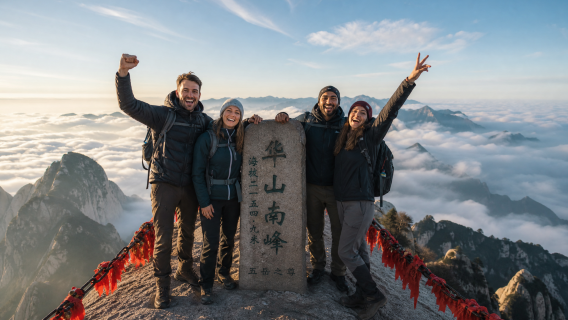
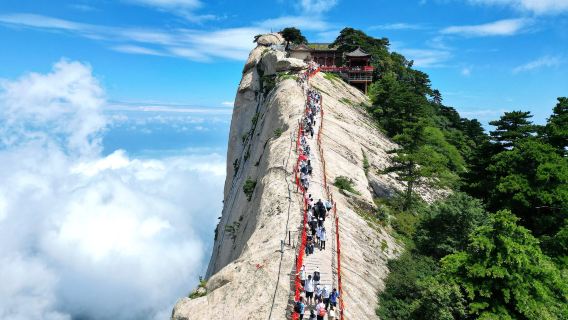
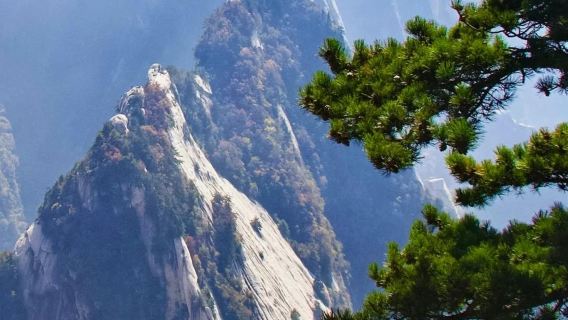
Mount Hua, known as the "Western Great Mountain" in ancient times, is one of China's Five Great Mountains. Located in Huayin, Shaanxi Province, it is also elegantly called "Taihua Mountain." The "Hua" in both "Zhonghua" and "Huaxia" originates from this mountain. "Steep and perilous" are the essence of Mount Hua's scenery, and the saying "there has always been only one path up Mount Hua" precisely describes its steepness—the Plank Road in the Sky, the Sparrowhawk Turn, the Thousand-Foot Precipice, the Hundred-Foot Gorge, the Laojun Plow Ditch, and other perilous sights leave every visitor awestruck. The Mount Hua attraction covers a vast area, including the main peak attraction, the Western Great Mountain Temple attraction, and the Xianyu attraction, among which the main peak attraction is the core, encompassing the five main peaks—east, south, west, north, and center—as well as the classic "Mount Hua Valley" climbing trail. The five main peaks each have their own distinctive features. The East Peak, at an elevation of approx. 2,100 m, has the open and expansive Chaoyang Terrace at its summit, making it an excellent spot for watching the sunrise, and is therefore also known as Chaoyang Peak; the natural stone patterns on the cliff face along the side of the peak resemble a giant palm print—this is the Huayue Immortal Palm, listed since ancient times as one of the Eight Views of Guanzhong. The West Peak, at an elevation of approx. 2,080 m, is named Lotus Peak because the giant rock at its summit resembles a lotus flower; the Cuiyun Palace, the Axe-Split Rock, and the Self-Sacrifice Cliff are scattered across it, and the myth of Chenxiang splitting the mountain to save his mother is said to have originated here. The South Peak, at an elevation of over 2,150 m, was called the "head of Mount Hua" by the ancients; it consists of two summits—Songgui Peak and Luoyan Peak—with a sheer cliff dropping straight down on one side. The North Peak, at an elevation of approx. 1,600 m, is also known as Yuntai Peak; it stands isolated and towering with precipitous drops on all four sides, and the story of "Taking Mount Hua by Strategy" took place here; the peak features views such as the Zhenwu Hall and the Jiaogong Stone Chamber. The Central Peak lies at the center of the East, West, and South Peaks, with serene and lush vegetation; on the peak is the Jade Maiden Shrine, said to be the place where Nongyu, daughter of Duke Mu of Qin during the Spring and Autumn period, cultivated herself, hence it is also known as Jade Maiden Peak. The Plank Road in the Sky is located on the mountainside east of the South Peak. It was built by the Yuan Dynasty Taoist He Zhizhen, who embedded stone stakes into the cliff face and laid wooden planks. At the end of the plank road, visitors can see Hezu Cave, where he cultivated himself. Visitors must press close to the cliff, hold the iron chains, and step on the wooden planks while moving sideways slowly—an extremely thrilling experience. The ridge of Canglong Ridge is as narrow as a blade, flanked by bottomless chasms, and walking on it makes one's heart race and vision blur. Golden Lock Pass is the vital gateway to the East, West, South, and Central peaks. Taoists believe that passing through this pass marks entry into a fairyland, and there is a folk saying: "Once past Golden Lock Pass, you enter another realm."

Huayin · 83.3km from Heyang
Longmen Grottoes
2026 Asia 100 - Best Things to Do

Longmen Grottoes

8.9
4.7/5
62.4k reviews

Longmen Grottoes are located in the southern suburbs of Luoyang, Henan Province, on the cliffs along both banks of the Yi River. As one of China's three major grotto art treasures, they were inscribed on the World Cultural Heritage list in 2000. The grottoes were first carved when Emperor Xiaowen of Northern Wei moved the capital to Luoyang, and construction continued through the Eastern Wei, Western Wei, Northern Qi, Sui, and Tang dynasties, with the vast majority of niches and statues left from the Northern Wei and Tang periods. Today, more than 2,000 niches and over 100,000 statues remain, along with a large number of inscriptions and steles, making the site an important representative of Chinese stone carving art. The attraction is divided by the Yi River into two parts: West Hill and East Hill. The West Hill Grottoes are the essence of the site, carved from the Northern Dynasties through the Sui and Tang periods. Famous caves include Guyang Cave, Binyang Cave, Lotus Cave, Wanfo Cave, and Fengxian Temple. The Lushena Buddha at Fengxian Temple stands about 17 m tall, making it one of the larger Buddha statues at Longmen Grottoes. Its face is dignified and serene, with a faint smile, and legend holds that it was modeled on the appearance of Wu Zetian, earning it the name "Oriental Mona Lisa." The inner walls of Wanfo Cave are densely covered with about 15,000 small Buddha statues, each only a few cm tall, neatly arranged and finely crafted. Guyang Cave is the earliest cave carved at Longmen, and its inscription calligraphy is exquisite; the selected "Twenty Masterpieces of Longmen" are representative works of Wei stele calligraphy. Binyang Cave consists of the South, Middle, and North caves and took more than twenty years to complete. Its original reliefs depicting emperors and empresses worshipping the Buddha were looted and lost overseas in the 1930s. In Binyang North Cave, a Buddha statue has a distinctive hand gesture, with the right index and middle fingers raised in a shape resembling the modern "scissors hand," though it is actually a Buddhist mudra, and it once sparked heated discussion online. The East Hill Grottoes are mostly Tang dynasty works and are smaller in scale than those on West Hill, but from the opposite bank visitors can enjoy panoramic views of West Hill from different angles, especially distant views of the Lushena Buddha. The attraction also includes Xiangshan Temple and Bai Juyi Memorial Park (Bai Garden). The Tang dynasty poet Bai Juyi lived in Luoyang in his later years and once praised it, saying, "Of the scenic splendors of Luoyang's surrounding mountains and waters, Longmen ranks first." When visiting, simply follow the route West Hill—East Hill—Xiangshan Temple—Bai Garden, proceeding in one direction without backtracking. The West Hill Grottoes are densely packed with content, so it is advisable to set aside ample time for a closer look; East Hill is quieter and more secluded, suitable for a brief visit and gazing across the river when energy is limited.

China · Luoyang
Xi'an City Wall
2026 Global 100 - Night Attractions

Xi'an City Wall

8.8
4.6/5
63.1k reviews

Xi'an City Wall, also known as the Xi'an Ming City Wall, is an ancient city wall defense system encircling the old city of Xi'an from the Ming and Qing dynasties. The main body of the existing wall was built during the Hongwu period of the Ming Dynasty, expanded on the foundation of the imperial city of Chang'an from the Sui and Tang dynasties, and has undergone multiple renovations since then, remaining well preserved to this day. The wall is roughly rectangular in plan, with a perimeter of about 14 km, and the area it encloses is the old city of Xi'an. The wall is about 12 m high, about 15 to 18 m wide at the base, and about 12 to 14 m wide at the top. The top of the wall is broad and flat, allowing visitors to cycle or stroll along it while overlooking the scenery inside and outside the city. The defensive system of the wall consists of the wall body, city gates, barbicans, bastions, corner towers, and the moat. Nearly a hundred bastions were built along the outer face of the wall, spaced about 120 m apart, precisely within bow-and-arrow range, reflecting the defensive wisdom of the cold weapon era. There is a corner platform at each of the four corners, among which the southwest corner platform is circular, forming a striking contrast with the other three square corner platforms—a unique form rarely seen among surviving ancient city walls. The moat outside the wall encircles the entire city, together with the wall forming a complete defensive layout. The wall currently has 18 city gates, among which Yongning Gate (South Gate), Anding Gate (West Gate), Anyuan Gate (North Gate), and Changle Gate (East Gate) are the four main gates originally built in the Ming Dynasty. Each main gate features three tiers of gate towers—the gate control tower, arrow tower, and main tower—forming a layered barbican defense. Yongning Gate is the one that has been in use the longest, with a history dating back to the Sui Dynasty, and is also the one whose form is relatively well preserved. The section of the wall at Hanguang Gate encloses the remains of the Sui and Tang imperial city, with a site exhibition that offers an intuitive sense of the wall's layered history spanning over a thousand years. Cycling a full loop around the city on the wall is a popular experience, taking about one and a half to two hours in total. Ascending the wall in the evening allows you to take in both the traditional architecture inside the city and the modern urban skyline outside, with the wall and moat set off beautifully against the glow of the setting sun.

China · Xi'an

Experiences you can't miss in Heyang

Featured Culture & history in Heyang

View all Culture & history
Featured Outdoor & sports in Heyang

View all Outdoor & sports
Xi'an Mount Hua 1-day tour | admission ticket + round-trip cable car + shuttle bus + optional English group
󱌍
4.8/5
· 45 reviews· 338 booked
Duration: 14.6 hrs
English
Free cancellation
Instant confirmation
Book now for tomorrow
28 consecutive positive reviews
FromAU$ 71.93
Xi'an Mount Huashan One-Day Tour | Tickets & Round-Trip Cable Car & Shuttle Bus Included | Breakfast/Coffee & Hiking Pole Provided
󱌍
4.8/5
· 143 reviews· 511 booked
Duration: 16.6 hrs
English
Free cancellation
Instant confirmation
Book now for tomorrow
95.8% of travelers recommend
FromAU$ 82.86
Huashan One-Day Tour for Families and Parents Includes Entrance Fee, Round-Trip Transportation, Cable Car, Scenic Area Shuttle Bus, Lunch, Water, and Hiking Gloves
󱌍
4.3/5
· 34 reviews· 280 booked
Duration: 13.5 hrs
English
Instant confirmation
Book now for tomorrow
77 travellers saved
FromAU$ 59.13
Xi'an Huashan One-Day Family Tour: Includes entrance ticket, round-trip cable car, shuttle bus, lunch, and pick-up from the station.
󱌍
4.2/5
· 20 reviews· 144 booked
Duration: 11.2 hrs
English
Free cancellation
Instant confirmation
Book now for tomorrow
FromAU$ 59.13
Xi'an Huashan Mountain Adventure English Group 1-Day Tour (Solo-Friendly)
󱌍
5.0/5
· 1 review
Duration: 5 hrs
English
Free cancellation
Instant confirmation
Book now for tomorrow
FromAU$ 166.46
Mount Hua day tour with cable car and private English-speaking driver included
󱌍
Duration: 11.6 hrs
English
Free cancellation
Instant confirmation
Book now for tomorrow
9% off
Limited-time sale
FromAU$ 122.98AU$ 136.64
One-Day Adventure to Mount Huashan from Xi'an
󱌍
Duration: 8.5 hrs
English
Free cancellation
Book now for tomorrow
FromAU$ 466.56
Xi'an travel in Shaanxi - Mount Hua guide with hiking companionship and guide - Chinese and English service [Free Trip Moments]
󱌍
FromAU$ 65.37
Heyang Today's weatherFoggy -1-12℃
Heyang weather for the next 2 days11/12: 0-14℃, 11/13: 2-16℃

Free things to do in Heyang

What travellers say about Heyang

user-avatar
骑着蜗牛赶绿灯17 January 2026
5.0
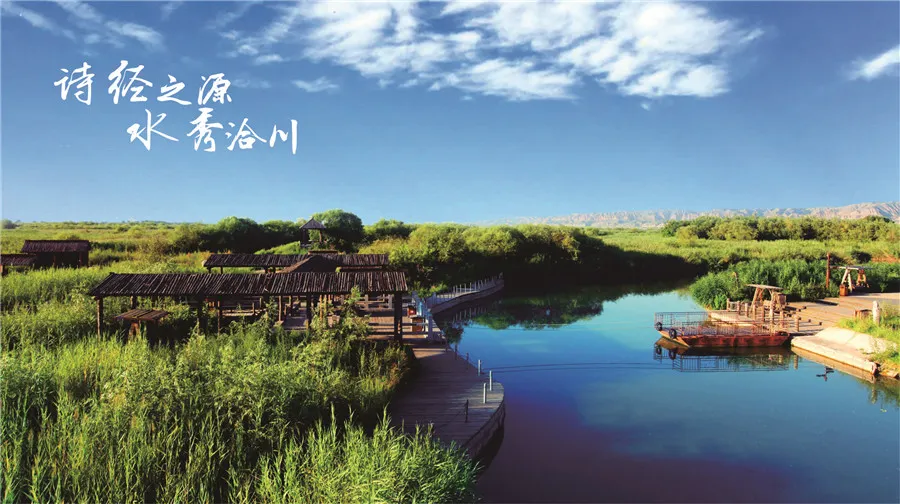
With its vast reed marshes and rich cultural heritage from the Book of Songs, the Virgin Spring sand bath, the Yellow River sunset, and the ancient architecture of Fushan, this place offers stunning views. In autumn and winter, visitors can observe migratory birds and soak in warm springs. The fusion of nature and culture is incredibly therapeutic.

Qiachuan Scenic Area

user-avatar
Sheila Salgado10 November 2026
4.0
Very cool to see, and a really important part of China culture. However, many guides will try to sell you guided tours while outside. If you’re solo traveling like me, dont do it. I feel like it didnt add much to my experience, on the contrary. They give you details that you can find online, and you’re on a timer to move around the place, instead of just going and enjoying the time for yourself.

Emperor Qinshihuang's Mausoleum Site Museum

user-avatar
Anonymous user5 October 2026
4.0
This is a great place to learn about historical figures and acquire historical knowledge, inspiring a sense of solemnity and reverence. Although the path is not long, it is not easy to walk, so those with mobility issues should proceed with caution.

Sima Qian Memorial Temple

user-avatar
M52***9011 October 2026
5.0
I hadn't originally planned to visit the Stork Tower, as it's a reconstruction completed in 2002. However, I came across a travelogue about climbing it, and perhaps the focus for modern people isn't so much on whether it's an ancient building, but rather on Wang Zhihuan's famous line, "To see a thousand miles further, climb one more story." When you reach the top and gaze into the distance—the Yellow River, the Zhongtiao Mountains, the blue sky and white clouds overhead, the wind blowing from Fengling Ferry—don't we feel the same sentiment as Wang Zhihuan back then? Sometimes, even a simple visit can lead to unexpected experiences. The scenic area has set up signature boards for each province, autonomous region, municipality, and region. Surprisingly, this tourist experience made the friendship between Qin and Jin (Shaanxi and Shaanxi) more tangible. The board for Shaanxi Province has already been replaced twice, as it's become too densely packed with signatures from friends from neighboring Shaanxi. The scenic area simply put up a sign at the very front of the signature corridor that reads "Qin People Gather!" It looks like it'll be full soon too.

Guanque Tower

user-avatar
Anonymous user11 November 2026
5.0
This guided tour of the Shaanxi History Museum was truly excellent. Our guide, Mr. Du, was professional yet approachable. He didn't just recite from a script; instead, he vividly told the stories behind the artifacts, tracing their history through the Zhou, Qin, Han, and Tang dynasties. He explained key exhibits like bronzes, terracotta figurines, Tang dynasty gold and silver artifacts, and the Hejiacun hoard very clearly, clarifying their dates, techniques, and the reasons for their value. The tour lasted about two to three hours, with a well-paced rhythm, highlighting key points and preventing any sense of boredom. The service was also very attentive. The guides were friendly and patiently answered all questions, adjusting the route according to the flow of visitors. They used simple language to explain things, keeping the experience engaging. Overall, this guided tour made what would have been a rushed visit much more rewarding and is highly recommended.

Shaanxi History Museum

user-avatar
Anonymous user16 June 2026
5.0
Stepping into the Houtu Temple in Jiexiu, the entire Taoist temple complex is a treasure trove of glazed tile roofs, shimmering with iridescent light. The interconnected courtyards are ingeniously laid out, featuring a unique three-section ancient stage and the majestic Sanqing Tower, exuding ancient charm. The Houtu Hall is solemn and dignified, with delicate and vivid brick and tile carvings. Strolling through the courtyards, the craftsmanship of the Ming and Qing dynasty artisans is truly admirable. Every brick and tile embodies the belief in the Earth Mother and the aesthetics of ancient Jinzhong architecture; a quiet contemplation leaves one deeply moved.

Houtu Temple

user-avatar
疯子爱溜达2 October 2024
4.0
The spring water is clear, and children are playing. It is fun to look straight ahead.

Virgin Spring

user-avatar
Anonymous user10 November 2026
4.0
It's very convenient: entrance ticket + 2 cable car rides + bus to and from the mountain. However, the morning shuttle bus wasn't very smooth; you had to wait and transfer, so even though it picked me up at 7:00 AM, I didn't arrive at the mountain until 12:30 PM. There were also a lot of tourists that day, and everyone was rushing to complete the five peaks of Huashan in one day.

Mount Hua

user-avatar
Auleef10 November 2026
5.0
We entered from the west gate first, visiting the West Hill Grottoes and getting close to the Vairocana Buddha. We skipped the evening lighting ceremony and arrived at 9 am to avoid the crowds and take better photos. Next, we visited the East Hill Grottoes. We rested and admired the sights at a leisurely pace, taking about 3-4 hours.

Longmen Grottoes

user-avatar
JC Riano10 November 2026
5.0
A beautiful journey through history!The Xi’an City Wall is absolutely impressive! It’s amazing to see how well preserved this ancient structure is and to imagine how it once protected the city centuries ago. Walking along the top gives you a wonderful perspective of Xi’an, with beautiful views of both the historic and modern parts of the city.It’s a great experience to explore the wall, appreciate its history, and see how ancient China and modern life come together in one place. Definitely worth visiting when in Xi’an!

Xi'an City Wall

Trip Moments in Heyang
Popular cities near Heyang

Frequently asked questions

Get help anytime, anywhere within 30 secondsContact customer support

Change and cancellation policies vary by attractions and tours. Please check the product details page for more information.

Ticket prices may vary between weekdays and weekends, as well as during peak and off-peak seasons. When booking with Trip.com, you can also use Trip Coins to get extra savings. For more tips on booking discounted tickets, please visit Trip.com for the latest information.