
Things to do in Yuncheng
Explore top experiences
Top 10 attractions in Yuncheng


Guanque Tower
A national AAAA-level tourist attraction and one of the top ten attractions in Shanxi Province, Guanque Tower is located on the eastern bank of the Yellow River west of Puzhou Ancient City in Yongji, Shanxi. Alongside the Yellow Crane Tower in Wuhan, Hubei; Yueyang Tower in Yueyang, Hunan; and Tengwang Pavilion in Nanchang, Jiangxi, it is renowned as one of China's four great historical and cultural towers. Originally built during the Northern Zhou Dynasty (557–571 AD) by military commander Yuwen Hu as a defensive watchtower, the tower earned its name from the storks that frequently perched on its structure. The Tang Dynasty poet Wang Zhihuan's celebrated poem "On the Stork Tower" ("The sun along the mountain bows; The Yellow River seawards flows. You will enjoy a grander sight; If you climb to a greater height.") has become an enduring masterpiece, widely known both domestically and internationally. After standing for over 700 years through the Tang and Song dynasties, the tower was destroyed during warfare in the early Yuan Dynasty (1222 AD). The reconstructed Guanque Tower follows Tang-style architecture, featuring four eaves externally with three visible tiers, while internally comprising six floors. With a total height of 73.9m, it epitomizes the grandeur of the Tang era. Ascending Guanque Tower not only offers breathtaking panoramic views but also immerses visitors in the brilliance of China's 5,000-year civilization.Yongji · 16.5km from downtown

Yongle Palace
Yongle Palace, also known as Dachunyang Longevity Palace, was built in the Yuan Dynasty. Construction of such a magnificent palace complex with Taoist characteristics took over a century. Yongle Palace displays the typical architectural style of the Yuan Dynasty. Thick brackets intersect with each other layer by layer without much carved decoration. The architecture is spare and bright compared with the building style in the Ming and Qing Dynasties. The halls are arranged on the south-north axis. Of note, there are elaborate wall paintings on the Yongle Palace. There are many and of high artistic value, true rarities.Ruicheng · 3km from downtown

Yuncheng Guan Gong Hometown Cultural Tourism Scenic Area
The Jiezhou Guandi Temple is located at the West Pass in Yuncheng's Jiezhou Town. The current buildings are reconstructions of buildings that would have stood here during the Qing Dynasty. The Jiezhou Guandi Temple is divided into two parts: the main temple and the Jieyi Garden. Upon entering the scenic site, visitors will first come to the Jieyi Garden. In the garden are structures such as the Jieyi Building and the Junzi Pavilion. In the main temple, the primary hall is Chongning Hall. This is where the statue of Guandi can be found. Every year, around National Day, a grand "Guandi Cultural Festival" is held featuring historical ceremonies and folk worship activities.Yuncheng · 19.4km from downtown

Pujiu Temple
Pujiu Temple, located 12 km southwest of Yongji City in Shanxi Province on the Emei Plateau, was built during the Northern and Southern Dynasties and is a thousand-year-old ancient temple. It is a national AAAA-level tourist attraction, one of Shanxi's "Top Ten" tourist attractions, and one of the Eight Scenic Spots of Hedong. The temple gained fame worldwide thanks to the Yuan Dynasty playwright Wang Shifu's "The Romance of the Western Chamber." The story of Zhang Sheng and Yingying breaking free from feudal constraints, with the matchmaker Hongniang facilitating their love under the moonlight through letters, has become a timeless tale. For centuries, Pujiu Temple has been regarded as a sacred destination for couples seeking love, drawing visitors from far and wide. The annual Qixi Festival's Love Culture Celebration further elevates the eternal theme of love with its enchanting beauty. The temple was born from the drama, and the drama gave the temple its fame. The stupa within the temple was thus beautifully named the "Yingying Pagoda," and its remarkable frog-croaking echo effect is celebrated as one of China's four great echo architectures. Due to its unique acoustic structure, Yingying Pagoda is ranked alongside Italy's Leaning Tower of Pisa and France's Eiffel Tower as one of the "Six Wonder Pagodas of the World," truly a marvel of architectural acoustics. "While temples worldwide shun romance, only Pujiu Temple in Shanxi embraces love." May Pujiu Temple bless all lovers to unite in marriage!Yongji · 10.7km from downtown

Temple of Guan Di in Sitou
The Shitou Guandi Temple is located on Beigaoling, Shitou Village, Caochuan Town, Pinglu County, Yuncheng City, Shanxi Province. Covering an area of 2,800 square meters, the temple faces south and features a three-courtyard layout. The main hall, offering hall, main hall, and Spring and Autumn Tower are located along its central axis. The main hall is a relic of the Yuan Dynasty, featuring a single-eaved hipped roof and a five-rafter roof structure. The offering hall dates from the Ming Dynasty, while the remaining buildings are mostly from the Qing Dynasty. The Spring and Autumn Tower features a two-story, cross-shaped hip roof, a three-bay ground floor with a veranda, and a gray ceramic tile roof. The protected area extends 5 meters to the east, west, and north, and 10 meters south of the mountain gate. The construction control zone extends 30 meters beyond.Pinglu · 30.3km from downtown

Li Family Courtyard
Li Family Courtyard in Yuncheng is the private residence of Li Ziyong, a wealthy merchant in southwest of Shanxi, and it was built in the late Qing Dynasty and early period of the Warlord Era. Li Family Courtyard is a typical building reflecting the style of residential houses in the southern Shanxi province. The whole building is arranged around a quadrangle courtyard and also boasts Hui style architecture. It combines the features of two major architectural forms in south and north of China, and in terms of the art of decoration, the national culture infiltrates every corner of the building.Wanrong · 17.3km from downtown

Wanrong Feiyun Tower Scenic Area
Wanrong Dongyue Temple is a national key cultural relic protection unit. It is a temple dedicated to Huang Feihu, the emperor of Dongyue. It was built in the early Tang Dynasty and has been repaired in all dynasties. The main building in the temple, the Feiyun Tower, is made of pure wood, with a light structure, overlapping bucket arches, entwined cloud belts, flying in the sky, and ingenious craftsmanship. Together with the Yingxian Wooden Tower, it is known as the South Tower and the North Tower. It is a rare flower in the field of Chinese architecture. , has a very high research and appreciation value.Wanrong · 308m from downtown

Great Ladder Cliff of The Yellow River
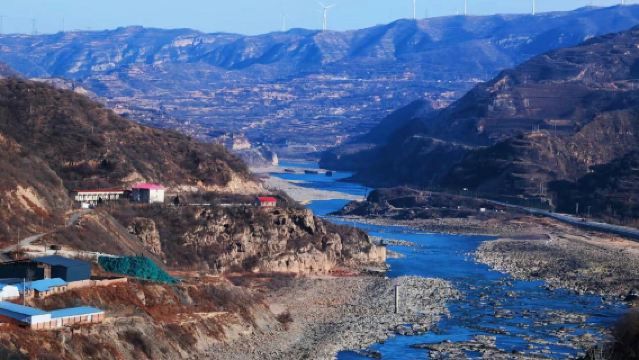
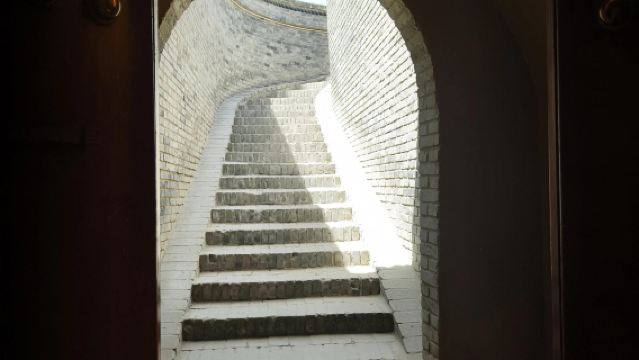
The Yellow River Ladder Cliff is located in Hejin City, Shanxi Province, between Longmen and Shimen of the Yellow River. It faces Shimen to the north, Longmen to the south, the Yellow River to the west, and Luliang to the east. The mountains and rivers are magnificent and the scenery is unique. The core landscape of the Ladder Cliff, the Ladder Cliff, is very old, dating back to the Northern Wei Dynasty, according to relevant records. Although the chisel marks on the wall have experienced wind and rain, they are still clearly visible. It is an ancient zigzag plank road artificially excavated on the edge of the cliff according to the terrain. It consists of 365 steps, with a width of four or five feet and each step is seven or eight inches high. The overall shape of the Ladder Cliff from the air is like carving 365 steps on a vertical stone. The terrain is steep, the scenery is unique, and the craftsmanship is amazing. The red past on the ladder cliff: On December 23, 1938, the Japanese army entrenched in Hejin, with the 7th and 8th regiments attached to the Tengtian Battalion as the backbone, plus puppet troops, totaling 4,000 to 5,000 people, more than 20 cannons, and the air force cooperated to attack the frontier positions of the New Eighth Division East Longmen Mountain and Yumenkou. The officers and soldiers of the New Eighth Division fought bravely and repelled the Japanese attack many times. The Japanese suffered heavy casualties, and the casualties of the officers and soldiers of the New Eighth Division's frontier positions also reached more than 70%. Among them, a reinforced platoon guarding Yunzhong Temple all died heroically. Many frontier positions were lost for a time. On the 30th, Zhu Zhenmin, deputy commander of the New Eighth Division, ordered the 23rd Regiment to cross the mountains and ridges, cross the river from Shijiatan to reinforce, and launch an attack on the Japanese army from the side of Longmen Mountain (Datizi Cliff) to recover all the positions in Longmen Mountain. This battle dealt a heavy blow to the Japanese invaders, killing and wounding more than 200 Japanese soldiers, forcing them to retreat to Hejin and Jieshan. 271 officers and soldiers from Guizhou, including the company commander of the New Eighth Division, were buried together at the foot of Longmen Mountain at the junction of Shaanxi and Shanxi (this place belongs to Hejin County, Shanxi Province). In 1987, the Hejin County Political Consultative Conference built a monument in front of the tomb. The beautiful legend on the ladder cliff: It is said that when Dayu arrived here to control the flood, he encountered an evil dragon blocking him and could not continue the construction. So he built the stone ladder to the sky of the Yellow River ladder cliff, intending to go to heaven to complain to the Jade Emperor. As a result, after the ladder was built, he found that he still could not go to heaven. Then Guanyin Bodhisattva saw it and could not bear the suffering of the people, so he enlightened Dayu to enter heaven, and then met the Jade Emperor. The Jade Emperor sent heavenly soldiers and generals to kill the evil dragon and remove the obstacles to river control. Dayu led the people to fight day and night, and soon chiseled the dragon gate, allowing the endless flood to flow into the sea. Now there is a barefoot print on the rock wall next to the Guanyin Buddha niche on the ladder cliff. Legend has it that this is what Dayu left when he entered heaven. Peach Blossom Valley Peach Blossom Valley, as the name suggests, is named after the peach blossoms that bloom all over the mountains in early spring. The valley is quiet and elegant, with lush vegetation, gurgling streams, waterfalls, and various rock formations. The scenery of each season is unique. In spring, peach blossoms bloom all over the mountains. In summer, the scenery is lush and green, with birds singing and flowers fragrant. In autumn, the intoxicating red leaves are scattered on both sides of the valley like ribbons. In winter, everything is quiet, accumulating strength and waiting for the coming year. If you are lucky, you can catch a snowfall, which is really as if it can cleanse the beauty of the soul. Mingxiu Plank Road (Glass Plank Road) Mingxiu Plank Road: "Ming" means wisdom, "Xiu" means practice, and "Mingxiu" means practice of wisdom. The plank road is made up of 108 pieces of three-layer tempered glass, which is exactly the same as the number of 108 Buddhist beads. We integrate the meaning of 108 Buddhist beads with it, and hope that everyone can be happy and at ease in this practice of life. The glass plank road is about 230 meters long and has a vertical height difference of about 150 meters. It is the best way to reach Taohua Valley. On the way, tourists can experience the Sky Walk while enjoying the Taohua Valley Waterfall.Hejin · 14.1km from downtown

Temple of Prince Guangren
The Temple of Prince Guangren is a courtyard-style temple building located in Ruicheng County, Yuncheng City, Shanxi Province. Originally built during the Taihe era of the Tang Dynasty, this historic site serves as both a provincial and national key cultural relic protection unit. As an attraction combining religious faith, architectural artistry, and cultural experiences, the Temple of Prince Guangren draws numerous history enthusiasts and visitors who come to admire its architecture and offer prayers. Temple of Prince Guangren and the Yuan Dynasty Taoist temple about 1 li to the southeastYongle PalaceFacing each other from afar, atYongle PalaceNot far to the northwest, there isLongquan VillageIn the past, a spring called Longquan gushed from the high ground north of the village, irrigating fertile farmland, so the villagers built upon it.LongwangmiaoSacrificial rituals. The temple enshrines the Five Dragon Kings of the Five Directions. Legend says Nuwa appointed five dragons, with the Azure Dragon as their leader to govern all dragons, bestowing upon him the title Prince Guangren - hence the name Temple of Prince Guangren. The Temple of Prince Guangren faces south and covers an area of 4,560 square meters. It consists of a main hall, an opera stage, and side rooms, featuring simple construction with an elegant, rustic charm. The opera stage has three bays in width and three purlins in depth, with unadorned bracket sets on the column-top lintels. The central bracket set features a dragon head emerging from the large bracket mouth, while elephant trunks extend from both sides. The two end bays display dragon heads emerging from their bracket mouths. The main hall is the only surviving Tang Dynasty wooden structure in the Hedong region. Among the four remaining Tang Dynasty wooden buildings in China, the main hall of the Temple of Prince Guangren is one. The temple's Tang Dynasty stele holds significant reference value for studying ancient water conservancy projects that benefited the people, as well as the temple's construction period. Visitors can explore the main hall, side rooms, and courtyard at the Temple of Prince Guangren, admiring the exquisite wooden architecture and stone inscriptions. They'll learn about the legendary stories of Prince Guangren and local history while experiencing the solemnity and sacredness of this traditional temple.Ruicheng · 4km from downtown

Yuncheng Salt Lake
Located in the south of Shanxi Province, Xiechi Lake is often called China's "Dead Sea." Visitors can go for a mud massage, swim in the lake (the high salt content makes it very easy to float), and bathe in the natural mineral springs.Yuncheng · 4.8km from downtown
Experiences you can't miss in Yuncheng
Featured Cultural experiences in Yuncheng
View all Cultural experiences
Free cancellation
Book now for tomorrow
FromUS$33.51
Free cancellation
Book now for tomorrow
FromUS$33.51
![[Yuncheng, Shanxi] Guides/Translators/Local Companions for City Walks, Sightseeing, Exhibition Translation, Hiking, and Travel Escorts in Chinese/English/French/Russian and Other Languages](https://ak-d.tripcdn.com/images//0583q12000o3apkv3E7F1_C_568_320.jpg?_fr=wc)
5% off
Limited-time sale
FromUS$146.34US$154.05
5% off
Limited-time sale
FromUS$146.34US$154.05
![[Pingyao, Shanxi] Guided Tours and Translation Services in Chinese/English/French/Russian/Korean/German and Other Languages|Business/Exhibition Translation • City Walk • Attraction Tours • In-Park Commentary](https://ak-d.tripcdn.com/images/0354612000r4doognE81E_C_568_320.png?_fr=wc)
Free things to do in Yuncheng
Temple of Guan Di in Sitou
Pinglu · 30.3km from downtown
Yuncheng Museum
Yuncheng · 2.6km from downtown
Fenglingdu
Ruicheng · 35.6km from downtown
City God Temple
Ruicheng · 411m from downtown
Qiufeng Tower
Wanrong · 33km from downtown
Si Ma Gong Memorial Area
Xia County · 10.9km from downtownImmediate access, Book now for today, Cancel anytime
Nanfan Stone Memorial Archway
Jiang County · 13.7km from downtown
Wangu Temple
Yongji · 9.2km from downtown
Guanwang Temple
Yuncheng · 1.5km from downtown
Shaanxi History Museum
China · Xi'an
More ways to travel from Yuncheng
Private Tours in Yuncheng
View More Private Tours in Yuncheng

What travellers say about Yuncheng

M38***0821 September 2026
5.0
Finally visited the Stork Tower from the textbook! Although it's a modern reconstruction in the style of the Tang Dynasty, it's incredibly impressive, with magnificent eaves and a strong Tang Dynasty feel. The best part was the elevator; you can go directly to the top floor if you don't want to climb the stairs, which is very convenient for lazy people or tourists with mobility issues.
Guanque Tower

M37***454 September 2026
4.0
I'd seen the Yongle Palace murals in Yuncheng countless times in books, and finally seeing the real thing was breathtaking! The staff kept telling us not to take pictures, but tourists kept snapping away! These murals have survived from the Yuan Dynasty to the present day. Don't take pictures just to post on social media and damage the treasures left by our ancestors. Let them last so that future generations can also see them.
Yongle Palace

爱旅游的孔雀10 August 2026
5.0
The ancestral temple of Guan Yu, one of the 30,000 temples worldwide, is indeed magnificent and awe-inspiring. Several emperors personally inscribed plaques, making it a royal temple exuding grandeur. It's a bit far from the city center, so it's advisable to plan your time accordingly.
Yuncheng Guan Gong Hometown Cultural Tourism Scenic Area

兩江總督趙1 September 2026
5.0
Pujiu Temple is the place where Zhang Sheng met Cui Yingying in the Romance of the Western Chamber. Within the temple grounds is a courtyard with pear blossoms, which was Yingying's residence. Yingying Pagoda is the site of their secret rendezvous, and a path leading down the mountain nearby leads to their elopement. The temple is serene and ancient, a sacred place for Buddhist worship.
Pujiu Temple

W~一抹微笑23 August 2024
5.0
Brought the kids there, the cultural relics and ancient buildings were really shocking. We asked for a guide and learned some history. It's really worth a visit. Not many people there, so it's worth it. The only thing is that the incense and worship items in the main hall are quite expensive. We went to the Temple of the God of Wealth at the back, where the incense prices are more affordable.
Temple of Guan Di in Sitou

行走毛毛22 August 2026
4.0
Everyone knows that Shanxi has many large courtyards, which are the products left by the Shanxi merchants of that time. Among the many courtyards, the Li Family Courtyard is relatively quiet and low-key. It is located in a county under Yuncheng, but I think it is still worth visiting. There are many stories of the integration of Chinese and Western cultures here.
Li Family Courtyard

Anonymous user16 June 2026
5.0
Known as the premier wooden building in China, Feiyun Tower is constructed entirely of wood without nails, relying solely on mortise and tenon joints for support. Its exquisite design features three visible and five hidden stories, with over three hundred sets of bracket sets layered like clouds, and thirty-two soaring eaves. It is considered one of the "Southern Towers and Northern Towers," alongside the Yingxian Wooden Pagoda. Standing before the tower and examining its wooden structure, one marvels at the superb craftsmanship of ancient artisans. Every mortise and tenon joint embodies the wisdom of Eastern construction, its ancient charm leaving a lasting impression.
Wanrong Feiyun Tower Scenic Area
Anonymous user22 September 2026
5.0
The Yellow River Ladder Cliff boasts a unique geographical location and offers a variety of activities. Visitors can hike and enjoy the scenery along both banks of the Yellow River, walk on a glass walkway, and experience thrilling rock climbing. With its rich cultural heritage, historical stories, and diverse attractions, it's definitely worth a visit!
Great Ladder Cliff of The Yellow River

没钱还到处浪22 August 2026
5.0
Guangrenwang Temple is a precious surviving Tang Dynasty Taoist wooden structure in China. Although not large in scale, it is imbued with grandeur. The main hall's bracket sets are robust and simple, and the two Tang Dynasty steles in the courtyard are invaluable. With few tourists and minimal commercialization, it's ideal for quietly appreciating the architectural style of the Tang Dynasty. A visit to Yongle Palace on the way is highly recommended, making it a must-see for ancient architecture enthusiasts.
Temple of Prince Guangren

gary liu8 May 2026
5.0
As the spring breeze swept across southern Shanxi, I followed the ancient salt-producing tradition, stepping into Yuncheng, a land of natural beauty and profound cultural heritage. In a single day, I experienced the three wonders of the salt lake, the charm of the Pond God Temple, and the statue of Guan Yu. Every step I took felt like walking on the fabric of history, every glance a deep dive into the heart of culture, leaving me with a profound sense of awe and tranquility.
Floating on the Emerald Salt Lake: Body Like a Light Boat, Heart Drifting with the Water
Yuncheng Salt Lake, known as the "Dead Sea of China," boasts a salinity more than eight times that of ordinary seawater. Its exceptional buoyancy allows one to float effortlessly on its surface. Stepping into the lake, the salt water gently supports the body, allowing one to lie flat, feeling like a light canoe, steadily floating on the clear water. A gentle stretch of the arms becomes like a pair of oars, fingertips gliding across the water, salt grains lightly touching the skin—a delicate and wondrous sensation.
Close your eyes, take a deep breath, and all is quiet except for the gentle ripples softly caressing your body and soul. At this moment, the body seems to merge completely with the lake's surface, all worldly troubles vanish with the ripples, and the mind and body sink into unprecedented relaxation, breathing becoming slow and deep. One truly experiences the feeling of "the body like a light boat, the heart drifting with the water," the world is silent, body and mind merge with nature, and all weariness is gently healed by this pool of spiritual water.
The Charm of the Salt God Temple: A Thousand-Year-Old Shrine, Reverence for the God and Protection of Salt
The Salt God Temple is a unique temple in China dedicated to the Salt God. Originally built in 777 AD during the Tang Dynasty, it has withstood a thousand years of wind and rain, still standing majestically on the shore of the salt lake, silently witnessing the inheritance and continuation of millennia-old salt culture. Stepping into the temple, the ancient buildings are simple and solemn, with incense smoke swirling around, exuding a profound sense of history.
The layout of the sacrificial altar is ingenious. The Salt God sits in the center, flanked by the Wind God and the Sun God, all three receiving incense offerings, fully demonstrating the ancient people's pragmatic belief in following nature and seeking practical protection. The statues of the gods are sculpted with lifelike detail, their robes flowing gracefully, their expressions both majestic and benevolent. Most moving is the sun bird beside the sun god, its full plumage and agile form perfectly capturing the ancient people's reverence for heaven and the gods, and their initial intention to protect the salt lake. Standing before the statues, one can almost hear the devout prayers of our ancestors from a thousand years ago; the overwhelming historical atmosphere fills one with awe and reverence.
Guan Yu Statue: Loyal and Righteous, Majestic, Enduring Legacy
Before us stands the world's largest bronze statue of Guan Yu, 80 meters tall, with a 61-meter-long body symbolizing Guan Yu's 61-year life of great achievements; the 19-meter-high base commemorates the 19 years he spent in his hometown of Yuncheng. Each number carries the boundless respect and deep remembrance of the Chinese people for Guan Yu.
Walking slowly along the mountain path, I initially didn't perceive the statue's imposing stature. But upon reaching its base, I was struck by my own insignificance—not even as tall as its thumb—and a profound sense of awe washed over me. Looking up, Guan Yu, clad in armor and wielding his Green Dragon Crescent Blade, stood with piercing eyes and a majestic presence, like a guardian deity silently protecting this land. Across a thousand years, Guan Yu's spirit of loyalty, righteousness, benevolence, and courage still resonates deeply, becoming a belief etched into the blood of the Chinese people.
My day trip to Yuncheng was incredibly rewarding, from the serene natural beauty of the salt lake to the cultural heritage of the Chishen Temple, and finally to the spiritual legacy of the Guan Yu statue. The ethereal beauty of the salt lake, the solemnity of the ancient temple, and the majestic statue all touched my heart.
Yuncheng Salt Lake


