
Things to do in Xianyang
Explore top experiences
Top 10 attractions in Xianyang


Qinhan Civilization Museum
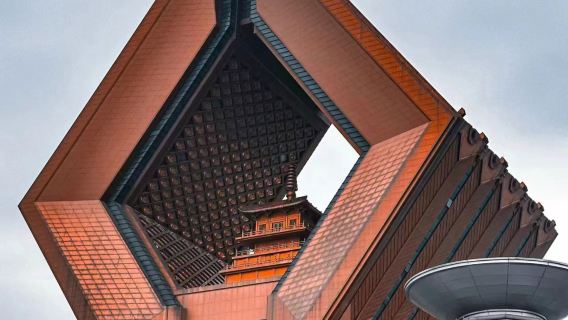
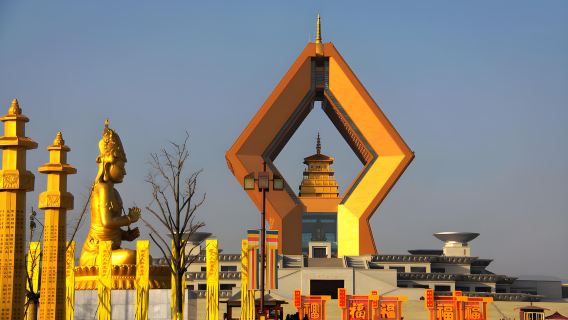
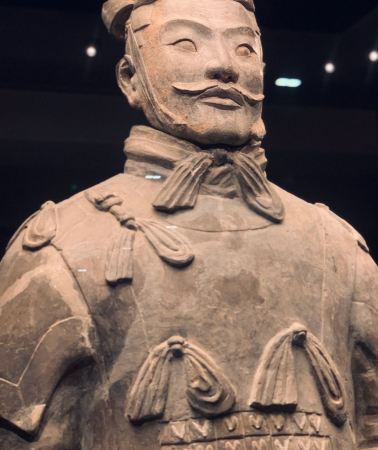
The Qin Han Museum of Shaanxi History Museum is located in the core area of Qinchuangyuan and Weihe Science and Technology Innovation Belt in Qinhan New Town, Xixian New District. It is an important part of the large-scale comprehensive cultural tourism project Daqin Civilization Park. It is a collection of cultural relic protection, display and exhibition, academic research, science education, It is a modern museum with a strong traditional style that integrates tourism services and other functions. The Qin Han Museum of Shaanxi History Museum adopts the appearance of a high platform building. The exhibition area is located on a high platform on the first floor, and public activity areas such as tourism services are located in the "hall" on the high platform. It can not only meet the use requirements of different functions of the museum, but also It also presents the high-platform architectural modeling characteristics of the Qin and Han palaces of "high pavilions and beautiful palace rooms". Spreading out the plane of the museum area, each unit is distributed according to the layout of "Wei River runs through the capital, with Xiang Tianhan, crossing the bridge to the south, and Fa Qiangniu", with Yaoguang, Kaiyang, Yuheng, Tianquan, and Tianquan among the Big Dipper. The five stars of Tianji form a symmetrical layout and are connected to each other through overhead corridors. The axis determined with Yuheng as the center is set on the extension of the central axis of Palace No. 1 of Qin Xianyang Palace. Among them, the main building adopts the form of a high platform to meet different functions. At the same time, it also shows the characteristics of Qin and Han palaces such as "high terraces and pavilions, beautiful palaces and rooms, complex roads and empty roads, horizontal bridges and waves, lofty towers, and combination of palaces and gardens." The origin of high platform construction is very early, such as the Lutai of the Yin Shang Dynasty and the Lingtai of the Zhou Dynasty. From the Warring States Period to the Qin and Han Dynasties, the style of building platforms was very popular. The museum adopts the appearance of a high platform building, with the exhibition area located on a high platform on the first floor, and public activity areas such as tourism services located in the "hall" on the high platform. The interior is divided into five exhibition halls with an exhibition area of about 11,300 square meters, including the main exhibition hall "Qin and Han Civilizations", the ruins exhibition hall "Cities and Tombs", the art exhibition hall "Technology and Beauty", the temporary exhibition hall and the public archaeological center. The core main exhibition hall explains the achievements and role of this period in the development of Chinese civilization at multiple levels and angles from the aspects of politics, economy, military, culture, science and technology, and foreign exchanges of the Qin and Han dynasties - this is not only the ancient politics of our country The era when the system was created was also the era when academic thought was laid, and it was also the era when the Chinese nation, with the "Han" as the main body, was formed. The exhibition halls on both sides are the permanent special exhibitions "City and Mausoleum" and "Technology and Beauty", which not only echo and in-depth explanation of the basic display of "Qin and Han Civilization", but also display the splendor and splendor of Qin and Han civilization from the aspects of archeology and art respectively. Specifically, "Cities and Tombs" aims to explore the role of capitals and mausoleums as the true carriers of civilized society through the analysis of four major sites in Yongcheng, Yueyang, Xianyang, and Chang'an based on the results of archaeological excavations. position in an ongoing process of development. "Technology and Beauty" mainly uses material remains such as sculptures, murals, portrait stones, and ceramic models to show the rich and diverse image world of people during the Qin and Han Dynasties, and also reveal people's understanding of the universe, life and death at that time. The temporary exhibition hall extended outwards can realize the multi-purpose effect of one hall. Temporary exhibitions, academic conferences and lecture salons can be held here, and it is planned to be built into a Qin and Han archaeological and historical research center. Nowadays, museums are also getting rid of the boring traditional exhibitions and adding a large number of perceivable and immersive technological means to make cultural relics come alive. For example, the digital exhibition hall and public archaeological center in the Qin and Han Museum use digital technology to present the food, clothing, housing, transportation, and social customs of the Qin and Han Dynasties, and then combine it with the display of archaeological results to tell archaeological stories in an all-round way and popularize archaeological knowledge.Xianyang · 16.6km from downtown

Shaanxi History Museum
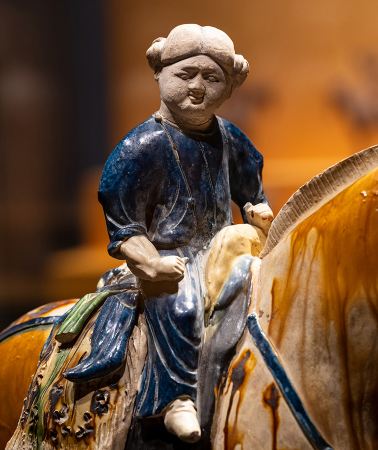
History background: Shaanxi History Museum is located in the northwest of the Dayan Pagoda in Xi'an. It is one of the landmark attractions of Xi'an. The museum was planned in 1983, started in the summer of 1986, and officially opened on June 20, 1991. It was named Shaanxi History Museum. In 2016, Shaanxi History Museum was selected as "China's 20th Century Architectural Heritage" by the Chinese Cultural Relics Society and the Chinese Architectural Society. Museum Features: Shaanxi History Museum is a large modern museum, and its completion marks a new milestone in the development of China's museum industry. This museum is a Tang-style building complex with a "central hall and four corner towers". The main and secondary buildings are well-organized, the heights are staggered, and the momentum is solemn. It integrates national traditions, local characteristics and the spirit of the times. The museum covers an area of 65,000 square meters, and houses more than 380,000 cultural relics ranging from simple stone tools used in the initial stage of ancient humans to various artifacts in social life before 1840, covering a time span of more than one million years. The cultural relics are not only numerous and diverse, but also of high quality and wide value. The collections in the museum are dazzling and exquisite. It is an art hall that showcases the history and culture of Shaanxi and ancient Chinese civilization, and is known as the "Pearl of the Ancient Capital, the Treasure House of China." There are many treasures in the museum, including bronzes from the Shang and Zhou dynasties, pottery figurines from various dynasties, gold and silver utensils from the Han and Tang dynasties, and murals from Tang tombs. Most of them are treasures from the prosperous periods of the Han and Tang dynasties, and some of them are fine items that are prohibited from leaving the country. Collection treasures: There are three exhibition halls in the center of the museum. The first exhibition hall displays cultural relics from the prehistoric civilization of Lantian ape-man 1.15 million years ago to the Qin Dynasty; the second exhibition hall displays cultural relics from the Han Dynasty and the Wei, Jin, Southern and Northern Dynasties; and the third exhibition hall is mainly cultural relics from the prosperous Tang Dynasty. Each exhibition hall has its own treasure. There are special exhibition halls on the east and west sides of the central hall. On the west side, there is a "Special Exhibition of Tang Dynasty Treasures (Treasure Hall, Cultural Relics Unearthed in Hejiacun)", where many fine gold and silver wares from the heyday of the Tang Dynasty were transferred to be exhibited. On the east side, there is a "Treasures of Tang Dynasty Murals Exhibition", which exhibits a number of authentic Tang Dynasty tomb murals. The tripod The tripod is placed in the first exhibition hall at the entrance of the museum, and it can be said to be the treasure of the first exhibition hall. The replica is placed here, and the original is kept in the warehouse. Inscription on the outer wall: The inscription "All under heaven is the king's land; all the people are the king's subjects" reflects the land ownership system in the Western Zhou Dynasty. There are four lines of inscriptions with 28 characters on the inner wall of the Yi Ding. The general meaning is: In early August of a certain year, Wang Jiang took back the land originally given to Shi Lu and gave it to Yi, who then made this tripod to commemorate it. Queen's Seal: One of the treasures worth seeing in the second exhibition hall is the jade seal of the empress of the Han Dynasty, which is displayed separately. The seal is made of Xinjiang Hetian mutton-fat jade and is engraved with a Chihu, symbolizing royal power. Three-color camel figurines carrying music: This world-famous tri-color camel figurine carrying music is located in the third exhibition hall of Shaanxi History Museum. Its overall appearance and color are well preserved. There are seven men sitting on the camel's back, holding different musical instruments in their hands. Among them, the figurine holding the clapboard is listening attentively, as if intoxicated by the wonderful music. The woman in the middle is performing, and the camel opens its mouth wide and looks up to the sky, as if it is also singing with its master. Gold-inlaid animal head agate cup: This cultural relic, located in the special exhibition "Tang Dynasty Relics Special Exhibition", is one of the first 64 national treasures listed by the State Administration of Cultural Heritage that are never allowed to be exhibited abroad. There are also many other treasures such as black-glazed oil-drip bowls, green-glazed porcelain pots with handles, gilded silver bamboo-joint copper incense burners, gold bowls with mandarin duck and lotus petal patterns, and so on.Xi'an · 25.5km from Xianyang

Yuanjia Village
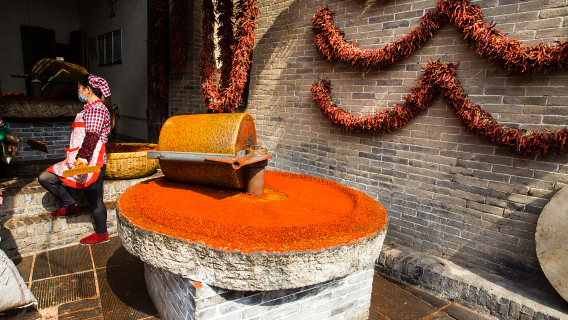
Yuanjia Village is located in the heart of the Weihe Plain, about a kilometer from the Zhao Mausoleum of Emperor Taizong of Tang. Yuanjia Village has two sections, one devoted to the folk culture of the plain, and the other to agritourism. Shops line the lanes of Yuanjia. There's a replica ancient oil mill and tofu and noodle workshops. You can even go inside a textile workshop where older people are carefully weaving cloth. The whole setting makes it feel like you've returned to the Weihe Plain of centuries past.Liquan · 15.9km from downtown

Zhao Mausoleum
Zhao Mausoleum is the tomb of Li Shimin, Emperor Taizong of Tang Dynasty. It is located on Jiuzong Mountain in the northeast of Liquan County, Xianyang. Zhao Mausoleum is one of the largest among the "Eighteen tombs of the Tang Dynasty" in Guanzhong, Shaanxi. The scenic spot is arranged along a central main road, with the memorial tablets of generals of the Tang Dynasty placed on both sides. After entering the gate, you will find that the terrain rises. There are four steps on the main road, with one building site on each step. The entire scenic spot is of great historical significance and value.Liquan · 16.8km from downtown

Xi'an Museum
Xi'an Museum is a modern comprehensive museum built upon the cultural relic protection site—the ruins of the Tang Dynasty Jianfu Temple and its iconic structure, the Small Wild Goose Pagoda. It integrates cultural relic collection and protection, academic research, exhibition and display, social education, and garden leisure. Its core area is the location of the original Tang Dynasty royal temple, Jianfu Temple, while the precious and striking historical relic existing within the temple—the Small Wild Goose Pagoda—has become the museum's unique landmark and soul. Therefore, the Jianfu Temple ruins and the Small Wild Goose Pagoda are not only the foundation and core carrier for the establishment of Xi'an Museum, but also important outdoor historical exhibition areas and focal points for visitors. The main building of the museum is located on the north side of the ancient temple ruins. The three elements (ancient temple ruins, ancient pagoda, and modern museum building) are organically integrated, jointly forming a unique cultural space that combines "museum, pagoda, temple, and garden," vividly showcasing the historical context of Xi'an from ancient times to the present. Xi'an Museum officially opened to the public on May 18, 2007. Its establishment aims to comprehensively showcase the glorious history and splendid culture of Xi'an (ancient Chang'an) as the capital of thirteen dynasties, filling the gap of a comprehensive museum of Xi'an's urban history. Collection highlights: The museum houses over 100,000 precious cultural relics from various historical periods of Xi'an. The collection spans from prehistoric times to the Ming and Qing dynasties, with particular emphasis on artifacts from the prosperous dynasties of Zhou, Qin, Han, and Tang, including bronze ware, jade articles, gold and silverware, ceramics, murals, stone steles, epitaphs, and Buddhist statues, systematically reflecting the political, economic, cultural, social life, and foreign exchanges of the ancient capital Chang'an. Main exhibition: The permanent exhibition "Ancient capital Xi'an" takes the urban development history of Xi'an as the main thread, showcasing the evolution and achievements of Xi'an as a capital (Zhou Fenghao, Qin Xianyang, Han Chang'an, Sui-Tang Chang'an) and a prefectural city (Song, Yuan, Ming, and Qing dynasties) through a large number of precious cultural relics, models, charts, and multimedia means. Unique environment: The museum's greatest feature lies in its surroundings. Travelers can not only visit modern exhibition halls but also stroll through the expansive heritage park encompassing the Small Wild Goose Pagoda, the ancient architectural complex of Jianfu Temple (including structures like the Ming dynasty bell tower housing a Jin dynasty ancient bell), an ancient stone sculpture art exhibition area, and garden views—experiencing the charm of the millennia-old capital at its historical site. The view of "morning bells at the Wild Goose Pagoda" is particularly renowned. Functional positioning: The museum is not only an important center for cultural relic collection, research, and display, but also an urban cultural park where citizens can relax, entertain, and immerse themselves in history and culture, undertaking significant social education and cultural exchange functions.Xi'an · 23.7km from Xianyang

Grand Tang Mall
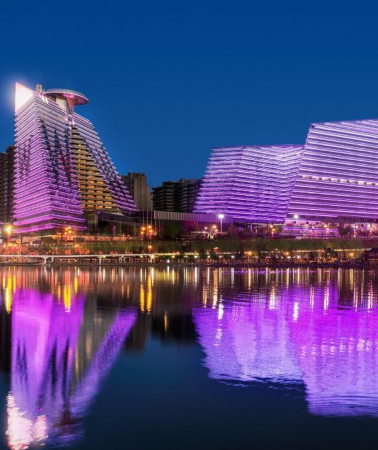
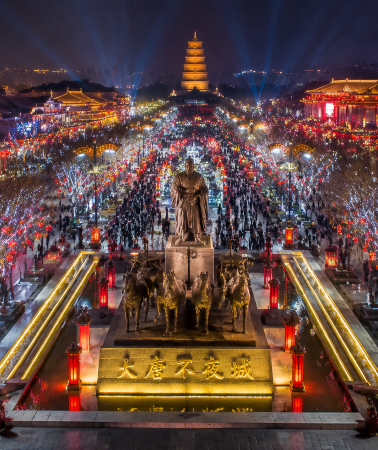
Grand Tang Mall is a large-scale Tang-style architectural pedestrian street in Xi'an's Qujiang New District, built around the Giant Wild Goose Pagoda. It stretches from the Xuanzang Square at the foot of the pagoda in the north to the Tang City Wall Ruins Park in the south, connected by a approx. 1500 m central axis view boulevard running north-south. The boulevard itself resembles an open-air sculpture gallery, featuring themed sculptures arranged sequentially from north to south: Buddhist culture of the Tang Dynasty, Tang heroes, the Zhenguan era governance, Empress Wu's procession, and the Kaiyuan heyday. Statues of eminent monks like Xuanzang and Jianzhen stand at the front, followed by Tang luminaries such as Li Bai, Wu Daozi, Sun Simiao, and Lu Yu in the middle section, with ceremonial processions of Emperor Taizong, Empress Wu Zetian, and Emperor Xuanzong concluding the display. Walking through this boulevard is akin to reading a three-dimensional history of the Tang Dynasty. The block connects three themed squares from north to south—Xuanzang square, Zhenguan square and Kaiyuan square—with Tang-style pavilions lining both sides. Among them are four cultural venues: Xi'an concert hall, Shaanxi grand theater, Xi'an art museum and Qujiang cinema. Enjoying concerts, visiting exhibitions and shopping for photos can all be arranged along the same route. By day, admire the architecture and sculptures, but the real highlight of this street comes after nightfall—when the lights come on, the Tang-style pavilions glow with radiant colors, and the entire street seems to recreate the splendor of the Tang Dynasty. The area features year-round immersive street performances: a "Tumbler Girl" in Tang attire leans in to hold hands with travelers as she spins; Fang Xuanling and Du Ruhui from the "Secret Box of the Tang Dynasty" appear, posing riddles and bantering, with clever answers from selected travelers drawing cheers from the crowd; Hu Xuan dances and Tang-era music performances compete in a colorful parade; and actors dressed as the "Poet Immortal" may challenge you to a verse duel at any moment—strolling around, you might stumble upon a performance. This place gathers trending attractions, highlighting dazzling colors, fantasy, and a tech vibe. Through large-scale installations, it creates a stylish and dynamic interactive experience center, offering a sought-after photo spot for trendy young crowds. In the family-friendly tech zone, scene-based displays and hands-on actions spark children's imagination and creativity, combining play with skill development and experiential gains—making it an ideal destination for family-friendly fun.Xi'an · 26.7km from Xianyang

Xi'an Muslim Quarter
Huimin Street is an old Muslim neighborhood with a history dating back centuries ago. It has a distinct Muslim culture and a vibrant food culture, making it a paradise for food lovers. Huimin Street is not just a single street. It is a collective name for the whole Muslim District. It consists of Beiyuan Gate, North Guangji Street, Xiyangshi and Dapiyuan Street. It is also known as “Muslim Quarter” and “Fang Shang”. The district also houses a number of old local restaurants: Jia San Soup Buns and Lao Mi Jia Soaked Bread etc. You can also eat almost all of Xi'an delicacies here: various kebabs, bread and mutton soup, soup buns, spicy goat trotters, and cold skin noodles etc.Xi'an · 22.9km from Xianyang

Xianyang Museum
Xianyang Museum is in the middle part of Zhongshan Street, Xianyang city, on top of an old Ming-dynasty Temple of Confucius (around 1371 AD). There are four south-facing yards. The main buildings are the Pailou, Xiandian, Dacheng Hall, Small Pailou and the main hall on the side yard. This is a Major National-Level Historical and Cultural Protected Site. There are seven exhibition rooms at the Xianyang Museum, three for Xianyang's historical artifacts, one for cultural objects from the Western Han imperial mausoleum, two for Western Han-dynasty painted terracotta and the last one for temporary exhibits. The cultural relics in the museum, mainly from the Qin and Han dynasties, offer valuable insights into the history and culture of the Qin and Han dynasties.Xianyang · 1.5km from downtown

China West Airport Group Museum of Heritage
Western Airport MuseumFeaturing Tang Dynasty-inspired architecture, the structure showcases a grand and majestic style.Western Airport MuseumFocusing on artifacts unearthed during the various construction phases of Xi'an Xianyang International Airport and supplemented by related archaeological finds from the Hongduyuan area, the exhibition showcases the process of cultural relic preservation and archaeological excavation during airport development. It not only displays a rich collection of artifacts but also combines history with modern technology through innovative presentation methods and technological means, such as interactive imaging and AR artifact displays, offering visitors an immersive historical experience. Additionally,Western Airport MuseumIt also introduced the "15-min cultural experience" initiative, showcasing artifact stories through standalone display cases to accommodate visitors' fast-paced browsing.Xianyang · 15.3km from downtown

Zhaoling Museum
Zhaoling Museum is located in Xianyang City, Shaanxi Province. As a thematic museum dedicated to showcasing the history and culture of the Tang Dynasty, it is both a national 3A-level attraction and a key cultural relic protection unit of China. The museum was established based on the mausoleum of Emperor Taizong of Tang, Li Shimin – Zhaoling. As one of the most grand and well-preserved imperial tombs from ancient China, Zhaoling serves not only as a crucial historical site for Tang Dynasty research but also as a window for visitors to understand the glorious culture of the High Tang period. The museum showcases a vast collection of cultural relics, including stone carvings, pottery figurines, and gold/silver artifacts, vividly recreating the social landscape and artistic achievements of the Tang Dynasty. Particularly noteworthy are the Six Steeds of Zhao Mausoleum - these stone relief carvings have gained fame for their exquisite craftsmanship and historical significance, attracting numerous history enthusiasts and art researchers. During their visit, visitors can gain an in-depth understanding of the political, economic, cultural, and artistic achievements of the Tang Dynasty through multimedia displays and interactive experiences. Additionally, Zhaoling Museum offers professional guided tour services to help visitors better comprehend the historical stories behind the exhibits. Zhaoling Museum is not just a showcase of cultural heritage but also a cultural feast that immerses people in the long river of history, making it suitable for visitors of all ages to explore and learn.Liquan · 14.8km from downtown
Experiences you can't miss in Xianyang
Featured Cultural experiences in Xianyang
View all Cultural experiences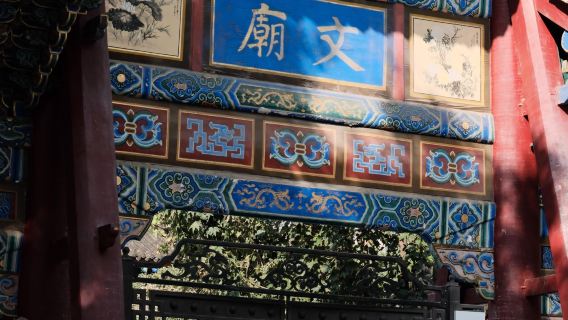
Free cancellation
Instant confirmation
FromSEK 590.00
5.0/5
· 6 reviews· 33 bookedFree cancellation
Instant confirmation
Book now for tomorrow
FromSEK 593.00

4.8/5
· 95 reviews· 849 bookedFree cancellation
Instant confirmation
Book now for tomorrow
94.7% of travelers recommend
FromSEK 738.00
4.6/5
· 29 reviews· 769 bookedFree cancellation
Instant confirmation
Save SEK 3
FromSEK 291.00SEK 294
4.6/5
· 78 reviews· 973 bookedFree cancellation
Instant confirmation
Book now for today
29 consecutive positive reviews
FromSEK 221.00
5.0/5
· 126 reviews· 716 bookedFree cancellation
Instant confirmation
100 consecutive positive reviews
FromSEK 430.00
Featured Food & drink in Xianyang
View all Food & drink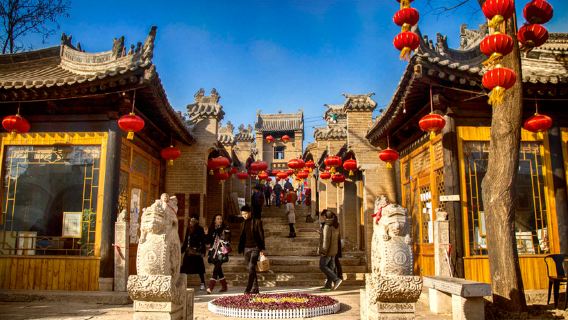
Free cancellation
Instant confirmation
Book now for today
FromSEK 592.00
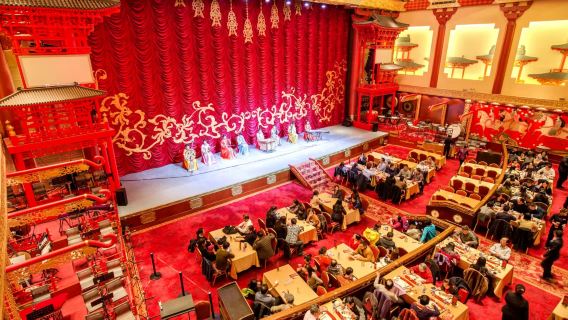
![[Empress Wu's grand feast] Xi'an Datang Empress Wu's grand feast [Panoramic immersive ancient palace dining show]](https://ak-d.tripcdn.com/images/0352e12000p0zlt871A4F_C_568_320.jpg?_fr=wc)
4.7/5
· 73 reviews· 1.6k bookedFree cancellation
Book now for today
21 consecutive positive reviews
FromSEK 378.00

4.6/5
· 27 reviews· 539 bookedFree cancellation
Instant confirmation
10% off
Limited-time sale
FromSEK 393.00SEK 437

4.4/5
· 19 reviews· 336 bookedInstant confirmation
Book now for today
FromSEK 398.00
4.3/5
· 24 reviews· 473 bookedFree cancellation
Instant confirmation
Book now for today
FromSEK 398.00

4.9/5
· 14 reviews· 119 bookedFree cancellation
Instant confirmation
FromSEK 420.00
5.0/5
· 24 reviews· 116 bookedFree cancellation
Instant confirmation
Book now for tomorrow
24 consecutive positive reviews
FromSEK 741.00
5.0/5
· 3 reviews· 53 bookedFree cancellation
Instant confirmation
Book now for tomorrow
FromSEK 575.00
Featured Day tours in Xianyang
View all Day tours
5.0/5
· 1 reviewFree cancellation
Instant confirmation
FromSEK 1,297.00
![[Chartered car with morning pick-up on the Third Ring Road] One-day in-depth tour of Famen Temple, Qianling Mausoleum, and Maoling Mausoleum (Western Route) | Family trip](https://ak-d.tripcdn.com/images/0355c12000s2niijw5EC4_C_568_320.jpg?_fr=wc)
FromSEK 294.00
4.9/5
· 407 reviews· 423 bookedFree cancellation
Instant confirmation
Book now for tomorrow
99.3% of travelers recommend
FromSEK 353.00
5.0/5
· 1 reviewFree cancellation
Instant confirmation
FromSEK 457.00
![Xi'an Famen Scenic Area + Qianling Mausoleum + Maoling Mausoleum 1-Day Private Charter Tour [Includes Complimentary Famen Scenic Area Ticket]](https://ak-d.tripcdn.com/images/0354y12000lb6mao4D0E7_C_568_320.jpg?_fr=wc)
Instant confirmation
Book now for tomorrow
Save SEK 5
FromSEK 492.00SEK 497
![One-day private guided tour to Binzhou Giant Buddha Temple Grottoes and Qianling Mausoleum in Shaanxi [Admire the first wonder of Guanzhong]](https://ak-d.tripcdn.com/images/0355c12000tkbu15149BA_C_568_320.jpg?_fr=wc)
Free cancellation
Instant confirmation
Book now for tomorrow
FromSEK 883.00
4.9/5
· 20 reviews· 65 bookedFree cancellation
Instant confirmation
Book now for tomorrow
81 travellers saved
FromSEK 388.00
5.0/5
· 1 reviewInstant confirmation
Book now for tomorrow
Save SEK 8
FromSEK 698.00SEK 706
Free things to do in Xianyang
Qinhan Civilization Museum
Xianyang · 16.6km from downtownShaanxi History Museum
Xi'an · 25.5km from XianyangYuanjia Village
Liquan · 15.9km from downtownZhao Mausoleum
Liquan · 16.8km from downtownCancel anytimeXi'an Museum
Xi'an · 23.7km from XianyangBook now for tomorrow, Cancel anytimeGrand Tang Mall
Xi'an · 26.7km from XianyangXi'an Muslim Quarter
Xi'an · 22.9km from XianyangXianyang Museum
Xianyang · 1.5km from downtownChina West Airport Group Museum of Heritage
Xianyang · 15.3km from downtownZhaoling Museum
Liquan · 14.8km from downtownCancel anytime
More ways to travel from Xianyang
Private Tours in Xianyang
View More Private Tours in Xianyang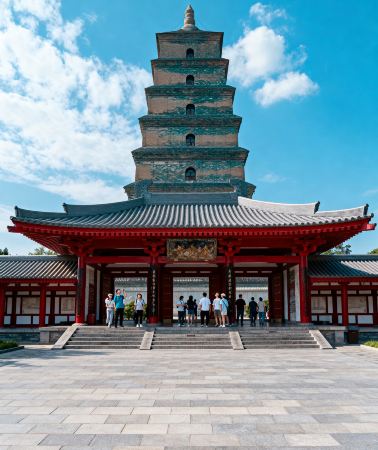


What travellers say about Xianyang

M48***763 October 2026
5.0
⭐⭐⭐⭐⭐ Five-star review! Highly recommend Ms. Yanzi from the Qin and Han Dynasty Hall of the Shaanxi History Museum!
Ms. Yanzi's explanations are professional and solid, and her presentation is vivid and engaging. Our group wasn't a premium small group tour, but the quality of the explanations far exceeded my expectations. Compared to several premium small group tours I've attended before, it was just as good, and much more affordable. My daughter is particularly fascinated by Qin Dynasty history and listened attentively throughout the entire tour, especially enjoying Ms. Yanzi's explanations. Following Ms. Yanzi through the Qin and Han Dynasty Hall, she clearly explained the stories behind the Qin and Han artifacts, making the whole experience incredibly enjoyable and well worth it!
Qinhan Civilization Museum

GH97060815 October 2026
5.0
Knowing that tickets to the Shaanxi History Museum are hard to get, I tried signing up for a guided tour. I was surprised by how reliable the service was from a large platform. The guide, Zhang Xiaojing, sent me the important information and meeting point the day before. He was also there early the next day to wait for everyone. Thanks to Xiaojing, the explanations were excellent, covering the most famous treasures and unique exhibits in Halls 1, 2, and 4 very clearly.
Shaanxi History Museum

M27***0619 June 2025
4.0
Yuanjia Village is an administrative village under the jurisdiction of Yanxia Town, Liquan County, Xianyang City. It is famous for its Guanzhong folk culture and rural tourism and is known as the "No. 1 Village in Guanzhong". The village was formed before the Yuan Dynasty, with an area of 0.4 square kilometers. It was listed in the second batch of traditional Chinese villages in 2013. The main industries include traditional snacks, farmhouses and handicraft workshops. Yuanjia Village is located in the hinterland of the Guanzhong Plain in Shaanxi, China, about 60 kilometers away from Xi'an, with convenient transportation. Tourism Features and Industries Folk Culture Experience: Preserve the style of Guanzhong folk houses, and regularly hold performances such as Qinqiang and shadow puppetry (national intangible cultural heritage). Food Street: It brings together Shaanxi specialty snacks such as mutton soup buns and cold noodles, and is known as the "Guanzhong Food Museum". Handicraft Workshop: Visitors can participate in the production of traditional crafts such as tofu, vinegar, and oil.
Yuanjia Village

衔春归玄燕1 August 2025
5.0
Zhaoling, this majestic mausoleum, stands quietly atop the main peak of Jiuyi Mountain in Liquan County, Shaanxi Province. It is the joint burial site of Emperor Taizong of Tang, Li Shimin, and Empress Wende, Zhangsun. As the largest of the 18 Tang Tombs in Guanzhong, its grand scale, vast area, numerous accompanying tombs, and rich cultural relics are all breathtaking.
🕰️ The construction of Zhaoling took 13 years, from the initial burial of Empress Wende in the 10th year of the Zhenguan reign to the interment of Emperor Taizong, Li Shimin, in the 23rd year of the Zhenguan reign. It embodied the wisdom and dedication of countless craftsmen. Meticulously designed and overseen by Yan Lide, Zhaoling is more than just a mausoleum; it is a silent history book, telling the glorious chapter of the Tang Dynasty's prosperity.
🌳 The location of Jiuyi Mountain is truly blessed. Surrounded by mountains, the winding Jing River flows through it, and before it lies the vast Guanzhong Plain, with the Wei River flowing through it like a jade belt. This geographical location is not only excellent for feng shui but also symbolizes peace and prosperity, perfectly complementing the achievements of Emperor Taizong of Tang, Li Shimin, in both civil and military affairs.
🐎 The "Six Horses of Zhaoling" are undoubtedly the crowning jewels of the mausoleum. These six steeds, loyal companions of Li Shimin throughout his campaigns, are immortalized in high-relief stone carvings at the mausoleum's edge. Each steed possesses a unique posture and expression, as if narrating the days of war and battle. Sadly, "Salu Zi" and "Quanmao Gu" were stolen and shipped to the United States, leaving a lasting legacy for the Chinese people. Today, the remaining four are treasured in the Xi'an Forest of Steles Museum, attracting countless visitors to see their splendor.
🏺 In addition to the "Six Horses of Zhaoling," numerous precious cultural relics have been unearthed from the mausoleum, including statues of chieftains from fourteen states, exquisite pottery figurines, and vibrant Tang Dynasty sancai (three-colored glazed pottery). These artifacts are not only artistic treasures but also vivid reflections of the prosperity and prosperity of the "Zhenguan Reign" during the heyday of the Tang Dynasty. From various perspectives, they showcase the remarkable achievements of the time, encompassing economic, social, and cultural fields, offering a glimpse into the splendor and grandeur of that era.
👑 The system of accompanying burials at Zhaoling is also unique. Emperor Taizong of Tang issued an edict requiring meritorious officials, close relatives, and those who assisted his time in their deeds to be buried alongside him. This measure not only demonstrated his deep affection for his deputies but also underscored the harmonious relationship between the emperor and his subjects during the Tang Dynasty. According to statistics, a total of 154 individuals were buried there, including renowned figures such as Zhangsun Wuji, Cheng Yaojin, and Wei Zheng. Their tombs, like stars surrounding the moon, form a vast complex of accompanying burials within the 300,000-mu (approximately 1,000 acres) Zhaoling cemetery. Many ministers considered it an honor to be buried there, and even their descendants followed their fathers' example. This orderly tradition of accompanying burials has become a unique historical hallmark of Zhaoling.
🌟 Today, Zhaoling has been designated a first-tier National Key Cultural Relics Protection Unit and a National AAAA-level Tourist Attraction, attracting visitors from all corners of the world. When you step into this ancient land, it is as if you have traveled through time and space and returned to the magnificent Tang Dynasty.
Zhao Mausoleum
E34***9717 October 2026
5.0
The Xi'an Museum at the Small Wild Goose Pagoda was less crowded than the Shaanxi History Museum, but its collection was also very rich. The guide, Xiao Li, explained everything in great detail; although it's repetitive work every day, she didn't do it half-heartedly. 👍
Xi'an Museum

呦未来可期15 October 2026
5.0
Take a stroll through the Tang Dynasty Never-Sleeping City on a pleasant autumn evening. The evening breeze is cool, the lights are dazzling, and the atmosphere of the Tang Dynasty is palpable. Street performances are everywhere, and tourists come and go, creating a lively scene. No need to plan a route; just wander around and explore as you please. Immersed in this world of lights, feeling the warmth of everyday life and ancient charm, this is what small satisfactions in ordinary days are all about. Chang'an's autumn nights are as bright as ever.
Grand Tang Mall

acyeveryday5 June 2026
5.0
Add this to your itinerary if you're visting Xi'an! I have been to the quarter 3 times. Walk along the main path of the quarter BUT make sure you also walk down the narrow alleyways! There are LOTS of shops and food stalls you don't want to miss. Open 24/7 too so make sure you visit!
Xi'an Muslim Quarter

Tom 老师25 February 2026
5.0
I was so surprised! This museum is free, and has so many ancient items including a tiny teracotta army!
Xianyang Museum

魔法师王紫儿26 June 2026
5.0
Xi'an Xianyang International Airport Museum (Terminal 5) is a rare archaeological site museum within an airport in China, built upon over 3,500 ancient tombs discovered during its construction. The museum features "underground artifacts, above-ground exhibitions," combining authentic archaeological sites with modern displays, showcasing approximately 120 precious artifacts, including the stone sarcophagus from the Northern Zhou Dynasty's Shi Jun Tomb, which is being exhibited for the first time. This innovative "airport + museum" model allows passengers to experience the civilization of the Zhou, Qin, Han, and Tang dynasties while waiting for their flights, making it a model of cultural tourism integration and well worth a special trip. But remember to visit it before security! It's located in the baggage check-in area.
China West Airport Group Museum of Heritage
M29***3519 August 2025
5.0
A highly underrated museum in Shaanxi. Although a Class II museum, the Zhaoling Museum boasts over 400 Class I artifacts, and over 1,000 Class I and Class II artifacts combined. Considering how few artifacts are on display, the 17-meter-tall Xu Maogong stele, a national treasure, sits openly in the open air, unprotected for over 1,000 years. While I don't fully understand the stories behind many of the figures, it still seems quite impressive. I plan to learn more and return in the future.
Zhaoling Museum


