Anze

Things to do in Anze

Search attractions or local attractions & tours
Search

Explore top experiences

Top 10 attractions in Anze

View all Attractions
Guangsheng Temple
No. 3 of Best Things to Do in Linfen

Guangsheng Temple

7.4
4.7/5
2.4k reviews
Guangsheng Temple is located at the southern foot of Huo Mountain in Hongtong County, Linfen, Shanxi. It is said to have been initially built during the Eastern Han Dynasty and renamed to its current name in the Tang Dynasty. Despite being repeatedly destroyed by wars, fires, and earthquakes over the centuries, the surviving halls are primarily structures from the Yuan and Ming Dynasties. The attraction consists of the upper temple on the mountain peak, the lower temple at the foot of the mountain, and the Water God Temple, forming a high-low connection that creates a natural upward visiting route. The Feihong Pagoda in the upper temple is the visual center of the entire complex. This octagonal thirteen-story brick pagoda, standing over forty meters tall, is adorned with glazed tiles in yellow, green, blue, white, and other colors from the second floor upwards. Figures of Buddhas, bodhisattvas, celestial beings, coiled dragons, and lion-like beasts protrude from the brick surfaces layer by layer. When sunlight hits it on clear days, the entire structure refracts rainbow-like brilliance, which is said to be the origin of its name "Feihong" (Flying Rainbow). The 1986 TV adaptation of *Journey to the West* filmed the episode where Tang Monk sweeps the pagoda to uncover an injustice here. In the 1930s, Liang Sicheng and Lin Huiyin also highly praised the quality and craftsmanship of the pagoda's glazed decorations during their survey. Behind the pagoda, a row of dark red sutra cabinets still stands in the Amitabha Hall, where the Buddhist canon "Zhaocheng Golden Tripitaka" was once stored. This engraved Tripitaka from the Jin Dynasty lay forgotten for centuries until its rediscovery in 1933. During the Anti-Japanese War, to prevent it from falling into Japanese hands, local soldiers and civilians risked their lives to transport it overnight. Now housed in the National Library of China, it is regarded as one of the library's most treasured collections. The sutra cabinets remain in the hall, and this legendary tale is worth pausing to hear. The Water God Temple at the foot of the mountain, the Mingying Wang Hall, is adjacent to the Huo Spring outlet. Its walls are adorned with over ten Yuan Dynasty murals centered around themes of praying for rain, rainfall, and giving thanks to deities. These murals depict water god worship and urban life rather than the typical Buddhist or Taoist subjects found in ordinary temples. The eastern section of the southern wall features "The grand performance troupe Zhongduxiu performing here," showcasing over ten actors and musicians representing various role types (sheng, dan, jing, mo, chou) on the same stage. This is a precious image for studying Yuan Dynasty zaju performances and, along with "The ball-hitting game," has been included in history textbooks. The adjacent Great Buddha Hall of the Lower Temple is a Yuan Dynasty wooden structure. Its original large-scale murals were stripped and sold overseas in the late 1920s, with the famous "Illustration of the Bhaisajyaguru Sutra" now housed at the Metropolitan Museum of Art in New York. To appreciate Yuan Dynasty murals, focus your attention on the Water God Temple. A bottom-up route is recommended: first visit the water god temple and lower monastery, then ascend via stone steps or the mountain road to see the Feihong pagoda at the summit. The glazed colors appear especially vibrant on sunny days, making it easier to capture great photos.Hongtong · 43.1km from Anze
Millennium City Park
2026 Asia 100 - Night Attractions

Millennium City Park

8.8
4.6/5
28.9k reviews
Millennium City Park is located by the Longting Lake in Kaifeng, a large-scale historical and cultural theme park that faithfully recreates the Northern Song Dynasty's capital based on the famous painting "Along the River During the Qingming Festival" by artist Zhang Zeduan, following the original layout at a 1:1 scale. The park is divided into two sections by the Shuangting Bridge: the southern area recreates the bustling urban life of Bianjing, with taverns, teahouses, pawnshops, and artisan workshops lining the streets, where peddlers with shoulder poles and shouting shop assistants move about; while the northern area features imperial gardens, with lakeside halls and quadrangular courtyards standing by the water. Staff and vendors throughout the park wear Song-style attire, accompanied by ancient music and the rhythmic sounds of bells and drums, creating the illusion of "stepping into a painting and traveling back a thousand years in a single day." The architecture here offers visually striking highlights: the Rainbow Bridge spanning the Bian River replicates the famous bridge from ancient paintings, arching like a rainbow—watching grain barges pass beneath recreates the painting's ambiance. Fuyun Pavilion towers above all other structures with its crimson facade and golden-roofed eaves, offering panoramic garden views. The reconstructed Shangshan Gate mirrors Kaifeng's Northern Song dynasty city gates, standing majestic with resplendent paintings as the garden's most imposing structure. Waterside pavilions like Shuixin Xie, Double Pavilion Bridge, and Nine Dragons Bridge dot the emerald waters in picturesque harmony. The daytime highlight is the scattered live performances throughout the park: "Judge Bao inspecting the Bian River grain transport" unfolds on the water by Rainbow Bridge, "Squire Wang's daughter seeking a husband" brings the embroidered ball tossing matchmaking to the streets, and "Yue Fei unhorsing Prince Xiao Liang" stirs up dust with galloping hooves in the drill ground. Folk performances like cockfighting, stilt walking, cuju (ancient football), and pan drumming are interspersed throughout. Families with children can visit Fun Garden and Great Song Games to try archery, dart throwing, rope climbing, and hoop diving—experiencing every Song dynasty game from a thousand years ago—or dress in period costumes at Square Courtyard to take mock imperial exams. Street-side workshops showcase folk crafts like Bian embroidery, Zhuxian Town woodblock prints, official kiln porcelain, and dough figurines, where visitors can watch artisans at work. The park takes on a different face after nightfall: red lanterns light up one after another, and the streets are ablaze with lights, making it seem like a completely different place from daytime. The large-scale water show "Northern Song Dynasty: Splendid Dreams of Dongjing" is performed on Jinglong Lake. The entire show is connected by eight classic Song Dynasty poems and a scroll of "Along the River During the Qingming Festival," transporting the audience back to Dongjing of the Northern Song Dynasty a thousand years ago. The performance lasts approx. 70 minutes, and many travelers specifically reserve their itinerary for the evening to wait for this show. After the performance, you might as well climb the Shangshan Gate tower to overlook the park scenery and the night view of Kaifeng under the lights. Dining in the park is also convenient: the snack street and night market around the Dongjing food area gather Kaifeng snacks like soup dumplings and mutton pancake, perfect for eating while strolling; for a proper sit-down meal, head to Sunyang Restaurant, a recreation of the "main shop" depicted in paintings, and try traditional Henan dishes such as soup dumplings and carp with noodles.China · Kaifeng
Jinci Temple Museum
2026 Asia 100 - Family-friendly Attractions

Jinci Temple Museum

8.7
4.8/5
20.8k reviews
Jinci Temple is located on the banks of the Jinshui River at the foot of Xuanweng Mountain, 25 km southwest of Taiyuan. It is a shrine built by later generations to commemorate Tang Shuyu, the founding feudal lord of the State of Jin, and serves as the ancestral temple of Jin. It is known for the saying, "If you have not visitedJinci Temple, it would be a wasted trip to Taiyuan," as the saying goes. After getting off at Jinci, the first place you arrive at isJinci Temple Museum, this is a free park with a nice environment that you can look around at will. Walk for about 10 minutes, and you can reach the main area of Jinci through the park. Inside the Jinci Temple Museum,Jinci Temple"Three treasures" (Jinci Temple Museum - Xian Hall, Flying Bridge Across Fish Pond, Jinci Temple Museum - Shengmu Hall) and "three wonders" (Jinci Temple Museum - Zhou Cypress, Nanlao Spring, painted clay sculptures) are what every visitor toJinci TempleA view that no one should miss. Jinci TempleThe "Three Treasures" are linked together and located atJinci TempleOn the central axis, they can be visited together. Jinci Temple Museum - Xian Hall is a place for enshrining sacrificial offerings, with fence-like walls on all four sides that provide ventilation and coolness. What is particularly notable is that no iron nails were used on the beams and pillars throughout the hall. The Fish Pond Flying Bridge is located west of Xian Hall, that is, between Xian Hall and the Hall of the Holy Mother, and was built during the Song Dynasty. The overall view resembles a modern overpass and is the only surviving example of its kind among ancient bridges in China. One end of the "Flying Bridge" connects to Jinci Temple Museum - Hall of the Holy Mother, which is one of the earlier main buildings extant in Jinci Temple Museum. The interior of the hall is very spacious, and having beams without pillars is a major highlight. On the 8 corridor pillars in front of the hall are carved 8 wooden coiled dragons poised to fly, which, together with the "Fish Pond Flying Bridge," appear quite imposing. Centered around Jinci Temple Museum-Holy Mother Hall, the "Three Wonders" are easy to find. The painted clay sculptures are located in Jinci Temple Museum-Holy Mother Hall. The main statue of the Holy Mother sits upright in a wooden shrine, dignified and gorgeous, with the other 42 attendants arranged on both sides. These sculptures are brightly dressed and have different expressions. Among them is a maid dressed as a huadan, half joyful and half sorrowful, which inevitably leaves viewers with mixed feelings. Master Mei Lanfang once stood for a long time in front of this maid, carefully savoring her movements and inner thoughts, and praised her greatly. Jinci Temple Museum-Zhou Cypress is located on the north side of Jinci Temple Museum-Holy Mother Hall. It was planted in the Western Zhou Dynasty and has a history of more than 3,000 years. Nanlao Spring is located on the south side of Jinci Temple Museum-Holy Mother Hall, and the source of the Jin water flows out from here. In addition,Jinci TempleInside, there is also the "Inscription on the Jinci Temple" stele, personally composed and handwritten by Emperor Taizong of Tang, Li Shimin, which is extremely precious. In the southernmost part, there is also the Shifang Fengsheng Zen Temple, said to have originally been the villa of Yuchi Gong, a founding general of the Tang Dynasty. South of the shrine, within the Futu Monastery, stands a Sarira Stupa; climbing the stupa and gazing into the distance,Jinci TempleThe panoramic views are vividly etched in my mind.China · Taiyuan
Mount Hua
2026 Asia 100 - Best Things to Do

Mount Hua

8.7
4.7/5
55.4k reviews
Mount Hua, formerly known as "Xiyue", is one of the five famous mountains in China. It is located in Huayin City, Shaanxi Province. Huashan is also known as "Taihuashan". It is the birthplace of Chinese civilization. The "Hua" in "Zhonghua" and "Huaxia" comes from Huashan. The words "strange and dangerous" are the essence of Huashan's scenery. "Since ancient times, there has been only one road to Huashan" describes the steepness of Huashan. The Attraction has many thrilling attractions such as Changkong Plank Road, Kitesurfing, Qianchi Chuang, Baichi Gorge, Laojun Ligou, etc., which are carved out on the steep cliffs. Those who visit them in person will be amazed. Huashan Attraction covers a vast area, including the Main Peak Attraction, Xiyue Temple Attraction, Xianyu Attraction, etc. The Main Peak Attraction is the core Attraction of ​​Huashan, including "Huashan One Road" and the five main peaks in the southeast, northwest, and center. Huashan in most people's minds refers to the Main Peak Attraction. Five main peaks The East Peak is about 2,100 meters above sea level and is named for its location in the east. There is a platform on the top of the peak, which is high and dangerous with a wide view. It is a good place to watch the sunrise. It is called Chaoyang Terrace, and the East Peak is also called Chaoyang Peak. The East Peak consists of four peaks, one main peak and three s-ervant peaks. The peak where Chaoyang Terrace is located is higher, the Yunv Peak is in the west, the Shilou Peak is in the east, and the Botai is in the south. There are more than dozens of landscapes on the East Peak. There is a natural stone pattern on the cliff on the side of the East Shilou Peak, which looks like a giant palm print. This is the Huayue Immortal Palm, which is listed as the first of the eight scenic spots in Guanzhong. The story of the giant spirit opening the mountain and guiding the river originated from this. The West Peak is about 2,000 meters above sea level. Because there is a huge rock on the top of the peak that looks like a lotus petal, ancient literati often called it Lotus Peak or Hibiscus Peak. Xu Xiake wrote in his "Diary of Traveling to Mount Taihua": "There is a rock rising on the peak, and there are stone pieces covering it, like a lotus flower." This stone must be referring to it. There are many landscapes on the West Peak, including Cuiyun Palace, Lotus Cave, Giant Spirit Foot, Axe-Split Stone, Sheshen Cliff, etc., and there are many beautiful myths and legends. Among them, the well-known story of Chenxiang splitting the mountain to save his mother is circulated here. The South Peak is over 2,100 meters above sea level and is the highest peak of Huashan. The ancients called it the "Head of Huashan". On one side of the South Peak is a thousand-foot cliff, standing straight like a knife, and below is a deep ravine, which is separated from Sangong Mountain and Sanfeng Mountain. The South Peak consists of one peak and two peaks. The east side is called Songhui Peak, and the west side is Luoyan Peak. The origin of the name of Luoyan Peak is said to be because the migrating wild geese often land here to rest. The North Peak is about 1,600 meters above sea level, with cliffs on all sides, covered with clouds above and connected to the earth veins below. It stands tall and unique, and is also called Yuntai Peak because it looks like a cloud platform. Li Bai of the Tang Dynasty wrote in his poem "A Song of the Cloud Platform of Mount Xiyue to Complimentary Danqiuzi": "Three peaks stand as if about to collapse, and the green cliffs and red valleys are high. The golden essence of the White Emperor mobilizes his vitality, and the stones become lotus flowers and the clouds become platforms." The famous story of "Taking Huashan by Strategy" took place here. There are many landscapes on the mountain, including the Zhenwu Hall, Jiaogong Stone Chamber, Changchun Stone Chamber, and the place where Laojun hung the plow. The Middle Peak is the only way to the other four peaks. It is located in the middle of the East, West and South Peaks. The forests on the peak are lush and green, and the environment is quiet. There is a Taoist temple named Yunu Temple on the top of the peak. It is said that it was the place where Qin Mu Gong's daughter Nong Yu cultivated herself in the Spring and Autumn Period, so it is also called Yunu Peak. Main landscape: There are more than 210 famous Attraction in Huashan. From ancient times to the present, countless literati and poets have left various classic poems here. Skywalk The Changkong Plank Road is located on the east side of the Huashan South Peak. It was built by the master of the Huashan School, Taoist He Zhizhen of the Yuan Dynasty, who wanted to get away from the world and practice Taoism. He built it by inlaying stone piles on the cliffs and paving wooden boards. At the end of the plank road, you can see the "Hezu Cave" where Master He practiced self-cultivation. The road builders chiseled stone holes on the cliffs, wedged stone piles into the holes, and laid wooden boards about 40 cm wide between the stone piles. Visitors must stick to the cliff wall, pull the iron chain with their hands, step on the wooden boards, and move forward slowly sideways. Xiyue Temple Xiyue Temple, also known as Huayue Temple, is a temple where emperors of all dynasties worshipped and offered sacrifices to Shaohao, the Great Emperor of Xiyue. It was first built during the Yuanguang period of Emperor Wu of the Han Dynasty (134-129 BC) at the entrance of Huangshengu (now Huangfuyu) at the foot of Huashan Mountain. It was moved to its current location during the reign of Emperor Huan of the Eastern Han Dynasty (147-167 AD) and renamed today. It was rebuilt many times during the Tang, Song, Ming and Qing dynasties. Canglong Ridge The steps on Canglong Ridge are only 2 feet wide, with deep ravines on both sides, as steep as a knife. The height difference between the ridge and the top is about 500 meters, and the slope is more than 45 degrees. Looking at the green pines and white clouds in the distance and hearing the sound of the wind is dizzying. Jinsuoguan Jinsuoguan is one of the five passes of Huashan Mountain. It is built on a stone archway at the entrance of the three peaks. It is the throat of the Wuyun Peak to the four peaks of East, West, South and Center. There is no way to pass after the pass, so it is also called Tongtianmen. Taoists believe that Huashan is the fairyland of gods. Only after passing Tongtianmen can you enter the fairyland. Therefore, there is a folk song that "after passing Jinsuoguan, there is another world". There has been only one road to Mount Huashan since ancient times "There has been only one road to Mount Hua since ancient times" refers to the "Huashan Valley" hiking trail, which includes various scenic spots along the Huashan hiking trail since ancient times. When connected together, it is what is commonly referred to as "There has been only one road to Mount Hua since ancient times." How to visit Huashan has two mountain gates (entrances): East Gate and West Gate (also known as Huashan Gate). Take the cable car up the mountain and go to the East Gate; if you climb the mountain on foot, enter from the West Gate. Huashan currently has two cable cars, the East and West Lines, which reach the North Peak and the West Peak respectively (please plan the climbing route in advance before purchasing the ticket and purchase the corresponding ticket type, and you cannot change it midway.). Route 1: Hiking route There has been only one road on Mount Huashan since ancient times. It is an ancient mountaineering road with a total length of 12.5 kilometers and 9,567 steps. It takes about 4 hours to hike from Yuquanyuan, through Wuli Pass, Shaluoping (night climbing), Qianchi Chuang, Baichi Gorge, etc. to the North Peak, and then start the tour from the North Peak. Route 2: "Up West and Down West", a mountaineering route suitable for the Seniors and tourists with children This route goes up the West Peak Cableway of Mount Huashan and down the West Peak Cableway, that is, going up from the west and down from the west. The whole route takes a relatively short time, about 4 hours, and is also more energy-saving, making it more friendly to the Seniors and tourists with children. Route 3: "Up West and Down North", a one-day mountaineering route chosen by 80% of tourists This route goes up by cable car from the West Peak of Mount Huashan and down by cable car from the North Peak, that is, going up from the west and down from the north. The entire route is a classic one-day tour route, which takes about 6 hours. You can visit all the attractions without backtracking. Most tourists choose this route because this road almost goes straight down, which is easier and faster than the uphill road. Route 4: "North up and north down", a time-saving, economical and panoramic mountaineering route This route goes up by cable car at the North Peak of Huashan and down by cable car at the North Peak, that is, going up from the north and down from the north. The whole route is a relatively low-cost cable car mountaineering route. If your sightseeing time is limited, you can choose this route and visit the North Peak, which has the Memorial Pavilion, Ear-Crushing Cliff, Canglong Ridge, Huashan Sword Contest Monument, panoramic Huashan and other attractions.China · Huayin
Laojun Mountain Scenic Spot
No. 1 of Fall Viewing Attractions in Henan

Laojun Mountain Scenic Spot

8.6
4.7/5
16.5k reviews
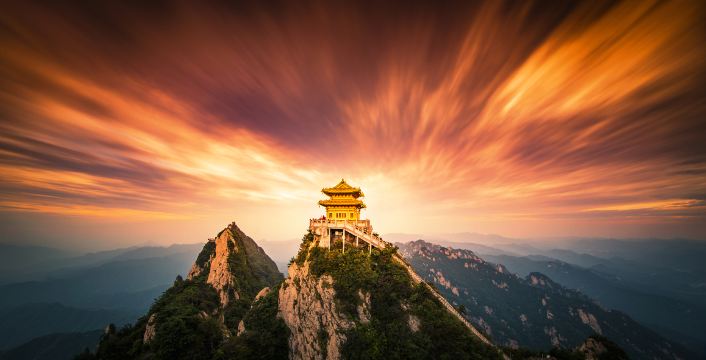
It is said that Laojun Attraction is the place where Li Er (Laozi), the founder of Taoism, practiced in seclusion. During the Northern Wei Dynasty, a temple was built in the mountain to commemorate it. Later, it was named "the famous mountain in the world" and has always been popular. The mountain is lush with trees and picturesque, and mountain springs can be seen everywhere. In the golden autumn, this is the best choice for viewing red leaves in the Souvenir areas. After the rain, Laojun Mountain is surrounded by clouds and mist in each peak, like a fairyland in the sky. The Attraction area is huge and is mainly divided into the main Laojun Mountain Attraction in the center, the Dream Valley Attraction in the west, and the Zhaigou Attraction Area in the east. Generally, tourists will spend a day to visit the main Laojun Mountain Attraction, which is also the most developed area of ​​the entire Attraction. If you go to the top of the mountain, you will also have the opportunity to see the beautiful sea of ​​clouds, sunrise, and sunset. The main Attraction of ​​Laojun Mountain includes Zhongtianmen, Jinding, Laojun Temple, Nantianmen, Yuhuangding and Mazongling. Since its construction in the Northern Wei Dynasty, Laojun Temple has been the center of worship for pilgrims from the Central Plains; the Taoist temple on Yuhuangding enshrines the Jade Emperor and is also a good place to view the scenery in the mountain; Jinding and Mazongling are good places to watch the sunrise and the sea of ​​clouds. Recommended itinerary: Day Trips Most tourists choose to spend a day to visit the main Attraction of ​​Laojun Mountain. Lingguan Hall - the statue of Laojun at the foot of the mountain - Lincu Hall - Zhongtianmen - tree-lined trail - Lying Yunsong - Bodhisattva Hall - Laojun Temple, Jinding - Yuhuangding, and then return along the original route. Tourists can choose to walk the whole way or take a "walk + cable car" tour of Laojun Mountain according to their own conditions. There is the Zhongling Cableway of the Attraction between the Lingguan Temple at the foot of the mountain and the Zhongtian Gate on the mountainside. Take the Zhongling Cableway and then walk from Zhongtian Gate to the top of the mountain, Yuhuang Peak. The road from Zhongtian Gate to the top of the mountain is not very steep and can usually be completed in about an hour. Two-day tour If you have enough time, you can spend two days to visit Laojun Mountain. The general route is: D1: Visit the main Attraction of ​​Laojun Mountain and stay in the mountain that night. D2: From the top of Laojun Mountain, choose to go down the mountain to the Dream Valley in the west or the Zhaigou Attraction in the east, and arrive at the west gate and east gate of the Attraction respectively. In the main Attraction of ​​Laojun Mountain, you can stay near Zhongtianmen on the mountainside and Laojun Temple on the top of the mountain. There are hotels near Zhongtianmen with better accommodation conditions, while the accommodation conditions Souvenir Laojun Temple are relatively poor. If you plan to go to the top of the mountain to watch the sunrise the next morning, you can stay Souvenir Laojun Temple. Compared with the Zhaigou Attraction in the east, the mountain roads in Dream Chasing Valley are smoother, and tourists can choose one of them to go down the mountain according to their preferences. There are many places in the Attraction that can provide Dining services for tourists, but the signboards on some sections of the road in the Attraction are not yet very complete, so tourists need to pay more attention when visiting.China · Luanchuan
Wansuishan Martial Arts City
No. 1 of Family-friendly Attractions in Henan

Wansuishan Martial Arts City

8.6
4.6/5
16.5k reviews
Wansuishan Martial Arts City is located in the northwest of Kaifeng's urban areaWansuishan Martial Arts City, it is a large-scale attraction built with Song Dynasty culture and wuxia culture as its backdrop. Within the attraction, there are quaint and charming Song Dynasty garden streets and alleys, year-round exciting wuxia and period costume performances, as well as a wealth of entertainment facilities, making it a great place for relaxation and entertainment in Kaifeng, Zhengzhou, and surrounding areas. When visiting Wansuishan Martial Arts City, the first thing you will notice is the beautiful scenery of the attraction. Wansuishan Martial Arts City as a whole creates an atmosphere of the Song Dynasty, among which many views are very eye-catching, such as Wansui Temple, which recreates the splendor of a thousand-year-old ancient temple from the Song Dynasty, the Dragon Altar, which embodies the spirit of Buddhism, Confucianism, and Taoism, the relatively well-preserved ancient city wall of Kaifeng in China, and the "Nine Dragons Waterfall," one of the large man-made stream and waterfall groups in China. What is rare is that the attraction also has a very large area of forest and green space, with a quiet environment, and flowers bloom in season, making it very suitable for photography. Afterward, visitors will notice the unique wuxia features within the attraction. Year-round, multiple wuxia-themed performances are staged here, with several themed shows such as "Cross Slope," "Wu Song Drunkenly Beats Jiang the Gatekeeper," and "Wild Boar Forest" being quite spectacular—definitely not to be missed when visiting. Interactive performances like the "Wuxia Film and Television Experience Hall," "Martial Arts Champion," and "Li Kui Judges a Case" also allow visitors to participate in wuxia stories, offering plenty of fun. In the architectural design of the attraction, there are also many wuxia elements: the Wuxia Road built with large-scale weapons such as the "Heaven-Reliant Sword" and "Overlord Blade," the "Gallant Heroes Portrait" at the Great Song Martial Arts Hall, the "Sword Altar" at Cross Slope, Juxian Manor, and the Martial Arts Arena—all are uniquely distinctive. Additionally, every year during the Spring Festival periodWansuishanLarge-scale temple fairs are held, featuring grand performances, a rich variety of specialty snacks, a dazzling array of handicrafts, and highly distinctive entertainment activities, creating a lively atmosphere. It has now become one of the most popular temple fairs in the Central Plains region.China · Kaifeng
Song Du Huangcheng Cultural Tourism Resort

Song Du Huangcheng Cultural Tourism Resort

8.6
4.6/5
177 reviews
Song Du Huangcheng Cultural Tourism Resort is located in the northern part of the old city of Kaifeng, precisely on the site of the imperial palace of the Northern Song Dynasty's Dongjing city. The millennium-old central axis of Kaifeng runs through this area, making it the core zone of the royal culture of the Song Dynasty. Here, you can find the Song-style imperial architecture of the Longting attraction, the tales of the Yang Family Generals at Tianbo Yang's residence, and the calligraphic steles of Han Yuan Stele Forest. The Shuanglong Lane historical and cultural block, 960 Cultural and Creative Park, and Qisheng Corner have transformed old streets and courtyards into Song-style blocks perfect for leisurely exploration. The resort also connects a series of Song culture attractions: Wansui Mountain Great Song Martial Arts City stages year-round martial arts live shows and intangible cultural heritage iron fireworks, while historic sites like the Iron Pagoda, Kaifeng city wall, Zhouqiao and Bian River ruins, Shanshangan Guild Hall, Yanqing Taoist Temple, and Fan Pagoda are scattered across the old city, along with niche spots like the underground wartime grain storage. These places are hard to cover in one day, so we recommend focusing on two or three key sites. After dark, a different experience awaits as the attractions light up in unison. Boarding a painted pleasure boat on the Great Song Imperial River to watch the illuminated pavilions and towers sway with the rippling water is a popular nightlife option here.China · Kaifeng
Pingyao Ancient City
2026 Asia 100 - Night Attractions

Pingyao Ancient City

8.4
4.6/5
27.2k reviews
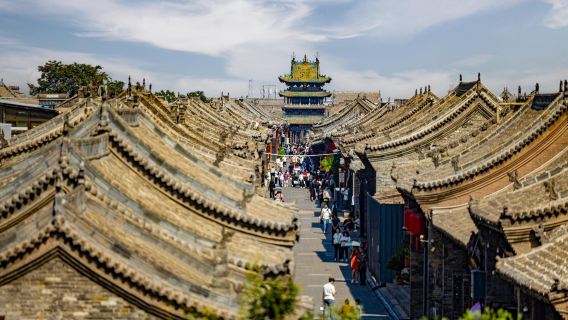
Pingyao Ancient City is approx. 85 km from Taiyuan. The streets, shops, and residences within the ancient city still maintain their traditional layout and appearance, making it one of the best-preserved ancient cities in China. It is also the only ancient county town in China that has successfully been listed as a UNESCO World Heritage Site as an entire city. Pingyao was once the financial center of China during the late Qing Dynasty. Walking through this once-prosperous ancient city, you can feel the essence of Shanxi merchant culture everywhere. The ancient city has six gates in total, with the north gate near Pingyao bus station and the west gate nearPingyao train stationThe south gate and west gate are places with many travelers. Entering the ancient town does not require an admission ticket, but if you want to climb the city wall or visit attractions like the ticket number, you need to purchase a pass for the ancient town. The ancient town is not very large, and walking is enough to explore it all. If you prefer not to walk, you can also take electric bikes. The streets of the entire ancient city are laid out in the shape of the Chinese character "土" (earth). When visiting, you usually enter the city from the West Gate and walk along West Street to Rishengchang Draft Bank, known as the "ancestor of modern Chinese banking". Here you can not only learn about the development history of ancient banking, but also have the old manager in a long robe and mandarin jacket write a draft for you using the early draft method, which is particularly historical. Moving forward is the north-south spanningSouth street, it is the central axis of the ancient city. During the Ming and Qing dynasties,South streetControlling over half of the nation's financial institutions, it was hailed as the "Wall Street of China" in its heyday. Today, it remains a bustling area of the ancient city, known as the Ming-Qing Ancient Street. Most attractions in Pingyao Ancient City are concentrated here, centered around the landmark structure, the Ancient City Tower. Surrounding it are attractions like Xie Tong Qing ticket number (China Banking Museum) and Wei Tai Hou (Ticket number museumAttractions such as Baichuantong, China Escort Museum, Tongxinggong Escort, Weishengchang, China Rare Newspaper Exhibition Hall, and Tianjixiang are available, along with restaurants, musical instrument stores, cafes, and bars. After strolling along the street, you can dine here, buy some souvenirs, and then continue south for more sightseeing. At the Pingyao Ancient City's county government office on the south side of the ancient city, you can see a large number of ancient documents and torture instruments, with daily performances of court sessions; near the Shangdong Gate are the Pingyao Ancient City's Chenghuang Temple andConfucian templeIt is quite grand and meticulously built, with thriving incense offerings where you can burn joss sticks. The Pingyao Ancient City wall is also one of the highlights of the ancient city, being not only majestic but also remarkably well-preserved. Climbing the wall offers a panoramic view of the entire ancient city. Among the gates, the tower of the south gate (Yingxun Gate of Pingyao Ancient City wall) is exquisitely crafted, and this area is close to residential buildings, allowing visitors to observe the daily life of the locals. If time permits, you can walk around the ancient city along the wall to fully appreciate its charm, which takes about an hour. Watching the sunset from the wall in the evening presents a beautiful scene. Besides the ancient town itself, Pingyao has two other major attractions: Zhenguo Temple and Shuanglin Temple. Zhenguo Temple was built without a single nail, with all structures joined by interlocking wooden components. Shuanglin Temple houses over 10 halls containing exquisitely crafted painted sculptures dating from the Yuan to Ming dynasties. It is highly recommended to stay overnight in the ancient town to enjoy its night view. You can also rent a bicycle to explore the small alleys and experience the authentic Pingyao, where the local culture and customs or photography make excellent subjects. Especially during the Chinese New Year, Pingyao is full of festive atmosphere. The town features old courtyards converted into inns, which are usually affordable, with clean and tidy accommodations available for just a few dozen yuan. Additionally, Pingyao is renowned for its beef. In the late Qing Dynasty, Empress Dowager Cixi passed through Pingyao and was so fond of the local beef after tasting it that she designated it as a royal tribute. Shops bearing the name "Guanyun beef" can be seen everywhere in the ancient town, making it hard to distinguish authenticity, and prices are generally high. You may consider buying some outside the town to try or give as gifts to friends and relatives.China · Pingyao County

Experiences you can't miss in Anze

Anze Today's weatherClear 0-16℃
Anze weather for the next 2 days10/31: 2-13℃, 11/1: 4-11℃

Free things to do in Anze

What travellers say about Anze

user-avatar
皮皮泡泡哦哦哦20 October 2026
5.0
The ancient pagoda was particularly impressive, and the glazed sculptures shimmered brilliantly in the sunlight. Their forms were incredibly lifelike. The only downside was the long wait for the shuttle bus; we got on the bus five minutes ago, but waited for another 40 minutes.

Guangsheng Temple

user-avatar
沉香优雅29 October 2026
4.0
It is very famous and attracts many people. The main statues are well-sculpted and are said to be based on Empress Wu Zetian. However, the other statues are generally mediocre, and many have been destroyed, leaving many empty grottoes, which is regrettable.

Longmen Grottoes

user-avatar
Anonymous user29 October 2026
5.0
It's convenient to visit Qingming Riverside Landscape Garden, and easy to come back and rest after a long day of sightseeing. The guesthouse has a great environment and good service, and the breakfast is handmade, nutritious, and delicious. I had a great time and a comfortable stay for three days, and I would definitely recommend it to my friends!

Millennium City Park

user-avatar
Anonymous user30 October 2026
5.0
Jinci is truly a hidden treasure trove of ancient architecture in Shanxi. Stepping inside is like stepping into a thousand years of time. The ancient cypress trees, palaces, and murals are all so captivating that you can't tear yourself away. It's definitely worth a visit!

Jinci Temple Museum

user-avatar
WY32029 October 2026
5.0
Highly recommend hiking up and coming down via cable car. The scenery on the way up was amazing and you also get to experience how people used to hike up the most dangerous mountain in China. It was raining at the top, wind was strong and temperature dropped. Be sure to check weather forecast and be ready for any kind of weather.

Mount Hua

user-avatar
Anonymous user30 October 2026
5.0
Overall, a perfect experience! The scenery of Laojun Mountain is magnificent, and our guide, Xiao Chen, provided attentive companionship throughout the trip, promptly reminding us of meeting times and important information. He took care of every tourist, and there were no hidden costs. I'll definitely hire Xiao Chen again next time! A fantastic experience!

Laojun Mountain Scenic Spot

user-avatar
张冰020930 October 2026
5.0
This is my second visit to Wansui Mountain. Every time I visit Kaifeng, this is the only place I can explore because it's so much fun! Many of the popular NPCs can keep me there all day; there's just no room to move. The scenery is vast. There are people interacting with everything. You can play games from morning till night. Everyone, from NPCs to security guards, cleaners, and shopkeepers, is incredibly welcoming, making you feel happy. There are so many activities! Prices are cheap, and there are plenty of restrooms, so you don't have to worry about finding one. The cleaning is excellent; you won't feel uncomfortable at all. Every staff member is exceptionally nice; no wonder it's ranked number one in the country. It's all thanks to the hard work of every staff member. Kudos to the operations team and all the cultural and tourism professionals!

Wansuishan Martial Arts City

user-avatar
M55***2018 August 2026
5.0
It's very worthwhile, but it's also very crowded, which might slightly detract from the overall experience. However, the people are incredibly welcoming, and there are many beautiful spots for taking photos. The food is also affordable and inexpensive, which kids enjoy. I'll definitely go back when it's less crowded.

Song Du Huangcheng Cultural Tourism Resort

user-avatar
aa***d29 October 2026
5.0
Hukou Waterfall is breathtaking. Although it's not the high-water season, it's still incredibly impressive. The sun was shining brightly, and we even saw a rainbow 🌈 – very lucky! Definitely worth the trip. I didn't go to the Shaanxi side, but the Shanxi side felt like it offered a more comprehensive view.

The Hukou Waterfall Scenic Area

user-avatar
Anonymous user29 October 2026
4.0
Worthy of being a Ming and Qing dynasty ancient county town and a World Cultural Heritage site, its biggest highlight is its complete ancient city layout, with four main streets, eight alleys, and seventy-two winding lanes forming a "土" (earth) shaped framework. The streets and alleys resemble the patterns on a tortoise shell. It also features the history of Shanxi merchants' banks and ancient architectural relics.

Pingyao Ancient City

Trip Moments in Anze

Popular cities near Anze

Frequently asked questions

What are the recommended tours and excursions in Anze?

When choosing a tour, start with how much time you have and the kind of experience you're looking for. Trending options right now include Private Charter One-Day Tour to Mianshan Mountain, Jiexiu, Shanxi, Guanyin Hall + Chongqing Temple + The Five-Phoenix Pavilions 1-day tour in Changzhi, Shanxi with Chinese and English service, and 1-day tour of Pingyao Ancient City, Shuanglin Temple, and Wang Family Compound in Jinzhong, Shanxi with Chinese and English services (admission tickets not included). Check the real-time availability and itinerary before you book.

As of 31 October 2026, the reference price for day tours and activities in Anze is around PKR 30,687.02 – PKR 42,489.71. Rates vary by duration, group size, transport, tickets, meals, and any special admission requirements. Before you book, please confirm the billing currency and whether the price is quoted per person or per group.

Get help anytime, anywhere within 30 secondsContact customer support

Change and cancellation policies vary by attractions and tours. Please check the product details page for more information.

Ticket prices may vary between weekdays and weekends, as well as during peak and off-peak seasons. When booking with Trip.com, you can also use Trip Coins to get extra savings. For more tips on booking discounted tickets, please visit Trip.com for the latest information.