


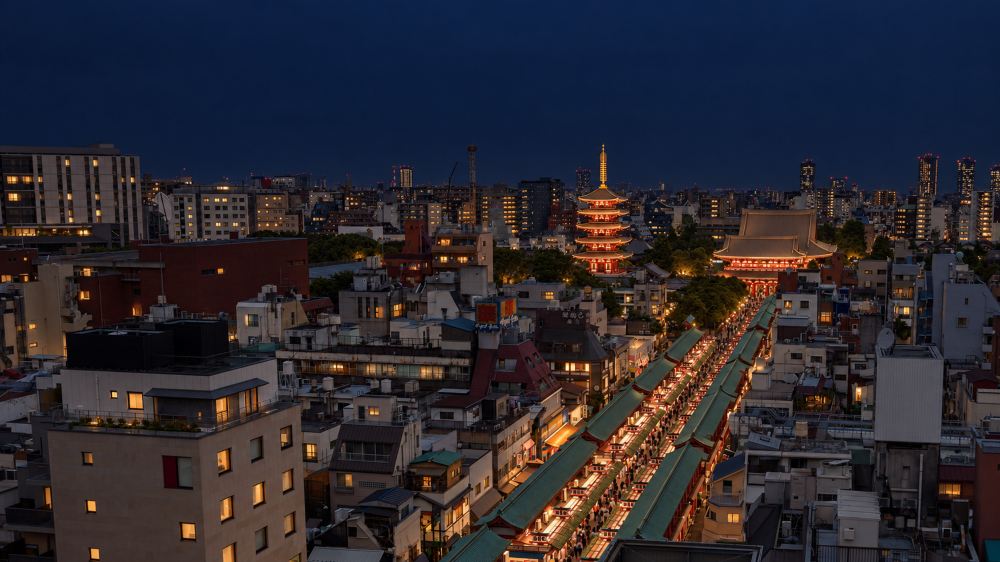
▲ From the observation deck on the 8th floor of the Asakusa Culture Tourist Information Center, looking north, the approach of Nakamise-dori and the buildings of Sensō-ji extend along the neighborhood. Observe the layers of roofs and streets from above, then walk into the old streets to experience the different perspectives between the elevated view and ground-level stroll.
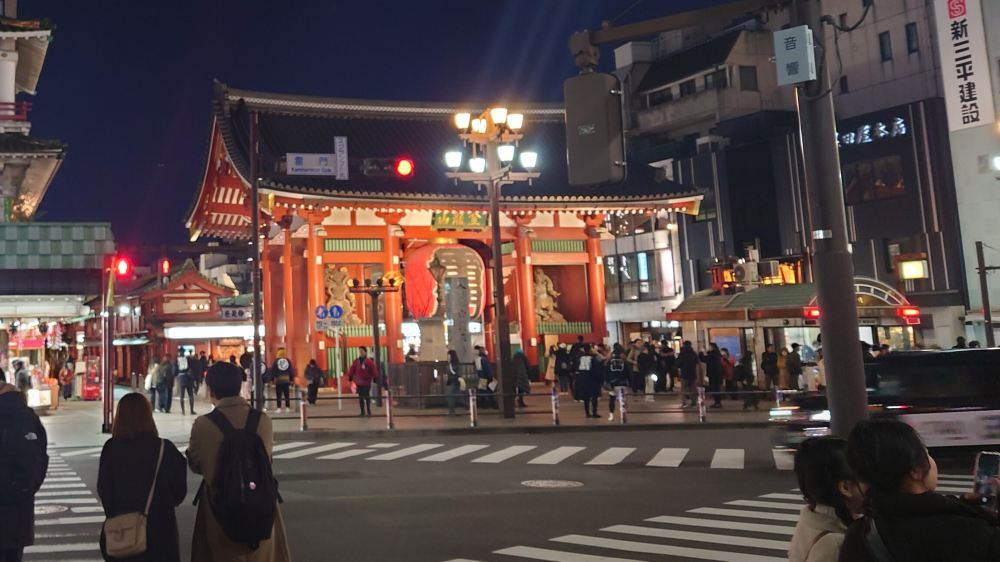
▲ In the twilight, Kaminari-mon Gate welcomes travelers with its vermilion pillars and large lantern, its outline accentuated by the lights. The current gate was reconstructed in 1960, with the gods of wind and thunder on either side echoing the name "Kaminari-mon Gate." Pause to admire its exterior and experience this landmark of Asakusa amidst the vibrant street life.
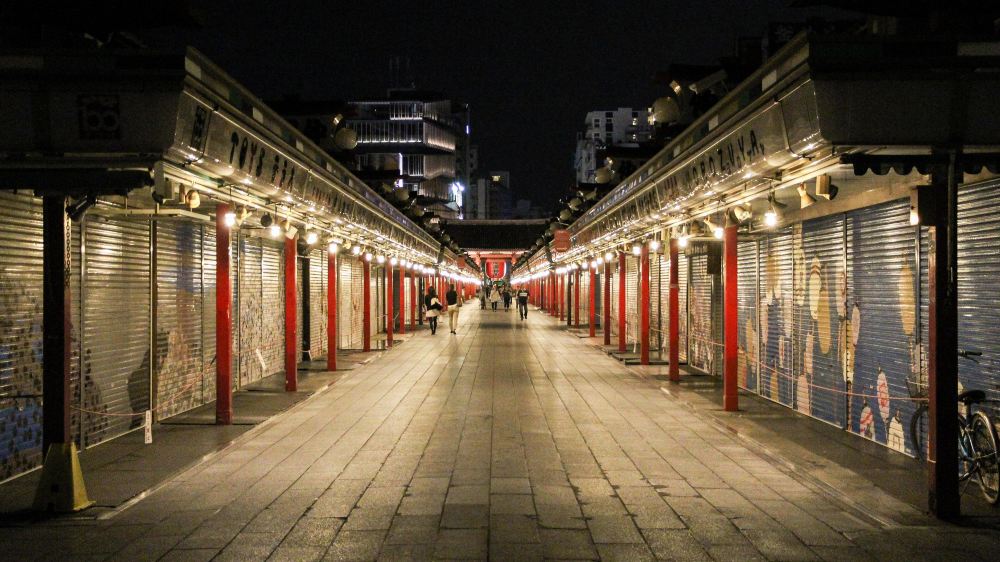
▲ After Nakamise shops close, the paintings on rolling shutters and lights under eaves create a different streetscape. Walk slowly along the passage, noticing the artwork on both sides, vermilion pillars and extending approach, to experience the neighborhood scenery shaped by the combination of pilgrimage paths and front-town commerce. The nighttime experience focuses on walking and sightseeing, with no guarantee of shop operations or shopping.
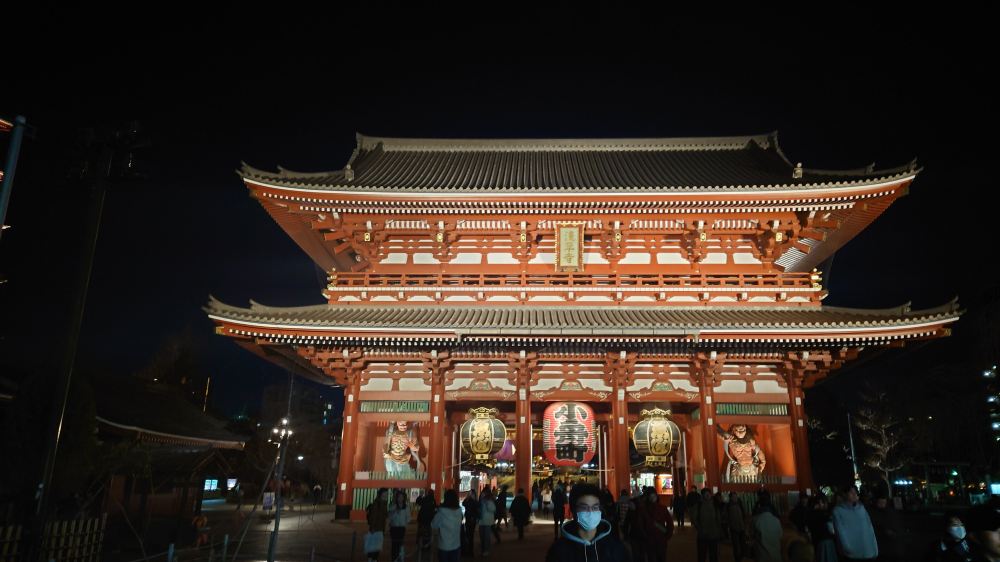
▲ The lights outline the double-layered eaves and vermilion pillars of the treasure gate, with the central passage and flanking Nio statues forming a solemn frontal view. The current structure was rebuilt in 1964 and is named for its collection of Buddhist scriptures and temple treasures.
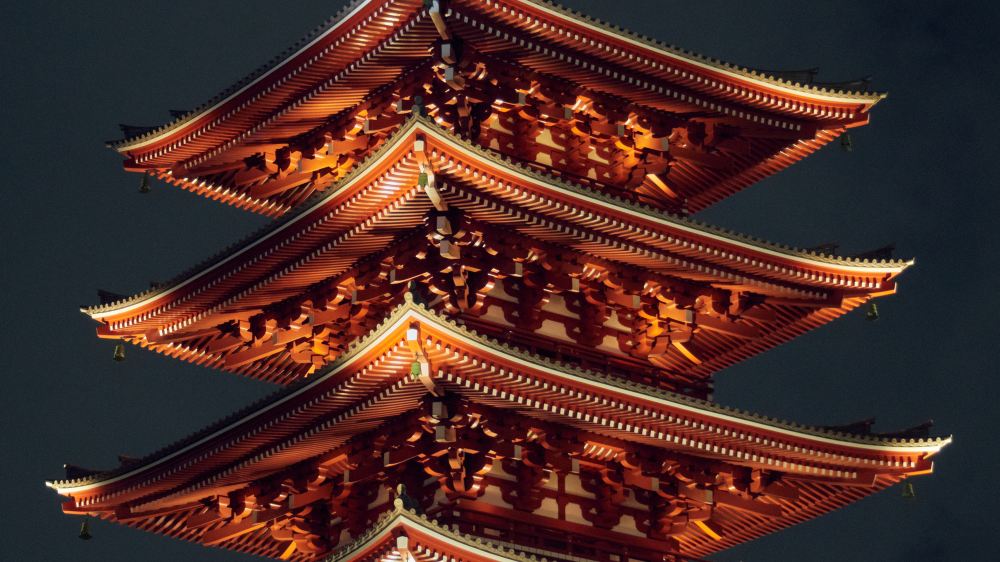
▲ The layered eaves are outlined by lights against the night sky, with the adjacent Hōzōmon gate forming a horizontally extended architectural backdrop. The current pagoda, rebuilt in 1973, is one of the important structures of Sensō-ji. Observing the height variations between the pagoda and temple gates from public areas reveals the relationship between the pagoda's silhouette and the temple's nightscape.
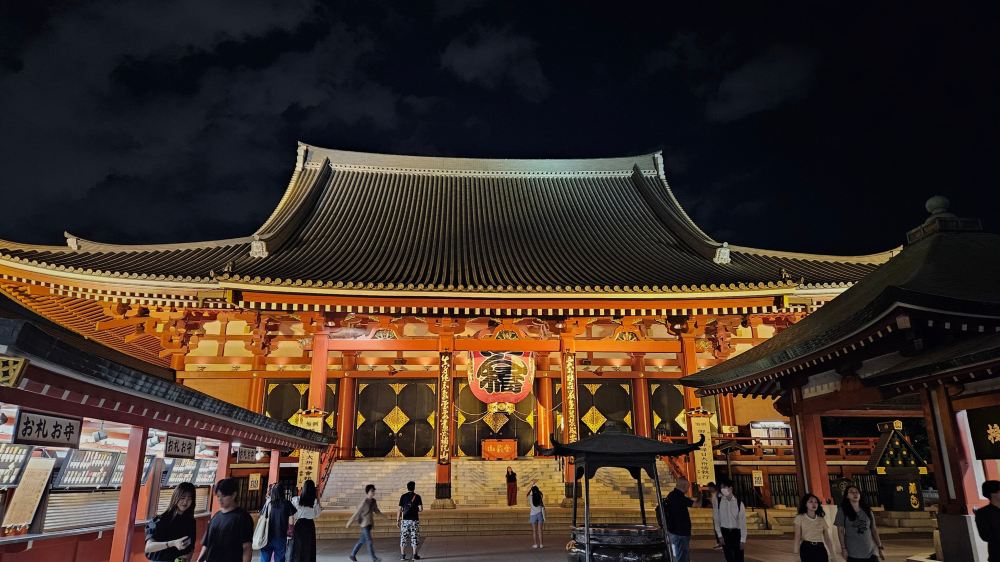
▲ The main hall in the night becomes the visual center of the square with its broad roof and illuminated vermilion facade, while the visitors in front accentuate the building's scale. The main hall, also known as the Kannon Hall, was rebuilt in 1958. Admire the layered lighting on the eaves and facade along the square, and experience the temple's exterior ambiance after nightfall.
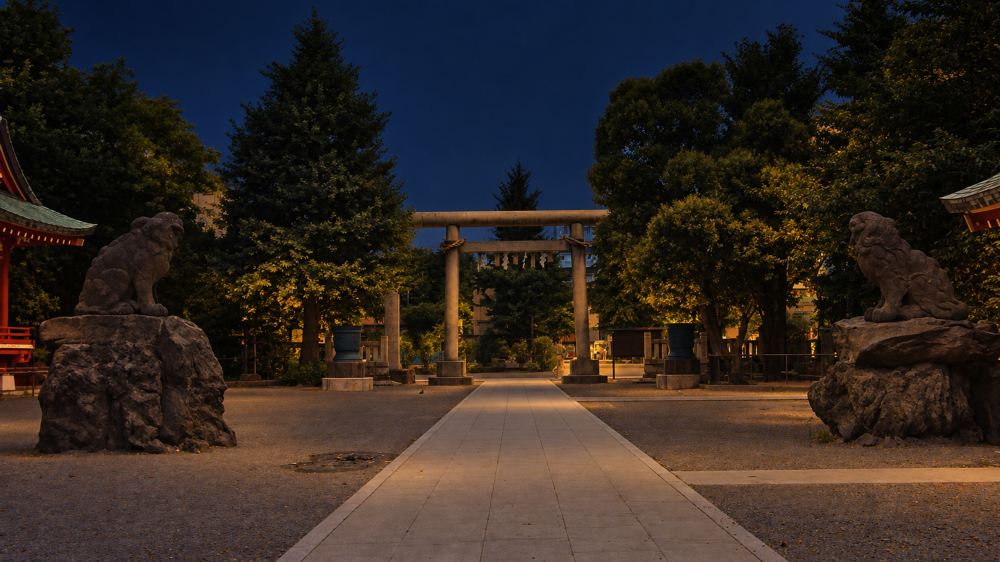
▲ The stone torii at the entrance of Asakusa Shrine and the tree-lined approach create a spatial hierarchy distinct from the temple gate.