


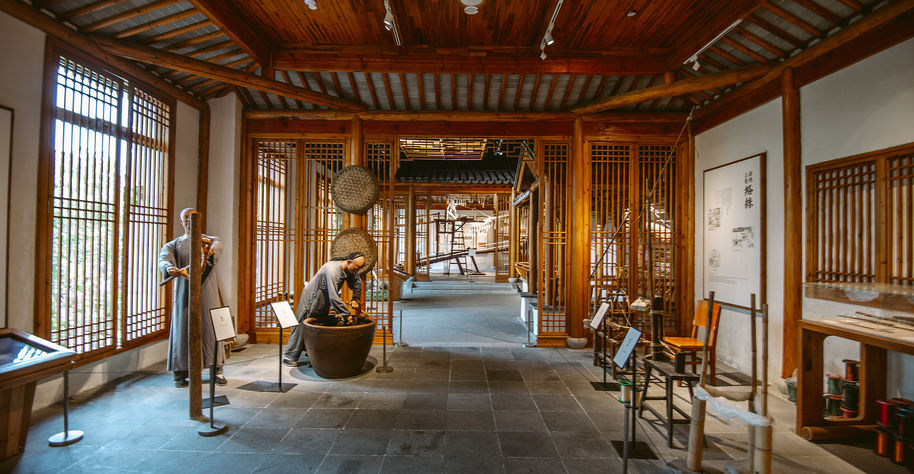
First stop: History hall (approximately 60 minutes) Ancient hall - The beginning of the "silk road": Starting from the history of the silk road, it focuses on interpreting the treasures of the museum, such as the Song dynasty "brocade ashes pile" fragments and Ming-Qing dragon robes. Tribute weaving courtyard - Royal silk "haute couture": This area showcases the top-grade silk produced for royalty by the Suzhou weaving administration during the Ming and Qing dynasties. Intangible cultural heritage hall - The inheritance of artisan spirit: Learn about the unique craftsmanship of national intangible cultural heritages like Song brocade and kesi, with special emphasis on "kesi".

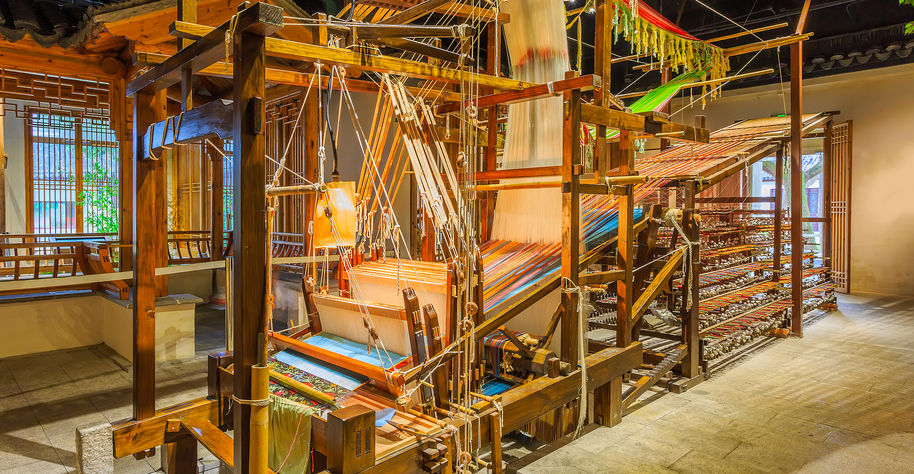
Second stop: Weaving and dyeing workshop (approx. 15 min) - watch "living" loom performances featuring the must-see tall Song brocade xiaohualou loom and colorful Zhang satin dahualou loom of the museum

Third stop: Silkworm house (about 15 minutes) - Revealing the life cycle of silkworms: During specific seasons, you can witness the entire process from eggs to larvae, then spinning silk, cocooning, pupating, and finally becoming moths.

Fourth stop: Silk weaving machinery exhibition room & Qian Xiaoping silk culture and art museum (about 30 minutes) Machinery exhibition room: This displays iron-wood electric silk looms, warping machines and other textile machinery from the industrial revolution, showcasing the transition of silk production from manual to mechanized processes.
