


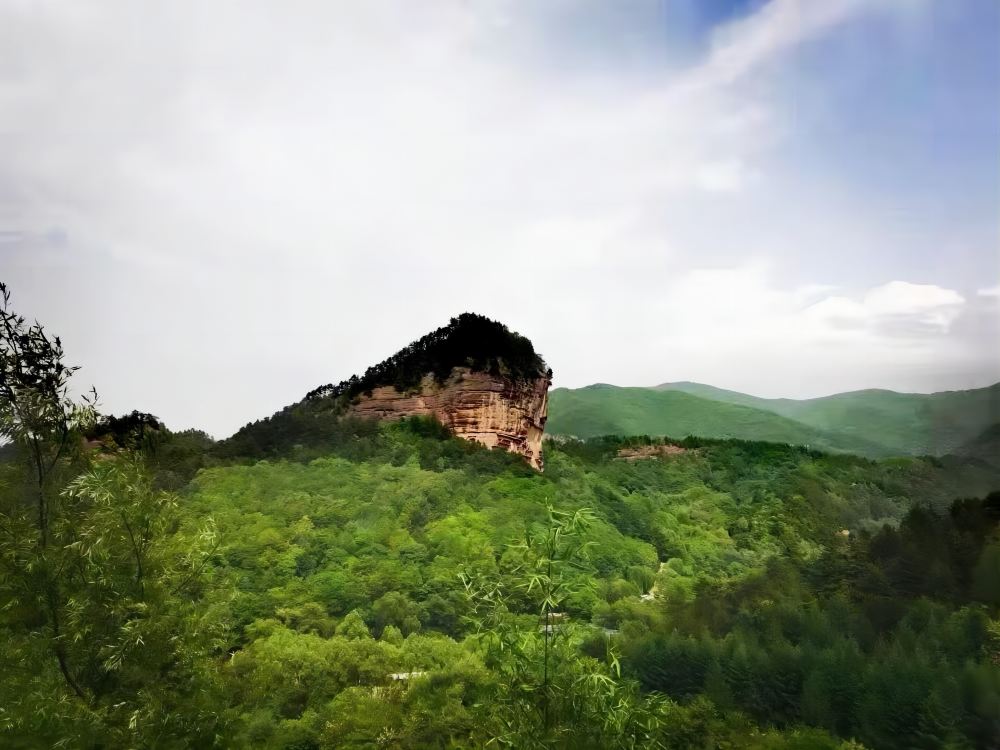
▲ Morning time travel at Maiji Mountain Grottoes in Tianshui, afternoon enlightenment at Fuxi Temple, journey through time at Tianshui Museum, and experience Qin dynasty charm in Tianshui Ancient City
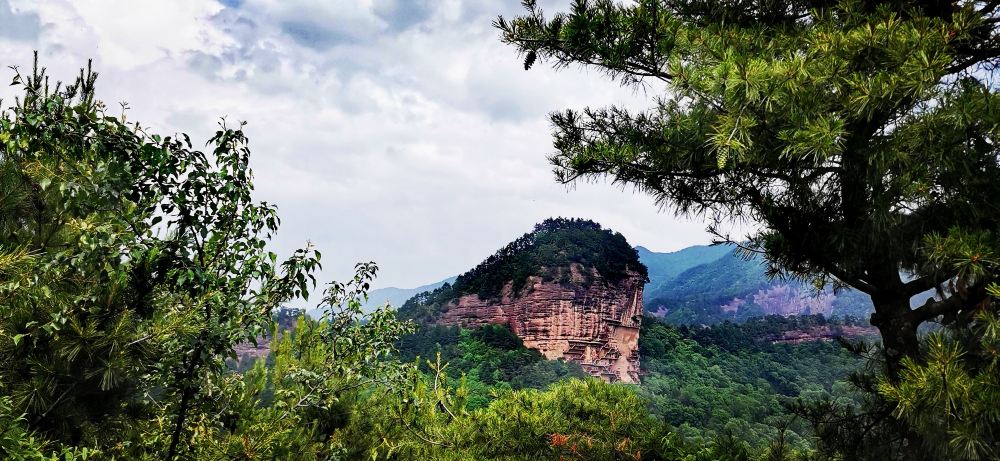
▲ Since its establishment, the Maijishan grottoes in Tianshui have undergone continuous expansion through successive dynasties including Western Qin, Later Qin, Northern Wei, Western Wei, Northern Zhou, Sui, Tang, Song, Yuan, Ming, and Qing, evolving into a grand cave-temple complex. Historical earthquakes naturally divided the mountain into east and west cliffs, preserving 221 caves, 10,632 statues, and 979.54 m² of murals. Renowned as the "Oriental sculpture art gallery" for its exquisite carvings across dynasties, it ranks among China's four great grottoes alongside Dunhuang's Mogao Caves, Yungang Grottoes, and Longmen Grottoes.
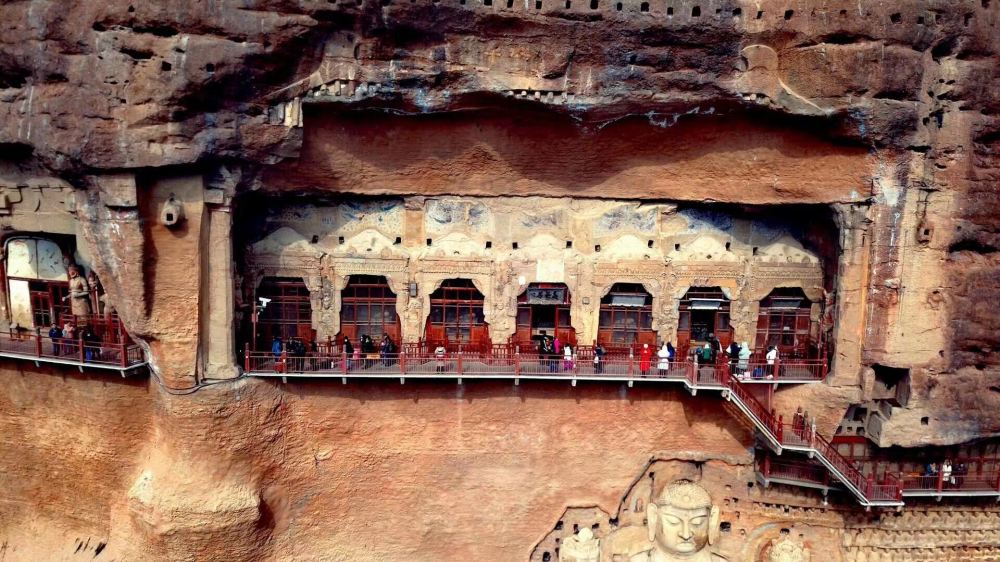
▲ Cave 4 is located more than 50 m above ground and was initially built during the Northern Zhou dynasty. It is a cliffside pavilion-style hall with seven bays and eight columns, where all stone columns were carved directly from the cliff face, creating a grand and magnificent structure. The cave corridor measures 31 m in length and 8.75 m in height, with sections on both the east and west sides. Known as the upper seven Buddha pavilion, it contains 841 large and small statues.
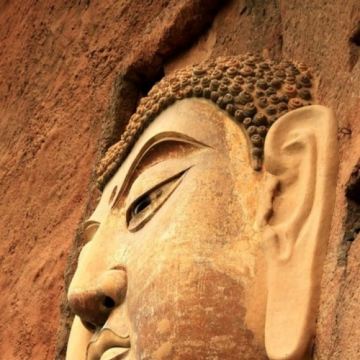

▲ The Maitreya Buddha on the eastern cliff of Maiji Mountain was constructed in the second year of the Kaihuang era of the Sui Dynasty.
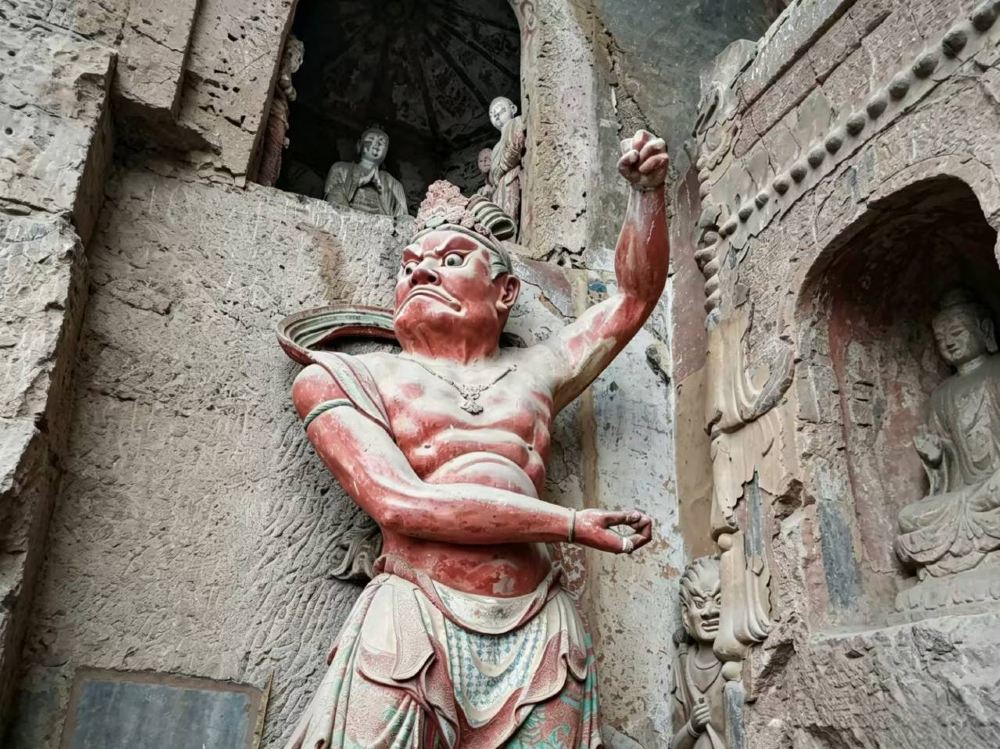
▲ Song dynasty vajra statue in cave 4
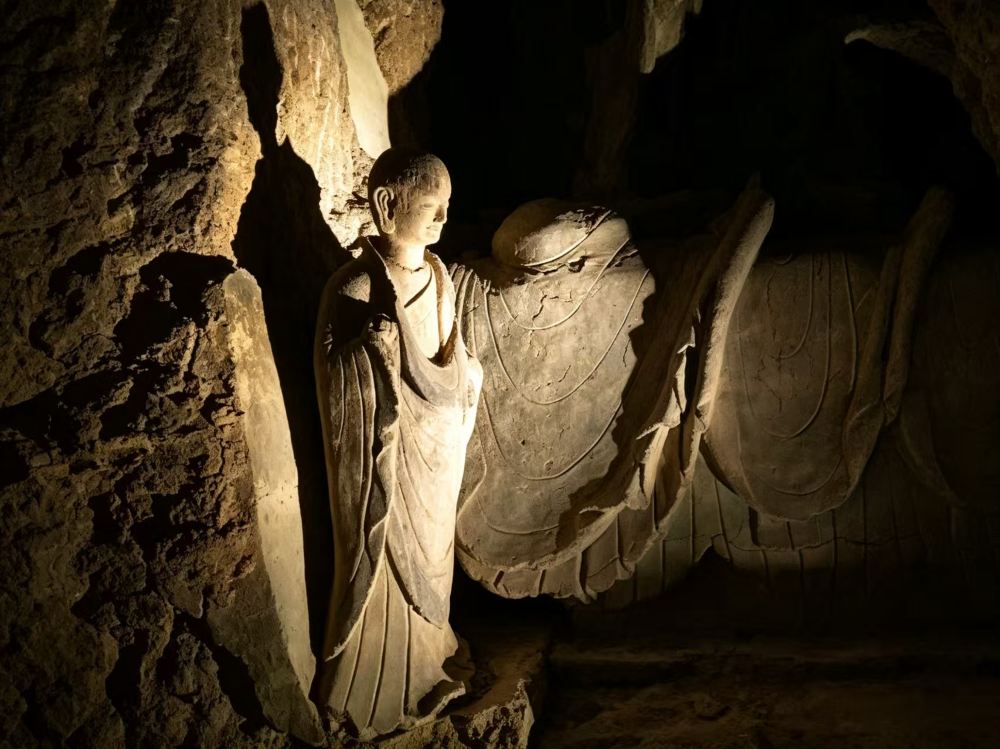
▲ A representative of late Northern Wei Dynasty sculptures at Maiji Mountain, deeply influenced by Central Plains Buddhist culture with strong secular characteristics. The Buddha robe features a double-collar draping style with a wide belt tied at the waist. The garment folds are primarily carved with intaglio lines, depicting an emaciated facial structure and frail physique. The craftsmanship excels in delicate character portrayal, skillfully using close-up techniques to highlight partial aesthetic beauty.
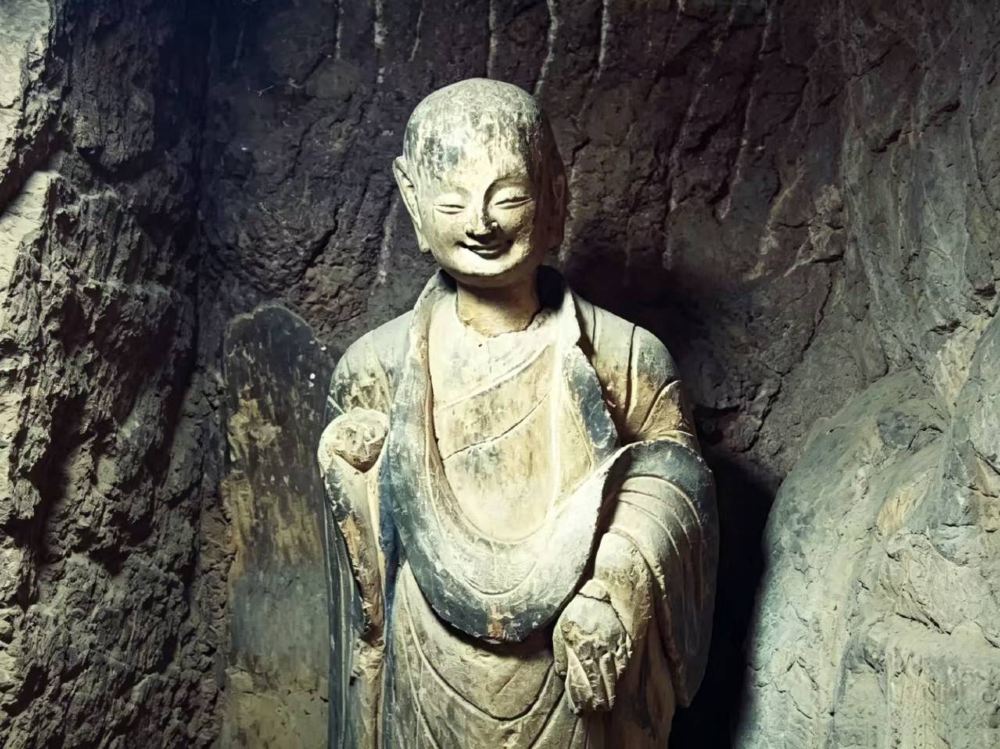
▲ Statue of the young novice in cave 133
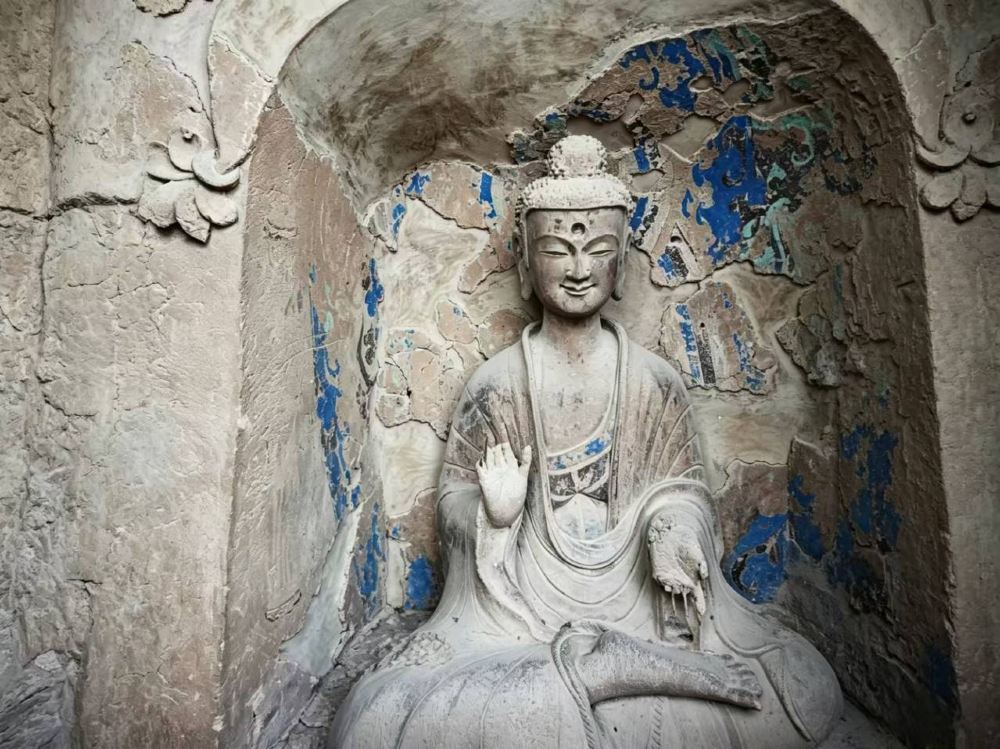
▲ The Buddhist statues of the Western Wei dynasty exhibit subtle differences from those of the late Northern Wei period. While inheriting the "elegant and slender" style prevalent since the Wei-Jin era, they display a trend toward rounder and softer facial features, including the eyes. The Buddha and bodhisattvas wear loose robes with wide sashes or crossed-collar jackets, paired with cloud-patterned shoes, and bear gentle, kindly smiles.
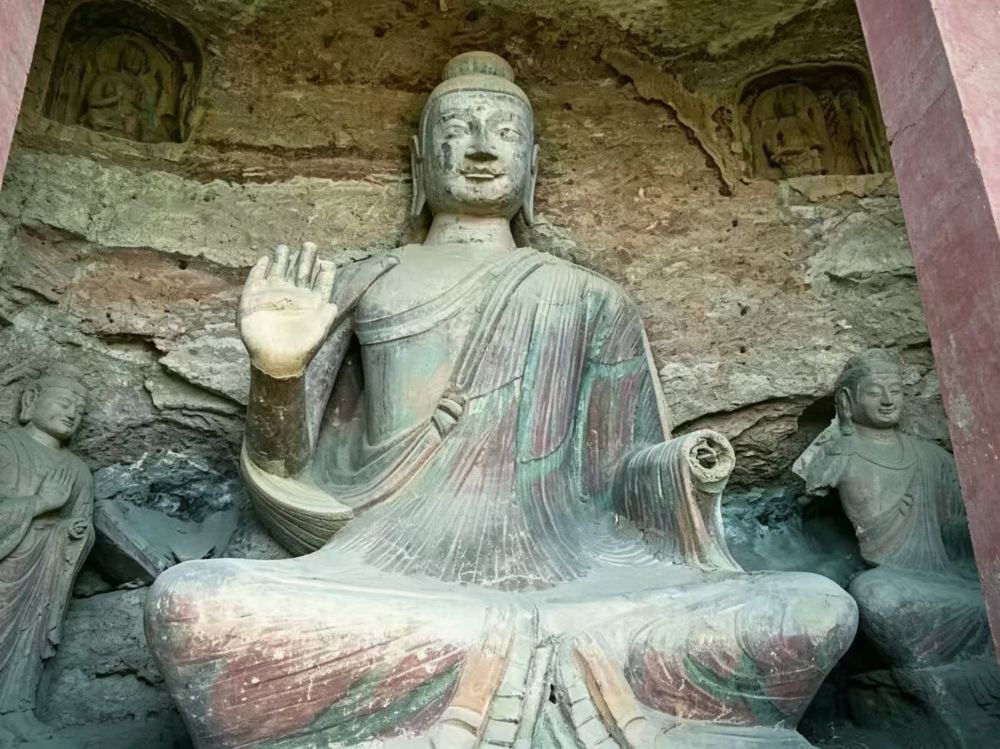
▲ The Northern Wei bodhisattva statues exhibit a distinct feature - the sloped luoye (a type of draped garment). The edges of the luoye are folded inward with densely carved pleated patterns. The attire and headwear of the donor figures on the pedestal of Cave 78 clearly display characteristics of Xianbei ethnic donors. In 1965, 18 donor figures were uncovered on the pedestal, each measuring 23 cm in height, arranged in two rows of nine figures each. The ink inscriptions on the pedestal include: "From Qiuchi Town... Scribe Wang XX dedicates offerings to the Buddhas of the ten directions. Yang XX from Qiuchi Town dedicates offerings..." Qiuchi Town was established in the 7th year of Tai Ping Zhen Jun era (446 AD) of Northern Wei. In 443 AD (4th year of Tai Ping Zhen Jun), Emperor Taiwu of Northern Wei pacified Qiuchi and occupied the Tianshui area.
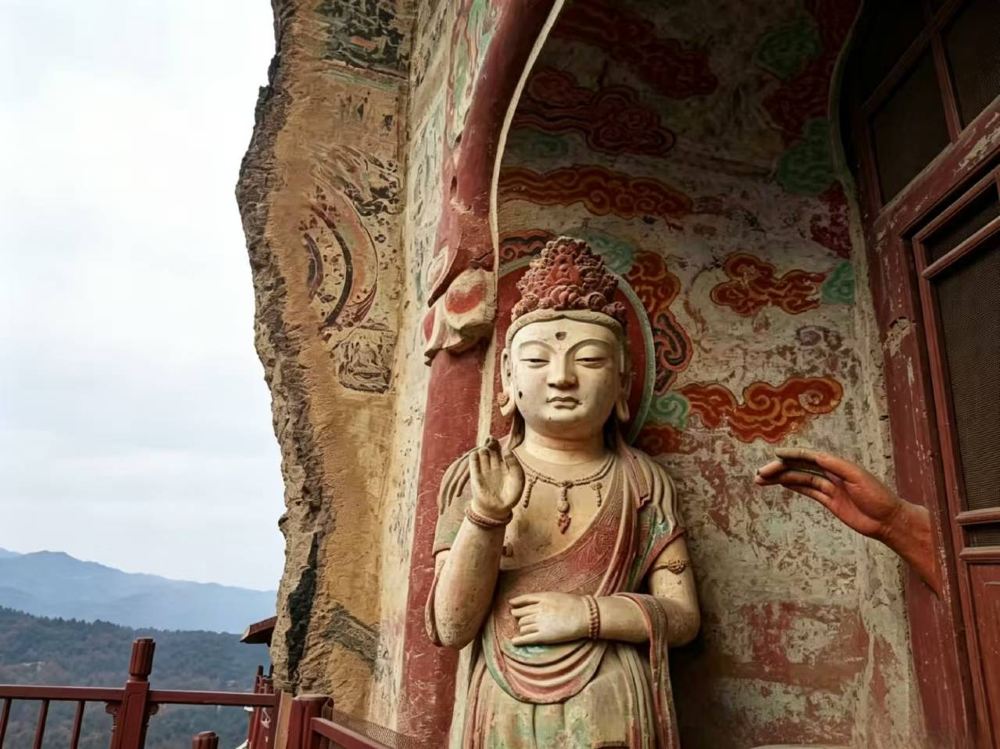
▲ Standing bodhisattva statue from the Tang dynasty in cave 5
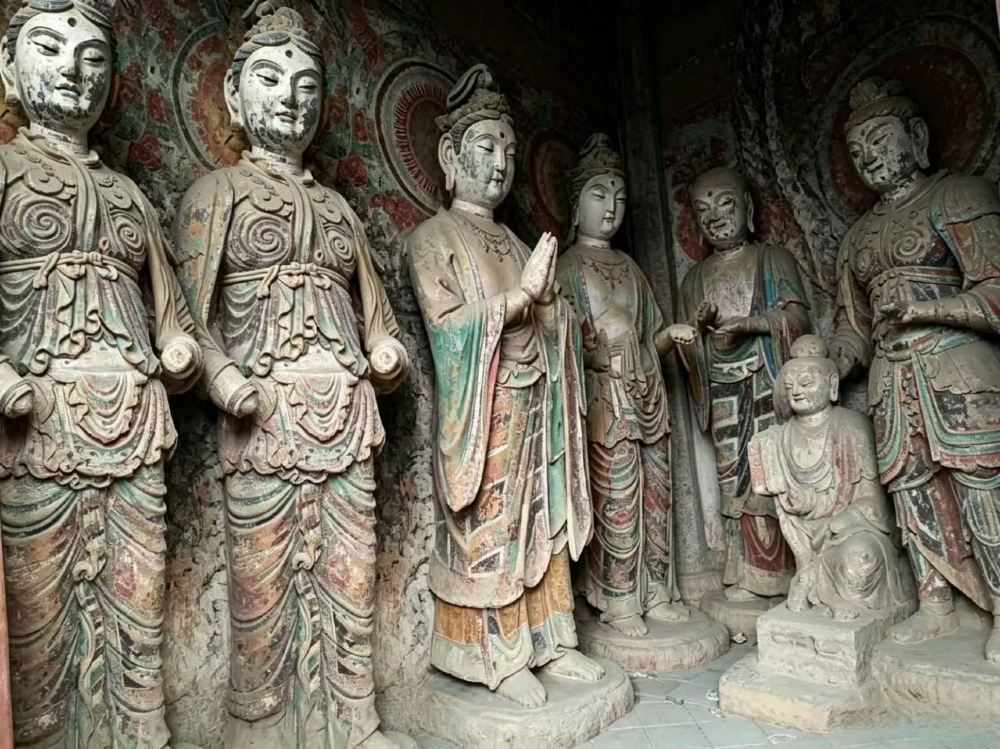
▲ Standing bodhisattva statue in cave 4
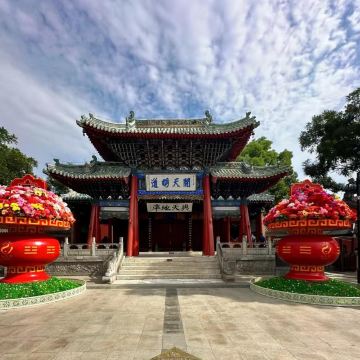

▲ Exterior view of Fuxi Temple
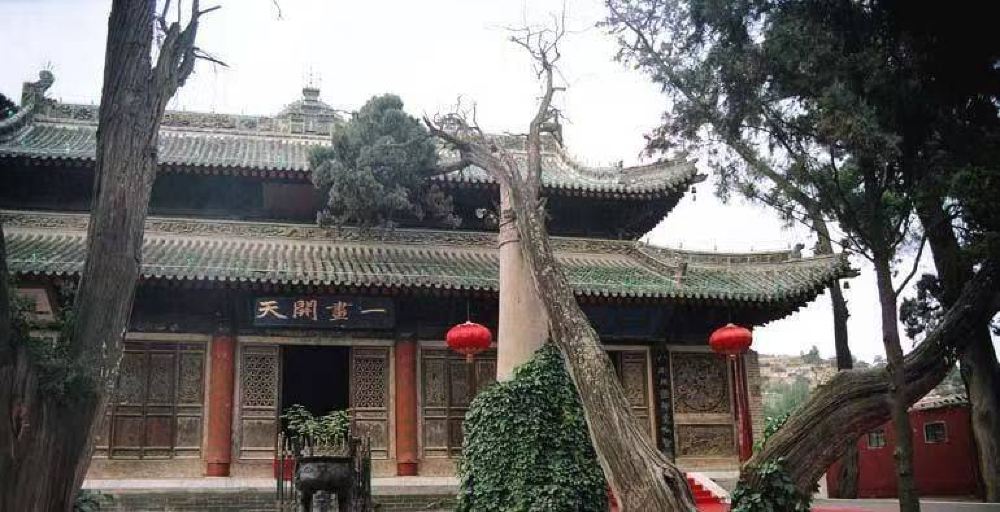
▲ Fuxi Temple's Xiantian hall
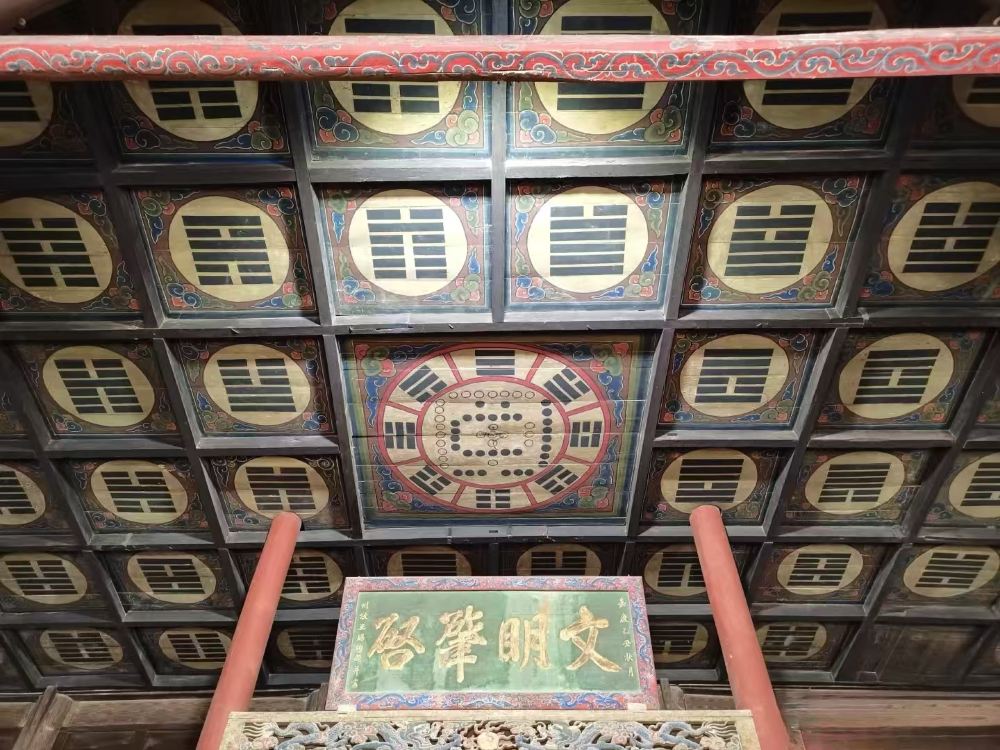
▲ Hexagram caisson ceiling in Xiantian Hall
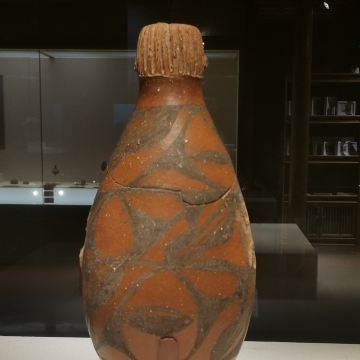

▲ Painted pottery vase with human-head-shaped mouth unearthed at Dadiwan, a first-class national cultural relic and third batch of prohibited export artifacts
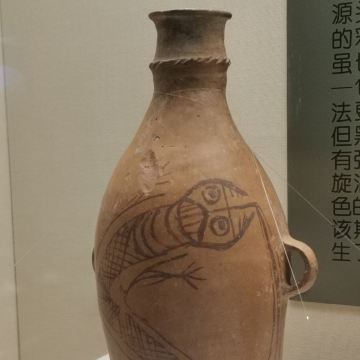

▲ The fish-patterned painted pottery vase. The vase is 38.4 cm in height, 7 cm in mouth diameter, and 12 cm in base diameter. Made of orange-yellow clay, it features a small mouth, sloping shoulders, nearly straight sides, a flat base, and symmetrical double handles on both sides of the belly. The neck is decorated with an additional raised band, while one side of the belly is painted with a black curvilinear salamander design. Dating back 5,500 to 5,000 years, this painted pottery vase belongs to the Shilingxia type of Yangshao culture and is classified as a national first-class cultural relic (treasure-level artifact).
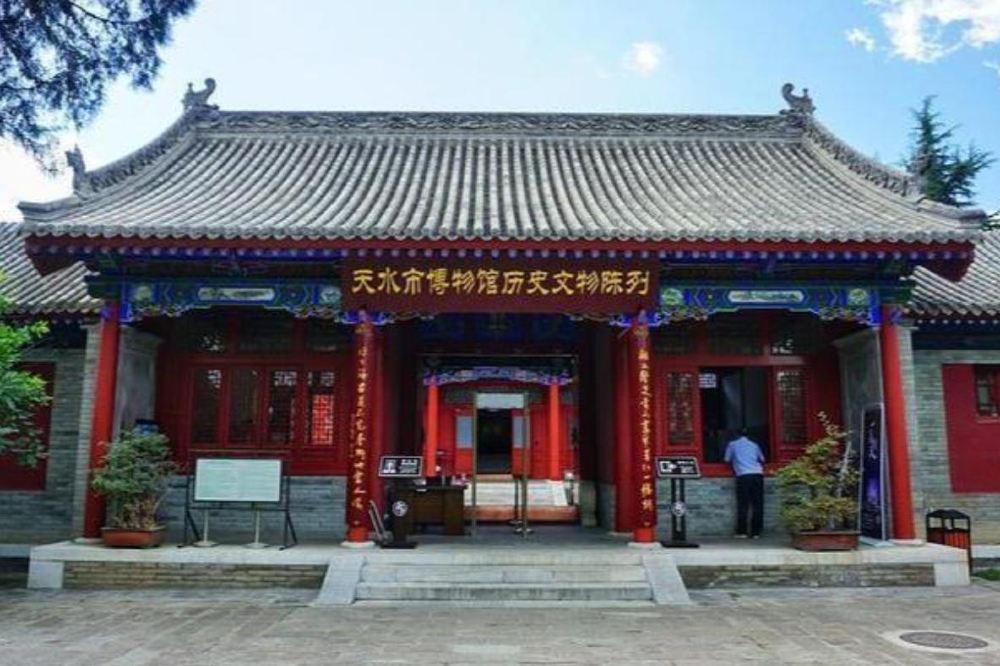
▲ Tianshui museum, located within the Fuxi temple in Qinzhou district of Tianshui city, Gansu province, is a national first-class museum integrating collection, preservation, research, exhibition and education. It boasts a rich collection of over 30,000 cultural relics (sets), including more than 2,000 precious artifacts (sets).
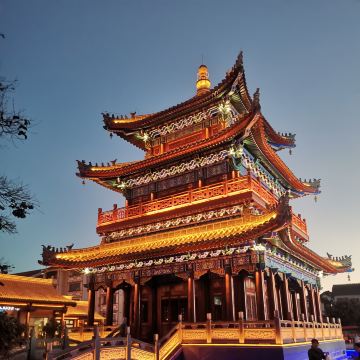

▲ Qihan tower in the ancient city
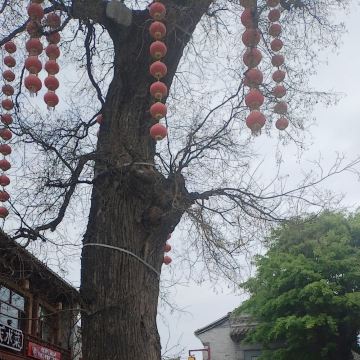

▲ Ancient city street view
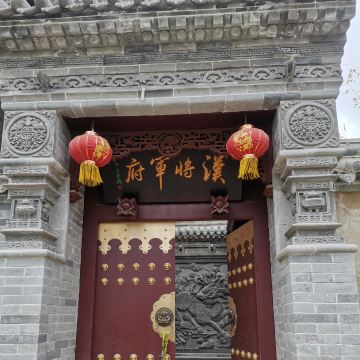

▲ Li's grand courtyard in Feijiang lane, Tianshui ancient city

▲ Premium 7-seater VIP business van