





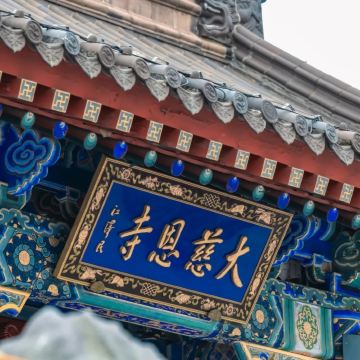

▲ The main structure in the temple is the Big Wild Goose Pagoda. Located in Daci'en Temple in Jinchangfang of Tang Chang'an City (now Xi'an, Shaanxi Province), it is also known as "Ci'en Temple Pagoda." In the third year of Tang Yonghui (652 AD), Xuanzang initiated the construction of the Big Wild Goose Pagoda to preserve the Buddhist scriptures and statues brought from India via the Silk Road to Chang'an. Initially five stories tall, it was expanded to seven stories during the Chang'an era of Empress Wu Zetian and has maintained this appearance ever since. The pagoda stands 64.517 m tall with a base side length of 25.5 m. Here, we cleanse our minds and reflect, as the Big Wild Goose Pagoda, standing guard over Chang'an for over 1,300 years, resides in this very place. Since the Tang Dynasty, scholars and officials who achieved success in imperial examinations or promotions often visited Daci'en Temple. This practice was emulated by later generations, gradually forming the custom of inscribing names on the pagoda for good fortune and success.
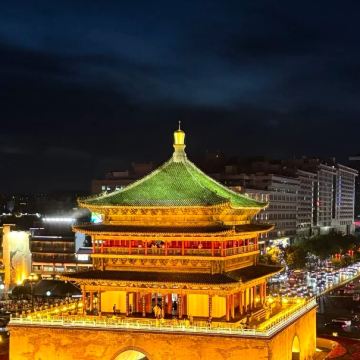

▲ A timeless beauty that transcends centuries, the Bell Tower stands proudly at the intersection of Xi'an's four main avenues within the Ming Dynasty city walls, representing one of China's best-preserved ancient bell towers. Originally constructed in 1384 during Emperor Hongwu's reign at Guangji Street intersection facing the Drum Tower, it was relocated to its current position in 1582 during Emperor Wanli's era. Bathed in daylight, the tower exudes historical grandeur with its upturned eaves, intricate bracket systems, and exquisite carvings—each detail showcasing the masterful craftsmanship of ancient artisans. Ascending the tower rewards visitors with panoramic views of Xi'an's vibrant cityscape, revealing the metropolis's unique charm. As night falls, the Bell Tower transforms into a luminous historical jewel. When evening lights illuminate its structure,
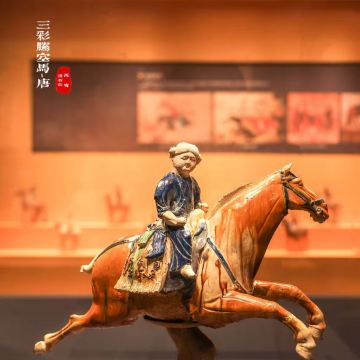

▲ As of the end of 2022, Xi'an Museum houses a collection of 113,977 items/sets, including 11,612 precious cultural relics. It is recognized as a National First-Class Museum, a National AAAA Tourist Attraction, a Key National Ancient Books Protection Unit, and a National Science Education Base. Designated as an important reception unit by both the Shaanxi Provincial Party Committee and Government as well as the Xi'an Municipal Party Committee, Xi'an Museum consists of three parts: the museum itself, the Tang Dynasty Jianfu Temple ruins, and the Small Wild Goose Pagoda. It serves as an urban museum integrating cultural relic preservation, scientific research, social education, and garden leisure. Among its treasures are the Western Han Dynasty Painted Figure and Horse-Drawn Carriage Mirror and the Tang Dynasty Tri-Color Glazed Galloping Horse, which are considered the museum's crown jewels.