China Power Plug and Socket Types: Adapters and Voltage

Contents
- What Plug Type Does China Use?
- China's three plug types
- China Voltage and Frequency: Do You Need a Converter?
- Will your chargers work in China?
- When you need a voltage converter
- Where to Charge Your Devices in China
- Where to find a socket in China
- What to Pack Before You Fly to China
- China power packing checklist
Show more
If you are flying to China, the accessory that decides whether your phone survives the trip is a China power plug adapter. Mainland China uses Type A, Type C and Type I sockets at 220-230V/50Hz, and none of them accept the Type G plugs used in the UK, Singapore, Malaysia and Hong Kong. Here is what to pack, whether you need a voltage converter, and where you can actually charge your devices once you land.
The short version: buy a Type G to Type I travel adapter before you leave, and check the voltage printed on anything you pack that is not a phone or laptop charger.
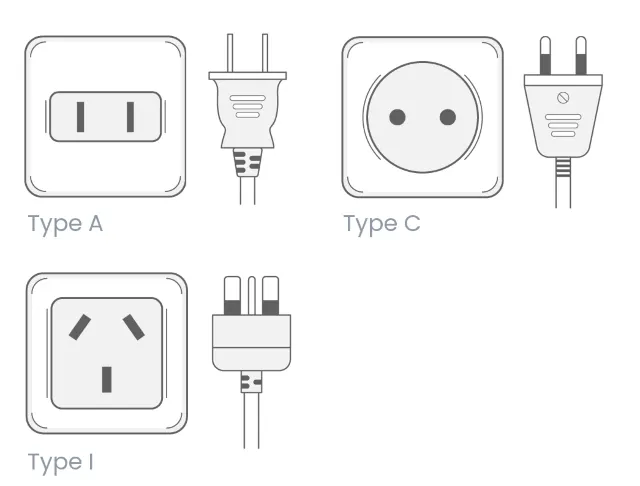
Mainland China uses three plug types. The national standard socket is a hybrid socket that takes both Type I and Type A flat-pin plugs, while the older Type C round-pin socket is still common in hotels and older buildings.
Source: Trip.com
Two details are worth knowing before you buy: Chinese sockets usually place the earth contact at the top, and a multi-plug extension lead from home is not a substitute for a proper travel adapter.
No Chinese socket accepts a Type G plug - the three rectangular pins simply do not fit - so a charger bought in the UK, Singapore or Malaysia will not go straight into a wall socket in Beijing, Shanghai or Chengdu. For a socket-by-socket breakdown, see Trip.com's China plug types guide.
China runs at 220V/50Hz, and the UK, Singapore and Malaysia run at 230V/50Hz. The two are close enough that voltage is rarely a problem for visitors, and because they all use 50Hz there is no frequency mismatch either. The one thing that does cause trouble is a device built for 110V only.
An adapter changes the shape of the plug, not the voltage. If the label reads 110V only, leave the device at home or bring a converter.
Appliances sold in the UK, Singapore and Malaysia are rated for 220-240V, so they work on China's supply. Check the small print on the plug or the base of the device before you pack it, and put everything you plan to charge in one pouch so nothing gets left behind in the hotel.
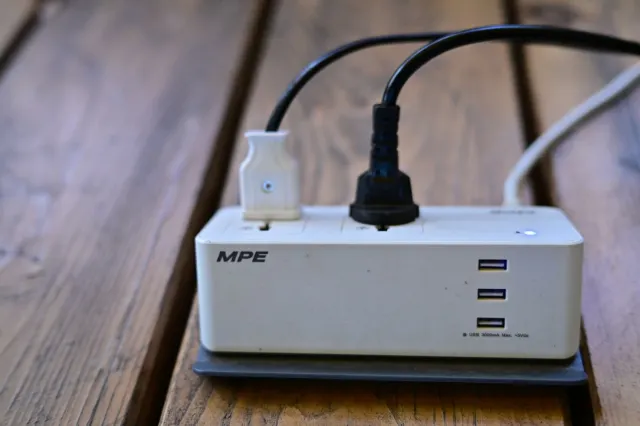
Photo: Sóc Năng Động via Pexels
One more habit that pays off: Chinese hotel rooms often have only one or two reachable sockets, sometimes hidden behind a bedside table or under the desk. A small power strip plugged into your adapter turns that single socket into three or four, which is enough for a family or a couple travelling with several devices.
Source: Trip.com

Popular recommendations

Travel to China from Singapore 2026: Top Places & Key Things to Know
 蝦餃愛旅行|Travel Guides
Getting Around in China
 _TI***fn