Wuzhai

Things to do in Wuzhai

Search attractions or local attractions & tours
Search

Explore top experiences

Top 10 attractions in Wuzhai

View all Attractions
Datong Ancient City
No. 1 of Night Attractions in Shanxi

Datong Ancient City

8
4.7/5
508 reviews

Datong Ancient City is the historic core of Datong, Shanxi. It served as the capital Pingcheng during the Northern Wei dynasty, the western auxiliary capital during the Liao and Jin dynasties, and a strategic frontier stronghold in the Ming dynasty, earning it the enduring title "northern key." Over its 2,000-year history spanning dynastic changes, the city's location remained largely unchanged, preserving its chessboard-style street grid centered on Sipailou to this day. The 2008 conservation and restoration project reunited the city walls, reconnected the moat, and gradually revived ancient architecture and old streets, layering the grandeur of an ancient capital with modern life within the same walled city. The ancient town offers an exceptionally dense concentration of noteworthy sights: in Huayan Temple's Liao- and Jin-dynasty halls, the graceful "clasped-hands, smiling" Liao-dynasty bodhisattva statue in the Scripture Depository Hall has long been hailed as the "Oriental Venus"; Shanhua Temple preserves a complete complex of Liao- and Jin-era wooden architecture. The Nine-dragon Wall, originally a glazed screen wall before the Ming-dynasty Dai Prince's residence (destroyed in war), survives with its nine coiling dragons still radiant—older and larger than its counterparts in Beijing's Forbidden City and Beihai Park. Climbing the reconstructed Ming-style city walls reveals a bird's-eye view of the square town's crisscrossing four main streets and orderly rooftops. An evening wait for sunset on the ramparts, followed by the illuminated outlines of walls and watchtowers after dark, makes for one of the town's most enchanting moments. Walking is recommended for touring: the attractions inside the city walls are spaced closely, allowing Huayan Temple, Shanhua Temple, the Nine-dragon Wall, and the drum tower to form a connected route. When tired, you may turn into the area around East Drum Tower Street, where time-honored shops and snack stores are concentrated, making it ideal for resting and replenishing. The ancient town covers a considerable area, so allocate at least half a day and wear comfortable shoes to leisurely appreciate the layered historical depth of this ancient capital.

China · Datong
Wu Tai Shan
No. 2 of Fall Viewing Attractions in Shanxi

Wu Tai Shan

7.8
4.6/5
8.6k reviews

Wu Tai Shan is located in Wutai County, Xinzhou City. It is named for its five peaks, whose summits are flat like platforms and cluster together. As the sacred site of Bodhisattva Manjushri, it is dotted with numerous temples and is one of China's Four Sacred Buddhist Mountains. It is also a well-known summer resort, with a cool and pleasant climate in summer. What makes it unique is the coexistence of Yellow Temples (Tibetan Buddhism) and Blue Temples (Han Buddhism); visitors can see both Han Buddhist monks and Tibetan lamas, and this pattern of Han and Tibetan Buddhism coexisting is quite rare among China's sacred Buddhist mountains. If the five fingers are likened to the towering "Five Terraces," the palm is Taihuai Town—the geographic center of the attraction, where most temples are concentrated and which serves as the main base for visitors. To the northwest of the town lies a cluster of essential temples, which can be explored on foot or by the attraction's eco-friendly shuttle bus. The Great White Stupa of Tayuan Temple is the landmark structure of the attraction; in front of the gate of Luohou Temple stand a pair of ancient stone lions; Xiantong Temple is the largest Qingmiao (Chinese Buddhist) temple on the mountain; and Pusading is a highly representative Yellow Hat (Tibetan Buddhist) monastery. From Taihuai Town, crossing the Qingshui River to the north, you reach Dailuoding. Ascending the Dazhi Road with over a thousand stone steps, you can pay homage to the Five Directional Manjushri statues, known as the "Little Pilgrimage," or take a round-trip cable car. Heading south along the road, Bishan Temple is a Ten Directions Zen Monastery, housing a Burmese jade Buddha and a statue of the future Buddha Maitreya; Shuxiang Temple contains a tall painted clay statue of Manjushri; Nanshan Temple is renowned for its dazzling array of stone carvings and offers distant views of the South, North, and Central Terraces. Zhenhai Temple is serene and secluded, preserving painted murals within, and local folklore tells of legends related to Emperor Shunzhi's renunciation. In addition to the main temples above, there are also Nanchan Temple, Longquan Temple, Baiyun Temple, and others on the mountain, each with its own distinctive features. If you wish to reach the summit of the five terraces—known as the "Great Pilgrimage to the Terraces"—the East Terrace, Wanghai Peak, is a great place to watch the sunrise, with spectacular views of the sea of clouds and the rising sun; the South Terrace is covered with wildflowers in summer; on the West Terrace on an autumn night, the moon hangs like a mirror above the peak; the North Terrace is a high peak in North China and an excellent spot for enjoying snowy scenery, offering panoramic views of the surrounding mountains after snowfall.

China · Wutai County
The Qiao's  Family Compound
No. 16 of Best Things to Do in Shanxi

The Qiao's Family Compound

7.8
4.7/5
15.1k reviews

The Qiao's Family Compound is located in the center of Qiaojiapu village, Qi county, also known as "The Qiao Family CourtyardIt was the residence of Qiao Zhiyong, a renowned commercial and financial capitalist in the Qing Dynasty, and has served as a filming location for over 30 movies and TV series, including "The Qiao Family Courtyard" and "Raise the Red Lantern." If you've seen these films, you'll surely recognize the scenes here: rows of red lanterns hanging high, towering brick walls, exquisite carvings, beautiful bracket sets and upturned eaves, and deep alleys. This is the famous The Qiao Family Courtyard. This is a residential complex from the Ming and Qing dynasties, its architecture resembling a castle, imposing and grand, typical of the living style of a large northern family during the Ming and Qing periods. Viewed from above, the entire courtyard layout resembles the Chinese character "囍" (double happiness), symbolizing good fortune. The complex is meticulously laid out yet also varied; even the more than 140 chimneys on the rooftops are unique. It is said to have been built by the imperial family.The Forbidden CityThere's a saying that "for residential architecture, visit the Qiao family courtyard". Upon entering the Qiao family courtyard, a straight stone-paved path approx. 80 m long divides the six courtyards into two rows, north and south. According to traditional naming, the three courtyards on the north side of the Qiao family courtyard are called the old courtyard, northwest courtyard, and study courtyard from east to west. The three courtyards on the south side are called the southeast courtyard, southwest courtyard, and new courtyard, reflecting the construction sequence of each courtyard. The brick carvings, painted decorations, and inscribed plaques in each courtyard are exquisitely crafted. The standout is the "hundred longevity characters" screen wall at the main entrance, featuring 100 uniquely styled seal-script "longevity" characters, where art and culture blend seamlessly. The brick carvings at the land god shrine are also noteworthy. Under the eaves of every room in the Qiao family courtyard, you'll find genuine gold-painted decorations, notably created using the raised paste technique with meticulous layering and final gold application. Among the many inscribed plaques at the Qiao family courtyard, the one personally calligraphed by Fu Shan in the fourth courtyard is particularly remarkable.Danfeng pavilion“Plaque”, when visiting here, be sure to learn about the story behind this plaque. Additionally, there are three treasures in the Qiao Family Courtyard: the ten-thousand-people ball, the rhinoceros gazing at the moon mirror, and the nine-dragon lantern. The rhinoceros gazing at the moon mirror was the treasure that brought wealth to the Qiao family, while the nine-dragon lantern was a gift from Empress Dowager Cixi, located in the courtyard at the southern center. Today, the Qiao family courtyard also serves as a folk museum, with its six courtyards respectively displaying agricultural life through the seasons, life rituals, inner gardens, commercial customs, luxurious furnishings, and the history of the Qiao family. Visitors can explore while learning about the Qiao family's philosophy of life, household management, and business.

China · Qi County
Taiyuan Botanical Garden
No. 2 of Family-friendly Attractions in Shanxi

Taiyuan Botanical Garden

7.6
4.7/5
6k reviews

Overview of Taiyuan Botanical Garden The attraction is a landscaping project designated by the municipal party committee, was selected into the third batch of PPP demonstration projects by the Ministry of Finance, and won the Shanxi Province PPP Project Award for Improving the Living Environment. It is located at the foot of Taishan Attraction in Jinyuan District, starting from Fengyugou Mouth in the west, extending to Old Jinci Road in the east, from Fengyu Shahe in the north to Taigu Highway in the south, with a total area of approx. 2,730 mu and a total project investment of CNY 3.558 billion. The overall plan of the garden is divided into five functional areas: the entrance management area, the plant scientific classification area, the plant scientific application area, the plant evolution display area, and the scientific experiment area. The construction content includes five major building areas—the main entrance building, the exhibition conservatory, the potted plant museum, the waterfront restaurant, and the research center—as well as twenty-five specialized gardens. To date, more than 5,800 species of plants have been collected. The architectural design of the botanical garden project was completed by the internationally renowned design firms DMAA Architecture Design Co., Ltd. of Austria and Valentin Urban Planning and Landscape Design Office of Germany, and the landscape design was completed by the Beilin Landscape Planning and Design Institute of Beijing Forestry University. The attraction aims to protect species diversity, plant resources, and historical resources in Shanxi Province throughOwn responsibility, collectTaihang Mountains, Lüliang MountainsA comprehensive botanical garden in our province featuring temperate-zone plant resources dominated by distinctive plants, with introduced and domesticated new, superior, and specialty varieties suitable for the local area. It fully leverages its science education and educational functions, achieving an organic integration of beautiful garden landscapes, scientific substance, and distinctive local cultural resources. It is a comprehensive botanical garden integrating scientific research, science education, tourism, ecological leisure, and cultural tourism, adding to the city a great destination where residents can both systematically learn botanical science knowledge and enjoy leisure, entertainment, and vacation travel,At the same time, it connects with Jinci Temple, Tianlong Mountain Scenic Area, Taishan Longquan Temple Attraction, Mengshan Giant Buddha Attraction, Jinyang Lake Park, and Jinyang Ancient City Ruins Park to form a unique tourism brand for Taiyuan. In addition, its completion provides the necessary conditions for our city to consolidate its title as a "National Garden City" and to create an ecological garden city. At the same time, it has very important practical and strategic significance for improving the categories of parks in our city, promoting the rapid formation and development of the provincial capital's tourism area, improving the urban ecological environment, building a famous historical and cultural city, enhancing the city's quality, and constructing a city of green mountains and clear waters and a harmonious and livable city. Main entrance The main entrance building covers an area of 20,135 m² and incorporates the architectural style of Shanxi courtyard compounds. It is a comprehensive building integrating offices, the plant science popularization hall, the specimen hall, the lecture hall, the restaurant, and visitor reception. Visitors can stand on the cantilever of the main entrance to overlook the entire botanical garden, and in the distance, they can also gaze at the Taishan attraction, taking in the beautiful scenery at a glance. At the main entrance, there are also the Taiyuan Botanical Garden Plant Science Popularization Hall and the Insect Specimen Hall. The Taiyuan Botanical Garden Plant Science Popularization Hall covers an area of 4,300 square meters. All 118 educational science videos in the hall were independently directed and filmed by our garden. The exhibition is themed "Vivid Colors, Fragrant Life, Endless Vitality" and is divided into seven major thematic exhibition areas: Plant Evolution (exploring the origin of plants), Plant Mysteries (understanding plant structure), Plant Wisdom (discovering the wonders of plants), Plant Value (counting the contributions of plants), Plant Ecology (appreciating the influence of plants), Plant Culture (plants and traditional Chinese culture), and Shanxi's Botanical Beauty (distribution and conservation of plants in Shanxi). In the wonderful atmosphere of innovative integration between art and nature, light and shadow dance with flowers and leaves as visitors stroll through. The insect specimen museum displays more than 2,000 boxes (over 4,000) of rare insect and other arthropod specimens, and through the explanation of basic knowledge, it aims to help people understand nature, experience nature, and love nature, and enhance awareness of protecting insects, protecting plants, and protecting the environment. Insects are closely related to human life and are one of the most successfully evolved, diverse, and wonderfully fascinating groups of organisms on Earth. From colorful butterflies, flower-visiting honey-making bees, and loudly singing cicadas, to agile dragonflies and mantises wielding their "broadswords"; from marching ants in groups, to annoying mosquitoes, flies, cockroaches, and so on.The variety of insect species is unmatched by other animals. Insects are not only numerous in species, but the number of individuals within a single species is also astonishingly large. More than 1.1 million species of insects are known worldwide, and there may be several million more waiting to be discovered. Harmony between humanity and nature has become a consensus of human society in the present era. Only by living in harmony with the animals and plants of the natural world can humanity achieve sustainable development—this is the purpose and significance of our planning of the insect specimen science exhibition. Exhibition greenhouse The botanical garden conservatory complex consists of three individual conservatories—the Tropical Rainforest Hall, Taiyuan Botanical Garden - Succulent Plant Hall, and Rare Flowers Hall—as well as the conservatory energy center. All three exhibition conservatories are built with wooden dome structures with a span of 88 m. Their construction concept inherits the classical wooden structure construction theory of Shanxi on the basis of modern conservatory construction, representing a combination of the classical and the modern, and isBotanical gardenA simple tribute to this beloved land beneath our feet. The tropical rainforest conservatory covers an area of 5,521 m² and consists of the Tropical Rainforest Wonders Area, Tropical Rainforest Community Simulation Area, Flying Waterfall Viewing Area, Fun Botanical Garden, Palm Garden, and Tropical Aquatic Plant Garden; Taiyuan Botanical Garden - Succulent Plant Hall covers an area of 2,245 m² and collects and displays succulents from Africa, the Americas, and Australia; the Rare Plants and Four Seasons Flowers Exhibition Conservatory covers an area of 1,470 m² and mainly collects and displays tropical flowers, ferns, shade-loving plants, and more. For a long time, the exhibition greenhouses of botanical gardens have become charming places in the minds of visitors. The beautifully shaped large exhibition greenhouses, such as those at the Royal Botanic Gardens, Kew in the United KingdomPalm houseAlong with the Princess of Wales Conservatory, the grid-shell large-span hemispherical greenhouses at the Missouri Botanical Garden in the United States, the New York Botanical Garden conservatory, and the Longwood Gardens conservatory in Philadelphia, these structures are not only the diamonds in the crown of their botanical gardens but have also become landmarks of the architecture, culture, and civilization of their cities. To a certain extent, exhibition greenhouses can represent the level of cultural, scientific, and technological development of a city. Exhibition greenhouses originated during the European Renaissance. At that time, greenhouses served as cultivation and propagation bases for plant introduction, providing experimental materials and venues for scientific research, as well as places for cultivating flowers and plants for household use. With the improvement of economic and technological levels and humanity's understanding of nature, exhibition greenhouses have undergone significant transformations. Today's exhibition greenhouses are not only places for plant collection and display, scientific conservation and research, but also green spaces that integrate ecology and environment, science popularization and education, culture and art, and tourism and appreciation. Therefore, the exhibition greenhouse is a multi-level, multi-disciplinary, and multi-faceted field, whose construction and operation involve architecture, horticulture, ecology, aesthetics, and management, forming an indoor garden that is artificially controlled and displays plants growing in different regions and climatic conditions along with their living environments. Tropical rainforest hall The tropical rainforest hall covers an area of 5,521 m², relying on the existing mountain terrain on the north side and connecting to a water body on the south side. Through cliffs, precipices, gorges, caves, and flying waterfalls, it presents diverse landscape spaces. The mountain reaches a height of 12 m, with towering peaks and steep cliffs, while also featuring deep gorges, cascading waterfalls, and babbling streams. The overall layout combines openness and enclosure, creating a natural and varied topography. Bridges, plank roads, platforms, and stepping stones connect these nodal spaces. The exhibition hall is furnished with various typical tropical rainforest plants. The upper layer is dominated by tall trees whose crowns rise high above the other layers, standing out like a crane among chickens. The middle layer consists of small and medium-sized trees, interspersed with epiphytic and climbing plants that form hanging gardens. The lower layer contains ground cover and fern plants of varying density, while the large trees have gnarled and intertwined roots of diverse forms, making visitors feel as if they are walking through the beautiful and mysterious plant world of a tropical rainforest—sometimes striking and magnificent, sometimes elegant and peculiar, sometimes plain and tranquil, and always deeply evocative. The exhibition hall consists of six areas. Tropical rainforest wonder area The cliff and precipice terrain at the entrance leaves visitors entering the exhibition hall in awe, and stone carvings and rock paintings reflecting the regional culture of the rainforest can be seen everywhere on the cliff face. Following the direction of the cliff, the rumbling sound of water can be faintly heard in the distance, and the skywalk spanning the air comes into view, drawing visitors' footsteps irresistibly to explore. Visitors can also climb the steps to enter the 5 m high aerial viewing platform, where the beautiful scenery unfolds in full view. The plant arrangement in this area mainly focuses on presenting the typical landscape features of tropical rainforests, such as the eight major phenomena of tropical rainforests and the "five trees and six flowers" of Buddhist culture. Tropical rainforest community simulation area Clever use is made of the uneven terrain to display the typical views of Asian tropical rainforest, American tropical rainforest, and African tropical rainforest plant communities. Within the jungle, lush greenery abounds, with tall and dense tree crowns, and hanging gardens created by epiphytic plants can be seen everywhere, colorful and full of spring beauty. The root systems of various plants are also bizarre and distinctive, giving visitors an immersive tropical rainforest experience and feeling. Waterfall viewing area At the entrance, the waterfall is heard before it is seen, and after a winding path it suddenly comes into view before visitors. With the waterfall as the core view of the attraction, it has a drop of 9 m, cascading down in tiers and formed by stacked stone, with a pool of clear water below; the scene combines movement and stillness, blending plants with mountains and water. The viewing point for the waterfall is the viewing platform, from which visitors can gaze into the distance and let their imagination wander. On the ground level, a paved area is left in front of the waterfall as a space for visitors to stroll, enjoy the view, rest, and take photos. Tropical rainforest fruit tree area This area is located on the northwest side of the exhibition hall, where the mountain rises to a height of 12 m and streams flow gently. Various interesting rainforest fruits are planted according to the terrain, such as bananas, papayas, guavas, and jackfruit. Each fruit has different suitable growing conditions, but they generally share a preference for heat and intolerance of cold, so they grow in warm, humid places. In the tropical rainforest fruit tree area, this dazzling and unique phenomenon is displayed, opening up a rainforest world for visitors. Tropical rainforest style area This area is located at the western entrance, where the terrain is relatively flat. It features a concentrated planting of various tall and stately palm plants, graceful and upright in form. Beneath the palms, seasonal flowers are arranged in bright, vivid colors and are replaced periodically according to the season, creating a charming exotic landscape. Tropical aquatic botanical garden With the towering mountain as a backdrop, the water system of the entire mountain is designed to return to this water body. Travelers weave through the undulating tropical jungle, their eyes overwhelmed by the ever-changing scenery, until they arrive at the open water surface, calm and soothing, and stroll across the wooden bridge, connecting with the water and letting their spirits soar. Taiyuan Botanical Garden - Desert Plant House The Taiyuan Botanical Garden's Desert Plant House is a landscape greenhouse integrating species conservation, scientific research, and educational exhibition. The exhibition hall collects desert plants from Australia, Africa, Asia, and the Americas, showcasing the customs and cultures of different desert regions. Combining the existing terrain with a large-scale layout approach, the greenhouse is divided into regional exhibition zones based on the places of origin of cacti and succulents. American desert flora region The area covers approx. 600 m², making it the main exhibition area in this pavilion. The area features saguaros, golden barrel cacti with their all-over golden color, Ferocactus with eagle-claw-like spines, ponytail palms with bottle-shaped trunks, shaving brush trees with trunks resembling tortoise shells, and elegant yuccas as the backbone of the community, with other plants from the Agavaceae and Cactaceae families arranged in a balanced density, allowing visitors to truly experience the American desert scenery with a strong Native American flair. African desert flora region This area covers approx. 200 m² and focuses on showcasing representative desert plants native to the African desert and savanna desert zones. It features a community backbone of the silver-spined, commanding African milk barrel, the desert rose with its sturdy branches and fiery blooms, the awe-inspiring, intricately sculpted Aloe erinacea, and the solitary, leafless pencil cactus, complemented by a desert view of wind-eroded rocks and isolated walls of shifting sand,Among themDotting with other succulents such as aloes and sansevierias, it makes visitors feel as if they were in the vast and lonely African desert where eagles soar. Australian desert flora region This area covers 50 m² and features a community backbone of towering, majestic Queensland bottle trees shaped like giant bottles, elegant and handsome black ebony trees known as Australia's "Black Prince," and robust, formidable Australian Moore cycads, complemented by red soil and curved red rocks, along with other small and medium-sized desert plants arranged with a balanced density, showcasing a unique and charming Australian style. Premium desert plant display case Mainly, it shows that during the growth of desert plants, some species undergo abnormal variations in their form or epidermal color, primarily including variegation, cristation, and monstrose forms. Because the probability of occurrence is very low, they are generally difficult to see, so the mutated individuals appear particularly precious. On one side of the steps in the desert greenhouse, several groups of glass display cases are arranged, mainly used to display cristate golden barrel cactus, variegated golden barrel cactus, cristate African milk tree, and relatively rare premium desert plants such as the genus Lithops of the family Aizoaceae. The dry creek meanders and twists, narrowing from wide to narrow, passing through various exhibition areas to connect the entire desert plant hall before disappearing within the venue, symbolizing the longing for water in the desert and the long-standing historical culture. The echoing peak column in the middle of the venue uses driftwood to create a giant structure shaped like a bottle tree, serving as an extension of the entire venue's space, and the raised central section can display some folk culture specimens from various regions. Four seasons flower hall The greenhouse covers an area of 1,470 m² and incorporates the concept of a sunken garden, with pathways connecting three view levels—high, middle, and low—with a drop of 3 m, spiraling downward. The north entrance serves as the main viewing route, descending step by step through the second-floor viewing platform to reach the ground floor of the entire exhibition hall. The south side features an accessible pathway for people with special needs to reach the ground floor. For plants, tropical flowers, ferns, and shade-loving plants are used to create rich view layers. The varying-height retaining walls are a major feature of this exhibition hall, using materials such as stainless steel panels, stone, and plants to display rich facade effects. Greenhouse plant exhibition area This area covers 470 m² and features a concentrated display of rare plants, shade-loving plants, and ferns, with occasional accents of uniquely shaped, elegant landscape trees or rare plants. Carnivorous plant exhibition area Carnivorous plants use their own methods to make insects stay on their leaves and stems, then fall into their traps and be consumed. The exhibition area displays carnivorous plants through transparent glass display panels, which can both ensure the safety of visitors and allow visitors to observe the growth forms of carnivorous plants up close. Floral-themed attraction display area This area covers 235 m² and is built with walls and streams, using orchids as the main floral material to create a themed attraction. Here, visitors can admire different varieties of orchids and enjoy a feast of orchids. Throughout the year, different themed floral displays are presented here—flowers and scenery together, with flowers within the scenery and flowers blending into the scenery—making it a great spot for visitors to take photos. Premium flower exhibition area Display rare orchid varieties from around the world in a concentrated arrangement using racks, partitions, driftwood, and display cabinets. Examples include: Cattleya from the Americas, the "Queen of Orchids" Phalaenopsis from Southeast Asia, the "Rising Star of Orchids" Cymbidium from Korea, the "Greek Princess" Miltonia, and the "Elegant Dancer" Oncidium. Hanging plant exhibition area This area covers 50 m² and features various tropical orchids and other hanging foliage and flowering plants arranged in a concentrated display through various carriers. Three large-scale three-dimensional floral installations are arranged at varying heights, creating a delightful visual experience. Bonsai Hall One flower, one leaf, one bodhi; one pot, one landscape, one world. Bonsai originated in China, with a long history and a distant source. In the long river of human social history, during the primitive period, humans lived in groups in nature and depended on nature. With the development of human civilization, people living in cities, although residing in cities, still long for and deeply love every plant, every mountain, and every river of nature. This circular, streamlined building employs a technique that combines the solid and the ethereal, bridging the past and the present to showcase the long history, unique craftsmanship, innovative achievements, and cultural connotations of bonsai. Amid the tide of inheritance and innovation, it will remain true to its original aspiration and open a new chapter for Jin-style bonsai! The Bonsai Hall has two floors. Currently, the first floor displays scholar's rocks and landscape bonsai, while the second floor displays stump bonsai, succulents, and other plants. Screens, railings, tables, and other furniture are used to divide the space and display the bonsai and scholar's rocks, presenting the great art of Chinese bonsai through immersive scenes. Bonsai emphasizes the trinity of the scenery, the pot, and the stand. The three essential elements of bonsai complement one another and merge into a single whole, integrating multiple artistic elements to present the overall beauty and artistic beauty of the work. The artistic creations of bonsai craftsmen through the ages enable a small bonsai to reveal a vast world. The pot reveals the beauty of nature, and only through artistic conception can one appreciate the ingenuity of the craftsmanship. As the saying goes, bonsai and scholar's rocks are inseparable; many bonsai enthusiasts are also lovers of scholar's rocks. This is because stones are used when making root-over-rock bonsai and water-and-land bonsai, and if scholar's rocks can be used to complement them, the effect is even more striking. In addition, bonsai and scholar's rocks are both refined hobbies, and the two share much in common. Waterfront restaurant The waterfront restaurant has a building area of 2,822 m² and is built by the water. Its roof uses a traditional Chinese post-and-lintel timber structure, and the floor-to-ceiling glass offers a panoramic view of the botanical garden. Dining here is a feast for both the eyes and the palate. Research center The total area is approx. 54 mu. The research center has 7 individual buildings in total, namely the library and specimen museum, staff apartments, laboratory and office building, expert apartments, and garden waste treatment station. To facilitate plant resource introduction and domestication, ex situ conservation, and scientific research for researchers, the research center also features 300 mu of experimental fields. 25 specialized gardens In addition, there are 25 specialized gardens, including: the Plant Application Garden,Xuanqiu Garden, bamboo garden, APG taxonomy garden, rose garden, rare and endangered plant garden,Perennial flower garden, Lilac and Viburnum Garden, Taiyuan Botanical Garden - Chrysanthemum Garden, Taiyuan Botanical Garden - Rock Garden, Medicinal and Tea Garden,Pagoda, Taiyuan Botanical Garden - Arboretum, Ginkgo and Conifer Garden, Taiyuan Botanical Garden - Bonsai Garden, Taiyuan Botanical Garden - Sophora Garden, Climbing Plant Garden, Water Garden, Brownfield Restoration Demonstration Garden, Taiyuan Botanical Garden - Peach Blossom Garden, Cherry and Plum Garden, Taiyuan Botanical Garden - Crabapple Garden, Taiyuan Botanical Garden - Peony and Herbaceous Peony Garden, Willow and Linden Garden, Taiyuan Botanical Garden - Magnolia Garden. Throughout the year, the scenery is ever-changing. In spring, flowers bloom in abundance; in summer, lush greenery prevails; in fall, the entire garden turns golden; and in deep winter, pines and cypresses stand tall.

China · Taiyuan
Zhengding Ancient City
No. 2 of Night Attractions in Hebei

Zhengding Ancient City

7.6
4.7/5
589 reviews

Zhengding Ancient City has a history of more than 1,600 years. The existing city wall is a relic of the Ming Dynasty. It was first built with earth in the Eastern Jin Dynasty and expanded into a brick city in the Ming Dynasty. Historically, it was known together with Baoding and Beijing as one of the "three great towns of the north." The south city gate still bears a stone plaque inscribed with "three passes great town." This is also the hometown of Zhao Zilong, a famous general of the Three Kingdoms period. The city has a dense concentration of historical sites, and Longxing Temple is a representative ancient temple. First built in the sixth year of the Kaihuang era of the Sui Dynasty (586), it was expanded by imperial order of Zhao Kuangyin, Emperor Taizu of Song, and was praised by the architectural historian Liang Sicheng as "the foremost famous temple outside the capital." The temple has many highlights: the Mani Hall has a cruciform plan and is a typical surviving example of Song Dynasty construction techniques; the reclining Guanyin wall sculpture behind the hall was called the "Beauty of the East" by Lu Xun; the revolving sutra repository in the Zhuanlunzang Pavilion is one of China's earliest surviving revolving sutra repositories; the Longzang Temple Stele, whose script evolved from Han clerical script to Tang regular script, was praised by Kang Youwei as "the finest Sui stele"; and the bronze Thousand-Handed and Thousand-Eyed Guanyin enshrined in the pavilion is one of China's earliest surviving large bronze Buddha statues. The ancient city is also home to four distinctive ancient pagodas: the Lingxiao Pagoda of Tianning Temple is a pavilion-style pagoda with a mixed brick-and-wood structure; the Hua Pagoda of Guanghui Temple combines the architectural features of both a vajra-throne pagoda and a flower pagoda; the Xumi Pagoda of Kaiyuan Temple and the Tang Dynasty Bell Tower are arranged symmetrically, reflecting the evolution of Buddhist temple layouts from tower-centered to hall-centered; and the Chengling Pagoda of Linji Temple is the robe-and-bowl relic pagoda of Master Yixuan, founder of the Linji School. The Rongguo Mansion inside the city was built according to the descriptions in "Dream of the Red Chamber," and most scenes of the TV series "Dream of the Red Chamber" were filmed here. The "Ningrong Street" beside the mansion recreates the street scene of the Qing Dynasty. When touring, it is recommended to connect the main attractions along the central axis of the ancient city. Longxing Temple is rich in content, and the architectural structures of the Mani Hall and the Zhuanlunzang Pavilion are worth a closer look; the four pagodas are distributed in different directions within the city and are suitable for visiting one by one on foot; the south city gate is relatively well preserved, and climbing the wall offers a panoramic view of the overall layout of the ancient city.

China · Zhengding
Shanhua Temple
Selected for Best Things to Do in Shanxi

Shanhua Temple

7.5
4.8/5
2.4k reviews

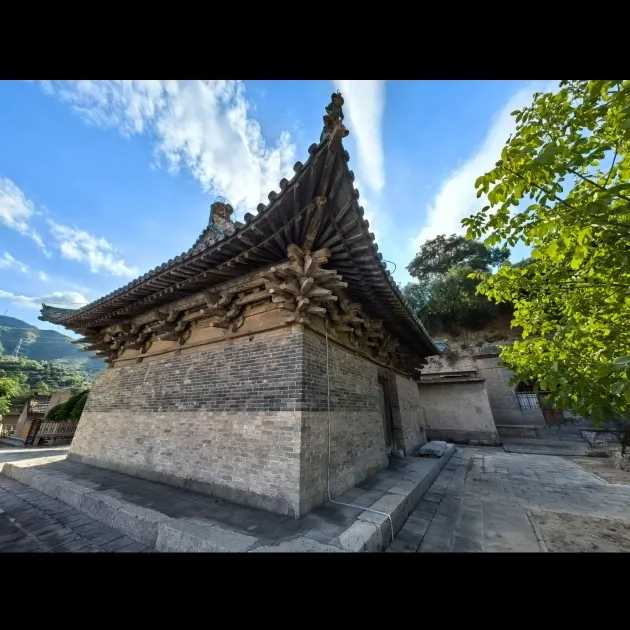
Shanhua Temple, commonly known as the "southern temple," is located in the southern corner of the ancient city of Datong. The temple was first built during the Kaiyuan era of the Tang Dynasty and was initially named Kaiyuan Temple. It was renamed Dapu'en Temple during the Later Jin Dynasty but was destroyed in the war at the end of the Liao Dynasty. It was rebuilt on the original site during the Jin Dynasty and was officially named Shanhua Temple in the Ming Dynasty, a name that has been used ever since. The temple's mountain gate, Three Saints Hall, Mahavira Hall, and Puxian Pavilion are all original structures from the Liao and Jin periods, making it one of the relatively well-preserved temple architectural complexes from that era in China. The halls are gradually elevated along the central axis from south to north, with the layout of the Tang Dynasty temple still faintly discernible. Unlike most temples, the mountain gate here combines with the heavenly king hall into one structure: the five-bay Jin dynasty gate houses Ming dynasty statues of the four heavenly kings, immediately visible upon entry with imposing majesty. The central three saints hall, also a Jin dynasty construction, features strikingly large and ornate bracket sets under its eaves that project in layers resembling blooming flowers—a distinctive hallmark of this hall. It enshrines the original Jin dynasty "Flower Adornment three saints": Vairocana Buddha at the center flanked by Manjusri and Samantabhadra bodhisattvas, their forms full and expressions serene. The main hall of the great hero on the northern high platform is the temple's principal hall, built during the Liao Dynasty and renovated in the Jin Dynasty. The altar enshrines the five wisdom buddhas arranged from east to west: Aksobhya in the east, Ratnasambhava in the south, Vairocana at the center, Amitabha in the west, and Amoghasiddhi in the north—all surviving Liao sculptures with Jin-era repainting. Twenty-four deva polychrome sculptures stand on brick platforms along the eastern and western walls, twelve on each side, representing masterpieces of Jin Dynasty sculpture. Some appear armored and weapon-wielding with fierce expressions, while others wear official robes with flowing sashes. Among them, the benevolent and graceful Sridevi particularly captivates viewers. The hall's western and southern walls preserve Buddhist narrative murals painted during the Kangxi era of the Qing Dynasty. Before entering the temple, consider viewing the glazed five-dragon wall in front of the mountain gate. This Ming dynasty Wanli-era relic was originally the screen wall of Xingguo Temple in the southern city, relocated here in the 1980s. Five coiling dragons surge amid turbulent clouds and waves on the wall, with the central "main dragon" holding a fire pearl and facing directly forward toward the ancient temple's gate. During your visit, pay special attention to the hall of three saints' diagonal arches and the Liao- and Jin-dynasty polychrome sculptures in the main hall. The dim lighting in these ancient halls invites slower observation of the statues' expressions and drapery details, allowing deeper appreciation of these Liao-Jin treasures.

China · Datong

Experiences you can't miss in Wuzhai

Featured Culture & history in Wuzhai

View all Culture & history
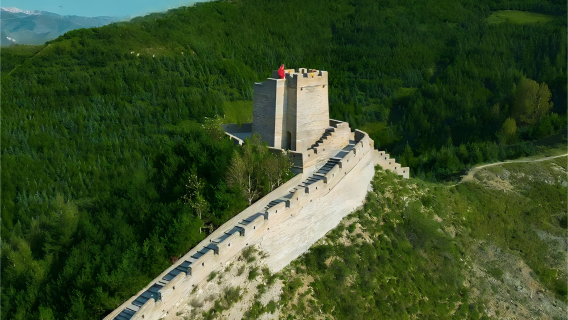
Departing from Taiyuan or Datong: private car tour to Yanmen Pass and Xinzhou Ancient City
󱌍
5.0/5
· 1 review
Duration: 9 hrs
English
Free cancellation
Instant confirmation
Book now for tomorrow
FromS$ 65.73
Departing from DaTong: One-day private car tour to Yanmen Pass and Xinzhou Ancient City
󱌍
Duration: 6.5 hrs
English
Free cancellation
Instant confirmation
Book now for tomorrow
FromS$ 153.35

Private tour | Taiyuan 1-day tour to Yanmen Pass + Xinzhou Ancient City/A journey through the millennia-old frontier ancient city
󱌍
FromS$ 76.73
[Departure from Datong]Private chartered one-day tour: Yingxian Wooden Pagoda + Yanmenguan
󱌍
Duration: 8.5 hrs
English
Free cancellation
Instant confirmation
FromS$ 142.40
Wuzhai Today's weatherClear -5-13℃
Wuzhai weather for the next 2 days11/13: -2-14℃, 11/14: -2-9℃

Free things to do in Wuzhai

What travellers say about Wuzhai

user-avatar
WYQ62705 November 2026
5.0
The mottled Ming Dynasty city walls bear witness to six centuries of wind and frost, with autumn sunlight filtering through the crenellations. Deep within the city's alleys, the Liao Dynasty statues of Huayan Temple smile with lowered brows, while the eaves of Shanhua Temple cast shadows of clouds. The aroma of knife-cut noodles wafts from time-honored shops, the clinking of coppersmiths echoes through the alleys, and old-timers play chess by the city walls, fanning themselves with palm-leaf fans. This is not just an empty shell of an ancient city for taking photos; it is a metropolis that has lived for a thousand years in the border region—ancient buildings retain their soul, the everyday life nourishes their roots, and every step reveals the profound weight and gentleness of northern Shanxi.

Datong Ancient City

user-avatar
SNSD- Sone11 November 2026
5.0
Overall, the Wutai Mountain scenic area was quite nice! There are many temples, and the routes are relatively simple; you can easily see everything by following the signs! The shuttle bus service was less frequent due to the off-season, but it didn't take too long! The fewer crowds made for a more comfortable experience, which was great!

Wu Tai Shan

user-avatar
Anonymous user9 November 2026
4.0
Worth visiting: the Forbidden City is for royalty, while the Qiao Family Compound is for ordinary people. Today, stepping into the Qiao Family Compound, also a filming location for the movie "Raise the Red Lantern," and listening to the stories of the Qiao family, while gazing at the three characters "Learn to Take Losses" on the screen wall, I was deeply moved. This is not only a maxim for Shanxi merchants in the past, but also a fundamental principle of conduct and business that deserves our careful consideration.

The Qiao's Family Compound

user-avatar
Anonymous user9 November 2026
5.0
You can see many tropical plants, desert plants, and various flowers. There are also various animals to observe for free at the entrance. It's a very engaging place to visit, offers a wide variety of food, and the night view inside must be quite nice. I didn't have time to check out the night view from the elevator.

Taiyuan Botanical Garden
user-avatar
爱笑的大大君君8 November 2026
5.0
Recommended. The entire trail is about 10 kilometers long. The Danxia landform is incredibly stunning and unique, especially under the bright sunshine; the dazzling effect is like stepping onto another planet. However, it gets crowded, the entrance is a bit cramped, and parking took quite a while.

The Wave Valley Scenic Area

user-avatar
亮点liangpoint26 July 2022
4.0
According to the Classic of Mountains and Seas, "Fen River flows out from Guancen Mountain". Later generations believed that this was the source of the Fen River. There is a pond at the source, and four characters "Fenyuan Lingzhao" are engraved on the stone wall above the pond. The Jellyfish Cave at the source is a pond, and there is a dragon head carved in the stone wall. A clear spring gushes out of the dragon's mouth, flowing all year round. The ancient monument of "Fenyuan Lingzhao" has been preserved as a key cultural relic, and the shrine for worshiping jellyfish has been replaced by the "Fenyuan Pavilion" built in 1995 in front of us.

Source of Fenhe River

user-avatar
Anonymous user5 October 2026
5.0
This is a Buddhist holy site well worth visiting. The Thousand-Handed and Thousand-Eyed Buddha and the mural of the Reclining Guanyin are historical and artistic treasures that have been preserved intact for future generations to appreciate and understand history! An even greater gain was visiting the memorial hall of Mr. Liang Sicheng, where I learned about the contributions he and Lin Huiyin made to the preservation of historical sites in my country and their transmission in education, so that we, the later generations, can appreciate these historical sites!

Zhengding Ancient City

user-avatar
楚云霁月21 August 2026
4.0
The old town was rather deserted. The art exhibition was quite nice, though a bit over the top. But the park at the exit was absolutely gorgeous. Winding paths led to secluded spots, and unexpected beauty unfolded.

Taiyuan Ancient County

user-avatar
Anonymous user21 October 2026
5.0
Shanhua Temple, located in the ancient city of Datong, Shanxi Province, is commonly known as the South Temple. It was among the first batch of national protected sites. Originally built during the Kaiyuan era of the Tang Dynasty, it was destroyed by fire and rebuilt by Master Yuanman during the Jin Dynasty. It was named Shanhua Temple during the Zhengtong era of the Ming Dynasty. It retains four original Liao and Jin Dynasty buildings: the Liao Dynasty Mahavira Hall (with the Jin Dynasty Twenty-Four Deities painted sculptures inside, which are masterpieces of Liao and Jin sculpture, especially the auspicious goddess), the Jin Dynasty Heavenly King Hall (the largest Jin Dynasty hip-roofed mountain gate in China), the Three Saints Hall (famous for its magnificent sloping arches and Jin Dynasty vermilion tablet), and the Puxian Pavilion. The whole temple faces south and has a complete layout. It is the best-preserved Liao and Jin Dynasty temple complex in China and was highly praised by Liang Sicheng. There are also remnants of the Ming Dynasty Five Dragon Wall in front of the temple.

Shanhua Temple

user-avatar
HuijunC.5 November 2026
5.0
Hengshan is big and the view isis magnificent, visited in late October, it’s cold and the hiking is actually not difficult as expected. And there are many temples and spots that you can visit throughout the hike. I took the cable car up and the bus down.

Heng Shan Mountain

Trip Moments in Wuzhai

Popular cities near Wuzhai

Frequently asked questions

How can I contact Trip.com customer support?

Get help anytime, anywhere within 30 secondsContact customer support

Change and cancellation policies vary by attractions and tours. Please check the product details page for more information.

Ticket prices may vary between weekdays and weekends, as well as during peak and off-peak seasons. When booking with Trip.com, you can also use Trip Coins to get extra savings. For more tips on booking discounted tickets, please visit Trip.com for the latest information.