Anqiu

Things to do in Anqiu

Search attractions or local attractions & tours
Search

Explore top experiences

Top 10 attractions in Anqiu

View all Attractions
Weifang Kite Museum
No. 4 of Family-friendly Attractions in Weifang

Weifang Kite Museum

5.3
4.7/5
1.4k reviews

Weifang Kite Museum is one of the earliest large-scale kite-themed museums in China. Its architectural design is inspired by the Weifang dragon-headed centipede kite; a complete, composite ceramic giant dragon coils along the roof ridge, and the peacock-blue glazed tile roof undulates like a dragon soaring through the sky. The museum houses and displays thousands of exquisite kites from ancient and modern times, both domestic and international, supplemented by historical materials such as photos, paintings, and replicas. The kite culture exhibition on the first floor begins with the legend of Mozi and Lu Ban creating wooden kites during the Spring and Autumn period, unfolding the 2,000-year history of kites from military tools to folk spring entertainment. It features domestic schools such as Beijing, Tianjin, and Nantong, alongside Yangjiabu kites with their woodblock print style, as well as kites from North Korea, Japan, Malaysia, and Western countries, plus a retrospective of the Weifang International Kite Festival. Hanging high in the main hall is the giant dragon-headed centipede kite "China Dragon," crafted by kite artisans; the dragon head is over 4 m high, and the dragon body stretches over 200 m. Nearby, the miniature goldfish and swallow kites are so small that you need a magnifying glass to see them clearly. Beyond the exhibits, the museum also features a digital experience space, complete with VR experiences, an immersive cinema, and a creative workshop where you can try your hand at making a kite. If you catch the indoor circling eagle kite flying performance, you can see the kite circling in the exhibition hall like a real eagle without the need for wind. Visiting in the spring might coincide with the annual Weifang International Kite Festival; after viewing the kite treasures in the museum, head to the flying site to look up at the sky full of kites—only then can you say you have truly experienced Weifang's kites.

Weifang · 26.8km from Anqiu
Mount Taishan
2026 Asia 100 - Best Things to Do

Mount Taishan

9
4.7/5
62.7k reviews

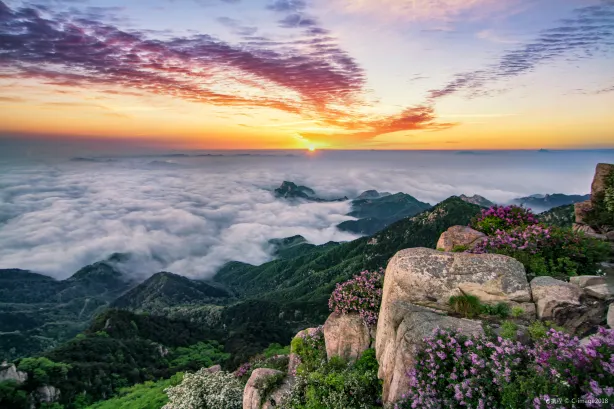
Mount Taishan is centered around Mount Taishan, the first of the Five Great Mountains, with steep and towering peaks, and the views of sunrise and sunset from the summit are breathtaking. Sea of clouds often appear among the mountains, and in winter there are spectacular rime ice views. In addition to natural scenery, the mountain also has numerous historical sites, stone inscriptions, religious temples, and other cultural views, with cliff inscriptions and steles scattered throughout the mountain, which is a major feature of Mount Taishan. Mount Taishan has its own highlights in each of the four seasons: in spring, peach and pear blossoms bloom across the mountains; in summer, the mountaintop is lush green and cool, making it a great summer retreat; in fall, the leaves are a mix of red and yellow, dyeing the layered forests in brilliant colors. There are multiple routes to the summit of Mount Taishan. The hiking trail at the Hongmen entrance is the traditional route opened during Emperor Qin Shi Huang's Fengshan ceremony, consisting mainly of stone steps. Walking from Hongmen to Zhongtianmen, you will pass by numerous attractions along the way, including Wanxian Tower, Doumu Palace, Huima Ridge, and Hutiange. This area is also where stone inscriptions are concentrated. After reaching Zhongtianmen, you can take a cable car or walk to Nantianmen and the summit area, where you can see attractions such as Eighteen Bends, Shengxian Archway, Duisong Mountain, Chaoyang Cave, and Wudafu Pines. The Tianwaicun route is a road leading from Tianwaicun to Zhongtianmen, accessible by tour bus, passing by Heilong Pool, Fanzhi Cliff, and Feng Yuxiang's Tomb. After reaching Zhongtianmen, it merges with the latter half of the Hongmen route. Travelers who prefer not to hike can choose this route. The Tianzhufeng route is relatively steep with few visitors, and is a hiking route often taken by outdoor enthusiasts. It features beautiful mountain scenery, including attractions such as Liyu Back, and at the starting point there is also the large-scale live performance "Chinese Mount Taishan: Grand Ceremony of Fengshan." The Taohuayu route is mostly chosen by travelers when descending the mountain. From Tianjie at the summit, take the ropeway to the mountainside, then transfer to a tour bus down to Taohuayu at the foot of the mountain. Along the way, you can enjoy the Colorful Stone Stream scenic area, where the colorful stone patterns at the bottom of the stream are quite magical. Dongyudao is also a walking hiking route, with attractions such as Qingyang Hall, Hanque Gate, and Dongtianmen along the way. Each route ultimately leads to the Daiding tourist area at the summit. Daiding features the main peak of Mount Taishan, Jade Emperor Peak, the Tianjie Scenic Area, as well as attractions such as Sun Viewing Peak, Daguan Peak, Zhanlu Terrace, Bixia Temple, and Confucius Temple. On clear days at the summit, you can gaze at the Yellow River in the distance and admire the wonder of the "Golden Belt of the Yellow River." The Houshiwu area is rich in varied pines and rocks, and there is a cableway leading to the North Heavenly Gate. Many visitors who want to watch the sunrise choose to climb Mount Taishan at night, usually setting off from the Hongmen route, and it is advisable to depart around 11 pm. This route is well lit at night, and a hike of about seven to eight hours will allow you to reach Sun Viewing Peak or Jade Emperor Peak at the summit before sunrise, which are ideal spots for watching the sunrise.

China · Tai'an
Ancient Town of Qingzhou
No. 3 of Night Attractions in Shandong

Ancient Town of Qingzhou

8.1
4.5/5
4.6k reviews

Qingzhou is one of the ancient nine provinces of China. Since the early Western Han Dynasty, six cities—Guang County, Guanggu City, Dongyang City, Nanyang City, Dongguan Weizi City, and Qicheng—were successively built on this land, with a continuous urban history spanning over two thousand years. Today, the Ancient Town of Qingzhou has been comprehensively protected and restored, forming three major districts: the Beiguan ancient block in Dongyang City, the Ouyuan historical and cultural block and the South Gate block in Nanyang City, and the Zhaode ancient block in Dongguan Weizi City. Government buildings, traditional residences, and classical gardens are scattered across hundreds of ancient streets and alleys, such as North Gate Street and East Gate Street, with their blue bricks and dark tiles showcasing distinct Ming and Qing architectural styles. Unlike many entirely reconstructed ancient towns, this is a "living ancient town," where original residents still live in the old streets and alleys, and intangible cultural heritage items like the cuoqin are passed down on the streets, blending the vibrancy of daily life with ancient charm. A visit can begin by ascending the Fucai Gate Tower at the south gate of ancient Nanyang City for a panoramic view of the town's sea of dark tiles. Ouyuan is a preserved classical garden within the town, originally the eastern garden of the Ming Dynasty's Prince of Heng's residence and later the private garden of Feng Pu, a grand secretary during the Qing Kangxi era. Its three-peak rockery embodies the grandeur of northern landscapes. Figures like Fan Zhongyan and Ouyang Xiu once served as officials here, and Li Qingzhao lived in Qingzhou for over a decade, composing numerous ci poems. Historical relics like the Qingzhou Prefecture Examination Hall are also scattered throughout the streets, where traces of this cultural legacy can often be encountered. The main street is densely lined with shops, but to avoid crowds, one can turn into the side alleys or head straight to Zhaode Ancient Street—where rows of Ming and Qing-era houses remain, with wooden doors, stone steps, and flagstone paths offering a glimpse of old Qingzhou's daily life.

Qingzhou · 69.8km from Anqiu
Tsingtao Beer Museum
No. 1 of Family-friendly Attractions in Shandong

Tsingtao Beer Museum

8.7
4.8/5
48.8k reviews

The Tsingtao Beer Museum is located at No. 56 Dengzhou Road, the birthplace of Tsingtao beer. This century-old factory, housed in a 1903 German-style industrial complex, witnesses China's beer industry journey from its infancy to prominence. As China's first beer-themed model for industrial heritage revitalization, the museum transforms weathered red-brick workshops into immersive spaces using precious early equipment like old motors, mash kettles, and boiling kettles. Visitors walking through the century-old memory corridor can touch over 30,000 artifacts from the German occupation era while overlooking the smart production lines of the "lighthouse factory" through glass walls. Through the dialogue between traditional wooden fermentation tanks and fully automated filling equipment, they decode the evolution of Chinese manufacturing from artisanal heritage to digital transformation. With the innovative concept of "living heritage + technological empowerment," the museum breaks free from the static display constraints of industrial sites. The VR brewing lab allows visitors to become brewers adjusting malt ratios, while the hop recognition system decodes the scientific secrets behind beer flavors. Personalized beer label printing customizes brews, turning taste into portable urban memories. This cultural landmark, bearing Qingdao's industrial DNA, not only showcases its benchmark value in cultural-tourism integration through honors like "national first-class museum" and "China's top 10 cultural heritage tourism cases," but also injects more sustainable vitality into the century-old factory by being selected as a "national cultural industry demonstration base." It continues to brew the city's cultural richness from industrial heritage amid the tides of time.

China · Qingdao
Laoshan Scenic Spot
No. 3 of Best Things to Do in Shandong

Laoshan Scenic Spot

8.5
4.7/5
26.3k reviews

Laoshan Scenic Spot is located in the east of Qingdao, bordered by the Yellow Sea to the east and south. It enjoys the reputation of "famous mountain on the sea," with its highest peak at an altitude of approx. 1,100 mJufeng. The attraction, renowned for its majesty, grandeur, uniqueness, and elegance, has become a famous Taoist mountain. The Taoist temples, sunrises, and sea of clouds in the attraction are allPrestigious. The attraction is mainly composed of seven scenic areas: the Laoshan Jufeng Scenic Area, Liuqing River Scenic Area, Laoshan Taiqing Scenic Area, Huayan Scenic Area, Laoshan Yangkou Scenic Area, Laoshan Jiushui Scenic Area, and Laoshan Hualou Scenic Area. There are four tour routes in total, including three land routes (south route, east route, and central route) and one water route. The scenery in these scenic areas includes: Jufeng Sunrise, Taiqing Water Moon, Haijiao Immortal Mound,Hualou Dieshi, and Jiushui Mingyi, together forming the twelve scenic spots of the attraction. The Hualou scenic area of Laoshan is located in Beizhai Subdistrict, Laoshan District. The Jiushui scenic area of Laoshan is known for its water, with streams and springs throughout the attraction and beautiful scenery. For typical visitors, the routes truly worth exploring are the Julan Peak scenic area of Laoshan and the Liuqinghe scenic area–Yangkou scenic area of Laoshan route; one day for each of these two routes is sufficient. The Julan Peak scenic area of Laoshan and the Yangkou scenic area of Laoshan are also where the attraction's natural beauty lies. Liuxinghe attraction - the Laoshan Yangkou scenic area, also known as the southern route, is the earlier-developed attraction here. It hugs the coastline and features the famous attraction Laoshan Taiqing Palace, making it the route most people take. The basic route into the attraction is Liuxinghe attraction - Taiqing Palace scenic area - Huayan Temple, with the endpoint being the Laoshan Yangkou scenic area. Since the essence of this route lies in the Laoshan Yangkou scenic area, it is recommended that you manage your time accordingly when visiting the attractions before it. Laoshan Taiqing Palace—LiaozhaiMediumLaoshan MountainThe setting of the story of the Taoist priest. Back then, Pu Songling came to this place and was inspired by the Taiqing Palace in Laoshan, where he wrote "The Taoist Priest of Laoshan." Visitors here can see the wall through which the Taoist priest in Pu Songling's story passed through walls and walked through solid barriers. Huayan Temple — the surviving Buddhist temple in the attraction. Because the Laoshan Yangkou scenic area is close toHuanghai, where you can look at the sea and enjoy the breeze. Of course, in addition to the beautiful scenery, the Yangkou Scenic Area of Laoshan also has the challenging Mitian Cave. This cave is winding, steep, and narrow; in dark spots you cannot see your hand in front of your face, and in narrow spots you can barely squeeze through, greatly increasing the fun of the visit. You can walk or take a cable car to Mitian Cave; after climbing to the mountaintop, you can take photos, enjoy the scenery, and gaze out at the Yellow Sea. Also remember to bring a flashlight so you can take in the beautiful sights inside the cave. In addition to the Yangkou Scenic Area of Laoshan, the second beautiful spot in the attraction is the Giant Peak Scenic Area of Laoshan. The Giant Peak Scenic Area is home to the main peak of the attraction, with Laoding as the highest point. This area is mainly for mountain hiking and is one of the more physically demanding parts of the attraction. The Giant Peak Scenic Area of Laoshan features layered rocky peaks with a magnificent momentum. On clear days, you can see the sea; on cloudy days, you can watch the sea of clouds; and from Laoding, the sunrise offers a breathtakingly enchanting view.

China · Qingdao
Baotu Spring
No. 4 of Best Things to Do in Shandong

Baotu Spring

8.5
4.6/5
59.2k reviews

Baotu Spring is located in the bustling downtown area of Jinan, with Thousand Buddha Mountain to the south, Daming Lake attraction to the north, and Quancheng Square to the east. It is a distinctive garden themed around springs, renowned as "the finest spring under heaven" and ranked first among Jinan's "72 famous springs," with a history spanning over 2,000 years. It has also appeared in literary works many times, most notably in Lao She's essay "Baotu Spring." Visitors come here to witness the magnificent sight of the three springs erupting. The main spring is the centerpiece of the park. The spring water splits into three streams, clear and crisp, gushing day and night, and reaching several feet high when the flow is abundant. Around the spring are large stone blocks with railings, where visitors can look down at the spectacular sight of the three springs surging in the pool. Beside the spring stands a stone tablet inscribed with "First Spring" in dark green, written by Emperor Qianlong himself. In addition, nearby are scattered more than thirty famous springs, including Golden Thread Spring, Shuyu Spring, Xibo Spring, Liuxu Spring, Huanghua Spring, and Dukang Spring. Due to the abundant local rainfall in July and August, this is a good season to come and admire the spring water. In midsummer, visitors can have an intimate encounter with the spring water in the park. Some springs have no railings around them, and there are stone paths in the pools with spring water flowing over them. Visitors can step down into the pools to get close to the water, and walking on the stone paths, their feet will be splashed by the spring water, giving a cool sensation. Besides getting close to the water, there are also springs beside the pools that visitors can drink from directly. To the east of the spring is the Wanghe Pavilion Teahouse, which offers visitors specially preparedThis springFragrant tea brewed with water. In addition to the springs, another sight worth seeing in the park is the South Gate. It is magnificently and elegantly decorated. The horizontal plaque above the gate, with the words "Baotu Spring" in golden characters on a blue background, was written by Emperor Qianlong of the Qing Dynasty and is acclaimed as the "first gate" of Chinese gardens. In addition, the attraction frequently hosts various cultural activities. Every year during the first lunar month, a lantern festival is held in the park, lasting 20 days. There is also the Spring Water Culture Festival, during which the park features various folk activities, calligraphy and painting exhibitions, and opera performances for visitors to enjoy. The park also hosts a chrysanthemum exhibition; in the golden fall season, when the springs all surge forth and chrysanthemums and spring water complement each other beautifully, it is well worth a visit. In addition, the attraction has also launched a cruise route. After touring the attraction, visitors who are interested can board a boat at the boat station and sail through the West Gate Bridge in Jinan's old city area, passing by the East Gate of Wulongtan Park and entering Wulongtan Lock, Jinan's first passenger lock in history, where they can experience a drop of more than 2 m. Sitting on the east side of the boat, visitors can also see the relief sculptures of the "Eight Views of Jinan." Along the way, there are many aquatic plants on the banks, and the river water is so clear that the bottom is visible.

China · Jinan

Experiences you can't miss in Anqiu

Featured Culture & history in Anqiu

View all Culture & history
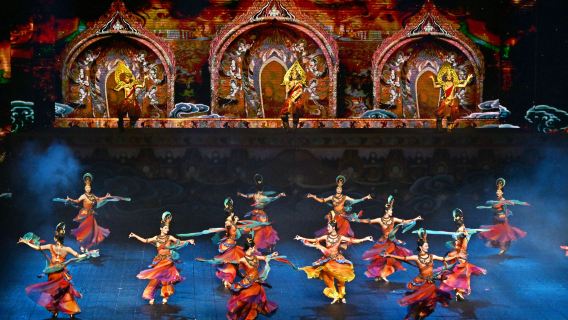
Qingdao Silk Road Eternal Love half-day tour: Marine tradition + trade history grand performance
󱌍
1.0/5
· 1 review
Duration: 1 hr
English
Free cancellation
Instant confirmation
FromKRW 54,091
Qingdao Silk Road Eternal Love half-day tour: Private charter + tickets [Qilu culture + maritime Silk Road]
󱌍
Duration: 1 hr
English
Free cancellation
Instant confirmation
Book now for tomorrow
FromKRW 96,810
Anqiu Today's weatherClear 6-21℃
Anqiu weather for the next 2 days11/6: 8-14℃, 11/7: 10-17℃

Free things to do in Anqiu

What travellers say about Anqiu

user-avatar
自然游好20 April 2026
4.0
There were many tourists and kites, and the hillsides were covered with flowers, creating a lively and joyful atmosphere. However, the visitor center was hard to find, we were tired from carrying our luggage, and the park signage was not very clear and needs improvement.

World Kite Park

user-avatar
linglizi2 April 2026
5.0
Spring has arrived, and Fangzi Town is bursting with new life. Located in Fangzi District, Weifang, Shandong Province, it is a cluster of modern German and Japanese-style buildings. Relying on the Fangzi Station of the Jiaoji Railway, it preserves historical buildings, industrial heritage, and military facilities from the German and Japanese periods. Now protected and developed, the town has become a distinctive scenic area integrating historical culture, artistic creativity, and tourism, presenting a unique blend of Chinese and Western architectural styles. It is open year-round and free of charge.

Fangtze Eurotown

user-avatar
YoYo_D1l9r9b11 November 2026
5.0
Hidden deep in the alleys of Weifang's old city, Shihu Garden is a rare private garden in northern China with the charm of Jiangnan. Spanning only about ten acres, pavilions, terraces, rockeries, and ponds are scattered along the terrain, unfolding in a charmingly haphazard fashion.

Shihuyuan

user-avatar
祥云龙29 June 2023
5.0
Weifang Anqiu Qingyunshan Folk Amusement Park is one of the first national AAAA-level tourist attractions. It is located 30 kilometers south of Weifang City, the international kite capital. It is a large-scale comprehensive tourist attraction that highlights folk cultural characteristics and integrates sightseeing, leisure, entertainment, vacation and shopping. Qingyunshan Folk Amusement Park covers an area of ​​5,000 acres. The park has a pleasant climate and rich vegetation. It blooms in three seasons and is evergreen all year round. Relying on the natural landscape of Qingyun Mountain, the amusement park has six functional areas: Jiangnan Beauty, Ethnic Customs, Wild Animals, Leisure and Entertainment, Qilu Folk Customs and Peach Blossom Spring.

Qingyun Mountain Folk-custom Amusement Park

user-avatar
Anonymous user24 December 2025
5.0
The kite museum showcases the history of kites and various types of kites, including those from abroad, combining knowledge and interest, making it suitable for all kinds of people to appreciate.

Weifang Kite Museum

user-avatar
Anonymous user4 November 2026
5.0
Mount Tai, the most revered of the Five Sacred Mountains, is a must-see. Remember to bring a five-yuan ticket to check it off your list. The natural grandeur and millennia-old cultural heritage blend seamlessly. The winding stone steps are dotted with cliff carvings, and the Eighteen Bends offer a challenging and treacherous experience. Only by reaching the summit of Jade Emperor Peak can you truly appreciate the awe-inspiring feeling of "Ascending to the highest peak, all mountains appear small." For sunrise and sea of ​​clouds views, consider a night climb; be prepared for the wind at the summit. If your stamina is average, you can take a bus and cable car from Tianwai Village, choosing your route flexibly. Although the climb is arduous, the expansive feeling at the summit makes all the fatigue worthwhile. Everyone should climb Mount Tai at least once in their life.

Mount Taishan

user-avatar
汤少环球旅行5 November 2026
5.0
Ou Garden is located in the heart of Qingzhou Ancient City, not far from the Catholic Church. This visit was at night, so there were fewer tourists. The exhibits and garden design were decent, but I was amazed that the garden's area was comparable to, or even surpassed, that of any famous garden.

Ancient Town of Qingzhou

user-avatar
Jinun J.5 November 2026
5.0
เป็นประสบการณ์ที่ดีที่ได้เข้าไปเยี่ยมชม เดินง่ายมีลูกศรบอกตลอดเส้นทาง วันธรรมดาคนไม่เยอะเดินชมถ่ายรูปชิลๆ มีพื้นที่กว้างขวาง

Tsingtao Beer Museum

user-avatar
爱旅行的小麻薯2 November 2026
5.0
It was a great experience! The ascent was leisurely ⛰️, and the descent was scenic via cable car! The cable car was safe 🚠 and very convenient, perfect for those who don't enjoy hiking but still want to appreciate the mountain views 👫. We met many people along the way, including those from other cities and tourists from nearby Shandong! In short, the trip to Laoshan was well worth it!

Laoshan Scenic Spot

user-avatar
M42***574 November 2026
5.0
The First Spring Under Heaven, a garden brimming with the charm of springs. Three clear springs gush forth from the earth, their waters surging like wheels, their sound like distant thunder, ceaseless year after year. Within the garden, springs are scattered like stars, the Golden Thread Spring and the Jade Washing Spring each possessing their own unique beauty; ancient pavilions and terraces, weeping willows surrounding the ponds, and inscriptions on steles that have left their mark. Here, one can find the poetic beauty of Li Qingzhao, and the poems of literati throughout the ages. A pool of clear water, blending landscape and literary tradition, allows one to stroll leisurely, the clear springs cleansing the soul, and the scene filled with tranquility—truly the soul of the Spring City.

Baotu Spring

Trip Moments in Anqiu

Popular cities near Anqiu

Frequently asked questions

How can I contact Trip.com customer support?

Get help anytime, anywhere within 30 secondsContact customer support

Change and cancellation policies vary by attractions and tours. Please check the product details page for more information.

Ticket prices may vary between weekdays and weekends, as well as during peak and off-peak seasons. When booking with Trip.com, you can also use Trip Coins to get extra savings. For more tips on booking discounted tickets, please visit Trip.com for the latest information.