Wuhan is stunning, but I honestly don’t recommend going in June because........
Wuhan: A Complete Guide to the Interwoven World of Everyday Life and Historical Scrolls
1. Classic Landmarks: The Symphony of Jiangcheng’s Spirit and Cultural Heritage
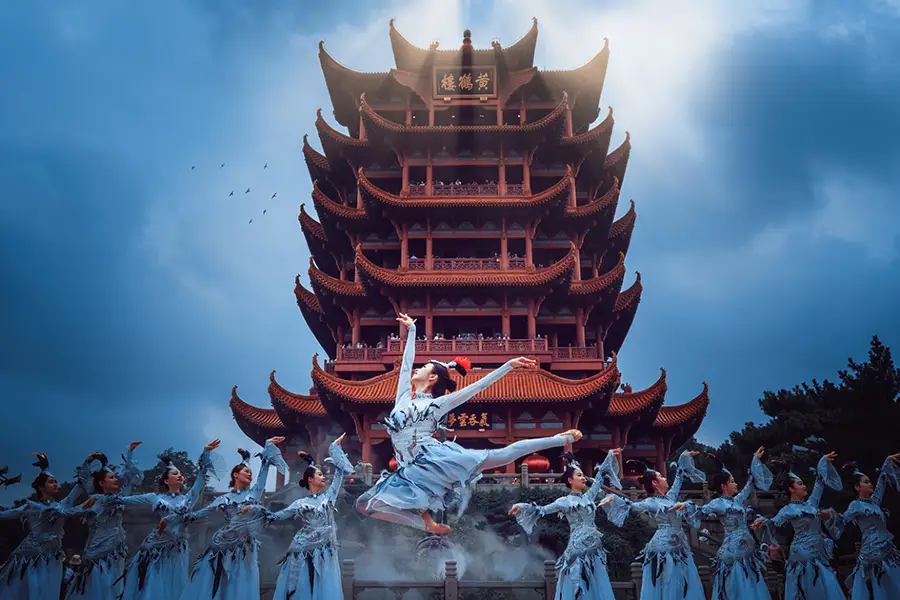
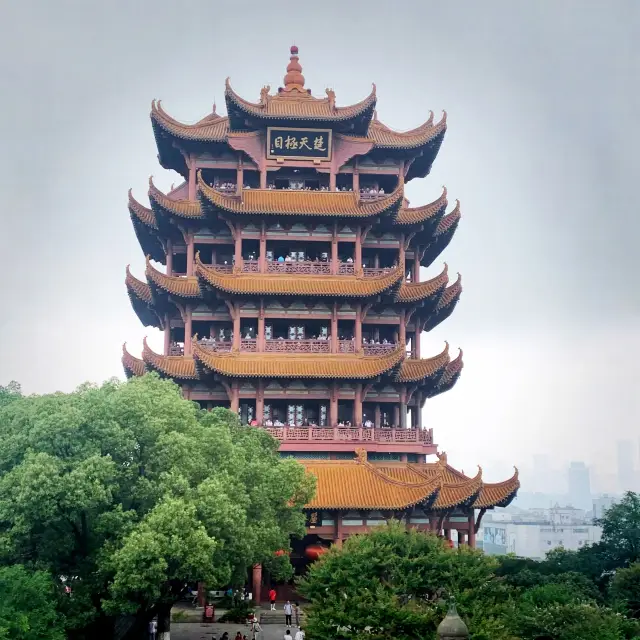
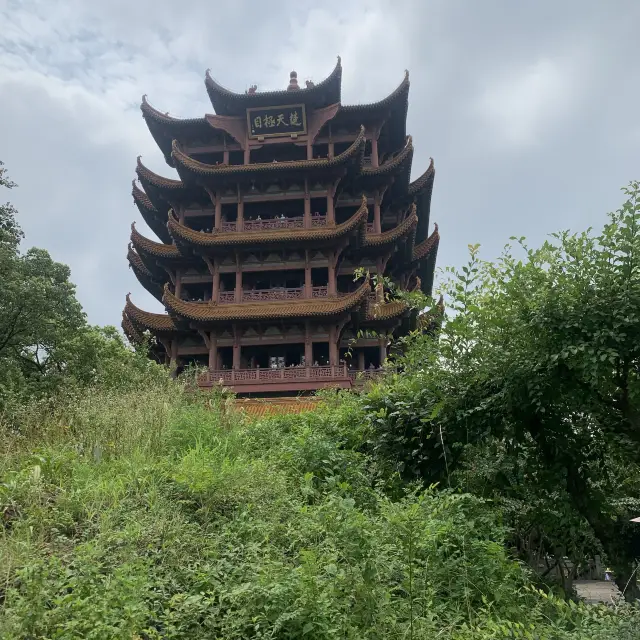
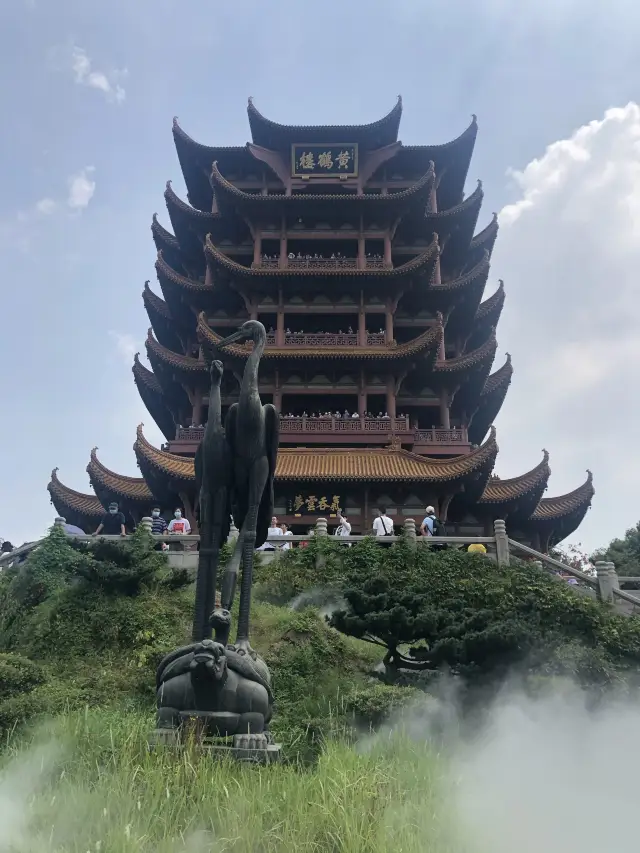
Yellow Crane Tower: A Millennium of Poetic Charm and the Core of Wuhan’s Skyline
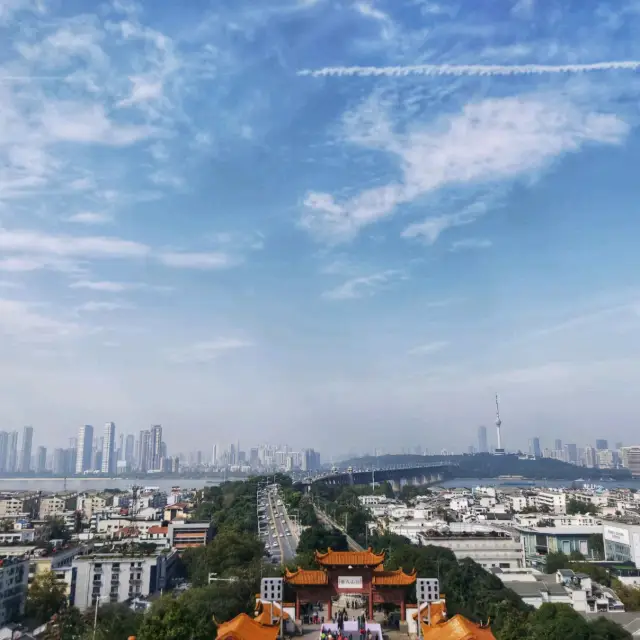
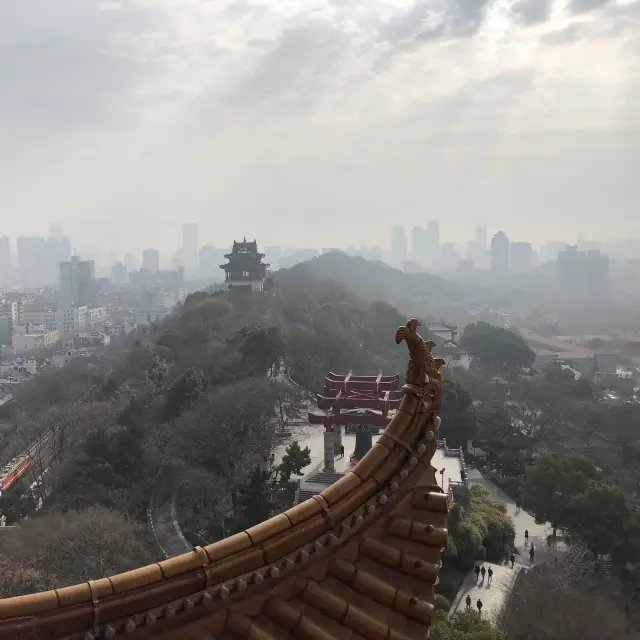
Experience: Climb the tower to overlook the Yangtze River and the three towns of Wuhan, check in at the plaque “The First Tower under Heaven,” and feel the poetry of Li Bai’s “Old friend bids farewell at Yellow Crane Tower.”
Night Tour of Yellow Crane Tower (120 RMB/person), a light and shadow show narrating a thousand-year story, with lights illuminating the pavilion like a dream.
Tips: Book tickets in advance to avoid weekend crowds; enter from the west gate for a closer walk to the main tower, about 10 minutes on foot.
East Lake Ecotourism Scenic Area: The City’s Green Lung and Cycling Paradise
Recommended Activities: Ride along the greenways (recommended Tingtao Road and Moshandao), passing Huxin Island and Luoyan Scenic Area, encounter squirrels and egrets.
Climb Moshanshan Scenic Area to Chutian Terrace for a panoramic view of East Lake; ride the East Lake Eye Ferris wheel (30 RMB/person), one full rotation in 13 minutes and 14 seconds, full of romance.
Best Time: Cherry blossom season in March-April (East Lake Cherry Blossom Garden), autumn colors in October-November (Maple Mountain red leaves), and bird watching in winter (Luoyan Scenic Area).
Hubei Provincial Museum: Journey Through Millennia of Jingchu Civilization
Treasures: Marquis Yi’s Bronze Bells (daily performances at 11:00/15:00, 50 RMB/person), Sword of King Goujian, Yunxian Human Skull Fossil.
In-depth Experience: Reserve free tickets 3 days in advance, rent an AR guide device (20 RMB/unit), immerse yourself in Chu culture.
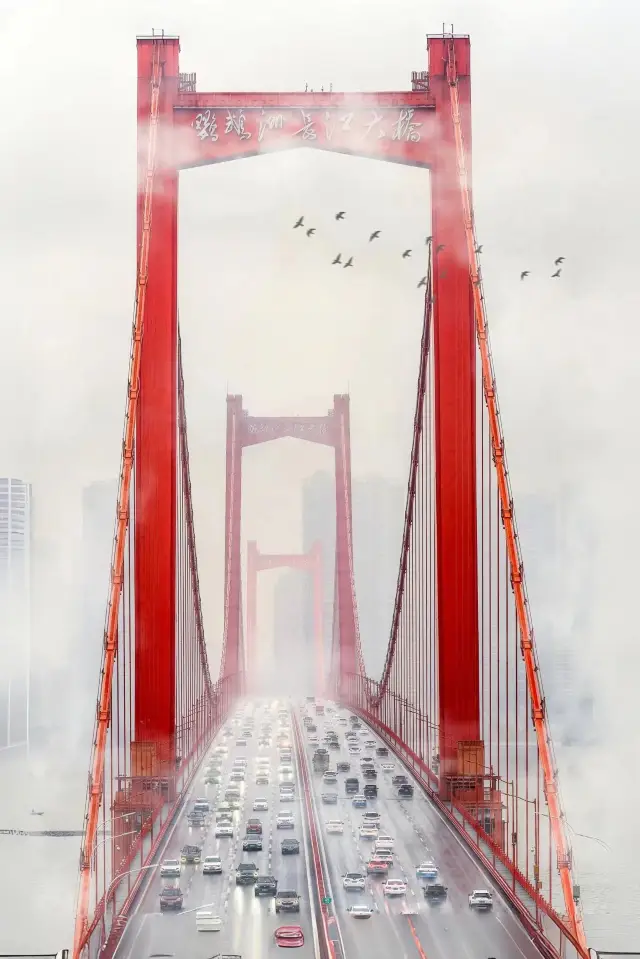
Yangtze River Bridge: The Majestic First Bridge Over the Yangtze
Route Highlights: Walk across the bridge (about 1.6 km), take the elevator at the bridgehead fortress to the top (2 RMB/person), overlook the confluence of two rivers and the Turtle-Snake Lock on the river.
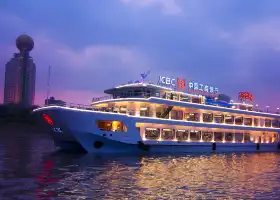
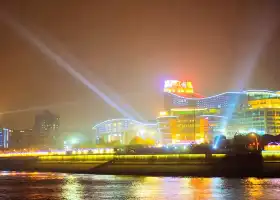
Night Cruise on the Yangtze (Two Rivers Tour, 120 RMB/person), enjoy the light show from the deck, feel the river breeze, and experience the “Endless Night of Jiangcheng.”
2. Local Experiences: The Diverse Life from Street Scenes to Artsy Neighborhoods
Tanhualin: A Utopia for Artistic Youth
Must-visit: Chengyu Zhen Bookstore, Visual Book House for niche books; Xu Daodao and her dorayaki, try the red bean paste Japanese dessert.
Old City Wall Ruins, Former Renji Hospital, perfect for vintage photo shoots; hilltop barbecue restaurants overlooking the old city night view.
Gude Temple: A Buddhist Secret Realm with East-West Fusion
Architectural Features: A blend of Gothic, Islamic, and Indo-Burmese styles; the Nine Buddha Pagodas in the Yuantong Hall symbolize “The Supreme Emperor.”
Photo Tips: Soft light in early morning or evening, wear plain long dresses for better shots; open 8:30-16:00, ticket 13 RMB (includes incense).
Lihuangpi Road: The Collision of Concession Style and Coffee Aroma
Artsy Shops: Old Time Café, Hankou No.2 Factory Playground, drink soda and take vintage photos; Bagong House, Former Russian Police Station, feel the historical vicissitudes.
Zhiyin Hao: An Immersive Drama Experience Through the Republic of China Era
Highlights: Change into qipao or changshan, board the ship to watch the play, interact with actors, feel the river breeze on the deck, listen to old songs from the gramophone.
Ticket Tips: Buy tickets one week in advance (228 RMB/person on weekdays, 298 RMB/person on weekends), 19:30 show is best.
3. Culinary Universe: A Carbohydrate Feast from Breakfast to Late Night Snacks
Breakfast Rituals of Wuhan People
Hot Dry Noodles: Cailinji (black sesame sauce), Luo’s Hot Dry Beef Noodle Shop (freshly boiled beef hot dry noodles), paired with egg wine to cut the greasiness.
Three-Delicacy Doupi: Lao Tongcheng (glutinous rice, fresh meat, fresh egg, fresh shrimp), golden crispy outer skin.
Mianwo: Next to Xu Sao’s Hu Tangfen stall, crispy outside and glutinous inside, even better dipped in Hu Tangfen soup.
Late Night Food Scene: The Smoky Atmosphere of Lobster and Barbecue
Liangliang Steamed Shrimp: Oil-braised big shrimp, steamed shrimp, cold noodles, a must-eat in summer; the queue king at the main store on Xuesong Road, recommend off-peak visits.
Xiaomin Food Stall: Chicken feet, dried bean curd strips, edamame, spicy and satisfying; Jianghan Road branch upgraded environment, suitable for gatherings.
Old Brands and Snack Streets
Yan Laoyao Shaomai: Heavily oiled shaomai (black pepper flavor), doupi, queues start from 1 hour in the morning.
Liangdao Street: Master Zhao’s fried cake wrapped shaomai, Thai red bean pastry, Uncle Qin’s Guilin rice noodles, eat to fullness for about 20 RMB per person.
4. Accommodation Guide: Diverse Choices from River View Rooms to Artsy Inns
Wuchang District: Culture and River Views
Wuhan Wanda Reign Hotel: By East Lake, river view rooms overlooking the Yangtze River Bridge, high-end luxury.
Hidden Tanhualin Residence: Renovated Republic of China old house, artsy and retro, walking distance to Tanhualin.
Hankou District: Concession Style and Convenient Transport
Wuhan Marco Polo Hotel: Along Jiang Avenue, near Lihuangpi Road and Jianghan Road, European style.
Wuhan Fengmao Andi Hotel: Renovated century-old building, combining art exhibitions and guest rooms, strong design sense.
Hanyang District: Cost-effective Options
Wuhan Shimao Hilton Hotel: Next to Parrot Island Yangtze River Bridge, river view rooms with great value.
Guesthouse near Guiyuan Zen Temple: Zen style, suitable for peaceful trips, close to Guiyuan Zen Temple and Qintai Grand Theatre.
5. Transportation Guide: Convenient Options from Ferries to Metro
Cross-River Transport
Ferry: Zhonghua Road Pier → Wuhan Pass Pier (1.5 RMB/person, 7:00-20:00), enjoy river views from the deck, experience old Wuhan life.
Yangtze River Tunnel / Road-Rail Tunnel: Drive across the Yangtze to avoid bridge congestion.
City Transport
Metro: Covers major attractions, search “Wuhan Electronic Bus Card” on Alipay to scan and ride.
Bus: Tourist lines like 521, 402 connect East Lake, Yellow Crane Tower, and Provincial Museum.
Shared Bikes / Electric Scooters: First choice for short trips, very pleasant to ride in the old concession area of Hankou.
6. Pitfall Avoidance Guide: Secrets Locals Won’t Tell You
Avoiding Traps
“Free guiding” around Yellow Crane Tower is mostly scams, refuse sales pitches; snacks in Hubu Alley are overpriced, better to go to Liangdao Street or Water Tower Street.
Night ferry tickets differ from regular ones, pay attention; rent bikes on East Lake greenway from official points to avoid deposit disputes.
Money-saving Tips
Reserve free tickets in advance for Provincial Museum, Yellow Crane Tower, etc.; student and senior IDs get discounts.
Choose “Two Rivers Tour” ordinary cruise for night Yangtze tours, better value than luxury cruises; pick community old shops for breakfast, 5 RMB fills you up.
Practical Tips
Wuhan summers are hot and humid, bring sunscreen, sun hats, and Huoxiang Zhengqi water; wear light jackets in spring and autumn to handle temperature differences between day and night.
Address locals as “Shifu” (master) for friendliness, avoid blunt “Hey”; bus announcements are in Wuhan dialect, listen carefully for “Next stop: XXX.”
7. Seasonal Specials: Unlock Wuhan’s Four Seasons Charm
Spring (March-May): East Lake Cherry Blossom Garden (March), Wuhan University Cherry Blossoms (mid-late March), Mulan Grassland Gesang Flowers (April-May).
Summer (June-August): East Lake Lingbo Gate Diving, Maya Beach Water Park, Yangtze River Night Cruise for cooling off.
Autumn (September-November): Hankou Riverside Reed Marsh (October-November), Mulan Tianchi Red Leaves, Qingchuan Pavilion Osmanthus.
Winter (December-February): Guiyuan Zen Temple Arhat Statues, East Lake Plum Garden Plum Viewing, Hot Spring Resorts for soaking.
Conclusion
Wuhan is the poetry and distance of Yellow Crane Tower, the blue waves and cycling of East Lake, the bronze bells and King Goujian’s sword of the Provincial Museum, the sunset and ferry of the Yangtze River Bridge. Here you find the grandeur of “One bridge spanning north and south, turning a natural moat into a thoroughfare,” and the everyday life of “breakfast at Hubu Alley, late-night snacks at Jiqing Street.” With this guide, have a coffee at Tanhualin, listen to old songs on Zhiyin Hao, watch a light show by the Yangtze River—after all, every bite of hot dry noodles in Wuhan satisfies, and every crossing of the river tells a story.
The owner was very nice and patiently explained the ticket booking and route up and down the mountain. The hotel was very clean and tidy with no unsanitary corners. I've already recommended it to friends, and it will definitely be my first choice for next time.
I waited an hour and a half to see the night view, which was generally quite nice, though a bit pricey. The security guards were diligent and responsible, and the management was very organized, but the view itself was only so-so.
The guide was very patient. The content was very comprehensive. They also helped take photos, which turned out great. My child enjoyed it very much. It's worth mentioning that the clapper talk segment was truly amazing. Thank you for the guide.
Standing on the bank of the Yangtze River in Wuhan, the Yellow Crane Tower is one of the three famous towers in the south of the Yangtze River in my country and a landmark of Wuhan. It has a long strategic and cultural history, and a large number of immortal poems and essays make it a famous cultural tower. Climbing to the top of the tower and overlooking the Yangtze River and the city with tall buildings is so beautiful and spectacular.
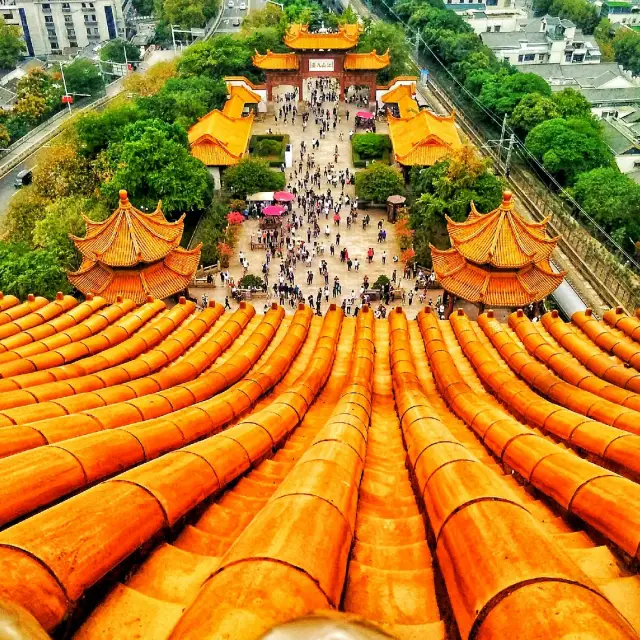
Sharing the real experience of night tour of Yellow Crane Tower During this trip to Wuhan, the night view of Yellow Crane Tower completely amazed me! The Yellow Crane Tower in the daytime is shocking enough - the building with flying eaves and corners is wrapped in golden glazed tiles, and the reinforced concrete antique building retains the ancient charm and contains ingenuity. Climbing to the top of the building, the Yangtze River is surging, the double bridges are across, and the scenery of the three towns is in full view. I instantly understood the grandeur described by the poet thousands of years ago. But when night fell, I found that the real charm of Yellow Crane Tower has just blossomed. When the lights came on, the whole Yellow Crane Tower was clearly outlined by warm yellow lights, and the lanterns under the flying eaves were lit up one after another. The golden building was shining in the night, like a jade building from the historical scroll. Especially the lights and the reflections on the river surface complement each other. From a distance, the Yellow Crane Tower seemed to float on the waves, beautiful as a dream. The pavilions and towers in the scenic area are also shrouded in soft lights. Walking among them, it seems as if you have traveled back to the ancient literati gathering. What's more surprising is that the area around the Yellow Crane Tower is very lively under the night sky. The neon lights flicker on the streets, the aroma of snack stalls is overflowing, hot dry noodles are wrapped in thick sesame paste, duck necks are so spicy that you sweat but can't stop eating, and there are freshly baked lotus root clips and fermented rice balls. Every bite is authentic Wuhan flavor. The cultural and creative shops on the street emit warm light, and the bookmarks and luminous badges in the shape of the Yellow Crane Tower are exquisite and interesting. Occasionally, you can also encounter street performers playing folk songs, and the singing mixed with the laughter of the crowd makes the night atmosphere more lively. The only drawback is that there are more tourists at night, and you have to be patient to find the angle if you want to take beautiful photos of the Yellow Crane Tower without people. But when you see this thousand-year-old famous tower glowing with new vitality in the night, and feel the blend of history and modernity in light and shadow, everything is worth it! When you come to Wuhan, you must spend a night at the Yellow Crane Tower. This romance unique to the night in this river city is absolutely unforgettable!
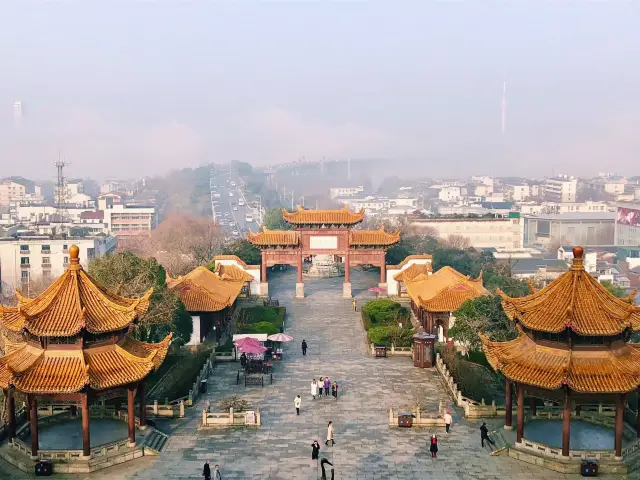
1. Strange Stone Hall: The blend of nature and culture Strange Stone Hall is located on the only way from the West District to the South District of the Park. It was built in 1990 and is divided into indoor and outdoor exhibition areas: exhibit features : 262 strange stones are displayed indoors, and 35 strange stones from across the country are displayed outdoors, including mountain-shaped stones, pictogram stones, More than 10 categories of textured stone, paleontological stone. Famous exhibits such as "Shenlong Stone", "Chrysanthemum Stone", "Lingqian Stone", etc., have different forms, both ornamental and collectible value. Cultural Meaning : The Strange Stone Museum is not only an art exhibition venue, but also a cultural series with surrounding attractions such as "Cui Yu's Poetry Picture" reliefs, brush pavilions, etc., reflecting the deep historical heritage of the Yellow Crane Tower. 2. Entrance Landscape Stone: The garden art is dotted with The entrance of the park has a large landscape stone, mainly natural stone, unique shape and colorful. These stones have been artificially carved and laid out to form the auspicious meaning of "stone to run", which is a popular place for tourists to take pictures and punch in. Yellow Crane Tower Entrance Landscape Stone 3. Shengxiang Pagoda: The gem of the Yuan Dynasty stone structure Shengxiang Pagoda near the main entrance of the Yellow Crane Tower is one of the only remaining Yuan Dynasty stone towers in the country. In 2025, it was rated as a national protected cultural relics: Building characteristics : The tower body is made of original stone in the Yuan Dynasty, and each stone is from the Yuan Dynasty process. The structure is simple and solemn, the tower is octagonal, about 9 meters high. Historical Status : As a "hidden attraction" of Yellow Crane Tower Park, it has witnessed the changes of Wuhan since the Yuan Dynasty, and is an important object for studying ancient architecture and stone carving art. Yellow Crane Tower is a tower of victory. 4. Historical Stone Inscription: The "spectacular" authentic track of Shixian Li Bai is rumored to have the word "spectacular" engraved on the stone wall of the park. Although the specific location is not clear, this legend adds romance to the Yellow Crane Tower. In addition, there are ancient stone inscriptions and inscriptions near Shiji historical sites (such as Huangqiji), which record the rise and fall of the Yellow Crane Tower for thousands of years.
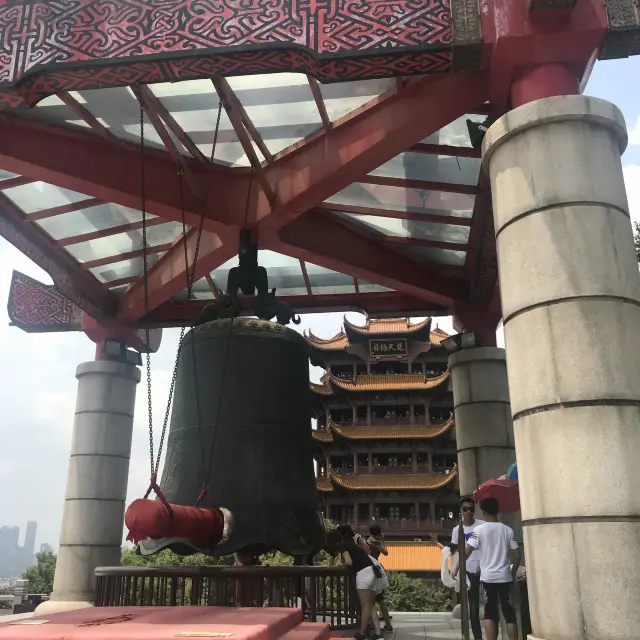
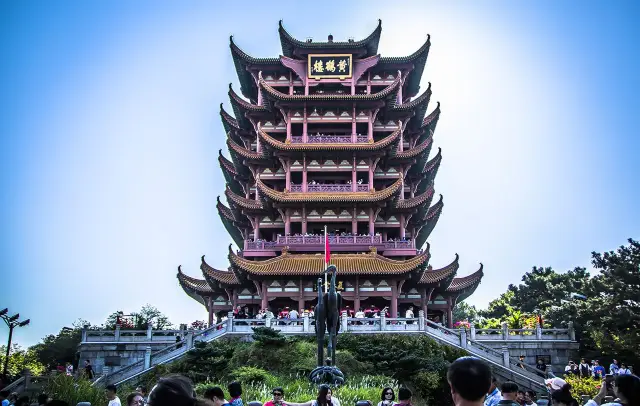
1. Historical evolution Origin and Military Background Yellow Crane Tower was built in the two years (223) of Dongwu Huangwu during the Three Kingdoms Period. Sun Quan, in order to strengthen military defense, built a building on the mountain in the southwest corner of Xiakou City, and was originally a military building overlooking the guard. After the destruction of Dongwu, with the development of Jiangxia City, it gradually evolved into a place for viewing and feasting. repeatedly destroyed and built during the Song, Yuan and Ming and Qing Dynasties, the Yellow Crane Tower was destroyed many times in the fighting and fires. Only the Ming and Qing Dynasties were destroyed 7 times and rebuilt 10 times. The last burning in Qingguangxu ten years (1884) left only the remains of the copper roof. In 1985, the Qing Dynasty "Tongzhi Building" was rebuilt as a model, using reinforced concrete imitation wood structure, now high 51.4 meters, the whole body is magnificent. 2. Building characteristics structure and meaning appearance five floors, internal actual nine floors, implicit "95 supreme" meaning. Dart five floors, the tip of the golden glazed tile, 60 angles stretched outward, shaped like a yellow crane with wings. The building is supported by 72 cylinders and has a four-sided set of eight-sided bodies, which combines traditional architecture and modern design. Landscape Layout Buildings surround the cast bronze yellow crane sculpture, Shengxiang Pagoda, archway and other buildings, forming a unique landscape of "Yellow Crane, Eight-sided moths". Each floor has a viewing platform overlooking the magnificent scenery of the Yangtze River. 3. Cultural status Literature symbol Cui Wei's "Yellow Crane Tower" in the Tang Dynasty was known as "the first seven laws of the Tang Dynasty". Li Bai sighed after he climbed the building and said "there is a scene in front of him." The literary men of all generations left more than 400 poems, making it an important image of Chinese poetry. The first of the famous buildings and the Yueyang Building in Hunan and the Tengwang Pavilion in Jiangxi are also called "the three famous buildings in Jiangnan", and Qingchuan Pavilion and Guqintai are called "the three famous places in Wuhan". Known as "the first floor of the world" and "the world is amazing". 4. The name legend is named after the mountain because it is built in "Huanglu Mountain" (the ancient "Yuan" and "He"), so it is called the Yellow Crane Tower. Fairy legend The most popular saying is: Daoshi Xin's hotel wall painting yellow cranes to attract wealth, ten years later Daoshi whistled the crane to fly, Xin's Sui Jianlou Memorial, named "Yellow Crane Tower". 5. Modern value As a national 5A scenic spot, the Yellow Crane Tower is not only a landmark in Wuhan, but also a must-visit place for Chinese and foreign tourists to appreciate China's history and culture. Its reconstruction project combines traditional technology and modern technology, and has become a model for the restoration of ancient buildings.
The Yellow Crane Tower is located in Wuchang District, Wuhan City, Hubei Province. It is located on the top of Snake Mountain and is close to the Yangtze River. It is one of the "Three Famous Towers in Jiangnan" and has enjoyed the reputation of "the most beautiful scenery in the world" and "the first tower in the world" since ancient times. The Yellow Crane Tower was first built in the second year of Huangwu in the Three Kingdoms of Wu (223 AD). It was repeatedly built and destroyed. The current Yellow Crane Tower was rebuilt in 1985. The Yellow Crane Tower has five floors on the outside and nine floors on the inside, implying the meaning of "the supreme ruler of the nine fives". The whole building is shaped like a yellow crane, spreading its wings and ready to fly. The Yellow Crane Tower has a unique national style and exudes the spirit, temperament and charm of traditional Chinese culture. The roofs of various sizes on each floor are staggered and overlapped, and the corners are raised, as if they are the wings of a crane spreading its wings and ready to fly. The Yellow Crane Tower is not only a treasure of architectural art, but also carries a profound historical and cultural connotation. Countless literati and poets have left poems and lyrics that have been passed down through the ages, highlighting its cultural value. As a famous historical site and tourist destination in China, the Yellow Crane Tower attracts many domestic and foreign tourists to visit and experience its unique charm and cultural heritage.