
Things to do in Yu County
Explore top experiences
Top 10 attractions in Yu County


Nuanquan Ancient Town
Originally built during the Yuan dynasty (1279-1368), Nuanquan Ancient Town holds many ancient-style structures that are perfect for photographing. Compared to certain other ancient towns that have become popular via the Internet, Nuanquan appears simpler and more tranquil, and many locals reside within the town. The town is not particularly large but has an ancient west wall (an ancient gate tower) and several large courtyard complexes open to visitors. The “Make Treeflower Fungus” show is a famous event here. The show is a unique traditional festival light show with over 300 years of history. It involves villagers heating iron to 1500˚°C to become molten iron and then splashing it against the city wall to create a majestic scene of “fire trees and silver flowers” that is truly stunning.Yu County · 13.7km from downtown

Weizhou Ancient City
Weizhou Ancient City is located on a platform on the south bank of Huliu River. At present, the south and east walls of Weizhou Ancient City have been completely demolished. The remaining well-preserved are the north wall and the northern section of the west wall, which is about 1,600 meters long. The east and west gates have been destroyed, and only the south gate remains. Wanshan Tower and Wenchang Pavilion in the city were restored and rebuilt in 1998. The east, west and south sides of the moat basically exist, and the stone bridge outside the three gates still exists. According to the Records of Weizhou, the ancient city of Weizhou is seven li and thirteen steps in circumference, with a wall three feet and five feet high, three city gate towers, and four corner towers. The tower is Jingyang Tower, the south gate is Jingxian Gate, the tower is Wanshan Tower, the west gate is Qingyuan Gate, and the tower is Guangyun Tower. There are tall and majestic urn cities outside the three gates. The moat is connected to the inner city by a suspension bridge. Outside the city is a moat more than three feet deep and seven feet wide. The Weizhou city is irregular in shape, wide in the south and narrow in the north, with many bends on the east and west sides. There is only the east, west, and south gates in the city, but no north gate, and the Jade Emperor Pavilion is built on the north city wall. The four main streets in the city are east, west, south, and north, forming an architectural pattern with Wenchang Pavilion (Drum Tower) and the south gate (Wanshan Tower) symmetrical, and the north-south streets as the central axis. Due to historical reasons, the ancient city of Weizhou suffered some damage, but the style of the ancient city has remained basically unchanged. In addition, there are many government offices, temples, pavilions and houses in the ancient city, and the legacy of the ancient cities of Ming and Qing dynasties is still there. In the history of Weizhou, Han culture was the mainstream. However, the ancient city's form was contrary to the strict "ritual system" of the traditional Han nationality: it was square and dignified, with clear longitude and latitude, and symmetrical planning along the central axis, which is the characteristic of Weizhou ancient city.Yu County · 1.6km from downtown

Yuxian Museum
Yu County MuseumIt is one of the national key cultural relics protection units, with a notable collection of ceramics, pottery, and paintings.Yu County · 3.1km from downtown

National Museum of China
The National Museum of China is an institution that, on behalf of the country, collects, studies, displays and interprets representative material evidence that fully reflects China's fine traditional culture and advanced socialist culture. It is a national palace of history, culture and art and a cultural living room. The National Museum of China currently has more than 1.4 million collections, covering ancient cultural relics, modern and contemporary cultural relics, rare books and ancient books, and artworks. Among them, there are 815,000 pieces (sets) of ancient cultural relics, 340,000 pieces (sets) of modern and contemporary cultural relics, more than 240,000 pieces (volumes) of rare books and ancient books, and a total of nearly 6,000 first-class cultural relics. In recent years, especially since the 19th National Congress of the Communist Party of China, the National Museum of China has increased its efforts to collect representative material evidence reflecting contemporary advanced culture, and publicly collected cultural relics collections from the society, collecting an average of about 50 sets of ancient cultural relics and more than 1,000 sets of modern and contemporary cultural relics, physical objects and artworks each year. The exhibitions of the National Museum of China include three series: basic exhibitions, special exhibitions, and temporary exhibitions, forming a three-dimensional exhibition system covering theme exhibitions, basic exhibitions, special exhibitions, and temporary exhibitions. Among them, "Ancient China", "Road to Rejuvenation" and "Road to Rejuvenation in the New Era" are the basic exhibitions of the National Museum, and are also important positions for promoting Chinese traditional culture, advanced socialist culture, and cultivating and practicing the core socialist values. The special exhibitions are mainly based on the collection of cultural relics, including more than ten special exhibitions such as ancient Chinese bronzes, Buddhist statues, jades, porcelains, modern classic works of art, and African wood carvings. Temporary exhibitions include two categories: self-planned exhibitions and introduced exchange exhibitions, covering historical culture, fine cultural relics, archaeological discoveries, classic works of art, regional culture, international exchanges and other aspects, with an average of more than 40 exhibitions held each year. The National Museum of China has rich research resources, a solid research foundation and strong research capabilities, and is the industry leader in the development of the domestic museum industry. Since 2018, in accordance with the principle of "not seeking to collect but to exhibit, open cooperation, mutual benefit and win-win", we have established strategic cooperative relations with many cultural and museum institutions, institutes, universities and colleges at home and abroad, jointly carried out academic research, held high-quality cultural relics exhibitions, convened seminars, launched postdoctoral research workstations, and took the lead in establishing two international organizations, the BRICS Museum Alliance and the Silk Road Museum Alliance, striving to play a greater role and make greater contributions in promoting the core socialist values, enhancing cultural confidence, promoting exchanges and mutual learning between Chinese and foreign civilizations, and building a socialist cultural power.China · Beijing

Xida Fortress
Yu County · 23.5km from downtown
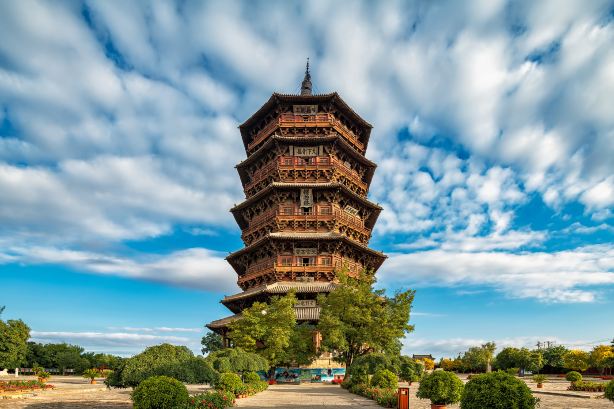
Yingxian Wooden Pagoda
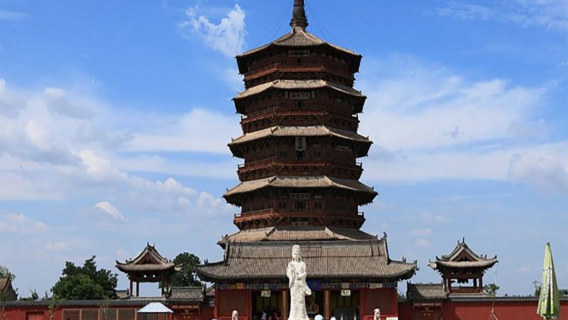
The full name of Yingxian Wooden Tower is Sakyamuni Pagoda of Fogong Temple. It is in the Fogong Temple in the northwest of Yingxian County. The octagonal wooden pagoda has five stories. Except for the high-end stone foundation of the first floor, the rest of the pagoda is made of wood using the traditional craftsmanship of Sunmao. Each layer of the wooden tower is equipped with wind chimes for a pleasant sound when the wind blows.China · Ying County

Shanxi Museum
"Five thousand years of history can be seen in Shanxi." Located on Binhe West Road in Taiyuan, the Shanxi Museum showcases the essence of Shanxi's cultural relics. The museum consists of a main building and four corner annexes, with the main building resembling both a dipper and a ding vessel, serving as the primary venue for travelers to view the collection. The main building has four floors. The first-floor lobby features a general service desk, while the second and third floors host thematic exhibitions on history and culture. The fourth floor showcases art-themed exhibitions, which together form the permanent displays of the Shanxi Museum. After entering the first-floor lobby, proceed to the second floor via the stairs to begin the historical journey themed "Soul of Jin." The cultural and historical thematic exhibition showcases the highlights of Shanxi's five-thousand-year civilization through numerous precious artifacts, ranging from ancient human relics to the rise and fall of Shanxi merchants during the Ming and Qing dynasties over five centuries. During your visit, several exquisite artifacts are not to be missed. The bird zun, a bronze ritual vessel from the Western Zhou period, was used in the ancestral temple sacrifices of the Jin marquis. The bird zun features an exquisitely crafted design with a phoenix as its main form. On the phoenix's back rests a small bird, serving as the handle for the vessel's lid. At the tail of the phoenix, an elephant is depicted, with its long trunk perfectly balancing the phoenix's two legs to form a stable tripod base. This artifact is a representative piece among the bronze collections in the museum. In addition, you can also admire: the Houma covenant texts, which are oath documents from the Spring and Autumn period used by the ministers of the Jin state; the lacquered wooden panel paintings, a painted screen from the Northern Wei dynasty depicting colorful stories from the "Biographies of Exemplary Women"; the white marble sarcophagus, a relic from the Sui dynasty, belonging to a tomb occupant who was a member of the Central Asian Yu people, with intricate carvings both inside and outside the sarcophagus, featuring figures with deep-set eyes, high noses, and black hair, characteristic of the Mediterranean Caucasian race. In the cultural thematic exhibition, you can also learn about the origins and development of Buddhism and traditional opera in Shanxi. The fourth floor of the main hall features an art thematic exhibition area. Among them, the "Timber and earth splendor" - ancient architectural art thematic exhibition showcases Shanxi's status as a province rich in cultural relics and ancient structures. "For above-ground relics, look to Shanxi" - Shanxi is renowned as the "treasure trove of ancient Chinese architecture," boasting over half of China's above-ground ancient structures with comprehensive categories, especially in the quantity of religious buildings. If you're a fan of ancient architecture, this is a must-visit. The Shanxi Museum also hosts temporary exhibitions periodically. At the first-floor lobby service desk, services such as hiring on-site guides (Chinese and English) and renting audio guides are available. The main building also houses a restaurant and a tea house for visitors.China · Taiyuan

Xinzhou Ancient City
Xinzhou was called Xiurong in ancient times. It is located between Taiyuan and Mount Wutai. It is the seat of Xinzhou Administrative Office and Prefectural Committee. In the Spring and Autumn Period, Xinzhou belonged to Jin State. In the Warring States Period, it belonged to Zhao State. In the Qin and Han Dynasties, it belonged to Taiyuan County, Yanmen County, and Taiping County. In the Sui Dynasty, it was Xinxingdu and Yanmen. During the Tang, Five Dynasties and Song dynasties, it was called Dingxiang Prefecture of Xinzhou. During the Jin, Yuan, Ming and Qing dynasties, it was called Xinzhou, Daizhou and Baodezhou. During the Anti-Japanese War and the War of Liberation, most of the area belonged to Jinchaji, and the area to the west belonged to Jinsui. In 1949, Xinzhou Prefecture was established. The cultural relics and historical sites in Xinzhou City include: Xinzhou North Gate Tower. Located in Xinzhou City, on the Gongchen Gate of the old north city wall. The North Gate Tower was built in the 24th year of Wanli in the Ming Dynasty. The tower is located on the 12-meter-high city wall, which makes it more majestic and magnificent. The city wall stands tall and is painted red on the outside. There is a Voucher doorway below, with a very high top and a bottom width of more than 3 meters.China · Xinzhou

Sun Park
Chaoyang Park is found in Beijing's East Fourth Ring. The park is enclosed with lakes, trees, pavilions, and European castles. The environment is a beautiful sight to behold. There are also numerous children's play programs in the park, ideal for relaxing strolls and staying busy. There are several lakes connected to the park. Each lake has a boat dock and you can rent a boat to ride at any of them.China · Beijing

Datong Ancient City
Datong Ancient City is the historic core of Datong, Shanxi. It served as the capital Pingcheng during the Northern Wei dynasty, the western auxiliary capital during the Liao and Jin dynasties, and a strategic frontier stronghold in the Ming dynasty, earning it the enduring title "northern key." Over its 2,000-year history spanning dynastic changes, the city's location remained largely unchanged, preserving its chessboard-style street grid centered on Sipailou to this day. The 2008 conservation and restoration project reunited the city walls, reconnected the moat, and gradually revived ancient architecture and old streets, layering the grandeur of an ancient capital with modern life within the same walled city. The ancient town offers an exceptionally dense concentration of noteworthy sights: in Huayan Temple's Liao- and Jin-dynasty halls, the graceful "clasped-hands, smiling" Liao-dynasty bodhisattva statue in the Scripture Depository Hall has long been hailed as the "Oriental Venus"; Shanhua Temple preserves a complete complex of Liao- and Jin-era wooden architecture. The Nine-dragon Wall, originally a glazed screen wall before the Ming-dynasty Dai Prince's residence (destroyed in war), survives with its nine coiling dragons still radiant—older and larger than its counterparts in Beijing's Forbidden City and Beihai Park. Climbing the reconstructed Ming-style city walls reveals a bird's-eye view of the square town's crisscrossing four main streets and orderly rooftops. An evening wait for sunset on the ramparts, followed by the illuminated outlines of walls and watchtowers after dark, makes for one of the town's most enchanting moments. Walking is recommended for touring: the attractions inside the city walls are spaced closely, allowing Huayan Temple, Shanhua Temple, the Nine-dragon Wall, and the drum tower to form a connected route. When tired, you may turn into the area around East Drum Tower Street, where time-honored shops and snack stores are concentrated, making it ideal for resting and replenishing. The ancient town covers a considerable area, so allocate at least half a day and wear comfortable shoes to leisurely appreciate the layered historical depth of this ancient capital.China · Datong
Experiences you can't miss in Yu County
Featured Day tours in Yu County
View all Day tours

4.9/5
· 52 reviews· 257 bookedFree cancellation
Instant confirmation
Book now for tomorrow
52 consecutive positive reviews
FromBRL 298.11
4.9/5
· 50 reviews· 206 bookedFree cancellation
Instant confirmation
Book now for tomorrow
50 consecutive positive reviews
FromBRL 285.33


4.9/5
· 202 reviews· 328 bookedFree cancellation
Instant confirmation
Book now for tomorrow
99% of travelers recommend
FromBRL 298.11
4.8/5
· 18 reviews· 78 bookedInstant confirmation
Book now for tomorrow
FromBRL 319.40
5.0/5
· 6 reviews· 42 bookedInstant confirmation
Book now for tomorrow
FromBRL 289.59
5.0/5
· 3 reviews· 36 bookedFree cancellation
Instant confirmation
FromBRL 519.56

4.5/5
· 10 reviews· 31 bookedFree cancellation
Instant confirmation
Book now for tomorrow
FromBRL 256.07
Free things to do in Yu County
Nuanquan Ancient Town
Yu County · 13.7km from downtownWeizhou Ancient City
Yu County · 1.6km from downtownYuxian Museum
Yu County · 3.1km from downtownNational Museum of China
China · BeijingXida Fortress
Yu County · 23.5km from downtownYingxian Wooden Pagoda
China · Ying CountyImmediate access, Book now for today, Cancel anytimeShanxi Museum
China · TaiyuanXinzhou Ancient City
China · XinzhouSun Park
China · BeijingDatong Ancient City
China · Datong
What travellers say about Yu County

Anonymous user10 August 2026
4.0
I heard it's the birthplace of the "Iron Flower" performance, with over 300 years of history, so I went to see it. Compared to other live performances in scenic areas across the country, the show wasn't particularly exciting. All four sections of the "Iron Flower" performance were the same, lacking variation and originality compared to other attractions. However, if you haven't seen it before, it's still worth checking out.
Nuanquan Ancient Town

水漫三楼3 June 2026
4.0
Weizhou Ancient City, also known as Rabbit City or Iron City, is located in Weixian County, Zhangjiakou City, Hebei Province. It was first built in the second year of the Daxiang era of the Northern Zhou Dynasty (580 AD) and rebuilt in the tenth year of the Hongwu era of the Ming Dynasty (1377 AD), covering an area of 1.6 square kilometers. The ancient city has a circumference of over 3800 meters, with city walls 11.5 meters high. It has three city gates: Anding Gate (Jingyang Tower) to the east, Jingxian Gate (Wanshan Tower) to the south, and Qingyuan Gate (Guangyun Tower) to the west. There are also four corner towers, 24 watchtowers, and over 1100 crenellations. Outside the city gates are barbicans and outer walls, and a moat surrounds the city. The ancient city boasts numerous historical sites and scenic spots, with temples, palaces, altars, halls, government offices, towers, and residences scattered throughout. It possesses nine national key cultural relics protection units (Jade Emperor Pavilion, Nan'an Temple Pagoda, Sakyamuni Temple, Zhenwu Temple, Changping Granary, Lingyan Temple, Guandi Temple, Tianqi Temple, and the ancient city wall), all possessing high historical and cultural value, folklore research value, and architectural art value. Weizhou Ancient City is a national historical and cultural city. The existing Weizhou city was built in the fifth year of the Hongwu reign of the Ming Dynasty, with earth excavated and city walls constructed on the original site. In the tenth year of the Hongwu reign, the walls were rebuilt with bricks and stones, forming a "magnificent iron city surpassing all others on the border."
Weizhou Ancient City

打锅十八牛18 March 2025
5.0
河北这个县级博物馆,藏着一部活历史。明明是个县,却藏着河北最大的县级博物馆!蔚县古称“蔚州”,曾是“燕云十六州”要塞,馆里文物多到连本地司机都疯狂安利。 🏛 看点速览1️⃣ 西汉青铜黑科技:彩绘雁鱼灯,防风还能调光!2️⃣ 北魏造像:千年微笑,一眼沉沦~3️⃣ 辽代地宫奇珍:舍利塔、彩绘木塔,搬进博物馆的“地下佛国”!4️⃣ 唐宋陶瓷:绿釉凤首壶,唐风扑面而来~5️⃣ 古墓壁画:直接把辽代壁画墓“搬”进展厅,沉浸式穿越!
Yuxian Museum

E43***4413 October 2026
5.0
张洋导游讲解的非常好!All visitors should book the national Museum of China trip. It is not easy to book on your own, book through Trip.com and have a guide to share the history with you..
National Museum of China

瞿大少游全球6 January 2025
4.0
Located about 30km northeast of Wei County. A free roadside attraction. I think it is quite unique and worth a visit! A military fortress from the Ming Dynasty. The scenery is unique. Due to the high terrain, there is a cliff in the castle (it is estimated to be hundreds of meters high and there is no fence), so don't run around in the castle, and pay special attention to safety! 20 minutes is enough for the tour.
Xida Fortress
Anonymous user19 October 2026
5.0
Every snapshot is a beautiful scene! The park is very well maintained, with picturesque views at every turn and a wonderful atmosphere. The scenery is captivating, offering a high success rate for photos. You don't need to specifically find the right angle; every shot is a beautiful picture, making it a perfect blend of sightseeing and photography.
Yingxian Wooden Pagoda
Anonymous user7 October 2026
5.0
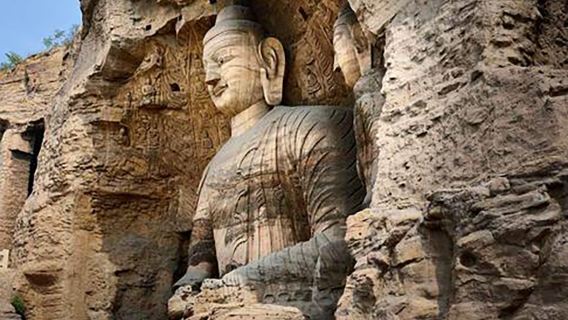
The tour guide was attentive and incredibly friendly, covering everything he needed to, and explaining things in considerable detail. With so many people during the National Day holiday, his experience helped us squeeze in every possible moment, and surprisingly, the trip wasn't crowded at all. The Yungang Buddha and the VR tour of Wutai Mountain were definitely worthwhile, and the Yanmen Pass Great Wall and Wang Family Courtyard were also very enjoyable. The driver was fantastic, incredibly experienced, and knew many shortcuts to Xiaoxitian, taking us directly to the scenic area entrance and saving us a lot of walking. The small group size meant it wasn't crowded, and the hotel arrangements were quite reasonable. The Yingxian Wooden Pagoda, the Yanmen Sunset, and the Wang Family Brick Carvings were all breathtakingly beautiful. The local tour guide was completely transparent and honest. I highly recommend this Shanxi tour; if you want to see ancient architecture but are afraid of doing research, book this tour without hesitation.
Shanxi Museum
Anonymous user17 September 2026
5.0
This is the most spectacular iron flower display I've ever seen! The program was diverse and engaging, the host was witty, the audience interaction was lively, the iron flower workers were incredibly skilled, and the iron flowers were dazzling and colorful – the effect was absolutely stunning! Thumbs up! 👍👍👍
Xinzhou Ancient City

YoYo_9H7U5N1A2 April 2026
5.0
The largest urban park within Beijing's Fourth Ring Road, it's free and incredibly welcoming. With its vast lawns, expansive lake, and stunning European-style architecture and fairytale castle, it's perfect for photos. You can run, boat, take your kids, and visit exhibitions. It's comfortable year-round, and locals often come here to relax.
Sun Park

118***6918 October 2026
5.0
It's definitely worth a visit. Huayan Temple in Datong Ancient City was built during the Liao, Jin, and Northern Wei dynasties. The architecture is magnificent and simple, and it's remarkably well-preserved. The Buddha statues inside are solemn and dignified, with vivid depictions. The murals, though hundreds of years old, remain remarkably vibrant. We are grateful to the people of Datong for protecting them so well.
Datong Ancient City


