
Things to do in Yucheng
Explore top experiences
Top 10 attractions in Yucheng




Yucheng Today's weatherFoggy 10-16℃
Yucheng weather for the next 2 days11/13: 9-16℃, 11/14: 7-19℃
Free things to do in Yucheng


What travellers say about Yucheng

夏日清风cyn5 November 2026
4.0
Shangqiu Ancient City (4A level, Figure 1), located in Suiyang District, Shangqiu City, is one of the best-preserved ancient cities in China, and is one of China's top ten ancient cities and a national water conservancy scenic area (Figure 2).
Shangqiu has a history of over 4,000 years, and has been a famous capital city throughout history. Emperor Ku, Shang Tang, and the State of Song all established their capitals here (Figure 3).
Shangqiu Ancient City has three main characteristics: an octagonal city, a water city, and a city built upon a city.
The entire city is circular on the outside and square on the inside, reflecting the concept of a round heaven and a square earth. It has four gates with eight entrances, staggered layouts, and ninety-three streets arranged like a chessboard (Figure 4), guided by the principles of Yin-Yang and Five Elements, and the Eight Trigrams and Feng Shui.
A wide city lake surrounds the city, making it appear as if the ancient city is built on water from a distance (Figure 5).
The existing Guide Prefecture City (Figure 6) was built during the Hongzhi and Zhengde periods of the Ming Dynasty, and has a history of over 500 years. Below it lie six ancient capital cities: Nanjing (Yingtian Prefecture) of the Northern Song Dynasty, Songzhou (Songzhou City) of the Sui and Tang Dynasties, Suiyang (Suzhou City) of the Liang State of the Qin and Han Dynasties, and Song State of the Zhou Dynasty.
Entrance to the ancient city is free, but some smaller attractions within the city require payment. The official combined ticket includes the following three attractions:
**Guide Prefecture City Wall (Figure 7):** A relatively well-preserved Ming Dynasty city wall. We only climbed the South Gate—Gongyang Gate—from which one can overlook the scenery inside and outside the city.
**Zhang Xun Ancestral Hall (Figure 8):** Commemorating Zhang Xun and Xu Yuan, generals of the Tang Dynasty's defense of Suiyang, it is a patriotic education base.
**Yingtian Academy (Figure 9):** The foremost of the four great academies of the Northern Song Dynasty, where Fan Zhongyan once studied and taught.
Shangqiu Ancient City Scenic Area

哈哈岛张易之9 March 2020
5.0
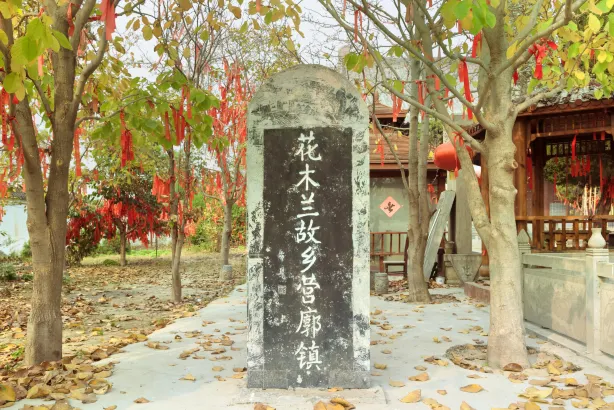
Mulan Temple is located in Dazhouzhuang Village, Yingkuo Town, 35 kilometers south of Yucheng County, Shangqiu City, Henan Province. It was built in the Tang Dynasty 1,300 years ago.
I lie on my head on the battlefield at night, with swords and spears as my pillow, and I dream of the yellow flowers several times.
I wake up to find the jade hairpin, but the long blade is frozen with frost.
Mulan Ancestral Hall

M22***2222 October 2022
5.0
Yingtian Academy, also known as Yingtianfu Academy, Suiyang Academy, Nanjing Academy, and Nandu Academy, was later upgraded to Nanjing Imperial Academy and became the highest institution of learning in the Northern Song Dynasty. It is also the only academy in ancient China that was upgraded to Imperial Academy. Most academies in the Northern Song Dynasty were located in mountainous areas, but Yingtian Academy was located in a bustling city, which became the main feature of Yingtian Academy.
Yingtian Academy is known as one of the four ancient academies in China, along with Bailudong Academy in Lushan, Jiangxi, Yuelu Academy in Changsha, Hunan, and Songyang Academy in Dengfeng, Henan. It occupies an important position in the history of education, culture, and thought in China.
Yingtian Academy

iKun~~12 August 2023
5.0
Yanbo Terrace, formerly known as Shangqiu, and commonly known as Huoxing Terrace and Vulcan Terrace, is located 3 miles southwest of the ancient city of Shangqiu in Suiyang District, Shangqiu City, Henan Province. It is an observatory site dating back more than 4,500 years. It is the earliest existing observatory in China and is a rare physical material for studying the history of China's astronomical development, with extremely high scientific research value.
Shang Qiu Huo Shen Tai

Anonymous user10 November 2026
5.0
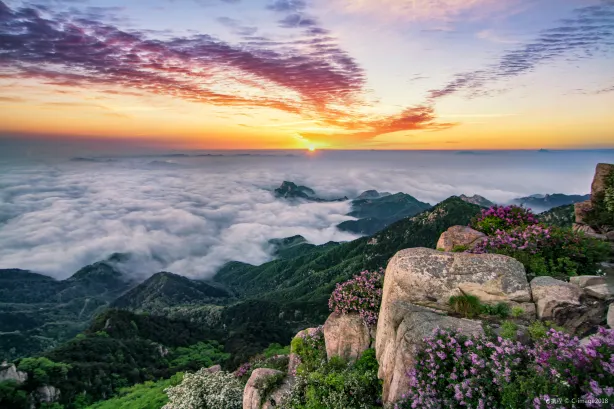
Taking the Zhongtianmen Cableway on Mount Tai is a time-saving, effortless, and worry-free option. It only takes about 10 minutes to get from Zhongtianmen to Nantianmen, and you don't even need to climb the 18 bends – truly a blessing for lazy people!
Mount Taishan
Anonymous user10 November 2026
4.0
The scenery is different during the day and at night, each with its own unique characteristics. The scenic area is well-planned and the landscape is quite nice, making it worth a visit. The only downside is the large number of people. Transportation in the surrounding area is not very convenient.
Millennium City Park

M55***2018 August 2026
5.0
It's very worthwhile, but it's also very crowded, which might slightly detract from the overall experience. However, the people are incredibly welcoming, and there are many beautiful spots for taking photos. The food is also affordable and inexpensive, which kids enjoy. I'll definitely go back when it's less crowded.
Song Du Huangcheng Cultural Tourism Resort

侧手翻小子11 November 2026
5.0
The construction is absolutely stunning, especially the night view! The antique buildings and lanterns create a feeling of stepping back in time. The silver-threaded ancient buildings, combined with the lights and "snowflakes," are incredibly romantic. The NPCs' costumes are exquisite, they're very enthusiastic, and the interactions are excellent. Everywhere you go in the scenic area, they're incredibly helpful when you ask questions—they're practically the equivalent of Pang Donglai in the cultural tourism world! The Bianhe River cruise is fantastic value; definitely buy the combined ticket and take the Imperial River section. Every bridge and archway feels like stepping into a painting. There are also shows along the river. The experience is truly exceptional. The only downside is that Wansui Mountain Scenic Area gets incredibly crowded. Going during the off-season would be an even better experience.
Wansuishan Martial Arts City

verazhe7 November 2026
5.0
A must-see attraction in Jinan, the chrysanthemum exhibition is also very beautiful recently.
The continuous gushing of Baotu Spring is quite amazing, and it gets really crowded. Going early is better.
The spring water is incredibly clear when the weather is good.
Baotu Spring
还不曾去过倒悬山!3 July 2026
4.0
There's a Riyue Lake in Shangqiu, and there's also one in Yongcheng. The one in Yongcheng seems to be a bit bigger than the one in Shangqiu. I've been to Shangqiu a few times. Yeah, but I only rode an electric scooter around Riyue Lake before, just on the outer perimeter, because you can't ride it in. This time I came specifically to hike around it.
Shangqiu Riyue Lake Scenic Area
Trip Moments in Yucheng


Popular cities near Yucheng


Frequently asked questions
How can I contact Trip.com customer support?
Get help anytime, anywhere within 30 secondsContact customer support
Can I change or cancel my booking?
Change and cancellation policies vary by attractions and tours. Please check the product details page for more information.
How can I get discounted prices?
Ticket prices may vary between weekdays and weekends, as well as during peak and off-peak seasons. When booking with Trip.com, you can also use Trip Coins to get extra savings. For more tips on booking discounted tickets, please visit Trip.com for the latest information.