Xiangyuan

Things to do in Xiangyuan

Search attractions or local attractions & tours
Search

Explore top experiences

Top 10 attractions in Xiangyuan
View all Attractions
Xiantang Mountain
No. 6 of Fall Viewing Attractions in Changzhi

Xiantang Mountain

4
4.3/5
315 reviews

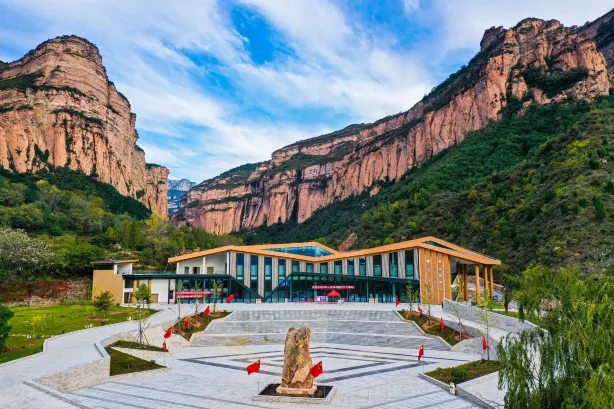
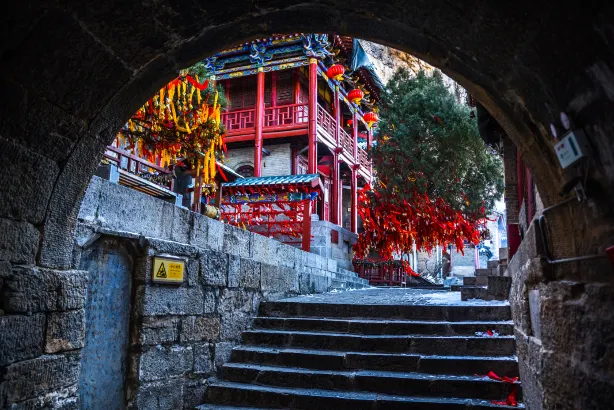
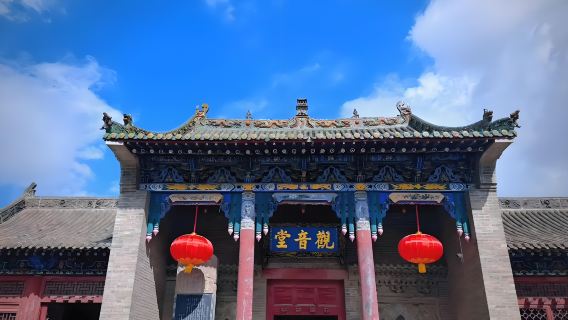
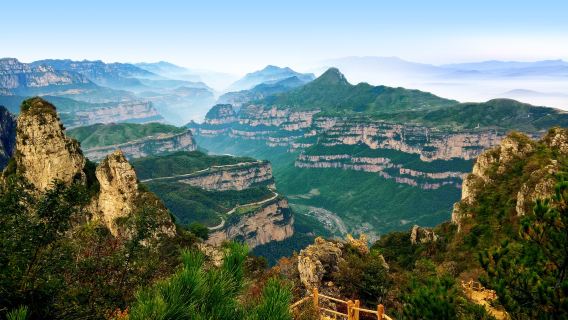
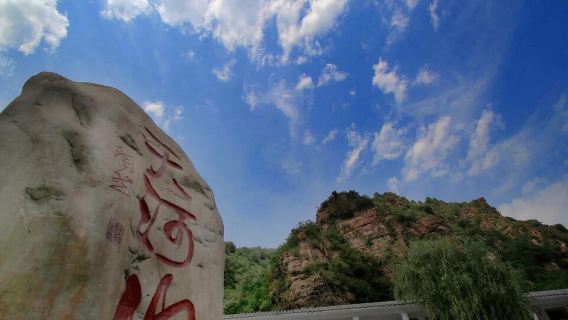
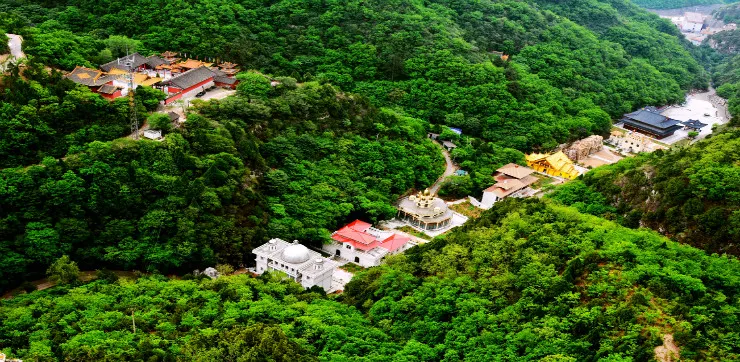
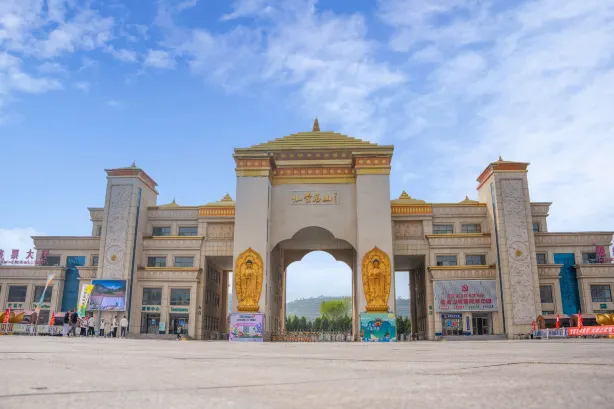
Xiantang Mountain is a national AAAA-level tourist attraction, national forest park, China low-carbon tourism demonstration site, provincial scenic spot in Shanxi, moral education base in Shanxi Province, provincial civilized and harmonious scenic area, and education base in Changzhi City. Xiantang Mountain is located in Xiangyuan County, Shanxi Province, at the western foot of the Taihang Mountains and north of the Shangdang Basin, covering an area of 21 km². Xiantang Mountain, known as the "Sacred Mountain of Taihang," stands at an elevation of 1,100–1,750m. It boasts over 360 species of flora with 90% forest coverage. The air and surface water quality meet national standards, while environmental noise levels remain at zero, earning it the reputation of a "natural oxygen bar." The attraction features over 30 scenic spots including Xiantang Temple, Wa Huang Palace, Guanyin Cave, the ancient architectural complex of Liuli Rock, Faxian Memorial Garden, Xiantang Bahe Garden, the Temple of Wealth, and Guanyin Hall. Among these, Xiantang Temple stands as the crown jewel, with a celestial ladder at its entrance, towering peaks behind it, and springs winding through its halls. Surrounded by mountains on all sides, it's a breathtaking spectacle historically praised as "encircled by nine dragons, a place of outstanding people and spiritual energy." Each season offers unique charm: spring brings blooming wildflowers, summer offers dense forest shade, fall paints the mountains in red foliage, and winter transforms the landscape into a pristine icy wonder. As Ming Dynasty scholar Li Jun poetically described: "This is the true realm of Penglai—where else could one seek such celestial halls?" Trace the footsteps of Faxian and explore the sacred Xiantang Mountain. During the Eastern Jin Dynasty, the eminent monk Faxian practiced and preached Buddhism here. As the first Chinese monk in recorded history to reach India for Buddhist scriptures—230 years before Xuanzang of the Tang Dynasty—he became a cultural envoy and pioneer of the ancient Silk Road, honored by Lu Xun as "the backbone of China." The activities held during festivals like the Spring Festival and Red Leaf Festival each year are spectacular, attracting countless visitors to explore the serene beauty and find inner peace. The scenic cable car in the attraction offers an effortless way to reach the summit, where you can overlook the mountain ranges and enjoy breathtaking panoramic views. Xiantang Mountain is a comprehensive tourist destination offering mountain climbing adventures, sightseeing tours, summer retreats, and cultural exchanges. Introduction to Xiantang Mountain petting zoo: The Xiantang Mountain Petting Zoo is an immersive forest-themed animal park created by Shanxi Xiantang Mountain Tourism Development Co., Ltd. The park has introduced hundreds of species and thousands of rare, adorable animals, including lions, black bears, wolves, and other wild creatures. Here, visitors can not only observe various cute animals up close and watch sea lion shows and pet performances, but also engage in hands-on activities like feeding, petting, and interactive photo sessions. Immerse yourself in this kingdom of adorable creatures and experience the charm of nature.

Xiangyuan · 18.2km from downtown
Huangyadong Scenic Area
No. 1 of Family-friendly Attractions in Changzhi

Huangyadong Scenic Area

6.5
4.8/5
671 reviews

Huangyadong Cultural Tourism Area is located in the hinterland of the Central Taihang Mountains, Licheng County, Changzhi City, Shanxi Province, with a total area of ​​6.7 square kilometers. It consists of the Huangyadong Red Classic Area, Tianwaitian Leisure Experience Area and the Entrance Service Area. During the Anti-Japanese War, this was an ordnance base behind enemy lines in North China. The earliest arsenal established by the Eighth Route Army was born here, and it was known as the "Cradle of People's Military Industry". In November 1941, the Huangyadong Defense War that shocked China and the world took place. Our army defeated the enemy with fewer troops and the weak with stronger ones, creating an unprecedented record of 6:1 enemy and our casualties in the Sino-Japanese war. Huangyadong (material warehouse), the former site of the arsenal, the martyrs' cemetery, the carved fort group and other sites and relics are scattered throughout. It is a relatively well-preserved red anti-Japanese war site and is known as the "anti-Japanese war museum without walls". It integrates the magnificent scenery of Taihang Mountains, the geological wonders of Zhangshiyan, the red military industry culture, and the historical sites of the War of Resistance Against Japanese Aggression. It is a cultural tourism area with the main functions of resource protection, cultural promotion, party and government training, study and team building, sightseeing and vacation, summer health care, and outdoor expansion.

Licheng · 41.3km from Xiangyuan
Longmen Grottoes
2027 Asia 100 - Best Things to Do

Longmen Grottoes

9
4.7/5
62.7k reviews

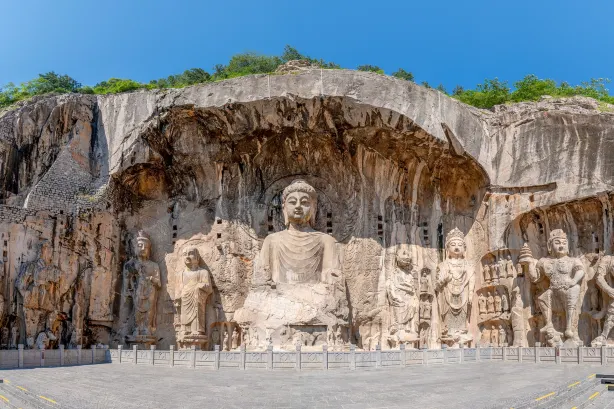
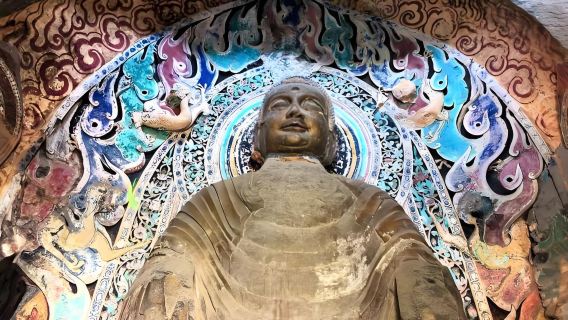
Longmen Grottoes are located in the southern suburbs of Luoyang, Henan Province, on the cliffs along both banks of the Yi River. As one of China's three major grotto art treasures, they were inscribed on the World Cultural Heritage list in 2000. The grottoes were first carved when Emperor Xiaowen of Northern Wei moved the capital to Luoyang, and construction continued through the Eastern Wei, Western Wei, Northern Qi, Sui, and Tang dynasties, with the vast majority of niches and statues left from the Northern Wei and Tang periods. Today, more than 2,000 niches and over 100,000 statues remain, along with a large number of inscriptions and steles, making the site an important representative of Chinese stone carving art. The attraction is divided by the Yi River into two parts: West Hill and East Hill. The West Hill Grottoes are the essence of the site, carved from the Northern Dynasties through the Sui and Tang periods. Famous caves include Guyang Cave, Binyang Cave, Lotus Cave, Wanfo Cave, and Fengxian Temple. The Lushena Buddha at Fengxian Temple stands about 17 m tall, making it one of the larger Buddha statues at Longmen Grottoes. Its face is dignified and serene, with a faint smile, and legend holds that it was modeled on the appearance of Wu Zetian, earning it the name "Oriental Mona Lisa." The inner walls of Wanfo Cave are densely covered with about 15,000 small Buddha statues, each only a few cm tall, neatly arranged and finely crafted. Guyang Cave is the earliest cave carved at Longmen, and its inscription calligraphy is exquisite; the selected "Twenty Masterpieces of Longmen" are representative works of Wei stele calligraphy. Binyang Cave consists of the South, Middle, and North caves and took more than twenty years to complete. Its original reliefs depicting emperors and empresses worshipping the Buddha were looted and lost overseas in the 1930s. In Binyang North Cave, a Buddha statue has a distinctive hand gesture, with the right index and middle fingers raised in a shape resembling the modern "scissors hand," though it is actually a Buddhist mudra, and it once sparked heated discussion online. The East Hill Grottoes are mostly Tang dynasty works and are smaller in scale than those on West Hill, but from the opposite bank visitors can enjoy panoramic views of West Hill from different angles, especially distant views of the Lushena Buddha. The attraction also includes Xiangshan Temple and Bai Juyi Memorial Park (Bai Garden). The Tang dynasty poet Bai Juyi lived in Luoyang in his later years and once praised it, saying, "Of the scenic splendors of Luoyang's surrounding mountains and waters, Longmen ranks first." When visiting, simply follow the route West Hill—East Hill—Xiangshan Temple—Bai Garden, proceeding in one direction without backtracking. The West Hill Grottoes are densely packed with content, so it is advisable to set aside ample time for a closer look; East Hill is quieter and more secluded, suitable for a brief visit and gazing across the river when energy is limited.

China · Luoyang
Millennium City Park
2027 Asia 100 - Best Things to Do

Millennium City Park

8.8
4.6/5
29.3k reviews

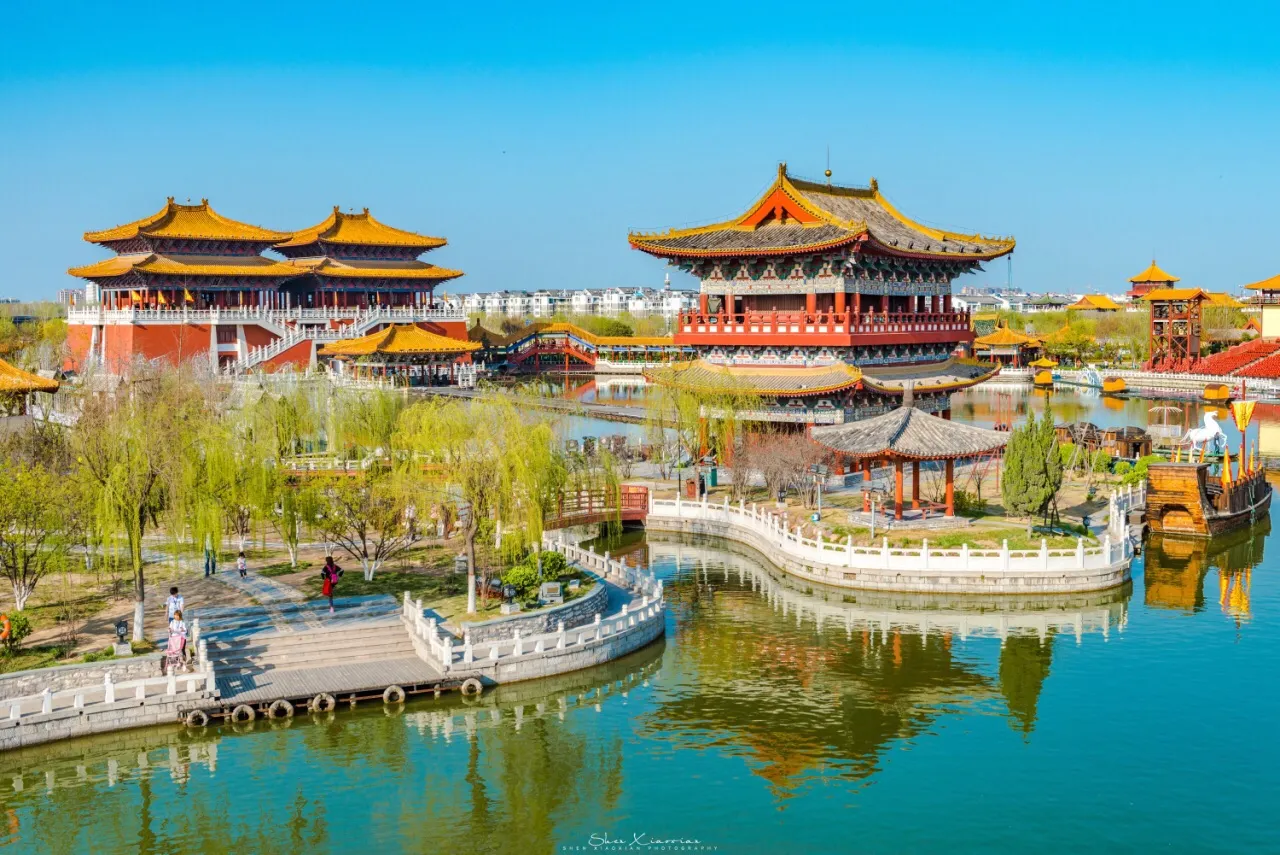
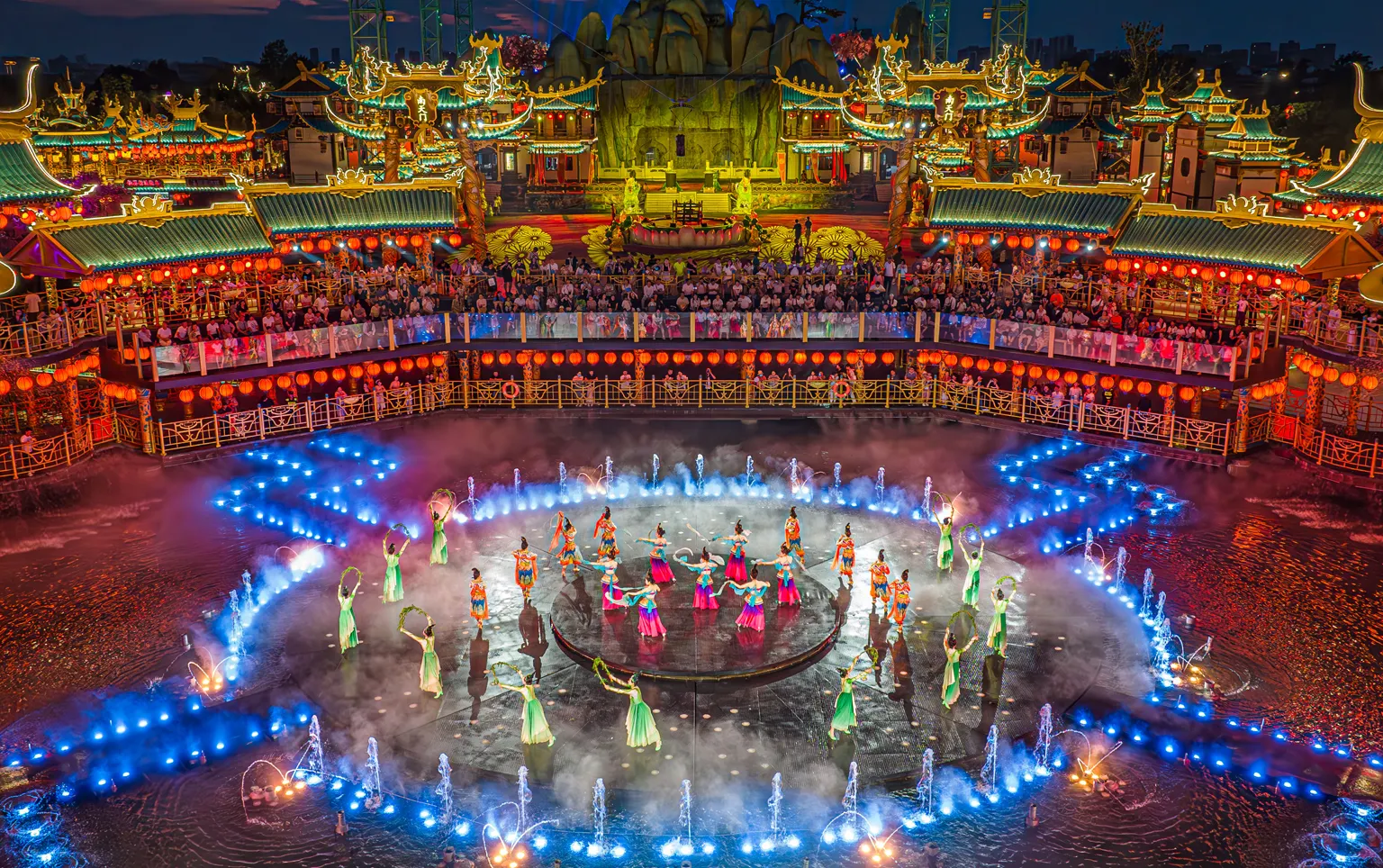
Millennium City Park is located by the shores of Longting Lake in Kaifeng. It is a large-scale historical and cultural theme park of the Song Dynasty, recreated one-to-one based on the famous painting Along the River During the Qingming Festival by Song Dynasty painter Zhang Zeduan. The park is divided into two sections by the Shuangting Bridge: the South Garden recreates the bustling street life of the Bianjing city, with taverns, eateries, teahouses, and pharmacies lined up along the streets; the North Garden is an imperial garden, with waterside halls, the Sifang Courtyard, and other palace buildings standing by the lake. Performers and street vendors in the park mostly wear Song Dynasty costumes, with ancient music lingering and bells and drums sounding, so that after a few steps visitors can easily fall under the illusion of "stepping into a painting in one morning, dreaming back a thousand years in one day." Architecture is the intuitive and tangible highlight here: the Rainbow Bridge spanning the Bian River is a replica of the famous bridge in the painting, shaped like a long rainbow, and standing on the bridge watching the grain boats pass by feels much like being inside the painting; the Fuyun Pavilion towers above all the other pavilions in the garden, with its tiered red towers and golden tiles on all four eaves, inviting one to climb from afar; the Shangshan Gate is rebuilt after the Northern Song dynasty Dongjing city gate, tall and majestic with brilliant painted decorations, making it the most imposing gate tower in the garden; and the Shuixin Xie, Shuangting Bridge, Jiulong Bridge, and other pavilions and waterside structures are scattered among the blue waves. The main attraction of the day is the immersive performances staged throughout the park: "Bao Zheng Inspects the Bian River Grain Transport" unfolds on the water on both sides of the Rainbow Bridge; "Squire Wang Seeks a Son-in-Law" features a decorated tower erected in front of Squire Wang's house where a silk ball is tossed to choose a groom; "Yue Fei Challenges Prince Xiao Liang" raises dust on the Song dynasty parade ground as horses gallop; and folk performances such as cockfighting, stilt walking, and pan drumming are interspersed throughout. To step into the action yourself, head to the Four Directions Courtyard to don traditional costumes and enter the examination cells for a hands-on Song dynasty imperial exam experience; families with children can enjoy carousel rides, roller coasters, and other amusement facilities wrapped in Song dynasty storytelling at the Song Dynasty·Royal Pleasure Ground; and in the entertainment quarters, face-changing, qigong fire-breathing, ancient magic, and other Song dynasty variety acts take turns on stage, with intangible cultural heritage feats ready to break out at any moment right beside you. After nightfall, the park takes on a different face: red lanterns light up one after another, the market streets are brightly illuminated, and it feels like a completely different park from the daytime. The large-scale water-based live performance "The Great Song Dynasty's Eastern Capital: A Dream of Splendor" is staged on the surface of Jinglong Lake. The entire show is woven together from eight classic Song ci poems and the painting Along the River During the Qingming Festival, drawing the audience back to the Northern Song dynasty's Eastern Capital a thousand years ago. The performance runs about 70 minutes, and many visitors deliberately plan their itinerary to stay until the evening to catch this show. Dining in the park is also convenient: the snack street at Dongjing Food Court brings together Kaifeng snacks such as fried liangfen, tongzi chicken, and almond tea, perfect for eating while strolling; if you want to sit down for a proper meal, you can visit the reconstructed Sun Yang Zheng Dian in the park, which was originally one of the seventy-two official restaurants of Bianjing in the Northern Song Dynasty, where you can taste traditional Henan dishes such as soup dumplings and carp with baked noodles.

China · Kaifeng
Jinci Temple Museum
No. 1 of Family-friendly Attractions in Shanxi

Jinci Temple Museum

8.8
4.8/5
21.1k reviews

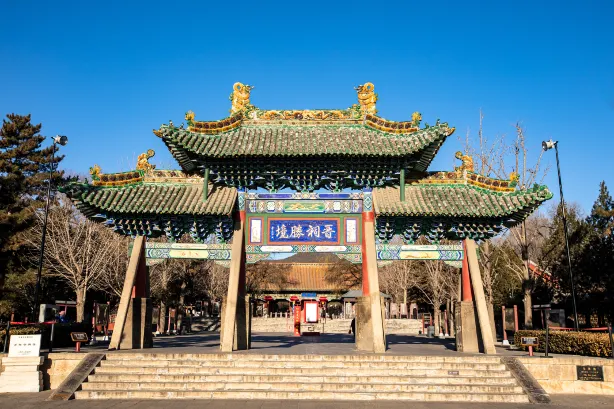
Jinci Temple Museum is located at the foot of Xuanweng Mountain by the banks of the Jin River. It is an ancestral temple built to commemorate Tang Shuyu, the founding feudal lord of the State of Jin, and is also one of the earlier surviving royal sacrificial gardens in China. There is a saying that "you have not truly visited Taiyuan until you have visited Jinci." The ancient buildings in the museum are arranged in sequence along the central axis, among which the Xian Hall, the Flying Bridge over the Fish Pond, and the Hall of the Holy Mother are known as the "three treasures," while the Zhou Cypress, the Never-Aging Spring, and the Song dynasty attendant statues are known as the "three wonders"—these are the core highlights of any visit. The "Three Treasures" are located on the central axis and can be visited together. Xian Hall is the place where sacrificial offerings are placed. The hall is surrounded by railings instead of walls, making it well-ventilated and bright, and its beam structure is simple and lightweight. The Flying Bridge Across Fish Pond is on the west side of Xian Hall. It is a cross-shaped ancient bridge built over a square pond, resembling a modern overpass in form, and this type of bridge structure is extremely rare among surviving ancient buildings. The west end of the bridge connects to Shengmu Hall, the oldest surviving building in the museum. Wooden carved dragons coil around the porch columns in front of the hall, making them relatively early surviving examples of wooden coiled dragons. The hall interior was built using the reduced-column method, creating a rather spacious interior. It houses dozens of Song Dynasty colored sculptures, with the main statue of Shengmu seated in the shrine and the remaining attendants arranged on both sides with varied expressions. One attendant statue is half joyful and half sorrowful, vividly lifelike and moving. With Shengmu Hall as the center, you can also seek out the "Three Wonders." The Zhou Cypress is located on the north side of Shengmu Hall. It is said to have been planted in the Western Zhou Dynasty, and its trunk leans south like a reclining dragon, full of ancient majesty. The Never-Aging Spring is located on the south side of Shengmu Hall and is the main source of the Jin River. The museum also houses the Stele of the Inscription and Preface to Jinci, composed and handwritten by Emperor Taizong of Tang, Li Shimin, whose running-script calligraphy is vigorous and forceful. In the southern part is the Shifang Fengsheng Zen Temple, said to have originally been the villa of the Tang Dynasty general Yuchi Gong. In the Futu Courtyard, the Sarira ShengSheng Pagoda can be climbed for a distant view. The Jinci temple fair has been passed down to the present day and has been included in the national-level intangible cultural heritage list. The Water Mirror Stage, an ancient theater stage in the museum, is an important venue for activities during the temple fair.

China · Taiyuan
Wansuishan Martial Arts City
2027 Asia 100 - Best Things to Do

Wansuishan Martial Arts City

8.6
4.6/5
16.8k reviews

Wansuishan Martial Arts City is located in the northwest of Kaifeng's urban areaWansuishan Martial Arts City, it is a large-scale attraction built with Song Dynasty culture and wuxia culture as its backdrop. Within the attraction, there are quaint and charming Song Dynasty garden streets and alleys, year-round exciting wuxia and period costume performances, as well as a wealth of entertainment facilities, making it a great place for relaxation and entertainment in Kaifeng, Zhengzhou, and surrounding areas. When visiting Wansuishan Martial Arts City, the first thing you will notice is the beautiful scenery of the attraction. Wansuishan Martial Arts City as a whole creates an atmosphere of the Song Dynasty, among which many views are very eye-catching, such as Wansui Temple, which recreates the splendor of a thousand-year-old ancient temple from the Song Dynasty, the Dragon Altar, which embodies the spirit of Buddhism, Confucianism, and Taoism, the relatively well-preserved ancient city wall of Kaifeng in China, and the "Nine Dragons Waterfall," one of the large man-made stream and waterfall groups in China. What is rare is that the attraction also has a very large area of forest and green space, with a quiet environment, and flowers bloom in season, making it very suitable for photography. Afterward, visitors will notice the unique wuxia features within the attraction. Year-round, multiple wuxia-themed performances are staged here, with several themed shows such as "Cross Slope," "Wu Song Drunkenly Beats Jiang the Gatekeeper," and "Wild Boar Forest" being quite spectacular—definitely not to be missed when visiting. Interactive performances like the "Wuxia Film and Television Experience Hall," "Martial Arts Champion," and "Li Kui Judges a Case" also allow visitors to participate in wuxia stories, offering plenty of fun. In the architectural design of the attraction, there are also many wuxia elements: the Wuxia Road built with large-scale weapons such as the "Heaven-Reliant Sword" and "Overlord Blade," the "Gallant Heroes Portrait" at the Great Song Martial Arts Hall, the "Sword Altar" at Cross Slope, Juxian Manor, and the Martial Arts Arena—all are uniquely distinctive. Additionally, every year during the Spring Festival periodWansuishanLarge-scale temple fairs are held, featuring grand performances, a rich variety of specialty snacks, a dazzling array of handicrafts, and highly distinctive entertainment activities, creating a lively atmosphere. It has now become one of the most popular temple fairs in the Central Plains region.

China · Kaifeng
Song Du Huangcheng Cultural Tourism Resort

Song Du Huangcheng Cultural Tourism Resort

8.6
4.6/5
181 reviews

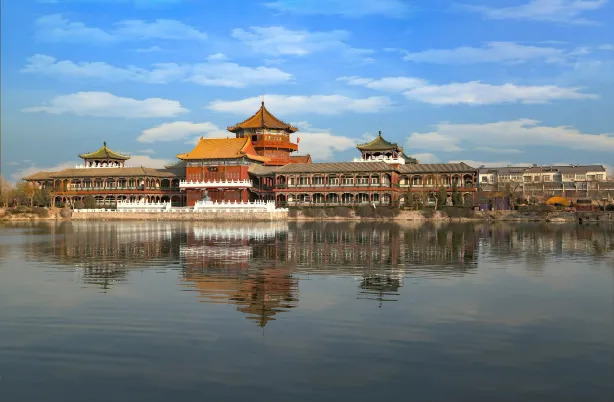
Song Du Huangcheng Cultural Tourism Resort is located in the northern part of the old city of Kaifeng, precisely on the site of the imperial palace of the Northern Song Dynasty's Dongjing city. The millennium-old central axis of Kaifeng runs through this area, making it the core zone of the royal culture of the Song Dynasty. Here, you can find the Song-style imperial architecture of the Longting attraction, the tales of the Yang Family Generals at Tianbo Yang's residence, and the calligraphic steles of Han Yuan Stele Forest. The Shuanglong Lane historical and cultural block, 960 Cultural and Creative Park, and Qisheng Corner have transformed old streets and courtyards into Song-style blocks perfect for leisurely exploration. The resort also connects a series of Song culture attractions: Wansui Mountain Great Song Martial Arts City stages year-round martial arts live shows and intangible cultural heritage iron fireworks, while historic sites like the Iron Pagoda, Kaifeng city wall, Zhouqiao and Bian River ruins, Shanshangan Guild Hall, Yanqing Taoist Temple, and Fan Pagoda are scattered across the old city, along with niche spots like the underground wartime grain storage. These places are hard to cover in one day, so we recommend focusing on two or three key sites. After dark, a different experience awaits as the attractions light up in unison. Boarding a painted pleasure boat on the Great Song Imperial River to watch the illuminated pavilions and towers sway with the rippling water is a popular nightlife option here.

China · Kaifeng
Pingyao Ancient City
2027 Asia 100 - Night Attractions

Pingyao Ancient City

8.4
4.6/5
27.4k reviews

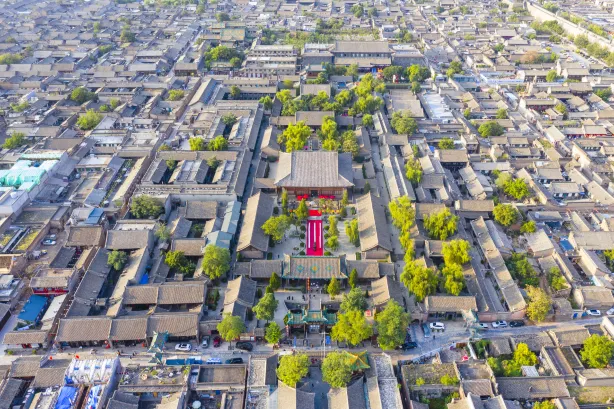
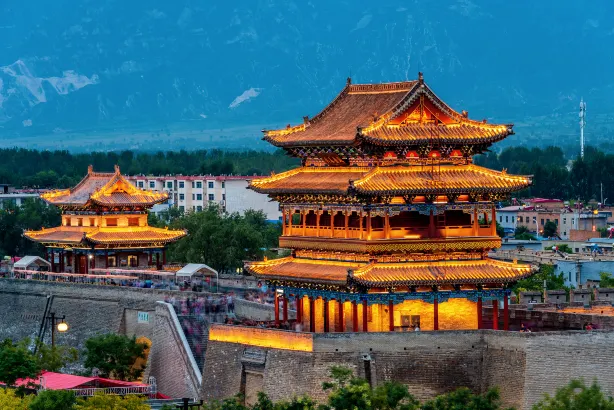
Pingyao Ancient City is one of the best-preserved ancient cities in China and, along with Lijiang Ancient City, is one of the two ancient cities in China to have successfully been designated as a World Cultural Heritage site in its entirety. Pingyao was once the financial center of China during the late Qing dynasty. Walking into this once-prosperous ancient city, you can feel the atmosphere of Shanxi merchant culture everywhere. The streets, shops, and residences within the ancient city still maintain their traditional layout and appearance. The overall street pattern is in the shape of the Chinese character 'tu', consisting of four main streets, eight small streets, and seventy-two lanes. The ancient city has six city gates in total, and the areas around the south gate and west gate are where visitors are concentrated. When touring, you usually enter the city through the lower west gate and walk along West Street to Rishengchang Exchange Shop, where you can learn about the development history of ancient banking and experience the legend of Shanxi merchants conducting business across the world. South Street, which runs north-south through the city, is the central axis of the ancient city. During the Ming and Qing dynasties, South Street gathered more than half of the country's financial institutions and was known as the "Wall Street of China" at the time. Today this street is called the Ming and Qing Ancient Street, and most of the ancient city's attractions are concentrated here. Centered on the landmark Market Tower, attractions such as Xietongqing Exchange Shop, Weitaihou Exchange Shop Museum, and the Chinese Escort Agency Museum are distributed around it, and a large number of shop buildings from the Ming and Qing periods are preserved along the street. At the Pingyao County Government Office in the south of the ancient city, you can see a large number of ancient documents and instruments of torture, and there is a daily performance of the county magistrate holding court; the City God Temple and the Confucian Temple in the east of the city have grand and refined architecture. The ancient city wall is very well preserved, and climbing the wall offers a panoramic view of the ancient city. The gate tower of Yingxun Gate at the south gate is especially exquisite, and watching the sunset from the city wall in the evening is a magnificent sight. In addition to the ancient city itself, the Zhenguo Temple and Shuanglin Temple outside the city are also part of the World Cultural Heritage. The Ten Thousand Buddha Hall of Zhenguo Temple is entirely made of wood, assembled with mortise and tenon joints without a single nail; Shuanglin Temple preserves painted sculptures from the Yuan to Ming dynasties, which are exquisite in form and renowned as a "treasure house of Eastern painted sculpture art."

China · Pingyao County
The Hukou Waterfall Scenic Area
No. 4 of Best Things to Do in Shanxi

The Hukou Waterfall Scenic Area

8.5
4.7/5
22.8k reviews

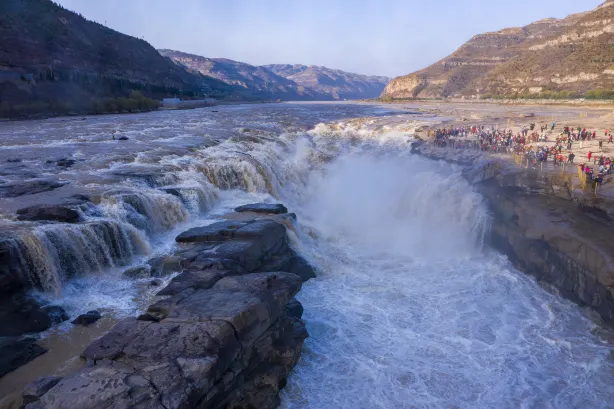
The Hukou Waterfall Scenic Area is located in the Jin-Shaan Grand Canyon in the middle reaches of the Yellow River and is the Shanxi-side section for viewing Hukou Waterfall. As the Yellow River rushes here, its surface suddenly narrows from several hundred meters wide to just a few dozen meters. The water, laden with silt, churns and pours down like water being poured into a giant kettle, which is how the name "Hukou" (Kettle Mouth) came to be. This is a rare yellow waterfall on the Yellow River, with muddy waves surging skyward and a roar like thunder, displaying magnificent momentum. The attraction is located on the east side of the waterfall, where the bank is relatively low, allowing visitors to look up and take in the full panorama of the Yellow River plunging downward. Below the waterfall, mist rises and fills the air, appearing like smoke or clouds from afar and creating the wondrous sight known as "smoke rising from the water"; on clear days, sunlight refracts through the mist to form a rainbow arching across the river, called "rainbow reaching the heavens." Within the attraction, Dragon Cave is a natural stone cave; following the stone steps down leads to a viewing platform close to the waterfall, where you can look up as the river pours down from above—an ideal spot to feel the force of the waterfall up close. Downstream from the waterfall, the Ten-Mile Dragon Trough is a deep channel formed by the river's long-term erosion of the riverbed; in the dry season, the trough floor is wide and flat, and ancients once used this terrain to haul boats along the bank, leaving behind the unique scene known as "sailing on dry land." Further downstream is Mengmen Mountain, where two huge rocks in the river split the Yellow River in two before the streams merge again; carved on the rock face are the four characters "Wo Zhen Kuang Liu" (Resting Here, Quelling the Raging Flow). The view of Hukou Waterfall is distinctive in each of the four seasons. Every year between April and May, peach blossoms bloom and the ice melts, coinciding with the "March peach blossom flood," when the abundant water volume makes the waterfall particularly spectacular. From September to November, the air is crisp in fall, and rainbows often appear in the mist, a phenomenon known as the "Hukou fall wind." Water volume is greater in spring and fall, and the sound of the water striking the rocks is like thunder, making these the best periods to admire the waterfall. The image of Hukou Waterfall once appeared on the CNY 50 banknote of the fourth series of the renminbi, making it a widely recognized classic symbol of Yellow River culture.

China · Ji County

Experiences you can't miss in Xiangyuan

Xiangyuan Today's weatherClear -10-11℃
Xiangyuan weather for the next 2 days11/24: -9-9℃, 11/25: -5-15℃

Free things to do in Xiangyuan
What travellers say about Xiangyuan

user-avatar
Anonymous user13 November 2025
5.0
Finally, I've arrived at Xiantang Mountain! Xiantang Mountain is located in Qiangji Township, 25 kilometers north of Xiangyuan County. It gets its name from Xiantang Temple, which is built halfway up the mountain. Originally named "Jiulong Mountain," the main peak is 1700 meters above sea level, covering an area of ​​over 20 square kilometers. From the summit, one can see layer upon layer of peaks, shrouded in mist, resembling nine dragons gathering. Xiantang Temple, ancient, solemn, and magnificent, is nestled halfway up the mountain, with Duxiu Peak (Cuiwei Peak) rising abruptly from the surrounding mountains beside it.

Xiantang Mountain

user-avatar
lxnellen28 October 2026
5.0
I didn't have high expectations, but I was pleasantly surprised when I entered. It was really nice. It felt like if you're looking at a canyon, you could walk right in and see everything without having to go around to the other side. The scenic area is quite large, so it's a bit far if you don't take public transportation. But the Taihang Mountain landscape is definitely worth a visit.

Huangyadong Scenic Area

user-avatar
Anonymous user22 November 2026
5.0
This place is definitely worth visiting. Our guide, Ms. Zhao Jing, explained the history and culture of the Longmen Grottoes very clearly. She even brought a tablet and provided us with many photos for comparison and explanation. It was fantastic!

Longmen Grottoes

user-avatar
年年有余200922 November 2026
5.0
The Qingming Riverside Landscape Garden was a great experience. Although it didn't have as many NPCs as Wansui Mountain, the crowds were just right. There were many games that were educational, and you didn't need a reservation to see the iron flower performance; it was first-come, first-served, so early arrivals got seats, and latecomers could watch from the sidelines without any regrets. The food was just average, not as good as Wansui Mountain, a bit more expensive, and with fewer options. Qingming Garden did offer a few free rides on rides, and the bumper cars were especially fun—the area was large, and you could ride together with a group. The Tokyo Defense War performance was very crowded, but you could take a boat to watch it, avoiding the crowds and enjoying the beautiful scenery on both banks. Overall, it's definitely worth a visit.

Millennium City Park

user-avatar
泰拉西尼-法瓦罗塔理查德23 November 2026
5.0
The saying "A trip to Taiyuan is incomplete without visiting Jinci" truly comes to mind after walking the entire complex. The three national treasures along the central axis—the Hall of the Holy Mother, the Fish Pond Flying Bridge, and the Offering Hall—are breathtaking at every turn: the wooden dragon carvings in front of the Hall of the Holy Mother, despite a thousand years, still retain their distinct scales and claws; the cross-shaped stone bridge of the Fish Pond Flying Bridge was described by Liang Sicheng as "a unique example"; and the Offering Hall is constructed entirely of mortise and tenon joints without a single nail, showcasing the ingenuity of the ancients. Among the three wonders, the Zhou Cypress stands crooked yet flourishes, and the plaque inscribed by Fu Shan at the Nanlao Spring Pavilion is also worth pausing to admire. A guided tour is strongly recommended; otherwise, it's easy to rush through the experience. The stories behind many details are the soul of Jinci. History buffs, ancient architecture enthusiasts, and families looking to broaden their children's horizons all deserve a special trip.

Jinci Temple Museum

user-avatar
Travel zumbie21 November 2026
5.0
A single ticket allows for unlimited entry over a three-day period. The performances are fantastic, and the performers are full of energy. A very enjoyable theme park

Wansuishan Martial Arts City

user-avatar
M55***2018 August 2026
5.0
It's very worthwhile, but it's also very crowded, which might slightly detract from the overall experience. However, the people are incredibly welcoming, and there are many beautiful spots for taking photos. The food is also affordable and inexpensive, which kids enjoy. I'll definitely go back when it's less crowded.

Song Du Huangcheng Cultural Tourism Resort

user-avatar
Anonymous user22 November 2026
4.0
Pingyao Ancient City charges a combined ticket of over 100 yuan, which includes many attractions, but it's impossible to see them all, nor is it necessary. The city walls close at 5:15 PM, which is inconvenient. Unique features include the county government office, a money exchange, a treasury, and a security escort agency.

Pingyao Ancient City

user-avatar
133***9514 November 2026
4.0
I booked a day trip to Xiaoxitian and Hukou Waterfall; buying tickets separately is more cost-effective. The water level wasn't high in winter, so I didn't see a very spectacular sight, although the current was still quite strong. The waterfall itself is a small area; half an hour is enough. If you want to see the waterfall up close, you need to buy a separate ticket to go down to the river. It's quite a distance from Taiyuan, so the time cost was too high, and I felt it wasn't worth the price. There's a commercial street outside the scenic area with many restaurants, so you don't have to worry about finding a place to eat.

The Hukou Waterfall Scenic Area

user-avatar
小宇贝贝22 November 2026
5.0
It's a good place to go during the off-season, though it can be a bit chilly on the way up. This is the easiest mountain I've ever climbed; the steps are quite gentle, with platforms every two or three steps, so it's not tiring at all.

Wahuang Palace

Popular cities near Xiangyuan

Frequently asked questions

When choosing a tour, start with how much time you have and the kind of experience you're looking for. Trending options right now include Changzhi Taihang Mountain Grand Canyon 1-day tour with private charter and bilingual service, 1-day tour to Handan Road + Jingniang Lake + East Taihang in Hebei with bilingual Chinese-English service, and 1-day tour to Taihang Wuzhi Mountain and Wahuang Palace in Handan, Hebei with Chinese and English service (admission ticket not included). Check the real-time availability and itinerary before you book.

As of 24 November 2026, the reference price for day tours and activities in Xiangyuan is around EUR 134.71 – EUR 140.83. Rates vary by duration, group size, transport, tickets, meals, and any special admission requirements. Before you book, please confirm the billing currency and whether the price is quoted per person or per group.

Get help anytime, anywhere within 30 secondsContact customer support

Change and cancellation policies vary by attractions and tours. Please check the product details page for more information.

Ticket prices may vary between weekdays and weekends, as well as during peak and off-peak seasons. When booking with Trip.com, you can also use Trip Coins to get extra savings. For more tips on booking discounted tickets, please visit Trip.com for the latest information.