Things to do in Ningwu
Explore top experiences
Top 10 attractions in Ningwu


Luya Mountain Scenic Area
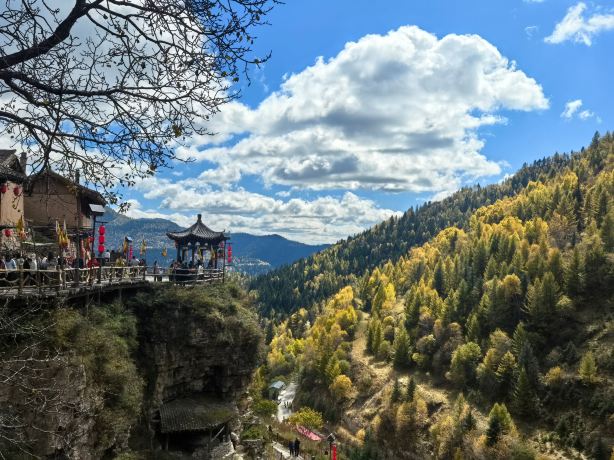
Known for its "asparagus" shape, Luya Mountain is a towering peak among high mountains. There are mountains and waterfalls, as well as odd-looking rocks and lush trees. During the sunrise after rain, the green Luya Mountain turns fire red and a colorful chakra-shaped "Luya Buddha's light" is occasionally seen.Ningwu · 27.1km from downtown

Source of Fenhe River
The source of the Fen River is located about 1 kilometer northwest of Dongzhai Town, Ningwu County. According to the "Classic of Mountains and Seas", "The Fen River originates from the Guancen Mountain", so later generations believe that this is the source of the Fen River. It is the mother river of Shanxi people. There is a pond at the source, with the four characters "Fenyuan Lingzhao" engraved on the stone wall. It has been known as the first holy place in Shanxi since ancient times. The ancient temple Leiming Temple in northern Shanxi got its name because the sound of Fenshui gushing out from the dragon's mouth under the stone cliff is like thunder. The temple is built on the mountain and is grand and majestic. The ancient temple fair is held on the eighth day of April every year, which is unprecedented.Ningwu · 26.9km from downtown
Yingxian Wooden Pagoda
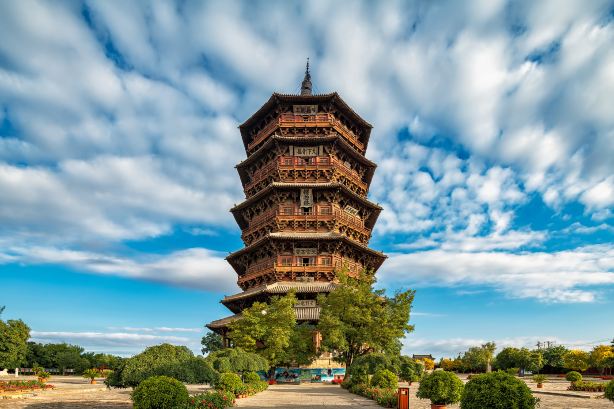
The full name of Yingxian Wooden Tower is Sakyamuni Pagoda of Fogong Temple. It is in the Fogong Temple in the northwest of Yingxian County. The octagonal wooden pagoda has five stories. Except for the high-end stone foundation of the first floor, the rest of the pagoda is made of wood using the traditional craftsmanship of Sunmao. Each layer of the wooden tower is equipped with wind chimes for a pleasant sound when the wind blows.Ying County · 98.9km from Ningwu

Xinzhou Ancient City
Xinzhou was called Xiurong in ancient times. It is located between Taiyuan and Mount Wutai. It is the seat of Xinzhou Administrative Office and Prefectural Committee. In the Spring and Autumn Period, Xinzhou belonged to Jin State. In the Warring States Period, it belonged to Zhao State. In the Qin and Han Dynasties, it belonged to Taiyuan County, Yanmen County, and Taiping County. In the Sui Dynasty, it was Xinxingdu and Yanmen. During the Tang, Five Dynasties and Song dynasties, it was called Dingxiang Prefecture of Xinzhou. During the Jin, Yuan, Ming and Qing dynasties, it was called Xinzhou, Daizhou and Baodezhou. During the Anti-Japanese War and the War of Liberation, most of the area belonged to Jinchaji, and the area to the west belonged to Jinsui. In 1949, Xinzhou Prefecture was established. The cultural relics and historical sites in Xinzhou City include: Xinzhou North Gate Tower. Located in Xinzhou City, on the Gongchen Gate of the old north city wall. The North Gate Tower was built in the 24th year of Wanli in the Ming Dynasty. The tower is located on the 12-meter-high city wall, which makes it more majestic and magnificent. The city wall stands tall and is painted red on the outside. There is a Voucher doorway below, with a very high top and a bottom width of more than 3 meters.Xinzhou · 77.1km from Ningwu

Shanxi Museum
"Five thousand years of history can be seen in Shanxi." Located on Binhe West Road in Taiyuan, the Shanxi Museum showcases the essence of Shanxi's cultural relics. The museum consists of a main building and four corner annexes, with the main building resembling both a dipper and a ding vessel, serving as the primary venue for travelers to view the collection. The main building has four floors. The first-floor lobby features a general service desk, while the second and third floors host thematic exhibitions on history and culture. The fourth floor showcases art-themed exhibitions, which together form the permanent displays of the Shanxi Museum. After entering the first-floor lobby, proceed to the second floor via the stairs to begin the historical journey themed "Soul of Jin." The cultural and historical thematic exhibition showcases the highlights of Shanxi's five-thousand-year civilization through numerous precious artifacts, ranging from ancient human relics to the rise and fall of Shanxi merchants during the Ming and Qing dynasties over five centuries. During your visit, several exquisite artifacts are not to be missed. The bird zun, a bronze ritual vessel from the Western Zhou period, was used in the ancestral temple sacrifices of the Jin marquis. The bird zun features an exquisitely crafted design with a phoenix as its main form. On the phoenix's back rests a small bird, serving as the handle for the vessel's lid. At the tail of the phoenix, an elephant is depicted, with its long trunk perfectly balancing the phoenix's two legs to form a stable tripod base. This artifact is a representative piece among the bronze collections in the museum. In addition, you can also admire: the Houma covenant texts, which are oath documents from the Spring and Autumn period used by the ministers of the Jin state; the lacquered wooden panel paintings, a painted screen from the Northern Wei dynasty depicting colorful stories from the "Biographies of Exemplary Women"; the white marble sarcophagus, a relic from the Sui dynasty, belonging to a tomb occupant who was a member of the Central Asian Yu people, with intricate carvings both inside and outside the sarcophagus, featuring figures with deep-set eyes, high noses, and black hair, characteristic of the Mediterranean Caucasian race. In the cultural thematic exhibition, you can also learn about the origins and development of Buddhism and traditional opera in Shanxi. The fourth floor of the main hall features an art thematic exhibition area. Among them, the "Timber and earth splendor" - ancient architectural art thematic exhibition showcases Shanxi's status as a province rich in cultural relics and ancient structures. "For above-ground relics, look to Shanxi" - Shanxi is renowned as the "treasure trove of ancient Chinese architecture," boasting over half of China's above-ground ancient structures with comprehensive categories, especially in the quantity of religious buildings. If you're a fan of ancient architecture, this is a must-visit. The Shanxi Museum also hosts temporary exhibitions periodically. At the first-floor lobby service desk, services such as hiring on-site guides (Chinese and English) and renting audio guides are available. The main building also houses a restaurant and a tea house for visitors.China · Taiyuan

Datong Ancient City
Datong Ancient City is the historic core of Datong, Shanxi. It served as the capital Pingcheng during the Northern Wei dynasty, the western auxiliary capital during the Liao and Jin dynasties, and a strategic frontier stronghold in the Ming dynasty, earning it the enduring title "northern key." Over its 2,000-year history spanning dynastic changes, the city's location remained largely unchanged, preserving its chessboard-style street grid centered on Sipailou to this day. The 2008 conservation and restoration project reunited the city walls, reconnected the moat, and gradually revived ancient architecture and old streets, layering the grandeur of an ancient capital with modern life within the same walled city. The ancient town offers an exceptionally dense concentration of noteworthy sights: in Huayan Temple's Liao- and Jin-dynasty halls, the graceful "clasped-hands, smiling" Liao-dynasty bodhisattva statue in the Scripture Depository Hall has long been hailed as the "Oriental Venus"; Shanhua Temple preserves a complete complex of Liao- and Jin-era wooden architecture. The Nine-dragon Wall, originally a glazed screen wall before the Ming-dynasty Dai Prince's residence (destroyed in war), survives with its nine coiling dragons still radiant—older and larger than its counterparts in Beijing's Forbidden City and Beihai Park. Climbing the reconstructed Ming-style city walls reveals a bird's-eye view of the square town's crisscrossing four main streets and orderly rooftops. An evening wait for sunset on the ramparts, followed by the illuminated outlines of walls and watchtowers after dark, makes for one of the town's most enchanting moments. Walking is recommended for touring: the attractions inside the city walls are spaced closely, allowing Huayan Temple, Shanhua Temple, the Nine-dragon Wall, and the drum tower to form a connected route. When tired, you may turn into the area around East Drum Tower Street, where time-honored shops and snack stores are concentrated, making it ideal for resting and replenishing. The ancient town covers a considerable area, so allocate at least half a day and wear comfortable shoes to leisurely appreciate the layered historical depth of this ancient capital.China · Datong

Taiyuan Ancient County
The ancient county seat of Taiyuan is located in Jinyuan District, covering an area of about 0.8 square kilometers. There are many relics of historical buildings in the city, the pattern of cross streets is clear, and the texture of streets and alleys is perfect. It follows the ancient architectural pattern of Jinyang ancient city "Phoenix Flying in the City", just like a phoenix with its head north and tail south. It has the reputation of "Phoenix City" since ancient times. It is the continuation of the 2500-year-old Jinyang ancient city. There are 79 existing cultural relics buildings in the city, and 49 historical buildings listed for protection by the Taiyuan Municipal Government. Among them, the Confucian Temple is listed as a national key cultural relics protection unit.China · Taiyuan

Zhengding Ancient City
Zhengding Ancient City is located 15 km north of Shijiazhuang, the capital of Hebei Province. Built according to traditional Chinese planning concepts and architectural styles, it embodies China's historical and cultural characteristics from the 5th to 19th centuries, showcasing the wisdom and perseverance of ancient laborers. Historically known as one of the "Three Northern Strongholds" alongside Baoding and Beijing, its southern gate still bears a stone inscription reading "Stronghold of Three Passes." Zhengding is also the hometown of Zhao Zilong, a renowned general from the Three Kingdoms period. The long and rich history has endowed Zhengding Ancient City with magnificent and uniquely styled cultural relics and historic sites, renowned for its "Three Invisible Mountains, Nine Non-Flowing Bridges, Nine Towers, Four Pagodas, and Eight Great Temples, along with Twenty-Four Exquisite Memorial Archways." "Three Invisible Mountains" refers to the fact that Zhengding was historically the administrative center of the Zhongshan State, Hengshan Commandery, and Changshan Commandery, yet the area itself has no mountains. "Nine Non-Flowing Bridges" describes a single-arched three-path stone bridge in front of the Longxing Temple, as well as the pan bridges (ancient pan bridges typically featured three parallel bridges) in front of the Prefectural Confucian Temple and the Zhengding County Confucian Temple—none of which have flowing water. "Nine Towers, Four Pagodas, and Eight Great Temples" refers to the original four gate towers, four corner towers, and the Yanghe Tower within the city; the four pagodas are the Tianning Temple Pagoda, Huata Pagoda of Guanghui Temple, Xumi Pagoda, and Chengling Pagoda of Linji Temple; the eight great temples include Longxing Temple, Guanghui Temple, Linji Temple, Kaiyuan Temple in Zhengding Ancient City, Tianning Temple, Hongji Temple, Sheli Temple, and Chongyin Temple—the latter three of which have been destroyed. Zhengding once boasted 24 magnificent memorial archways, including the Xu Family Archway, Liang Family Archway, Ancient Changshan County, Supreme Virtue Reaching Heaven, Virtue Matching Heaven and Earth, and Wooden Bell for All Affairs. However, due to historical changes, weathering, and especially the destruction during the decade-long Cultural Revolution, many precious cultural relics were damaged. Yet with 9 nationally protected relics, 6 provincially protected relics, and over 10 county-level protected relics, Zhengding still retains the grandeur of a renowned historical and cultural city. The ancient city of Zhengding was designated as a provincial-level historical and cultural city in 1990 and recognized as a national historical and cultural city in 1994. Zhengding's tourism features a unique blend of "modern and ancient," "elegant and folk" characteristics. Among its historical sites, the Longxing Temple, originally built in 586 AD during the Sui Dynasty and expanded under the decree of Emperor Zhao Kuangyin, the founding emperor of the Song Dynasty, stands majestic and well-preserved. It enjoys high acclaim both domestically and internationally, praised by renowned architect Liang Sicheng as "the foremost temple beyond the capital." The temple's "Reclining Guanyin" mural sculpture was hailed by Lu Xun as "the Goddess of Eastern Beauty."Revolving Sutra LibraryDubbed by physicists as a prime example of Newton's laws in action, along with China's scripture cabinets. The Sui Dynasty Longzang Temple Stele is one of the country's renowned ancient stone inscriptions, showcasing the evolution from Han clerical script to Tang regular script, praised by Kang Youwei as "the finest Sui stele." Standing 22 meters tall, the grand Buddha statue is among China's earliest and tallest surviving bronze standing Buddhas. The cross-shaped Mani Hall exemplifies classic Song Dynasty architectural techniques. Zhengding's vicinity also boasts four famous pagodas, including Huagong Pagoda at Guanghui Temple—a brilliant fusion of diamond throne and floral pagoda styles. Tianning Temple's...Lingxiao PagodaIt is the foremost wooden pavilion tower in China. The symmetrical arrangement of the Tang Dynasty bell tower and ancient pagoda at Kaiyuan Temple in Zhengding Ancient City exemplifies the transition in Chinese Buddhist temple architecture from pagoda-centered to hall-centered layouts. The Chengling Pagoda at Linji Temple serves as the reliquary pagoda for Master Yixuan, founder of the Linji school of Buddhism, and has become a symbol of Sino-Japanese friendship. Located within Zhengding, the Zhengding Rongguo Mansion was meticulously designed and constructed according to descriptions in Cao Xueqin's literary masterpiece "Dream of the Red Chamber" while strictly adhering to China's "Great Qing Code", making it the country's first architectural complex replicating Ming-Qing architectural styles. Most scenes from the TV series adaptation of "Dream of the Red Chamber" were filmed here. The Qing Dynasty-style Ningrong Street by Rongguo Mansion's west gate stretches over 200 meters, where pivotal scenes like "Imperial Consort Yuan's Homecoming" and "Qin Keqing's Funeral" were shot. With over 1,600 years of history, Zhengding Ancient City's walls were originally earthen fortifications during the Eastern Jin Dynasty, rebuilt in stone during the Northern Zhou Dynasty, expanded into earthen walls during the Tang Dynasty, and finally reconstructed as 24-li (approximately 12 km) brick walls during the Ming Dynasty. The surviving 8,106-meter Ming-era walls feature four magnificent gates: Yingxu (later renamed Huancui) to the east, Changle to the south, Zhenyuan to the west, and Yong'an to the north. While time has eroded the western and northern gates, the eastern gate was entirely buried under 1960s military fortifications. In 2001, the southern gate tower and 50-meter flanking walls were restored through public donations of original bricks and a CNY 3.99 million investment.China · Zhengding

Donghu Vinegar Garden
Explore Donghu Vinegar Garden and discover the history of vinegar brewing in Shanxi. As a national AAAA-level tourist attraction, a national industrial tourism demonstration base, and a provincial research and practice education demonstration base for primary and secondary schools, Donghu Vinegar Garden covers a total construction area of approximately 16,667 square meters. Rooted in Shanxi's long-standing Yellow River farming culture, it preserves and innovates the history of the "Meiheju" vinegar workshop founded during the Hongwu period of the Ming Dynasty, the national intangible cultural heritage "Meiheju" aged vinegar brewing technique, and Shanxi's vinegar history and culture. Based on the ancient brewing process of "steaming, fermenting, smoking, filtering, and aging," it truly embodies "inheriting traditional craftsmanship and realizing a health-oriented philosophy." Since its opening in 2000, Donghu Vinegar Garden has launched distinctive "intangible cultural heritage" vinegar culture study tours, offered Shanxi aged vinegar DIY courses, added "intangible cultural heritage" vinegar-making experience programs, and developed traditional Shanxi vinegar-themed banquets. It has welcomed over 5 million visitors from home and abroad, with annual visits by minors exceeding 30,000, making it a highlight for promoting traditional Chinese agricultural culture and vinegar culture in China's condiment industry. The garden features twelve specialized exhibition halls including "Donghu Meiheju Development History Museum," "Vinegar Therapy Garden," "Vinegar Museum," "Vinegar Cellar," and "Craft Brewing Workshop," each displaying agricultural tools and vinegar-making equipment from different historical periods. Donghu Vinegar Garden showcases the unique charm of "National Intangible Cultural Heritage - Traditional Vinegar Brewing Techniques" to visitors from around the world through displays of ancient and modern utensils, vinegar product exhibitions, and hands-on experiences of intangible cultural heritage vinegar-making techniques. It opens a time tunnel for people to understand Shanxi's vinegar culture, deeply experience the intangible heritage vinegar-making process, and recognize the health benefits of Shanxi aged vinegar. Visitors can not only explore the profound history of Shanxi vinegar culture, breathe in the rich aroma of Donghu vinegar, enjoy a "Donghu vinegar sauna," and taste authentic Donghu aged vinegar, but also deeply engage with the national intangible cultural heritage of traditional vinegar brewing techniques. Visitors can also sample various vinegar-infused specialties like vinegar-soaked beans and vinegar snacks, as well as traditional Shanxi vinegar banquets, gaining a deeper understanding of Shanxi aged vinegar. Over its 20+ years of operation, Donghu Vinegar Garden has earned honors such as the "Certificate of Origin Registration," "National Silver Quality Award," and inclusion in China's "Intangible Cultural Heritage" protection list. It is highly revered by domestic and international biology experts as the "Living Fossil of Chinese Grain Vinegar Brewing" and the "Finest Vinegar in China." Praised by Europeans and Americans as the "Secret of China" and by Japanese merchants as the "Chinese Mystique," it has evolved into an immersive vinegar experience center integrating production, tourism, dining, and research, becoming a cultural landmark of Shanxi with distinct ethnic charm.China · Taiyuan

Hebei Museum
Hebei Museum, formerly known as Hebei Provincial Museum, was established in 1953. It serves as a comprehensive provincial museum, a national patriotic education demonstration base, and a key museum jointly supported by central and local governments. The museum consists of three sections: the main campus, Jianhua campus, and Yucai campus. The main campus is located at Shijiazhuang Cultural Square, divided into north and south zones. The north zone was built in 1968 while the south zone is a newly expanded area, with both zones featuring harmonious and magnificent architecture that stands as a landmark cultural view of Shijiazhuang. The Jianhua and Yucai campuses serve as artifact storage facilities, housing a total collection of 310,000 items. Hebei Museum leverages the strengths of its provincial cultural and museum collections, drawing from the brilliant chapters of Hebei's history to present 10 permanent exhibitions: "Hebei in the Stone Age," "Shang Dynasty Civilization in Hebei," "Heroic Ballads – Stories of Yan and Zhao," "Power of the Warring States – Ancient Zhongshan State," "The Grand Finale of the Han Dynasty – Han Tombs at Mancheng," "Quyang Stone Carvings," "Northern Dynasties Murals," "Famous Kilns and Porcelain," "Flames of War Against Japan – Heroic Hebei," and " 'Enjoy Hebei' Intangible Cultural Heritage Living Room – Exhibition of Hebei Province's Intangible Cultural Heritage Protection Achievements." Through over 5,000 exquisite artifacts and modern display methods, these exhibitions chronicle 2 million years of continuous human development in Hebei. Hebei Museum also hosts numerous temporary exhibitions each year covering history, art, nature, science and technology, current affairs, and folklore, greatly enriching people's spiritual and cultural lives. Over the years, Hebei Museum has made significant contributions to the collection, preservation, research, exhibition, public education, and international exchanges of cultural relics. In 2015, it was honored as a "National Civilized Unit," and in 2018, it earned the title of "National Innovative Museum." With its profound historical and cultural heritage, modern exhibitions, and clean, comfortable environment, Hebei Museum warmly welcomes visitors from all over the world.China · Shijiazhuang
Experiences you can't miss in Ningwu
Featured Day tours in Ningwu
View all Day tours
5.0/5
· 12 reviews· 52 bookedFree cancellation
Instant confirmation
Book now for tomorrow
FromPHP 1,940.66
5.0/5
· 4 reviewsFree cancellation
Instant confirmation
Book now for tomorrow
FromPHP 3,234.44

5.0/5
· 1 reviewInstant confirmation
Book now for tomorrow
FromPHP 3,288.34

5.0/5
· 2 reviewsInstant confirmation
Book now for tomorrow
FromPHP 4,053.83
5.0/5
· 1 reviewFree cancellation
Instant confirmation
Book now for tomorrow
FromPHP 4,269.45
Instant confirmation
Book now for tomorrow
FromPHP 2,803.18

Free cancellation
Instant confirmation
Book now for tomorrow
FromPHP 5,121.19
5.0/5
· 1 reviewFree cancellation
Instant confirmation
Book now for tomorrow
FromPHP 3,234.44
Free things to do in Ningwu
Luya Mountain Scenic Area
Ningwu · 27.1km from downtownSource of Fenhe River
Ningwu · 26.9km from downtownYingxian Wooden Pagoda
Ying County · 98.9km from NingwuImmediate access, Book now for today, Cancel anytimeXinzhou Ancient City
Xinzhou · 77.1km from NingwuShanxi Museum
China · TaiyuanDatong Ancient City
China · DatongTaiyuan Ancient County
China · TaiyuanZhengding Ancient City
China · ZhengdingDonghu Vinegar Garden
China · TaiyuanImmediate access, Book now for today, Cancel anytimeHebei Museum
China · Shijiazhuang
What travellers say about Ningwu

tinghai8415 October 2026
4.0
I went on October 4th. It was already frosty in the morning and very cold. Wearing a down jacket wouldn't be excessive. After crossing the Malun Grassland, you can go to the summit of Luyashan Mountain, which is quite nice.
Luya Mountain Scenic Area

亮点liangpoint26 July 2022
4.0
According to the Classic of Mountains and Seas, "Fen River flows out from Guancen Mountain". Later generations believed that this was the source of the Fen River. There is a pond at the source, and four characters "Fenyuan Lingzhao" are engraved on the stone wall above the pond. The Jellyfish Cave at the source is a pond, and there is a dragon head carved in the stone wall. A clear spring gushes out of the dragon's mouth, flowing all year round. The ancient monument of "Fenyuan Lingzhao" has been preserved as a key cultural relic, and the shrine for worshiping jellyfish has been replaced by the "Fenyuan Pavilion" built in 1995 in front of us.
Source of Fenhe River

小牧无忧20 October 2026
5.0
⭐⭐⭐⭐⭐ Five-star review! The Yingxian Wooden Pagoda is breathtaking. This thousand-year-old pure wooden mortise and tenon structure from the Liao Dynasty was built without a single iron nail. The brackets are exquisite. It has stood majestically for a thousand years and is a gem of ancient architecture. It is a must-see for any road trip in Shanxi and is well worth a special trip!
Yingxian Wooden Pagoda

Anonymous user17 September 2026
5.0
This is the most spectacular iron flower display I've ever seen! The program was diverse and engaging, the host was witty, the audience interaction was lively, the iron flower workers were incredibly skilled, and the iron flowers were dazzling and colorful – the effect was absolutely stunning! Thumbs up! 👍👍👍
Xinzhou Ancient City
Anonymous user7 October 2026
5.0
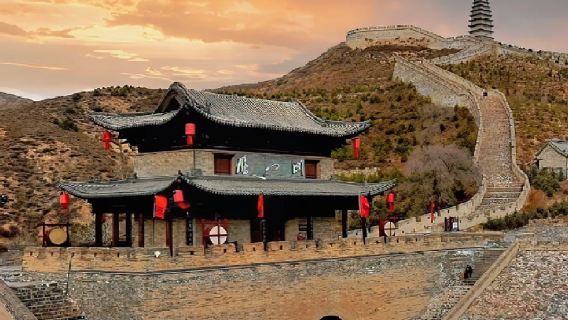
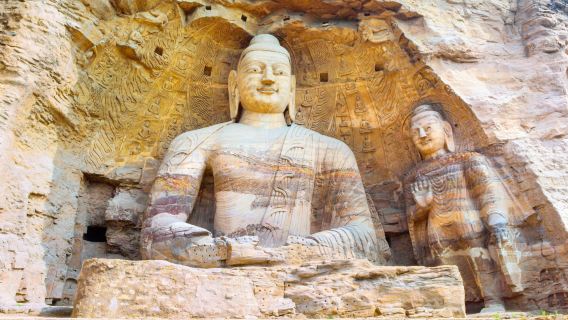
The tour guide was attentive and incredibly friendly, covering everything he needed to, and explaining things in considerable detail. With so many people during the National Day holiday, his experience helped us squeeze in every possible moment, and surprisingly, the trip wasn't crowded at all. The Yungang Buddha and the VR tour of Wutai Mountain were definitely worthwhile, and the Yanmen Pass Great Wall and Wang Family Courtyard were also very enjoyable. The driver was fantastic, incredibly experienced, and knew many shortcuts to Xiaoxitian, taking us directly to the scenic area entrance and saving us a lot of walking. The small group size meant it wasn't crowded, and the hotel arrangements were quite reasonable. The Yingxian Wooden Pagoda, the Yanmen Sunset, and the Wang Family Brick Carvings were all breathtakingly beautiful. The local tour guide was completely transparent and honest. I highly recommend this Shanxi tour; if you want to see ancient architecture but are afraid of doing research, book this tour without hesitation.
Shanxi Museum

118***6918 October 2026
5.0
It's definitely worth a visit. Huayan Temple in Datong Ancient City was built during the Liao, Jin, and Northern Wei dynasties. The architecture is magnificent and simple, and it's remarkably well-preserved. The Buddha statues inside are solemn and dignified, with vivid depictions. The murals, though hundreds of years old, remain remarkably vibrant. We are grateful to the people of Datong for protecting them so well.
Datong Ancient City
楚云霁月21 August 2026
4.0
The old town was rather deserted. The art exhibition was quite nice, though a bit over the top. But the park at the exit was absolutely gorgeous. Winding paths led to secluded spots, and unexpected beauty unfolded.
Taiyuan Ancient County
Anonymous user5 October 2026
5.0
This is a Buddhist holy site well worth visiting. The Thousand-Handed and Thousand-Eyed Buddha and the mural of the Reclining Guanyin are historical and artistic treasures that have been preserved intact for future generations to appreciate and understand history! An even greater gain was visiting the memorial hall of Mr. Liang Sicheng, where I learned about the contributions he and Lin Huiyin made to the preservation of historical sites in my country and their transmission in education, so that we, the later generations, can appreciate these historical sites!
Zhengding Ancient City

酷姐驾到28 September 2026
4.0
The vinegar-making experience presented so far is too simplistic and crude. I hope it can be further optimized to include more scientific knowledge and engaging elements. Could you explain how the fumigation method was discovered, the detailed principles behind each process, the corresponding chemical reactions, and the role of microorganisms? And how does this compare to industrial vinegar-making processes?
Donghu Vinegar Garden

望雁18 October 2026
5.0
The Hebei Provincial Museum is definitely worth a visit. It boasts a rich and diverse collection of exhibits, arranged scientifically and logically. It also offers a wide variety of cultural and creative products and activities. It's not only suitable for teenagers but also for children.
Hebei Museum


