
Things to do in Jingxing County
Explore top experiences
Top 10 attractions in Jingxing County

Mt Cangyan Scenic Area
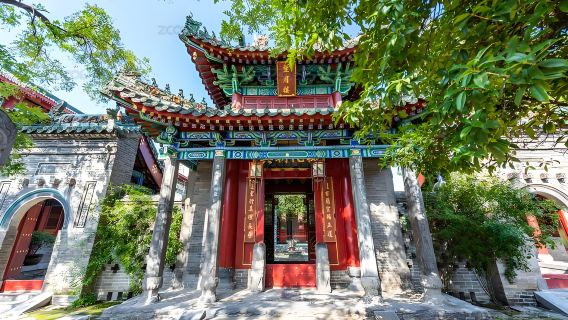
Mt Cangyan Scenic Area covers a total area of 63 km², with a height of 1,039.6m and an elevation of over 1,000m. As a branch of the Taihang Mountains, it boasts breathtaking scenery with lush vegetation. Every step reveals stunning views, each with unique wonders and historical significance. Since ancient times, it has been celebrated as "the epitome of the Five Great Mountains' splendor and the crown jewel of the Taihang range." The area features ancient towering trees, layered verdant peaks, and extraordinary natural landscapes, including its famous "Sixteen Scenic Wonders" such as Emerald Stream Sacred Sandalwoods, Cliffside Stone Milk, Precipice-Embedded Pearls, Sunset Glow on Furnace Peak, Waist-Hugging Cypress, and Cave-Revealing New Perspectives. Among these peaks are scattered numerous meditation halls, ancient temples, pavilions, and stone tablets, mostly relics from the Ming and Qing dynasties. These structures, either perched on steep cliffs or nestled beneath sheer precipices, feature intricately carved beams and painted rafters, exuding an antique charm. The main attractions include Fuqing Temple, the Academy, Wanxian Hall, Yuhuang Peak, Princess Shrine, Qiaolou Hall, Fenghui Pavilion, and the Scripture Depository. The Bridge Tower Hall is a famous architectural marvel in Cangyan Mountain. Perched between two sheer cliffs, three single-arch stone bridges span the chasm, crowned with pavilions. Viewed from below, the suspended bridge and tower appear to soar through the clouds, creating an illusion of flight. This hall ranks among China's top three cliffside temples and stands as a masterpiece of ancient Chinese architecture.Jingxing County · 22.1km from downtown

Baodu Scenic Spot
Baozhai is not a village but a mountain. (Zhai means village in Chinese) Baozhai is located to the west of Shijiazhuang City. Mountain slopes are very steep, so the ancients built military villages there. This is a nice destination for hiking and visiting cultural and historical sites.Shijiazhuang · 13km from Jingxing County

Longquan Ancient Town · Drama Illusion City
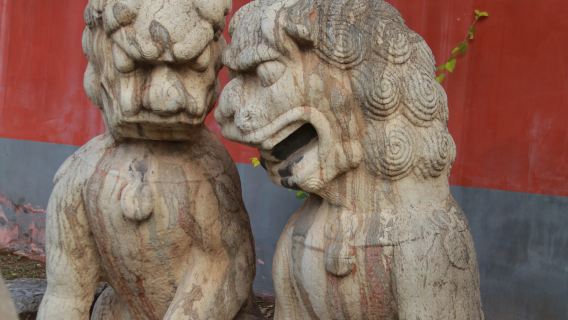
Longquan Ancient Town · Drama Illusion City is located in Luquan District, Shijiazhuang City, Hebei Province, in the heart of the North China Plain. Recognized as one of Hebei Province's "Top 10 Cultural Industry Projects of 2020," this attraction spans 948 acres. The ancient town's architecture consists of a large-scale cluster of Ming-Qing and Republic-era buildings, meticulously reconstructed using authentic historical components collected over 30+ years from across China—including century-old houses, gates, bridges, and stone carvings. This architectural treasure offers exceptional social value for studying Ming-Qing to Republic-era construction techniques, folk customs, and wedding traditions, while actively contributing to cultural preservation and heritage promotion.Shijiazhuang · 17.2km from Jingxing County

Duanjialou Sceneic Area
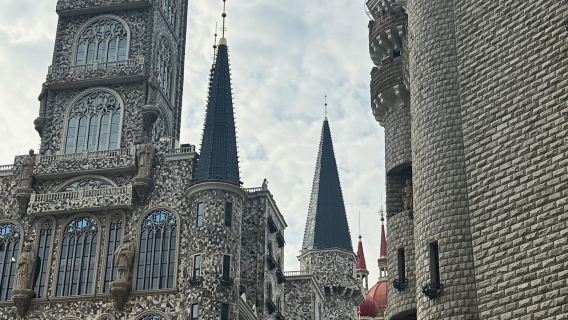
Duanjialou Attraction is located in Maxigou, Fengshan Town, in the southern part of Jingxing Mining Area, Shijiazhuang City, Hebei Province. It is the largest German-style building complex in Shijiazhuang that has been well preserved so far. It has now become a key cultural relic protection unit in Hebei Province. The Attraction consists of four parts: Duanjialou, Duanjia private garden, Duanjia tunnel and the underground tunnel of Zhengfeng Mine, covering a total area of 160,000 square meters.Shijiazhuang · 9.9km from Jingxing County

Yujia Stone Village
Located in Shijiazhuang, Hebei provinceYujia Stone VillageThis ancient village is renowned for its stone architecture. Preserving numerous stone structures from the Ming and Qing dynasties, it showcases rich historical culture, making it an ideal destination to explore ancient architectural artistry and folk traditions. Distinctive highlights: Stone architecture and historical culture Unique stone architecture Most buildings in the village are constructed from stone, with houses, streets, and courtyards all made of this material, showcasing the wisdom and craftsmanship of ancient laborers. These stone structures are not only sturdy and durable but also possess unique aesthetic appeal, attracting numerous architecture enthusiasts and visitors. Rich historic sites Yujia Stone Village boasts numerous well-preserved historical relics, including ancient temples, ancestral halls, and stone tablets. These artifacts not only document the village's historical evolution but also reflect local religious beliefs and folk culture. Rich folk culture The villagers still preserve many traditional lifestyles and folk activities, such as traditional festivals and handicraft making. Visitors can experience authentic rural life here and immerse themselves in the rich folk culture atmosphere.Jingxing County · 13.9km from downtown

Qinhuang Ancient Road
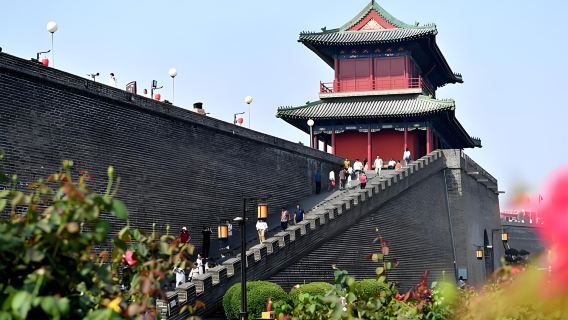
Qinhuang Ancient Road is located in Jingjing County, Shijiazhuang City. The deep rut imprint shows the prosperous scene of the year. The well-preserved Qingyipu provides important evidence for the study of ancient Chinese postal history. The famous Han Xin's battle with the backwaters and the fight against the G-8 of the Eight-Power Allied Forces took place here. Here, you can feel the tremendous changes that have taken place since ancient times, and appreciate the wonderful aspects of the art of war on the ancient battlefield.Jingxing County · 4.6km from downtown

Daliangjiang Ancient Village
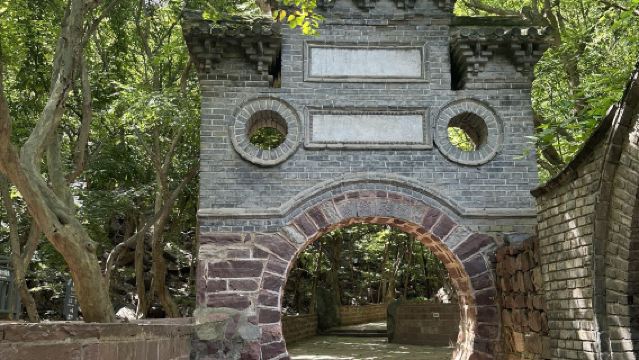
The Daliangjiang Ancient Village is located in the west of Jingxing County, Hebei Province. Because it is hidden in the mountains, its ancient style and appearance have been completely preserved. There is a complete Ming and Qing architectural complex here. The houses are made of stone as the main material, with wooden doors and windows, green tiles and blue bricks, and flying eaves. It is magnificent and shows people the former glory of a generation of Shanxi merchants. Some people call it the "Qiao Family Courtyard" in Hebei. The most representative building in Daliangjiang Village in Jingxing is the "One House and Nine Courtyards" of the "Military Scholar", which covers an area of two mu and has 100 houses. Entering a gate, you can walk through the nine courtyards, with courtyards within courtyards, buildings within courtyards, buildings on top of buildings, courtyards on top of buildings, buildings connecting to buildings, and courtyards connecting to courtyards. It can be said to be a large house in the deep mountains. It has become the best preserved and largest one discovered in Shijiazhuang since the third national cultural relics survey. Not far from the "One House and Nine Courtyards", a thousand-year-old tree bears witness to the history of the ancient village. According to research, this old locust tree was planted in the Tang Dynasty, and it has a history of more than 1,000 years. The heart of the old locust tree has withered, with only part of the bark alive. The entire tree body has tilted to the southeast and is supported by a small arched archway by the villagers. It grows upwards again, still luxuriant and tall. The bark of the old locust tree is vigorous and wrinkled, and the branches are twisted and twisted. The main streets in the village include Shangjie, Xiajie, Zhongjie and 5 alleys, with a total length of 3,700 meters and a width of 2 to 4 meters. The streets are staggered and crisscrossed, paved with bluestone or cobblestone. The square warehouse is built accordingly. The overall layout of the quadrangle courtyard is unique, with clear functional divisions, and it is a typical representative of the ancient residential buildings in the village.Jingxing County · 20.1km from downtown

Deming Ancient Town
Deming Ancient Town is a cultural town with the theme of Yuanqu culture in Luquan District, Shijiazhuang City. It is located in the beautiful Wenqing Valley. The buildings in the ancient town absorb the essence of the architecture of the Jin, Yuan, Ming and Qing dynasties. The bridges, pavilions and pavilions are exquisitely designed, simple and elegant. There is a clear river running through the ancient town, which allows tourists to deeply experience the ancient customs of the Qinhuai River. Deming Ancient Town is two kilometers long. It draws on the architectural form of the famous Chinese painting "Along the River During the Qingming Festival" to create ancient buildings with customs and folk customs, including Xingye Garden, Food Garden, Baile Garden, B&B Garden, Academy, and Liyuan. Deming Ancient Town has its own unique commercial facilities. With its advantages, it provides tourists with a unique experience of eating, drinking, playing and shopping.Shijiazhuang · 12.9km from Jingxing County

Western Evergreen
The western evergreen is located in the west of Shijiazhuang. There are snow and ice towns (outdoor ski resorts), Liuxian Valley, Yihe Tourist Park, and Deming Ancient Town (hot spring hotel). Liuxian Valley is a natural scenic area built with its natural features, including more than ten scenic spots such as the main road and the branch road, water system and stone bridge. Yihe Tourist Park is a comprehensive park integrating agricultural tourism, flower appreciation, wedding photography, wedding base and fruit picking.Shijiazhuang · 12.5km from Jingxing County

Niangzi Pass Scenic Area
Niangziguan Scenic Area is in the northeast of Pingding County. It was an ancient gateway. In the Kaihuang Period of the Sui Dynasty, Weize County was built here. Princess Pingyang led women soldiers hold the pass, so later generations called it Women Soldiers Gate. Women Soldiers Pass Falls is under Dunv Temper, which is near the east gate of Women Soldiers Pass Castle. The waterfall flows from the cliff and forms a gorgeous water curtain.Pingding · 23.4km from Jingxing County
Experiences you can't miss in Jingxing County
Featured Day tours in Jingxing County
View all Day tours
Save US$0.5
FromUS$88.64US$89.14
5% off
Limited-time sale
FromUS$138.83US$146.14
5% off
Limited-time sale
FromUS$107.97US$113.66
5% off
Limited-time sale
FromUS$138.83US$146.14
Free cancellation
Instant confirmation
Book now for tomorrow
FromUS$38.49
Free cancellation
Instant confirmation
Book now for tomorrow
Save US$0.6
FromUS$60.29US$60.89
5% off
Limited-time sale
FromUS$138.83US$146.14

5% off
Limited-time sale
FromUS$177.39US$186.73
Free things to do in Jingxing County
Mt Cangyan Scenic Area
Jingxing County · 22.1km from downtownBaodu Scenic Spot
Shijiazhuang · 13km from Jingxing CountyImmediate access, Book now for today, Cancel anytimeLongquan Ancient Town · Drama Illusion City
Shijiazhuang · 17.2km from Jingxing CountyImmediate access, Book now for todayDuanjialou Sceneic Area
Shijiazhuang · 9.9km from Jingxing CountyImmediate access, Book now for today, Cancel anytimeYujia Stone Village
Jingxing County · 13.9km from downtownQinhuang Ancient Road
Jingxing County · 4.6km from downtownDaliangjiang Ancient Village
Jingxing County · 20.1km from downtownDeming Ancient Town
Shijiazhuang · 12.9km from Jingxing CountyWestern Evergreen
Shijiazhuang · 12.5km from Jingxing CountyNiangzi Pass Scenic Area
Pingding · 23.4km from Jingxing County
What travellers say about Jingxing County

等待热的茶6 July 2026
5.0
Worth it!
My son and I went up the mountain from Qiaoloudian and down from Dongtianmen, taking less than two and a half hours in total. The natural scenery and ancient relics along the way were aesthetically pleasing.
I recommend taking the Dongtianmen route down; there are several excellent spots for photographing Qiaoloudian.
I deducted one point for the aesthetics at the summit—those guesthouses were so ugly it made me want to curse. The scenic area is great from the foot of the mountain to the middle, but it gets incredibly noisy at the top. When it comes to attractions, quality over quantity is key!
Finally, let me talk about the night view. I arrived at night and went for a stroll after dinner at the hotel. I was amazed to find that the scenic area had a night view; the aesthetics were quite good, probably designed by professionals. A small suggestion: the lighting on the mountain was poorly chosen. The green light was completely invisible, and the red light was okay but a bit eerie. Could you try using blue light instead?
Mt Cangyan Scenic Area

_WB***5911 August 2026
5.0
The cable car ride up and down was quite easy; walking around the top wasn't tiring at all. From the cable car station, I noticed the stairs looked incredibly long if you wanted to climb up yourself. Also, the middle station (the entrance to the slide) and the end station are on two different mountain peaks, requiring you to go up and down the stairs. The scenery at the summit was fantastic, with cliffs and precipices typical of the Taihang Mountains.
To get to Wanfo Cave, you need to climb a short, rather steep staircase. The descent isn't far, but the drop is significant; some steps are as high as my calf. Wanfo Cave was cool and shrouded in mist.
There are some shops on and at the foot of the mountain; bottled water is 2 yuan, very affordable. However, the KFC at the foot of the mountain wasn't open.
Baodu Scenic Spot

Anonymous user6 September 2026
4.0
Longquan Ancient Town is one of the most interesting ancient towns I've ever visited. Its charm rivals that of Wansui Mountain Martial Arts City in Hebei.
However, the only downside is the sheer number of people. Definitely avoid visiting during holidays. It's not fun at all; the overwhelming crowds halve the enjoyment. Even the NPCs (players) are exhausted.
But visiting during the off-season will definitely be much more enjoyable. Watch the classic shows and sample some local snacks. It will make your trip to Shijiazhuang even more magical.
Longquan Ancient Town · Drama Illusion City

流光溢彩5667 May 2026
5.0
The Duanjialou Scenic Area is now an immersive experience zone with a storyline where you can earn silver coins and interact with many NPCs. We went on the weekend, and it wasn't crowded. We watched a few performances, and exchanged the silver coins we earned for an eraser. Haha, it was quite fun.
Duanjialou Sceneic Area

揽月踏山河17 April 2025
5.0
1. Architectural Features
All-Stone Structure
The village is built with bluestone as the main material, including stone houses, stone bridges, stone railings, stone wells, etc. There are more than 4,000 existing stone houses, more than 3,700 meters of stone streets, and more than 1,000 stone wells. It is known as the "Stone Kingdom" and the "China Northern Stone Culture Museum".
Unique Craftsmanship
The house adopts a gable roof design. The stone is finely polished and mortise and tenon jointed. There are no beams or columns, which are warm in winter and cool in summer. For example, the Qingliang Pavilion at the east entrance of the village is completely built with stones without foundation support, showing superb architectural skills.
2. Layout Planning
Labyrinth-like Alleys
The village is built on the mountain, and the layout of the alleys is intricate, forming a pattern of "six streets, seven lanes, and eighteen alleys", with a total length of more than 3,700 meters. The alleys are not directly connected to each other, and they look like a Bagua formation from top to bottom, which is called a "stone maze".
Functional zoning
The roads are divided into east-west "streets" and north-south "lanes". Hutongs are used to connect households. Siheyuan-style houses are door-to-door and connected to each other, reflecting the planning wisdom of ancient clan settlements23.
III. History and Humanities
Yu Qian's Descendants Culture
The village was founded by Yu Youdao, a descendant of Yu Qian, a famous official in the Ming Dynasty, during the Chenghua period of the Ming Dynasty. 95% of the villagers are surnamed Yu. There are still historical relics such as the Yu Clan Ancestral Hall and the Yu Qian Memorial Hall.
Folk Customs and Intangible Cultural Heritage
Traditional cultural venues such as the opera house and Guanyin Pavilion are preserved, and opera performances are performed during festivals; stone daily necessities (such as stone mills and stone mortars) are still in use, showing the living folk customs.
IV. Nature and Landscape
Adapting to the terrain of the mountain
The village is located in the hinterland of Taihang Mountain, surrounded by mountains on all sides and low-lying, forming a hidden landscape of "not seeing the village until the entrance", which is integrated with the natural environment. Iconic attractionsQingliang Pavilion: A Ming Dynasty building, a three-story stone attic, with both defense and sacrificial functions, is a landmark of the village.
Sihelouyuan: A well-preserved Ming and Qing Dynasty Siheyuan, with a "brick on top and stone on the bottom" structure, reflecting the hierarchical regulation.
V.Tourism experienceImmersive exploration: You can walk along the smooth stone road, touch the stone wall to feel the traces of time, and climb up to overlook the panoramic view of the "Bagua Formation".
Cultural in-depth tour: Combined with ancient building visits (such as Qingliang Pavilion, Guanyin Pavilion), folk experience (stone tool making, opera viewing), etc., to form a 2-3 hour tour route.
Yujia Stone Village

yjw20005 October 2026
5.0
The ancient road was once a battleground, where Han Xin fought a decisive battle with his back to the river, and where Wang Jian campaigned against Zhao. Throughout history, countless wars have relied on this Taihang Pass. Once, armored horses traversed the pass, couriers rushed about, and merchants bustled about; countless stories of rise and fall are hidden within its walls. Now, the weapons are long gone, the mountain winds sweep through the pass, and the sounds of drums and gongs are no longer heard, only the rustling of grass and trees.
Qinhuang Ancient Road

面朝阳心亦朝阳15 May 2022
5.0
Jingxing is located at the eastern foot of Taihang Mountain. It is known as "the fifth of the eight passes in Taihang Mountain and the sixth of the nine passes in the world". It is also a strategic thoroughfare between Shanxi and Hebei. "Jing" means "pass" and "Sai" means "danger". Passage means smoothness, smoothness means danger, and danger means congestion. "Jing" and "Sai" are both interdependent and mutually restraining, and they are also a closed cycle with each other as their purpose. Around this companion and contradictory body, development, integration, defense, isolation, killing, communication... all happened almost at the same time. This drama has been played out scene by scene until today, and it will definitely be played out tomorrow, or even in the distant future.
Daliangjiang Ancient Village

M32***675 August 2026
5.0
The Changqing Deming Ancient Town in western Shijiazhuang, near the Qingming Riverside Scene, is a beautiful and clean tourist destination suitable for the whole family. There are fun things to do, and I especially recommend Qiao Aman Hot and Sour Noodles – it's incredibly delicious and authentic. I eat there every time I visit; the owner is very welcoming. The cumin tofu at the tofu shop is also delicious and a must-buy. Okay, that's all for now; I recommend it to everyone so you don't miss out.
Deming Ancient Town

最美的一点15 January 2025
5.0
Changqing in the west has beautiful scenery, tall mountains, charming scenery in spring, and picturesque snow scenery in winter. Located in Luquan District, Shijiazhuang City, it is a comprehensive tourist destination integrating amusement, health care, sports, leisure, research, exhibition, and living. Its core attractions include the Ice and Snow Town, Liuxian Valley, Deming Ancient Town, and Water Park.
Western Evergreen

碎叶寻白20 August 2026
5.0
It was a lot of fun, but it was too hot the day I went, so I only got to the waterfall and only experienced half of it! There were too few staff members, and I couldn't find anyone to ask for directions; I had to ask the business owners inside. Parking is allowed in front of the entrance, and the traffic police don't stop you, which is great.
Niangzi Pass Scenic Area


