
Things to do in Horinger
Explore top experiences
Top 10 attractions in Horinger

Helinge'erxian Shengle Museum
Horinger · 10.1km from downtown


Zhaojun Museum
Zhaojun Museum is located about nine kilometers south of Hohhot City. It is comprised of the Xiongnu Culture Museum, the Zhaojun Tomb, the Qin Palace, and the Zhaojun Memorial Hall. Here, you can learn the life story and impact of Wang Zhaojun, one of the four great classic beauties of Chinese history. Zhaojun Tomb is the core attraction of this scenic spot, built during the Western Han Dynasty sometime before 0 AD. As the tomb is covered with grass year-round, it is also called the Qing Tomb by the locals. It is an important local attraction of Hohhot Cty.Hohhot · 38.2km from Horinger

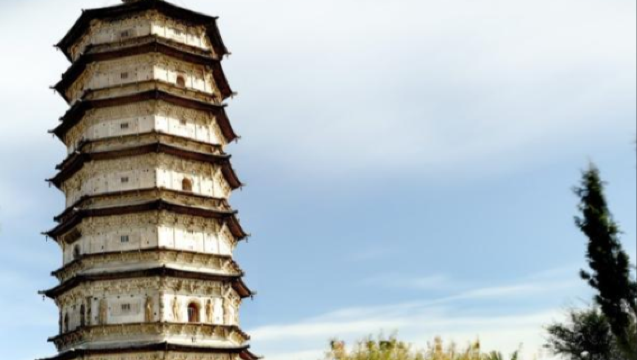
Yingxian Wooden Pagoda
The full name of Yingxian Wooden Tower is Sakyamuni Pagoda of Fogong Temple. It is in the Fogong Temple in the northwest of Yingxian County. The octagonal wooden pagoda has five stories. Except for the high-end stone foundation of the first floor, the rest of the pagoda is made of wood using the traditional craftsmanship of Sunmao. Each layer of the wooden tower is equipped with wind chimes for a pleasant sound when the wind blows.China · Ying County

Shanxi Museum
"Five thousand years of history can be seen in Shanxi." Located on Binhe West Road in Taiyuan, the Shanxi Museum showcases the essence of Shanxi's cultural relics. The museum consists of a main building and four corner annexes, with the main building resembling both a dipper and a ding vessel, serving as the primary venue for travelers to view the collection. The main building has four floors. The first-floor lobby features a general service desk, while the second and third floors host thematic exhibitions on history and culture. The fourth floor showcases art-themed exhibitions, which together form the permanent displays of the Shanxi Museum. After entering the first-floor lobby, proceed to the second floor via the stairs to begin the historical journey themed "Soul of Jin." The cultural and historical thematic exhibition showcases the highlights of Shanxi's five-thousand-year civilization through numerous precious artifacts, ranging from ancient human relics to the rise and fall of Shanxi merchants during the Ming and Qing dynasties over five centuries. During your visit, several exquisite artifacts are not to be missed. The bird zun, a bronze ritual vessel from the Western Zhou period, was used in the ancestral temple sacrifices of the Jin marquis. The bird zun features an exquisitely crafted design with a phoenix as its main form. On the phoenix's back rests a small bird, serving as the handle for the vessel's lid. At the tail of the phoenix, an elephant is depicted, with its long trunk perfectly balancing the phoenix's two legs to form a stable tripod base. This artifact is a representative piece among the bronze collections in the museum. In addition, you can also admire: the Houma covenant texts, which are oath documents from the Spring and Autumn period used by the ministers of the Jin state; the lacquered wooden panel paintings, a painted screen from the Northern Wei dynasty depicting colorful stories from the "Biographies of Exemplary Women"; the white marble sarcophagus, a relic from the Sui dynasty, belonging to a tomb occupant who was a member of the Central Asian Yu people, with intricate carvings both inside and outside the sarcophagus, featuring figures with deep-set eyes, high noses, and black hair, characteristic of the Mediterranean Caucasian race. In the cultural thematic exhibition, you can also learn about the origins and development of Buddhism and traditional opera in Shanxi. The fourth floor of the main hall features an art thematic exhibition area. Among them, the "Timber and earth splendor" - ancient architectural art thematic exhibition showcases Shanxi's status as a province rich in cultural relics and ancient structures. "For above-ground relics, look to Shanxi" - Shanxi is renowned as the "treasure trove of ancient Chinese architecture," boasting over half of China's above-ground ancient structures with comprehensive categories, especially in the quantity of religious buildings. If you're a fan of ancient architecture, this is a must-visit. The Shanxi Museum also hosts temporary exhibitions periodically. At the first-floor lobby service desk, services such as hiring on-site guides (Chinese and English) and renting audio guides are available. The main building also houses a restaurant and a tea house for visitors.China · Taiyuan

Xinzhou Ancient City
Xinzhou was called Xiurong in ancient times. It is located between Taiyuan and Mount Wutai. It is the seat of Xinzhou Administrative Office and Prefectural Committee. In the Spring and Autumn Period, Xinzhou belonged to Jin State. In the Warring States Period, it belonged to Zhao State. In the Qin and Han Dynasties, it belonged to Taiyuan County, Yanmen County, and Taiping County. In the Sui Dynasty, it was Xinxingdu and Yanmen. During the Tang, Five Dynasties and Song dynasties, it was called Dingxiang Prefecture of Xinzhou. During the Jin, Yuan, Ming and Qing dynasties, it was called Xinzhou, Daizhou and Baodezhou. During the Anti-Japanese War and the War of Liberation, most of the area belonged to Jinchaji, and the area to the west belonged to Jinsui. In 1949, Xinzhou Prefecture was established. The cultural relics and historical sites in Xinzhou City include: Xinzhou North Gate Tower. Located in Xinzhou City, on the Gongchen Gate of the old north city wall. The North Gate Tower was built in the 24th year of Wanli in the Ming Dynasty. The tower is located on the 12-meter-high city wall, which makes it more majestic and magnificent. The city wall stands tall and is painted red on the outside. There is a Voucher doorway below, with a very high top and a bottom width of more than 3 meters.China · Xinzhou

Inner Mongolia Museum (New Building)
Inner Mongolia Museum (New Building)Located in Hohhot, the building covers a total area of 135,775 square meters. The above-ground structure has 4 floors totaling 105,775 square meters, including public halls, exhibition areas, academic education zones, immersive experience galleries, and dining facilities. The underground level spans 30,000 square meters and primarily houses auditoriums, underground parking, staff cafeterias, and equipment rooms.Hohhot · 51.4km from Horinger

Datong Ancient City
Datong Ancient City is the historic core of Datong, Shanxi. It served as the capital Pingcheng during the Northern Wei dynasty, the western auxiliary capital during the Liao and Jin dynasties, and a strategic frontier stronghold in the Ming dynasty, earning it the enduring title "northern key." Over its 2,000-year history spanning dynastic changes, the city's location remained largely unchanged, preserving its chessboard-style street grid centered on Sipailou to this day. The 2008 conservation and restoration project reunited the city walls, reconnected the moat, and gradually revived ancient architecture and old streets, layering the grandeur of an ancient capital with modern life within the same walled city. The ancient town offers an exceptionally dense concentration of noteworthy sights: in Huayan Temple's Liao- and Jin-dynasty halls, the graceful "clasped-hands, smiling" Liao-dynasty bodhisattva statue in the Scripture Depository Hall has long been hailed as the "Oriental Venus"; Shanhua Temple preserves a complete complex of Liao- and Jin-era wooden architecture. The Nine-dragon Wall, originally a glazed screen wall before the Ming-dynasty Dai Prince's residence (destroyed in war), survives with its nine coiling dragons still radiant—older and larger than its counterparts in Beijing's Forbidden City and Beihai Park. Climbing the reconstructed Ming-style city walls reveals a bird's-eye view of the square town's crisscrossing four main streets and orderly rooftops. An evening wait for sunset on the ramparts, followed by the illuminated outlines of walls and watchtowers after dark, makes for one of the town's most enchanting moments. Walking is recommended for touring: the attractions inside the city walls are spaced closely, allowing Huayan Temple, Shanhua Temple, the Nine-dragon Wall, and the drum tower to form a connected route. When tired, you may turn into the area around East Drum Tower Street, where time-honored shops and snack stores are concentrated, making it ideal for resting and replenishing. The ancient town covers a considerable area, so allocate at least half a day and wear comfortable shoes to leisurely appreciate the layered historical depth of this ancient capital.China · Datong

Chilechuan Grassland
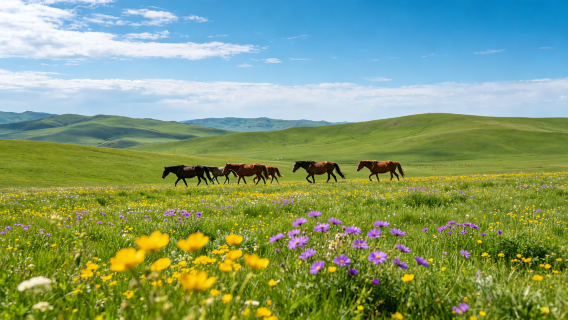
Chilechuan Grassland is located in Baohe Shao Town, Xincheng District, Hohhot City, at the foot of Daqing Mountain. It was founded in 2012 and covers a total area of more than 30,000 acres. It has now become a very important ecological barrier and "back garden" of Hohhot City. Chilechuan Grassland is an ideal place for leisure, vacation and health preservation. There are more than 40 kinds of natural pastures in the grassland. It is an urban grassland ecological functional area integrating grassland protection, grassland restoration, grassland culture, leisure tourism, ecological research, and exhibition activities.Hohhot · 60.5km from Horinger

Saishang Old Street
Saishang Old Street is a historic street in the old town area of Hohhot featuring Ming and Qing architectural styles, with a history dating back to the Ming and Qing dynasties. After Dazhao Temple was built, a market gradually formed on the west side in front of the temple, marking the origin of the old street. The current streetscape has undergone comprehensive renovation, preserving its traditional style by restoring it to its original appearance. Brick-and-wood buildings with blue bricks and gray tiles line both sides of the street, while flying eaves, brick carvings, and traditional shop signs showcase the streetscape of the former Guihua City. This area has been a hub for commercial activities since the Ming and Qing dynasties, where furs, dairy products, tea, and silk were traded between the grasslands and the Central Plains. Today, you can find antiques, calligraphy and paintings, jade, coins, leather paintings, leather goods, sheep-horn combs, and ethnic-style accessories along the street, and some shops also showcase traditional handicrafts such as wool felt pyrography. The district retains a certain ethnic cultural character, with the architecture, shops, and handicrafts collectively forming the overall character of the old street. At night, lanterns and shop lights illuminate the street, and the blue-brick and gray-tiled alleys present a view different from that of the daytime.Hohhot · 48.5km from Horinger

Donghu Vinegar Garden
Explore Donghu Vinegar Garden and discover the history of vinegar brewing in Shanxi. As a national AAAA-level tourist attraction, a national industrial tourism demonstration base, and a provincial research and practice education demonstration base for primary and secondary schools, Donghu Vinegar Garden covers a total construction area of approximately 16,667 square meters. Rooted in Shanxi's long-standing Yellow River farming culture, it preserves and innovates the history of the "Meiheju" vinegar workshop founded during the Hongwu period of the Ming Dynasty, the national intangible cultural heritage "Meiheju" aged vinegar brewing technique, and Shanxi's vinegar history and culture. Based on the ancient brewing process of "steaming, fermenting, smoking, filtering, and aging," it truly embodies "inheriting traditional craftsmanship and realizing a health-oriented philosophy." Since its opening in 2000, Donghu Vinegar Garden has launched distinctive "intangible cultural heritage" vinegar culture study tours, offered Shanxi aged vinegar DIY courses, added "intangible cultural heritage" vinegar-making experience programs, and developed traditional Shanxi vinegar-themed banquets. It has welcomed over 5 million visitors from home and abroad, with annual visits by minors exceeding 30,000, making it a highlight for promoting traditional Chinese agricultural culture and vinegar culture in China's condiment industry. The garden features twelve specialized exhibition halls including "Donghu Meiheju Development History Museum," "Vinegar Therapy Garden," "Vinegar Museum," "Vinegar Cellar," and "Craft Brewing Workshop," each displaying agricultural tools and vinegar-making equipment from different historical periods. Donghu Vinegar Garden showcases the unique charm of "National Intangible Cultural Heritage - Traditional Vinegar Brewing Techniques" to visitors from around the world through displays of ancient and modern utensils, vinegar product exhibitions, and hands-on experiences of intangible cultural heritage vinegar-making techniques. It opens a time tunnel for people to understand Shanxi's vinegar culture, deeply experience the intangible heritage vinegar-making process, and recognize the health benefits of Shanxi aged vinegar. Visitors can not only explore the profound history of Shanxi vinegar culture, breathe in the rich aroma of Donghu vinegar, enjoy a "Donghu vinegar sauna," and taste authentic Donghu aged vinegar, but also deeply engage with the national intangible cultural heritage of traditional vinegar brewing techniques. Visitors can also sample various vinegar-infused specialties like vinegar-soaked beans and vinegar snacks, as well as traditional Shanxi vinegar banquets, gaining a deeper understanding of Shanxi aged vinegar. Over its 20+ years of operation, Donghu Vinegar Garden has earned honors such as the "Certificate of Origin Registration," "National Silver Quality Award," and inclusion in China's "Intangible Cultural Heritage" protection list. It is highly revered by domestic and international biology experts as the "Living Fossil of Chinese Grain Vinegar Brewing" and the "Finest Vinegar in China." Praised by Europeans and Americans as the "Secret of China" and by Japanese merchants as the "Chinese Mystique," it has evolved into an immersive vinegar experience center integrating production, tourism, dining, and research, becoming a cultural landmark of Shanxi with distinct ethnic charm.China · Taiyuan
Experiences you can't miss in Horinger
Featured Cultural experiences in Horinger
View all Cultural experiences
5.0/5
· 1 review· 27 bookedFree cancellation
Instant confirmation
Book now for tomorrow
Save US$0.77
FromUS$76.57US$77.34

5.0/5
· 1 reviewFree cancellation
Book now for tomorrow
FromUS$26.77

Free cancellation
Book now for tomorrow
FromUS$128.89
FromUS$152.91
Featured Day tours in Horinger
View all Day tours![[Departing from Hohhot] One-Day Tour to Hongshiya + Chilechuan Grassland + Tianci Grassland](https://ak-d.tripcdn.com/images/0352y12000rwkbwtx1A01_C_568_320.jpg?_fr=wc)
4.3/5
· 3 reviews· 27 bookedFree cancellation
Instant confirmation
Book now for tomorrow
Save US$0.59
FromUS$57.84US$58.43
FromUS$202.79
![[Depart From Hohhot] Laoniuwan Yellow River Grand Canyon Tourist Area Private Day Tour](https://ak-d.tripcdn.com/images/0354k12000s8rsysjDE9F_C_568_320.jpg?_fr=wc)
Free cancellation
Instant confirmation
Book now for tomorrow
Save US$2.87
FromUS$284.12US$286.99
Free cancellation
Instant confirmation
Book now for tomorrow
Save US$0.7
FromUS$69.42US$70.12
Free cancellation
Instant confirmation
FromUS$154.67

FromUS$191.38
Free things to do in Horinger
Helinge'erxian Shengle Museum
Horinger · 10.1km from downtownZhaojun Museum
Hohhot · 38.2km from HoringerYingxian Wooden Pagoda
China · Ying CountyImmediate access, Book now for today, Cancel anytimeShanxi Museum
China · TaiyuanXinzhou Ancient City
China · XinzhouInner Mongolia Museum (New Building)
Hohhot · 51.4km from HoringerDatong Ancient City
China · DatongChilechuan Grassland
Hohhot · 60.5km from HoringerSaishang Old Street
Hohhot · 48.5km from HoringerDonghu Vinegar Garden
China · TaiyuanImmediate access, Book now for today, Cancel anytime


