Ganquan

Things to do in Ganquan

Search attractions or local attractions & tours
Search

Explore top experiences

Top 10 attractions in Ganquan

View all Attractions
Ganquan Canyon
No. 3 of Best Things to Do in Yan'an

Ganquan Canyon

7.2
4.7/5
2.8k reviews
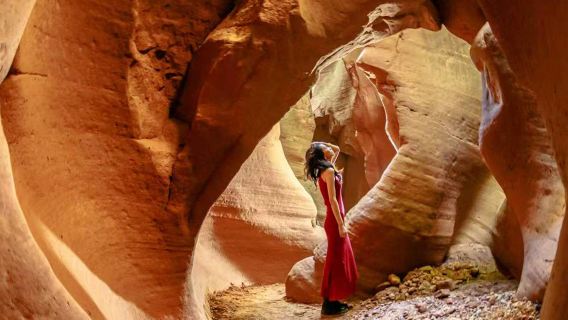
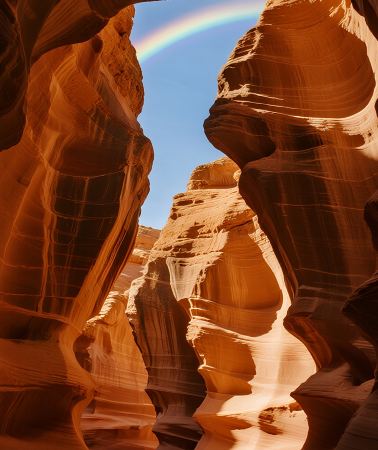
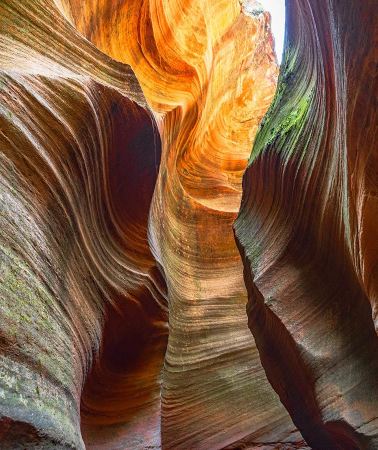
Ganquan Canyon is located in Ganquan County, Yan'an, Shaanxi, and is also known as Yucha Canyon. It is a group of red sandstone fissures hidden deep in the ravines of the Loess Plateau, hailed as a "natural fissure wonder of the Loess Plateau." Legend has it that an ancient earthquake split the mountain, and years of rainwater and flash floods carved out the now winding and graceful ravines. Due to its striking resemblance to Antelope Canyon in the U.S., it is often called the "Chinese Antelope Canyon" by photography enthusiasts. The attraction consists of multiple ravines, including Huashu Gully, Longba Gully, Mudan Gully, and Thread of Sky Gully. Among them, Huashu Gully is renowned for its smooth, layered rock walls, offering both an easy hike and stunning photo opportunities, making it the highlight of the area. The true highlight of this canyon is its play of light and shadow. Around noon on sunny days, sunlight pours straight down through the narrow gap overhead, with warm hues of ochre and gold flowing slowly along the curves of the rock walls, while moss clinging to the surfaces adds a touch of emerald green. Standing at the canyon floor and looking up, the sky narrows into a bright, slender line—between the alternating light and shadow, every casual snapshot becomes strikingly picturesque. On overcast days or during early/late hours when light slants in, the rock walls appear noticeably duller, somewhat diminishing the visual impact. Here are a few tips for your visit: Huashu Gully is gentle and open, ideal for leisurely photography; Longba Gully alternates between wide and narrow sections, offering more adventurous fun; the narrowest part of Yixiantian is particularly cramped, so extra caution is needed when passing through. Some gullies occasionally have accumulated water and mud, making the paths slippery—wearing anti-slip shoes is advisable. If you're here for the light effects, try to schedule your gully visit around noon on sunny days.Ganquan · 39.9km from downtown
Baota Mountain
No. 19 of Best Things to Do in Shaanxi

Baota Mountain

7.4
4.5/5
5.1k reviews
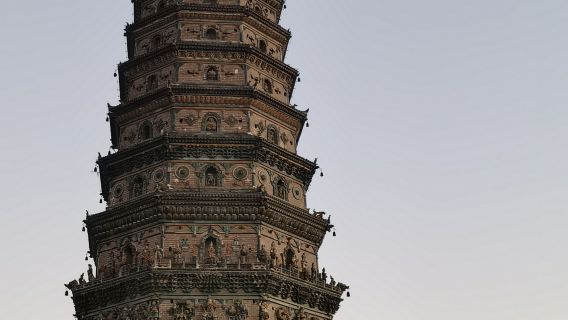
Baota Mountain is located in the center of Yan'an city, by the side of the Yan River, and is named after the pagoda on the mountain. The pagoda was first built in the Tang Dynasty, and the existing structure is a pavilion-style brick pagoda rebuilt in the Ming Dynasty. The pagoda, together with the mountain, the Yan River, and the bridge, forms the city skyline of Yan'an and is also a symbol of the revolutionary holy land in people's hearts. The poet He Jingzhi wrote in "Returning to Yan'an" the famous line, "How many times in my dreams have I returned to Yan'an, embracing Baota Mountain with both hands," adding emotional weight to this mountain. The mountain is densely scattered with historical sites, including Song dynasty cliff carvings, Fan Gong Well, beacon towers, Star-gazing Tower, Jialing Academy, ancient city walls, and the former site of the Japanese Workers' and Peasants' School. Among them, the inscriptions "Jialing Mountain" in clerical script and "My chest harbors tens of thousands of armored soldiers" by Fan Zhongyan of the Northern Song dynasty have long been renowned. An iron bell cast in the Ming dynasty still hangs beside the pagoda, which was used for timekeeping and alarms during the CPC Central Committee's Yan'an period. Ascending the mountain path to Star-gazing Tower and beacon tower areas offers panoramic views of Yan'an city and the Yan River. After nightfall, the mountain and pagoda illuminate, and gazing back at the lit pagoda from near Yan River Bridge remains a favorite photo spot for many travelers.Yan'an · 37.2km from Ganquan
Emperor Qinshihuang's Mausoleum Site Museum
2026 Global 100 - Best Things to Do

Emperor Qinshihuang's Mausoleum Site Museum

10
4.7/5
150.1k reviews
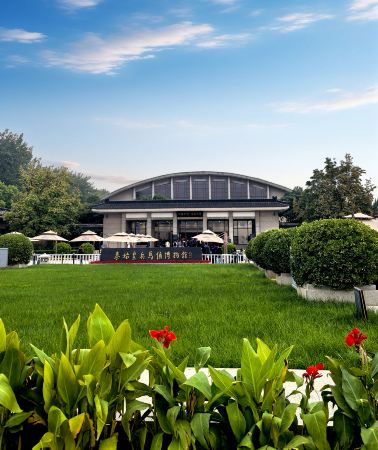
The Qin Shihuang Mausoleum Museum (Terracotta Army) is a large-scale archaeological site museum built on the site of the burial pits of the Qin Terracotta Army, located about 1.5 kilometers east of the Qin Shihuang Mausoleum mound. In March 1974, farmers in Xiyang Village accidentally unearthed fragments of terracotta warriors while digging a well, and archaeological exploration confirmed Pit No. 1. In 1976, Pit No. 2 and Pit No. 3 were successively discovered north of Pit No. 1, bringing this army that had been sleeping for more than two thousand years back to the light of day. The discovery of the Qin Terracotta Army is hailed as "one of the great archaeological discoveries of the 20th century." Pit No. 1 is the main military formation among the three pits, stretching over 200 meters from east to west, and is estimated to contain approximately 6,000 terracotta warriors and horses. Looking down from the edge of the pit, armored warriors, chariots, and terracotta horses are arrayed in actual battle formation facing east. A closer look reveals that each figure is unique in its facial features, hairstyle, beard, and even hand gestures. The terracotta figures were originally painted, but much of the paint has peeled off and discolored due to fire and prolonged burial. Pit No. 2 is L-shaped, with crossbowmen, cavalry, and chariot soldiers arranged in a mixed formation. The vividly depicted kneeling archer was unearthed here. Pit No. 3 is smaller in size; the unearthed ceremonial guards and chariots have led scholars to believe it served as the command post for the armies in Pit Nos. 1 and No. 2, an ancient term for a "military headquarters." The pits also yielded bronze swords, spears, lances, crossbows, and numerous arrowheads, many of which remain sharp even after more than two thousand years, demonstrating the exquisite metallurgical craftsmanship of the Qin Dynasty. The Terracotta Army and the Mausoleum of the First Qin Emperor at the foot of Mount Li were originally one entity. After ascending the throne at the age of thirteen, the First Qin Emperor began constructing the mausoleum, conscripting hundreds of thousands of laborers and continuing the construction for more than thirty years. The Terracotta Army, which used terracotta warriors to replace human sacrifices, was the underground guard that protected this imperial mausoleum. To avoid crowds during your visit, consider starting with Pit 3 and Pit 2, and then leisurely experiencing the awe-inspiring sights of Pit 1 at the end. After viewing the terracotta pits, you can take the attraction shuttle bus to Lishan Garden, where the Mausoleum of the First Qin Emperor is located. The Acrobatics Terracotta Pit, the Civil Official Terracotta Pit, and the Bronze Chariot and Horse Museum are all located within the park. The two painted bronze chariots and horses, cast at half the scale of the real chariots, are exquisitely crafted and adorned with dazzling gold and silver ornaments, making them well worth a special trip to see.China · Xi'an

Traveller favourites curated for you

Experiences you can't miss in Ganquan

Featured Day tours in Ganquan

View all Day tours

More things to do

Private Tours in Ganquan

View More Private Tours in Ganquan
Ganquan Today's weatherClear -2-17℃
Ganquan weather for the next 2 days11/5: -1-16℃, 11/6: 1-10℃

Free things to do in Ganquan

What travellers say about Ganquan

user-avatar
M27***689 October 2026
5.0
I visited Ganquan Grand Canyon during the National Day holiday, avoiding the crowds at major cities and tourist attractions. It was a less crowded but still excellent experience! Recommended by China National Geographic magazine, definitely worth a visit! It's chilly and damp inside the canyon, so be sure to wear a thick coat. I wouldn't recommend coming in winter; it would probably be too cold.

Ganquan Canyon

user-avatar
_CF***644 October 2024
4.0
It's beautiful, a masterpiece of nature, but there are not many birch trees. I don't know why it is called Birch Valley.

Huashugou Canyon

user-avatar
M84***9719 January 2025
5.0
This is the birthplace of China's military reclamation and agricultural reclamation. It is built by the mountains and rivers. The attractions here include the Thousand Mu Rice Field with a history of more than 70 years, the Party Emblem Square, Taobao Valley, the Wetland Park, the Great Production Memorial Hall, and the former site of the Central Administration Bureau Cadre Rest Home. [星R] We mainly went to the Thousand Mu Rice Field (Figures 1-3). The weather was very good today. The blue sky and white clouds matched the green rice fields and it was really a good photo! The Wetland Park (Figures 4-5) also has good scenery. There are some rafting and boating entertainment projects, which are more suitable for picnics and relaxation with friends on weekends. Due to time constraints, we could only visit the Great Production Memorial Hall in a hurry. It was the first time to experience viewing the exhibition in a wheelchair [笑泣R] Figures 9 and 10 are the scenes of Nanniwan last autumn.

Nanniwan Scenic Area

user-avatar
M44***0529 September 2026
5.0
The scenery is beautiful; it definitely needs a sunny day to go. It's worth seeing!

Yuchagou

user-avatar
夜阑月色溶溶7 October 2026
5.0
Because we had children with us, we opted to take the sightseeing bus up and down, which was very relaxing. We got a close look at the pagoda, took photos, and learned about its history, especially the plaques at the north and south gates: "Soaring high above the heavens, overlooking the mortal world"—for over 1000 years, the pagoda has achieved this.

Baota Mountain

user-avatar
MICO二先生2 July 2023
5.0
[Scenery] Nice [Fun] OK [Value for money] High

Yucha Township

user-avatar
Anonymous user3 November 2026
5.0
日本人は、ほとんど見ない。地下鉄でも行けるが、中心部から出てるバスを利用したほうがいい。地下鉄とローカルバスで行ったが、時間が掛かる。ローカルバス探したり、待ったり と、時間がもったいない。

Emperor Qinshihuang's Mausoleum Site Museum

user-avatar
博😘😘肖1 November 2025
5.0
From a historical perspective, both Yangjialing and Zaoyuan were important locations for the Central Committee of the Communist Party of China (CPC) during the Yan'an period, carrying profound historical memories. However, they differ in details. Yangjialing is renowned as the cradle of revolutionary spirit and a witness to many important historical events; while Zaoyuan is known for its garden-like environment and its status as an important base for national revolutionary tradition education. Furthermore, Yangjialing and Zaoyuan differed in the location of their administrative offices and the revolutionary tasks they undertook. Yangjialing was the former site of all the CPC Central Committee's administrative offices, undertaking the important tasks of commanding the anti-Japanese war and the War of Liberation behind enemy lines, leading the Great Production Movement and the Rectification Movement; while Zaoyuan was the former site where the Secretariat of the CPC Central Committee moved from Yangjialing, primarily undertaking tasks such as leading the entire Party in the Rectification Movement and the Great Production Movement in the liberated areas, and preparing for the Seventh National Congress of the CPC.

Yangjialing Revolutionary Site

Trip Moments in Ganquan

Popular cities near Ganquan

Frequently asked questions

What are the recommended tours and excursions in Ganquan?

When choosing a tour, start with how much time you have and the kind of experience you're looking for. Trending options right now include Ganquan Yucha Grand Canyon Day Trip (Includes entrance fee, round-trip transportation, family group tour, vacation group tour), 1-day tour to Ganquan Canyon and Wave Valley in Yan'an, Shaanxi with Chinese and English services (admission ticket not included), and Departing from Linfen: One-day private car tour to visit Hukou Waterfall and Xiaoxitian. Check the real-time availability and itinerary before you book.

As of 5 November 2026, the reference price for day tours and activities in Ganquan is around EUR 35 – EUR 182.59. Rates vary by duration, group size, transport, tickets, meals, and any special admission requirements. Before you book, please confirm the billing currency and whether the price is quoted per person or per group.

Get help anytime, anywhere within 30 secondsContact customer support

Change and cancellation policies vary by attractions and tours. Please check the product details page for more information.

Ticket prices may vary between weekdays and weekends, as well as during peak and off-peak seasons. When booking with Trip.com, you can also use Trip Coins to get extra savings. For more tips on booking discounted tickets, please visit Trip.com for the latest information.