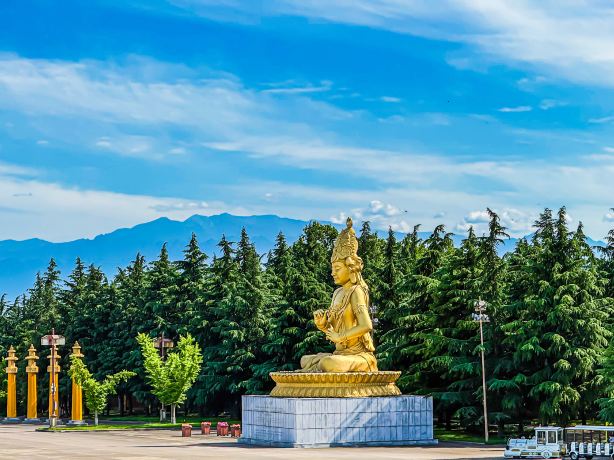
Things to do in Fufeng County
Explore top experiences
Top 10 attractions in Fufeng County


Traveller favourites curated for you


 6D5N • Emperor Qinshihuang's Mausoleum Site Museum + Hukou Waterfall Scenic Spot + Shaanxi History Museum
This private tour's exclusive perks: one-on-one driver&guide service, fixed vehicle, round-the-clock butler support, flexible itinerary changes, no shopping stops & unrushed sightseeing. | Stay in selected 5-diamond hotels with spacious rooms, comfortable bedding, and a wide variety of breakfast options. | The itinerary is fully customizable and adjustable, we can modify schedules according to your preferences and actual needs.Savings TWD 4,981
From TWD 31,267TWD 36,249

 6D5N • Emperor Qinshihuang's Mausoleum Site Museum + Mount Hua + Qianling Mausoleum + Famen Temple - Eastern Buddha Capital
Chinese tour guide, 1V1 service throughout the whole process, independent explanation of the scenic spot, equipped with mineral water. With good service guarantee in the industry achieved good credibility. | Terracotta Army is known as the eighth wonder of the world. In addition, we will visit many famous attractions, such as Xi'an City Wall, Big Wild Goose Pagoda, Little Wild Goose Pagoda and etc. Not only can we visit Xi'an, but also many famous scenic spots in Shaanxi province~~Savings TWD 328
From TWD 33,170TWD 33,500
Experiences you can't miss in Fufeng County
Featured Culture & history in Fufeng County
View all Culture & history
Free cancellation
Instant confirmation
Book now for tomorrow
FromTWD 974
4.9/5
· 408 reviews· 424 bookedFree cancellation
Instant confirmation
Book now for tomorrow
99.3% of travelers recommend
FromTWD 1,170

Instant confirmation
Book now for tomorrow
FromTWD 1,648
5.0/5
· 1 reviewInstant confirmation
FromTWD 2,341
Free cancellation
Instant confirmation
Book now for tomorrow
FromTWD 2,955
Free cancellation
Book now for tomorrow
FromTWD 5,407
Featured Food & drink in Fufeng County
View all Food & drink
4.7/5
· 79 reviews· 1.7k bookedFree cancellation
Book now for today
27 consecutive positive reviews
FromTWD 1,254

4.6/5
· 29 reviews· 585 bookedFree cancellation
Instant confirmation
10% off
Limited-time sale
FromTWD 1,303TWD 1,448

4.4/5
· 20 reviews· 350 bookedInstant confirmation
Book now for today
FromTWD 1,318

5.0/5
· 25 reviews· 128 bookedFree cancellation
Instant confirmation
Book now for tomorrow
25 consecutive positive reviews
FromTWD 2,458

4.9/5
· 15 reviews· 128 bookedFree cancellation
Instant confirmation
FromTWD 1,393
4.2/5
· 26 reviews· 497 bookedFree cancellation
Instant confirmation
Book now for tomorrow
FromTWD 1,318
5.0/5
· 3 reviews· 64 bookedFree cancellation
Instant confirmation
Book now for tomorrow
FromTWD 1,908

5.0/5
· 2 reviews· 43 bookedInstant confirmation
Book now for today
FromTWD 1,318
More things to do
Private Tours in Fufeng County
View More Private Tours in Fufeng County


Fufeng County Today's weatherClear 6-17℃
Fufeng County weather for the next 2 days11/5: 4-19℃, 11/6: 6-16℃
Free things to do in Fufeng County


What travellers say about Fufeng County

賢賢君21 October 2026
5.0
Our tour guide, Mr. Li, provided very detailed introductions to the attractions and artifacts. He was also very friendly and patient, and when explaining the artifacts, he would use supplementary pictures to help us gain a deeper understanding.
Famen Cultural Scenic Spot

中西南北东20 November 2025
4.0
Famen Temple Museum, a national first-class museum, is located in the Famen Temple Cultural Park, 10 kilometers north of Fufeng County, Baoji City, Shaanxi Province. It is 110 kilometers east of Xi'an and 90 kilometers west of Baoji City, covering an area of 48,779 square meters, with a building area of 13,768 square meters and an exhibition area of 4,000 square meters. It is a social science-oriented religious site museum.
Completed in 1987, the museum's collection originates from artifacts unearthed from the underground palace of Famen Temple. The collection includes gold and silver artifacts, glassware, and porcelain. As of the end of 2019, the museum held 9,439 pieces/sets of artifacts, including 225 pieces/sets of precious cultural relics. Unfortunately, the Buddha's finger relic is not on display here; the reason will not be discussed here.
Famen Temple Museum

水漫三楼17 June 2026
5.0
The Baoji Zhouyuan Museum is a specialized museum located in Zhaochen Village and Jingdang Village, Famen Town, at the border of Fufeng County and Qishan County, Shaanxi Province. This area was the living and settlement area of the pre-Zhou people. Built in 1987 based on the archaeological excavation of the Zhouyuan site, it was rated as a national second-class museum in 2018. The museum, based on the core area of the Zhouyuan site, exhibits over 10,000 artifacts, including the foundations of Western Zhou ancestral temples and palaces, as well as bronzes, oracle bones, and jade artifacts. Among them, the bronze vessels such as the Zhe Gong and Shi Qiang Pan are renowned for their long inscriptions and large scale. Zhouyuan, located in western Guanzhong Plain, about 100 kilometers from Xi'an, encompasses most of present-day Fengxiang, Qishan, Fufeng, and Wugong counties. Historical records indicate that the ancestor of the Zhou people, Gugong Danfu, led his people to settle in the area south of present-day Qishan, known as "Zhou." The Zhou state was named after this location. The land here is fertile, with abundant rainfall and a mild climate. Before King Wen of Zhou, it was the center of Zhou people's activities. The world-renowned Zhouyuan Site is located within a 20-square-kilometer area at the border of Qishan and Fufeng counties. Archaeological surveys have uncovered the ancestral temples, tombs, treasuries, and documents (bronze inscriptions and oracle bone inscriptions) of the Zhou royal family. The northwestern part is the palace and ancestral temple area (present-day Fengchu Village in Qishan County and Zhaochen Village in Fufeng County). The southeastern part was the residential area of the Zhou people, as well as a workshop area for smelting bronze, firing pottery, and carving bone artifacts (present-day Qizhen, Zhuangbai, Qijia, and Yuntang Village in Huangdui Township, Fufeng County). The southwestern part is the burial area (present-day Hejia Village and Li Village in Jingdang Township, Qishan County). Zhouyuan is known as the "Hometown of Bronze Ware," with an unparalleled history and quantity of unearthed bronze artifacts. Bronze artifacts have been unearthed here since the third year of the Shenjue era of Emperor Xuan of Han (58 BC), with numerous significant discoveries. Zhouyuan is a veritable underground treasure trove of cultural relics. In 1982, the State Council listed it as a second batch of national key cultural relics protection units.
Zhouyuan Museum

110***6813 April 2025
4.0
The core attraction of Famen Temple Scenic Area is also the place where the finger bone relics of Sakyamuni's real body are found. It is said to be the finger bone relics of Sakyamuni's real body.
Note: The finger bone relics are only open from 10:00 to 16:00 on the first and fifteenth day of the lunar month and weekends and holidays
The stupa itself takes 30 minutes, and the surrounding area takes about two hours
Namaste Dagoba

广州中奖小锦鲤14 July 2022
4.0
There are also various kinds of precious Buddhist instruments, and you can also see various boxes of relics here. It is really a very exquisite relic pagoda. Through the explanation, you can also learn more about the treasures of Famen Temple.
Famen Temple - Great Tang Treasures Exhibition

M2c***n725 September 2025
5.0
Special Features of the Famen Temple Stupa
[Scenic Spots]
1. Enshrining the world's only Buddha's finger relic.
This is the most central and unparalleled feature of the Famen Temple Stupa.
· Supreme Sacred Relic: According to research, the Buddha's finger relic (a section of the middle finger bone relic) unearthed from the underground palace of Famen Temple is the authentic relic of Sakyamuni Buddha, the most sacred relic in Buddhism.
· Unique in the World: This is the only Buddha's finger relic in the world that has been excavated, clearly documented, and verified by inscriptions. Its status far surpasses the replicas (imitations) or commemorative relics found in other temples.
2. Unique Architecture: A Blend of Modern and Traditional Architectural Style
The stupa's architecture is unique, breaking with traditional Buddhist stupa form.
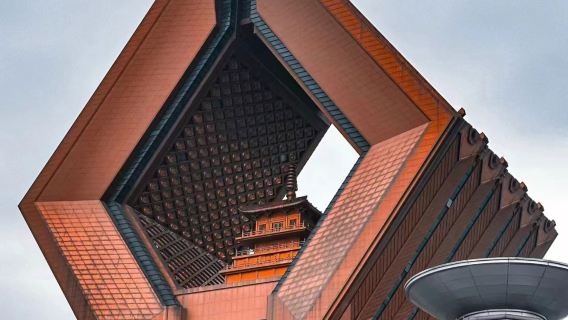
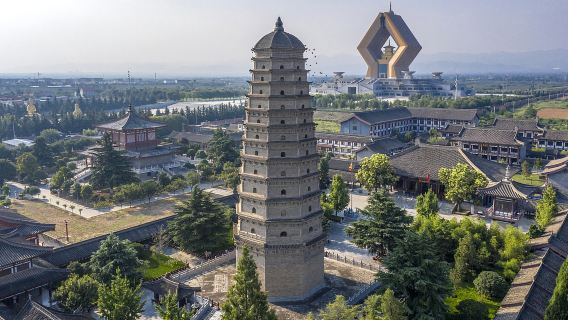
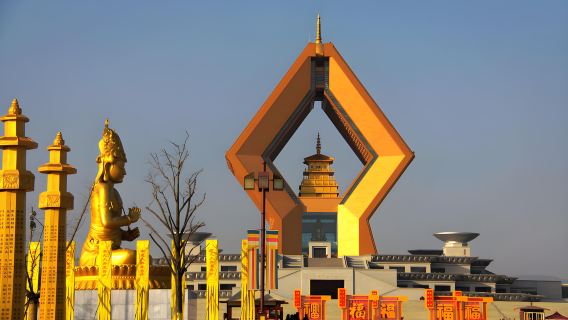
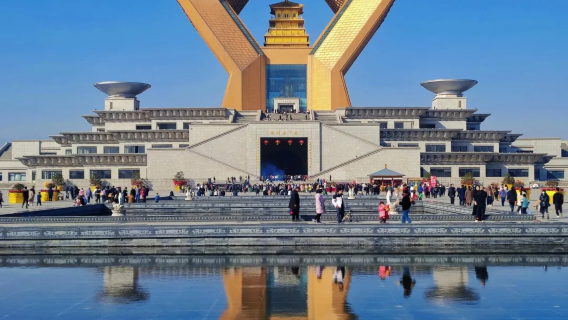
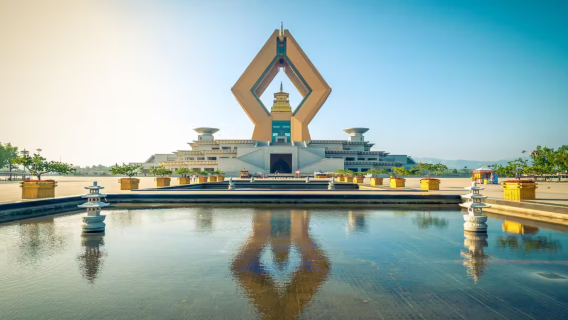
· Profound Meaning: The stupa's shape resembles two hands clasped together, hence the name "He Shi Relic Stupa." This design symbolizes devout worship and peace, boasting a magnificent and unique form, a strong sense of modernity, and symbolic significance.
· Massive Scale: Standing 148 meters tall, equivalent to a 50-story building, the pagoda is imposing and one of the tallest Buddhist pagodas in the world.
· Multifunctionality: More than just a religious structure, it serves as a comprehensive venue for cultural relic viewing, Buddhist practice, cultural exchange, and tourism. The pagoda houses a main hall enshrining the relics, a lecture hall, and a museum.
3. Inseparability from the Tang Dynasty Underground Palace: The pagoda's uniqueness is inseparable from the millennia-old Tang Dynasty underground palace beneath it.
· Significant Archaeological Discovery: In 1987, during the cleaning of the Ming Dynasty pagoda's foundation, the undiscovered, millennia-sealed Tang Dynasty underground palace was unexpectedly discovered. This is a significant discovery in Chinese archaeology, characterized by its complete structure and exceptionally high quality. Unearthed artifacts astounded the world: The underground palace not only unearthed the Buddha's finger relic, but also thousands of rare treasures from the Tang Dynasty imperial family, including gold and silver artifacts, glassware, silk fabrics, and secret-color porcelain. These artifacts are of unparalleled exquisiteness, reflecting the highest level of Tang Dynasty craftsmanship and attesting to Famen Temple's lofty status as an imperial monastery.
"The Ninth Wonder of the World": This discovery has earned Famen Temple and its Buddha's finger relic the title of "The Ninth Wonder of the World," revered both domestically and internationally.
4. Unique Worship Method: One True Relic, Three Shadows
Famen Temple's worship of the Buddha's finger relic is also unique.
One True Relic, Three Shadows: A total of four Buddha's finger relics were discovered in the underground palace. One is a "spiritual bone," the authentic Buddha bone relic; the other three are "shadow bones," Tang Dynasty imitations made of jade and other materials to protect the original relic. · Reflection of Buddhist Philosophy: This "shadow bone" system embodies the Buddhist principle of "cultivating the true through the false." Shadow bones are also sacred objects devoutly worshipped by Buddhists. While real body relics are extremely precious and rarely displayed, shadow bones are primarily used to satisfy the need for worship by believers.
5. An Important Center for Buddhist Activities
Due to its sacred status, the Famen Temple Relic Pagoda has become a global center for Buddhist pilgrimage and cultural exchange.
· Major Dharma Assembly: On major Buddhist festivals (such as Buddha's Birthday), grand Dharma ceremonies are held here to welcome the Buddha's finger relic for public viewing, attracting countless Buddhists from home and abroad.
Famen Temple

门掩梨花31 October 2026
5.0
Climbing Mount Taibai reveals the true grandeur of the Qinling Mountains. Here lies the watershed between the Yangtze and Yellow Rivers, where glaciers and rock formations have lay dormant for millennia. The mountain paths are treacherous, the weather unpredictable, but hiking along the ridge allows one to witness the layers of mountains stretching into the distance. Reaching Baixiantai is not necessary; simply standing on the main ridge of the Qinling Mountains is enough to experience the magnificence of the landscape.
The Mount Taibai National Forest Park

kiu先生28 October 2026
5.0
The scenic area is large and clean, with a refreshing atmosphere. The children were very happy, and the visit was very comfortable. The staff were very welcoming, and the routes were well-designed, making it incredibly convenient! I will definitely come again next time.
Qianling Mausoleum

Anonymous user6 April 2026
5.0
Wuzhangyuan in Qishan was the final resting place of Zhuge Liang's life. In the autumn of 234 AD, Zhuge Liang, the Prime Minister of Shu Han, led his army on a northern expedition, stationing his troops here to confront Sima Yi across the Wei River. Ultimately, he "died before achieving his goal," forever freezing the last moments of his life on this loess plateau. The Zhuge Liang Temple at Wuzhangyuan was first built in the Yuan Dynasty, and most of the existing buildings are from the Qing Dynasty. Its most unique layout is that the entire structure faces north, backed by the majestic Qinling Mountains and facing the surging Wei River, symbolizing Zhuge Liang's unfulfilled ambition to "pacify the Central Plains."
Wuzhangyuan Zhuge Liang Temple
Anonymous user3 November 2026
5.0
日本人は、ほとんど見ない。地下鉄でも行けるが、中心部から出てるバスを利用したほうがいい。地下鉄とローカルバスで行ったが、時間が掛かる。ローカルバス探したり、待ったり と、時間がもったいない。
Emperor Qinshihuang's Mausoleum Site Museum
Trip Moments in Fufeng County


