Things to do in Xiangfen
Explore top experiences
Top 10 attractions in Xiangfen


Experiences you can't miss in Xiangfen
Featured Day tours in Xiangfen
View all Day tours
5.0/5
· 3 reviews· 74 bookedFree cancellation
Instant confirmation
Book now for tomorrow
FromS$ 43.85

5.0/5
· 4 reviews· 25 bookedFree cancellation
Instant confirmation
Book now for tomorrow
FromS$ 61.16
Instant confirmation
Book now for tomorrow
FromS$ 80.65
5.0/5
· 2 reviewsFree cancellation
Instant confirmation
FromS$ 157.36
5.0/5
· 1 reviewFree cancellation
Book now for tomorrow
FromS$ 50.27
4.0/5
· 1 reviewFree cancellation
Instant confirmation
Book now for tomorrow
FromS$ 57.32
5.0/5
· 2 reviewsFree cancellation
Instant confirmation
Book now for tomorrow
9% off
Limited-time sale
FromS$ 103.51S$ 115.01
Free cancellation
Instant confirmation
Book now for tomorrow
FromS$ 185.77
Xiangfen Today's weatherFoggy 4-17℃
Xiangfen weather for the next 2 days11/3: 5-18℃, 11/4: 4-15℃
Free things to do in Xiangfen


What travellers say about Xiangfen

行走毛毛17 November 2025
5.0
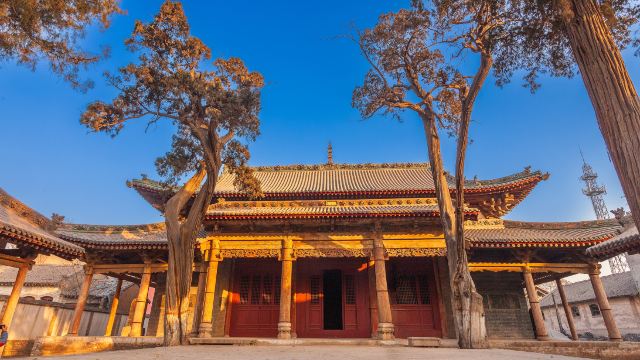
Some attractions will never regain their former tranquility. For example, there is a group of ancient buildings that used to be so quiet and not open to the public. Now that it is open, there are always all kinds of crowds. Some people say that the gate has been blocked off and that an entrance fee may be charged in the future.
Fencheng Ancient Building Complex

还不曾去过倒悬山!11 November 2024
4.0
The Taosi Ancient City Ruins is a large-scale settlement site from the late Neolithic Age, where more than 5,500 cultural relics of various types have been unearthed: Taosi "ancient observatory", gui ruler, red-lettered flat pot, Taosi bronze bell... It is known as one of the "four major early capital sites" of the Chinese Civilization Origins Exploration Project.
Taosi Site Museum

crystalura16 September 2026
5.0
Shanxi is truly an underrated treasure province, with many historical and cultural buildings hidden in the city's heart, including the Yao Temple. With over 1700 years of history, it contains ancient trees and buildings, serving as a sacred site for emperors throughout the ages to worship Emperor Yao and for descendants of Yan and Huang from home and abroad to pay homage to their ancestors. Perhaps because it's off-season now, there aren't many people, allowing for a leisurely experience.
Yao Temple

Anonymous user6 April 2026
5.0
Huamen, the First Gate Under Heaven, is located on Yaodu Avenue, west of Yaomiao Square, Yaodu District, Linfen City, Shanxi Province. It is a monument to Chinese civilization. Huamen consists of a base, the main gate, and the gate tower. The three gates on the front symbolize the three emperors Yao, Shun, and Yu. The main gate, at 18 meters high, is the largest gate in the world. A 25-meter-long waterfall wall runs in front of the main gate. Fifty-six yellowish-brown steps lead up to the gate, representing the 56 ethnic groups of China.
The first-floor pavilion houses the "Nine Linked Tripods," a bronze artifact. One main tripod connects eight auxiliary tripods, symbolizing the unification of China and the power of a single word, showcasing the majesty of these important Chinese artifacts. Eight giant bronze dragon pillars stand tall and majestic in the main hall, complementing the exhibits on various dynasties, creating a profound and awe-inspiring display of China's 5,000-year cultural heritage.
The Nuwa sculpture in the "Hall of Heroines" on the fourth floor is an innovative masterpiece of Nuwa sculpture in China. The fifth-floor rooftop offers panoramic views of the surrounding scenery.
Overall, the visit was quite pleasant. The architecture is impressive and photogenic, especially beautiful when lit up in the evening. The interior isn't particularly large, but it's clean and tidy, with information about Chinese history and the Yao culture on each floor. You can take an elevator to each floor. As a must-see attraction in Linfen, it's worth stopping by for a look and some photos; suitable for both locals and tourists. It takes about 30 minutes to an hour to see everything.
Huamen

好景致29 September 2020
4.0
There are many archaeological relics in the Dingcun site, which are concentratedly displayed in the Dingcun Folk Museum. Due to time constraints, we will have a brief visit. Although the ancients did not have the advanced automation of today, their wisdom is something that modern people cannot fully appreciate. In fact, in order to survive and reproduce, the more difficult and harsh the environment, the more they need to create an environment suitable for living. The ancients are constantly fighting with nature, exploring and looking for various favorable factors that can change their environment in practice. This exploration has continued to this day.
The residential houses in Dingcun were built in the Ming and Qing dynasties, mostly in quadrangle structures, and there are currently 26 courtyards. In terms of scale, each courtyard is different from the merchant courtyards in Jinzhong. Here, the residential function is more reflected. Each courtyard is very delicate, dignified and generous, and the decoration is gorgeous. Most of the courtyards have main halls, halls, gatehouses, and wing rooms, all of which are brick and stone wooden structures. There are wood carvings and brick and stone carvings on the building components, such as figures, flowers, birds, animals, classical operas, and historical stories. There are also various paintings and sculptures on the steps, column bases, beams, and window lattices of the house. The carving art is very exquisite. The first thing you feel when you walk in is that you have entered a deep courtyard. The walls are very high and have a strong protective function. Of course, it is reasonable for these wealthy families who are officials or rich people to first protect themselves. There are the same side doors between different courtyards of the same family, mainly to facilitate communication, and also as an escape route in case of accidents. For strangers, it is difficult to understand the internal structure in a short time. This is indeed a means to prevent emergencies.
At present, there are some folk customs displays in weddings, funerals, festivals and sacrifices. What I am most interested in is dough sculpture. The ancients were able to calm down and fully express their wisdom with dough sculptures. The exquisite and superb craftsmanship is amazing.
I saw the manger of the rich family and felt the luxury of the rich. When the poor family was worried about their lives, the manger of the rich family had exquisite carvings. It is really "rich people are particular, and poor people make do".
For thousands of years, the Chinese people have had the tradition of buying land and building houses when they have money. This is not only a reflection of wealth, but also a way to show off the glory of the family. This is still the case today with villas everywhere.
Dingcun Site

许泱流18 October 2026
5.0
The Jin State Museum, which recently reopened after renovations for the Mid-Autumn Festival, is divided into three main sections: the first section displays the history and ancient artifacts of the Jin State and the pre-Qin period; the second section features a realistic display of Jin State tombs; and the third section showcases porcelain. The overall flow of the exhibits is well-organized, providing a comprehensive experience from understanding and reading about history to witnessing it firsthand.
Jinguo Museum

老虎abc14 September 2024
3.0
The door is usually closed. I asked a fellow villager passing by, and he said there should be an old man guarding the door inside. I knocked for a long time but there was no response, and no phone call. Maybe I went too early at 8:30. My fellow villager said that there might be someone there at noon, and if I couldn't wait, I would just pass by.
Pujing Temple

殷都老虎19 June 2026
4.0
Taosi Site (National Cultural Relics Site)
Located in Taosi Village, Xiangfen County, Shanxi Province, it is the largest Longshan Culture site in the Central Plains region. Dating from 2300 to 1900 BC, it holds significant academic value for reconstructing the social nature of the late Neolithic period in China, the history of state formation, and exploring the Xia culture. It is one of China's three major prehistoric city sites (along with Liangzhu Ancient City in Zhejiang and Shimao Site in Shenmu, Shaanxi), and is suspected to be the capital of Emperor Yao.
Taosi society exhibited a stark disparity between rich and poor, with a small number of nobles accumulating vast wealth, forming a privileged class and paving the way for the transition from the state-state era to the regional state era. This is of great significance for exploring the origins of ancient Chinese civilization and the social history of the Yao and Shun era.
The site and museum showcase astronomical facilities used for exploring the universe over 4000 years ago—an ancient observatory, city walls, palaces, royal tombs, religious and ritual buildings, dragon-patterned pottery plates, red-inscribed flat pots, gnomons, bronze gears, and hourglasses. The ancient inhabitants calculated solar terms, formulated calendars, and precisely managed time, having already established a preliminary complete timekeeping system for years, months, days, and hours. Fragments of a flat-bottomed pot were unearthed, bearing two characters in red ink. One character is "文" (wen), while the other has been interpreted by experts as "尧" (Yao), "易" (Yi), or "命" (ming), among other interpretations, which are significant for the study of the origins of Chinese characters.
The Taosi culture began with the excavation of foundation trenches and the construction of rammed earth walls in its early stages. In its middle period, a ceremonial gate with a gate indicating rank and status was built at the southeast gate of the palace city. Many small house foundations were discovered at the residential site, surrounded by roads, wells, pottery kilns, and a relatively dense number of ash pits. The house foundations are categorized into three types: above-ground, semi-subterranean, and cave dwellings. The interior floors were coated with a mixture of straw and mud, compacted or fired, and most were then coated with a layer of white lime, with the wainscoting also finished with white lime. The walls have niches of varying sizes. A stove was located on one side of the interior, with a flue connecting to the outside at the rear. The well was round at the top and 13 meters deep, with a wooden retaining structure built near the bottom.
Travel Guide: Transportation: Linfen West Station—Taosi Direct Bus (two buses, 8:00 AM and 2:00 PM) (Free for veterans with preferential treatment cards in the city area)
Ticket Price: 50 yuan. (Half-price for veterans with preferential treatment card)
Time: 2-6 hours.
Accommodation and meals: Inconvenient.
Route: The museum is 5 kilometers from the ruins; there is no shuttle bus. For those driving, it is recommended to take the route: Observatory—Southeast Gate of the Palace City—turn back; then drive to the museum.
Nearby attractions: Hongtong Big Locust Tree (for ancestral worship), Xiaoxitian, Guangsheng Temple, Taosi Ruins Museum, Tiefo Temple, Fusheng Temple.
Taosi Relic Site

🕉Uma Feng Ya4 November 2025
4.0
The museum is located in a park. The parking lot is near the park, but there are many cars and few spaces. We parked quite far away. The museum's entrance, plaza, and staircase are all rather extravagant, requiring a long walk. After going up to the second floor and entering the main gate, exhibition halls 1 and 2 are on the first floor, so you have to go back downstairs. The exhibits are worth seeing, but the layout is inconvenient and should be improved.
Linfen Museum
Trip Moments in Xiangfen


