How to Get Around China as a Tourist: Metro, Taxis, Trains & Essential Apps

Contents
- What Types of Transport Are Available in China?
- How to Get from the Airport to the City
- Metro: The Most Convenient Way to Get Around the City
- Metro in Beijing, Shanghai, and Guangzhou
- Taxis in China: How to Book a Ride and Not Get Lost?
- Must-Have Apps for Travelling in China
- Maps: Apple Maps, Gaode, and Baidu Maps
- Taxis: DiDi and Gaode
- Trains and Flights: Trip.com
- High-Speed Trains: Travelling Between Cities
- Beijing-Shanghai Train: When to Choose the Train over a Flight?
- So, What Should You Choose: Metro, Taxi, Train, or Plane?
Show more
China has a remarkably well-developed transport system: major cities boast convenient metro networks, high-speed trains connect regions, and taxis can be hailed through apps. But for a first-time visitor, navigating China can feel overwhelming — station names are often only in Chinese, airports and train stations may have dozens of exits, and taxi drivers don't always speak English.
To avoid getting lost after landing, it's worth understanding how transport works in China before you arrive: which apps to install and how to plan routes between cities.
For tourists, four main types of transport are most useful: metro, taxis, high-speed trains, and domestic flights. Within major cities, the metro is the most convenient option — it's fast, easy to understand, and helps you avoid traffic. Taxis work well for airport transfers, late-night returns to your hotel, or routes where the metro isn't practical.
Between cities, many travellers choose high-speed trains. For example, trains are a great way to travel from Beijing to Shanghai, Shanghai to Hangzhou, Guangzhou to Shenzhen, or Chengdu to Chongqing. For longer distances, flying is the better option.
| Mode of Transport | Where to Use It | Best For |
| Metro | Beijing, Shanghai, Guangzhou, Shenzhen, and other major cities | Getting around the city |
| Taxi | Airports, hotels, evening trips, areas without metro | Quick, convenient rides |
| High-Speed Trains | Between cities | Beijing–Shanghai, Shanghai–Hangzhou, Guangzhou–Shenzhen routes |
| Flights | Long distances | When cities are far apart |
| Buses | Suburbs, smaller towns, specific tourist routes | Supplementary option |
After landing in China, you'll usually have several options: metro, airport express train, taxi, or a pre-booked transfer. The best choice depends on the city, your arrival time, how much luggage you have, and where your hotel is.
If you arrive during the day and your hotel is near a metro station, the metro or airport express line is often the most reliable option — no traffic jams, and the cost is usually lower than a taxi.
If you arrive late at night, are travelling with heavy luggage, or it's your first time in China, a taxi or a ride-hailing app is more convenient. The key thing: save your hotel address in Chinese characters beforehand. Don't expect the driver to understand the English name of your hotel or a Latin-alphabet address.
Before leaving the airport, check three things: Is your internet working? Does your map app load? And do you have your hotel address saved in Chinese?
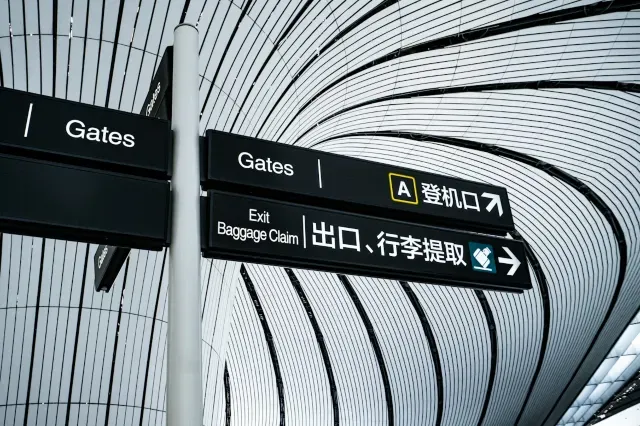
Metro systems in Chinese cities are among the best in the world for tourists. They're fast, affordable, and station signs often include English translations.
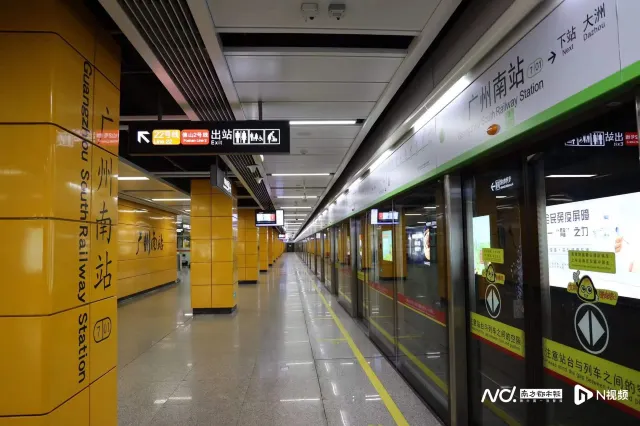
Key tips for using the metro:
Beijing Metro Map
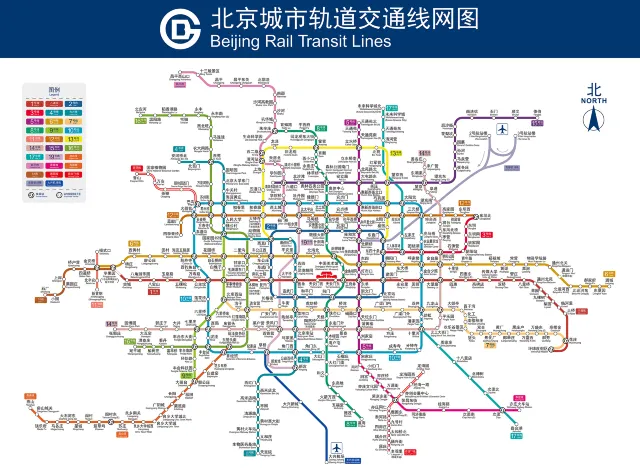
In Beijing, the metro is great for getting to major attractions, train stations, and business districts. Tourists should check the Beijing metro map beforehand — the city is huge, and transfers can take time. If you're heading to popular spots, make sure to check not just the station but also the nearest exit.
Shanghai Metro Map
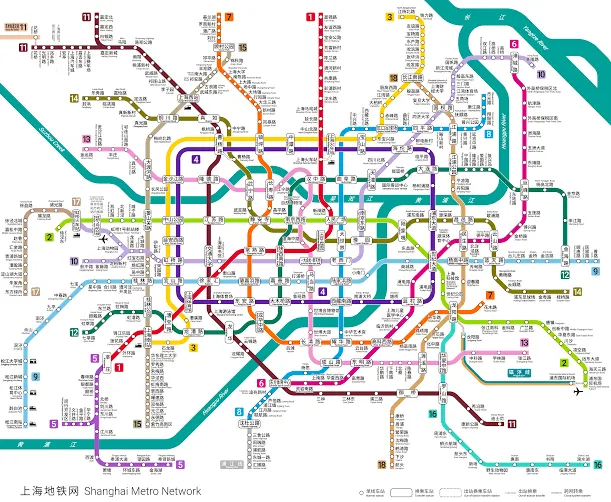
Shanghai's metro is well-suited for travelling between airports, train stations, the city centre, and modern districts. It's especially convenient for routes to People's Square, the Bund waterfront, the Lujiazui area, shopping streets, and major malls. The Shanghai metro map is particularly useful if you plan to get around the city a lot.
Guangzhou Metro Map
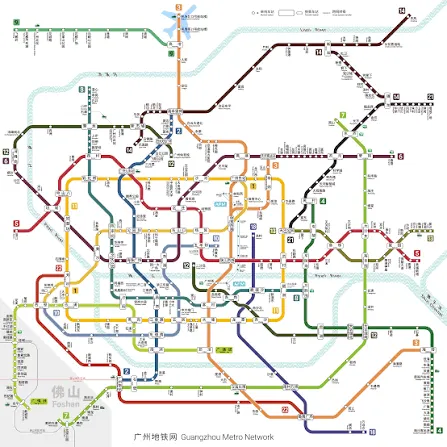
In Guangzhou, the metro is handy not just for tourists but also for those visiting trade fairs, markets, or business meetings. The metro reaches many commercial districts, train stations, and exhibition zones. If it's your first time in Guangzhou, save the metro map and your destination station name in Chinese beforehand.
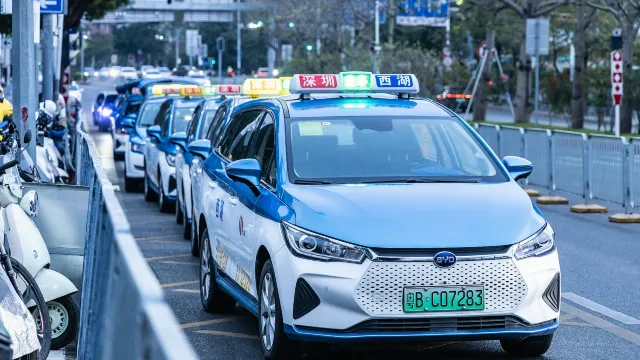
Taxis in China are convenient when you're heading from the airport, returning late at night, travelling with suitcases, or heading to a place where the metro isn't practical. But there's an important caveat: taxi drivers most often don't speak English, so you need to show your destination in Chinese.
The easiest option is to book a ride through an app. That way, the driver sees the pickup point and destination address right away. If you're hailing a regular taxi on the street or at the airport, show the driver the address of your hotel, museum, or restaurant in Chinese beforehand.
At airports and train stations, use the official taxi queue or a trusted app. Don't accept rides from random drivers who approach you in the arrivals hall or outside the station exit.
What to prepare before your taxi ride:
Chinese apps

For a comfortable trip around China, tourists should install several apps beforehand. They help you plan routes, book taxis, buy train and flight tickets, and navigate the city.
Gaode Map
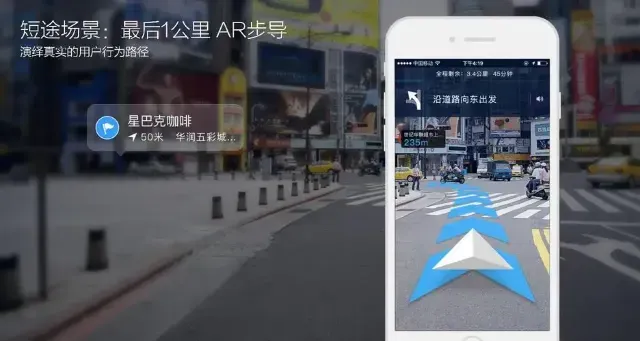
For navigation in China, you can use Apple Maps, Gaode Maps / 高德地图, and Baidu Maps / 百度地图. It's best to install at least one mapping app before your trip and save your hotel address in Chinese as a bookmark.
Apple Maps are convenient for iPhone users: the interface is familiar, and you can quickly plan routes on foot, by car, or via public transport. This is a good option for basic navigation in major cities.
Gaode Maps / 高德地图 is one of the most popular Chinese mapping apps. It's particularly useful for precise routes, traffic information, metro exits, buses, pedestrian navigation, and taxi pickup points. The downside for tourists — the interface is primarily designed for Chinese-speaking users.
Baidu Maps / 百度地图 is also worth adding as a backup. The app includes route planning, navigation, public transport, taxi, traffic info, and various travel options. But for foreign tourists, Baidu Maps has a downside: it's most comfortable for those who understand at least some Chinese.
For most tourists, it's best to start with Apple Maps or Gaode, and keep Baidu Maps as a backup local tool — especially if you need to find a place in Chinese or check a route within the city.
DiDi Taxi

For booking taxis in China, DiDi / 滴滴 is very convenient. It's one of the most popular ride-hailing services. Through the app, you can set the pickup point and destination, choose the car type, and track your route.
You can also book a taxi via Gaode Maps / 高德地图. This is handy if you've already planned a route on the map and want to immediately call a car to that point. In some cases, Gaode helps you choose the pickup location more precisely, especially near shopping malls, train stations, and large intersections.
When booking a taxi, it's important to carefully check the pickup point. In China, airports, train stations, shopping malls, and large residential complexes may have multiple entrances and exits. If you select the wrong pickup point, the driver may wait for you on the other side of the building.
Beijing-Shanghai High-Speed Train

For travelling between cities, Trip.com is very convenient. Through the app, you can search and book flights, hotels, and train tickets. This is especially useful for tourists travelling through China who want to plan their route between Beijing, Shanghai, Guangzhou, Hangzhou, Xi'an, Chengdu, and other cities in advance.
Trip.com is great for comparing options: where the train is faster, where the flight is cheaper, which station is closer to your hotel, and when to leave. Before booking, it's important to carefully check the city, station, departure time, and passport details.
For trains in China, your passport is especially important: it's used for buying the ticket and for verification before boarding. So the data in your booking must match your document.
| Task | Apps | Purpose |
| Maps & Routes | Apple Maps, Gaode Maps / 高德地图, Baidu Maps / 百度地图 | Walking routes, metro, buses, navigation, finding places |
| Taxis | DiDi / 滴滴, Gaode Maps / 高德地图 | Calling a car, choosing pickup point, route to hotel or attraction |
| Trains & Flights | Trip.com | Searching and booking tickets, comparing trains and flights, planning routes |
China's high-speed rail network is the largest in the world, with trains running at speeds of up to 350 km/h (217 mph). For many intercity routes, the train is the best combination of speed, comfort, and convenience.
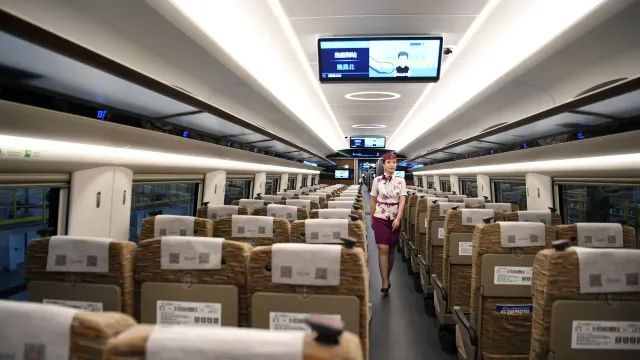
Why choose the train:
How to buy tickets:
Important: Always double-check which station your train departs from. Major cities often have multiple train stations (e.g., Beijing has Beijing Station, Beijing West, Beijing South, Beijing North, and more).
The Beijing-Shanghai route is one of the most popular for travelling in China. High-speed trains run between the cities, and there are also many flights. Whether to choose the train or the plane depends on your budget, time, and personal preferences.
The high-speed train is convenient because train stations are often better connected to city transport than airports. The train also lets you avoid the long check-in and boarding waits at the airport. It's a good option for those who want to see more of China and don't like flying.

Details
A flight may be more convenient if you've found a good deal or your hotel is located closer to the airport. But when comparing times, don't forget to factor in not just the flight itself, but also the transfer to the airport, check-in, security, baggage claim, and the transfer from the airport to the city.

Details
If it's your first time, it's best to compare both options in advance using the app: check the price, schedule, train stations, airports, and total travel time.
The single most important tip: Before your trip, install the essential apps, set up mobile internet, and save all your addresses in Chinese characters. Do that, and getting around China becomes not a source of stress — but a seamless part of your journey.
Have a great trip! 😊
Popular recommendations

10 Items You Must Buy When Shopping in Batam
 Trip.com
3 Ipoh Night Markets To Visit During Your Stay
Trip.com