
Things to do in Shannan
Explore top experiences
Top 10 attractions in Shannan


Yamdrok Yumtso
Yamdrok Yumtso means "swan pool" in Tibetan and is also called Yamdrok Yumtso Lake, locally referred to as "Yang Lake" for short. Along with Namtso and Mapam Yumtso, it is known as one of the three holy lakes of Xizang. Located on the south bank of the Yarlung Zangbo River in Nagarze County, Shannan City, the lake surface sits at an elevation of approx. 4400 m, making it a relatively large inland lake on the northern foothills of the Himalayas. Yamdrok Yumtso has numerous branching inlets and winding tributaries, resembling coral branches spreading among the mountains when viewed from above, hence its Tibetan name "upper coral lake." The lake water displays alternating layers of blue and green under different lighting conditions. The lake is dotted with over a dozen small islands and is home to plateau fish species such as the fine-scaled fish, Xizang schizothoracin, and plateau naked carp. It is also an important waterbird habitat in southern Xizang, where migratory birds like swans, bar-headed geese, yellow ducks, and ospreys gather in flocks along the lakeshore and on the central islands to overwinter each winter. Yamdrok Yumtso is more impressive when viewed from afar than up close. After crossing the Gambala Pass at an altitude of about 5,000 meters, the view suddenly opens up, and the winding lake surface can be seen like a ribbon below—a classic angle to admire Yamdrok Yumtso. Descending the winding mountain road for about half an hour leads to the lakeshore, with multiple viewing platforms along the way for stopping to take photos and appreciate the changing colors of the lake and the interplay of mountains and water from different heights.Nagarze County · 33.1km from downtown

Kula Kangri Snow Mountain
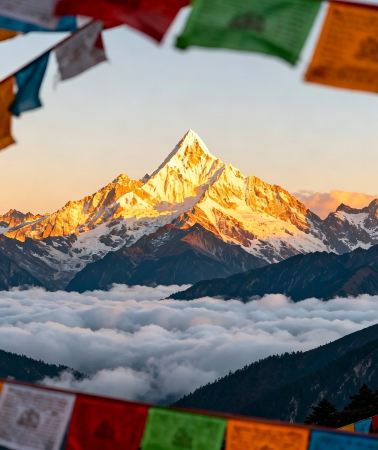
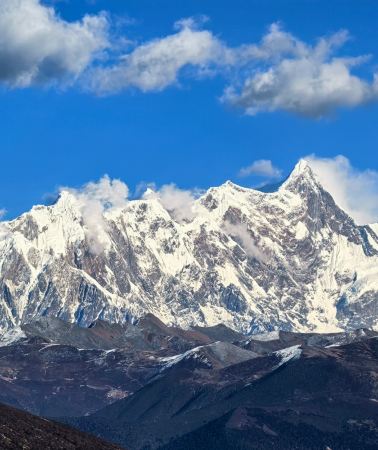
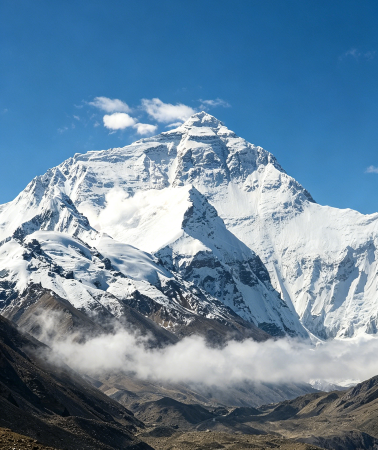
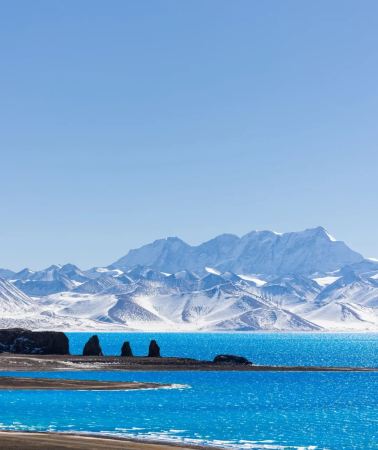
Kula Kangri Snow Mountain stands on the main ridge of the central Himalayas, with its main peak at an elevation of 7,538 m. It is highly revered in Tibetan tradition. The entire mountain consists of three main peaks, with six other peaks over 7,000 m standing side-by-side, forming a continuous barrier of ice and snow. The cliffs on both sides of the ridge are steep, and multiple glaciers have developed in the valleys. Among them, two valley glaciers on the north slope stretch for approx. 10 km, with landscapes such as ice forests, ice cliffs, and ice walls spreading along the glacial valleys, where ice avalanches occur from time to time. The other side of the ridge is adjacent to Bhutan, while the valley at the northern foot is dry, cold, and open. From May to June, warm and humid air currents from the Indian Ocean bring vitality to the mountain valleys, with flowers and trees reviving, forming a sharp contrast with the snow-capped peaks. Hiking around the lakes at the foot of the mountain is a representative way to explore this snow-capped mountain: Pemaling Tso, Zhegong San Cuo, Jiejiu Cuo, and other plateau lakes are scattered among the peaks, with the Cuoyu Village area at the foot of the mountain serving as a base. Among them, theshores of Pemaling Tsoare a popular spot for panoramic photography of the snow-capped mountains, and when the weather is clear, you have a chance to see the "golden mountain" moment. Every spring and fall, alpine rhododendrons bloom by the lake, the sky is high and clouds are light, and visibility is high, making it a good time for mountain viewing. Summer is the rainy season, and the snow-capped mountains are often hidden in clouds and mist. The altitude along the hiking route is generally over 4,500 m, so you need to reserve time for altitude acclimatization. For tourists who do not plan to hike, you can also view this range of snow-capped peaks from the roadside when driving over the Mengdala Pass.Lhozhag · 25.1km from downtown

Lake Puma Yumco
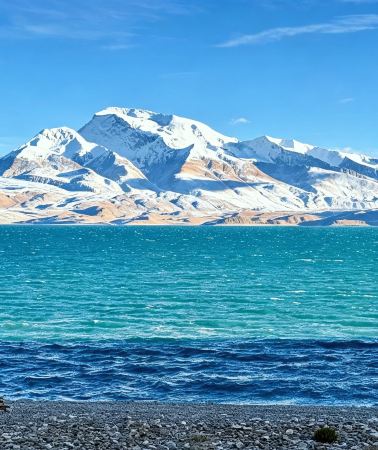
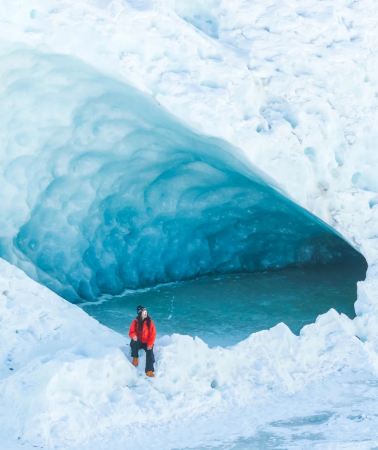
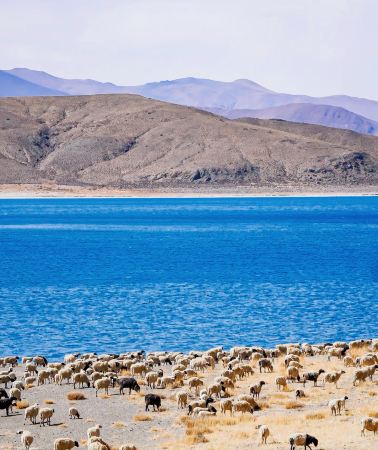
Lake Puma Yumco is a large, high-altitude, brackish freshwater lake in the Himalayas; its Tibetan name is often interpreted as "Girl Lake." The lake surface is at an elevation of approx. 5,010 m, with an area of approx. 292 sq km. The lake is supplied by meltwater fromsnow-capped mountains such as Kula Kangri, making its water exceptionally clear and blue. It is hidden deep in the plateau south ofYamdrok Yumtsoand has a remarkably high altitude among the large lakes in southern Tibet; in the warm season, the lakeside pastures are lush, with cattle and sheep scattered among them, and looking north, you can also see a range of snow-capped peaks such as Noijin Kangsang. Every deep winter, the lake surface freezes completely, forming a vast expanse of deep blue ice. As sunlight shines into the ice, cracks and bubbles frozen within are clearly visible, and layers of ice waves pile up on the shore; it is therefore often called "China's Lake Baikal" by travelers. There are several small rocky islands in the northeastern part of the lake. At this time, herders from the lakeside Tuiwa Village use stove ash to pave paths on the ice, driving their flocks of sheep to the islands for winter grazing. This herding sheep on ice tradition, which has continued for thousands of years, was also recorded in the documentary "The Third Pole".Nagarze County · 44km from downtown

Samye Monastery
Samye Monastery is located at the foot of Mount Hepori. It was founded in the 8th century during the reign of the Tibetan King Trisong Detsen, designed by Shantarakshita, and built under the guidance of Padmasambhava. Legend has it that it was modeled after the Odantapuri Monastery built by the Pala Dynasty in Magadha, ancient India. It is the first monastery in the history of Tibet where monks were ordained, and the first formal monastery in the history of Tibetan Buddhism to possess the Three Jewels of Buddha, Dharma, and Sangha—seven noble youths personally selected by Trisong Detsen were ordained here, historically known as the Seven Trial Monks. Legend says that when the monastery was first being built, Trisong Detsen was eager to see what it would look like upon completion. Padmasambhava conjured a panoramic view of the monastery from his palm. Upon seeing this, the King exclaimed "Samye" (which means "unexpected" in Tibetan), and this exclamation became the name of the monastery. The entire monastery is laid out according to the cosmological vision in Buddhist scriptures, resembling a three-dimensional mandala. The central Utse Hall symbolizesMount Meru, the center of the world. Its ground floor is in Tibetan style, the middle floor in Han style, and the top floor in Indian style. Because it combines these three styles, the monastery is also known as the Three-Style Temple. The Moon Temple and Sun Temple on either side of the main hall symbolize the sun and the moon. The four square halls correspond to the Four Great Continents, the side halls next to each hall combine to form the Eight Sub-continents, and four stupas—red, white, green, and black—stand at the four corners. The walls of the Utse Hall and the corridors are covered with murals. Among them, the most famous is the History of Tibet mural on the middle corridor of the inner wall of the main hall, which begins with the legend of the union of the ancient divine monkey and the demoness that gave birth to the Tibetan people, and continues up to Tsongkhapa's founding of the Gelug school, a long scroll stretching 92m. On the south side of the east gate stands a square stone stele from the time of Trisong Detsen, recording the oath to promote Buddhism made by Trisong Detsen in 779 AD to support Samye Monastery. During the Tibetan Sun-Bathing Buddha Festival, a giant embroidered image of Shakyamuni Buddha is hung on the high wall of the Buddha Exhibition Hall in front of the Utse Hall.Zhanang · 18.4km from downtown

Rituo Temple
Rito Monastery is located on the shore of the Jade Yamdrok Lake, surrounded by the lake and beautiful scenery. It is a secret place worth visiting for tourists. You can have a 360-degree panoramic view of the world of Yamdrok Lake, which makes people feel as if they are out of this world and feel relaxed and happy. Visitors can also explore the daily life of the ascetic monks here and experience the dual impact of vision and spirit. Rito Temple is built on the hillside, with a staggered layout, reflecting the unique style of Tibetan architecture. Visitors can visit the main hall, pagoda and monks' quarters, and admire the exquisite murals and carvings. These works of art not only show Buddhist stories, but also reflect the history and culture of the Tibetan people. The daily chanting of monks in the temple provides visitors with an opportunity to experience the religious atmosphere. The natural environment around Rito Monastery is equally intoxicating. Surrounded by lakes, mountains and green waters, it feels like being in a fairyland, providing an ideal place for tourists to relax. Walking by the Yamdrok Lake, you can see bar-headed geese swimming freely in the water, and when night falls, the sky is full of stars reflected on the lake. Here, the temple and the lake, the snow-capped peaks and the blue sky are integrated. Rito Monastery provides every visitor with a perfect journey to explore religious culture and feel the tranquility of the soul.Gongga · 34.5km from downtown

Yungbulakang Palace
"Yongbu" means doe in Tibetan, and it is named after the mountain of Tashi Ci Ri, which looks like a doe; "Lakang" means temple. There is a spring called "Gar Spring" about 400 meters northeast of Tashi Ci Ri Mountain. It flows all year round. It is said that this spring can cure all diseases. Most people who come to Yongbulakang to worship come here to drink water and purify themselves. It is said that Yongbulakang is the palace where the first Tibetan king Niechi Zamp lived, and it has a history of more than 2,000 years. Yongbulakang is divided into two parts. The front part is a three-story building with more than ten stone steps on the first floor. The front half is the entrance hall, and there is a small platform with eaves outside the hall. From the entrance hall to the inside is the Buddha Hall, which enshrines the statues of the Three Buddhas and successive Zamps. In addition, there are statues of Princess Wencheng, Princess Bhrikuti of Nepal, and two Tibetan ministers, Thunmi Sambhota and Lu Dongzan, which are exquisitely shaped and very vivid. The second floor is also divided into two parts, the front part is a platform surrounded by low walls on three sides, and the back part is a corridor with a patio. The back part is a square high-rise fortress watchtower, connected to the front part, both built of stone, towering and majestic. The south slope is gentle, and you can spiral up from the bottom of the mountain. There are dozens of stone steps in front of the palace gate. Initially, Yongbulakang was just a small palace. After expansion, it gradually became a Buddhist temple.Shannan · 11.6km from downtown

Gongdelin Grassland
Gongdelin Grasslandis a famous local alpine pasture. In addition to the grassland scenery of cattle and sheep grazing in the breeze, it is also a well-known local source of ghee. Today,Gongdelin Grasslandis also an important attraction on the local southern and eastern tourist loop lines. Currently, pastoral homestays have been established on the grassland, where visitors can taste local food and enjoy a stay in tents run by herdsmen.Sangri · 39km from downtown

Pemaling Tso
In Tibetan, the word "white horse" means "lotus". In Tibetan lore, Pemaling Tso is regarded as one of Padmasambhava's three soul-return lakes, and it is said that those with a karmic connection can go to an observation platform beside Pemaling Tso and, by looking into the lake, see their past and present lives.Lhozhag · 17.6km from downtown

Yajiang River Valley Viewing Platform
The Yajiang River Valley Observation Deck is located on the hillside of Gangbala Mountain in Jiangtang Town, Gonggar County, Shannan City, Tibet, at an altitude of 4,280 meters. It is the only way to Yamdrok Yumtso (Yamdrok Lake). As an important resting point on the winding mountain road from Lhasa to Yanghu Lake, it is famous for its broad vision and magnificent natural scenery. You can overlook the magnificent landforms of the middle reaches of the Yarlung Zangbo River Valley. The Yarlung Zangbo River rushes out of the mountains in this section, forming a winding and deep canyon. The mountains on both sides of the river valley are stacked, and the scenery varies in different seasons. The main body of the observation deck is a 4,280-meter-high stone monument engraved with Tibetan and Chinese. This place is not only a scenic spot for photography enthusiasts, but also a window to experience the Tibetan culture - the local handicraft market and the scene of fluttering prayer flags add cultural atmosphere to the natural landscape. As a microcosm of the integration of nature and humanity in Gonggar area, the Yajiang River Valley Observation Deck has become a classic starting point for exploring the Yarlung Zangbo River, the "Heavenly River" of Tibet, with its pure vision at high altitude and pristine Tibetan customs.Gongga · 35.4km from downtown

Dagu Valley
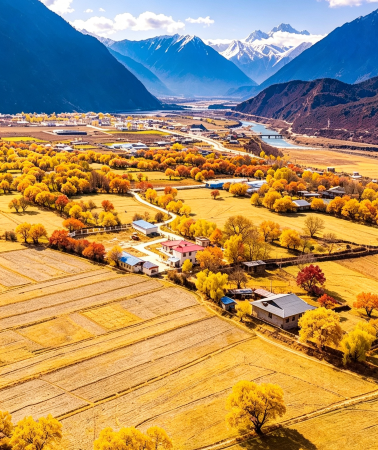
Dagu Valley has 4 attractions: Dagu Stream attraction, Baigou attraction, Jiexu attraction, and Gadui Xuezhui attraction. The Jiexu attraction is currently under construction. It is located at the border of Sangri County and Gacha County, at an average elevation of 3,200 m. Here, the mountains on both banks of the Yarlung Zangbo River are steep and precipitous, the river channel is narrow, and the current is rapid and roaring, making it arguably the first canyon of the Yarlung Zangbo River. On its northern side, the valley is humid with dense vegetation and clear mountain streams. It is home to protected animals such as brown bears, Tibetan macaques, snowcocks, and snow leopards. It also produces a wide variety of rare medicinal herbs, including cordyceps, fritillaria, snow lotus, and rhodiola, and, surprisingly, supports highly ornamental flowers such as red peonies, various rhododendrons, gentians, nodding asters, and primroses. The local customs of Dagu are a unique, striking sight. Dagu Village is located at a major bend of the Yarlung Zangbo River. Dagu is known for Dagu stone pots and the local specialty, Dagu stone pot fish. The area features naturally formed rock wonders such as Padmasambhava's alms bowl and theThousand Buddha Cliff.Sangri · 31.7km from downtown
Free things to do in Shannan
Yamdrok Yumtso
Nagarze County · 33.1km from downtownKula Kangri Snow Mountain
Lhozhag · 25.1km from downtownLake Puma Yumco
Nagarze County · 44km from downtownSamye Monastery
Zhanang · 18.4km from downtownRituo Temple
Gongga · 34.5km from downtownYungbulakang Palace
Shannan · 11.6km from downtownGongdelin Grassland
Sangri · 39km from downtownPemaling Tso
Lhozhag · 17.6km from downtownYajiang River Valley Viewing Platform
Gongga · 35.4km from downtownDagu Valley
Sangri · 31.7km from downtown
More ways to travel from Shannan
Private Tours in Shannan
View More Private Tours in Shannan


Group Tours in Shannan
View More Group Tours in Shannan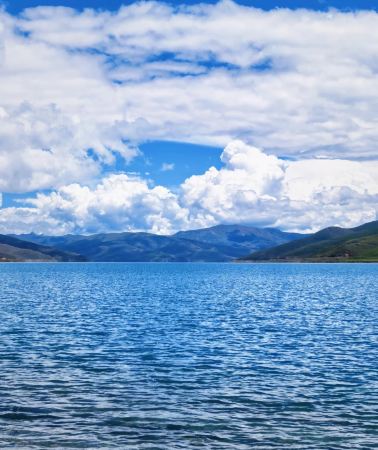
What travellers say about Shannan

Z·H13 October 2026
5.0
Yamdrok Lake truly lives up to its reputation as one of the three holy lakes of Tibet; its beauty is breathtaking from the first sight. The lake water is a rich tapestry of turquoise, like a sapphire set amidst the mountains, with snow-capped peaks in the distance and prayer flags fluttering in the wind. The scenery is vast and soothing. The viewpoints along the way offer expansive vistas, every angle a masterpiece. Standing on the lakeshore, a profound sense of peace washes over you. A trip to Tibet is incomplete without experiencing such stunning scenery.
Yamdrok Yumtso

行走在民间的艺术家8 December 2025
5.0
Embark on a Rendezvous in the Clouds: The Ultimate Healing Experience of Kula Kangri Snow Mountain
As the barley fields outside the car window are gradually replaced by pristine white snow, Kula Kangri Snow Mountain bursts into view with overwhelming grandeur—three main peaks, each over 7,000 meters high, stand side by side, their summits covered in glaciers that reflect the cold light of the sun, like a snow-covered secret realm left behind by heaven in southern Tibet, exuding a sacred and tranquil aura.
Following the hiking route, the path is a tapestry of gravel and meadows, with glacial meltwater flowing beside you, so clear it reflects the contours of the snow-capped mountains. Along the way, on the alpine meadows, wildflowers bloom defiantly in the cold wind, and occasionally yaks stroll leisurely, swishing their tails. In the distance, prayer flags flutter in the wind, their red, blue, white, green, and yellow hues drawing dynamic arcs between heaven and earth, embodying the piety and faith of Tibet. The higher you climb, the clearer the air becomes, and the details of the snow-capped mountains become increasingly clear: glacial crevasses resemble the patterns of the earth, and accumulated snow outlines smooth lines on the mountainside. Every breath carries the crispness of ice and snow, cleansing the dust from your heart.
Reaching the mountain pass, the entire snow-capped mountain range unfolds before your eyes. The main peak, Kula Kangri, stands majestically, flanked by Xiegeer Gongga Ri and Sangding Gangri, like guardian deities protecting this pristine land. At your feet, lakes, like sapphires, are nestled at the foot of the snow-capped mountains, their reflections indistinguishable—is it the mountains reflected in the water, or the water reflecting the spirit of the mountains? At this moment, the world is a vast expanse of white, save for the sound of the wind and your own heartbeat. All the noise is shut out by the snow-capped mountains, leaving only pure awe and tranquility.
In the evening, you stay in a village at the foot of the mountains. Wisps of smoke rise from the chimneys of Tibetan houses, mingling with the mountain mists. Sitting in the courtyard, watching the snow-capped mountains gradually turn golden-red in the twilight before finally fading into silence, the starry sky quietly fills the night, the Milky Way clearly visible, as if one could reach out and touch the vastness of the universe. Local herders bring steaming hot butter tea; its rich aroma dispels the chill and adds a touch of warmth to this snowy journey.
Saying goodbye to Kula Kangri, looking back at the pristine white mountains, my heart is filled with reluctance. Here, there is no excessive commercialization, only the most pristine nature and the purest faith. Every step is a baptism of the soul, every glance an unforgettable view. If you yearn for ultimate purity and awe, why not set foot on this land, converse with heaven and earth atop the snow-capped mountains, encounter yourself, and embark on an unforgettable rendezvous in the clouds?
Kula Kangri Snow Mountain

qtrqqcl13 July 2023
5.0
Pumauyongcuo (Pumauyongcuo), located at the junction of Lhozha County and Langkazi County in Shannan City, Tibet Autonomous Region, is a freshwater lake in the Himalayas and the highest freshwater lake.
Different from the majestic Namtso and the beautiful Yanghu Lake, Pumauyongcuo is peaceful, primitive and pure. The azure sky, the flowing white clouds and the snow-capped mountains in the distance make you not want to leave when you sit by the lake.
Lake Puma Yumco

pshr24 July 2025
5.0
Located in Zhanang County, Shannan, Tibet, Samye Monastery is the first monastery in the history of Tibetan Buddhism that has "Buddha, Dharma, and Sangha" and is known as "a masterpiece in the history of architecture". Samye Monastery was built by the Tibetan king Trisong Detsen, and designed by Indian Buddhist masters Shantarakshita and Padmasambhava. It took 12 years to complete in 779 AD. Legend has it that Trisong Detsen was amazed by the temple illusion shown by Padmasambhava and exclaimed "Samye", hence the name of the monastery. The monastery marked the official establishment of Buddhism in Tibet, ordained the first seven Tibetan monks ("Samye Seven Enlightened Ones"), and established Buddhism as the state religion of Tibet for the first time. Samye Monastery has a unique layout and a large scale. The entire building complex is said to be laid out according to the layout of the universe in Buddhist scriptures: the magnificent Wuzi Hall represents Mount Xumi, the center of the world; the Sun and Moon Halls symbolize the sun and moon in the universe; the four pagodas at the four corners of the Wuzi Hall represent the four great arhats, and the pagodas are blue, green, red, and white, representing the four processes of Sakyamuni's birth, becoming a monk, becoming a Buddha, and nirvana; the four temples of Jiangbailin, Ayabalulin, Qiangbalin, and Sangyelin were built near the gates of the wall on the east, south, west, and north sides, representing the four continents in the four salt seas in Buddhist scriptures. There are eight small halls evenly distributed around the main hall, representing the eight small continents in the four salt seas; the elliptical wall surrounding the temple symbolizes the Iron Mountain on the periphery of the world. Samye Monastery has a unique architectural style. The main hall is three-story, with the first floor in Tibetan style, the second floor in Han style, and the third floor in Indian style. It is also called the "Three-style Temple".
Samye Monastery

倩ang🍓🍉🍑🍒6 September 2025
5.0
Drones are allowed at Rito Temple.
There are only two monks chanting inside the temple.
A lonely island.
A lonely temple.
Located on the lonely Rito Lake.
[Scenery] As we walked, the weather gradually improved. By noon, we were treated to a stunning blue sky and the varying shades of blue in the lake.
[Fun] There are no guided tours, but you can ask.
[Value for money] Very good, I think the ticket price was 20 yuan.
Rituo Temple

gz当地向导伊妹儿9 July 2022
5.0
Yongbulakang is 51 kilometers away from Samye Monastery, about an hour's drive away. It is the first palace in Tibetan history and a 3A scenic spot with a watchtower-style building structure. You need to climb the mountain, but the mountain is not high and the experience is quite good!
Yungbulakang Palace

滇国剑客30 January 2021
5.0
Coming to the plateau environment of Tibet, there are many attractions to see, mainly the temple scenery of the Gelugpa sect of Tibetan Buddhism, and the grassland scenery is also very special, making it a special existence on the plateau.
Gongdelin Grassland

enjoyzent20 June 2021
5.0
Baima Lincuo is a quiet and beautiful plateau lake, located in Selin Township, Lhozha County, nestled against the sacred Kulagangri Mountain.
Because it is surrounded by ice and snow mountains, the lake surface of Baima Lincuo is always shrouded in mist, but the light dark green lake water unique to plateau lakes is irresistible. Looking down from the side of the mountainside, it is pleasing to the eye. I believe everyone can't bear to leave such a wonder!
Pemaling Tso

lyn99092918 January 2021
5.0
Walking in Tibet, you will see different scenery every day. Sitting in the car, you can take pictures of the beautiful scenery. After a while, I passed by a viewing platform and saw a stone with "Yajiang River Valley" written on it. There were two majestic Tibetan mastiffs standing on both sides of the stone. The Yajiang River Valley is located in Shigatse, Tibet. When driving from Lhasa to Yamdrok Lake, one of the three sacred lakes in Tibet, you will pass by the river valley viewing platform, which is 4,280 meters above sea level. Looking into the distance, the river valley, blue sky and white clouds are extremely beautiful.
Yajiang River Valley Viewing Platform

格格巴10 April 2021
4.0
Dagu Scenic Area is located in Dagu Village, Zengqi Township, Sangri County. It is one of the scenic spots of the Yarlung Zangbo River Canyon. As the saying goes, "there is snow at the foot of the mountain in midsummer, and ice on the top of the mountain in autumn", the extremely rich animal and plant resources here and the unique scenery formed by them really make people feel like being in a fairyland and intoxicated.
Dagu Valley


