Lujiang

Things to do in Lujiang

Search attractions or local attractions & tours
Search

Explore top experiences

Top 10 attractions in Lujiang

View all Attractions
Hongcun Village
No. 1 of Night Attractions in Anhui

Hongcun Village

8.6
4.5/5
50k reviews

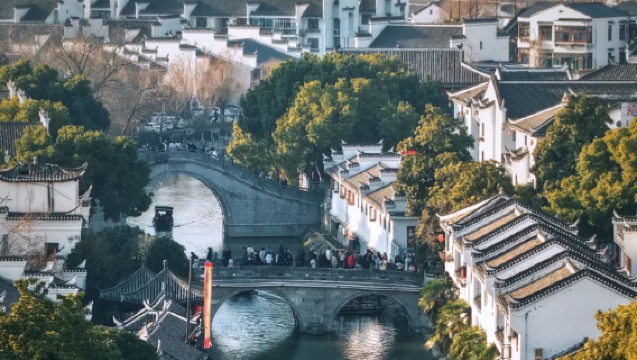
Hongcun Village is a classic Huizhou-style ancient village, renowned as a "village in a Chinese painting." A visit here offers two unmissable experiences: first, the water landscapes shaped by its irrigation system, with Nanhu Lake and Yuezhao Pond as the crown jewels; second, the exquisite "three carvings" of Huizhou architecture—brick, stone, and wood carvings—intricate enough to rival paper-cut art. Here, cultural heritage and natural beauty blend seamlessly into a harmonious whole. The ancient village was first built during the Shaoxing era of the Southern Song dynasty and gradually developed from the Yongle era of the Ming dynasty into a unique "ox-shaped village" layout. The two ancient trees at the village entrance form the "ox horns," the densely packed Ming and Qing Huizhou-style buildings in the village form the "ox body," the four bridges over the stream west of the village form the "ox feet," Yuezhao Pond is the "ox stomach," Nanhu Lake is the "ox belly," and the water channels flowing past every household are the "ox intestines." Sightseeing can begin at Nanhu Lake in the south of the village. Nanhu Lake is a bow-shaped artificial lake dug during the Wanli era of the Ming dynasty, with a broad expanse of water; the Huabridge crossing the lake is where Li Mubai led his horse in the film Crouching Tiger, Hidden Dragon. On the north bank of the lake, Nanhu Academy was formed by merging six original private schools by the lakeside, and its layout is exceptionally spacious. Heading north along the lake's north bank, visitors can also stop by ancient residences such as Jingde Hall and Wang Daxie's Former Residence (Zhenqi Hall). Continuing north leads to Yuezhao Pond at the village center, a half-moon-shaped pond dug during the Yongle era of the Ming dynasty, surrounded by Huizhou-style buildings reflected in its waters—one of the best spots for photography in the ancient village. However, visitors crowd around Yuezhao Pond year-round, so patience is needed to capture an empty shot. At the center of Yuezhao Pond's north bank stands Lexu Hall, also known as the Wang Clan Ancestral Hall, a surviving Ming dynasty building in the village with a simpler style than Qing dynasty architecture. On the western end of Yuezhao Pond's north side is Jingxiu Hall, built during the Qing dynasty. Further north, visitors can tour Chengzhi Hall, the residence of late Qing salt merchant Wang Dinggui. The residence is fully equipped with a study, kitchen, stable, bodyguard room, and servants' quarters, and even includes a "Paishan Pavilion" for playing mahjong; the house has its own pond and well, so water is available without leaving the premises. The exquisite Huizhou three carvings are worth examining closely—some wood carvings are even coated with gold powder, lavish and magnificent. Other ancient buildings in the village worth seeing include Deyi Hall, Shuren Hall, and Taoyuan Residence.

China · Yi County
Niushou Mountain Cultural Tourism Zone
No. 2 of Best Things to Do in Jiangsu

Niushou Mountain Cultural Tourism Zone

8.6
4.7/5
35.3k reviews

Niushou Mountain Cultural Tourism Zone, also known asNiushou Mountain Cultural Tourism Zone, it is named for its two peaks, one in the east and one in the west, which resemble the two horns of an ox's head. Niushou Mountain Cultural Tourism Zone boasts beautiful scenery and has long enjoyed the reputation of "Spring Niushou." In ancient times, it featured such Jinling scenic spots as Niushou Smoke and Mist and Zutang Temple's Resounding Tin Staff, and it also preserves many historical sites, such as the Jiangning section of the ancient fortifications where Yue Fei fought against the Jin, and the Zheng He Cultural Park. Usnisa Palace The Usnisa Palace is themed around the enshrinement of the Buddha's parietal bone relic and is divided into two parts: the large dome and the small dome, symbolizing outer offerings and inner offerings. The Usnisa Palace utilizes the original mine pit to build an underground palace, with six levels below ground and three levels above ground, appearing very solemn and magnificent. The parietal bone relic of Shakyamuni Buddha was enshrined at the Niushou Mountain Cultural Tourism Zone in October 2015. Visitors may go to the Usnisa Palace to pay homage on special Buddhist festivals. For specific times to view the relic, please call the attraction for inquiries. A thousand years of history Niushou Mountain Cultural Tourism Zone is a Buddhist sacred site. The Buddha Cave Temple, built by Sikong Xu Du in the second year of the Tianjian era of the Liang Dynasty (503 AD), was the first temple on Niushou Mountain, and Li Yu, the last ruler of the Southern Tang, renamed it Hongjue Temple. During the Tang Dynasty, Chan Master Farong, hailed as the "Bodhidharma of East China," founded the Niutou Chan School on Niushou Mountain, known in ancient times as "Jiangbiao Niutou." The founding of the Niutou Chan School served as an important bridge in the true transformation of Indian Chan into Chinese Chan! Niushou Mountain Cultural Tourism Zone - Taohua Stream Niushou Mountain Cultural Tourism Zone - Taohua Stream is located at the east entrance of Niushou Mountain Cultural Tourism Zone, with a total area of 14.87 hectares, approximately 220 mu. The peach blossoms selected are 26 varieties suitable for growing in the Nanjing area, making it a new view created by the Niushou Mountain attraction. A small stream winds down from Yinlong Lake, its water babbling, with peach trees planted on both sides. In spring, the buds gradually bloom, and a sea of flowers is intoxicating.

China · Nanjing
Slender West Lake
2026 Global 50 - Spring Outings

Slender West Lake

8.5
4.7/5
83.6k reviews

"In March when flowers bloom, head to Yangzhou." When visiting Yangzhou in spring, a trip to Slender West Lake is a must. This narrow stretch of waterway offers the perfect blend of natural beauty and cultural heritage. Stroll along the banks to admire scenic views, explore historic pavilions adorned with classical poetry and paintings, or cruise the lake by boat to experience the leisurely pleasure Emperor Qianlong once enjoyed during his royal visits. The attraction is quite expansive, stretching from the Great Rainbow Bridge in the southeast all the way north along the lake to Guanyin Mountain, passing dozens of attractions along the way. There are four main entrances (east, south, west, and north), with most visitors starting their tour at the south entrance on Great Rainbow Bridge Road. This renowned lakeside garden boasts breathtaking natural views. In spring, the area is shaded by lush willows and adorned with camellias, pomegranates, azaleas, and peach blossoms, attracting visitors from across the country to enjoy the seasonal blooms. For centuries, countless literati have lingered here, composing poetry and creating paintings that left behind numerous artistic treasures and stories. The site also features many landscape structures ingeniously designed to harmonize with its natural surroundings. The Five Pavilion Bridge in Shugang Slender West Lake Scenic Area is the iconic attraction with over 200 years of history. Featuring five wind pavilions atop, each of the bridge's fifteen arches cradles a moon during full moon nights. Another renowned attraction is the Twenty-Four Bridge, inspired by Du Mu's poetic line "Where is the jade-like beauty teaching flute-playing on the moonlit Twenty-Four Bridge?" While the original bridge no longer exists, visitors can admire its reconstructed version today. This was also a stop during Emperor Qianlong's southern tours in the Qing Dynasty. Architectural views like the Great Rainbow Bridge, Slender West Lake Scenic Area's Fishing Terrace, White Pagoda, and the Twenty-Four Bridges' Xichun Platform all bear inseparable historical anecdotes connected to Emperor Qianlong. During summer nights, the illuminated pavilions and moonlit reflections on the lake create a magical atmosphere. The nightlife experience here is entirely boat-based, offering a relaxing way to beat the summer heat while enjoying gentle lake breezes.

China · Yangzhou
Jiuhua Mountain
No. 3 of Best Things to Do in Southern Anhui

Jiuhua Mountain

8.3
4.8/5
28.6k reviews

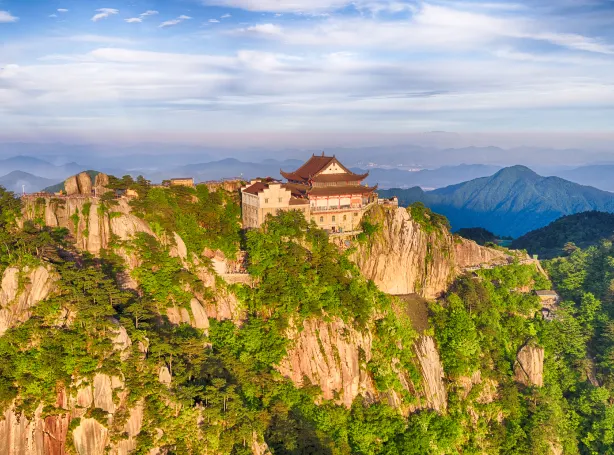
Jiuhua Mountain is located southeast of Chizhou. During the Kaiyuan reign of the Tang Dynasty (719 AD), Prince Jin Qiaojue of the ancient Silla Kingdom (an ancient regime on the Korean Peninsula) came here to practice Buddhism. Because various auspicious signs before and after his death closely resembled those of Ksitigarbha Bodhisattva, he was recognized as an incarnation of Ksitigarbha Bodhisattva and revered as Jin Ksitigarbha. Thus, Jiuhua Mountain became Ksitigarbha Bodhisattva's bodhimanda and, together with Mount Putuo, Mount Wutai, and Emeishan, was listed as one of the Four Sacred Buddhist Mountains. The preserved bodies of eminent monks from various dynasties are a major feature here. Under the perpetually humid climate, the bodies of these monks have been preserved after their passing. Currently, there are five such flesh-body bodhisattvas available for viewing. Jiuhua Street on the mountain is ring-shaped and serves as the core tourist hub of the attraction. Most trips to the various attractions start from Jiuhua Street, and many important temples are also located here. Temples are scattered throughout the mountain, and three key temples are recommended: Baisui Palace, the Hall of the Flesh Body, and Huacheng Temple. Except for Baisui Palace, which is built on a small hill, the latter two are both within the area of Jiuhua Street. To reach Baisui Palace, it takes about half an hour on foot up the mountain, or you can take the cable car. Baisui Palace enshrines the flesh body of the Ming Dynasty monk Wuxia, one of the oldest extant flesh-body bodhisattvas on Jiuhua Mountain, who was imperially conferred the title of "Response Body Bodhisattva." The Hall of the Flesh Body enshrines the flesh body of the Tang Dynasty Jin Dizang; the flesh body is sealed within a pagoda, so visitors cannot directly view the true body, but they may walk clockwise around the pagoda inside the hall. Huacheng Temple is the founding ancestral temple of Jiuhua Mountain and also the site of the Jiuhua Mountain History and Cultural Relics Museum, which houses the "Huayan Blood Sutra," copied by monk Wuxia over twenty-eight years using his own finger blood, a national first-class cultural relic. In addition to the two flesh bodies at Baisui Palace and Roushen Baodian, the other three flesh-body bodhisattvas are: Monk Mingjing of Zhantan Zen Forest, Monk Ciming of Dizang Zen Temple, and Master Renyi, a bhikkhuni, of Tonghui Zen Forest. Master Renyi is a bhikkhuni flesh body that can be visited. These three temples are all located on Jiuhua Street and can be visited in sequence. In the evening, the Qiyuan Zen Temple, the foremost of the four great monasteries, is brightly lit, and many large-scale Buddhist ceremonies are held here. Travelers may observe quietly, but must strictly observe Buddhist etiquette, refraining from loud noise and pointing at will. Travelers on a 1-day tour generally only need to visit the key temples; those with plenty of energy can continue upward from Baisuigong to Dongya Temple, and walk from Roushen Hall to **Shangchan Hall and Xiaotiantai**. Travelers on a 2-day tour can visit temples on the first day and hike up the mountain to enjoy the natural scenery on the second day, with three options: the Tiantai scenic area, the Huatai scenic area, or the ridge traverse from Tiantai to Huatai. Visiting Tiantai or Huatai separately generally takes about half a day; the Tiantai–Huatai traverse is a hiking route with a certain level of intensity, so it is recommended to set aside a full day. Tiantai is located on the south side, with its entrance at Fenghuang Pine south of Jiuhua Street; from Tiantai Temple at the top, you can enjoy the sunrise and sea of clouds and overlook the panoramic view of Jiuhua Street. Huatai is located in the northern part of the attraction, where the natural scenery is more pristine and pure, with exotic peaks and grotesque rocks scattered in varied forms; every May, rhododendrons bloom across the mountains in succession. The entrances to the two scenic areas are far apart, but they are connected by a hiking trail along the ridge. This place is foggy year-round, especially in spring and fall, when clouds and mist shroud the temple, giving it a sense of a Buddhist wonderland. Foggy days are often accompanied by drizzle, so bringing a rain poncho is recommended. In winter, snowy scenery is common in the mountains, but the steps are wet and slippery, so be sure to take anti-slip precautions when climbing.

China · Qingyang
Hubei Provincial Museum
2026 Asia 100 - Family-friendly Attractions

Hubei Provincial Museum

8.5
4.9/5
7.9k reviews

The Hubei Provincial Museum has ten treasures of the museum, including those unearthed from "Tomb of Marquis Yi of Zeng" the Hubei Provincial Museum's Zenghouyi chime bells; the Yue Wang Goujian sword, a masterpiece of the cold weapon era; the fossilized skull of the Yunxian Man dating back 1 million years; and a treasure of Yuan blue-and-white porcelain: the plum vase with the Four Loves design. The museum's regular exhibitions also feature distinctive characteristics of ancient Chu culture and ancient Yangtze River civilization. The Hubei Provincial Museum consists of the comprehensive exhibition hall,Chu culture hall,Chime bell hallIt is composed of multiple pseudo-classical buildings, and the layout reflects the high-platform architectural layout format of ancient Chu architecture, namely "one terrace, one hall" and "multiple terraces forming a group." Unearthed in 1978 at "Tomb of Marquis Yi of Zeng" in the Hubei Provincial Museum - the Zenghouyi chime bells have a wide range and their excavation rewrote the history of world music; the sword of Goujian, King of Yue, a masterpiece of the cold weapon era, is still incomparably sharp to this day, and displayed beside it is the "spear of Fuchai, King of Wu"; the geological age of the Yunxian human skull fossil is approx. 1 million years ago, earlier than the Peking Man skull fossil; the Yuan blue-and-white plum vase with four loves design is an extremely rare masterpiece among Yuan dynasty blue-and-white porcelain. Hubei is located in the middle reaches of the Yangtze River and belonged to the territory of the Chu state during the Spring and Autumn and Warring States periods. The permanent exhibitions at the Hubei Provincial Museum showcase ancient civilizations of southern China that differ from the Yellow River civilization of the north. The museum's current permanent exhibitions include "Yunxian Man: Prehistoric Humans in the Middle Reaches of the Yangtze River," "Qujialing: Prehistoric Culture in the Middle Reaches of the Yangtze River," and "Panlongcheng: Bronze Civilization in the Middle Reaches of the Yangtze River." In addition to viewing cultural relics at the Hubei Provincial Museum, you can also enjoy chime bell performances. In the museum's performance hall, chime bell performances are held from Tuesday to Sunday, and it is closed on Mondays.

China · Wuhan
Taoyangli Historical and Cultural District
No. 1 of Family-friendly Attractions in Jiangxi

Taoyangli Historical and Cultural District

8.4
4.6/5
11.9k reviews

Taoyangli Historical and Cultural District is located in the heart of Jingdezhen's old town, a historic neighborhood that grew around the ruins of the imperial kiln from the Ming and Qing dynasties. The old saying "Taoyang thirteen li, with tens of thousands of households" refers to this area. The imperial porcelain used by the royal families of the Ming and Qing dynasties was exclusively produced by the imperial kiln here, while rejected tribute items were shattered and buried on-site. The layers of underground porcelain fragments share the same origin as the collections in the Palace Museum, making this place often referred to as the key to understanding the porcelain capital. The core attractions of the district are concentrated around the ruins of the Taoyangli Historical and Cultural District and the imperial kiln museum. The ruins of the Taoyangli Historical and Cultural District have now been transformed into an archaeological site park, preserving relics such as kilns and workshops. The Longzhu pavilion, perched atop Zhushan hill, has been the iconic structure of the imperial kiln since the Ming dynasty and later became the symbol of Jingdezhen. The Zhushan hill beneath it was formed by layers of discarded porcelain fragments from imperial kilns throughout history. Nearby, the imperial kiln museum draws inspiration from traditional egg-shaped wood-fired kilns, featuring multiple brick arches arranged in a staggered layout. Many exhibits in the museum are restored from porcelain fragments unearthed at the site, including the Ming dynasty blue-and-white dragon jar—a signature exhibit pieced together from tons of discarded dragon jar fragments. Adjacent to the museum, the Xu family kiln, an old wood-fired kiln, still operates periodic firings. During kiln openings, the gate is wide open, allowing visitors to watch artisans retrieve freshly fired porcelain from saggars. The district also features winding alleyways lined with kiln-brick residences, guild halls, porcelain shops, and remnants of modern ceramic industry. The restored South goods street and Red shop street now host old teahouses, taverns, music bars, and craft workshops where you can observe traditional processes like clay throwing and porcelain painting, with some workshops offering hands-on experiences. It's recommended to set aside half a day for the visit—start with the kiln site and museum, then meander through the streets around Zhongshan north road and Longgang lane, where many historic courtyard houses hidden in deep alleys await patient discovery.

China · Jingdezhen
Qingchuan Pavilion
No. 4 of Best Things to Do in Hubei

Qingchuan Pavilion

8.4
4.7/5
7.7k reviews

Qingchuan Pavilion stands on Yugong Rock at the eastern foot of Tortoise Hill in Hanyang, facing the Han River to the north and the Yangtze River to the east, gazing across the river at Yellow Crane Tower in Wuchang on the opposite bank. The pavilion's name is taken from the line "the clear river reflects the trees of Hanyang" by the Tang dynasty poet Cui Hao, and it was initiated for construction by Fan Zhizhen, the Ming dynasty prefect of Hanyang. First built during the Jiajing era of the Ming dynasty, it has a history of more than four hundred years. Throughout history, Qingchuan Pavilion was destroyed and rebuilt as many as six or seven times, the last destruction caused by a windstorm; the existing structure was rebuilt in the 1980s following the style of the Guangxu era of the Qing dynasty. Long known as one of the "finest sights of the Three Chu regions" and a "grand vista through the ages," Qingchuan Pavilion echoes Yellow Crane Tower across the river and stands out distinctly along the banks of the Yangtze. The attraction is composed of three main structures—Qingchuan Pavilion, Yuji Xinggong (Yu and Ji Ancestral Hall), and Tiemen Pass—along with auxiliary structures such as the ancient archway, Chubo Pavilion, Chaozong Pavilion, Yu Stele Pavilion, Jingchu Heroic Spirit Stele, and the poetry stele corridor, forming a complex of ancient and pseudo-classical buildings standing by the river. Among them, Yuji Xinggong was first built during the Shaoxing era of the Southern Song dynasty under the original name Yu Wang Temple; during the Tianqi era of the Ming dynasty, it was renamed "Yuji Xinggong" after its worship was changed to Houji and other former sages, and it has been an important site in Wuhan for successive generations to pay homage to Yu the Great. Tiemen Pass was first built during the Three Kingdoms period and has been a strategic location contested by military strategists since ancient times; it was restored in the 1990s. Ascending Qingchuan Pavilion offers a panoramic view of the expansive river scenery where the Yangtze River and the Han River converge. Inside the pavilion, permanent exhibitions such as "Traces of Yu Across the Nine Provinces" and "Historical Paintings of Qingchuan" present Yu the Great culture and the historical heritage of Qingchuan Pavilion from multiple perspectives, ranging from water-control culture to poetry and couplets. The attraction nestles between the hills and the river, with pavilions and terraces scattered in graceful arrangement. The poetry stele corridor preserves inscribed stones bearing verses by literati and poets of successive dynasties, and strolling through it allows visitors to feel the rich historical and cultural atmosphere.

China · Wuhan

Experiences you can't miss in Lujiang

Featured Culture & history in Lujiang

View all Culture & history
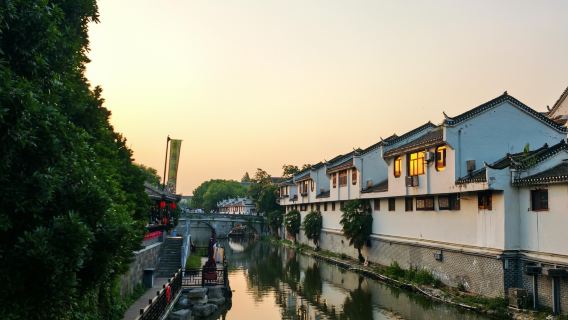
Hefei Xinqiao Airport departure|1-day tour of Sanhe Ancient Town - English / Chinese-speaking driver optional
󱌍
FromIDR 945,946
Lujiang Today's weatherOvercast 13-18℃
Lujiang weather for the next 2 days11/8: 7-15℃, 11/9: 4-12℃

Free things to do in Lujiang

What travellers say about Lujiang

user-avatar
Anonymous user6 November 2026
5.0
Everyone says Lushan is a natural air-conditioned room, and I personally experienced it. In the summer evenings, the cool mountain breeze instantly dispelled the heat of hiking. I was initially worried about the difficulty of the route, as my physical condition is average and I don't hike often. However, I was surprised to find myself successfully completing the entire trek across all five peaks. The transitions between peaks weren't continuous steep slopes; I could walk a bit, rest occasionally, enjoy the breeze, and gaze at the distant mountains – the views were expansive. The evening breeze was the biggest surprise of the trip; the fresh scent of grass and trees mingled with the cool air, without the stifling heat of midsummer.

Lushan National Park

user-avatar
M41***386 November 2026
5.0
Sanqingshan Scenic Area is worth visiting. The scenery is beautiful, with attractions such as the Giant Python Emerging from the Mountain, Goddess Peak, and the West Coast being particularly stunning. However, the mountain is often foggy, especially on rainy days, so choosing a good day is crucial. The scenic area is highly recommended!

Sanqingshan Mount Scenic Area

user-avatar
_TI***bl6 November 2026
5.0
Nice old town, with plenty of shops to see and food to experience. I liked the performance at the lake

Hongcun Village
user-avatar
娟娟6 November 2026
4.0
Personally, I think the Buddha Palace is the best part of the entire scenic area. It's magnificent and ornate. You should definitely try the Heavenly Vegetarian Noodles at the Buddha Palace; they're inexpensive and taste good. The other attractions aren't as outstanding. Actually, if the weather is nice, walking up and down the mountain is quite pleasant, even without taking the minibus.

Niushou Mountain Cultural Tourism Zone

user-avatar
M27***096 February 2023
5.0
It was great. The whole family was very happy. The service was also very good. The water in the hot spring palace was very hot. The front desk lady was very gentle and took the trouble to help us solve our questions. She also recommended nearby scenic spots for us.

Guoxuan Hot Spring Palace

user-avatar
Zhuzhu_blue3 November 2026
4.0
The scenery is beautiful and breathtaking! Worth spending a whole day there! However, I couldn't find the 9D experience; the staff didn't know either. It was a complimentary service, so I didn't bother looking for it. I'll just focus on enjoying the real scenery!

Slender West Lake

user-avatar
海洋去哪儿5 November 2026
5.0
We stayed at Jiuhua Tiantai Maoju Hotel. The first night, we braved the rain to climb the mountain, and the thick fog made it feel like a fairyland, which left me with a slight sense of regret. Fortunately, the next day the weather cooperated, and we encountered a sea of ​​clouds covering the mountains, allowing us to successfully reach Shiwang Peak. The hotel is not far from the Tiantai peaks, offering a tranquil mountain retreat and a leisurely pilgrimage, making it a very nice place to stay on the mountain.

Jiuhua Mountain

user-avatar
大土豆一颗4 October 2026
5.0
The exhibited artifacts were quite good; I've also been to joint exhibitions organized by museums like the Hunan Provincial Museum. The Kremlin artifacts here are well-prepared and thoughtfully designed. However, the souvenir and merchandise section was rather boring. I was thinking of buying a pendant or something, but that saved me some money.

Hubei Provincial Museum
user-avatar
Cocohhh5 November 2026
4.0
The night view is indeed beautiful, and the evening carnival show is quite spectacular. However, many shops are closed during the day, and there are basically no performances. If you plan to go, be sure to wait until dark. The staff performing the iron flower stunt and fire show were excellent, but some other staff members seemed to be slacking off and bumped into tourists during the parade, which was not very friendly to the elderly.

Taoyangli Historical and Cultural District

user-avatar
沅大王30 September 2026
5.0
The scenic area is filled with the fragrance of osmanthus blossoms. From the top, you can enjoy panoramic views of the Yangtze River Bridge and the Yellow Crane Tower. At the very top, watching the ships on the Yangtze and the cars and trains on the bridge, with the breeze blowing, is very pleasant, and it's not too crowded. The scenic area isn't large; a leisurely hour is about right to appreciate the scenery. Qingchuan Pavilion and Guishan Scenic Area are directly connected by the Iron Gate Pass, which leads to the West Gate of Guishan. Climbing the mountain and enjoying the breeze and osmanthus fragrance is a wonderful experience.

Qingchuan Pavilion

Trip Moments in Lujiang

Popular cities near Lujiang

Frequently asked questions

How can I contact Trip.com customer support?

Get help anytime, anywhere within 30 secondsContact customer support

Change and cancellation policies vary by attractions and tours. Please check the product details page for more information.

Ticket prices may vary between weekdays and weekends, as well as during peak and off-peak seasons. When booking with Trip.com, you can also use Trip Coins to get extra savings. For more tips on booking discounted tickets, please visit Trip.com for the latest information.