Lingbao

Things to do in Lingbao

Search attractions or local attractions & tours
Search

Explore top experiences

Top 10 attractions in Lingbao

View all Attractions
Temple of Prince Guangren
No. 6 of Fall Viewing Attractions in Yuncheng

Temple of Prince Guangren

6
4.3/5
214 reviews

The Temple of Prince Guangren is a courtyard-style temple building located in Ruicheng County, Yuncheng City, Shanxi Province. Originally built during the Taihe era of the Tang Dynasty, this historic site serves as both a provincial and national key cultural relic protection unit. As an attraction combining religious faith, architectural artistry, and cultural experiences, the Temple of Prince Guangren draws numerous history enthusiasts and visitors who come to admire its architecture and offer prayers. Temple of Prince Guangren and the Yuan Dynasty Taoist temple about 1 li to the southeastYongle PalaceFacing each other from afar, atYongle PalaceNot far to the northwest, there isLongquan VillageIn the past, a spring called Longquan gushed from the high ground north of the village, irrigating fertile farmland, so the villagers built upon it.LongwangmiaoSacrificial rituals. The temple enshrines the Five Dragon Kings of the Five Directions. Legend says Nuwa appointed five dragons, with the Azure Dragon as their leader to govern all dragons, bestowing upon him the title Prince Guangren - hence the name Temple of Prince Guangren. The Temple of Prince Guangren faces south and covers an area of 4,560 square meters. It consists of a main hall, an opera stage, and side rooms, featuring simple construction with an elegant, rustic charm. The opera stage has three bays in width and three purlins in depth, with unadorned bracket sets on the column-top lintels. The central bracket set features a dragon head emerging from the large bracket mouth, while elephant trunks extend from both sides. The two end bays display dragon heads emerging from their bracket mouths. The main hall is the only surviving Tang Dynasty wooden structure in the Hedong region. Among the four remaining Tang Dynasty wooden buildings in China, the main hall of the Temple of Prince Guangren is one. The temple's Tang Dynasty stele holds significant reference value for studying ancient water conservancy projects that benefited the people, as well as the temple's construction period. Visitors can explore the main hall, side rooms, and courtyard at the Temple of Prince Guangren, admiring the exquisite wooden architecture and stone inscriptions. They'll learn about the legendary stories of Prince Guangren and local history while experiencing the solemnity and sacredness of this traditional temple.

Ruicheng · 30.2km from Lingbao
Emperor Qinshihuang's Mausoleum Site Museum
2026 Global 100 - Best Things to Do

Emperor Qinshihuang's Mausoleum Site Museum

10
4.7/5
150.9k reviews

Emperor Qinshihuang's Mausoleum Site Museum is a large site museum built on the site of the Terracotta Army pits, which are located approx. 1.5 km east of the mound of Emperor Qinshihuang's Mausoleum. In March 1974, farmers from Xiyang Village accidentally unearthed fragments of terracotta figures while digging a well, and archaeological exploration confirmed Pit 1; in 1976, Pits 2 and 3 were successively discovered to the north of Pit 1. This army, which had slumbered for over 2,000 years, was thus brought back to light, and the discovery of the Terracotta Army has been hailed as "one of the great discoveries in the history of 20th-century archaeology." Pit 1 is the main military formation among the three pits, stretching over 200 m from east to west, with an estimated 6,000 pottery figurines and horses buried inside. Standing at the edge and looking down, armored warrior figurines, war chariots, and pottery horses are arrayed eastward in battle formation. A closer look at each figure reveals different facial shapes, hairstyles, beards, and even hand gestures. The figurines were originally painted all over, but most of the paint has peeled off and discolored due to fire and long burial. Pit 2 is L-shaped, with crossbowmen, cavalry, and charioteers arranged in a mixed formation; the vividly expressive kneeling archer was unearthed here. Pit 3 is small in scale, and scholars believe the ceremonial guard figurines and war chariots unearthed there indicate it served as the command center—known in ancient times as a "military tent"—directing the formations in Pits 1 and 2. The bronze swords, pi halberds, spears, crossbow triggers, and large quantities of arrowheads unearthed from the pits—many still sharp after more than 2,000 years—demonstrate the sophistication of Qin dynasty metallurgy. The Emperor Qinshihuang's Mausoleum Site Museum and the Qin Shi Huang Mausoleum at the foot of Mount Li were originally one integrated whole. After Qin Shi Huang ascended the throne at the age of 13, he began constructing the mausoleum, conscripting hundreds of thousands of laborers over a period spanning more than 30 years; the terracotta army, which replaced human sacrifice with figurines, served as the underground guard for this imperial mausoleum. To avoid the crowds during your visit, you might want to see Pit 3 and Pit 2 first, and then take your time to experience the awe-inspiring scene of Pit 1 last. After viewing the terracotta pits, you can also take the attraction's shuttle bus to Lishan Garden, where Emperor Qinshihuang's mausoleum is located; the Acrobats Pit, the Civil Officials Pit, and the Bronze Chariots and Horses Museum are all within the garden. The two painted bronze chariots and horses, cast at half the scale of real chariots, are exquisitely crafted with brilliantly gleaming gold and silver fittings, and are well worth a special trip to see.

China · Xi'an
Shaanxi History Museum
2026 Asia 100 - Family-friendly Attractions

Shaanxi History Museum

9.5
4.8/5
35.4k reviews

Shaanxi History Museum is a large modern museum built after China's reform and opening up and officially opened in 1991. The building was designed by architect Zhang Jinqiu and adopts a Tang-style architectural layout of "central hall and four corner towers," with a symmetrical central axis and a clear hierarchy of primary and secondary structures; in 2016 it was included in the first batch of the "Chinese Architectural Heritage of the 20th Century" list. Shaanxi was once the political center of dynasties such as the Zhou, Qin, Han, and Tang, and the museum's collection spans a million years of history, covering categories such as Shang and Zhou bronzes, pottery figurines of successive dynasties, Han and Tang gold and silver wares, and Tang tomb murals, with a total of over one million items. The permanent exhibition "Ancient Civilization of Shaanxi" follows a chronological main line and presents the historical process from prehistoric Lantian Man to the eve of the Opium War across three galleries, with the Zhou, Qin, Han, and Tang periods as the focus. The east and west sides of the central hall each host a thematic exhibition: on the west side, "Treasures of the Great Tang: Hejiacun Hoard Unearthed Artifacts Exhibition" concentrates on fine gold and silver wares of the High Tang, while on the east side, the "Tang Dynasty Mural Treasures Gallery" displays authentic murals removed from Tang tombs, with subjects covering figures, architecture, ceremonial guards, and more, making it a uniquely distinctive category of the museum's collection. Among the many artifacts in the museum, several are particularly notable. The agate cup with gold-inlaid beast head, from the Hejiacun hoard, is carved from a single piece of banded agate into the form of a curved-horn beast head, resembling Central Asian rhyton cups, and is one of the first batch of cultural relics prohibited from being exhibited abroad. The tri-color glazed camel carrying musicians figurine vividly recreates the lively scene of musicians playing and singers performing on a camel's back, with bright glaze colors and figures with distinct expressions. The Empress's Seal is made of Western Han Hetian mutton-fat jade and carved with a chi-tiger knob, and is the only known actual jade seal of a Han dynasty empress discovered to date. In addition, the gilt silver flask with a dancing horse holding a cup design, the celadon ewer with an overhead handle and bottom-filling design, and the black-glazed oil-spot bowl each have their own distinctive features. The gold and silver wares unearthed from the Hejiacun hoard are concentrated in the thematic gallery and are a highlight of any visit; visitors are advised to allow time to examine them closely.

China · Xi'an
Han Mountain Scenic Area

Han Mountain Scenic Area

2.8
4.6/5
29 reviews

Hanshan Scenic Area is located in Hexi Village, Guxian Town, Lingbao City. The Attraction is beautiful with clear water and intact vegetation. In spring, Hanshan has brilliant rape flowers and pink peach blossoms; in summer, there are thousands of rice waves at the foot of Hanshan, and green pines and cypresses on the mountainside; in autumn, Hanshan is full of wild chrysanthemums; in winter, Hanshan is covered with snow. Hanshan also has many cultural relics for you to visit. Here are the marks left by Liu Xiu, the founding emperor of the Eastern Han Dynasty, who was chased by Wang Mang after his arm was broken. The place where Liu Xiu hid was Liu Xiu Cliff, and the place where he stopped his horse was Ma Ti Cha; there is also a small temple in the mountain - Waguan Temple, which is dedicated to the land god. This is a small temple built in the shape of gray pottery, hollow with a door, small and exquisite, 45 cm high and 35 cm in diameter, which can be said to be the smallest temple in the world. At the foot of the mountain, there is a Sanguan Cave. There are statue platforms on the east, west and north sides of the cave. Originally, there were clay sculptures and painted statues. Due to damage over the years, only a few colored seated statues on the north side remain. To play in the Hanshan Scenic Area, you need to climb thousands of steps. For tourists who don't exercise much, they will feel backache and leg pain the next day after playing for a day. There are not many Dining facilities in the mountains. It is recommended that tourists bring their own drinking water and some snacks.

Lingbao · 34.8km from downtown
Mount Hua
2026 Asia 100 - Best Things to Do

Mount Hua

8.7
4.7/5
55.6k reviews

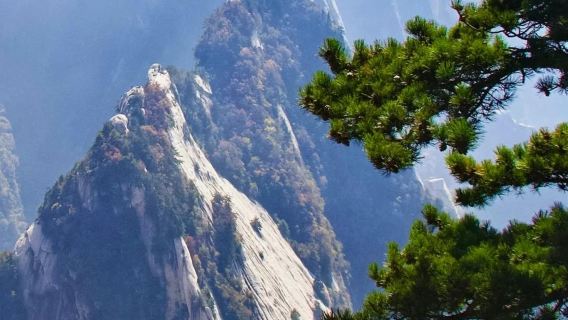
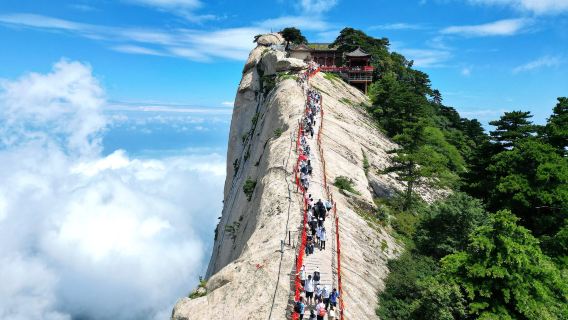
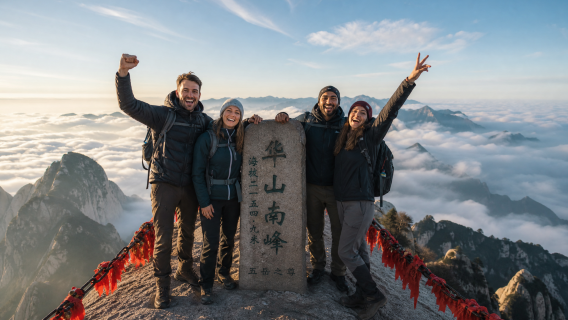
Mount Hua, known as the "Western Great Mountain" in ancient times, is one of China's Five Great Mountains. Located in Huayin, Shaanxi Province, it is also elegantly called "Taihua Mountain." The "Hua" in both "Zhonghua" and "Huaxia" originates from this mountain. "Steep and perilous" are the essence of Mount Hua's scenery, and the saying "there has always been only one path up Mount Hua" precisely describes its steepness—the Plank Road in the Sky, the Sparrowhawk Turn, the Thousand-Foot Precipice, the Hundred-Foot Gorge, the Laojun Plow Ditch, and other perilous sights leave every visitor awestruck. The Mount Hua attraction covers a vast area, including the main peak attraction, the Western Great Mountain Temple attraction, and the Xianyu attraction, among which the main peak attraction is the core, encompassing the five main peaks—east, south, west, north, and center—as well as the classic "Mount Hua Valley" climbing trail. The five main peaks each have their own distinctive features. The East Peak, at an elevation of approx. 2,100 m, has the open and expansive Chaoyang Terrace at its summit, making it an excellent spot for watching the sunrise, and is therefore also known as Chaoyang Peak; the natural stone patterns on the cliff face along the side of the peak resemble a giant palm print—this is the Huayue Immortal Palm, listed since ancient times as one of the Eight Views of Guanzhong. The West Peak, at an elevation of approx. 2,080 m, is named Lotus Peak because the giant rock at its summit resembles a lotus flower; the Cuiyun Palace, the Axe-Split Rock, and the Self-Sacrifice Cliff are scattered across it, and the myth of Chenxiang splitting the mountain to save his mother is said to have originated here. The South Peak, at an elevation of over 2,150 m, was called the "head of Mount Hua" by the ancients; it consists of two summits—Songgui Peak and Luoyan Peak—with a sheer cliff dropping straight down on one side. The North Peak, at an elevation of approx. 1,600 m, is also known as Yuntai Peak; it stands isolated and towering with precipitous drops on all four sides, and the story of "Taking Mount Hua by Strategy" took place here; the peak features views such as the Zhenwu Hall and the Jiaogong Stone Chamber. The Central Peak lies at the center of the East, West, and South Peaks, with serene and lush vegetation; on the peak is the Jade Maiden Shrine, said to be the place where Nongyu, daughter of Duke Mu of Qin during the Spring and Autumn period, cultivated herself, hence it is also known as Jade Maiden Peak. The Plank Road in the Sky is located on the mountainside east of the South Peak. It was built by the Yuan Dynasty Taoist He Zhizhen, who embedded stone stakes into the cliff face and laid wooden planks. At the end of the plank road, visitors can see Hezu Cave, where he cultivated himself. Visitors must press close to the cliff, hold the iron chains, and step on the wooden planks while moving sideways slowly—an extremely thrilling experience. The ridge of Canglong Ridge is as narrow as a blade, flanked by bottomless chasms, and walking on it makes one's heart race and vision blur. Golden Lock Pass is the vital gateway to the East, West, South, and Central peaks. Taoists believe that passing through this pass marks entry into a fairyland, and there is a folk saying: "Once past Golden Lock Pass, you enter another realm."

Huayin · 75.9km from Lingbao

Experiences you can't miss in Lingbao

Featured Culture & history in Lingbao

View all Culture & history
Featured Outdoor & sports in Lingbao

View all Outdoor & sports
Xi'an Mount Huashan One-Day Tour | Tickets & Round-Trip Cable Car & Shuttle Bus Included | Breakfast/Coffee & Hiking Pole Provided
Trip.Select
󱌍
4.8/5
· 143 reviews· 517 booked
Duration: 16.6 hrs
English
Free cancellation
Instant confirmation
Book now for tomorrow
95.8% of travelers recommend
From£ 42.76
Xi'an Mount Hua 1-day tour | admission ticket + round-trip cable car + shuttle bus + optional English group
󱌍
4.8/5
· 45 reviews· 336 booked
Duration: 14.6 hrs
English
Free cancellation
Instant confirmation
Book now for tomorrow
28 consecutive positive reviews
From£ 37.12
Huashan One-Day Tour for Families and Parents Includes Entrance Fee, Round-Trip Transportation, Cable Car, Scenic Area Shuttle Bus, Lunch, Water, and Hiking Gloves
󱌍
4.3/5
· 34 reviews· 280 booked
Duration: 13.5 hrs
English
Instant confirmation
Book now for tomorrow
77 travellers saved
From£ 30.51
Xi'an Huashan One-Day Family Tour: Includes entrance ticket, round-trip cable car, shuttle bus, lunch, and pick-up from the station.
󱌍
4.2/5
· 20 reviews· 146 booked
Duration: 11.2 hrs
English
Free cancellation
Instant confirmation
Book now for tomorrow
From£ 30.51
Xi'an Huashan Mountain Adventure English Group 1-Day Tour (Solo-Friendly)
󱌍
5.0/5
· 1 review
Duration: 5 hrs
English
Free cancellation
Instant confirmation
From£ 85.89
Mount Hua day tour with cable car and private English-speaking driver included
󱌍
Duration: 11.6 hrs
English
Free cancellation
Instant confirmation
9% off
Limited-time sale
From£ 63.46£ 70.51
One-Day Adventure to Mount Huashan from Xi'an
󱌍
Duration: 8.5 hrs
English
Free cancellation
Book now for tomorrow
From£ 240.73
Xi'an travel in Shaanxi - Mount Hua guide with hiking companionship and guide - Chinese and English service [Free Trip Moments]
󱌍
From£ 33.73
Lingbao Today's weatherHazy 6-15℃
Lingbao weather for the next 2 days11/13: 6-17℃, 11/14: 7-18℃

Free things to do in Lingbao

What travellers say about Lingbao

user-avatar
夏日清风cyn10 November 2026
4.0
Hangu Pass Tourist Area, a 4A-level scenic area, is located in Hangu Pass Town, Lingbao City. Hangu Pass, originally built during the Western Zhou Dynasty, is one of the earliest established strategic passes in China, commonly known as Qin Hangu Pass. Its name derives from the fact that "the pass is located in a valley, deep and treacherous like a box." Since ancient times, it has been a vital passage between the Central Plains and Guanzhong Plain, a strategically vital location fought over by military strategists. Many well-known idioms and allusions originate from here, such as "purple aura coming from the east," "chicken crowing and dog thievery," and "a white horse is not a horse." Hangu Pass is called "the First Pass Under Heaven" for a reason: firstly, it is older, predating Shanhaiguan and Jiayuguan by more than 2,000 years, a feat unmatched anywhere else in China; secondly, it has witnessed numerous battles, with over 200 battles that changed Chinese history taking place here. Among them, in May 1944, Chinese troops repelled multiple Japanese invasions here, effectively stopping the Japanese army outside the pass. Having witnessed 3,000 years of vicissitudes, Hangu Pass's historical significance is unparalleled. The Guanlou (reconstructed) is a majestic and imposing gate tower in the Qin and Han styles (Figure 1). Passing through the gate tower behind it leads to the "Hanguan Ancient Road" (Figure 2). The Taichu Sacred Palace is where Laozi wrote his classic text (Figure 3). When Laozi traveled west to this place, he was persuaded by the gatekeeper Yin Xi to stay for five months, where he wrote the 5,000-word *Tao Te Ching*, which has influenced the Chinese people for over 2,000 years. Therefore, this place is also known as the "Source of Taoism." The statue of Laozi (Figure 4) and the long stone wall inscribed with the *Tao Te Ching* (Figure 5) commemorate Laozi's outstanding contributions to Chinese culture. The scenic area also preserves architectural and cultural relics such as the Chicken Crowing Terrace (Figure 6), the Stele Forest (Figure 7), and the Detang Hall (Figure 8). Delightfully, besides the rich historical and cultural atmosphere that captivates visitors, a leisurely stroll along the Shangshan Lake in autumn is also a very pleasant way to relax (Figure 9).

Hangu Pass Tourist Area

user-avatar
Anonymous user28 October 2026
5.0
The Yongle Palace murals are Yuan Dynasty Taoist murals located in Yongle Palace, Ruicheng, Shanxi Province. Covering a total area of ​​1005.68 square meters, they are known as the "Oriental Gallery" and represent the pinnacle of ancient Chinese temple and monastery murals.

Yongle Palace

user-avatar
Sermwit6 November 2026
5.0
ฉันเดินทางโดยรถไฟความเร็วสูงมาลงที่สถานี Sanmenxianan แล้วต่อรถแท็กซี่ประมาณ 20-25 หยวน ก็มาถึงแหล่งท่องเที่ยว ด้านในเราจะได้ชมบ้านใต้ดินจำนวนมาก แต่ละหลังมีประวัติที่น่าสนใจ ไกด์บรรยายได้สนุกและคล่องแคล่ว ถ้ามาได้เวลาจะได้ชมการแสดงสนุกๆบริเวณลานบ้านด้วย ขากลับมีแท็กซี่จอดรอบริเวณด้านหน้า เดินทางสะดวกสบายมาก

Shanzhou Silo-cave

user-avatar
@良哥27 October 2026
5.0
On the Loess Plateau, the minimalist aesthetics of the Tang Dynasty shine through. Hidden in the southern Shanxi plateau is the Guangrenwang Temple, a single-eaved hip roof structure with imposing bracket sets and deep eaves. It is the only Tang Dynasty Taoist wooden structure in my country. Without ornate carvings, its simple grandeur embodies the essence of the Tang Dynasty. Without elaborate decorations, its minimalist structure is its aesthetic.

Temple of Prince Guangren

user-avatar
Anonymous user11 November 2026
5.0
Thank you, Director Li, for the explanation. The small team of four made our tour very comfortable, and they took great care of each of us. There weren't many people in the afternoon, so the pace was just right. They explained each point very thoroughly, paying attention to detail. They patiently answered all the children's questions. Very professional! Thumbs up! 👍

Emperor Qinshihuang's Mausoleum Site Museum

user-avatar
Anonymous user11 November 2026
5.0
This guided tour of the Shaanxi History Museum was truly excellent. Our guide, Mr. Du, was professional yet approachable. He didn't just recite from a script; instead, he vividly told the stories behind the artifacts, tracing their history through the Zhou, Qin, Han, and Tang dynasties. He explained key exhibits like bronzes, terracotta figurines, Tang dynasty gold and silver artifacts, and the Hejiacun hoard very clearly, clarifying their dates, techniques, and the reasons for their value. The tour lasted about two to three hours, with a well-paced rhythm, highlighting key points and preventing any sense of boredom. The service was also very attentive. The guides were friendly and patiently answered all questions, adjusting the route according to the flow of visitors. They used simple language to explain things, keeping the experience engaging. Overall, this guided tour made what would have been a rushed visit much more rewarding and is highly recommended.

Shaanxi History Museum

user-avatar
M25***l64 May 2025
5.0
The scenery is pleasant, the environment is good, the cable car price is very reasonable, and parking is free. I will go again if I have the chance!

Han Mountain Scenic Area

user-avatar
Anonymous user10 November 2026
4.0
It's very convenient: entrance ticket + 2 cable car rides + bus to and from the mountain. However, the morning shuttle bus wasn't very smooth; you had to wait and transfer, so even though it picked me up at 7:00 AM, I didn't arrive at the mountain until 12:30 PM. There were also a lot of tourists that day, and everyone was rushing to complete the five peaks of Huashan in one day.

Mount Hua

user-avatar
爱旅游的孔雀10 August 2026
5.0
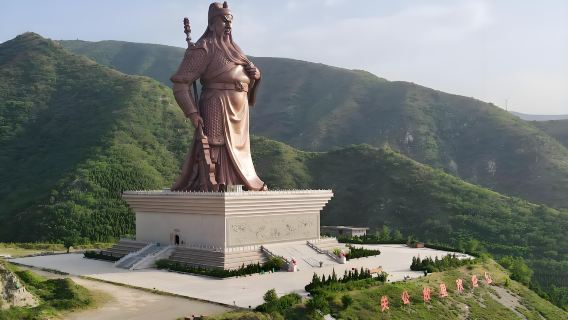
The ancestral temple of Guan Yu, one of the 30,000 temples worldwide, is indeed magnificent and awe-inspiring. Several emperors personally inscribed plaques, making it a royal temple exuding grandeur. It's a bit far from the city center, so it's advisable to plan your time accordingly.

Yuncheng Guan Gong Hometown Cultural Tourism Scenic Area

Trip Moments in Lingbao

Popular cities near Lingbao

Frequently asked questions

Get help anytime, anywhere within 30 secondsContact customer support

Change and cancellation policies vary by attractions and tours. Please check the product details page for more information.

Ticket prices may vary between weekdays and weekends, as well as during peak and off-peak seasons. When booking with Trip.com, you can also use Trip Coins to get extra savings. For more tips on booking discounted tickets, please visit Trip.com for the latest information.