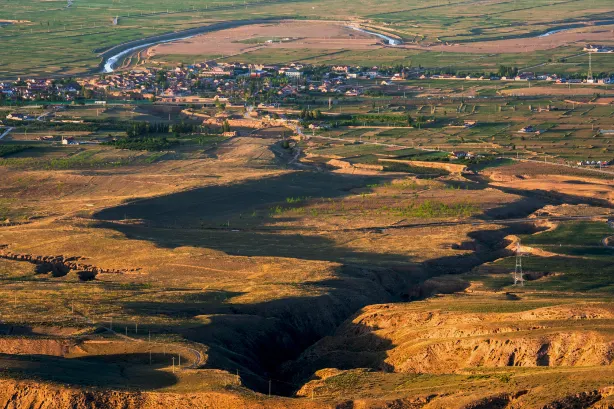
Haiyuan

Things to do in Haiyuan

Search attractions or local attractions & tours
Search

Explore top experiences

Top 10 attractions in Haiyuan

View all Attractions
Shapotou Scenic Area
No. 1 of Best Things to Do in Ningxia

Shapotou Scenic Area

8.3
4.8/5
39.1k reviews

The scenic spot is located 16 kilometers west of Zhongwei City, Ningxia, on the southeastern edge of the Tengger Desert. The scenic spot has successively won honors such as "the first batch of national 5A-level tourist attractions", "the top 500 global environmental protection units", and "the first batch of national tourism standardization demonstration units". The three major cultural elements of the scenic area include the "Yellow River Culture" based on the intangible cultural heritage sheepskin rafts, the "Desert Culture" based on straw grids and Desert Legend Park, and the "Starry Sky Culture" based on the Desert Star Hotel. The tourism resources of these three elements have created a unique and magnificent landscape of "sunset over the long river and starry sky in the desert". The "six major ways to play" are highly praised and loved by tourists. Among them, the Yellow River projects include sheepskin rafting, Huangtengda, Yellow River speedboat, drift boat, passionate sandboarding and high-altitude bungee jumping, etc. The desert projects include Desert Camel, Desert Flying (Stepping into the Blue Clouds), and Sand Sea. Surfing, etc., starry sky projects include stargazing lectures, meteor feasts, sand therapy experiences, star cakes and other special products. In addition, there are also privately customized products for hiking, desert expansion, and educational and entertaining study experiences. The scenic area not only has diverse cultural elements and fun project experiences, but also multi-level accommodation experiences waiting for you: the butler-style Diamond Hotel, the quiet Desert Star Hotel for stargazing, the quiet Yellow River Courtyard in the bustling city, and finally the economical and affordable business-style Tourist Service Center Hotel and other differentiated tourist accommodations for you to choose from.

China · Zhongwei
Lanzhou Danxia Geological Park
No. 1 of Family-friendly Attractions in Gansu

Lanzhou Danxia Geological Park

8.1
4.5/5
3.7k reviews

Lanzhou Danxia Geological Park is a key cultural tourism project in Gansu Province and a comprehensive cultural tourism initiative prioritized by the Lanzhou Municipal Committee and Government. Located by the Yellow River, the park is just 13 km from downtown Lanzhou and 30 km from Lanzhou Zhongchuan International Airport, making it one of the closest Danxia landform clusters to a major urban center in China. With a total planned area of 400 sq km and a core visiting area of 25 sq km in its first phase, it ranks among the largest discovered landscapes of its kind in the country. The park primarily features red mountain bay formations, along with spectacular Danxia cliffs, isolated peaks, secluded valleys, narrow gorges, and balancing rocks. Its colorful mountains set against winding waterways create a masterpiece of Danxia landform scenery. The attraction features seven viewing platforms showcasing the Danxia landforms: Silk Road Glow, Silk Road Eagle, Flying Apsaras Exploration, Nine-Colored Danxia, Danxia Reflecting Sky, Emerald Peaks Rippling Sky, and Danxia Summit Scenic View. It also includes the Ancient Silk Road Gateway, Shajing Tribe Cultural Square, Desert Bells Scenic Boulevard, and a 2,550m Danxia boardwalk viewing area. As a key cultural tourism project in the province, Lanzhou Danxia Geological Park adheres to the principles of "ecological protection, green development, preserving original features, and moderate development." Leveraging Lanzhou's unique resource advantages and focusing on the domestic tourism market, it aims to cultivate new growth drivers for Lanzhou's cultural tourism industry and establish a new highland for cultural tourism in the city.

China · Yongdeng
Xumishan Grottoes
No. 6 of Fall Viewing Attractions in Ningxia

Xumishan Grottoes

5.9
4.2/5
590 reviews

Xumi Mountain Grottoes, located about 60 kilometers northwest of Guyuan City, was an important pass in the Tang Dynasty (618-907) and also an important gateway on the Silk Road. Xumi Mountain Grottoes were excavated in the Northern Wei Dynasty (386-557) and continued until the end of the Tang Dynasty. Before the Xumi Mountain Grottoes, most Buddha statues were made of clay. Stone carving techniques were gradually adopted from the Xumi Mountain Grottoes. Numerous grottoes were excavated in Xumi Mountain from the Northern Wei Dynasty to the Sui and Tang Dynasties, and these grottoes reflect different styles of the times. The Buddha statues in the Northern Wei Dynasty have high nose bridges and retain the style of Indian Buddhism. Some statues have thin faces, slender shoulders, and wide robes with large sleeves; the Buddha statues in the Sui Dynasty have long upper bodies, short lower limbs, short necks, and simple and heavy images; the Buddha statues in the Tang Dynasty have a trend of plump bodies and luxurious and gorgeous clothes, showing the extraordinary temperament of Tang Dynasty art. The whole Attraction is divided into two parts: the museum and the grottoes. The two places are far apart. You can also take the sightseeing bus in the Attraction to go to these two places (10 yuan per round Round-trip, additional fee). Visitors can visit the museum first when entering the Attraction. The exhibits in the museum are themed on grottoes and Buddhist art, and are basically replicas. Here you can learn about the Buddhist caves, collections and stories related to Buddhism in various places on the Silk Road. After visiting the museum, you can follow the signs to go down the mountain and cross the river valley to reach Mount Xumi on the opposite bank, and climb the mountain to visit the grottoes. There were originally more than 100 caves in the Xumi Mountain Grottoes, and the exquisiteness of the caves is comparable to that of the Mogao Grottoes, but many have been destroyed by humans. So far, there are more than 20 caves with relatively intact statues. The color of the Buddha statues from the Sui Dynasty (581-618) in the first cave is well preserved; next to it is Cave No. 5, which is the symbol of the Xumi Mountain Grottoes - the Great Buddha Building built in the Tang Dynasty. It was the achievement of Wu Zetian in worshipping Maitreya Buddha nationwide. This Buddha statue is taller than the large sitting Buddha in the Yungang Grottoes and the Vairocana Buddha in the Longmen Grottoes. The 45th, 46th and 48th caves with the most existing statues in the Attraction are all located within the Yuanguang Temple in the Attraction. There are more than 40 statues larger than real people here. Most of the standing Buddhas in the niches are one Buddha and two Bodhisattvas, and the carvings are exquisite. In addition, there are various small Buddhas on the forehead of the niches, and there are musicians holding various musical instruments under the niches. There are reliefs of flying celestial beings flying around the tower pillars on the top of the caves, with various poses and dazzling. These caves were all built in the Northern Zhou Dynasty (557-581). The No. 51 cave in Xiangguo Temple is the largest cave in Xumi Mountain, but it is seriously damaged. In the 1960s, when a reservoir was built near Xumi Mountain, tens of thousands of workers lived in these caves. The transportation to Xumi Mountain Grottoes is not very convenient. There is no direct bus. Tourists need to take a minibus in Guyuan City to Sanying Town, and then transfer to a private car in the town to go to the Attraction.

Guyuan · 44.5km from Haiyuan
Xixia Imperial Tombs
No. 1 of Best Things to Do in Yinchuan

Xixia Imperial Tombs

7.8
4.6/5
9.1k reviews

Xixia Imperial Tombs, located in the western suburbs of YinchuanHelan MountainsLocated at the foot of the mountain, it is the royal tomb complex of the Xixia dynasty, where several emperors of the Xixia dynasty were buried. The entire tomb area now contains 9 imperial tombs and about 270 satellite tombs, making it one of the largest royal tomb complexes in Chinese history. The shape of the tombs is different from that of other Chinese tombs, resembling an inverted steamed bun. In addition, the attraction also features facilities and venues such as the Xixia Imperial Tombs Museum, the Xixia Imperial Tombs - Xixia History and Art Gallery, and the Xixia Stele Forest, helping visitors understand the history and culture behind the tombs. The attraction currently has tomb no. 3 and others open for visitors. Tomb no. 3 (the "Tai Tomb" of Li Yuanhao, the founding emperor of Xixia) is relatively close to the Xixia Imperial Tombs - Xixia History and Art Museum and the Xixia Stele Forest. The Xixia dynasty was established by the Tangut people, whose writing and customs differed from those of the Han Chinese in the Central Plains. After the dynasty fell, the cities and history of Xixia mysteriously vanished into the Gobi Desert, becoming an enduring mystery of the ages, and were not discovered and deciphered until modern times. The Xixia Imperial Tombs Museum houses a rich collection of artifacts from the Xixia dynasty, among which many stone carvings in Xixia script and murals with Xixia style are treasures. The free guided tours inside the museum are also excellent, helping visitors understand the customs, culture, and rise and fall of the mysterious Xixia dynasty, and allowing for a more meaningful visit to the imperial tombs. On July 11, 2025, the Xixia Imperial Tombs were officially inscribed on the World Cultural Heritage List. Within the attraction, you can walk up close to visit the Haowang Tomb. The massive inverted semicircular mausoleum stands upon the barren land, bringing the weight of history vividly before your eyes, while in the distance theHelan MountainsThe foothills are crisscrossed by ravines and gullies, evoking a sense of desolate grandeur and the vicissitudes of time. The Xixia Imperial Tombs Museum within the attraction has newly opened. Its exhibits are divided into six sections: Xixia history, Xixia culture, Xixia religious art, Xixia social economy, the Xixia Imperial Tombs, and protection and inheritance. Nearly 5,000 items are on display, including thangkas, documents, clay sculptures, bronze and iron wares, textiles, and porcelain, among which are a large number of fine artifacts unearthed during archaeological research on the Xixia Imperial Tombs in recent years.

China · Yinchuan
China West Film Studio
No. 1 of Family-friendly Attractions in Yinchuan

China West Film Studio

7.7
4.5/5
20.1k reviews

Zhenbeibao Western Cinema is located in Xixia District, Yinchuan City. In this studio, which is characterized by simplicity, roughness and desolation, classic films such as "Wrangler", "Red Sorghum", "Journey to the West", "Thorn Mausoleum", "Jin Yiwei" and hundreds of influential film and television films were filmed. In the remaining part, a large number of celebrities from the Chinese film industry have left their footprints here, such as Gong Li, Jiang Wen, Zhang Yimou, Ge You, Zhou Xingchi, Donnie Yen and so on. The cinema consists of three parts: Mingcheng, Qingcheng and Old Yinchuan Street. Tourists can visit the cinema along the "figure 8" route of Old Yinchuan Street. Here, you can see the appearance of Yinchuan in the first half of the 20th century, and eat local traditional snacks such as mutton soup. The Ming and Qing cities in the film city were rebuilt from the military castles left over from the Ming and Qing dynasties. In the Ming and Qing cities, you can see many familiar movie scenes, such as: the gate tower where Sun Wukong and Fairy Zixia are standing in "Journey to the West", the throne of the Bull Demon King, the torture platform of the Tang monk; and the movie "Journey to the West" The Moon Gate in "Red Sorghum", the winemaking workshop where "My Grandpa" urinated after being drunk, the sedan chair that Jiu'er took when he got married, the big vat for wine, and the bowls. There are costumes and props for rent in many places in the studio. Here, you can wear a set of costumes in the play, use the props in the movie, and walk around the scenes of the movie to live the addiction of being a star. Before going to Zhenbeibao Western Studios, you can revisit a few classic movies first, and then go to visit, you will have a different feeling.

China · Yinchuan
Gansu Provincial Museum
No. 2 of Family-friendly Attractions in Gansu

Gansu Provincial Museum

7.6
4.6/5
4k reviews

Gansu Provincial Museum is a large comprehensive museum centered on the civilization of the Silk Road. Located at a strategic point along the Silk Road and a convergence zone of Han and Tibetan cultures, its collections embody the diverse characteristics of the Central Plains, Western Regions, and the Tibetan Plateau. The three treasured artifacts—the Galloping Bronze Horse, the mural brick of a courier, and the painted pottery vase with a human-head-shaped mouth—serve as iconic representations of the museum. The museum has three floors, featuring permanent exhibitions on themes such as the civilization of the Silk Road, Buddhist art of Gansu, painted pottery of Gansu, paleontological fossils, and revolutionary Gansu. The Silk Road civilization exhibition on the second floor is the museum's centerpiece: the bronze galloping horse unearthed in 1969 from the Leitai Han tomb in Wuwei is displayed here. The horse has three hooves in the air and one stepping on a flying bird, standing steadily on a single hoof. Its image is now the symbol of Chinese tourism. In the same hall, the mural brick depicting a courier from the Wei-Jin tombs in Jiayuguan shows a messenger galloping on horseback, notably without a mouth, symbolizing the need for couriers to "keep their mouths shut." This pattern was later adopted as the emblem of China Post. The exhibition also features a procession of chariots and horses excavated from the same tomb as the bronze horse, along with Han and Tang dynasty silk textiles, gold and silver artifacts, making the prosperity of Silk Road trade vividly tangible. The Buddhist art exhibition hall on the third floor features replicas of caves from the Mogao Grottoes and Maijishan Grottoes, alongside statues, ritual objects, white pagodas, and prayer wheels from both Han and Tibetan Buddhism. Stepping into the hall feels like entering a temple, and this harmonious blend of Han and Tibetan styles is rarely seen elsewhere. On the same floor, the painted pottery exhibition showcases ceramics from cultures such as Dadiwan, Yangshao, and Majiayao, with intricate and fluid patterns like spiral and sawtooth designs. Among them, the painted pottery bottle with a human-head-shaped spout unearthed at Dadiwan in Qin'an, which integrates facial sculpture with the pottery vessel, is a highly popular exhibit. If you're interested in natural history, the paleontological fossils exhibition hall features the impressive skeleton of the Yellow River ancient elephant unearthed in Heshui, and the dinosaur fossils and reconstructed models are also popular with children. The revolutionary Gansu exhibition hall showcases historical artifacts and materials from periods such as the Nanliang base area and the Shaan-Gan-Ning border region, narrating the modern history of this land. The museum houses a large quantity of exhibits, and even a quick tour would take half a day. It's recommended to start with the Silk Road exhibition on the second floor, then proceed to the third floor for Buddhist art and painted pottery, following a logical route. In the exhibition halls, you can scan to listen to the audio guide, and at certain times, volunteers also provide guided explanations.

China · Lanzhou
Ningxia Museum
No. 3 of Family-friendly Attractions in Ningxia

Ningxia Museum

7.3
4.8/5
1.1k reviews

The Ningxia Museum is a provincial-level comprehensive museum in the Ningxia Hui Autonomous Region. The building's floor plan is shaped like the Chinese character "回" (hui), reflecting the region's name. The architectural elements used in the exterior decorations, such as the Kalavinka (a mythical bird) and the strongman-shaped support base, as well as the decorative patterns on the four main gates, are representative of Ningxia's historical and cultural heritage and possess distinct regional characteristics. The museum has four floors, with the three ground floors open to the general visitors. The first floor of the museum houses the visitor service hall and temporary exhibition halls. Here, you'll also find the rock painting exhibition titled "Stone carvings as history books." Stepping into this hall feels like entering an ancient era. While travelers often prefer visiting the ancient rock paintings in Helan Mountain, many rock art sites across Ningxia remain less visited due to their remote locations and limited transportation. In this exhibition hall, visitors can get up close with a wider collection of Ningxia's rock paintings. The museum's second floor houses the "General history of Ningxia exhibition hall," a key area for travelers. Treasures like the Western Han dynasty silver-inlaid bronze sheep, Tang dynasty stone door panels depicting the Sogdian whirl dance, Western Xia dynasty gilded bronze ox, and human figure pedestals are all displayed here. Travelers can also view rubbings of the "Stele inscription of the reconstructed Huguo Temple stupa in Liangzhou," where the Western Xia script appears more block-like than Chinese characters. The third floor features folk culture exhibits, including interactive electronic screens for experiencing Ningxia's unique square chess game.

China · Yinchuan
Maijishan Scenic Area
No. 12 of Fall Viewing Attractions in Gansu

Maijishan Scenic Area

7.2
4.5/5
1.8k reviews

The Maijishan Scenic Area is located in the southeast of Tianshui, Gansu Province, within the Xiaolong Mountain forest area of the western Qinling range. A ridge extending from southwest to northeast separates the Wei River, a tributary of the Yellow River, from the Jialing River, a tributary of the Yangtze, placing them to the north and south respectively. The northern mountains boast majestic peaks, while the southern streams are serene and picturesque, blending both temperaments within the same landscape. The entire attraction comprises five major sections: the Maijishan Cave-Temple Complex, Xianren Cliff, Shimen Mountain, Quxi, and Jieting Hot Springs, with over 180 attractions scattered across more than 200 square km of forested terrain. Ancient Qinzhou scenes like "Maiji mist and rain," "immortals offering lanterns," "night moon at Shimen," and "pine waves in pure land" all originate from these mountains. The core of the attraction is the Maijishan Cave-Temple Complex, renowned alongside the Mogao Caves in Dunhuang, the Yungang Grottoes in Datong, and the Longmen Grottoes in Luoyang as one of China's four great cave-temple complexes. Maiji Mountain is an isolated peak in the Xiaolong range, named for its resemblance to a farmer's wheat stack. Its sheer red cliffs—over 100 m high on the eastern, western, and southern sides—are densely honeycombed with caves, connected by tiered aerial walkways spiraling upward to the Upper Seven-Buddha Pavilion, colloquially called "Sanhua Tower," where railings frame panoramic views of forested peaks. First excavated during the Later Qin period of the Sixteen Kingdoms, the complex saw continuous construction for over 1,600 years through the Northern Wei, Western Wei, Northern Zhou, Sui, Tang, and up to the Ming and Qing dynasties. With over 200 surviving caves and 10,000 clay and stone sculptures, it's hailed as the "Oriental Sculpture Gallery." Particularly lifelike are the life-sized round sculptures, including the smiling novice monk in Cave 133, celebrated as the "Oriental Smile." When rain clears during summer and fall, mist coils around the cliffs, veiling the grottoes in ethereal beauty—a spectacle enshrined as "Maiji mist and rain" among the Eight Views of Qinzhou. The other areas each have their own highlights: Xianren Cliff, located over 10 km from the grottoes, consists of three cliffs, five peaks, and six temples. The halls beneath the cliffs preserve nearly 200 statues dating back to the Northern Wei dynasty, and with the lake reflecting the red cliffs, the old scene of "immortals offering lanterns" has been passed down to this day. Shimen Mountain features a granite peak forest landscape and is known as "Little Huangshan." Juxian Bridge spans the north and south peaks, and on the night of the Mid-Autumn Festival, the bright moon hangs right over the bridge, creating the "night moon at Shimen" scene. Quxi is hidden deep in the Xiaolong Mountain forest, where a stream winds through nine bends, featuring small bridges and flowing water—a secluded spot full of wild charm. The hot spring water in Jieting Ancient Town maintains a temperature of about 40 degrees year-round. The ancient town is said to be related to the Three Kingdoms allusion of "losing Jieting" and also preserves traces of Du Fu's stay in Qinzhou, making it a perfect place to soak and relax after touring the mountains and waters. The major areas are spaced 10 to over 20 km apart, so it's recommended to plan your itinerary priorities in advance. If time is limited, prioritize the Maijishan grottoes. The grotto walkways are suspended with steep and narrow steps, so travelers with acrophobia or limited physical strength should proceed within their capabilities. The walkways become slippery after rain, so take your time ascending—it's also a perfect opportunity to enjoy the mountain mist.

China · Tianshui
Haiyuan Today's weatherClear 0-13℃
Haiyuan weather for the next 2 days11/11: 0-13℃, 11/12: 0-13℃

Free things to do in Haiyuan

What travellers say about Haiyuan

user-avatar
M60***209 November 2026
5.0
Arriving at Shapotou, I had a thrilling and exciting time riding my beloved little camel. I saw the sea of ​​sand, the Yellow River, and the magnificent hundred-meter-high sand dunes. I'll definitely come back to Shapotou again next time.

Shapotou Scenic Area

user-avatar
Ana11sd9 November 2026
5.0
It was surprisingly entertaining 😍 we went thinking it was just a beautiful natural scenario but had a lot of fun with the equipments also. The waterslide its a must try!

Lanzhou Danxia Geological Park

user-avatar
Anonymous user22 October 2026
5.0
The Xumishan Grottoes, located on the northern Silk Road route from Guyuan, were first carved during the Northern Wei Dynasty, flourished during the Northern Zhou Dynasty, and continued to be built during the Sui and Tang Dynasties. Along the Danxia cliff face, they are divided into areas such as the Great Buddha Hall, the Descendant Palace, Yuanguang Temple, Xiangguo Temple, and Peach Blossom Cave. This season, there are relatively few people, the sun is shining, and the mountain scenery is beautiful. However, the attractions are scattered, and climbing can be tiring. Supporting services, such as catering, could be improved.

Xumishan Grottoes

user-avatar
_We***9125 October 2026
5.0
I booked free admission for Mondays, but I still needed to buy a shuttle bus ticket, which didn't apply to the number of tombs I visited. Normally, you first visit the Western Xia Imperial Tombs Museum to learn about that period of history, then walk along a rather long path to take the shuttle bus. Generally, you visit Tomb No. 3 first, then take the shuttle bus and horse-drawn carriage to Tomb No. 4, and then take the shuttle bus back to the starting point. The overall route was smooth, and the shuttle bus service was quite timely. However, the distance from the entrance to the shuttle bus station is a bit far, which might be inconvenient for disabled or elderly tourists. Overall, it was a good experience.

Xixia Imperial Tombs

user-avatar
月无痕gz5 November 2026
4.0
Zhenbeibao Western Film Studio, nestled at the foot of Helan Mountain, exudes the unique desolation and ruggedness of Northwest China. The ancient rammed earth castle, weathered and imposing, served as a filming location for movies like "A Chinese Odyssey" and "Red Sorghum." Strolling through the Ming Dynasty city, Qing Dynasty city, and Old Yinchuan Street, every wall and tile holds stories from classic films. No need for elaborate filters; every snapshot is a masterpiece of atmosphere. Perfect for those who love nostalgia and photography, offering an immersive experience of the unique charm of the martial arts world.

China West Film Studio

user-avatar
玖恩judy31 October 2026
5.0
The Gansu Provincial Museum is an absolute must-see during your trip to Lanzhou! The museum's collection is breathtakingly rich, especially the painted pottery exhibition hall. The patterns from thousands of years ago still possess a remarkable beauty, a testament to the wisdom of the ancients. Of course, the most unmissable exhibit is the museum's crown jewel, the "Flying Horse of Gansu" (bronze galloping horse). Seeing it in person is a truly awe-inspiring experience that pictures can't capture. The row of adorable terracotta figurines is also incredibly photogenic. The entire visit is both educational and entertaining, and with free reservations, it's excellent value. I highly recommend setting aside half a day for a leisurely exploration, and definitely hire a guide or rent an audio guide – it will elevate your experience significantly!

Gansu Provincial Museum

user-avatar
M41***3419 October 2026
4.0
The scenic area is quite large, but its main attraction is rather singular: the various rock paintings carved into the cliff faces. However, since they are remnants of the daily lives of ancient people, they are still worth seeing.

Helan Mountain Rock Painting
user-avatar
魔力的风30 November 2022
5.0
It's very beautiful and worth going. The lake and the blue sky are connected together, which is very beautiful.

Salt Lake

user-avatar
M62***7920 October 2026
5.0
The building is grand and the facilities are good, but the introduction of the value of key cultural relics needs improvement. The museum should strive to leave a deeper impression on visitors.

Ningxia Museum

user-avatar
M40***1316 September 2026
5.0
The environment is clean and elegant, the hot spring water is clear and comfortable, the temperature is just right, and you can relax and de-stress after soaking. The service is warm and thoughtful, the price is very reasonable, and the experience is superb.

Maijishan Scenic Area

Trip Moments in Haiyuan

Popular cities near Haiyuan

Frequently asked questions

How can I contact Trip.com customer support?

Get help anytime, anywhere within 30 secondsContact customer support

Change and cancellation policies vary by attractions and tours. Please check the product details page for more information.

Ticket prices may vary between weekdays and weekends, as well as during peak and off-peak seasons. When booking with Trip.com, you can also use Trip Coins to get extra savings. For more tips on booking discounted tickets, please visit Trip.com for the latest information.