Guanyun

Things to do in Guanyun

Search attractions or local attractions & tours
Search

Explore top experiences

Top 10 attractions in Guanyun

View all Attractions
Dayi Mountain

Dayi Mountain

3.8
4.2/5
231 reviews

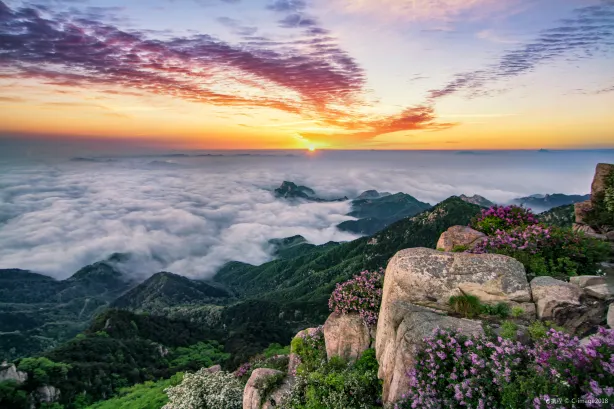
Dayi Mountain is located in the north of Guanyun County, covering an area of 5 km². As part of the Taishan Mountain range, it consists of 12 peaks, with the highest peak reaching 226.7 m. Dayi Mountain has long been known as "the finest mountain on the northern Huai'an plains" and for its scenery where "10 li of green hills half enter the town." Dayi Mountain attraction is home to a nationally protected cultural heritage site—the Dayi Mountain stone coffin tomb complex—while cultural features such as the Beauty Rock petroglyphs, star chart petroglyphs, sea boat petroglyphs, and sika deer petroglyphs are scattered across the mountain. The approximately 100,000 ㎡ Jian River Red Leaf Valley is located in the Laolongjian area, where colored-leaf trees such as red maple and Japanese maple, along with ground cover plants such as firepower nandina, yellow jasmine, and dwarf lilyturf, have been planted. The vegetation is rich in layers and diverse in variety, and the scenery changes distinctly through the four seasons. In fall in particular, red leaves cover the mountain and dye the entire forest, creating a breathtakingly beautiful scene. The attraction makes clever use of natural conditions, drawing water uphill from an artificial lake west of the mountain and reshaping the mountain's original terrain to create a landscape of cascading waterfalls, reflected red leaves, and splashing droplets of water. Babbling streams weave among the red-leaf trees, and the waterscape and greenery set each other off beautifully, greatly enhancing the visual appeal and layering of the attraction's scenery while also conserving soil and water, improving the vegetation environment, and enhancing the ecological appearance of Dayi Mountain. Main attraction introduction Stone Buddha Ancient Temple: Stone Buddha Ancient Temple is located on the east side of the west peak of Dayi Mountain, surrounded by mountains on three sides and facing the sun on one side. The temple's name is derived from the Eastern Jin Dynasty Buddhist Zen master "Sheng Gong's preaching moved even the insentient stones to nod," embodying the Buddha's teaching of tracing causes to their effects, encouraging people to do good, and the intention of delivering all sentient beings. The founding monk of Stone Buddha Ancient Temple, Master Yinkong, traveled here from Stone Buddha Temple on Mount Heng in Nanyue. Seeing that this mountain was endowed with natural beauty and spiritual vitality, with rocks exuding green and Buddha's light shining everywhere, he first built a thatched hut on the rocks, then later solicited donations to build the temple. After ten years of arduous effort, the temple was completed in the second year of Huangqing of the Yuan Dynasty (1313). Therefore, Yinkong was called "Stone Monk," symbolizing that his will was as firm as stone. In the fifteenth year of Zhizheng of Emperor Shun of the Yuan Dynasty (1355), Zhang Shicheng declared himself emperor with the dynastic title Zhou. The following year, Zhang Shicheng mobilized troops from the East Sea and fought a bloody battle against the Yuan Dynasty's Haizhou garrison commander Temur Bukha at Dayi Mountain, during which Stone Buddha Temple was destroyed by the flames of war. In the tenth year of Hongwu of the Ming Dynasty (1377), the eminent monk Master Guangshun presided over its expansion and repair. In the twenty-fourth year of Hongwu, it was merged into Daci Temple of Haizhou (formerly known as Dabei Temple). In the twenty-fifth year, the eminent monk Master Guang'an undertook renovations, after which it rose and fell several times. The current Stone Buddha Ancient Temple was rebuilt in 2002 following the style of Jinshan Temple in Zhenjiang. Old Dragon Ravine (Ravine Water and Red Leaf Valley): The source of Old Dragon Ravine (Ravine Water and Red Leaf Valley) is located above the Stone Buddha Ancient Temple. Green peaks stand in a ring around the ravine, and the water flows from west to east, passing through the temple gate of Stone Buddha Temple and Guangming Pavilion. After passing through the rocky slope, the water grows fierce, and the ravine below gradually widens, flowing into Old Dragon Pool to form Dragon Pool Waterfall. In every stormy season, the waterfall hangs high, a magnificent sight, with grotesque rocks and strange stones, ravines within ravines, gullies above ravines, gullies and ravines overlapping, winding and turning, tiered waterfalls scattered in graceful disorder, and murmuring streams singing and dancing softly. Nourished by the water of Old Dragon Ravine, the forests on both sides are lush and verdant, with mountain flowers vying in beauty, wondrous and deeply secluded. The exquisite stone bridge spanning the ravine, the finely crafted mid-mountain pavilions, and the partially hidden flying eaves and flowing corners immerse visitors completely in a fairy realm where "an ancient temple hides deep in the mountains, and the ravine grows more secluded with the sound of springs." Historical records state: "Grotesque rocks and strange stones, ravines within ravines, gullies and ravines overlapping, winding and turning, tiered waterfalls scattered in graceful disorder."

Guanyun · 3.1km from downtown
Hai Shang Yuntai Mountain
No. 18 of Best Things to Do in Jiangsu

Hai Shang Yuntai Mountain

7.6
4.8/5
5.9k reviews

Hai Shang Yuntai Mountain is the legendary immortal mountain of the East Sea—Yingzhou. It is located in Hou Yuntai Mountain, Lianyun District, Lianyungang, Jiangsu Province, and consists of 58 peaks including Yun Mountain, Weiping Mountain, Weijian Mountain, Lüduan Mountain, and Sucheng Mountain. The main peak, Da Weijian, at an elevation of 605.4 m, is the second-highest peak in Jiangsu. To its north lies the Oriental Great Port Lianyungang, the starting point of the New Eurasian Land Bridge; to its south is Sucheng Subdistrict, ranked among China's top ten villages and towns for slow travel and known as a "hidden paradise." The main attractions in the scenic area include: Wanshou Valley, East China's largest pristine catalpa forest flower sea; the bamboo sea wonderland "Wudao Nunnery"; the Fazhi Temple, where the Buddha comes from the sea and which is the foremost monastery of the Huaihai region; and the "Yuntai Divine Eagle," totem of the Shaohao kingdom, the oriental kingdom of birds. Compared with inland mountains, Hai Shang Yuntai Mountain is unique in that while walking along the plank roads on the mountain, you can see the beautiful Yellow Sea. The great Song dynasty poet Su Dongpo praised it in his poem "Writing My Thoughts on the Sea": "Lush Cangwu, the mountain on the sea, Penglai and Fangzhang lie somewhere between presence and absence; I have long heard that all the plants and trees there are immortal herbs, and I wish to abandon wife and children to guard the marketplace."

Lianyungang · 51.5km from Guanyun
Mount Taishan
2027 Asia 100 - Best Things to Do

Mount Taishan

9
4.7/5
63.4k reviews

Mount Taishan is centered around Mount Taishan, the first of the Five Great Mountains, with steep and towering peaks, and the views of sunrise and sunset from the summit are breathtaking. Sea of clouds often appear among the mountains, and in winter there are spectacular rime ice views. In addition to natural scenery, the mountain also has numerous historical sites, stone inscriptions, religious temples, and other cultural views, with cliff inscriptions and steles scattered throughout the mountain, which is a major feature of Mount Taishan. Mount Taishan has its own highlights in each of the four seasons: in spring, peach and pear blossoms bloom across the mountains; in summer, the mountaintop is lush green and cool, making it a great summer retreat; in fall, the leaves are a mix of red and yellow, dyeing the layered forests in brilliant colors. There are multiple routes to the summit of Mount Taishan. The hiking trail at the Hongmen entrance is the traditional route opened during Emperor Qin Shi Huang's Fengshan ceremony, consisting mainly of stone steps. Walking from Hongmen to Zhongtianmen, you will pass by numerous attractions along the way, including Wanxian Tower, Doumu Palace, Huima Ridge, and Hutiange. This area is also where stone inscriptions are concentrated. After reaching Zhongtianmen, you can take a cable car or walk to Nantianmen and the summit area, where you can see attractions such as Eighteen Bends, Shengxian Archway, Duisong Mountain, Chaoyang Cave, and Wudafu Pines. The Tianwaicun route is a road leading from Tianwaicun to Zhongtianmen, accessible by tour bus, passing by Heilong Pool, Fanzhi Cliff, and Feng Yuxiang's Tomb. After reaching Zhongtianmen, it merges with the latter half of the Hongmen route. Travelers who prefer not to hike can choose this route. The Tianzhufeng route is relatively steep with few visitors, and is a hiking route often taken by outdoor enthusiasts. It features beautiful mountain scenery, including attractions such as Liyu Back, and at the starting point there is also the large-scale live performance "Chinese Mount Taishan: Grand Ceremony of Fengshan." The Taohuayu route is mostly chosen by travelers when descending the mountain. From Tianjie at the summit, take the ropeway to the mountainside, then transfer to a tour bus down to Taohuayu at the foot of the mountain. Along the way, you can enjoy the Colorful Stone Stream scenic area, where the colorful stone patterns at the bottom of the stream are quite magical. Dongyudao is also a walking hiking route, with attractions such as Qingyang Hall, Hanque Gate, and Dongtianmen along the way. Each route ultimately leads to the Daiding tourist area at the summit. Daiding features the main peak of Mount Taishan, Jade Emperor Peak, the Tianjie Scenic Area, as well as attractions such as Sun Viewing Peak, Daguan Peak, Zhanlu Terrace, Bixia Temple, and Confucius Temple. On clear days at the summit, you can gaze at the Yellow River in the distance and admire the wonder of the "Golden Belt of the Yellow River." The Houshiwu area is rich in varied pines and rocks, and there is a cableway leading to the North Heavenly Gate. Many visitors who want to watch the sunrise choose to climb Mount Taishan at night, usually setting off from the Hongmen route, and it is advisable to depart around 11 pm. This route is well lit at night, and a hike of about seven to eight hours will allow you to reach Sun Viewing Peak or Jade Emperor Peak at the summit before sunrise, which are ideal spots for watching the sunrise.

China · Tai'an
Tsingtao Beer Museum
No. 1 of Family-friendly Attractions in Shandong

Tsingtao Beer Museum

8.7
4.8/5
49.2k reviews

The Tsingtao Beer Museum is located at No. 56 Dengzhou Road, the birthplace of Tsingtao beer. This century-old factory, housed in a 1903 German-style industrial complex, witnesses China's beer industry journey from its infancy to prominence. As China's first beer-themed model for industrial heritage revitalization, the museum transforms weathered red-brick workshops into immersive spaces using precious early equipment like old motors, mash kettles, and boiling kettles. Visitors walking through the century-old memory corridor can touch over 30,000 artifacts from the German occupation era while overlooking the smart production lines of the "lighthouse factory" through glass walls. Through the dialogue between traditional wooden fermentation tanks and fully automated filling equipment, they decode the evolution of Chinese manufacturing from artisanal heritage to digital transformation. With the innovative concept of "living heritage + technological empowerment," the museum breaks free from the static display constraints of industrial sites. The VR brewing lab allows visitors to become brewers adjusting malt ratios, while the hop recognition system decodes the scientific secrets behind beer flavors. Personalized beer label printing customizes brews, turning taste into portable urban memories. This cultural landmark, bearing Qingdao's industrial DNA, not only showcases its benchmark value in cultural-tourism integration through honors like "national first-class museum" and "China's top 10 cultural heritage tourism cases," but also injects more sustainable vitality into the century-old factory by being selected as a "national cultural industry demonstration base." It continues to brew the city's cultural richness from industrial heritage amid the tides of time.

China · Qingdao
Niushou Mountain Cultural Tourism Zone
No. 2 of Best Things to Do in Jiangsu

Niushou Mountain Cultural Tourism Zone

8.6
4.7/5
35.6k reviews

Niushou Mountain Cultural Tourism Zone, also known asNiushou Mountain Cultural Tourism Zone, it is named for its two peaks, one in the east and one in the west, which resemble the two horns of an ox's head. Niushou Mountain Cultural Tourism Zone boasts beautiful scenery and has long enjoyed the reputation of "Spring Niushou." In ancient times, it featured such Jinling scenic spots as Niushou Smoke and Mist and Zutang Temple's Resounding Tin Staff, and it also preserves many historical sites, such as the Jiangning section of the ancient fortifications where Yue Fei fought against the Jin, and the Zheng He Cultural Park. Usnisa Palace The Usnisa Palace is themed around the enshrinement of the Buddha's parietal bone relic and is divided into two parts: the large dome and the small dome, symbolizing outer offerings and inner offerings. The Usnisa Palace utilizes the original mine pit to build an underground palace, with six levels below ground and three levels above ground, appearing very solemn and magnificent. The parietal bone relic of Shakyamuni Buddha was enshrined at the Niushou Mountain Cultural Tourism Zone in October 2015. Visitors may go to the Usnisa Palace to pay homage on special Buddhist festivals. For specific times to view the relic, please call the attraction for inquiries. A thousand years of history Niushou Mountain Cultural Tourism Zone is a Buddhist sacred site. The Buddha Cave Temple, built by Sikong Xu Du in the second year of the Tianjian era of the Liang Dynasty (503 AD), was the first temple on Niushou Mountain, and Li Yu, the last ruler of the Southern Tang, renamed it Hongjue Temple. During the Tang Dynasty, Chan Master Farong, hailed as the "Bodhidharma of East China," founded the Niutou Chan School on Niushou Mountain, known in ancient times as "Jiangbiao Niutou." The founding of the Niutou Chan School served as an important bridge in the true transformation of Indian Chan into Chinese Chan! Niushou Mountain Cultural Tourism Zone - Taohua Stream Niushou Mountain Cultural Tourism Zone - Taohua Stream is located at the east entrance of Niushou Mountain Cultural Tourism Zone, with a total area of 14.87 hectares, approximately 220 mu. The peach blossoms selected are 26 varieties suitable for growing in the Nanjing area, making it a new view created by the Niushou Mountain attraction. A small stream winds down from Yinlong Lake, its water babbling, with peach trees planted on both sides. In spring, the buds gradually bloom, and a sea of flowers is intoxicating.

China · Nanjing
Laoshan Scenic Spot
No. 3 of Best Things to Do in Shandong

Laoshan Scenic Spot

8.6
4.7/5
26.5k reviews

Laoshan Scenic Spot is located in the east of Qingdao, bordered by the Yellow Sea to the east and south. It enjoys the reputation of "famous mountain on the sea," with its highest peak at an altitude of approx. 1,100 mJufeng. The attraction, renowned for its majesty, grandeur, uniqueness, and elegance, has become a famous Taoist mountain. The Taoist temples, sunrises, and sea of clouds in the attraction are allPrestigious. The attraction is mainly composed of seven scenic areas: the Laoshan Jufeng Scenic Area, Liuqing River Scenic Area, Laoshan Taiqing Scenic Area, Huayan Scenic Area, Laoshan Yangkou Scenic Area, Laoshan Jiushui Scenic Area, and Laoshan Hualou Scenic Area. There are four tour routes in total, including three land routes (south route, east route, and central route) and one water route. The scenery in these scenic areas includes: Jufeng Sunrise, Taiqing Water Moon, Haijiao Immortal Mound,Hualou Dieshi, and Jiushui Mingyi, together forming the twelve scenic spots of the attraction. The Hualou scenic area of Laoshan is located in Beizhai Subdistrict, Laoshan District. The Jiushui scenic area of Laoshan is known for its water, with streams and springs throughout the attraction and beautiful scenery. For typical visitors, the routes truly worth exploring are the Julan Peak scenic area of Laoshan and the Liuqinghe scenic area–Yangkou scenic area of Laoshan route; one day for each of these two routes is sufficient. The Julan Peak scenic area of Laoshan and the Yangkou scenic area of Laoshan are also where the attraction's natural beauty lies. Liuxinghe attraction - the Laoshan Yangkou scenic area, also known as the southern route, is the earlier-developed attraction here. It hugs the coastline and features the famous attraction Laoshan Taiqing Palace, making it the route most people take. The basic route into the attraction is Liuxinghe attraction - Taiqing Palace scenic area - Huayan Temple, with the endpoint being the Laoshan Yangkou scenic area. Since the essence of this route lies in the Laoshan Yangkou scenic area, it is recommended that you manage your time accordingly when visiting the attractions before it. Laoshan Taiqing Palace—LiaozhaiMediumLaoshan MountainThe setting of the story of the Taoist priest. Back then, Pu Songling came to this place and was inspired by the Taiqing Palace in Laoshan, where he wrote "The Taoist Priest of Laoshan." Visitors here can see the wall through which the Taoist priest in Pu Songling's story passed through walls and walked through solid barriers. Huayan Temple — the surviving Buddhist temple in the attraction. Because the Laoshan Yangkou scenic area is close toHuanghai, where you can look at the sea and enjoy the breeze. Of course, in addition to the beautiful scenery, the Yangkou Scenic Area of Laoshan also has the challenging Mitian Cave. This cave is winding, steep, and narrow; in dark spots you cannot see your hand in front of your face, and in narrow spots you can barely squeeze through, greatly increasing the fun of the visit. You can walk or take a cable car to Mitian Cave; after climbing to the mountaintop, you can take photos, enjoy the scenery, and gaze out at the Yellow Sea. Also remember to bring a flashlight so you can take in the beautiful sights inside the cave. In addition to the Yangkou Scenic Area of Laoshan, the second beautiful spot in the attraction is the Giant Peak Scenic Area of Laoshan. The Giant Peak Scenic Area is home to the main peak of the attraction, with Laoding as the highest point. This area is mainly for mountain hiking and is one of the more physically demanding parts of the attraction. The Giant Peak Scenic Area of Laoshan features layered rocky peaks with a magnificent momentum. On clear days, you can see the sea; on cloudy days, you can watch the sea of clouds; and from Laoding, the sunrise offers a breathtakingly enchanting view.

China · Qingdao
Guanyun Today's weatherClear 0-10℃
Guanyun weather for the next 2 days11/22: 4-15℃, 11/23: 1-14℃

Free things to do in Guanyun

What travellers say about Guanyun
user-avatar
吹吹风19756 August 2025
5.0
The scenery is pleasant and lush with trees. Unfortunately, it was too hot today, with no wind at all, and my clothes were soaked with sweat. There were few people and no water sellers, so each person only brought one bottle of water up the mountain. I came down halfway up. It's a good place to visit around May Day or National Day.

Dayi Mountain

user-avatar
_We***4115 July 2026
5.0
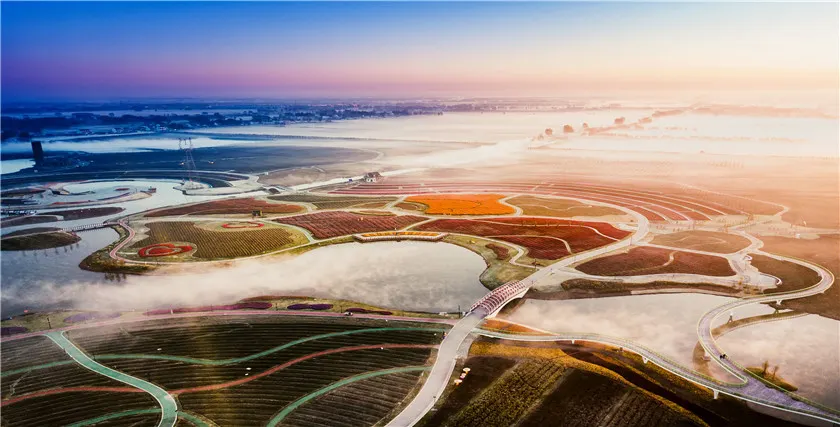
Yiyuan Garden in Guanyun District, Lianyungang, is a hidden gem of a rural paradise right at your doorstep. With its vast flower fields, tranquil lake views, and slow-paced atmosphere, it's a perfect place for relaxing with kids and taking photos that will turn heads wherever you go.

Yiyuan Scenic Area

user-avatar
Anonymous user14 November 2026
5.0
Huaguo Mountain is the true "hometown" of Sun Wukong in "Journey to the West". It is not only a place of mythology, but also a famous cultural mountain with profound heritage. It is the main peak of the Yuntai Mountain Range, and Yunu Peak is 624.4 meters above sea level, making it the highest peak in Jiangsu Province. Coming here is like stepping into a myth. You can see the Nuwa Relic Stone (legend has it that it is the birthplace of Sun Wukong) and the Seventy-Two Caves, which are described in the book. In particular, there are many monkey soldiers and generals. You can see cute monkeys everywhere on the branches and in the corners of the mountains.

Huaguo Mountain

user-avatar
M25***9715 November 2026
5.0
The most recommended attraction in Lianyungang is Yuntai Mountain by the Sea! It truly lives up to its reputation as the premier scenic spot on the East China Sea. Climbing to the Erweijian viewing platform, you'll enjoy panoramic views of mountains, sea, port city, and islands. Watching ships slowly sail by on the distant horizon offers a breathtaking and soothing vista. For those who don't want to hike, take the park's shuttle bus directly to the summit – effortless and convenient. The lush catalpa forest in Wanshou Valley has easy-to-walk boardwalks, perfect for strolling and enjoying the fresh air. The ancient Faqi Temple halfway up the mountain is tranquil and serene. The scenic area is well-managed, clean, and not too crowded, making it suitable for leisurely relaxation, taking photos, or a short hike. A sunny day offers the best views!

Hai Shang Yuntai Mountain

user-avatar
Anonymous user10 November 2026
5.0
This trip to Lian Island was a delightful surprise! The scenery where mountains meet the sea is incredibly atmospheric. Dasha Bay is lively and perfect for swimming, while Suma Bay is quiet and pristine. The 2.5-kilometer seaside boardwalk is the highlight, a comfortable place to stroll and take photos while enjoying the sea view. The scenic area has complete facilities and convenient parking. I recommend coming on a sunny day for the best view of the sea, making it a great short trip to the beach from the Jiangsu, Zhejiang, and Shanghai area.

Lian Island Scenic Area

user-avatar
MichalisS20 November 2026
5.0
I went up from the classic red gate route and came down from the peach blossom route passing from the colorful stream. I have to admit the descent was all the money. That route is way prettier than the classic one. If you don't have time for both, I'd suggest going up the colorful stream and taking the cable way down rather than doing the red gate route. It's longer, but a lot more rewarding in terms of beauty and scenery.

Mount Taishan

user-avatar
虎公公26 October 2026
5.0
The Yuwan Scenic Area boasts beautiful scenery. The winding mountain path is accompanied by the sound of flowing water, and a gentle breeze rustles the leaves in the forest, making the air exceptionally fresh. The only drawback is the recent lack of rainfall, resulting in smaller waterfalls and flowing water.

Yuwan Scenic Area

user-avatar
오로라ㅇ20 November 2026
5.0
붉은 벽돌 건물과 1903년 시계탑이 인상적이었던 칭다오 맥주박물관입니다. 양조 탱크와 제조 공정을 가까이서 볼 수 있어 알찼고, 굿즈샵에 칼 라거펠트 콜라보 맥주와 레트로 라벨 마그넷 등 기념품이 다양해 구경하는 재미가 있었습니다.

Tsingtao Beer Museum

user-avatar
Felisha E18 November 2026
5.0
This place is absolutely incredible! The architecture is breathtaking, and I would highly recommend visiting. Just be aware that the complex is massive, with lots of walking and stairs, so it takes quite a bit of time to explore everything. I would definitely recommend purchasing the shuttle bus ticket, as the distances between areas can be quite long.Everything is so beautiful and intricately designed, but one absolute highlight is the underground temple. Make sure you don’t miss it! The details and architecture inside are stunning and definitely worth seeing.Overall, such an amazing place and well worth the visit!

Niushou Mountain Cultural Tourism Zone
user-avatar
HHmeimei18 November 2026
5.0
Very convenient for overall even transportation, booking, sight seeing. So regret, can visit only Yangkou, skip Taiqing. Very tired and exhausted.

Laoshan Scenic Spot

Trip Moments in Guanyun

Popular cities near Guanyun

Frequently asked questions

How can I contact Trip.com customer support?

Get help anytime, anywhere within 30 secondsContact customer support

Change and cancellation policies vary by attractions and tours. Please check the product details page for more information.

Ticket prices may vary between weekdays and weekends, as well as during peak and off-peak seasons. When booking with Trip.com, you can also use Trip Coins to get extra savings. For more tips on booking discounted tickets, please visit Trip.com for the latest information.