Chibi

Things to do in Chibi

Search attractions or local attractions & tours
Search

Explore top experiences

Top 10 attractions in Chibi

View all Attractions
Qingchuan Pavilion
No. 4 of Best Things to Do in Hubei

Qingchuan Pavilion

8.4
4.7/5
7.7k reviews

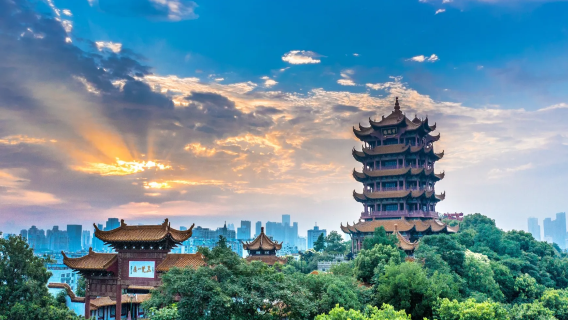
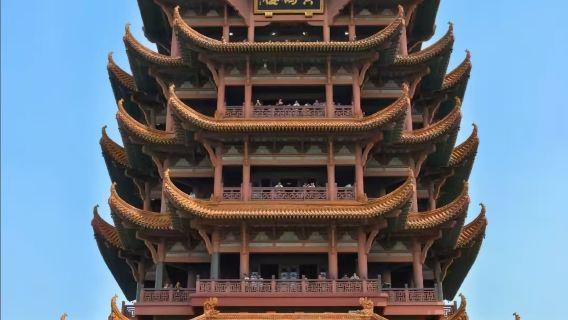
Qingchuan Pavilion stands on Yugong Rock at the eastern foot of Tortoise Hill in Hanyang, facing the Han River to the north and the Yangtze River to the east, gazing across the river at Yellow Crane Tower in Wuchang on the opposite bank. The pavilion's name is taken from the line "the clear river reflects the trees of Hanyang" by the Tang dynasty poet Cui Hao, and it was initiated for construction by Fan Zhizhen, the Ming dynasty prefect of Hanyang. First built during the Jiajing era of the Ming dynasty, it has a history of more than four hundred years. Throughout history, Qingchuan Pavilion was destroyed and rebuilt as many as six or seven times, the last destruction caused by a windstorm; the existing structure was rebuilt in the 1980s following the style of the Guangxu era of the Qing dynasty. Long known as one of the "finest sights of the Three Chu regions" and a "grand vista through the ages," Qingchuan Pavilion echoes Yellow Crane Tower across the river and stands out distinctly along the banks of the Yangtze. The attraction is composed of three main structures—Qingchuan Pavilion, Yuji Xinggong (Yu and Ji Ancestral Hall), and Tiemen Pass—along with auxiliary structures such as the ancient archway, Chubo Pavilion, Chaozong Pavilion, Yu Stele Pavilion, Jingchu Heroic Spirit Stele, and the poetry stele corridor, forming a complex of ancient and pseudo-classical buildings standing by the river. Among them, Yuji Xinggong was first built during the Shaoxing era of the Southern Song dynasty under the original name Yu Wang Temple; during the Tianqi era of the Ming dynasty, it was renamed "Yuji Xinggong" after its worship was changed to Houji and other former sages, and it has been an important site in Wuhan for successive generations to pay homage to Yu the Great. Tiemen Pass was first built during the Three Kingdoms period and has been a strategic location contested by military strategists since ancient times; it was restored in the 1990s. Ascending Qingchuan Pavilion offers a panoramic view of the expansive river scenery where the Yangtze River and the Han River converge. Inside the pavilion, permanent exhibitions such as "Traces of Yu Across the Nine Provinces" and "Historical Paintings of Qingchuan" present Yu the Great culture and the historical heritage of Qingchuan Pavilion from multiple perspectives, ranging from water-control culture to poetry and couplets. The attraction nestles between the hills and the river, with pavilions and terraces scattered in graceful arrangement. The poetry stele corridor preserves inscribed stones bearing verses by literati and poets of successive dynasties, and strolling through it allows visitors to feel the rich historical and cultural atmosphere.

Wuhan · 99.5km from Chibi
Yue Yang Tower
No. 1 of Family-friendly Attractions in Hunan

Yue Yang Tower

8.1
4.6/5
11.5k reviews

"Be the first to worry about the world's worries and the last to enjoy its pleasures"—this line from Fan Zhongyan's Northern Song dynasty essay "Yueyang Tower chronicle" made Yue Yang Tower by Dongting Lake a household name. The main tower, Yueyang Tower, is said to have evolved from a naval review tower built by Lu Su of Eastern Wu during the Three Kingdoms period. Alongside Yellow Crane Tower in Hubei and Tengwang Pavilion in Jiangxi, it is hailed as one of the three great towers of southern China. Poets like Li Bai, Du Fu, Meng Haoran, and Bai Juyi once climbed it to compose verses. From the top floor, leaning on the railings, you can take in the vast expanse of Dongting Lake stretching hundreds of miles, with Junshan Island visible across the waters—where timeless verses and the lake's beauty converge in this moment. The tower itself is an architectural treasure: its three-story, triple-eave structure is built entirely of wood with mortise-and-tenon joints—no iron nails used—and four golden nanmu pillars run straight from the ground to the rooftop. The helmet-shaped roof, called "helmet crown," is supported by layered ruyi bracket sets, a rare design among surviving ancient towers in China. Inside, carved Qing-dynasty panels of "Yueyang Tower chronicle" are preserved—pause to admire them when ascending. The small attractions within the attraction each have their own highlights: near the gate, the "Five-dynasty towers" use bronze miniature models to recreate Yueyang Tower's different architectural styles from the Tang, Song, Yuan, Ming, and Qing dynasties, showcasing a millennium of changes at a glance. On the lakeshore in front of the main tower, ancient iron artifacts resembling shackles and weighing several tons are displayed—their casting era and purpose remain debated, forming a long-standing historical mystery. Additionally, there are the Shuanggong Shrine commemorating Fan Zhongyan and Teng Zijing, the stele corridor engraved with poems about the tower from various dynasties, and the Xiaoqiao Tomb—said to belong to the wife of Three Kingdoms general Zhou Yu—waiting to be explored. If you wish to extend your itinerary, you may also take a boat tour of Dongting Lake and visit Junshan Island on the opposite shore. The nearby Bianhe Street, a cobblestone-paved antique-style street, is lined with local snack stalls and souvenir shops, making it convenient to explore along with the nearby Baling Square.

Yueyang · 87.1km from Chibi
Mount Yuelu
No. 1 of Fall Viewing Attractions in Hunan

Mount Yuelu

8.3
4.6/5
5.5k reviews

Mount Yuelu stands on the west bank of the Xiang River and is a landmark mountain in Changsha. At its foot lies the Yuelu Academy, founded during the Northern Song Dynasty, a millennium-old institution sharing the mountain's name. Ascending from here leads to Qingfeng Gorge, where the Aiwan Pavilion, named after Du Mu's poetic line "I stop my carriage to admire the maple woods at dusk," is surrounded by maple trees. Midway up the mountain, the ancient Lushan Temple, established in the Western Jin Dynasty over 1,700 years ago, features a lush six-dynasty-era podocarpus tree in front of its sutra repository. At the summit stands the Yunlu Palace, a Taoist temple built during the Ming Dynasty, offering panoramic views of the Xiang River and Changsha's urban area. The mountain's historical sites extend further, with the Yu King Stele, Python Cave, and Changsha Battle Memorial Stele scattered along its trails. Modern figures such as Huang Xing, Cai E, and Chen Tianhua are also buried here, making the mountain a condensed repository of profound modern history. Most cultural attractions are concentrated near the south gate, where you can visit major historic sites in sequence from Yuelu Academy to Aiwan Pavilion. For those preferring not to hike, a cableway station near the east gate allows easy ascent, eliminating most uphill climbing. With an elevation of about 300 m and well-developed trails, reaching the summit on foot is manageable. Ancient trees like Jin dynasty podocarps, Tang dynasty ginkgos, Song-Yuan era camphor trees, and Ming-Qing maple-chestnuts line the paths, making the entire mountain resemble a natural botanical museum. In late fall when maple leaves turn red across the slopes, it becomes an ideal time for hiking. Allocate half a day to leisurely photograph Aiwan Pavilion and the mountaintop viewpoints.

China · Changsha
Du Fu Pavilion
2026 Global 100 - Night Attractions

Du Fu Pavilion

8.2
4.6/5
10.9k reviews

Du Fu Pavilion is a Tang-style garden architecture built to commemorate the great Tang dynasty poet Du Fu. It stands on the Xiang River scenic belt in Changsha, gazing across the river at Orange Isle and Yuelu Mountain. In his later years, Du Fu lived in Changsha twice, renting a simple building by the Xiang River; because the house faced the river, he named it "River Pavilion," where he spent the final years of his life and wrote a large number of poems. The present pavilion was completed and opened to the public in 2005. Its main structure has four stories and stands approx. 18 m tall, with vermilion columns paired with antique lattice windows and a roof covered in dark blue-green glazed tiles, making it a highly recognizable landmark on the east bank of the Xiang River. The pavilion houses a Du Fu memorial hall, with a statue of Du Fu standing in the center. The poet's life is depicted on the walls in the form of paintings, and works by renowned calligraphers and painters such as Zhang Daqian and Lin Sanzhi are also displayed in the hall. The exhibitions on each floor follow Du Fu's travels and poetic works in Hunan as the main thread, presenting the wandering trajectory of the Poet Sage in his later years and the poems he composed during his time in Hunan through steles, calligraphy and paintings, and multimedia means. The pavilion also features a tea room where visitors can sip tea while gazing at the scenery on both banks of the Xiang River in the distance. After nightfall, the pavilion lights up, and the warm yellow glow reflects on the surface of the Xiang River, making it a popular night-view photo spot along the river. The pavilion also offers an immersive night tour experience, based on Du Fu's life experiences wandering in Xiaoxiang in his later years. With the help of digital light-and-shadow technology, the artistic conception of Du Fu's poems is transformed into real-life scenes. As visitors stroll through the corridors, they may unexpectedly encounter "people in the poems" dressed in ancient-style costumes, experiencing a thousand years of poetic charm among the corridors and pillars of the pavilion.

China · Changsha
chi bi · jie dong feng

chi bi · jie dong feng

2.4
4.0/5
1 reviews

"Chibi: Borrowing the East Wind" is the world's first immersive live-action performance based on the Three Kingdoms period, produced by Hubei Dingtu Cultural Tourism with cross-disciplinary artist Luo Kege as chief director. Centered on the theme "Borrowing the east wind at Chibi, we all become heroes," the production innovatively combines scattered performances with a main storyline across four narrative chapters: audiences time-travel through ancient city gates in "City Entry," experience Three Kingdoms folk culture in "Market Life," feel battlefield heroism in "Military Camp," and finally witness the epic Battle of Chibi in panoramic scale during "The War." This groundbreaking production shatters traditional theatrical boundaries with a 360° immersive stage and dynamic viewing routes. Cutting-edge technologies like 4D flying systems, giant circular projections, and holographic displays bring legendary scenes such as "Borrowing Arrows with Straw Boats" and "Burning the Linked Camps" to life with stunning audiovisual effects. The creative team blends reality with fiction—faithfully recreating historical figures like Zhuge Liang's wisdom and Zhou Yu's valor while offering contemporary interpretations of the strategic philosophy behind "right timing, geographical advantage, and human harmony." Audiences don't merely witness history; through interactive segments, they become active participants in these iconic moments, experiencing the essence of Three Kingdoms spirit. As a flagship cultural-tourism integration project, it constructs a tangible cultural space that serves as a vital medium for promoting Jing-Chu heritage.

Chibi · 30.7km from downtown
The National Archaeological Site Park of Nanchang Han Dynasty Haihun Marquis
No. 4 of Family-friendly Attractions in Jiangxi

The National Archaeological Site Park of Nanchang Han Dynasty Haihun Marquis

8
4.7/5
5.5k reviews

The National Archaeological Site Park of Nanchang Han Dynasty Haihun Marquis was developed based on the capital city ruins of Zijingcheng from the Western Han Dynasty Haihun Marquisate, the mausoleum of its first marquise Liu He, and the burial clusters to the west and south of the city. It represents the most well-preserved and structurally intact settlement ruins of a Han Dynasty marquise state capital discovered in China to date. Liu He, the tomb's occupant, was Emperor Wu's grandson who was deposed after merely 27 days on the throne, later becoming the Haihun marquise and moving south before being buried here. Since archaeological excavations began in 2011, over 10,000 artifacts including goldware, bronzes, jades, lacquerware, and bamboo slips have been unearthed, bringing this historically obscure "deposed Han emperor" back into public view with remarkable completeness. The park is divided into six functional zones: the ruins museum area, tomb exhibition area, Zijingcheng exhibition area, archaeological reserve area, entrance service area, and historical experience & ecological leisure area. The visitor center at the entrance adopts the shape of a jade bi disk—its white circular structure resembles a jade button when viewed from above, symbolizing "offering jade to heaven." The ruins museum takes its design inspiration from the dragon-shaped jade artifact unearthed from Liu He's tomb, appearing like a coiled dragon resting between mountains and waters. Permanent exhibitions such as "Golden Haihun," "Scholarly Haihun," and "Vermilion Lacquer Haihun" are housed here, alongside the interactive "Encountering Haihun" gallery. Among the over 1,000 displayed artifacts, gold items like cakes, horse-hoof ingots, unicorn-toe ingots, and plates are arranged in rows—their quantity and variety being exceptionally rare among excavated Han tombs. A complete set of bianzhong bells and bianqing stone chimes shares the stage with a bronze goose-fish lamp, whose curved neck holds a fish; rotating its dish adjusts brightness while smoke filters through water in the goose's belly without escaping, mirroring the ingenuity of the Changxin Palace lamp. A bronze lamp inscribed with "Nanchang" stands as a rare Han-dynasty physical testament to the city's name. Among the over 5,000 bamboo slips unearthed from the tomb of Liu He, the long-lost "Qi version of the Analects" was discovered after being missing for more than 1,800 years. The restoration achievements are showcased in the "Fragrance of Haichun" bamboo slips exhibition, where over a hundred newly restored original slips are displayed alongside Han Dynasty manuscripts like the "Book of Songs." Travelers who appreciate ancient texts and calligraphy will find it worth a closer look. The wooden back of the lacquered mirror depicting Confucius and his disciples features portraits and biographical accounts. While the original is still under restoration, the museum presents a full-scale replica with enlarged images to highlight details—another exhibit not to be missed. Beyond the museum, the Liu He Mausoleum at Guodun Mountain is another key attraction. The mausoleum complex features a trapezoidal layout, with the two main tombs of Liu He and his marquise wife sharing the same burial ground but in separate chambers at the central elevated platform. Surrounding them are auxiliary burial sites and remnants of ritual structures such as ancestral halls, resting chambers, garden walls, and gate towers. Outside the complex lies a rare chariot-and-horse burial pit seldom seen south of the Yangtze River. The Guodun Yuan ruins exhibition area built atop the mausoleum offers a panoramic view of the main tombs' wooden chamber structure from an encircling observation deck, while a 360-degree suspended screen recreates the mausoleum's construction process and Han Dynasty marquise funeral rites. The chariot pit preserves its original excavated state, with a restored quadriga carriage model showcasing the grandeur of Han nobility's travels. The park is planned around the grand heritage site, covering a vast area with its core visitable zones concentrated at the traveler center, ruins museum, and Liu He's tomb complex. The Zijingcheng city site is primarily preserved in its original state, so focus your visit on the museum and tomb area. As distances between zones are considerable, shuttle services are available—we recommend allocating half a day. The Han-style gate towers and golden imperial carriage at the entrance are popular photo spots. Throughout the park, Han cultural activities like costume parades and themed markets occasionally take place; keep an eye out while exploring the exhibitions.

China · Nanchang
Mount Hengshan
No. 8 of Night Attractions in Hunan

Mount Hengshan

8
4.5/5
6.7k reviews

Mount Hengshan is located in Nanyue district, Hengyang. Its highest peak is Zhurong peak, at an elevation of approx. 1300 m. Among the "Five Great Mountains", Mount Heng is located furthest south. Its relatively favorable climate means the mountain is verdant all year round, with lush trees, earning it the reputation of being the "most beautiful of the Five Great Mountains". Mount Hengshan is mainly composed of the central attraction and a few other small attractions. When most visitors refer to "Hengshan," they mean the central attraction. The "Nanyue Grand Temple" in Nanyue Town at the foot of Mount Hengshan is an important attraction besides the central attraction, and it is a massive ancient palace-style architectural complex in southern China. Mount Heng is a sacred site of Chinese Buddhism, where the "Nanyue school" of the Southern Chan tradition was founded, and its dharma lineage gave rise to the Weiyang and Linji schools, which spread throughout China and overseas. In addition, this is also a sacred site of the War of Resistance in southern China. At the foot of Xianglu Peak, the "Nanyue Martyrs' Shrine" commemorates and buries Chinese soldiers who died on the frontal battlefields of the War of Resistance. When visiting the central attraction, you can choose to walk the entire way, or combine walking with the eco-friendly bus (including the cableway). For most ordinary visitors, the latter is recommended, as it will leave you with more energy to appreciate the beautiful scenery in the mountains and experience the cultural connotations of Nanyue. Route recommendations If you choose to travel on foot and by eco-friendly bus (including the cableway), then visiting Mount Heng in one day is not a particularly strenuous task. You can first visit the "Nanyue Grand Temple" in Nanyue Town, and then enter the central attraction. The basic route is:Martyr's Shrine-Hengyang Mount Hengshan Tourist Area-Banshan Pavilion-Magu Wonderland-Mojing Terrace-Hengyang Mount Hengshan-Hengyang Mount Hengshan Tourist Area-Nantianmen-Zhurong Peak. If you have more time, then spending two days touring Mount Hengshan will yield more rewards. The general route is similar to the "1-day tour" above; since you have ample time, after visiting the Fuyan Temple in Mount Hengshan in Hengyang, you can then go to the Sutra Library Hall in the Mount Hengshan tourist area in Hengyang and stay for a while—it is extremely tranquil there. In the early morning of the second day, you can also head to the "Sun-Watching Terrace" to watch the sunrise.

China · Hengyang
Gexian Mountain

Gexian Mountain

3.2
4.4/5
24 reviews

Gexian Mountain is located in Zhongping Village, Guantangyi Town, Chibi City, with an altitude of 642.7 meters and an area of 6 square kilometers. It is 18 kilometers away from the Xingxing Bamboo Sea in Xianning in the east. There is a highway running through the Tiancheng District, which is adjacent to Chongyang in the south. It is named after Ge Hong, a famous chemist and medical scientist in Jin Dynasty, who once practiced Taoism here. According to Kangxi's "Puqi County Chronicle" in the Qing Dynasty, and Qianlong's "Puqi County Chronicle" recorded that "the place where Gexian's emergence in Jin Dynasty is located is Gexian Mountain, ten miles south of the maid...". Gexian Mountain Monastery is a place to commemorate Ge Hong, a famous chemist, medical scientist and Taoist theorist in Jin Dynasty, who cultivated here and became immortal. It was built without examination. According to the records of the stele, it was rebuilt during the Daoguang period of the Qing Dynasty. The statue of Ge Xian holding pills and pills in his hand is about 2 meters high. There is a Taiji map on the top of the courtyard door, and a stone carving on the door couplet that says "The peak of herbal medicine is still alive. , the traces of the burnt Danjing still exist." Outside the hospital, there is a stone tablet of merit and virtue of "Raising the Quartet". The peak in the east of the mountain is Ge Xian's ascension place. There is a round stone house with four stone statues of Ge Xian and his disciples inside. There are stone couplets inside and outside the round gate, which say "Extraordinary pills for changing bones. There is a 40-square-meter flat ground in front of the stone house, and there is a stone incense burner and a stone remnant plaque of "Gexian Mountain" on the side. The plaque contains the words "Repair in the Qing Dynasty".

Chongyang · 18.7km from Chibi
Jiangxi WuGong Mountain Scenic Area
No. 6 of Family-friendly Attractions in Jiangxi

Jiangxi WuGong Mountain Scenic Area

7.9
4.7/5
92 reviews

Jiangxi Wugong Mountain is located in the west of Jiangxi, spanning the three cities of Pingxiang, Yichun, and Ji'an. It has scenic spots such as Pingxiang Wugong Mountain, Yichun Mingyue Mountain, Anfu Wugong Mountain, and Anfu Yangshimu. It is a large-scale mountain type integrating human landscape and natural landscape. Scenic spot; Jiangxi Wugong Mountain-Pingxiang Wugong Mountain Scenic Spot is located in the southeast of Pingxiang City, belonging to the northern section of the Luoxiao Mountains on the border between Hunan and Jiangxi. It is a large-scale mountain-type scenic spot with the most abundant tourism resources in western Jiangxi Province. In history, it was once known as the three famous mountains in the south of the Yangtze River together with Lushan Mountain and Hengshan Mountain, and it is known as "the first martial arts in Hengshou and Luwei". Baihe Peak (Golden Summit), the main peak of Wugong Mountain, is 1918.3 meters above sea level. Jiangxi Wugong Mountain-Yichun Mingyue Mountain Scenic Spot is located 15 kilometers southwest of the central city of Yichun, with a total area of 389 square kilometers. Mingyue Mountain has four major resources of "mountain, spring, Zen, and agriculture". It is a scenic spot featuring "sightseeing, leisure and vacation, health care and religious tourism" as a whole. Jiangxi Wugong Mountain-Anfu Wugong Mountain is located in Taishan Township, Anfu County, Jiangxi Province. The depth of the scenic spot is about 150 kilometers. It is the highest mountain in Jiangxi. In history, Wugong Mountain was once known as the three famous mountains in the south of the Yangtze River together with Hengshan Mountain and Lushan Mountain, and was named "the first of Hengshan and Luwei in martial arts". Wugong Mountain is a scenic spot integrating human landscape and natural landscape. It is a mountain under development among the famous mountains in the south of the Yangtze River. , and natural landscape and intact original ecological environment, with charm. Jiangxi Wugong Mountain-Anfu Yangshimu Scenic Area is located in the northwest of Wugong Mountain in Anfu County, Jiangxi Province, a scenic spot, a national natural heritage site, a national forest park, and a national geological park. The scenic spot is dominated by granite peak forest landforms, which are majestic and majestic in various poses and with different expressions.

China · Luxi

Experiences you can't miss in Chibi

Chibi Today's weatherLight rain 15-19℃
Chibi weather for the next 2 days11/8: 8-16℃, 11/9: 6-13℃

Free things to do in Chibi

What travellers say about Chibi

user-avatar
沅大王30 September 2026
5.0
The scenic area is filled with the fragrance of osmanthus blossoms. From the top, you can enjoy panoramic views of the Yangtze River Bridge and the Yellow Crane Tower. At the very top, watching the ships on the Yangtze and the cars and trains on the bridge, with the breeze blowing, is very pleasant, and it's not too crowded. The scenic area isn't large; a leisurely hour is about right to appreciate the scenery. Qingchuan Pavilion and Guishan Scenic Area are directly connected by the Iron Gate Pass, which leads to the West Gate of Guishan. Climbing the mountain and enjoying the breeze and osmanthus fragrance is a wonderful experience.

Qingchuan Pavilion

user-avatar
_We***0129 October 2026
5.0
Yueyang Tower, one of the four great ancient towers of my country, stands majestically on the shore of Dongting Lake, inspiring awe in visitors throughout history. Unfortunately, when we arrived in the afternoon, it was raining, and by evening, visibility was poor, greatly diminishing the view.

Yue Yang Tower

user-avatar
118***585 October 2026
5.0
During the National Day holiday, the crowds were immense. Our tour guide, Xiao Xiang, led us along the way, providing lively and engaging explanations that saved us from taking unnecessary detours and greatly improved efficiency. He also clearly outlined the key locations.

Mount Yuelu

user-avatar
Anonymous user25 October 2026
5.0
I have visited Orange Isle multiple times and always had a positive experience. The scenic area boasts beautiful natural scenery, a magnificent view of the Xiang River and the head of Orange Isle, and a rich cultural heritage. Historical sites such as the Mao Zedong statue are well-preserved. The management is orderly, the tour routes are clear, and the supporting facilities are comprehensive. Overall assessment: As a core cultural landmark of Changsha, it possesses both natural and cultural value, and I highly recommend it as a priority visit for tourists to experience the charm of Hunan culture.

Du Fu Pavilion

user-avatar
300***123 August 2025
4.0
The combination of ancient and modern times, the story's appeal and the actors' performances need to be improved. The ticket exchange staff are conscientious and responsible. It deserves praise!

chi bi · jie dong feng

user-avatar
Anonymous user6 November 2026
5.0
It's definitely worth a visit, though it's a bit far. The exhibition area is large, but the shuttle bus is very convenient, so you don't have to walk much. It's not tiring to bring elderly people. The cultural and creative souvenirs are excellent; I bought a lot as gifts.

The National Archaeological Site Park of Nanchang Han Dynasty Haihun Marquis

user-avatar
Anonymous user4 November 2026
5.0
The scenic area boasts beautiful scenery, with breathtaking views at every turn, fresh air, and lush greenery. The trails are well-planned, clearly marked, and equipped with restrooms and rest areas. The scenery is even more stunning than photos, making for photogenic shots from every angle. Visitor services are attentive, and the commercialization is moderate, avoiding excessive noise. A stroll through the area is relaxing, a true escape from the city's hustle and bustle, making it a truly therapeutic trip and well worth a special trip.

Mount Hengshan

user-avatar
Anonymous user18 October 2026
5.0
Teacher Xiaoyu's explanation was excellent. She really wanted to tell us about the treasures of the Jiangxi Provincial Museum in a short time. You could feel her passion for her work. I am grateful to have had the opportunity to hear her explanation.

Jiangxi Provincial Museum

user-avatar
M88***3419 February 2025
5.0
The scenic area has convenient transportation, the plum blossoms are great, and the service is also very good

Gexian Mountain

user-avatar
夜空星城6 July 2026
5.0
The experience of visiting Wugong Mountain was quite good. The hiking route was of moderate difficulty and not strenuous. The view from the summit was expansive, overlooking vast meadows. The breeze was pleasant and refreshing. There were also ample supply points along the way, so I didn't need to bring too much with me. It was a very relaxing trip.

Jiangxi WuGong Mountain Scenic Area

Trip Moments in Chibi

Popular cities near Chibi

Frequently asked questions

As of 7 November 2026, the reference price for day tours and activities in Chibi is around BHD 15.26 – BHD 58.44. Rates vary by duration, group size, transport, tickets, meals, and any special admission requirements. Before you book, please confirm the billing currency and whether the price is quoted per person or per group.

Get help anytime, anywhere within 30 secondsContact customer support

Change and cancellation policies vary by attractions and tours. Please check the product details page for more information.

Ticket prices may vary between weekdays and weekends, as well as during peak and off-peak seasons. When booking with Trip.com, you can also use Trip Coins to get extra savings. For more tips on booking discounted tickets, please visit Trip.com for the latest information.