Cheng County

Things to do in Cheng County

Search attractions or local attractions & tours
Search

Explore top experiences

Top 10 attractions in Cheng County

View all Attractions
Xixia Ode Cliff Inscriptions

Xixia Ode Cliff Inscriptions

3.4
3.8/5
4 reviews

The Xixia Ode Cliff Inscriptions are located at the foot of Tianjing Mountain, 13 km from Cheng County, Gansu Province. Commonly known as the "Huanglong Stele," they were carved in the fourth year of the Jianning era of the Eastern Han Dynasty (171 AD). The Xixia Ode Cliff Inscriptions stele is 2.2 m high and 3.4 m wide. The stele header features four seal script characters reading "Hui An Xi Biao." The main text is in the form of a memorial, with 385 characters incised in clerical script across 12 lines, each character measuring approx. 9–10 cm square. It primarily records the life of Li Xi and his outstanding achievements while serving as a local administrative official, as well as his virtuous governance in leading the people to repair the ancient Xixia Road for the benefit of the public. Both the inscription and the calligraphy hold high value for epigraphic research and as models for appreciation and imitation. Before the main text, images of a yellow dragon, white deer, sweet dew, auspicious grain, intertwined trees, and a dew-bearing figure are incised. Around the cliff carvings are more than 30 ancient inscriptions, as well as the titles "Eastern Han Cliff Inscriptions" and "Xixia Ode" inscribed by the modern master of Chinese painting, Li Keran. To the lower left of the Xixia Ode Cliff Inscriptions is another Han clerical script cliff carving, commonly known as the "Taohua Stele." About 1 km to the east is the "Stele of Geng Xun, Governor of Wudu in the Han Dynasty" cliff carving, dating to the third year of the Xiping era of the Eastern Han Dynasty (173 AD), which records the achievements of Geng Xun. The Xixia Ode Cliff Inscriptions stele is one of the three major Han Dynasty ode steles remaining in China—the others being the "Shimen Ode" and "Fuge Ode"—and it is well-preserved. It integrates literature, painting, calligraphy, Han Confucian thought, and local administrative systems, serving as important physical evidence for studying Eastern Han memorial-style writing, as well as the social, political, economic, and transportation conditions of that time.

Cheng County · 12.7km from downtown
Xi'an Museum
No. 1 of Family-friendly Attractions in Shaanxi

Xi'an Museum

8.6
4.6/5
4.3k reviews

Xi'an Museum is a modern comprehensive museum built upon the cultural relic protection site—the ruins of the Tang Dynasty Jianfu Temple and its iconic structure, the Small Wild Goose Pagoda. It integrates cultural relic collection and protection, academic research, exhibition and display, social education, and garden leisure. Its core area is the location of the original Tang Dynasty royal temple, Jianfu Temple, while the precious and striking historical relic existing within the temple—the Small Wild Goose Pagoda—has become the museum's unique landmark and soul. Therefore, the Jianfu Temple ruins and the Small Wild Goose Pagoda are not only the foundation and core carrier for the establishment of Xi'an Museum, but also important outdoor historical exhibition areas and focal points for visitors. The main building of the museum is located on the north side of the ancient temple ruins. The three elements (ancient temple ruins, ancient pagoda, and modern museum building) are organically integrated, jointly forming a unique cultural space that combines "museum, pagoda, temple, and garden," vividly showcasing the historical context of Xi'an from ancient times to the present. Xi'an Museum officially opened to the public on May 18, 2007. Its establishment aims to comprehensively showcase the glorious history and splendid culture of Xi'an (ancient Chang'an) as the capital of thirteen dynasties, filling the gap of a comprehensive museum of Xi'an's urban history. Collection highlights: The museum houses over 100,000 precious cultural relics from various historical periods of Xi'an. The collection spans from prehistoric times to the Ming and Qing dynasties, with particular emphasis on artifacts from the prosperous dynasties of Zhou, Qin, Han, and Tang, including bronze ware, jade articles, gold and silverware, ceramics, murals, stone steles, epitaphs, and Buddhist statues, systematically reflecting the political, economic, cultural, social life, and foreign exchanges of the ancient capital Chang'an. Main exhibition: The permanent exhibition "Ancient capital Xi'an" takes the urban development history of Xi'an as the main thread, showcasing the evolution and achievements of Xi'an as a capital (Zhou Fenghao, Qin Xianyang, Han Chang'an, Sui-Tang Chang'an) and a prefectural city (Song, Yuan, Ming, and Qing dynasties) through a large number of precious cultural relics, models, charts, and multimedia means. Unique environment: The museum's greatest feature lies in its surroundings. Travelers can not only visit modern exhibition halls but also stroll through the expansive heritage park encompassing the Small Wild Goose Pagoda, the ancient architectural complex of Jianfu Temple (including structures like the Ming dynasty bell tower housing a Jin dynasty ancient bell), an ancient stone sculpture art exhibition area, and garden views—experiencing the charm of the millennia-old capital at its historical site. The view of "morning bells at the Wild Goose Pagoda" is particularly renowned. Functional positioning: The museum is not only an important center for cultural relic collection, research, and display, but also an urban cultural park where citizens can relax, entertain, and immerse themselves in history and culture, undertaking significant social education and cultural exchange functions.

China · Xi'an
Maijishan Cave-Temple Complex
No. 14 of Best Things to Do in Gansu

Maijishan Cave-Temple Complex

7.2
4.5/5
3.5k reviews

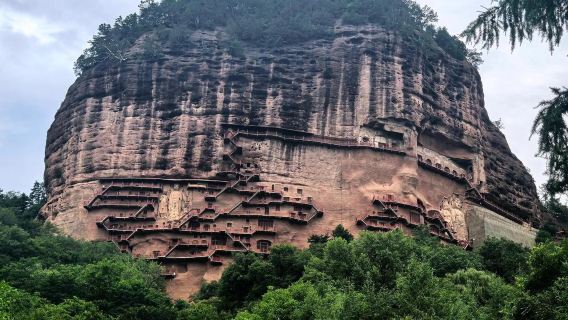
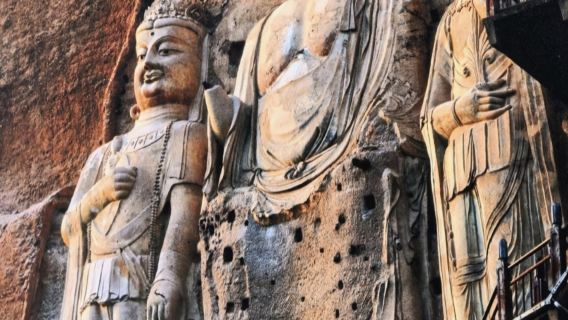
The Maijishan Cave-Temple Complex is carved into the cliff face of an isolated peak resembling a farmer's wheat stack in the Xiaolong Mountains. Alongside the Mogao Caves in Dunhuang, the Yungang Grottoes, and the Longmen Grottoes, it is renowned as one of China's four great cave-temple complexes and serves as the core attraction of the Maijishan scenic area. The caves were first excavated during the Later Qin period of the Sixteen Kingdoms and underwent continuous construction for over 1,600 years through the Northern Wei, Western Wei, Northern Zhou, Sui, Tang, and up to the Ming and Qing dynasties. The site preserves over 200 caves and niches, more than 10,000 clay and stone sculptures, and nearly 1,000 square meters of murals. Featuring predominantly clay sculptures with an unbroken lineage across dynasties, the complex showcases a complete and clear stylistic evolution, earning it the title "Oriental Sculpture Gallery." In 2014, it was inscribed as a UNESCO World Heritage Site as part of the "Silk Roads: the Routes Network of Chang'an-Tianshan Corridor." Maiji Mountain stands alone amidst surrounding peaks, with most of its grottoes carved into sheer cliffs dozens of meters above ground, connected solely by tiered aerial walkways spanning over ten levels. The visit itself becomes a cliffside adventure: at the base, gaze up at the exposed rock face and the colossal cliff-carved Buddha over ten meters tall, then ascend via winding walkways suspended dozens of meters high—both thrilling and offering panoramic views of lush forests. Grottoes along the path vary in size, with smaller ones protected by nets, while larger ones dominate the upper sections. The upper eastern cliff's Sanhua Tower (Upper Seven-Buddha Pavilion) is an unmissable highlight. This seven-bay, eight-pillared hall with a single-eaved hip roof replicates wooden architecture carved directly into the cliff, featuring a grand front corridor and rear chamber. Its ceiling showcases the unique "thin relief" flying apsaras—faces and limbs rendered in shallow sculpture while flowing robes are painted, creating a distinctive fusion of painting and sculpture unparalleled in ancient Chinese murals. As you walk and observe, the stylistic evolution of clay sculptures becomes distinctly visible: the elegant and slender figures of the late Northern Wei, the refined and serene style of the Western Wei, the plump and graceful forms of the Northern Zhou, and the full and rounded shapes of the Sui and Tang dynasties—like flipping through a three-dimensional history of sculpture. On overcast or freshly cleared days after rain, when mist swirls around the peaks and drizzle veils the landscape, the solitary haystack-shaped peaks emerge and fade in the clouds, creating the famous "Maji misty rain" scenery. The plank road is narrow, and visitors may need to queue and proceed slowly when crowded. Travelers with acrophobia should proceed with caution. Flash photography is prohibited in the grotto area, and touching the statues is not allowed. A few classic grottoes are designated as special grottoes and are not included in the regular tour route, such as Cave 133, famous for the "Oriental Smile" novice monk, and Cave 127, known for its large-scale sutra illustration murals. Travelers with a strong interest in statue art can check the special grotto visiting arrangements in advance. Most of the other caves and niches can be viewed in sequence along the plank road.

Tianshui · 71km from Cheng County
Maijishan Scenic Area
No. 12 of Fall Viewing Attractions in Gansu

Maijishan Scenic Area

7.2
4.5/5
1.8k reviews

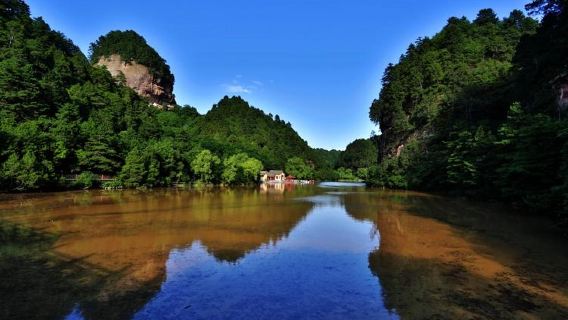
The Maijishan Scenic Area is located in the southeast of Tianshui, Gansu Province, within the Xiaolong Mountain forest area of the western Qinling range. A ridge extending from southwest to northeast separates the Wei River, a tributary of the Yellow River, from the Jialing River, a tributary of the Yangtze, placing them to the north and south respectively. The northern mountains boast majestic peaks, while the southern streams are serene and picturesque, blending both temperaments within the same landscape. The entire attraction comprises five major sections: the Maijishan Cave-Temple Complex, Xianren Cliff, Shimen Mountain, Quxi, and Jieting Hot Springs, with over 180 attractions scattered across more than 200 square km of forested terrain. Ancient Qinzhou scenes like "Maiji mist and rain," "immortals offering lanterns," "night moon at Shimen," and "pine waves in pure land" all originate from these mountains. The core of the attraction is the Maijishan Cave-Temple Complex, renowned alongside the Mogao Caves in Dunhuang, the Yungang Grottoes in Datong, and the Longmen Grottoes in Luoyang as one of China's four great cave-temple complexes. Maiji Mountain is an isolated peak in the Xiaolong range, named for its resemblance to a farmer's wheat stack. Its sheer red cliffs—over 100 m high on the eastern, western, and southern sides—are densely honeycombed with caves, connected by tiered aerial walkways spiraling upward to the Upper Seven-Buddha Pavilion, colloquially called "Sanhua Tower," where railings frame panoramic views of forested peaks. First excavated during the Later Qin period of the Sixteen Kingdoms, the complex saw continuous construction for over 1,600 years through the Northern Wei, Western Wei, Northern Zhou, Sui, Tang, and up to the Ming and Qing dynasties. With over 200 surviving caves and 10,000 clay and stone sculptures, it's hailed as the "Oriental Sculpture Gallery." Particularly lifelike are the life-sized round sculptures, including the smiling novice monk in Cave 133, celebrated as the "Oriental Smile." When rain clears during summer and fall, mist coils around the cliffs, veiling the grottoes in ethereal beauty—a spectacle enshrined as "Maiji mist and rain" among the Eight Views of Qinzhou. The other areas each have their own highlights: Xianren Cliff, located over 10 km from the grottoes, consists of three cliffs, five peaks, and six temples. The halls beneath the cliffs preserve nearly 200 statues dating back to the Northern Wei dynasty, and with the lake reflecting the red cliffs, the old scene of "immortals offering lanterns" has been passed down to this day. Shimen Mountain features a granite peak forest landscape and is known as "Little Huangshan." Juxian Bridge spans the north and south peaks, and on the night of the Mid-Autumn Festival, the bright moon hangs right over the bridge, creating the "night moon at Shimen" scene. Quxi is hidden deep in the Xiaolong Mountain forest, where a stream winds through nine bends, featuring small bridges and flowing water—a secluded spot full of wild charm. The hot spring water in Jieting Ancient Town maintains a temperature of about 40 degrees year-round. The ancient town is said to be related to the Three Kingdoms allusion of "losing Jieting" and also preserves traces of Du Fu's stay in Qinzhou, making it a perfect place to soak and relax after touring the mountains and waters. The major areas are spaced 10 to over 20 km apart, so it's recommended to plan your itinerary priorities in advance. If time is limited, prioritize the Maijishan grottoes. The grotto walkways are suspended with steep and narrow steps, so travelers with acrophobia or limited physical strength should proceed within their capabilities. The walkways become slippery after rain, so take your time ascending—it's also a perfect opportunity to enjoy the mountain mist.

Tianshui · 74km from Cheng County

Experiences you can't miss in Cheng County

Featured Culture & history in Cheng County

View all Culture & history
[Explore World Heritage] Tianshui Maijishan Cave-Temple Complex & Immortal Cliff Day Tour
󱌍
Duration: 7.2 hrs
English
Free cancellation
Instant confirmation
Book now for tomorrow
From€ 80.48
[Exploring a World Heritage Site] Lanzhou Maijishan Grottoes & Xianren Cliff One-Day Tour
󱌍
Duration: 6.5 hrs
English
Instant confirmation
Book now for tomorrow
From€ 121.07
Tianshui Maijishan Grottoes, Fuxi Temple and Tianshui Ancient City Day Tour: Private Car
󱌍
From€ 121.07
[Depart from Tianshui] Maijishan Grottoes & Fuxi Temple & Tianshui Ancient City Day Tour
󱌍
From€ 108.50
[Exploring a World Heritage Site] Tianshui Maijishan Grottoes & Xianren Cliff Day Tour
󱌍
Duration: 5 hrs
English
Instant confirmation
Book now for tomorrow
From€ 111.75
Xi'an: Maijishan Grottoes & Fuxi Temple Private Day Trip by Bullet Train
󱌍
Duration: 9.6 hrs
English
Free cancellation
Instant confirmation
Book now for tomorrow
From€ 307.82
Cheng County Today's weatherClear -4-13℃
Cheng County weather for the next 2 days11/19: -4-14℃, 11/20: -1-12℃

Free things to do in Cheng County

What travellers say about Cheng County

user-avatar
弗兰克 Frank1 November 2026
4.0
It's truly a delightful surprise, and perhaps because it's located in a county town, many people miss out on this attraction. A perfect scenic spot should be like this—a perfect blend of cultural elements and natural beauty. The current season is just right; the mountains are a vibrant mix of red, green, and yellow hues, and the overall physical exertion required is moderate, not particularly demanding. Just remember to enter from the west gate and exit from the east gate; this downhill route saves you energy.

Xixiasong Scenic Area

user-avatar
爱睡觉的猪0111 April 2020
5.0
Looking at the place where Du Fu lived, think about it and verify it. He was quite rich back then. After all, it was such a big house in the core area, right? Well, we still have to learn from him and work hard.

Du Fu Thatched Cottage

user-avatar
娴雅小溪16 December 2019
4.0
Jifeng Mountain is located in Jifeng Town, northwest of Daping Township, Cheng County, Gansu Province. Jifeng Mountain has strange peaks that are abrupt and touch the Milky Way. The Jifeng Peak is towering and green. The temple on the top of the mountain is surrounded by a sea of ​​fog, floating in the air. The forests are lush and the mountains are overlapping. Climbing to the top of the mountain is like being in a fairyland.

Jifeng Mountain
user-avatar
SyP9313630821 January 2025
5.0
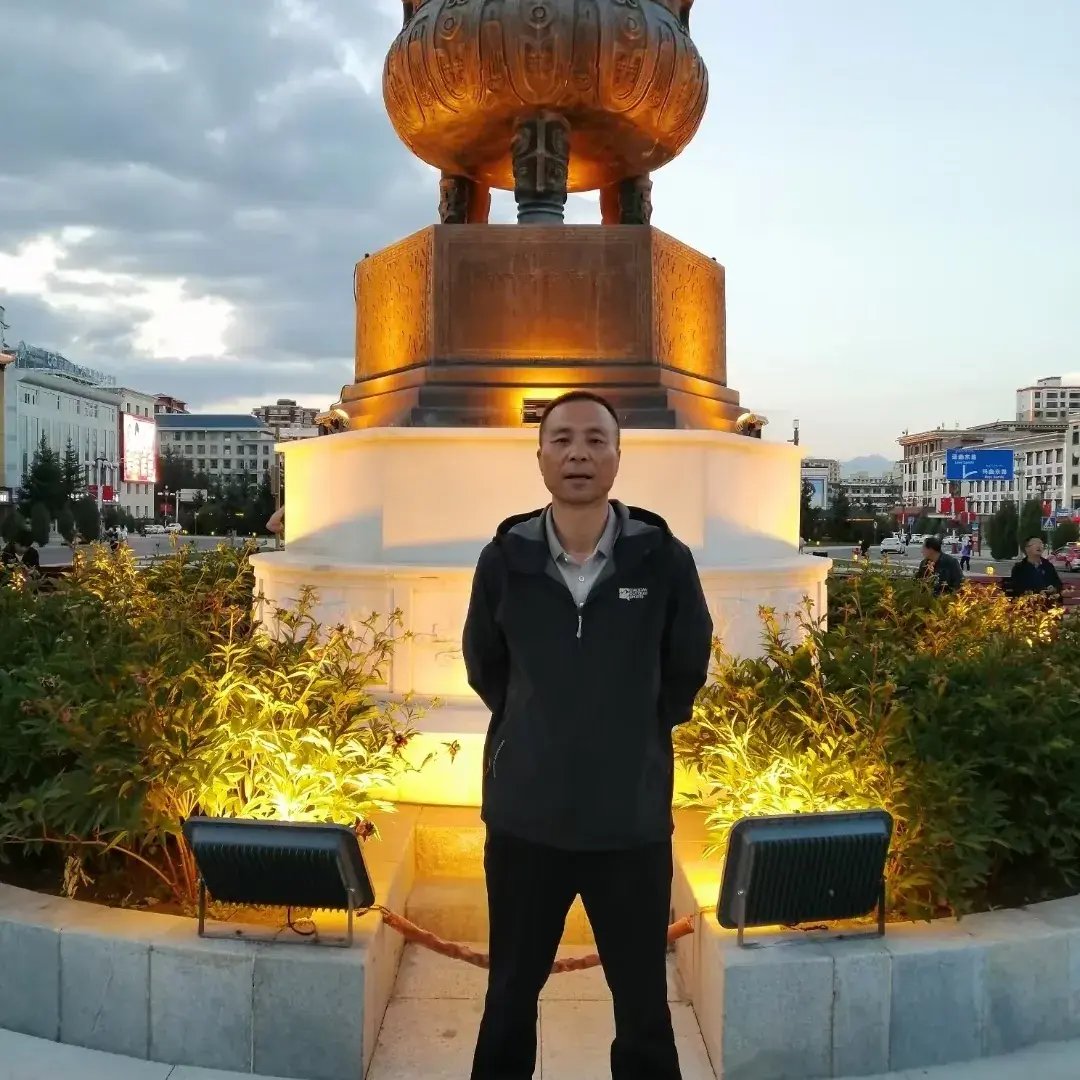
Worth it! Worth going!! Especially worth going!!! ∥Since "Xixia Song" is a cliff carving, it is rough and strong, the handwriting is simple and ancient, and the knife technique is powerful. ∥"Xixia Song", "Shimen Song" and "Yige Song" are listed as the "Three Songs" of Han Dynasty calligraphy. ∥It is the most complete cliff carving among the three major odes. ∥It is a work of the mature era of official script, but it has a strong meaning of seal script, so it is "between seal script and official script". ∥The artistic characteristics of "Xixia Song" are solemn and solemn, open-minded, and have a broad and real atmosphere. ///Influence on calligraphy art in later generations: The calligraphy value of "Xixia Song" is that it is regarded as an important masterpiece of "Han Li" in the official script of the Han Dynasty! It occupies a very important position in the history of calligraphy culture in my country. ∥Chinese name: Xixia Song Also known as "Xixia Song of Li Xi, the prefect of Hanwudu, Hanyang Ayang". ∥Creation time: June of the fourth year of Jianning in the Eastern Han Dynasty (171 AD) ∥Author: Qiu Jing ∥Calligraphy type: Lishu Specifications: The whole stele is 2.2 meters high and 3.4 meters wide Number of characters: 527 characters in total Currently located: Yuqiao Gorge, Tianjing Mountain, Cheng County, Gansu Province

Xixia Ode Cliff Inscriptions

user-avatar
M58***9718 November 2026
4.0
The overall environment was tranquil and elegant, the facilities were well-maintained, the bedding was soft, the toiletries were complete, the attention to detail was excellent, and the facilities were top-notch, making for a very comfortable stay. Airport shuttle service was also available.

Jiuzhaigou National Park
user-avatar
怪兽18 November 2026
5.0
Xi'an Museum: The glass cover is so thick it looks like frosted glass, making it seem like you're looking at a fog from inside. But the Chang'an street scene exhibition on the first floor is vibrant, and even though the basement is stuffy, the skirts of the terracotta figurines still seem to flutter.

Xi'an Museum

user-avatar
pxin17 November 2026
5.0
Love this place very much, but need to prepare good leg for this place, as there a lot of staircase.

Huanglong National Scenic Area

user-avatar
逃之杳杳13 November 2026
5.0
For the average tourist, it's worth going; it's a pretty good experience. However, I'm a frequent Via Ferrata rider, and I found the experience just average. It's only suitable for beginners. Nevertheless, considering Li Bai's poem "The Road to Shu is Hard" ("Monkeys and apes worry about climbing"), it's still quite meaningful.

Jianmen Pass

user-avatar
hutoumao3314 November 2026
5.0
I chose four special caves, which were a bit pricey, but after visiting them, I felt it was definitely worth the ticket price. They truly deserve to be one of the four major grottoes, with a distinct character compared to the other three sites. Their worldly smiles are unforgettable! Visiting this season also allows you to see the autumn scenery of the Qinling Mountains; the fading reds and greens of Maijishan are also uniquely charming. There were few people, and I walked around twice, deeply imprinting the experience in my mind. My only complaint was the male guide at the special caves; he was self-important and sounded like he was reciting a foreign language, making me constantly afraid of being misled, resulting in a poor experience. After coming down from the West Cliff, I rented an audio guide, but the ordinary caves were just reading from a script. Perhaps it's fate, as Buddha said, that I'll encounter a better guide next time.

Maijishan Cave-Temple Complex

user-avatar
M40***1316 September 2026
5.0
The environment is clean and elegant, the hot spring water is clear and comfortable, the temperature is just right, and you can relax and de-stress after soaking. The service is warm and thoughtful, the price is very reasonable, and the experience is superb.

Maijishan Scenic Area

Trip Moments in Cheng County

Popular cities near Cheng County

Frequently asked questions

How can I contact Trip.com customer support?

Get help anytime, anywhere within 30 secondsContact customer support

Change and cancellation policies vary by attractions and tours. Please check the product details page for more information.

Ticket prices may vary between weekdays and weekends, as well as during peak and off-peak seasons. When booking with Trip.com, you can also use Trip Coins to get extra savings. For more tips on booking discounted tickets, please visit Trip.com for the latest information.