






 4.0/5
4.0/5 Yuki馨
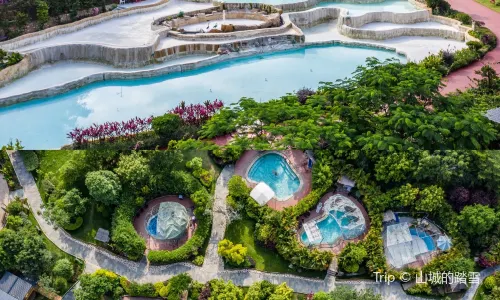
Yuki馨Pros: 1. The cascading hot springs are quite unique and photogenic. 2. Free lockers are available for access via QR code, and the deposit is refundable. 3. Highly cost-effective. Cons: 1. The hot spring water is cool, feeling around 28°C, similar to a heated swimming pool, making it ideal for summer swimming. 2. The showers have a bad odor, similar to the toilets. Although there are warning signs on each door, the odor is still quite strong. This is related to the individual's personality and the management style of the owner.
 4.2/5
4.2/5 人在旅途$
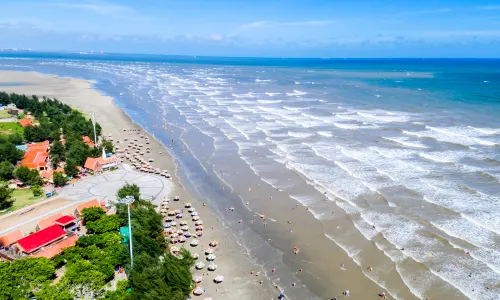
人在旅途$The sky is really blue. It was too hot the day we went, so we didn't play outside for long. It was great~ I picked up shells and conchs of all sizes on the beach, picked out the right size and put them in this grid. It's like a miniature ocean museum, both beautiful and meaningful~
 4.0/5
4.0/5 139***63
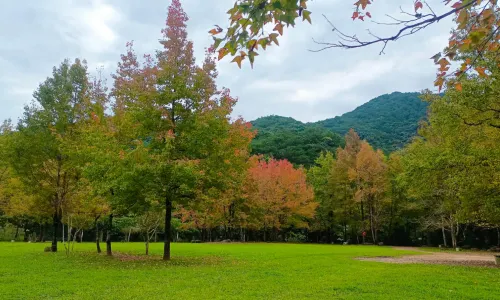
"Shiwandashan: A Forgotten Secret of the South"—A Geographical Retreat, a Soul's Retreat. On the map, it's just a dark green fold in southwestern Guangxi; in the eyes of travelers, it's the last untamed green lung on the China-Vietnam border; in my heart, the Shiwandashan Mountains, a name imbued with poetry and wildness. It's not part of the bustling tourist map, without direct high-speed rail access, and not on "must-see" lists. Yet, in its silent presence, it guards the most pristine pulse of life in southern China. This isn't a landscape gallery, but a living natural epic. 1. Geographical Remoteness: Hidden in the remote green landscape, the Shiwandashan Mountains aren't literally 100,000 mountains, but rather a transliteration of the Zhuang term Dishoih Vahndaengz (meaning "Heavenly Mountains"). Stretching across Fangchenggang, Shangsi, and Ningming, it borders the Shiwandashan National Nature Reserve to the north and the Beibu Gulf to the south. It is the last bastion of the northern tropical monsoon forest ecosystem in mainland China. The mountains here are not high, with few precipitous peaks or cliffs, but their beauty lies in their continuous, overlapping peaks. Clouds and mist linger year-round, like the earth's breath. Streams seep through cracks in the rocks, converge into rivers, and ultimately flow into the Beilun River, flowing to the sea—a journey that begins in silence and ends in vastness. Its "remoteness" isn't just a geographical isolation, but also a spiritual distance that modern civilization hasn't yet fully penetrated. Entering it feels as if time has slowed down. II. Ecological Depth: A Primitive Theater of Symbiosis Stepping into the Shiwan Mountains, you'll understand the saying, "Trees are older than men, vines longer than snakes." Towering ancient trees stand like bronze giants, their exposed buttresses like dragon claws gripping the ground. The air is so moist you could wring water out of it, and every breath feels like drinking a glass of sweet green juice. The humus beneath your feet is soft and thick, and you step silently, as if afraid to disturb the dormant mycelial network. Home to parashorea chinensis, also trees, slow lorises, and jungle fowl, this is the only place in China where you can observe the complete vertical spectrum of tropical forests. You don't have to search for rare species; simply stand still for a moment—a red-billed leiothrix flits through the treetops, a group of macaques hopscotches, an epiphytic orchid quietly blooms on a tree trunk... These moments are nature's personal messages to those who patiently seek them. Even more moving is the way the ecosystem here maintains a certain ancient balance. There's no overdevelopment, no artificial landscaping, only a natural dialogue between wind, rain, light, and shadow, and life itself.
 Achieved a 3-year streak on the annual lists
