





 4.7/5
4.7/5 鸠藰
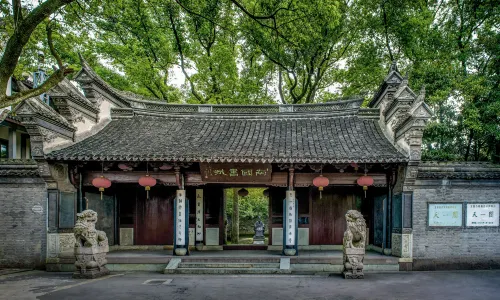
鸠藰Overall, it's passable, but it doesn't quite qualify as a 5A scenic spot, especially considering the admission fee. It lacks the grand garden layout of a typical tourist attraction; instead, it has many books and family genealogies. If an NPC or guide could unlock various historical and cultural elements or provide information about your name and ancestors, the experience would be significantly enhanced.
 4.6/5
4.6/5 洪虹
洪虹Tianyi Pavilion was built between 1561 and 1566 (the 40th and 45th years of the Jiajing reign of the Ming Dynasty). Originally the library of Fan Qin, the Right Vice Minister of the Ministry of War, it now houses nearly 300,000 volumes of ancient books, including more than 80,000 rare and valuable editions. It is the oldest existing private library in my country, the largest in Asia, and the third largest in the world. In 1982, it was listed as a national key cultural relics protection unit.
 4.6/5
4.6/5 M29***72
I went during the tourism festival's half-price promotion, which was a great deal. I think it was definitely worth it; the original price wouldn't have been worth it. I'm considered a bit of a scaredy-cat, but I was able to ride both roller coasters in the park without feeling any weightlessness! I really enjoyed it and will definitely come back for next year's tourism festival.
 4.5/5
4.5/5 叽里呱啦派大星
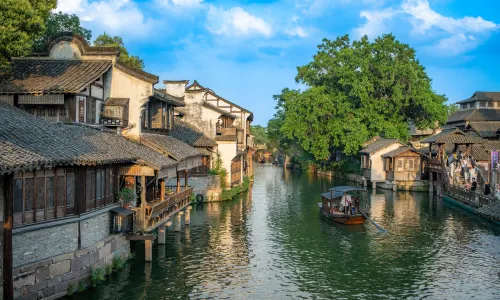
Wuzhen, the Water Town: A Jiangnan Narrative Traversing Bygone Eras and Artistic Dreams When you think of Jiangnan water towns, Wuzhen is always the first name that comes to mind. It's not just a geographical location, but a sentiment, a collective imagination of "small bridges, flowing water, and traditional houses." I once traveled there with this imagination, and when I returned, my suitcase no longer contained vague longings, but real memories soaked in the river, warmed by the lights, and touched by the culture. This was not just a trip, but an immersive reading of the poetic life of Jiangnan. Morning Light and Fireworks: The Original Colors of Life in Dongzha My time in Wuzhen began in the morning in Dongzha. Unlike the uniformly renovated and exquisitely picturesque Xizha, Dongzha preserves a more vibrant "life in progress." As the first rays of sunlight slant onto the eaves of the Fengyuan Twin Bridges, the residents on both sides of the river have already begun their day. Piece by piece, the wooden doors along the water's edge are removed, revealing the full view of the general stores or breakfast stalls inside; an old man leisurely lights a coal stove at his doorway, the smoke mingling with the water vapor from the river; a boatwoman wearing a blue-dyed cloth headscarf rows her boat under the stone bridge, scattering golden light across the river. The pace here is slow, the sounds are old, and the air is filled with the aroma of old wooden houses, damp stone slabs, and home-cooked meals. Walking through the alleys of Dongzha is like stepping into a weighty history book. At Mao Dun's former residence, I glimpsed the childhood scenes of the literary giant; the simple furnishings silently told the story of his lofty ambitions. And at the blue-dyed cloth workshop, the high-hanging, azure fabrics flutter in the wind, like a frozen sky, where the ancient tie-dyeing technique is vividly preserved. The beauty of Dongzha lies in this "unrefined" authenticity. It may lack uniformity, but it's brimming with vibrant, down-to-earth human warmth, making it the best textbook for understanding the original form of a "water town." Sunset and Lanterns: A Poem of Light and Shadow Under Xizha If Dongzha is a simple prose poem, then Xizha is a meticulously crafted lyric poem. Stepping into Xizha in the afternoon, the atmosphere suddenly becomes tranquil and artistic. The buildings here have been carefully restored; the wooden waterside pavilions from the Ming and Qing dynasties stretch for miles, reflected on the mirror-like river, their lines clear and beautiful. You can wander aimlessly, experience the elegance of an ancient academy at Zhaoming Academy, or send a postcard to your future self from the old post office. However, the soul of Xizha belongs to the night. As the sun sets, the magic moment arrives. The lights on both sides of the river illuminate one after another, not with dazzling neon, but with warm yellow, twinkling lights, gently outlining the contours of eaves, bridge arches, and willow branches. At this time, taking a rowboat is a must-do experience. The oars slice through the river, its surface shimmering like silk under the lights, making a soft, rhythmic sound as the boat navigates under bridges and through tunnels. People on the banks admire the scenery and the lights, while you, on the boat, observe them, becoming part of this flowing scroll of life. This scene perfectly embodies the meaning of "being immersed in a painting."
 4.6/5
4.6/5 Anonymous user
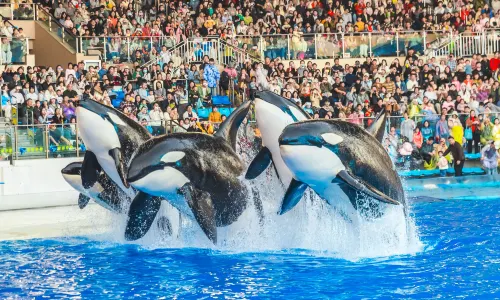
As the world's only orca park, it certainly lived up to expectations. The orcas were so cute, and the children watched intently and had a great time. I hope the orcas are happy too, and that they don't lose their own lives because they are kept in captivity.
 4.9/5
4.9/5 Herbivore
This planetarium is definitely worth a visit. It makes learning about space engaging for all ages. The exhibits on our solar system are packed with fascinating details and up-to-date discoveries. We especially loved the interactive stations. It's better to come in the morning so you can enjoy the most out of the museum.
 4.7/5Anonymous user
The ticket price was relatively cheap, 199 yuan for two adults and one child. Perhaps because it's so remote, there weren't many visitors, and the scenic area felt somewhat rushed. The best part was taking the free shuttle bus into the predator enclosure, but there were no animals in several areas.
 4.7/5
4.7/5 火 火
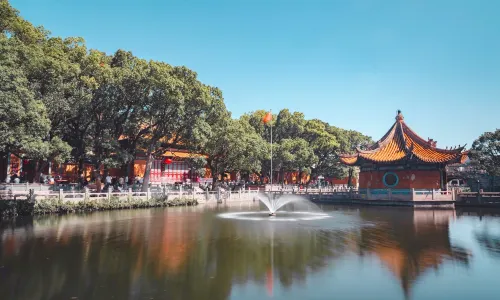
火 火Putuoshan Scenic Area, located in the eastern waters of Zhoushan, Zhejiang Province, is one of China's four sacred Buddhist mountains and the sacred site of Guanyin Bodhisattva. Known as the "Buddhist Kingdom by the Sea," it is a national 5A-level scenic area. The island covers an area of 12.5 km² and can only be accessed by boat, with no road connection to the mainland. Key Attractions: 1. Three Major Temples Puji Temple (Front Temple): The main temple on the mountain, the largest in scale and most popular with worshippers. Fayu Temple (Rear Temple): The Nine Dragon Hall's caisson ceiling is one of the "Three Treasures of Putuoshan" and a national key cultural relic protection unit. Huiji Temple (Fodingshan Temple): Located at an altitude of 283 m on Fodingshan Mountain, accessible by cable car, offering the best views. 2. South China Sea Guanyin Culture 33 m South China Sea Guanyin Statue: A landmark on the island, adjacent to the Purple Bamboo Forest and the "Refusing to Leave Guanyin Temple," where legend says Guanyin once "refused to leave." 3. Nature and Beaches Qianbu Beach and Baibu Beach: Fine sand and gentle slopes, perfect for sunrise viewing; Qianbu Beach is 3 li long and suitable for swimming in summer. Pantuo Stone, Heart-shaped Stone, and Two Turtles Listening to the Dharma Stone: Granite wonders, known as the "Three Stones of Putuo". 4. Three Caves and Outer Islands Fanyin Cave, Chaoyin Cave, and Chaoyang Cave: Sea cave wonders; Fanyin Cave has a legend of Guanyin appearing there. Luojia Mountain: A reclining Buddha in the sea.
 4.7/5
4.7/5 天空20190808
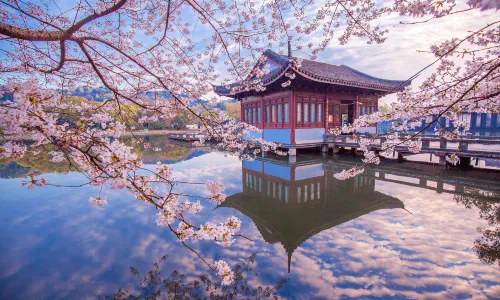
• Positive Reviews: Some tourists found the West Lake boat tour experience enjoyable, praising the large and stable boats, the clear explanations of the routes provided by staff, and the quick and efficient boat connections. Others found the on-site QR code ticket purchase convenient and fast, with various discounts readily available based on the ticket purchaser's ID information. • Negative Reviews: Some tourists pointed out the lack of price transparency for the West Lake boat tours, such as shorter advertised rowboat routes and hidden charges for self-rowed boats. Furthermore, the route selection was unsatisfactory, with long queues for island tours and limited views of attractions only on distant shores during the lake tour. Other complaints included inattentive boatman explanations and moldy life jackets.
 4.8/5
4.8/5 137***32
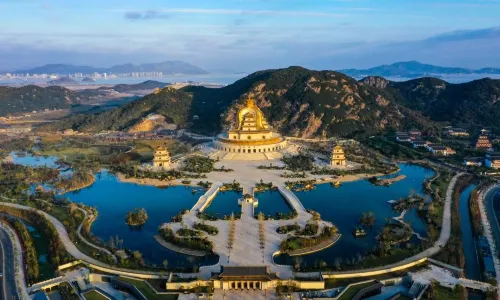
Guanyin Dharma Realm is worth a visit as a supplement to the Putuoshan itinerary. It is very photogenic when the weather is good. It is beautiful both inside and out, similar to Niushou Mountain in Nanjing, but one is about Buddha and the other is about Bodhisattva. There are also many exquisite works of art and cultural relics, like a small museum.

